
Open Banking Market Overview
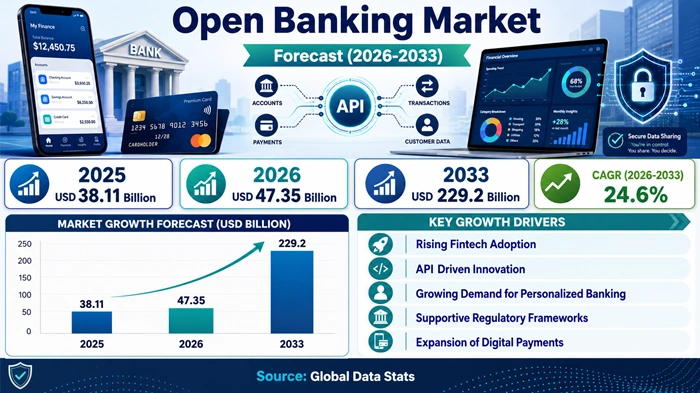
The global open banking market size is valued at USD 38.11 billion in 2025 and is predicted to increase from USD 47.35 billion in 2026 to approximately USD 229.2 billion by 2033, growing at a CAGR of 24.6% from 2026 to 2033. This remarkable expansion is powered by increasing consumer demand for personalized digital financial services, growing adoption of API-based solutions, supportive regulatory frameworks, and rapid fintech innovation reshaping the global banking ecosystem.
AI Impact on the Open Banking Industry
Artificial Intelligence Is Quietly Rewriting the Rules of How Banking Data Flows, Gets Analyzed, and Creates Value for Consumers and Institutions Alike
Artificial intelligence has become one of the most powerful catalysts transforming how open banking platforms operate. From real-time fraud detection to hyper-personalized financial recommendations, AI systems now process massive streams of banking data to deliver instant insights that were once impossible. Financial institutions are integrating machine learning models with open APIs to assess creditworthiness more accurately, automate customer onboarding, and predict spending behavior with a level of precision that improves both user experience and risk management. As AI capabilities evolve, the open banking market is seeing a new generation of intelligent financial tools that are smarter, faster, and more responsive to individual customer needs.
Beyond analytics, AI is accelerating the automation of compliance and regulatory workflows within open banking ecosystems. Smart algorithms can now monitor transactions in real time, flag suspicious activities, and ensure regulatory compliance without manual intervention. This reduces operational costs significantly while improving data security—one of the most persistent concerns in the sector. AI-powered chatbots and virtual assistants are further enhancing customer engagement by offering round-the-clock financial guidance. As more banks and fintech companies embed AI into their API layers, the synergy between machine intelligence and open finance is expected to drive the next wave of growth across the open banking market.
Growth Factors
Rising Fintech Collaboration, Regulatory Push, and the Shift Toward Digital-First Banking Are Together Fueling Robust Market Expansion Worldwide
The primary driver of the open banking market's rapid growth is the surge in partnerships between traditional banks and fintech companies. These collaborations allow financial institutions to broaden their digital service portfolios without building every capability from scratch. Consumers today expect seamless multi-bank access, instant payments, and personalized financial dashboards—all of which are made possible through open banking APIs. Supportive regulations like the EU's PSD2 framework and the CFPB's Personal Financial Data Rights rule in the US have compelled banks to share data securely, creating a more competitive and innovative financial environment. The growing adoption of account-to-account (A2A) payments is also a key contributor, as businesses and consumers increasingly prefer faster, lower-cost alternatives to traditional card-based transactions.
On the technology side, advancements in cloud infrastructure, big data analytics, and cybersecurity are making it easier for organizations to build scalable, compliant open banking solutions. Cloud deployment reduces the cost of API management while enabling real-time data processing and integration with third-party platforms. The rising popularity of embedded finance—where banking services are integrated directly into non-financial apps like e-commerce platforms and ride-hailing services—is opening new distribution channels. These developments are collectively expanding the addressable market for open banking well beyond traditional banking circles, attracting new entrants and accelerating the pace of digital transformation.
Market Outlook
Emerging Economies, Embedded Finance Expansion, and Banking-as-a-Service Models Are Unlocking Vast Untapped Potential Through 2033
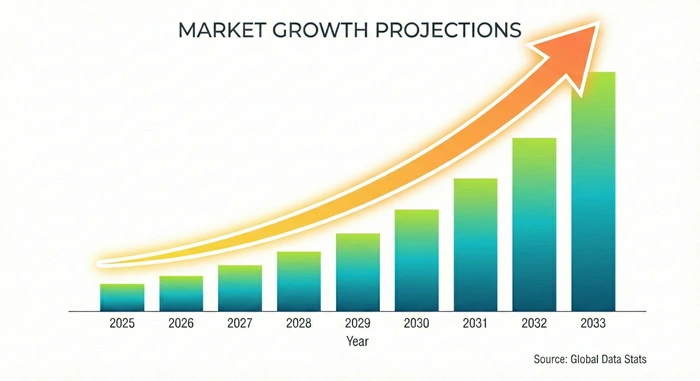
The outlook for the open banking market through 2033 is strongly positive, driven by several long-term structural trends. Emerging markets in Asia Pacific, Latin America, and Africa are at an early but accelerating stage of adoption, supported by rising smartphone penetration, growing middle-class populations, and government-backed digitalization initiatives. Countries like India, Brazil, and the UAE are developing robust open finance frameworks that are creating entirely new ecosystems for digital lending, payments, and wealth management. By 2033, the breadth of services enabled by open banking is expected to span far beyond basic account data access, encompassing insurance, investments, and complex multi-bank financial management.
Banking-as-a-Service (BaaS) is emerging as a major commercial model within the open banking landscape, enabling fintech startups and non-banking businesses to launch financial products using licensed banking infrastructure accessed through APIs. This model dramatically lowers the barrier to entry for new financial service providers and creates additional revenue streams for established banks. Alongside BaaS, the integration of open banking with insurtech and regtech platforms is opening new opportunities for automated underwriting, compliance reporting, and personalized risk management. As consumer trust in digital financial services continues to grow, and as more countries formalize their open banking regulations, the market is well-positioned for sustained, compounded growth through the forecast period.
Expert Speaks
-
"Open banking is fundamentally reshaping the competitive landscape of financial services. The institutions that embrace API-first strategies and build collaborative ecosystems will be the ones that lead in customer experience and profitability over the next decade." — Jane Fraser, CEO, Citigroup
-
"We see open banking as a transformative force that moves financial services from a product-centric to a customer-centric model. Real-time data sharing, combined with AI, will allow us to offer hyper-personalized solutions that were unimaginable just five years ago." — Bill Winters, CEO, Standard Chartered
-
"The future of banking is open. Fintech partnerships and API innovation are not optional—they are the core infrastructure of next-generation financial institutions. Those who invest in this foundation today will gain irreplaceable competitive advantages tomorrow." — Charles Scharf, CEO, Wells Fargo
Key Report Takeaways
-
Europe leads the global open banking market, holding approximately 35.8–36% market share in 2025, driven by early regulatory adoption of PSD2 and strong digital banking infrastructure across countries like Germany, the UK, and France.
-
Asia Pacific is the fastest-growing region in the open banking market, expected to record the highest CAGR through 2033, propelled by government-supported digitalization in India, China, Australia, and Southeast Asia.
-
Banks and traditional financial institutions are the dominant end-user segment, accounting for approximately 40% market share in 2025, as they remain the primary custodians of customer financial data and compliance-driven API rollouts.
-
The banking and capital markets service segment contributes the most to overall revenue, holding nearly 46% of the total market share in 2025, driven by core banking use cases like account aggregation, lending, and payments.
-
Cloud-based deployment is the most widely adopted model, commanding approximately 70% market share in 2025, owing to its scalability, cost efficiency, and ability to support high-frequency API transactions.
-
The payments segment is expected to grow at the fastest CAGR during the forecast period, fueled by rising demand for A2A payment rails, real-time fund transfers, and digital checkout integration across e-commerce platforms.
-
The apps and platforms distribution channel is projected to expand at the fastest CAGR through 2033, with a current market share that continues to rise as mobile-first fintech apps and super-app ecosystems expand their financial offerings globally—expected to capture over 25% market share by 2033.
Market Scope
| Report Coverage | Details |
|---|---|
| Market Size by 2033 | USD 229.2 Billion |
| Market Size by 2025 | USD 38.11 Billion |
| Market Size by 2026 | USD 47.35 Billion |
| Market Growth Rate from 2026 to 2033 | CAGR of 24.6% |
| Dominating Region | Europe |
| Fastest Growing Region | Asia Pacific |
| Base Year | 2025 |
| Forecast Period | 2026 to 2033 |
| Segments Covered | Service Type, Deployment, Distribution Channel, End-User, Region |
| Regions Covered | North America, Europe, Asia Pacific, Latin America, Middle East & Africa |
Market Dynamics
Drivers Impact Analysis
API Adoption, Regulatory Mandates, and the Rising Consumer Appetite for Personalized Digital Finance Are Collectively Accelerating Open Banking Growth at an Unprecedented Rate
| Driver | ≈ % Impact on CAGR Forecast | Geographic Relevance | Impact Timeline |
|---|---|---|---|
| Regulatory mandates (PSD2, CFPB) | ~35% | Europe, North America | Near-term (2026–2028) |
| Rising fintech partnerships | ~28% | Global | Medium-term (2026–2030) |
| Consumer demand for digital banking | ~22% | Asia Pacific, North America | Long-term (2026–2033) |
| AI and data analytics integration | ~15% | Global | Long-term (2026–2033) |
Regulatory frameworks remain the most powerful accelerator in the open banking market. Laws such as the Payment Services Directive (PSD2) in Europe and the Personal Financial Data Rights rule in the United States have mandated that banks provide third-party access to customer financial data through standardized APIs. This has unlocked significant competition among financial service providers and given consumers meaningful control over their own financial information. At the same time, the integration of big data analytics into open banking platforms is enabling institutions to deliver tailored financial products, improve risk assessment, and reduce fraud—all of which strengthen user trust and increase adoption rates.
The growing collaboration between fintech companies and traditional banks is also serving as a major growth engine for the open banking market. Banks benefit from the agility and innovation of fintech partners, while fintechs gain access to regulatory licenses and established customer bases. This mutual reliance is creating an ecosystem where new financial products are developed and deployed faster than ever before. As account-to-account payment systems continue to mature and embedded finance deepens its reach into non-financial platforms, the demand for open banking APIs is expected to remain robust through the forecast period.
Restraints Impact Analysis
Data Privacy Risks, Inconsistent Global Regulations, and Consumer Skepticism About Third-Party Data Access Continue to Challenge Market Growth
| Restraint | ≈ % Impact on CAGR Forecast | Geographic Relevance | Impact Timeline |
|---|---|---|---|
| Cybersecurity and data breach risks | ~40% | Global | Near-term (2026–2028) |
| Fragmented regulatory standards | ~35% | Latin America, MEA, APAC | Medium-term (2026–2030) |
| Limited consumer awareness | ~25% | Emerging Markets | Long-term |
The open banking market faces meaningful headwinds related to data security and privacy. As financial institutions share sensitive customer data with third-party providers through APIs, the potential for unauthorized access, data breaches, and cyberattacks grows. Consumers remain understandably cautious about granting third-party apps access to their bank accounts, especially in markets where data protection laws are still developing. Building consumer trust requires consistent, transparent communication about how data is used and protected, along with robust security frameworks that go beyond minimum regulatory requirements.
Another significant restraint is the lack of harmonized regulatory frameworks across different countries and regions. While Europe has made substantial progress with PSD2, other regions are at varying stages of open banking regulation. This fragmentation creates operational complexity for multinational financial institutions and technology providers that need to comply with different standards, authentication requirements, and data-sharing rules across markets. For businesses operating in multiple geographies, these inconsistencies increase compliance costs and slow down deployment timelines, ultimately constraining the pace of market expansion.
Opportunities Impact Analysis
Embedded Finance, Banking-as-a-Service, and Cross-Border Payment Innovation Represent Transformative Growth Opportunities in the Global Open Banking Ecosystem
| Opportunity | ≈ % Impact on CAGR Forecast | Geographic Relevance | Impact Timeline |
|---|---|---|---|
| Embedded finance expansion | ~38% | Global | Medium-term (2026–2030) |
| Banking-as-a-Service (BaaS) | ~30% | North America, Europe | Long-term (2026–2033) |
| Emerging market penetration | ~32% | Asia Pacific, Latin America | Long-term |
Embedded finance represents one of the largest and most immediate opportunities in the open banking market. As non-financial businesses—from e-commerce platforms to healthcare providers—seek to integrate financial services directly into their user interfaces, open banking APIs become the critical enabling layer. This trend is not only expanding the market's geographic and sector reach, but it is also creating new revenue models for banks that can monetize their API infrastructure through usage-based licensing and data-sharing partnerships. The rise of super apps in Asia Pacific, which bundle financial and non-financial services into unified digital experiences, is a particularly compelling example of this opportunity.
The development of Banking-as-a-Service platforms is creating another transformative opportunity, particularly in North America and Europe where fintech density is highest. BaaS allows non-bank entities to offer checking accounts, lending, and payment services by connecting to banking licenses and infrastructure through APIs. This model significantly reduces the capital and regulatory burden for new entrants, accelerating innovation and competition in the financial services sector. Similarly, the demand for seamless, low-cost cross-border payment solutions is growing rapidly among consumers, SMEs, and gig economy workers, and open banking is uniquely positioned to address this need by enabling direct, real-time international transfers at a fraction of traditional costs.
Segment Analysis
By Service Type: Banking & Capital Markets
Banking and Capital Markets Remains the Revenue Cornerstone of the Open Banking Ecosystem, Anchoring Market Stability While Driving Deep API Integration Across Financial Operations
The banking and capital markets segment is the largest contributor to the open banking market, accounting for approximately 46% of total revenue in 2025. This dominance stems from the fact that core banking functions—including account aggregation, lending, real-time payments, and cash management—are the primary use cases that open banking was initially designed to enable. Financial institutions across North America and Europe have invested heavily in API infrastructure to support these core functions, and the segment benefits from strong regulatory backing that mandates data-sharing for banking services. In Europe, which holds the largest regional share, banks in Germany, the UK, and France have been at the forefront of implementing open banking APIs for account information and payment initiation services. Companies such as BBVA, Barclays, and Finastra are leading contributors in this region, offering API marketplaces and open banking platforms that serve both retail and institutional clients.
The banking and capital markets segment is expected to maintain a healthy CAGR through 2033, supported by the continued growth of AI-driven investment platforms and digital lending services. As millennials and Gen Z consumers shift from traditional investment methods to app-based financial management tools, demand for sophisticated API-enabled banking services is rising. In Asia Pacific—the fastest-growing regional market—fintech companies in India and China are leveraging open banking frameworks to offer instant credit scoring and micro-lending to previously underserved populations. The combination of high user volumes, continuous product innovation, and growing cross-border financial activity ensures that this segment will remain the dominant revenue pillar of the open banking market throughout the forecast period.
By Deployment: Cloud-Based
Cloud Deployment Has Become the De Facto Standard for Open Banking Infrastructure, Enabling the Scalability and Speed That Modern API-Driven Finance Demands
Cloud-based deployment commands approximately 70% of the open banking market in 2025, making it the clear leader among all deployment models. The reasons for this dominance are well-grounded: cloud infrastructure supports the massive transaction volumes generated by open banking APIs, provides real-time data processing capabilities, and enables seamless integration with third-party fintech platforms. Cost efficiency is another major factor—smaller financial institutions and fintech startups can deploy open banking solutions on cloud infrastructure without the heavy capital expenditure associated with on-premise systems. In North America, cloud-first banks and challenger banks have built their entire open banking operations on platforms like AWS and Microsoft Azure, enabling rapid product iteration and regulatory compliance management through automated tooling.
The cloud segment is also the fastest-growing among deployment types, with adoption accelerating across Asia Pacific and Latin America as financial institutions in these regions seek cost-effective ways to modernize their banking infrastructure. In India and Brazil—two of the fastest-growing open banking markets globally—cloud deployment is enabling rapid scalability for fintech platforms serving hundreds of millions of users simultaneously. Key players such as IBM, Oracle, and Amazon Web Services provide the underlying cloud infrastructure, while fintech-focused players like Mambu and Finastra deliver cloud-native open banking platforms on top. As hybrid cloud models mature, offering organizations greater control over sensitive financial data while retaining the scalability benefits of public cloud, the segment's dominance within the open banking market is expected to remain unchallenged through 2033.
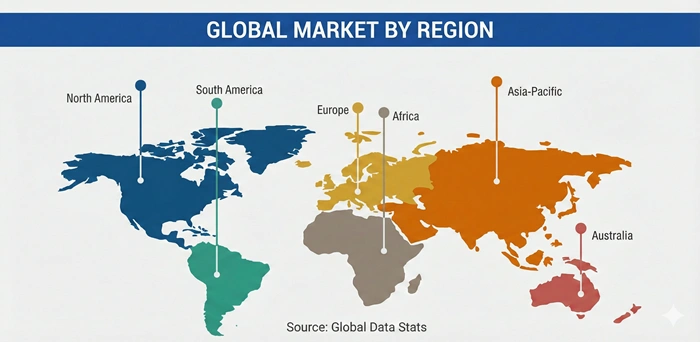
Regional Insights
Europe
Europe's Regulatory Leadership, Digital Banking Maturity, and API Ecosystem Depth Continue to Cement Its Position as the Undisputed Global Leader in Open Banking
Europe holds the dominant position in the global open banking market, accounting for approximately 35.8% of total revenue in 2025, and is expected to maintain this leadership with a healthy CAGR of approximately 21% through 2033. The region's dominance is rooted in the early and decisive implementation of the Payment Services Directive 2 (PSD2), which mandated that banks provide third-party providers with API access to customer account information and payment services. This regulatory groundwork fostered a highly competitive and innovative financial ecosystem across the UK, Germany, France, and beyond. Leading companies driving open banking adoption in Europe include Finastra (UK), Worldline (France), Crédit Agricole (France), and BBVA (Spain), all of which have built robust API platforms and embedded finance capabilities.
The UK has been particularly notable within the European open banking market, boasting over 13.3 million active open banking users as of early 2025—a figure that grew 40% year-on-year. Germany's market is evolving rapidly, with a strong emphasis on data security and privacy driving collaboration between traditional banks and fintech startups in Berlin and Frankfurt. France and Italy are also expanding their open banking ecosystems, supported by EU-level regulatory harmonization through the upcoming PSD3 framework. The depth of Europe's financial infrastructure, combined with high consumer digital literacy and progressive regulatory environment, ensures the region will continue to set the benchmark for open banking standards globally while remaining the most mature and revenue-dense market.
Asia Pacific
Asia Pacific's Explosive Fintech Growth, Large Unbanked Populations, and Government-Led Digitalization Programs Position It as the World's Fastest-Growing Open Banking Region
Asia Pacific is the fastest-growing region in the global open banking market, expected to register the highest CAGR through 2033 as countries across the region accelerate their digital finance journeys. The region's growth is underpinned by a unique combination of vast populations with limited access to traditional banking, rapidly expanding smartphone penetration, and government-led financial inclusion initiatives. India's open banking ecosystem, powered by the Account Aggregator framework, UPI, and India Stack, has enabled hundreds of millions of consumers to access digital financial services for the first time. In China, tech giants like Ant Financial and WeBank have embedded open banking capabilities into comprehensive financial super-apps, creating some of the world's most advanced API-driven financial ecosystems. Key players in the region include DBS Bank (Singapore), WeBank (China), HDFC Bank (India), ANZ (Australia), and Axis Bank (India).
Australia's Consumer Data Right (CDR) framework has been among the most structured open banking implementations in the Asia Pacific region, enabling consumers to share banking data with accredited third parties and fostering strong competition among digital banks and fintech platforms. South Korea and Japan are also investing significantly in API standardization and digital banking regulation. The region is projected to capture an increasingly larger share of global open banking revenues through 2033, driven by strong domestic demand, rising cross-border payment volumes, and the rapid deployment of embedded finance services across e-commerce, telecommunications, and ride-hailing platforms.
Customization Options for This Report
This Report Can Be Fully Customized to Deliver Region-Specific and Country-Level Market Intelligence, Helping You Make Targeted Business Decisions With Greater Confidence
We understand that different businesses require different levels of geographic specificity. This report is available with full region-wise and country-wise customization, allowing you to access detailed market analysis, competitive landscapes, demand trends, and growth opportunities tailored precisely to your target geography. Whether you need granular country-level data or a broader regional perspective, our team can configure the report to match your strategic needs.
-
Customized reports are available for the following regions and countries:
North America
-
United States (U.S.)
-
Canada
-
Mexico
Europe
-
United Kingdom (U.K.)
-
Germany
-
France
-
Italy
-
Rest of Europe
Asia Pacific
-
China
-
India
-
Japan
-
South Korea
-
Australia
-
Rest of Asia Pacific
Latin America
-
Brazil
-
Argentina
-
Rest of Latin America
Middle East & Africa
-
UAE
-
Saudi Arabia
-
Rest of Middle East & Africa (MEA)
Each customized report delivers in-depth insights specific to the selected market, including local regulatory analysis, dominant players, end-user demand patterns, investment landscape, opportunities, and forecasts aligned with the open banking theme. Contact our research team to request your customized geography-specific report.
Top Key Players
-
Banco Bilbao Vizcaya Argentaria, S.A. (BBVA) (Spain)
-
Crédit Agricole (France)
-
Finastra (United Kingdom)
-
Worldline (France)
-
Fiserv, Inc. (United States)
-
Jack Henry & Associates, Inc. (United States)
-
Capgemini (France)
-
Mambu (Germany)
-
Tink (Visa) (Sweden)
-
Plaid Inc. (United States)
-
TrueLayer (United Kingdom)
-
Salt Edge (United Kingdom)
-
MX Technologies (United States)
-
GoCardless Ltd. (United Kingdom)
-
Stripe, Inc. (United States)
-
NCR Corporation (United States)
Recent Developments
-
In February 2026, Truist Financial Corporation launched its first open banking integration by partnering with Mastercard's open finance technology, enabling consumer and small business clients to securely access and manage their financial data through a centralized API-driven platform connected to a trusted network of fintech applications.
-
In February 2026, Amazon announced the launch of Pay by Bank in the United Kingdom through a strategic partnership with TrueLayer, allowing UK customers to make purchases directly from their bank accounts using biometric authentication, offering faster checkout experiences and quicker refunds.
-
In November 2025, SBS, a global financial technology firm, introduced an upgraded version of its SBP Open Banking Platform, aimed at enabling banks across Europe to deliver next-generation digital payment and embedded finance solutions.
-
In 2025, Finastra expanded its open banking ecosystem by deepening integrations with multiple cloud-native fintech platforms, enhancing its digital banking and API marketplace capabilities for banking and capital markets clients globally.
-
In 2025, Plaid Inc. announced new data partnerships and expanded its network of connected financial accounts to over 12,000 institutions across North America and Europe, reinforcing its position as a leading open banking infrastructure provider.
Market Trends
Open Banking Is Evolving From a Compliance-Driven Initiative Into a Commercial Innovation Engine, Reshaping How Banks, Fintechs, and Consumers Interact With Financial Data
One of the most significant trends shaping the open banking market today is the shift from compliance-driven API implementation to commercially motivated open finance strategies. In the early years of open banking, most banks opened their APIs primarily because regulators required them to. Today, institutions are proactively investing in API marketplaces, developer ecosystems, and data monetization strategies because they recognize the commercial value of an open, collaborative financial ecosystem. The rise of embedded finance—where financial services are seamlessly integrated into retail, healthcare, and logistics platforms—is accelerating this commercial motivation, turning open banking into a revenue-generating capability rather than just a regulatory checkbox.
Another powerful trend is the convergence of open banking with artificial intelligence and real-time payments infrastructure. AI-powered financial management apps, powered by open banking data feeds, are giving consumers unprecedented visibility and control over their spending, savings, and investments. Meanwhile, real-time payment networks like the UK's Faster Payments, India's UPI, and Brazil's Pix are being tightly integrated with open banking rails, creating seamless end-to-end payment experiences. The combination of instant payments, intelligent data analysis, and API accessibility is setting a new standard for what consumers and businesses expect from financial services—one that traditional banking alone is increasingly unable to meet.
Segments Covered in the Report
-
By Service Type / Financial Service
-
Banking & Capital Markets
-
Payments
-
Digital Currencies
-
Value Added Services
-
-
By Deployment Type
-
Cloud-Based
-
On-Premise
-
Hybrid
-
-
By Distribution Channel
-
Bank Channels
-
App Markets / Platforms
-
Distributors
-
Aggregators
-
-
By End-User
-
Banks & Traditional Financial Institutions
-
Fintech & Third-Party Developers
-
SMEs & Enterprises
-
Consumers / Individuals
-
-
By Region
-
North America (U.S., Canada, Mexico)
-
Europe (Germany, UK, France, Italy, Rest of Europe)
-
Asia Pacific (China, India, Japan, South Korea, Australia, Rest of Asia Pacific)
-
Latin America (Brazil, Argentina, Rest of Latin America)
-
Middle East & Africa (UAE, Saudi Arabia, South Africa, Rest of MEA)
-
❝ Built for Every Level — From Startups to Industry Giants ❞
Here Is Exactly How This Report Works for You
-
This report delivers competitive intelligence that works for every business tier — whether you are a startup benchmarking entry points, a mid-level company assessing expansion opportunities, or a Tier 1 institution monitoring competitor revenue streams and market positioning in the open banking market. It covers how geopolitical factors, fragmented regulatory environments, and shifting consumer trust dynamics impact investment decisions, and provides you with the strategic clarity needed to respond with confidence. Investors and high-level decision-makers will gain direct access to supply-demand gap analysis, competitor revenue breakdowns, geographic risk assessments, and forward-looking forecasts that enable smarter capital allocation and market entry strategies in the final purchased version.
Frequently Asked Questions
Question 1: What is the current size of the global open banking market and what is its projected value by 2033?
Answer: The global open banking market is valued at USD 38.11 billion in 2025 and is projected to reach approximately USD 229.2 billion by 2033. This growth reflects a CAGR of 24.6% between 2026 and 2033, driven by API adoption, regulatory mandates, and fintech innovation.
Question 2: What are the key factors driving open banking market growth during the forecast period?
Answer: The open banking market is primarily driven by rising fintech partnerships, supportive regulatory frameworks like PSD2, and growing consumer demand for digital-first financial services. AI integration, cloud infrastructure, and the expansion of embedded finance are further accelerating this growth globally.
Question 3: Which region dominates the open banking market and which is growing fastest?
Answer: Europe dominates the open banking market with approximately 35.8% market share in 2025, supported by PSD2 and a mature digital banking ecosystem. Asia Pacific is the fastest-growing region, led by India, China, and Australia, fueled by government-backed financial inclusion programs and rapid fintech expansion.
Question 4: What challenges or restraints does the open banking market face?
Answer: The open banking market faces challenges related to data privacy concerns, cybersecurity risks, and inconsistent regulatory frameworks across regions. Limited consumer awareness in emerging markets and the complexity of cross-border API standardization also slow adoption in certain geographies.
Question 5: Who are the leading companies operating in the global open banking market?
Answer: Key players in the open banking market include BBVA, Finastra, Plaid, TrueLayer, Worldline, Fiserv, Mambu, and Crédit Agricole, among others. These companies compete through API platform development, fintech partnerships, and geographic expansion strategies.