
Non-Fungible Token Market Overview
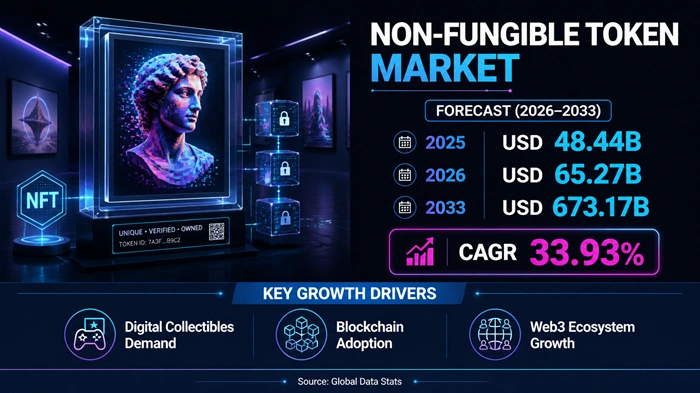
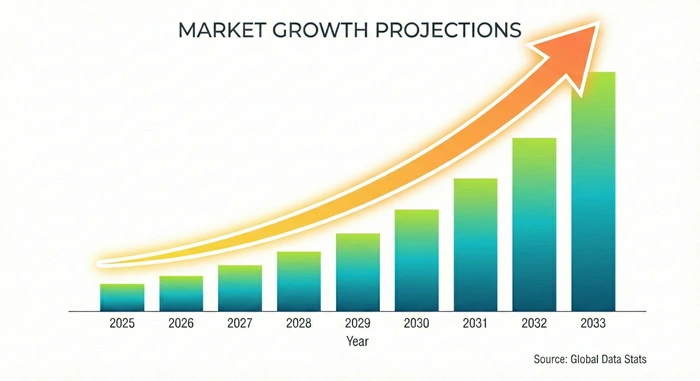
The global Non-Fungible Token market size is valued at USD 48.44 billion in 2025 and is predicted to increase from USD 65.27 billion in 2026 to approximately USD 673.17 billion by 2033, growing at a CAGR of 33.93% from 2026 to 2033.
Non-fungible tokens represent unique digital assets stored on blockchain networks that verify ownership and authenticity of specific items including digital art, music files, collectibles, gaming assets, and virtual real estate. Unlike cryptocurrencies such as Bitcoin or Ethereum which are interchangeable on a one-to-one basis, each NFT possesses distinct characteristics and cannot be replicated or exchanged equivalently, creating verifiable scarcity in the digital realm.
The Non-Fungible Token market has transformed how creators monetize digital content and how consumers establish ownership rights in virtual environments. Blockchain technology provides an immutable ledger that records every transaction and ownership transfer, ensuring transparency and preventing forgery across the ecosystem. Smart contracts embedded within NFTs automate critical processes including ownership transfers upon sales and royalty payments to original creators on subsequent resales, establishing sustainable income streams for artists without requiring intermediaries. The convergence of gaming, social media, brand engagement, and virtual experiences has propelled NFTs from niche cryptocurrency applications into mainstream digital commerce, attracting participation from individual collectors, major corporations, celebrities, and institutional investors seeking exposure to this emerging asset class.
AI Impact on the Non-Fungible Token Industry
Transforming Creative Production and Personalized User Experiences Through Intelligent Algorithms
Artificial intelligence has emerged as a transformative force within the Non-Fungible Token market, fundamentally reshaping how digital assets are created, marketed, and experienced by users worldwide. Intelligent algorithms now generate original artwork, music compositions, and digital collectibles autonomously, enabling both established artists and non-traditional creators to produce unique pieces that push creative boundaries beyond conventional limitations. Platforms such as Art Blocks and Alethea AI are pioneering this movement by offering generative and responsive NFTs capable of learning, adapting, and evolving over time based on environmental inputs or owner interactions. This dynamic capability transforms static digital assets into living artworks that respond to external stimuli, creating unprecedented value propositions for collectors seeking interactive experiences rather than passive ownership.
Machine learning and AI technologies optimize the marketing, curation, and discovery processes within NFT marketplaces by analyzing user preferences, behavioral patterns, and historical transaction data. Recommendation engines powered by intelligent algorithms help collectors navigate vast digital inventories by surfacing relevant assets aligned with individual tastes and investment strategies, significantly improving user experience and engagement metrics. AI-driven metadata optimization enhances how NFTs are tagged, categorized, and indexed across platforms, improving discoverability for both buyers and sellers within increasingly crowded marketplaces. Predictive analytics models analyze historical sales data and current market trends to provide valuation insights, helping participants make more informed purchasing and investment decisions. These AI integrations are simplifying the Non-Fungible Token market ecosystem while increasing its accessibility, usability, and scalability for mainstream adoption.
Growth Factors
Blockchain Security and Digital Ownership Revolution Drive Market Expansion
The Non-Fungible Token market is experiencing explosive growth driven by fundamental technological innovations and evolving consumer behaviors regarding digital ownership and asset authentication. Blockchain technology provides the foundational infrastructure ensuring transparency, security, and decentralization that makes NFTs tamper-proof and independently verifiable by any participant. This immutable ledger system tracks complete ownership histories and authenticates originality, eliminating forgery risks that plague traditional digital content distribution. Smart contracts automate critical functions including ownership transfers and royalty distributions, revolutionizing how creators earn sustainable income from their work by guaranteeing compensation on every subsequent sale without requiring intermediaries or manual enforcement. The technological framework has democratized creative monetization by enabling direct-to-consumer relationships that bypass traditional gatekeepers such as galleries, record labels, and publishing houses.
The concept of verifiable digital scarcity has fundamentally transformed how consumers perceive value in virtual environments. While digital files can be copied infinitely, NFTs provide unique tokenized certificates of ownership for original files, creating scarcity dynamics similar to physical collectibles or fine art. This psychological shift from viewing digital content as infinitely reproducible to recognizing scarce, ownable assets has driven unprecedented demand within the Non-Fungible Token market. High-profile sales including Beeple's artwork selling for USD 69 million have generated mainstream media attention and legitimized NFTs as viable investment vehicles. Celebrity and brand participation from figures like Snoop Dogg, Eminem, and companies including Adidas, Gucci, and Nike has amplified visibility and attracted massive fan bases into NFT ecosystems. The integration of NFTs within gaming through play-to-earn models enables players in developing nations to generate meaningful income streams, particularly in blockchain games like Axie Infinity where users breed, trade, and battle digital creatures for cryptocurrency rewards.
Market Outlook
Metaverse Integration and Enterprise Adoption Fuel Future Growth Trajectory
The Non-Fungible Token market outlook remains exceptionally positive as technological innovations converge with expanding use cases across diverse industries and virtual environments. The metaverse concept representing persistent virtual worlds where users socialize, work, and transact is fundamentally dependent on NFT infrastructure to establish asset ownership, enable cross-platform interoperability, and facilitate decentralized governance. Major technology companies including Meta, Microsoft, and Apple are investing billions in metaverse development, positioning NFTs as essential components for digital identity verification, virtual real estate ownership, and in-world commerce. Virtual economies within metaverse platforms are blurring distinctions between digital and physical financial systems, with some virtual real estate parcels selling for millions of dollars and generating rental income from virtual businesses.
Enterprise adoption is accelerating as brands recognize NFTs as powerful tools for customer engagement, loyalty programs, and innovative marketing campaigns. Companies including Starbucks, Coca-Cola, and Nike have launched NFT initiatives offering exclusive digital collectibles, membership benefits, and unique experiences to loyal customers while creating new revenue streams beyond traditional product sales. Luxury fashion brands are exploring NFTs for product authentication, supply chain traceability, and digital twins that accompany physical purchases, addressing counterfeiting concerns while enhancing customer experiences. The transparency and traceability provided by blockchain technology enable consumers to verify product authenticity and ethical sourcing, increasing trust and brand value. Regulatory frameworks are evolving globally as governments establish guidelines for digital asset classification, taxation, and consumer protection, providing institutional investors the clarity needed for substantial market participation. These converging trends position the Non-Fungible Token market for sustained expansion throughout the forecast period.
Expert Speaks
-
Satya Nadella, CEO of Microsoft stated in 2025 that "The convergence of blockchain, AI, and immersive technologies is creating new digital economies where NFTs serve as foundational infrastructure for ownership, identity, and commerce in virtual worlds, representing a fundamental shift in how we create and exchange value."
-
Tim Cook, CEO of Apple noted during a recent technology conference that "Digital ownership and authenticity verification through technologies like NFTs will play increasingly important roles as augmented reality and virtual experiences become mainstream, enabling creators to monetize their work directly while providing consumers unprecedented control over digital assets."
-
Brian Armstrong, CEO of Coinbase emphasized in early 2026 that "NFTs have evolved beyond speculative collectibles into utility-driven assets powering gaming economies, brand loyalty programs, and digital identity systems, demonstrating that blockchain-based ownership models are reshaping how individuals and enterprises interact with digital content."
Key Report Takeaways
-
North America dominates the Non-Fungible Token market with a commanding 32% revenue share in 2025, supported by advanced digital infrastructure, robust venture capital funding, widespread blockchain knowledge, and strong investor activity across established NFT platforms and marketplaces concentrated in the United States and Canada
-
Asia-Pacific emerges as the fastest-growing region with an exceptional CAGR exceeding 35% from 2026 to 2033, fueled by massive gaming populations, mobile-first economies, play-to-earn adoption in Southeast Asia, tech-savvy demographics, and aggressive Web3 innovation across China, Japan, South Korea, Singapore, and emerging markets
-
Digital assets segment maintains market leadership capturing approximately 73% of total revenue in 2024, driven by surging demand for digital art, music NFTs, gaming collectibles, and virtual real estate that benefit from easy creation, storage, and transfer capabilities supported by major platforms like OpenSea and Rarible
-
Gaming application demonstrates strongest growth potential accounting for 35-40% of market share with a projected CAGR of 25-28% through 2033, as play-to-earn models, blockchain gaming ecosystems, true asset ownership, and GameFi integration attract millions of users particularly across Asia-Pacific markets including South Korea, China, and Southeast Asia
-
Commercial end-user segment exhibits rapid expansion expected to grow at the fastest rate through 2033, as enterprises leverage NFTs for marketing campaigns, loyalty reward programs, ticketing solutions, IP protection, product authentication, and supply chain tracking, with major brands implementing Web3 strategies for customer engagement
-
Physical assets segment shows promising growth trajectory projected to expand at a CAGR of 12-15% from 2026 to 2033, driven by increasing institutional interest in tokenized real estate, luxury goods authentication, fine art ownership, and real-world applications in supply chain traceability and property rights verification
Market Scope
| Report Coverage | Details |
|---|---|
| Market Size by 2033 | USD 673.17 Billion |
| Market Size by 2025 | USD 48.44 Billion |
| Market Size by 2026 | USD 65.27 Billion |
| Market Growth Rate from 2026 to 2033 | CAGR of 33.93% |
| Dominating Region | North America |
| Fastest Growing Region | Asia-Pacific |
| Base Year | 2025 |
| Forecast Period | 2026 to 2033 |
| Segments Covered | Type, Application, End-User, Region |
| Regions Covered | North America, Europe, Asia-Pacific, Latin America, Middle East & Africa |
Market Dynamics
Driver Impact Analysis
Democratization of Creative Monetization and Play-to-Earn Gaming Revolution
| Impact Factor | Details |
|---|---|
| ≈ Impact on CAGR Forecast | +5.8% to +7.2% |
| Geographic Relevance | Global, with strongest impact in North America, Asia-Pacific, and Europe |
| Impact Timeline | 2026-2033 |
The Non-Fungible Token market is experiencing transformative growth as blockchain technology empowers creators to monetize their work directly without traditional intermediaries or gatekeepers. Digital artists who previously struggled to earn sustainable income from infinitely reproducible content now generate substantial revenue through NFT sales with guaranteed royalty payments on every subsequent transaction. This revolutionary shift has attracted talent from diverse creative disciplines including music, photography, 3D modeling, and digital animation, expanding the creator economy and fostering innovation across artistic mediums. Platforms such as Foundation, SuperRare, and Known Origin have democratized access to global collectors, enabling emerging artists to build international audiences and establish market value independent of gallery representation or institutional validation. The psychological impact of verified ownership has transformed consumer behavior, with collectors no longer simply acquiring digital files but obtaining unique blockchain-verified certificates that establish provenance and authenticity.
Play-to-earn gaming models represent another powerful driver reshaping the Non-Fungible Token market by enabling players to generate real income through blockchain-integrated games. Users in developing nations particularly Southeast Asia have embraced games like Axie Infinity where players breed, trade, and battle digital creatures represented as NFTs, earning cryptocurrency rewards that provide meaningful income streams. This economic model has fundamentally disrupted traditional gaming paradigms where in-game assets remain locked within proprietary ecosystems controlled by publishers. NFTs grant true ownership of virtual items that players can trade across marketplaces, use in multiple games supporting interoperability standards, or hold as appreciating investments. The integration of decentralized finance elements into gaming creates sophisticated economic systems where players stake assets, earn yield, and participate in governance decisions that shape game development. Celebrity and brand participation from companies like Nike, Adidas, and Gucci legitimizes NFTs for mainstream audiences while generating media attention that drives adoption beyond cryptocurrency enthusiasts.
Restraints Impact Analysis
Extreme Market Volatility and Regulatory Uncertainty
| Impact Factor | Details |
|---|---|
| ≈ Impact on CAGR Forecast | -3.2% to -4.8% |
| Geographic Relevance | Global, particularly impactful in markets with unclear regulations |
| Impact Timeline | 2026-2030 |
The Non-Fungible Token market faces significant challenges from extreme volatility and speculative behavior that undermines long-term value stability. Unlike traditional assets with fundamental valuation metrics, NFT prices fluctuate dramatically based on perceived scarcity, social media hype, celebrity endorsements, and market sentiment rather than intrinsic utility. This speculative nature creates boom-and-bust cycles where asset prices surge to astronomical levels overnight before plummeting equally quickly, leaving investors holding worthless tokens. The perception that NFTs represent gambling rather than legitimate investment vehicles deters risk-averse participants and institutional capital that could provide market stabilization. High-profile project failures and "rug pulls" where creators abandon projects after collecting funds have damaged ecosystem reputation and eroded trust among potential participants.
Regulatory uncertainty represents another critical restraint limiting Non-Fungible Token market expansion as governments worldwide struggle to classify digital assets and establish appropriate oversight frameworks. Ambiguity regarding whether NFTs constitute securities, collectibles, or digital property creates compliance challenges for platforms, creators, and investors navigating divergent jurisdictions. This legal gray area raises complex questions about intellectual property rights, as NFT purchases typically do not transfer copyright ownership of underlying assets to buyers. The lack of defined regulations makes the market vulnerable to money laundering, tax evasion, and fraud, deterring mainstream financial institutions from providing services to NFT-related businesses. Scalability issues and high transaction fees on blockchain networks particularly Ethereum during peak demand periods create economic barriers that make small transactions unfeasible. Although Layer 2 solutions and alternative blockchains offer faster, cheaper alternatives, cross-chain interoperability challenges and fragmented adoption limit their effectiveness. Environmental concerns regarding energy consumption associated with blockchain operations continue generating criticism despite Ethereum's transition to more efficient consensus mechanisms.
Opportunities Impact Analysis
Metaverse Expansion and Enterprise Loyalty Integration
| Impact Factor | Details |
|---|---|
| ≈ Impact on CAGR Forecast | +4.5% to +6.3% |
| Geographic Relevance | Strong opportunities in North America, Asia-Pacific, and Middle East |
| Impact Timeline | 2026-2033 |
The Non-Fungible Token market presents exceptional growth opportunities through accelerating metaverse development that depends fundamentally on NFT infrastructure for asset ownership, identity verification, and economic transactions. Virtual worlds including The Sandbox and Decentraland already host millions of NFT asset holders who purchase virtual land, build digital businesses, and participate in decentralized economies that generate real financial value. The integration of NFTs within metaverse platforms enables true cross-platform interoperability where users seamlessly move digital assets between different virtual environments, creating unified digital identities and persistent value across fragmented ecosystems. Major technology companies investing billions in augmented reality and virtual reality technologies require NFT frameworks to facilitate commerce, establish property rights, and enable peer-to-peer transactions within immersive experiences. The distinction between digital and physical economies continues blurring as virtual real estate generates rental income, digital fashion items carry social status, and virtual businesses operate with economic models mirroring physical counterparts.
Enterprise adoption for brand engagement and customer loyalty programs represents another transformative opportunity reshaping the Non-Fungible Token market landscape. Major brands including Starbucks, Nike, and Coca-Cola are implementing NFT-based loyalty programs that reward customers with exclusive digital collectibles, special experiences, and community membership benefits that deepen emotional connections. These blockchain-verified assets provide transparency and traceability that traditional loyalty points lack, while enabling secondary market trading that creates economic value for participants. Luxury brands leverage NFTs for product authentication and supply chain management, addressing counterfeiting concerns while providing consumers verifiable proof of authenticity and ethical sourcing. The ticketing industry is adopting NFTs to combat fraud, eliminate scalping, and create interactive memorabilia that appreciates post-event, transforming disposable paper tickets into collectible assets with enduring value. NFT integration within identity verification, educational credentials, healthcare records, and sustainability initiatives presents specialized growth opportunities as blockchain-based verification gains regulatory acceptance across professional sectors.
Segment Analysis
By Type: Digital Assets Segment
Creative Content and Virtual Experiences Dominate Market Revenue
The digital assets segment dominates the Non-Fungible Token market with commanding 73% revenue share in 2024, projected to maintain leadership throughout the forecast period with sustained double-digit CAGR exceeding 33% from 2026 to 2033. Digital NFTs encompassing artwork, music, gaming collectibles, and virtual real estate benefit from ease of creation, storage, and transfer that makes them accessible to both creators and collectors worldwide. Blockchain technology enables immediate ownership verification that fosters transparency and trust while eliminating geographical barriers that constrain physical asset markets. Major platforms including OpenSea, Rarible, Foundation, and SuperRare have established robust ecosystems supporting digital asset minting, trading, and curation, processing billions in transaction volume annually. The segment benefits from continuous innovation including dynamic NFTs that evolve over time, generative art produced by algorithms, and interactive experiences that respond to owner inputs or environmental conditions.
North America leads digital asset adoption within the Non-Fungible Token market, driven by strong consumer demand, favorable investment activity, and concentration of established NFT marketplaces and technology infrastructure. Asia-Pacific particularly countries including South Korea, Japan, and Singapore is experiencing exponential growth fueled by gaming ecosystems, government-led blockchain initiatives, and cultural affinity for digital collectibles. Leading companies within the digital assets segment including Dapper Labs creator of NBA Top Shot and CryptoKitties, Yuga Labs behind Bored Ape Yacht Club, and Art Blocks specializing in generative art have achieved billion-dollar valuations. The media and entertainment industries rely heavily on digital NFTs to create immersive fan experiences and drive customer engagement, with musicians selling exclusive tracks, albums, and concert experiences directly to supporters. The segment is projected to capture well over 70% of global NFT revenue through 2033 as digital-native generations increasingly value virtual ownership and online social status.
By Application: Gaming Segment
Play-to-Earn Models and True Asset Ownership Transform Industry Economics
The gaming segment has emerged as the dominant application within the Non-Fungible Token market, accounting for approximately 35-40% of total market share with projected CAGR of 25-28% from 2026 to 2033. Blockchain-integrated games enable play-to-earn models where players generate real income through gameplay, fundamentally disrupting traditional gaming economics where publishers capture all monetary value. Users in developing nations particularly Southeast Asia have embraced gaming NFTs as meaningful income sources, with some players earning more from blockchain games than local employment opportunities. NFTs grant true ownership of in-game assets including characters, weapons, skins, and virtual land that players can trade freely across marketplaces, use in multiple games supporting interoperability standards, or hold as appreciating investments. This represents a revolutionary shift from traditional gaming models where items remain locked within proprietary ecosystems controlled by publishers who can modify or delete content arbitrarily.
Asia-Pacific leads gaming NFT adoption within the Non-Fungible Token market, with South Korea, China, and Southeast Asian countries fueling high transaction volumes in blockchain gaming platforms. North America and Europe follow closely with robust venture capital investment in gaming studios developing play-to-earn titles and GameFi platforms. Industry trends including gamification of finance, integration of artificial intelligence for dynamic in-game NFT behaviors, and blockchain infrastructure improvements are reinforcing the segment's leadership position. Leading platforms including Axie Infinity, The Sandbox, Decentraland, and Immutable X process millions of gaming NFT transactions generating billions in revenue annually. Game developers, publishers, eSports organizations, and virtual item marketplaces represent key ecosystem participants driving innovation and market expansion. The segment benefits from strong community engagement, continuous content updates, and economic incentives that sustain player participation and attraction of mainstream gaming audiences.
Regional Insights
North America
Technology Infrastructure and Investment Capital Drive Regional Leadership
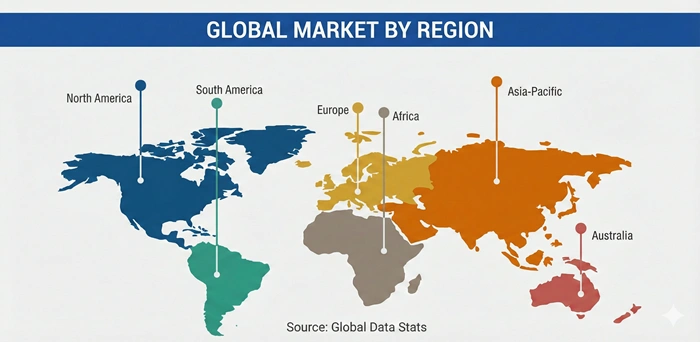
North America maintains its position as the dominant region in the Non-Fungible Token market, capturing approximately 32% of global revenue in 2025 with projected CAGR of 34.82% from 2026 to 2033. The United States represents the largest national market valued at USD 12.95 billion in 2025 and expected to reach USD 190.90 billion by 2034, driven by early technology adoption, sophisticated digital infrastructure, and robust investor participation across established platforms. American consumers demonstrate strong willingness to experiment with emerging technologies and allocate investment capital to speculative assets, creating favorable conditions for NFT marketplace growth. The concentration of prominent platforms including OpenSea, Blur, Dapper Labs, Coinbase NFT, and Gemini provides seamless user experiences for minting, buying, and selling digital assets. High-profile sales, celebrity participation, and mainstream media coverage have legitimized NFTs for broader audiences beyond cryptocurrency enthusiasts.
Corporate adoption is accelerating across North America as brands leverage NFTs for customer engagement, loyalty programs, marketing campaigns, and intellectual property monetization. Companies including Nike, Coca-Cola, Starbucks, and major sports leagues have launched NFT initiatives offering exclusive collectibles and membership benefits to loyal customers. The region benefits from substantial venture capital funding supporting NFT startups, infrastructure development, and innovative applications across gaming, art, music, and virtual real estate sectors. Leading technology companies including Meta, Microsoft, and Apple are investing billions in metaverse development with NFTs serving as foundational components for digital commerce and ownership. Strong legal frameworks and regulatory clarity compared to other regions provide institutional investors confidence to allocate capital toward NFT-related investments. Canada contributes meaningfully to regional growth with thriving blockchain communities and government support for digital innovation. The North American Non-Fungible Token market continues establishing global best practices and technological standards that influence worldwide adoption patterns.
Asia-Pacific
Gaming Dominance and Mobile-First Adoption Fuel Exceptional Regional Growth
The Asia-Pacific region emerges as the fastest-growing segment of the global Non-Fungible Token market, projected to expand at an exceptional CAGR exceeding 35% from 2026 to 2033, driven by massive gaming populations, mobile-first digital economies, and aggressive Web3 innovation. The region's tech-savvy demographics demonstrate high cryptocurrency adoption rates that serve as primary catalysts for NFT market growth, with numerous local marketplaces and blockchain projects launching to serve regional preferences. Gaming and entertainment sectors dominate regional adoption, with play-to-earn models achieving immense success particularly in Southeast Asia where players generate meaningful income from blockchain games like Axie Infinity. Cultural affinity for anime, K-pop, and digital collectibles translates into strong demand for NFTs representing beloved characters, music, and entertainment properties.
Regulatory landscapes vary significantly across Asia-Pacific, with countries including Japan and Singapore establishing comprehensive digital asset frameworks actively promoting Web3 development, while others maintain restrictive policies or ambiguous regulations. China despite cryptocurrency trading restrictions has shown growing interest in government-sanctioned NFT projects and blockchain applications for official purposes. Corporate and government initiatives are proliferating as startups and established technology companies expand into NFT applications, with some governments experimenting with NFT-based documentation and identity systems. The United Arab Emirates has positioned itself as a regional hub through favorable regulations and initiatives including NFT stamp issuances. Leading global companies including Dapper Labs, Animoca Brands, Immutable, and OpenSea have established substantial Asia-Pacific operations to capture market opportunities. The region's improving internet connectivity, expanding middle class, and government support through favorable policies and digital infrastructure investment create exceptionally conducive environments for sustained Non-Fungible Token market expansion.
Top Key Players
-
Dapper Labs Inc. (Canada)
-
OpenSea (United States)
-
Rarible (United States)
-
SuperRare (United States)
-
Foundation (United States)
-
YellowHeart LLC (United States)
-
Cloudflare Inc. (United States)
-
PLBY Group Inc. (United States)
-
Dolphin Entertainment Inc. (United States)
-
Funko (United States)
-
Ozone Networks Inc. (United States)
-
Takung Art Co. Ltd. (China)
-
Gemini Trust Company LLC (United States)
-
Onchain Labs Inc. (United States)
-
Yuga Labs (United States)
-
Animoca Brands (Hong Kong)
-
Magic Eden (United States)
-
Immutable (Australia)
-
Sorare (France)
-
NBA Top Shot (Canada)
Recent Developments
-
Nike acquired RTFKT Studios in December 2021 and successfully launched multiple NFT collections including Crypto Kicks digital sneakers and CloneX avatars with customizable digital wearables, establishing the athletic brand as a pioneer in digital fashion and solidifying its presence in the metaverse economy
-
Meta introduced NFT display features on Instagram and Facebook in May 2022, allowing users in over 100 countries to connect digital wallets and showcase NFTs on social media profiles, marking a major milestone in normalizing NFTs for mainstream audiences and bringing blockchain-based digital ownership into everyday social platforms
-
Starbucks launched its Odyssey Web3 loyalty program in 2023, integrating NFT-based rewards that provide customers with exclusive digital collectibles, special experiences, and community membership benefits, demonstrating how established brands leverage blockchain technology to enhance customer engagement and create new value propositions
-
MetaWin successfully launched its MetaWinners NFT collection in December 2024, which sold out within hours, combining exquisite digital art with unique attributes that enhance gameplay experiences, resonating strongly with gamers and NFT enthusiasts while showcasing the continuing demand for utility-driven digital assets
-
nWay launched Paris 2024 Mascot NFT digital pins in July 2024 in collaboration with the International Olympic Committee to celebrate the Olympic Games Paris 2024, bringing unique digital collectibles to fans worldwide and enhancing engagement with global sporting events through innovative blockchain technology applications
Market Trends
Cross-Platform Interoperability and Utility-Driven Assets Reshape Ecosystem
The Non-Fungible Token market is experiencing fundamental transformation toward utility-driven assets that provide tangible benefits beyond speculative value. Projects increasingly focus on delivering real-world applications including access to exclusive communities, voting rights in decentralized autonomous organizations, unlocking physical products or experiences, and serving as keys to gated digital content. This shift addresses criticisms that NFTs lack intrinsic value by tying digital ownership to meaningful benefits that justify market prices. Brands are exploring phygital NFTs that bridge physical and digital realms, with luxury goods manufacturers pairing tangible products with companion NFTs that verify authenticity, provide ownership history, and unlock exclusive digital experiences. Ticketing applications are gaining traction as NFTs combat fraud, eliminate scalping through smart contract controls, and transform disposable admission passes into collectible memorabilia that appreciates post-event.
Cross-platform interoperability is emerging as a critical trend reshaping how NFTs function within broader digital ecosystems. Standards including ERC-6551 enable NFTs to own other assets, creating nested ownership structures and portfolio management capabilities previously impossible. Layer 2 scaling solutions and alternative blockchain networks are addressing Ethereum's historical limitations of high gas fees and slow transaction processing, with platforms like Polygon, Arbitrum, and Immutable X offering near-instantaneous transfers at minimal cost. Cross-chain bridging technologies from LayerZero and Axelar facilitate multi-chain deployments that allow NFTs to migrate between different blockchain networks, expanding market liquidity and user accessibility. The integration of dynamic NFTs with updatable metadata enables applications in education where digital diplomas reflect continuing credentials, healthcare where medical records update in real-time, and supply chain management where tokenized products track journeys from manufacture to end consumer. These technological advancements continue expanding addressable markets while attracting mainstream adoption across diverse industries and demographics.
Segments Covered in the Report
By Type
-
Digital Assets
-
Digital Art
-
Music NFTs
-
Gaming Collectibles
-
Virtual Real Estate
-
Domain Names
-
Digital Trading Cards
-
-
Physical Assets
-
Real Estate
-
Luxury Goods
-
Fine Art
-
Collectible Items
-
By Application
-
Art
-
Pixel Art
-
Fractal/Algorithmic Art
-
Computer Generated Painting
-
2D/3D Painting
-
2D/3D Computer Graphics
-
GIFs
-
-
Collectibles
-
Gaming
-
Trading Card Games
-
Video Games
-
Strategy Role Playing Games
-
In-Game Assets
-
-
Utilities
-
Tickets
-
Domain Names
-
Asset Ownership
-
Membership Access
-
-
Metaverse
-
Virtual Land
-
Digital Wearables
-
Virtual Buildings
-
-
Sports
-
Athlete Tokens
-
Highlight Clips
-
Fan Engagement Assets
-
-
Others
By End-User
-
Personal
-
Individual Collectors
-
Investors
-
Content Creators
-
-
Commercial
-
Enterprises
-
Brands
-
Gaming Companies
-
Entertainment Industry
-
By Region
-
North America
-
United States
-
Canada
-
Mexico
-
-
Europe
-
Germany
-
United Kingdom
-
France
-
Italy
-
Spain
-
Rest of Europe
-
-
Asia-Pacific
-
China
-
Japan
-
India
-
South Korea
-
Singapore
-
Australia
-
Southeast Asia
-
Rest of Asia-Pacific
-
-
Latin America
-
Brazil
-
Argentina
-
Rest of Latin America
-
-
Middle East & Africa
-
UAE
-
Saudi Arabia
-
South Africa
-
Rest of MEA
-
Frequently Asked Questions
Question 1: What is the projected Non-Fungible Token market size by 2033?
Answer: The global Non-Fungible Token market is projected to reach USD 673.17 billion by 2033, growing from USD 65.27 billion in 2026. The market is expanding at a CAGR of 33.93% during the 2026-2033 forecast period driven by gaming adoption, metaverse integration, and digital ownership trends.
Question 2: Which region dominates the Non-Fungible Token market currently?
Answer: North America dominates the Non-Fungible Token market with approximately 32% revenue share in 2025, supported by advanced infrastructure and early adoption. However, Asia-Pacific is the fastest-growing region with a CAGR exceeding 35% from 2026 to 2033.
Question 3: What are the key applications driving Non-Fungible Token market growth?
Answer: Gaming applications lead the Non-Fungible Token market with 35-40% market share, driven by play-to-earn models and true asset ownership. Art, collectibles, and metaverse applications are other critical segments driving enterprise and consumer adoption worldwide.
Question 4: How is blockchain technology impacting the Non-Fungible Token market?
Answer: Blockchain technology provides the foundation for the Non-Fungible Token market by ensuring transparency, security, and verifiable ownership through immutable ledgers. Smart contracts automate ownership transfers and royalty payments, revolutionizing creator monetization and asset authentication.
Question 5: Which segment is growing fastest in the Non-Fungible Token market?
Answer: The commercial end-user segment is experiencing the fastest growth in the Non-Fungible Token market, driven by enterprises leveraging NFTs for loyalty programs, marketing, and brand engagement. Gaming applications also demonstrate exceptional growth with 25-28% CAGR through 2033.