
Narcolepsy Therapeutics Market Overview
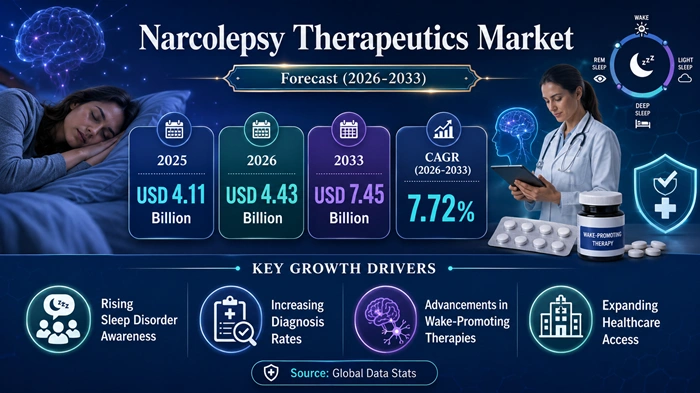
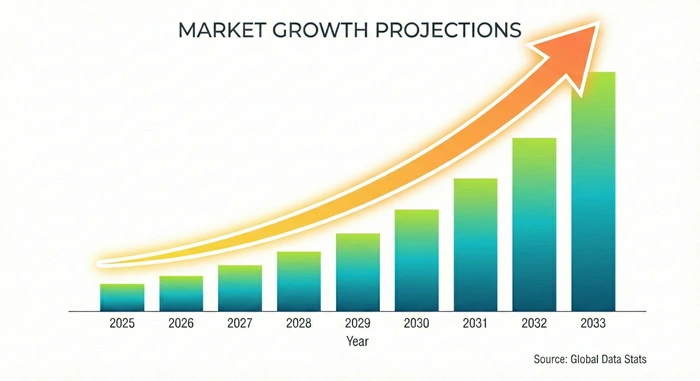
The global narcolepsy therapeutics market size is valued at USD 4.11 billion in 2025 and is predicted to increase from USD 4.43 billion in 2026 to approximately USD 7.45 billion by 2033, growing at a CAGR of 7.72% from 2026 to 2033.
This steady growth reflects improving diagnostic accuracy, greater physician and patient awareness of this often-misunderstood neurological sleep disorder, and continued pharmaceutical innovation moving beyond traditional stimulants toward novel oxybate formulations and orexin receptor agonists. As more patients gain access to sleep specialists and newer treatment options reach the market, demand for effective narcolepsy therapeutics continues expanding across developed and increasingly emerging healthcare markets.
AI Impact on the Narcolepsy Therapeutics Industry
Artificial Intelligence Is Improving Sleep Disorder Diagnosis, Accelerating Drug Discovery for Orexin Pathways, and Strengthening Patient Monitoring Across the Narcolepsy Therapeutics Landscape — Fundamentally Changing How Clinicians Detect and Manage This Chronic Condition
Artificial intelligence has become an increasingly valuable diagnostic tool in sleep medicine, with machine learning models now capable of analyzing polysomnography and multiple sleep latency test data to identify narcolepsy-specific sleep patterns with greater consistency than manual scoring, helping reduce the diagnostic delays that have historically affected patients for years before receiving an accurate diagnosis. This diagnostic improvement matters considerably given that narcolepsy is frequently misdiagnosed as depression or other sleep disorders, and AI-assisted sleep pattern analysis is helping close this diagnostic gap by flagging characteristic REM sleep abnormalities more reliably. Companies building AI-driven sleep study analysis directly into clinical workflows are increasingly differentiating themselves through faster, more accurate patient identification.
Beyond diagnostics, AI is also accelerating drug discovery efforts targeting the orexin signaling pathway, with computational models now able to screen candidate molecules and predict their binding affinity to orexin receptors, considerably shortening early-stage research timelines for next-generation narcolepsy treatments. This capability has proven valuable for pharmaceutical researchers developing orexin receptor agonists, since better molecular screening reduces the number of candidates requiring expensive laboratory validation. As these AI-driven diagnostic and drug discovery tools continue maturing, they are becoming an increasingly important factor shaping innovation across the broader narcolepsy therapeutics market.
Growth Factors
Rising Diagnostic Awareness and Growing Pipeline of Novel Oxybate Formulations Continue Driving Sustained Demand
The most significant growth factor supporting the narcolepsy therapeutics market is the steadily improving awareness of narcolepsy symptoms among both primary care physicians and the general public, driven substantially by patient advocacy organizations working to reduce the years-long diagnostic delays that have historically plagued this condition. As sleep clinics expand and physicians receive better training to recognize symptoms like excessive daytime sleepiness and cataplexy, more patients are being identified and started on appropriate therapy earlier in their disease course.
A second important growth factor is the continued pharmaceutical innovation in oxybate-based formulations and non-sedative alternatives, as companies develop once-nightly dosing options and novel mechanisms like pitolisant that offer improved tolerability compared to older stimulant-based treatments. This growing therapeutic diversity, combined with expanding insurance coverage for these often expensive specialty medications, has broadened the addressable patient base for narcolepsy therapeutics considerably. This combination of rising diagnostic awareness and expanding treatment innovation continues to strengthen demand across the narcolepsy therapeutics market.
Market Outlook
Orexin Receptor Agonist Development and Expanding Sleep Specialist Access Point Toward Sustained Growth Through 2033
Looking ahead through the forecast period, the narcolepsy therapeutics industry is expected to benefit substantially from continued clinical advancement of orexin receptor agonists, an emerging drug class that directly addresses the underlying neurochemical deficiency responsible for narcolepsy rather than simply managing symptoms through stimulant effects. This mechanism-based approach is likely to reshape the competitive treatment landscape considerably as these therapies progress through late-stage trials and toward potential regulatory approval.
At the same time, expanding access to sleep specialists and diagnostic testing infrastructure, particularly across underserved regions, is expected to create substantial new demand as more patients receive timely and accurate diagnosis. Companies that can deliver both clinically differentiated therapies and strong patient support programs are increasingly well positioned to capture this growth. Manufacturers combining strong pipeline innovation with deep physician education efforts are likely to lead growth within the broader narcolepsy therapeutics market through 2033.
Expert Speaks
-
"Our continued investment in oxybate innovation reflects our deep commitment to giving narcolepsy patients treatment options that genuinely improve their daily quality of life." — CEO, Jazz Pharmaceuticals plc
-
"As orexin science continues advancing, our pipeline remains focused on addressing the root cause of narcolepsy rather than just managing its symptoms." — CEO, Takeda Pharmaceutical Company Limited
-
"We remain dedicated to expanding physician education so more patients receive an accurate narcolepsy diagnosis earlier in their disease journey." — CEO, Harmony Biosciences Holdings Inc
Key Report Takeaways
-
North America leads the global narcolepsy therapeutics market, holding approximately 48% market share in 2025, supported by strong sleep specialist infrastructure and early access to novel therapies
-
Asia Pacific is the fastest-growing region, projected to expand at a CAGR near 9.6% through 2033, driven by improving diagnostic infrastructure and rising awareness across China and Japan
-
Narcolepsy type 1 patients represent the dominant patient segment, accounting for roughly 63% share, given the more pronounced symptom burden requiring consistent pharmacological management
-
Oxybate-based drug applications contribute the most to overall demand, reflecting their established efficacy for both cataplexy and excessive daytime sleepiness
-
Retail pharmacies remain the most widely used distribution channel, valued for their accessibility for long-term specialty medication refills
-
Orexin receptor agonist segments will grow the fastest among drug class categories, holding close to 15% market share with a CAGR near 13.8% through the forecast period, driven by rising interest in mechanism-targeted therapy
Market Scope
| Report Coverage | Details |
|---|---|
| Market Size by 2033 | USD 7.45 Billion |
| Market Size by 2025 | USD 4.11 Billion |
| Market Size by 2026 | USD 4.43 Billion |
| Market Growth Rate from 2026 to 2033 | CAGR of 7.72% |
| Dominating Region | North America |
| Fastest Growing Region | Asia Pacific |
| Base Year | 2025 |
| Forecast Period | 2026 to 2033 |
| Segments Covered | Drug Class, Disease Type, Distribution Channel, Region |
| Regions Covered | North America, Europe, Asia Pacific, Latin America, Middle East & Africa |
Market Dynamics
Drivers Impact Analysis
Rising Diagnostic Awareness and Growing Pharmaceutical Innovation Remain the Two Strongest Forces Behind Market Momentum
| Driver | (≈) % Impact on CAGR Forecast | Geographic Relevance | Impact Timeline |
|---|---|---|---|
| Improving physician awareness reducing years-long diagnostic delays | ~34% | Global, strongest in North America, Europe | Short to long-term |
| Continued innovation in oxybate formulations and non-stimulant therapies | ~29% | North America, Europe | Medium to long-term |
| Expanding insurance coverage for specialty narcolepsy medications | ~23% | North America, Europe | Short to medium-term |
| Growing sleep clinic infrastructure across emerging healthcare markets | ~14% | Asia Pacific, Latin America | Medium-term |
Improving physician awareness continues to serve as the primary engine behind sustained growth in the narcolepsy therapeutics market, as reduced diagnostic delays mean more patients are identified and started on appropriate therapy earlier in their disease course. This growing diagnostic capability has translated directly into rising treatment initiation rates across major healthcare markets with established sleep medicine infrastructure.
Continued pharmaceutical innovation in oxybate formulations represents the second major driver, as companies develop once-nightly dosing options and novel mechanisms that improve tolerability and adherence compared to older stimulant-based treatments. This innovation-driven demand, combined with expanding insurance coverage, continues reinforcing steady demand growth across the broader narcolepsy therapeutics market.
Restraints Impact Analysis
High Treatment Costs and Persistent Diagnostic Delays Continue to Moderate Broader Adoption
| Restraint | (≈) % Impact on CAGR Forecast | Geographic Relevance | Impact Timeline |
|---|---|---|---|
| High cost of branded oxybate and orexin-targeted therapies | ~35% | Global, particularly emerging markets | Short to medium-term |
| Persistent misdiagnosis and delayed recognition of narcolepsy symptoms | ~29% | Global | Medium to long-term |
| Reimbursement hurdles including prior authorization and step therapy requirements | ~22% | North America | Short to medium-term |
| Limited number of specialized sleep medicine centers in developing regions | ~14% | Emerging markets | Medium-term |
The most persistent restraint facing the narcolepsy therapeutics market is the high cost associated with branded oxybate and newer orexin-targeted therapies, which can create significant financial barriers for patients even in markets with relatively strong insurance infrastructure. This cost sensitivity remains particularly acute in emerging markets where out-of-pocket spending represents a larger share of healthcare costs.
Persistent misdiagnosis and delayed symptom recognition represent a second significant restraint, since narcolepsy is frequently mistaken for depression, epilepsy, or other sleep disorders, often delaying appropriate treatment by years after symptom onset. Combined with reimbursement hurdles including prior authorization requirements, these restraints continue moderating how quickly broader treatment adoption spreads across the global narcolepsy therapeutics market.
Opportunities Impact Analysis
Orexin Receptor Agonist Advancement and Expanding Diagnostic Infrastructure Represent the Clearest Paths to Growth
| Opportunity | (≈) % Impact on CAGR Forecast | Geographic Relevance | Impact Timeline |
|---|---|---|---|
| Advancing orexin receptor agonist therapies targeting underlying disease mechanism | ~38% | North America, Europe | Short to medium-term |
| Expanding sleep specialist and diagnostic infrastructure across Asia Pacific | ~33% | Asia Pacific | Medium to long-term |
| Growing patient advocacy driving earlier diagnosis and treatment initiation | ~29% | Global | Medium-term |
Advancing orexin receptor agonist therapies represents one of the most substantial opportunities within the narcolepsy therapeutics market, as companies developing treatments that directly address the underlying neurochemical deficiency stand to capture significant share from patients seeking more targeted symptom control. This mechanism-based innovation is expected to meaningfully reshape competitive positioning among leading narcolepsy drug developers over the coming years.
Expanding sleep specialist and diagnostic infrastructure across Asia Pacific presents a second substantial opportunity, as countries like China and Japan continue investing in sleep medicine training and diagnostic capacity to better serve growing patient populations. Growing patient advocacy efforts further broaden the opportunity landscape, particularly as awareness campaigns help reduce the stigma and misdiagnosis that have historically delayed treatment. Companies pursuing these parallel opportunities are well positioned to capture meaningful growth within the broader narcolepsy therapeutics market through the forecast period.
Segment Analysis
By Drug Class: Oxybates
Oxybate-Based Therapies Continue to Anchor the Treatment Landscape, Reflecting Their Established Efficacy Across Core Symptoms
Oxybate-based therapies hold the largest share within the drug class segment of the narcolepsy therapeutics market, accounting for approximately 54% of total segment revenue in 2025. This dominance reflects the long-established clinical use of sodium oxybate formulations, which remain among the few treatments effectively addressing both cataplexy and excessive daytime sleepiness simultaneously, making them a cornerstone therapy for patients with more severe symptom burden. In markets like the United States and the United Kingdom, physicians increasingly favor once-nightly oxybate formulations that improve patient adherence compared to older twice-nightly dosing regimens. Leading suppliers such as Jazz Pharmaceuticals, Avadel Pharmaceuticals, and Takeda Pharmaceutical continue to dominate this segment through continuous formulation improvements and expanded patient support programs.
Growth within this segment remains particularly strong in North America, where strong sleep specialist infrastructure and comprehensive insurance coverage continue driving broad patient access to both branded and increasingly available generic oxybate options. The region's combination of established prescribing patterns and deep clinical trial infrastructure has helped oxybate therapies maintain their leading position despite growing enthusiasm for emerging orexin-targeted alternatives. As formulation innovation continues improving convenience and tolerability, oxybate-based drugs are expected to remain the dominant category within the broader narcolepsy therapeutics market throughout the forecast period.
By Drug Class: Orexin Receptor Agonists
Orexin Receptor Agonists Represent the Fastest-Growing Drug Category, Reflecting Rising Interest in Mechanism-Targeted Treatment
Orexin receptor agonists represent the fastest-growing drug class within the narcolepsy therapeutics market, holding close to 15% share in 2025 with a projected CAGR near 13.8% through the forecast period as clinical development of this novel mechanism continues advancing toward broader patient access. Unlike traditional stimulants and oxybates that manage symptoms indirectly, orexin receptor agonists work by directly compensating for the orexin neuropeptide deficiency that underlies narcolepsy, offering the potential for more physiologically targeted symptom control. This mechanism-based approach has generated substantial physician and patient interest, particularly given encouraging clinical trial results demonstrating meaningful improvement in both wakefulness and cataplexy control.
Growth in this segment remains especially strong in North America, where leading pharmaceutical companies continue advancing late-stage clinical trials and preparing for potential regulatory approval at academic sleep medicine centers. Companies like Takeda Pharmaceutical and Alkermes have expanded their orexin-focused pipeline investment significantly to serve this growing clinical interest, often collaborating closely with sleep specialist networks to support trial enrollment. As orexin receptor agonist candidates continue progressing through the regulatory pathway, this drug class is expected to remain the fastest-growing category within the broader narcolepsy therapeutics market.
Regional Insights
North America
Strong Sleep Specialist Infrastructure and Early Therapy Access Keep North America Firmly in the Lead
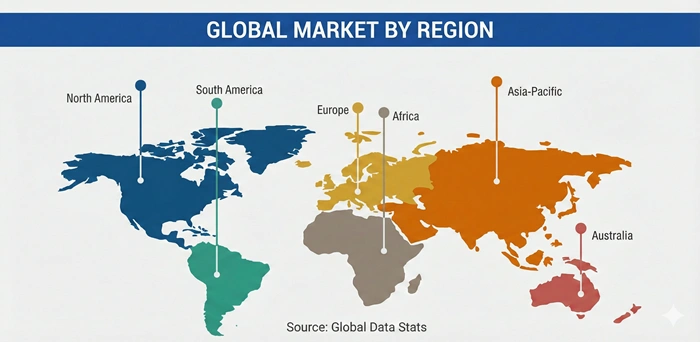
North America commands the leading position in the global narcolepsy therapeutics market, holding approximately 48% share in 2025, supported by strong sleep specialist infrastructure, comprehensive insurance coverage, and early regulatory approval of novel narcolepsy treatments. The United States drives the overwhelming majority of regional demand, backed by a dense concentration of leading pharmaceutical companies and well-established sleep medicine specialist networks. Companies with strong regional presence include Jazz Pharmaceuticals, Harmony Biosciences, Avadel Pharmaceuticals, and Takeda Pharmaceutical, each maintaining deep relationships with sleep clinics and patient advocacy organizations across the country.
Canada also contributes meaningfully to regional demand, supported by growing sleep medicine specialist availability and expanding diagnostic testing access for suspected narcolepsy patients. The region's combination of strong reimbursement support, deep clinical infrastructure, and continuous therapy innovation ensures North America's leadership position within the narcolepsy therapeutics market remains firmly intact through the remainder of the forecast period.
Asia Pacific
Improving Diagnostic Infrastructure and Rising Awareness Position Asia Pacific as the Fastest-Growing Region
Asia Pacific is projected to register the fastest CAGR within the global narcolepsy therapeutics market through 2033, expanding at a rate near 9.6% as improving diagnostic infrastructure and rising public awareness create substantial new demand across the region. China and Japan lead much of this regional growth, supported by expanding sleep medicine training programs and growing government attention toward sleep disorder diagnosis and management. Regional and international pharmaceutical companies alike have expanded their presence to serve this growing patient population, often partnering with local sleep clinics to improve diagnostic accuracy.
South Korea and Australia contribute further depth to regional growth, both bringing expanding healthcare infrastructure that increasingly incorporates dedicated sleep medicine specialties into mainstream clinical practice. Growing awareness campaigns across several Asia Pacific countries continue to accelerate diagnosis rates among historically underdiagnosed patient populations alike. This combination of rising diagnostic capacity, growing awareness, and expanding specialist access positions Asia Pacific as the clear growth leader within the broader narcolepsy therapeutics market through the forecast period.
Customization Available for This Report
Region-Specific and Country-Specific Versions of This Report Are Available to Deliver a Sharper, More Localized View of Market Dynamics
This report can be tailored on a region-by-region and country-by-country basis, providing localized market sizing, competitive mapping, and treatment adoption trend analysis that a global overview alone cannot fully capture.
Clients seeking a more focused breakdown can request a customized version covering any of the following regions and countries, complete with demand forecasting, competitor landscape review, and adoption trend analysis tied specifically to the narcolepsy therapeutics keyword focus:
North America
-
U.S. — Detailed review of sleep specialist access and reimbursement trends
-
Canada — Coverage of diagnostic testing access and specialist availability
-
Mexico — Analysis of emerging sleep medicine infrastructure trends
Europe
-
U.K. — Review of narcolepsy drug regulation and treatment access trends
-
Germany — Coverage of clinical investment among leading pharmaceutical manufacturers
-
France — Insights into oxybate and non-stimulant therapy adoption patterns
-
Italy — Analysis of regional narcolepsy treatment investment trends
-
Rest of Europe — Country-level view of emerging demand across Eastern Europe and the Nordics
Asia Pacific
-
China — Coverage of expanding sleep medicine training and diagnostic adoption
-
India — Analysis of growing diagnostic awareness and treatment access
-
Japan — Review of established sleep disorder healthcare infrastructure trends
-
South Korea — Assessment of narcolepsy treatment investment and adoption
-
Australia — Insights into sleep specialist access and adoption trends
-
Rest of Asia Pacific — Country-level breakdown covering Thailand, Vietnam, Indonesia, and Malaysia
Latin America
-
Brazil — Coverage of expanding narcolepsy treatment access and adoption
-
Argentina — Analysis of early-stage sleep medicine infrastructure modernization trends
-
Rest of Latin America — Country-level sizing across Colombia, Peru, and Chile
Middle East & Africa
-
UAE — Review of healthcare infrastructure investment and treatment access trends
-
Saudi Arabia — Coverage of expanding sleep medicine modernization initiatives
-
Rest of MEA — Country-level view of Sub-Saharan Africa healthcare infrastructure expansion
Top Key Players
-
Jazz Pharmaceuticals plc (Ireland)
-
Harmony Biosciences Holdings Inc (United States)
-
Avadel Pharmaceuticals plc (Ireland)
-
Takeda Pharmaceutical Company Limited (Japan)
-
Teva Pharmaceutical Industries Ltd (Israel)
-
Ligand Pharmaceuticals Incorporated (United States)
-
Novartis AG (Switzerland)
-
Alkermes plc (Ireland)
-
Hikma Pharmaceuticals plc (United Kingdom)
-
Bioprojet Pharma (France)
-
Axsome Therapeutics Inc (United States)
-
Roche Holding AG (Switzerland)
Recent Developments
-
In 2025, Jazz Pharmaceuticals expanded patient access programs for its once-nightly oxybate formulation across additional international markets
-
In 2025, Avadel Pharmaceuticals advanced its formulation improvements following continued regulatory engagement to broaden its narcolepsy treatment label
-
In 2026, Takeda Pharmaceutical progressed its orexin receptor agonist candidate through late-stage clinical development targeting broader narcolepsy patient eligibility
-
In 2025, Harmony Biosciences strengthened its non-stimulant therapy portfolio through continued investment in pediatric narcolepsy treatment research
-
In 2025, Alkermes deepened its investment in orexin-focused pipeline development targeting improved wakefulness and cataplexy control
Market Trends
Orexin Pathway Innovation and Rising Once-Nightly Formulation Adoption Are Reshaping Treatment Development Priorities
One of the clearest trends shaping the narcolepsy therapeutics market is the accelerating clinical development of therapies targeting the orexin signaling pathway, as researchers work to address the underlying neurochemical deficiency responsible for narcolepsy rather than simply managing symptoms through indirect mechanisms. Companies are investing heavily in late-stage clinical trials, recognizing that orexin-targeted innovation has become an increasingly important competitive differentiator as the treatment landscape continues shifting toward more mechanism-based approaches.
A second significant trend is the growing preference for once-nightly oxybate formulations over older twice-nightly dosing regimens, as improved convenience meaningfully enhances patient adherence and overall treatment satisfaction. This trend toward simplified dosing is particularly meaningful for patients balancing work and family responsibilities, continuing to support steady expansion across the broader narcolepsy therapeutics market as formulation innovation continues addressing real-world adherence challenges.
Segments Covered in the Report
By Drug Class
-
Oxybates
-
Stimulants and Wakefulness-Promoting Agents
-
Orexin Receptor Agonists
-
Other Drug Classes
By Disease Type
-
Narcolepsy Type 1
-
Narcolepsy Type 2
By Distribution Channel
-
Hospital Pharmacies
-
Retail Pharmacies
-
Online Pharmacies
By Region
-
North America (U.S., Canada, Mexico)
-
Europe (U.K., Germany, France, Italy, Rest of Europe)
-
Asia Pacific (China, India, Japan, South Korea, Australia, Rest of Asia Pacific)
-
Latin America (Brazil, Argentina, Rest of Latin America)
-
Middle East & Africa (UAE, Saudi Arabia, Rest of MEA)
❝ Built for Every Level — From Startups to Industry Giants ❞
Here Is Exactly How This Report Works for You
-
For tier 1 companies, investors, and established market leaders, this report delivers detailed competitor revenue analysis, pipeline innovation trend mapping, and geopolitical risk context that support confident decisions around product expansion, pricing strategy, and long-term positioning within the narcolepsy therapeutics space
-
For tier 2 and tier 3 companies, startups, and mid-sized suppliers, this report highlights the most commercially promising drug categories and underserved regional opportunities, giving you a practical framework to compete against larger established players without overextending limited resources
-
For every decision maker across the value chain, this report explains exactly how diagnostic awareness trends, pipeline developments, and competitor product launches are shaping market direction through 2033, equipping you to plan investment and go-to-market decisions with genuine confidence
Frequently Asked Questions
Question 1: How large is the global narcolepsy therapeutics market expected to become by 2033?
Answer: The global narcolepsy therapeutics market was valued at USD 4.11 billion in 2025 and is projected to reach USD 7.45 billion by 2033. This growth is driven largely by rising diagnostic awareness and continued pharmaceutical innovation.
Question 2: What is driving growth in the narcolepsy therapeutics market right now?
Answer: Growth in the narcolepsy therapeutics market is being driven by improving physician awareness and continued innovation in oxybate formulations. Expanding insurance coverage for specialty medications is further reinforcing this expansion.
Question 3: Which region currently dominates the narcolepsy therapeutics market?
Answer: North America currently leads the narcolepsy therapeutics market with roughly 48% share, supported by strong sleep specialist infrastructure. Asia Pacific is growing the fastest, driven by improving diagnostic infrastructure and rising awareness.
Question 4: Which drug class generates the most revenue in the narcolepsy therapeutics market?
Answer: Oxybate-based therapies generate the largest share of revenue in the narcolepsy therapeutics market, reflecting their established efficacy across core symptoms. Orexin receptor agonists remain the fastest-growing drug class.
Question 5: Who are the leading companies competing in the narcolepsy therapeutics market?
Answer: Leading companies in the narcolepsy therapeutics market include Jazz Pharmaceuticals, Harmony Biosciences, Avadel Pharmaceuticals, and Takeda. These companies compete through continuous innovation in oxybate and orexin-targeted therapy development.