
Nanotechnology in Medical Devices Market Overview
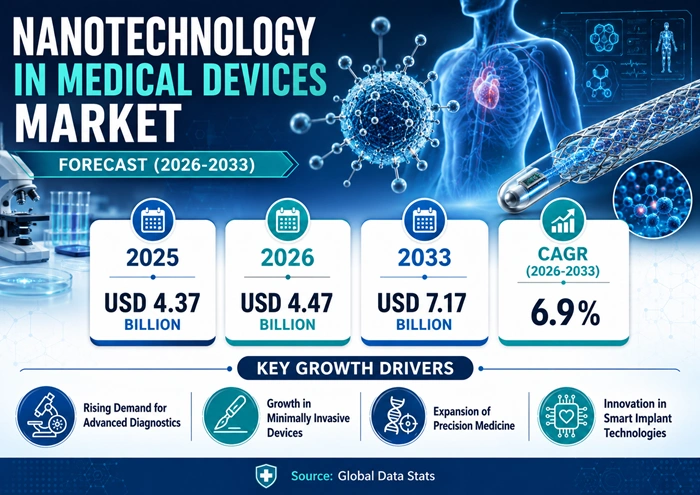
The global nanotechnology in medical devices market size is valued at USD 4.37 billion in 2025 and is predicted to increase from USD 4.47 billion in 2026 to approximately USD 7.17 billion by 2033, growing at a CAGR of 6.9% from 2026 to 2033.
The market is being propelled by a growing need for precise, minimally invasive, and highly effective medical solutions that operate at the molecular level. Nanoscale materials and structures — typically ranging between 1 and 100 nanometers — are fundamentally transforming how implants, diagnostics, and therapeutics are designed and delivered. As chronic diseases continue to rise globally and aging populations demand more durable, biocompatible medical devices, the nanotechnology in medical devices sector is becoming one of the most strategically critical areas in modern healthcare.
AI Impact on the Nanotechnology in Medical Devices Industry
Artificial Intelligence Is Accelerating Nanoscale Innovation in Medical Device Development, Transforming Everything from Materials Design to Real-Time In-Vivo Monitoring
Artificial intelligence is fundamentally reshaping the nanotechnology in medical devices landscape by enabling smarter materials discovery, predictive modeling, and intelligent device behavior. AI algorithms trained on large-scale datasets of nanomaterial properties are significantly shortening the timeline for identifying optimal nanocoatings, nanostructures, and nanocomposites for specific medical applications — what previously required years of laboratory iteration can now be narrowed to months through computational screening. In orthopedic implants, for example, AI-assisted simulation tools are helping engineers design nanostructured titanium surfaces that maximize osseointegration while minimizing inflammatory response, reducing trial-and-error in device development and accelerating regulatory submission timelines.
Beyond materials design, AI is enabling the next generation of nano-enabled smart devices capable of real-time biological sensing, adaptive drug delivery, and remote patient monitoring. Nano-biosensors combined with AI-powered data processing platforms can detect disease biomarkers at extraordinarily low concentrations — making earlier diagnosis possible for conditions like sepsis, cancer, and cardiovascular disease. Wearable nano-sensor arrays that continuously monitor glucose, cortisol, or cardiac markers are being paired with AI decision-support systems to enable predictive and personalized care. As AI capabilities continue to advance, the convergence of nanotechnology and machine intelligence is expected to produce a new class of medical devices that can learn from patient data and adjust their function autonomously, redefining the standard of care across multiple therapeutic areas.
Growth Factors
Rising Chronic Disease Burden, Demand for Minimally Invasive Solutions, and Advances in Nanomaterials Science Are Powering Consistent Market Expansion in Nanotechnology-Enabled Medical Devices
The most significant growth driver for the nanotechnology in medical devices market is the rapidly rising global burden of chronic diseases — including cardiovascular disorders, cancer, orthopedic conditions, and diabetes — that demand more effective and durable treatment solutions. According to the WHO, cardiovascular diseases account for nearly 31% of all global deaths annually, while cancer represents the second leading cause of mortality worldwide. These staggering disease prevalence figures are creating intense clinical demand for nano-enabled devices that can deliver drugs more precisely, improve implant biocompatibility, and detect diseases at earlier stages — capabilities that conventional medical devices simply cannot match. As the global population ages and lifestyle-driven conditions multiply, the therapeutic urgency driving investment in nano-enabled healthcare solutions will only intensify throughout the forecast period.
Minimally invasive surgical procedures represent a second powerful growth catalyst, as patients and clinicians increasingly favor approaches that reduce recovery time, minimize infection risk, and preserve surrounding tissue. Nanotechnology enables the development of ultra-miniaturized devices — including nano-catheters, nano-coated stents, and nano-sensor-embedded wearables — that can enter the body with far less disruption than conventional instruments while delivering superior therapeutic precision. Growing R&D investment from both government agencies and private biotechnology companies is accelerating the commercialization of new nanomaterial categories, including nanofibers, quantum dots, carbon nanotubes, and nanocomposites, each with distinct properties suited to different medical device applications. This expanding materials toolkit is steadily broadening the range of clinical challenges that the nanotechnology in medical devices industry can address.
Market Outlook
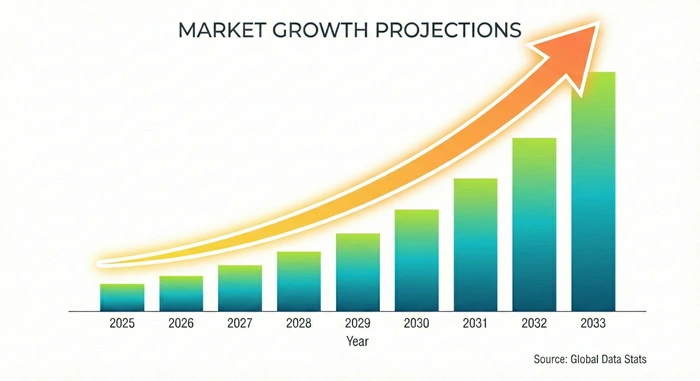
The Nanotechnology in Medical Devices Market Is Positioned for Steady Long-Term Growth Through 2033, Driven by Regulatory Maturation, Smart Device Innovation, and Expanding Clinical Applications
The long-term outlook for the nanotechnology in medical devices market is highly encouraging, supported by a regulatory environment that is gradually becoming more sophisticated in its approach to nano-enabled products. The U.S. FDA and the European Medicines Agency have both made meaningful progress in developing safety and efficacy assessment frameworks specifically for medical devices incorporating nanomaterials, reducing the uncertainty that has historically slowed market entry for innovative nano-device developers. As these regulatory pathways become clearer and as real-world safety data for approved nano-enhanced devices accumulates, the market will attract increasing participation from large established medical device companies that have so far adopted a cautious, watch-and-wait stance.
Smart wound care, nano-enabled implants, and biosensor-embedded wearables are expected to be the fastest-growing product categories over the 2026–2033 horizon, as each of these application areas benefits from converging trends in personalized medicine, remote patient monitoring, and the demand for devices that can respond dynamically to physiological changes. The continued decline in the cost of nanomaterial production — driven by scale effects and process innovation — will also improve the commercial viability of nano-enhanced medical devices in price-sensitive markets, particularly in Asia Pacific and Latin America. Together, these dynamics ensure that the nanotechnology in medical devices sector will remain a high-priority innovation frontier for the global healthcare industry throughout the forecast period.
Expert Speaks
Leading executives from global healthcare and medical device companies are expressing strong conviction in the transformative potential of nanoscale technologies:
-
"Nanotechnology is giving us tools to engineer medical devices at a level of precision that was simply not possible a decade ago. The ability to design implants that interact intelligently with the body at the cellular level is fundamentally changing what we can offer our patients — and we are investing significantly to make this a core part of our product strategy." — CEO, Medtronic PLC
-
"From nano-coated stents to nanofiber wound dressings, the intersection of nanotechnology and medical devices is delivering real clinical outcomes today. We see this area as one of the most promising growth vectors in our portfolio, and our R&D pipeline reflects our commitment to being a leader in nano-enabled medical innovation." — CEO, Boston Scientific Corporation
-
"The future of medical devices is at the nanoscale — smaller, smarter, and more responsive to patient needs. Our investment in nanotechnology research is driven by the belief that these innovations will define the next generation of surgical, diagnostic, and therapeutic platforms, and we are committed to bringing them to market at scale." — CEO, Stryker Corporation
Key Report Takeaways
-
North America leads the global nanotechnology in medical devices market, accounting for approximately 38% of the global revenue share in 2025, driven by strong R&D investment, favorable FDA regulatory pathways, and the presence of leading companies such as Medtronic, Abbott Laboratories, and Boston Scientific.
-
Asia Pacific is the fastest-growing regional market, projected to expand at an above-average CAGR through 2033, driven by large patient populations, rapidly improving healthcare infrastructure, and significant government funding for nanotechnology research in China, Japan, India, and South Korea.
-
Hospitals represent the largest end-user segment, capturing the highest share of market revenue in 2025, as complex surgical implantation procedures, emergency wound care, and advanced diagnostics are primarily delivered in tertiary care hospital settings equipped to handle nano-enhanced devices.
-
Implantable devices dominate the product type segment, holding approximately 44% of global market share in 2026, driven by the widespread use of nano-enhanced orthopedic implants, cardiac stents, and hearing aids that deliver superior biocompatibility and longer device lifespans.
-
Orthopedics is the largest application segment, accounting for approximately 35% of the application revenue in 2026, as nano-structured titanium and hydroxyapatite coatings significantly improve osseointegration, reduce post-operative failure rates, and support faster patient recovery.
-
Wound care is the fastest-growing application category, expected to register the highest CAGR through 2033, as nanofiber-based smart dressings with antimicrobial and infection-sensing capabilities gain rapid clinical adoption across hospitals and specialty wound care centers globally.
-
The diagnostics segment is poised for strong future growth, driven by the rapid development of nano-biosensors and point-of-care devices that enable ultra-early disease detection, with nano-diagnostic platforms expected to capture an increasingly significant market share by 2033.
Market Scope
| Report Coverage | Details |
|---|---|
| Market Size by 2033 | USD 7.17 Billion |
| Market Size by 2025 | USD 4.37 Billion |
| Market Size by 2026 | USD 4.47 Billion |
| Market Growth Rate from 2026 to 2033 | CAGR of 6.9% |
| Dominating Region | North America |
| Fastest Growing Region | Asia Pacific |
| Base Year | 2025 |
| Forecast Period | 2026 to 2033 |
| Segments Covered | Product Type, Application, End-User, and Region |
| Regions Covered | North America, Europe, Asia Pacific, Latin America, and Middle East & Africa |
Market Dynamics
Drivers Impact Analysis
Surging Demand for High-Performance Implants and Targeted Diagnostics Is the Primary Engine Driving Sustained Revenue Growth in the Nanotechnology in Medical Devices Market
| Driver | ≈ % Impact on CAGR Forecast | Geographic Relevance | Impact Timeline |
|---|---|---|---|
| Rising chronic disease and aging population | ~36% | Global, especially North America & Asia Pacific | 2026–2033 |
| Demand for minimally invasive medical devices | ~24% | North America, Europe | 2026–2033 |
| Advances in nanomaterials and nanocoatings | ~20% | Global | 2026–2033 |
| Government R&D funding and academic collaboration | ~12% | North America, Asia Pacific, Europe | 2026–2030 |
| Regulatory acceptance of nano-enabled devices | ~8% | North America, Europe | 2026–2030 |
The escalating global burden of cardiovascular disease, orthopedic disorders, cancer, and diabetes is the most consequential driver shaping the nanotechnology in medical devices market. These conditions share a common clinical demand — for devices that can operate with greater precision inside the human body, integrate seamlessly with biological tissue, and sustain performance over longer periods without revision or replacement. Nano-engineered surfaces on implants, nano-structured bioactive coatings on stents, and nanoparticle-enhanced wound dressings are directly addressing these needs in ways that have dramatically improved patient outcomes across multiple surgical disciplines. As global demographic trends continue to push the prevalence of these conditions upward — particularly among aging populations in North America, Europe, and Asia Pacific — the clinical and commercial imperative for nanotechnology-integrated medical devices will only grow stronger.
Government and institutional R&D funding represents a critical enabling driver, as the complex science underlying nanomaterial development requires long-term investment that often precedes commercial viability by years. Agencies such as the U.S. National Institutes of Health (NIH), the European Research Council, and the Chinese Ministry of Science and Technology have collectively committed billions in nanotechnology research funding, much of which flows directly into medical device applications. This publicly funded research creates a robust pipeline of pre-commercial innovations — nanorobots, nano-biosensors, and nanocarrier-based delivery systems — that are progressively transitioning into clinical development and commercial manufacturing. The strong relationship between academic research institutions and medical device manufacturers has created an efficient innovation ecosystem that accelerates the journey from laboratory discovery to market-ready nano-enabled product.
Restraints Impact Analysis
Regulatory Complexity, Biocompatibility Uncertainty, and High Development Costs Represent the Most Significant Barriers to Accelerated Growth in the Nanotechnology in Medical Devices Market
| Restraint | ≈ % Impact on CAGR Forecast | Geographic Relevance | Impact Timeline |
|---|---|---|---|
| Regulatory and biocompatibility challenges | ~34% negative impact | Global | 2026–2030 |
| High development and clinical trial costs | ~28% negative impact | Global | 2026–2033 |
| Toxicity and long-term safety concerns | ~20% negative impact | Global | 2026–2033 |
| Limited standardization of nanomaterial testing | ~12% negative impact | Asia Pacific, Latin America | 2026–2029 |
| Complexity of scaling nanomanufacturing | ~6% negative impact | Global | 2026–2030 |
Regulatory uncertainty is one of the most persistent and impactful restraints on the nanotechnology in medical devices market. The novel properties of nanomaterials — enhanced reactivity, small particle size, and unique surface characteristics — create biological interaction profiles that differ fundamentally from those of conventional materials, and existing regulatory frameworks were not originally designed to assess these differences comprehensively. Questions around nanoparticle biodistribution, intracellular accumulation, immune modulation, and long-term degradation behavior remain partially unanswered, and both the FDA and EMA are still refining their guidance on how to evaluate these factors in the context of device approval submissions. This regulatory ambiguity extends product development timelines, increases the cost of clinical evidence generation, and can deter smaller companies from pursuing commercialization.
The high cost and technical complexity of scaling nanomanufacturing processes from laboratory to commercial production represents an additional significant restraint. Producing nanomaterials with consistent particle size, surface chemistry, and functional performance at industrial volumes is technically demanding and requires specialized equipment, tight quality controls, and highly skilled workforce capabilities that are not uniformly available across all geographies. Even for companies that successfully navigate the technical challenges, the capital investment required to build or retrofit manufacturing facilities for nano-enabled device production can be prohibitive — particularly for startups and mid-sized companies that lack the balance sheet strength of large multinational medical device corporations. Together, these manufacturing and regulatory constraints act as meaningful friction forces that moderate the pace of market expansion, even as underlying clinical demand continues to grow.
Opportunities Impact Analysis
Smart Wound Care Innovation, Nano-Biosensor Platforms, and Emerging Market Penetration Represent the Most Compelling Untapped Opportunities in the Nanotechnology in Medical Devices Market
| Opportunity | ≈ % Impact on CAGR Forecast | Geographic Relevance | Impact Timeline |
|---|---|---|---|
| Smart nano-wound care and infection-sensing dressings | ~32% positive impact | North America, Europe, Asia Pacific | 2026–2033 |
| Nano-biosensor and point-of-care diagnostics | ~26% positive impact | Global | 2027–2033 |
| Nano-enabled wearables and remote monitoring | ~20% positive impact | North America, Europe | 2026–2033 |
| Emerging market expansion and affordable nano-devices | ~14% positive impact | Asia Pacific, Latin America, MEA | 2028–2033 |
| Theranostic device platforms combining diagnostics and therapy | ~8% positive impact | Global | 2028–2033 |
Smart wound care represents one of the highest-growth opportunities in the nanotechnology in medical devices market, driven by the enormous global burden of chronic wounds — including diabetic foot ulcers, pressure injuries, and post-surgical wounds — that affect hundreds of millions of patients globally. Nanofiber-based dressings embedded with infection-sensing molecules, antimicrobial agents, and growth factors are transforming wound management by creating intelligent materials that respond dynamically to the wound environment, releasing therapeutic agents precisely when and where they are needed. The commercial potential of this segment is amplified by the fact that chronic wound care generates enormous ongoing healthcare costs, creating strong payer incentive for solutions that demonstrably accelerate healing and reduce hospital readmission rates. Companies that can bring clinically validated smart nano-wound dressings to market with robust health economic evidence will be positioned to capture significant revenue across both developed and developing healthcare systems.
Nano-biosensor platforms for point-of-care and continuous monitoring diagnostics represent a transformative long-term opportunity, as the convergence of nanotechnology with microfluidics, AI, and wireless connectivity creates the foundation for a new generation of ultra-sensitive, portable diagnostic devices. Carbon nanotube-based sensors, quantum dot-enabled immunoassays, and nano-electrode arrays are enabling detection of disease biomarkers — including cancer antigens, viral proteins, and cardiac enzymes — at concentrations orders of magnitude lower than conventional diagnostic methods can achieve. This ultra-sensitivity enables earlier disease detection, more precise treatment monitoring, and the ability to perform complex diagnostics outside of traditional laboratory environments. As the personalized medicine movement accelerates, demand for nano-enabled diagnostic platforms that deliver laboratory-quality results at the point of care — in clinics, pharmacies, and even patients' homes — will grow substantially, creating enormous commercial opportunity for both established diagnostic companies and innovative new entrants.
Segment Analysis
By Product Type
Implantable Devices Dominate the Product Landscape While Smart Wound Dressings Emerge as the Fastest-Growing Nanotechnology-Enhanced Medical Device Category
Implantable devices hold the dominant position within the nanotechnology in medical devices market by product type, commanding approximately 44% of global revenue in 2026. This leadership reflects the broad and well-established use of nanomaterial enhancements across orthopedic implants, cardiac stents, cochlear implants, and retinal devices — applications where nano-engineered surfaces, coatings, and structural reinforcements deliver measurable improvements in biocompatibility, longevity, and patient outcomes. Nanostructured titanium alloys and hydroxyapatite coatings on joint replacement implants have become near-standard practice in advanced orthopedic surgery, as their superior osseointegration properties substantially reduce post-operative failure rates and revision surgeries. North America leads this segment, where a combination of high surgical volume, advanced healthcare infrastructure, and strong clinical evidence for nano-enhanced implants drives consistent demand, with key companies including Stryker, Zimmer Biomet, and Medtronic leading innovation and commercial growth in this space. The segment's CAGR is projected to remain steady through 2033, underpinned by aging demographic trends that continuously expand the patient population requiring orthopedic and cardiac device interventions.
Medical textiles and wound dressings represent the fastest-growing product type within the nanotechnology in medical devices market, driven by accelerating clinical adoption of nanofiber-based smart dressings that actively respond to wound conditions to optimize the healing environment. These products use nanofibers crafted from polymers, biopolymers, and composite nanomaterials to create scaffolds that mimic the natural extracellular matrix, promoting cell adhesion, migration, and differentiation in ways that dramatically speed tissue regeneration. Infection-sensing capabilities — built using pH-responsive nanoparticles or silver nanoparticle matrices — allow dressings to automatically release antimicrobial agents upon detecting bacterial colonization, eliminating the need for frequent clinical intervention. Asia Pacific is emerging as the most dynamic regional growth market for this segment, where the enormous population of diabetic patients in China and India creates high unmet demand for cost-effective nano-wound care solutions, and where companies like Smith & Nephew and regional innovators are actively investing in accessible product formats for these high-burden markets.
By Application
Orthopedics Leads Application Revenue While Dentistry Demonstrates the Strongest Growth Trajectory Across the Nanotechnology in Medical Devices Market
The orthopedics application segment holds the largest revenue share in the nanotechnology in medical devices market, accounting for approximately 35% of global application revenue in 2026. The primary reason for this dominance is the critical role that nano-enhanced materials play in addressing the clinical challenges of bone and joint reconstruction — a discipline where device-tissue integration quality directly determines long-term patient mobility and quality of life. Nanocoatings incorporating hydroxyapatite, nanosilver, and calcium phosphate on hip, knee, and spinal implants have demonstrated significantly improved bone bonding strength, reduced bacterial adhesion, and longer functional implant lifespans compared to conventional surface-treated devices. The segment is growing fastest in Asia Pacific, where a rapidly aging population base in Japan, China, and South Korea is generating increasing volumes of joint replacement surgeries, while companies like Stryker, Zimmer Biomet, and Japan-based national implant manufacturers are investing in nano-enhanced portfolios to meet rising regional clinical demand. The orthopedics segment is expected to maintain its leadership position through 2033, supported by the ongoing global increase in orthopedic surgery volumes and the progressive incorporation of nanotechnology into next-generation implant designs.
Dentistry is the fastest-growing application area within the nanotechnology in medical devices market, expanding at a CAGR above the overall market average as demand for cosmetic dental procedures increases and as the clinical advantages of nano-dental materials become more widely recognized. Nano-filled composites, nano-adhesives, and nanoparticle-embedded dental filling materials offer superior aesthetics, wear resistance, and antimicrobial properties compared to conventional dental materials — making them preferred choices for both restorative and cosmetic dental procedures. The ability of nano-sized particles of zinc oxide, calcium phosphate, and silica to promote enamel remineralization and reduce secondary decay is particularly valued in preventive dentistry applications, where long-term patient outcomes are a priority. Europe is a key growth market for the dental nanotechnology application, driven by high rates of cosmetic dentistry, a strong network of private dental practices, and active participation by companies like Dentsply Sirona and Coltene Holding AG in bringing nano-enhanced dental products to market. The dentistry segment's accelerated growth rate ensures it will represent a progressively larger share of total application revenue by 2033.
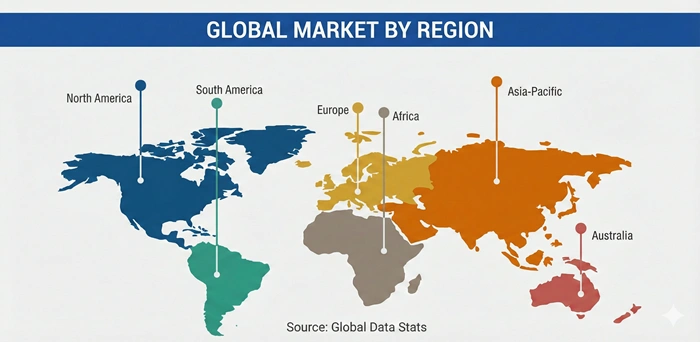
Regional Insights
North America
North America Leads the Global Nanotechnology in Medical Devices Market, Anchored by FDA Regulatory Progress, World-Class R&D Infrastructure, and High Clinical Adoption Rates
North America maintains its position as the dominant regional market for nanotechnology in medical devices, accounting for approximately 38% of the global market share in 2025 and growing at a CAGR of approximately 7.1% through 2033. The United States is the undisputed regional anchor, driven by its leadership in nanomedicine research, the FDA's progressive approach to developing regulatory pathways for nano-enabled devices, and the deep commercial relationships between academic research centers — such as MIT, Stanford, and Johns Hopkins — and major medical device manufacturers. High rates of cardiovascular and orthopedic procedures, combined with strong private insurance coverage for advanced medical technologies, ensure robust and consistent clinical demand for nano-enhanced implants, diagnostics, and wound care products. Key companies driving North American market leadership include Medtronic, Boston Scientific, Abbott Laboratories, Stryker, and Smith & Nephew.
Canada contributes meaningfully to the region's performance, with Health Canada making gradual progress in aligning its nano-device regulatory framework with international standards and with a growing cluster of nanomedicine startups concentrated in Toronto, Vancouver, and Montreal. The United States continues to dominate regional revenue, however, particularly in the high-value implantable devices and nano-diagnostics segments where commercial reimbursement frameworks strongly support adoption. North America's combination of advanced manufacturing capabilities, deep venture capital investment in nanomedicine, and a mature clinical evidence base positions it to retain its regional leadership throughout the forecast period, even as Asia Pacific narrows the competitive gap.
Asia Pacific
Asia Pacific Is the Fastest-Growing Region in the Nanotechnology in Medical Devices Market, Powered by Population Scale, Rising Healthcare Investment, and Government-Backed Nanotechnology Programs
Asia Pacific is projected to register the highest CAGR in the nanotechnology in medical devices market through 2033, driven by a powerful combination of demographic, economic, and policy-level factors that are simultaneously expanding clinical demand and local supply capabilities. China represents the single largest growth engine within the region, supported by the government's ongoing commitment to nanotechnology as a strategic technology priority, a rapidly growing private healthcare sector, and the world's largest aging population creating surging demand for orthopedic and cardiovascular nano-enabled devices. Japan and South Korea also contribute significantly, with their advanced manufacturing ecosystems and high physician uptake of innovative medical technologies making them receptive markets for next-generation nano-enhanced implants and diagnostics. Key players active across Asia Pacific include Olympus Corporation, Terumo Corporation, and regional subsidiaries of global companies such as Medtronic, Johnson & Johnson, and Zimmer Biomet.
India is the most compelling emerging growth market within Asia Pacific, combining a rapidly expanding private hospital sector with one of the world's highest burdens of diabetic wound complications and rising rates of orthopedic disorders in an aging urban population. Government initiatives like the National Biopharma Mission and the Production-Linked Incentive scheme for medical devices are fostering local manufacturing capabilities and attracting foreign investment into India's nanomedicine and medical device ecosystem. The cost-sensitivity of the Indian and Southeast Asian markets is driving innovation in affordable nano-enabled product formats — including low-cost nanosilver wound dressings and portable nano-biosensors — that are expanding access to advanced medical technologies in markets that were previously underserved. This dynamic ensures that Asia Pacific will progressively capture a larger share of global nanotechnology in medical devices market revenue through 2033.
Report Customization by Region and Country
Geographic Coverage Customization Available — This Report Can Be Tailored to Deliver Focused, Country-Level Market Intelligence on Nanotechnology in Medical Devices for Any Region or Country Listed Below
This report is available with fully customized, geography-specific editions that provide in-depth market analysis, competitive intelligence, growth trends, regulatory landscape, and investment opportunities specific to your chosen region or country — tailored precisely to the nanotechnology in medical devices market.
North America
-
United States — FDA nano-device regulatory framework, key player commercial activity, CAGR by segment, and market size projections
-
Canada — Health Canada regulatory developments, nanomedicine startup ecosystem, and provincial healthcare adoption trends
-
Mexico — Healthcare infrastructure expansion, market entry dynamics, and demand growth for affordable nano-enabled medical devices
Europe
-
United Kingdom — MHRA regulatory status, NHS adoption of nano-devices, and academic-industry collaboration landscape
-
Germany — AMNOG assessment for nano-devices, advanced manufacturing ecosystem, and Fraunhofer Institute-led R&D insights
-
France — HAS pricing and reimbursement analysis, hospital procurement trends, and nano-dental market activity
-
Italy — AIFA regulatory developments, specialty care adoption, and orthopedic nano-device market analysis
-
Rest of Europe — Nordic nanotechnology R&D hubs, Eastern European market growth, and cross-border commercialization trends
Asia Pacific
-
China — NMPA approval dynamics, government nanotechnology funding, local manufacturer analysis, and market size by application
-
India — CDSCO regulatory landscape, Production-Linked Incentive impact, wound care demand, and orthopedic market growth
-
Japan — PMDA regulatory environment, aging population demand, Olympus and Terumo competitive positioning
-
South Korea — MFDS approvals, OEM manufacturing capabilities, and nano-dental and orthopedic market analysis
-
Australia — TGA-aligned nano-device regulatory framework, PBS reimbursement landscape, and clinical trial activity
-
Rest of Asia Pacific — Southeast Asian market opportunities, medical tourism impact, and emerging nano-device demand
Latin America
-
Brazil — ANVISA regulatory framework, hospital procurement activity, diabetic wound care demand, and market size
-
Argentina — Economic conditions, medical import policies, and healthcare system capacity for advanced device adoption
-
Rest of Latin America — Regional market development trends, access to nano-dental and wound care products
Middle East & Africa
-
UAE — Advanced hospital infrastructure, medical tourism positioning, and demand for premium nano-enabled implants
-
Saudi Arabia — Vision 2030 health transformation impact, chronic disease management priorities, and government procurement
-
Rest of MEA — Emerging healthcare system development, NGO-driven wound care demand, and nanotechnology access trends
Top Key Players
-
Medtronic PLC (Ireland)
-
Abbott Laboratories (United States)
-
Boston Scientific Corporation (United States)
-
Stryker Corporation (United States)
-
Zimmer Biomet Holdings Inc. (United States)
-
Smith & Nephew PLC (United Kingdom)
-
3M Company (United States)
-
Dentsply Sirona Inc. (United States)
-
PerkinElmer Inc. (United States)
-
Merck KGaA (Germany)
-
AstraZeneca PLC (United Kingdom)
-
Cochlear Ltd (Australia)
-
Starkey Hearing Technologies (United States)
-
Coltene Holding AG (Switzerland)
-
LivaNova PLC (United Kingdom)
Recent Developments
-
In March 2025, Medtronic announced the successful completion of clinical trials for its nanocoated cardiac stent, specifically engineered to minimize restenosis and thrombosis risks through an advanced anti-inflammatory nanocoating. The company anticipates FDA approval within the year, which would significantly expand its cardiovascular nano-device product portfolio.
-
In February 2025, Smith & Nephew launched a next-generation nanofiber wound dressing incorporating time-release antibiotic technology, designed specifically for chronic diabetic wound management. The product targets a global patient population exceeding 130 million people living with diabetic foot ulcers and related chronic wounds, representing a significant commercial expansion opportunity.
-
In January 2025, Stryker received EU approval for a new line of nanostructured titanium spinal implants that demonstrated measurably superior osseointegration performance in clinical testing compared to conventional implant surfaces. The EU approval positioned Stryker to accelerate commercial penetration across European orthopedic surgery markets.
-
In December 2024, a U.S.-based hearing device startup launched a Bluetooth-enabled hearing aid incorporating a proprietary nanocoating that provides enhanced sweat and dust resistance, targeting active users in the over-60 demographic. The product gained immediate commercial traction through partnerships with leading audiology clinic networks across North America and Europe.
-
In November 2024, Coltene Holding AG introduced a nano-silica particle dental adhesive designed for cosmetic dentistry practices, offering enhanced wear resistance, improved bonding strength, and long-term aesthetic durability. The product launch was specifically targeted at the fast-growing cosmetic dentistry market in Asia Pacific, where demand for premium dental materials is rising rapidly.
Market Trends
The Nanotechnology in Medical Devices Market Is Being Shaped by the Rise of Theranostic Platforms, Smart Nano-Surfaces, and the Convergence of Nanomaterials with Digital Health Technologies
The most defining trend reshaping the nanotechnology in medical devices market is the emergence of theranostic platforms — integrated nano-devices that simultaneously perform diagnostic sensing and therapeutic delivery within the same device architecture. These systems, built on nanocarrier frameworks combining imaging agents and therapeutic payloads, represent a paradigm shift from the traditional separation of diagnostic and treatment functions onto a unified, intelligent medical device. Companies and research institutions are investing heavily in theranostic nano-device development for oncology, cardiovascular medicine, and infectious disease applications, where the ability to detect a pathological condition and intervene in real time offers profound clinical advantages. The growing body of preclinical and early clinical evidence supporting theranostic nano-platforms is attracting increasing regulatory interest, with both the FDA and EMA engaging in early dialogue with developers to shape appropriate evaluation frameworks.
A second major trend is the rapid development of nano-surface engineering for implantable devices — the precise modification of device surfaces at the nanoscale to control how biological tissues respond to the implant. Rather than simply coating devices with nanomaterials, next-generation surface engineering involves creating topographies, chemistries, and mechanical gradients at the nanoscale that actively direct cell behavior — promoting adhesion in bone contact zones, resisting protein fouling in blood-contacting areas, and releasing bioactive molecules on programmed schedules in infection-prone sites. This level of surface intelligence is enabling implant designs that work with the body's own healing mechanisms rather than against them, dramatically improving device longevity and reducing complication rates. As nanofabrication technologies become more precise and cost-effective, nano-surface engineering is expected to become a standard design feature across implantable device categories throughout the forecast period.
Segments Covered in the Report
By Product Type
-
Biochips (Lab-on-Chip, DNA Microarrays)
-
Implantable Devices (Cardiac Rhythm Management Devices, Hearing Aid Devices, Retinal Implants, Orthopedic Implants)
-
Medical Textiles and Wound Dressings
-
Active Implant Devices
-
Others
By Application
-
Orthopedics
-
Cardiology
-
Diagnostics
-
Dentistry
-
Wound Care
-
Oncology
-
Others
By End-User
-
Hospitals
-
Specialty Clinics
-
Research Institutes
-
Ambulatory Surgical Centers
-
Others
By Region
-
North America (U.S., Canada, Mexico)
-
Europe (U.K., Germany, France, Italy, Rest of Europe)
-
Asia Pacific (China, India, Japan, South Korea, Australia, Rest of Asia Pacific)
-
Latin America (Brazil, Argentina, Rest of Latin America)
-
Middle East & Africa (UAE, Saudi Arabia, Rest of MEA)
"Built for Every Level — From Startups to Industry Giants"
Here Is Exactly How This Report Works for You
-
For Tier 1 medical device manufacturers, hospital procurement teams, and institutional investors, this report provides granular competitor revenue analysis, product pipeline benchmarking, and geopolitical supply chain risk assessments — including the impact of trade policies on nanomaterial sourcing, FDA and EMA regulatory shifts, and regional reimbursement reforms — enabling strategic acquisition, licensing, and market entry decisions grounded in verified, forward-looking intelligence for the nanotechnology in medical devices industry.
-
For startups, mid-level medtech companies, and Tier 2 and Tier 3 suppliers, this report identifies demand-supply gaps across product type and application segments, highlights white-space opportunities in underserved markets like nano-wound care and dental nanotechnology, and provides detailed competitor revenue source breakdowns and partnership activity — giving innovators the strategic insight needed to target the right segment, geography, and commercial partner.
-
For every decision-maker — from R&D directors and commercial strategists to portfolio managers and board-level executives — this report maps precisely how macroeconomic factors, including healthcare spending trends, currency dynamics, tariff impacts on nanomaterial imports, and geopolitical tensions affecting global supply chains, are reshaping competitive positioning in the nanotechnology in medical devices market — and explains how industry leaders are making decisions in response to these forces today.
Frequently Asked Questions
Question 1: What is the current value of the nanotechnology in medical devices market and how large will it be by 2033?
Answer: The nanotechnology in medical devices market is valued at USD 4.37 billion in 2025 and is projected to reach USD 7.17 billion by 2033. It is expected to grow at a CAGR of 6.9% from 2026 to 2033, supported by rising chronic disease prevalence and growing demand for precision nano-enabled healthcare solutions.
Question 2: What are the primary applications driving growth in the nanotechnology in medical devices market?
Answer: Orthopedics is the largest application in the nanotechnology in medical devices market, driven by widespread use of nano-enhanced implants and coatings that improve bone integration and device longevity. Wound care, dentistry, and nano-diagnostic platforms are the fastest-growing application areas through 2033.
Question 3: Which region dominates the nanotechnology in medical devices market and which is growing the fastest?
Answer: North America leads the nanotechnology in medical devices market with approximately 38% of global revenue share in 2025, anchored by strong FDA regulatory progress and high R&D investment. Asia Pacific is the fastest-growing region, driven by large patient populations, increasing healthcare investment, and government-backed nanotechnology programs in China, India, and Japan.
Question 4: What are the major challenges that companies face in the nanotechnology in medical devices market?
Answer: The most significant challenges in the nanotechnology in medical devices market include evolving regulatory frameworks for nano-enabled devices, particularly around long-term biocompatibility and toxicity assessment, and the high cost and complexity of scaling nanomanufacturing processes. These factors can extend product development timelines and increase the capital requirements for market entry, especially for smaller companies.
Question 5: How is nanotechnology improving medical device performance compared to conventional technologies?
Answer: Nanotechnology enhances nanotechnology in medical devices by enabling superior surface properties — including improved osseointegration in implants, antimicrobial resistance in wound dressings, and ultra-sensitive detection capabilities in biosensors — that conventional materials cannot match. These performance advantages directly translate into better patient outcomes, longer device lifespans, and reduced complication rates across surgical, diagnostic, and therapeutic applications.