
Multimodal AI Market Overview
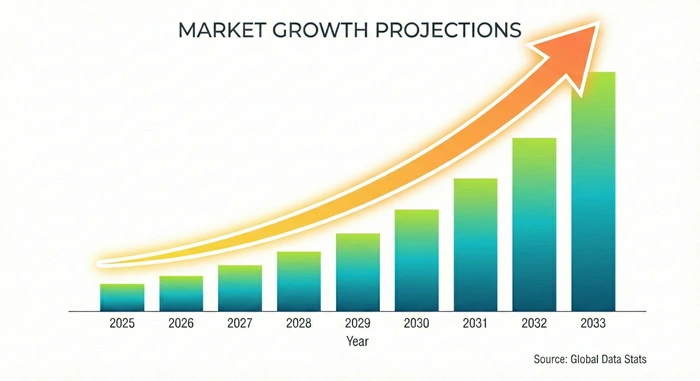
The global multimodal AI market size is valued at USD 2.21 billion in 2025 and is predicted to increase from USD 3.13 billion in 2026 to approximately USD 29.81 billion by 2033, growing at a CAGR of 36.32% from 2026 to 2033. Multimodal artificial intelligence represents advanced systems that simultaneously process and analyze multiple data types including text, images, audio, video, and sensor information, enabling more comprehensive understanding compared to traditional single-mode AI approaches. This technology mimics human perception by integrating diverse information sources to generate contextually rich insights, make accurate predictions, and deliver natural interactions that transform how businesses engage with customers and optimize operations.
The multimodal AI market continues revolutionizing industries through applications ranging from healthcare diagnostics combining medical imaging with patient records to autonomous vehicles fusing camera, radar, and lidar data for real-time decision-making. Organizations increasingly adopt multimodal systems to enhance virtual assistants responding to voice commands while understanding visual context, improve content moderation analyzing text alongside images and videos, and develop personalized marketing campaigns tailored to individual preferences across communication channels. The technology enables computers to understand the world more holistically, bridging the gap between narrow AI capabilities and human-like cognitive flexibility.

AI Impact on the Multimodal AI Industry
Accelerating Innovation Through Cross-Modal Learning and Generative Capabilities
Artificial intelligence fundamentally transforms the multimodal AI market by enabling sophisticated cross-modal learning where models trained on one data type can transfer knowledge to improve performance on entirely different modalities. Advanced neural network architectures including transformers and attention mechanisms allow systems to identify relationships between visual elements, textual descriptions, and audio patterns that would remain invisible to human analysts processing information separately. This capability powers breakthrough applications like generating realistic images from text descriptions, creating detailed captions for complex scenes, and translating spoken language while accounting for facial expressions and gestures that provide crucial contextual nuance affecting meaning.
Furthermore, generative AI approaches revolutionize multimodal capabilities by creating entirely new content that seamlessly blends multiple data types based on high-level instructions or limited input examples. Systems can automatically produce multimedia presentations combining generated graphics, narrated explanations, and background music optimized for specific audiences, while virtual training environments create realistic scenarios mixing visual simulations, spatial audio, and interactive dialogue preparing workers for complex real-world situations. The integration of reinforcement learning enables multimodal AI systems to improve continuously through experience, adapting to changing conditions and discovering optimal strategies for processing diverse information streams in ways that surpass initial programming capabilities.
Growth Factors
Rising Demand for Personalized Experiences and Advanced Human-Machine Interfaces
The multimodal AI market experiences robust growth driven by escalating consumer expectations for personalized interactions that account for individual preferences, context, and communication styles across digital touchpoints. Retail organizations leverage multimodal systems analyzing customer browsing patterns, purchase histories, social media engagement, and in-store behavior captured through cameras and sensors to deliver tailored product recommendations, dynamic pricing, and customized marketing messages resonating with specific demographic segments. Entertainment platforms combine viewing habits with mood indicators derived from facial recognition and voice tone analysis to suggest content matching current emotional states, while financial services use multimodal verification combining facial biometrics, voice prints, and behavioral patterns to provide secure yet frictionless authentication experiences.
Advanced human-machine interfaces represent another critical growth driver as organizations seek natural interaction methods reducing training requirements and improving accessibility for users with diverse abilities. Voice-controlled systems enhanced with computer vision understand gestural commands and facial expressions adding layers of meaning beyond spoken words, while augmented reality applications overlay contextual information onto physical environments responding to where users look and what questions they ask verbally. The multimodal AI market benefits from healthcare applications where doctors describe symptoms verbally while AI simultaneously analyzes patient images and electronic health records to suggest diagnoses, manufacturing facilities where workers receive hands-free guidance through AR headsets responding to voice queries and recognizing tools and components being manipulated, and education platforms adapting instructional content based on student attention levels detected through facial analysis combined with performance on interactive exercises.
Market Outlook
Strong Growth Trajectory Supported by 5G Networks and Edge Computing Infrastructure
The multimodal AI market demonstrates exceptional growth prospects through the forecast period, supported by global 5G network deployment and edge computing infrastructure enabling real-time processing of bandwidth-intensive multimodal data at the source rather than cloud data centers. North America currently dominates market share due to technology leadership among major AI platforms, substantial corporate investment in research and development, and early adoption across enterprise sectors, while Asia Pacific exhibits the fastest growth rates driven by massive smartphone user bases, government initiatives promoting AI development, and rapid digitalization across emerging economies. The market benefits from increasing recognition that multimodal capabilities deliver competitive advantages in crowded markets where customer experience differentiation determines success or failure.
Investment in the multimodal AI market spans venture capital funding for specialized startups developing domain-specific applications, strategic acquisitions by technology giants seeking to enhance platform capabilities, and collaborative research partnerships between universities and industry advancing fundamental algorithms. The proliferation of IoT devices generating diverse data streams creates expanding opportunities for multimodal systems making sense of information from billions of connected sensors, cameras, microphones, and specialized detectors monitoring everything from industrial equipment to environmental conditions. Regulatory developments around data privacy, algorithmic bias, and AI transparency increasingly influence market dynamics as organizations navigate compliance requirements while pursuing innovation, with companies demonstrating responsible AI practices gaining trust advantages attracting customers and partners concerned about ethical technology deployment.
Expert Speaks
-
Andrea Guerzoni, Global Vice Chair EY-Parthenon, stated that "CEOs are taking a realistic and pragmatic view on the need to add new skillsets and to keep human oversight in many AI use cases for the near future, with 58% of surveyed leaders expecting AI to be a major growth engine in the next two years".
-
Industry analysts observe that "2026 is expected to be a turning point for AI investments, as CEOs shift from piloting technologies to scaling them across their organizations to accelerate transformation, with AI adoption evolving from a bolt-on to a built-in foundation of business models".
-
Frederic Van Haren highlights that "multimodal AI systems processing text, voice, and images represent transformative technologies with the potential to revolutionize human-AI engagement, while domain-specific large language models tailored to industries such as healthcare, law, and finance will offer greater accuracy and efficiency".
Key Report Takeaways
-
North America leads the multimodal AI market with the largest regional share of 48% in 2024, driven by sophisticated technological infrastructure, presence of major AI companies including Google, Microsoft, and OpenAI, and substantial R&D investments across enterprise sectors
-
Asia Pacific emerges as the fastest-growing region during the forecast period, fueled by rapid technology adoption across e-commerce, healthcare, and finance sectors in China, Japan, and India, combined with government initiatives supporting AI development and massive smartphone user bases
-
The software segment dominates the component category with 66% market share in 2024, as organizations deploy advanced AI applications integrating multiple modalities including text, audio, video, and images for comprehensive data analysis
-
Services segment demonstrates the highest growth rate at projected CAGR of 38% during the forecast period, driven by increasing demand for consulting, integration, training, and ongoing support services enabling enterprises to implement and optimize multimodal AI systems effectively
-
Media and entertainment holds the largest end-use segment share, leveraging multimodal AI for content generation, production automation, viewer engagement optimization, and personalized recommendations, while BFSI sector exhibits fastest growth through enhanced security and fraud detection capabilities
-
Text data commands the largest data modality share in 2024 due to widespread text analytics applications, while speech and voice data segment projects the highest CAGR driven by proliferation of voice-activated devices, virtual assistants, and conversational AI interfaces
Market Scope
| Report Coverage | Details |
|---|---|
| Market Size by 2033 | USD 29.81 Billion |
| Market Size by 2025 | USD 2.21 Billion |
| Market Size by 2026 | USD 3.13 Billion |
| Market Growth Rate from 2026 to 2033 | CAGR of 36.32% |
| Dominating Region | North America |
| Fastest Growing Region | Asia Pacific |
| Base Year | 2025 |
| Forecast Period | 2026 to 2033 |
| Segments Covered | Component, Data Modality, End Use, Enterprise Size, Region |
| Regions Covered | North America, Europe, Asia Pacific, Latin America, Middle East & Africa |
Market Dynamics
Drivers Impact Analysis
Healthcare Transformation and Automotive Innovation Drive Market Expansion
The healthcare sector heavily drives multimodal AI market growth through applications consolidating data from medical imaging, electronic health records, genetic sequencing, wearable devices, and clinical notes to enable precision medicine approaches previously impossible with siloed information systems. Multimodal AI analyzes CT scans, MRI images, and X-rays simultaneously with patient histories, lab results, and treatment outcomes to identify early disease indicators, recommend personalized treatment plans, and predict potential complications before they manifest clinically. Remote patient monitoring systems integrate data from multiple wearable sensors tracking vital signs, activity levels, and medication adherence with patient-reported symptoms and environmental factors to generate real-time alerts enabling proactive interventions preventing hospitalizations and improving outcomes while reducing healthcare costs.
The automotive industry represents another critical driver as manufacturers develop multimodal AI solutions for advanced driver assistance systems and autonomous vehicles requiring seamless fusion of camera, radar, lidar, ultrasonic, and GPS data processed in real-time to understand complex traffic scenarios. Self-driving systems must simultaneously identify pedestrians, vehicles, traffic signals, road markings, and obstacles while predicting movements, planning safe trajectories, and executing smooth control actions within milliseconds under diverse weather and lighting conditions. In-vehicle experiences leverage multimodal AI combining voice recognition, gesture control, gaze tracking, and contextual awareness to provide intuitive infotainment interfaces, personalized climate settings, and proactive safety alerts tailored to individual drivers and passengers, transforming cars from mechanical transportation into intelligent mobile environments.
| Driver | ≈ Impact on CAGR Forecast | Geographic Relevance | Impact Timeline |
|---|---|---|---|
| Healthcare Transformation and Precision Medicine | High (+4-5%) | Global, particularly North America and Europe | Immediate to Long-term (2026-2033) |
| Automotive Innovation and Autonomous Vehicles | High (+3-4%) | Global, particularly North America, Europe, Asia Pacific | Immediate to Long-term (2026-2033) |
Restraints Impact Analysis
High Implementation Costs and Data Quality Challenges Limit Adoption
The substantial costs associated with implementing comprehensive multimodal AI systems represent significant restraints affecting market growth across industries and organizational sizes. Developing effective multimodal models requires massive computational resources for training algorithms on diverse datasets, specialized expertise spanning computer vision, natural language processing, speech recognition, and machine learning disciplines, and expensive infrastructure including high-performance GPUs, vast storage capacity, and high-bandwidth networks supporting data transfer. Small and medium-sized enterprises often lack capital budgets necessary for full-scale multimodal deployments, while even large organizations face challenges justifying investments when quantifying returns on projects with long development timelines and uncertain outcomes due to rapidly evolving technology landscapes.
Data quality and availability issues create additional barriers limiting multimodal AI market expansion as effective systems require large volumes of high-quality labeled datasets covering all modalities with accurate annotations describing relationships between different information types. Collecting comprehensive multimodal datasets proves expensive and time-consuming, particularly for specialized domains like medical imaging where expert annotation demands scarce clinical expertise, while privacy regulations restrict access to sensitive information needed for training robust models. Bias potential in multimodal models emerges from training data reflecting societal prejudices or unrepresentative sampling, leading to unfair outcomes when systems deployed in real-world settings encounter demographic groups, scenarios, or edge cases underrepresented during development, requiring careful validation and ongoing monitoring to detect and mitigate discriminatory behaviors.
| Restraint | ≈ Impact on CAGR Forecast | Geographic Relevance | Impact Timeline |
|---|---|---|---|
| High Implementation and Infrastructure Costs | Medium (-2-3%) | Global, particularly SMEs and emerging markets | Immediate to Medium-term (2026-2030) |
| Data Quality, Availability, and Bias Challenges | Medium (-2-3%) | Global, particularly regulated industries | Immediate to Long-term (2026-2033) |
Opportunities Impact Analysis
Edge Computing Integration and Expanding Application Domains Create Growth Avenues
The deployment of 5G networks and edge computing infrastructure creates transformative opportunities for the multimodal AI market by enabling real-time processing of bandwidth-intensive multimodal data at the source rather than cloud data centers, reducing latency from hundreds of milliseconds to single digits required for time-critical applications. Edge deployment addresses privacy concerns by processing sensitive information locally without transmission to remote servers, reduces ongoing operational costs from cloud computing and data transfer fees, and maintains functionality during network disruptions affecting cloud connectivity. Manufacturing facilities deploy edge multimodal AI analyzing machine sounds, vibrations, thermal signatures, and visual inspections simultaneously to predict equipment failures, smart cities process traffic camera footage with pedestrian flows and environmental sensors locally to optimize signal timing, and retail stores analyze customer movements, shelf inventory, and point-of-sale data in real-time to prevent theft and optimize layouts.
The expansion of multimodal AI applications into emerging domains including education, agriculture, environmental monitoring, and entertainment creates significant growth opportunities as organizations recognize technology's potential beyond traditional enterprise use cases. Educational platforms combine student facial expressions indicating confusion or engagement with performance on interactive exercises and verbal questions to adapt instructional pace and content delivery methods matching individual learning styles, while virtual tutors provide personalized assistance understanding both subject matter inquiries and emotional states affecting motivation. Agricultural systems integrate satellite imagery with weather data, soil sensors, and drone footage to optimize irrigation, fertilization, and pest control tailored to field variations, environmental monitoring networks fuse air quality sensors with traffic patterns and industrial activity to identify pollution sources and predict health impacts, and immersive entertainment experiences blend realistic graphics with spatial audio and haptic feedback creating presence rivaling physical environments.
| Opportunity | ≈ Impact on CAGR Forecast | Geographic Relevance | Impact Timeline |
|---|---|---|---|
| 5G and Edge Computing Integration | High (+4-5%) | Global, particularly Asia Pacific and North America | Immediate to Long-term (2026-2033) |
| Expanding Application Domains and Industry Verticals | High (+3-4%) | Global, particularly emerging markets | Medium to Long-term (2027-2033) |
Segment Analysis
Component Analysis
Software Dominates Market While Services Exhibit Fastest Growth Rate
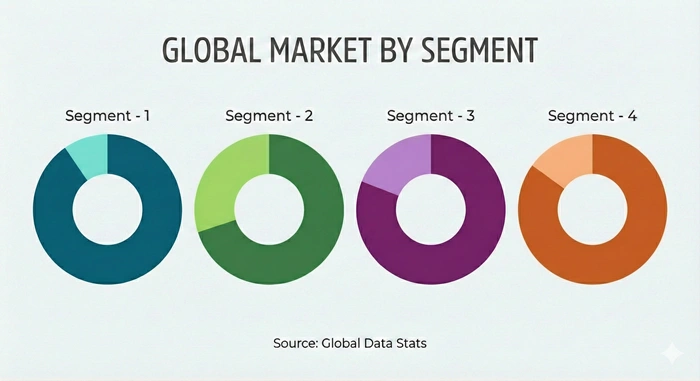
The software segment accounts for 66% of the multimodal AI market share in 2024, driven by organizations deploying advanced AI applications capable of simultaneously processing and analyzing text, images, audio, video, and sensor data for comprehensive insights. Multimodal AI software integrates cutting-edge technologies including deep learning, natural language processing, computer vision, and speech recognition into unified platforms enabling computers to understand complex real-world scenarios requiring synthesis of diverse information streams. The segment benefits from scalability advantages allowing organizations to expand AI capabilities without major hardware investments, with cloud-based software-as-a-service offerings providing access to sophisticated multimodal models through simple APIs requiring minimal technical expertise. Leading technology companies including Google, Microsoft, OpenAI, and Meta invest billions developing next-generation multimodal software platforms, driving continuous innovation in model architectures, training techniques, and pre-trained foundation models that organizations fine-tune for specific use cases.
The services segment demonstrates the highest projected growth rate at CAGR of 38% during the forecast period as enterprises require expert assistance implementing, integrating, and optimizing increasingly complex multimodal AI systems within existing technology ecosystems. Professional services including consulting engagements help organizations identify high-value use cases, assess technical readiness, and develop implementation roadmaps aligned with business objectives, while integration specialists connect multimodal platforms with CRM systems, data warehouses, and operational applications ensuring seamless information flow. Training services prove critical as successful deployment requires workforce development across technical teams implementing solutions and business users leveraging AI capabilities in daily workflows, with customized programs addressing skill gaps and change management challenges. North America leads services adoption driven by mature consulting markets and substantial enterprise AI budgets, while Asia Pacific exhibits rapid growth as organizations across the region accelerate digital transformation initiatives requiring external expertise to navigate technical complexities and maximize return on multimodal AI investments.
End-Use Analysis
Media and Entertainment Leads While BFSI Demonstrates Rapid Expansion
The media and entertainment segment holds the largest share in the 2024 multimodal AI market, leveraging technology to transform content creation, production workflows, distribution strategies, and audience engagement across platforms. Multimodal AI enables automated video editing combining scene recognition with audio analysis to identify highlights, generate summaries, and create personalized compilations tailored to viewer preferences, while content recommendation engines analyze viewing histories, search patterns, social media engagement, and even facial expressions detected through device cameras to suggest programming matching current moods. The proliferation of streaming platforms intensifies competition for subscriber attention, driving media companies to implement AI solutions delivering personalized experiences, optimizing content catalogs for diverse global audiences, and automating production tasks reducing costs while accelerating time-to-market. The segment benefits from abundant multimodal training data including massive video libraries, music collections, and user interaction logs that technology companies leverage to develop increasingly sophisticated models.
The BFSI segment exhibits the fastest projected growth rate during the forecast period as financial institutions deploy multimodal AI systems enhancing security, improving customer service, streamlining operations, and enabling sophisticated risk assessment. Banks leverage multimodal authentication combining facial recognition, voice biometrics, behavioral patterns, and contextual factors including location and device characteristics to provide secure yet frictionless access to digital services, while fraud detection systems analyze transaction patterns alongside social media activity, communication metadata, and even typing dynamics to identify suspicious behaviors invisible to single-mode approaches. Customer service chatbots enhanced with computer vision understand documents customers photograph for assistance, interpret emotional states from voice tone guiding interaction strategies, and maintain context across channels as conversations shift between messaging, voice calls, and video consultations. Asia Pacific leads BFSI growth driven by rapid mobile banking adoption, government initiatives promoting digital financial inclusion, and intense competition among financial technology startups deploying AI capabilities to differentiate services, while North America maintains substantial market presence through established institutions modernizing legacy systems and regulatory environments supporting responsible AI innovation.
Regional Insights
North America
Technology Leadership and Enterprise Adoption Drive Regional Dominance
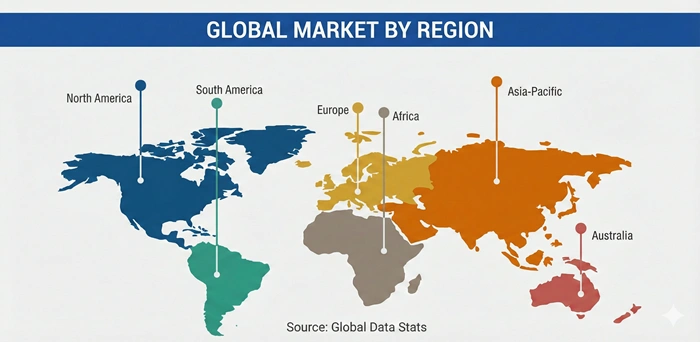
North America dominates the global multimodal AI market with 48% market share in 2024, supported by presence of leading technology companies driving platform innovation, substantial corporate R&D investments, and mature enterprise adoption across diverse industry sectors. The region benefits from sophisticated AI ecosystems including world-class research universities producing specialized talent, venture capital networks funding innovative startups, and collaborative partnerships between academia and industry advancing fundamental algorithms and applications. The United States leads North American market activity, with technology giants including Google, Microsoft, Amazon, Meta, and OpenAI headquartered in the region investing tens of billions annually developing next-generation multimodal models, cloud infrastructure supporting AI workloads, and applications spanning consumer services to enterprise solutions. The U.S. multimodal AI market is valued at USD 1.08 billion in 2025 and projects reaching USD 18.60 billion by 2034 at CAGR of 37.14%.
The North American multimodal AI market thrives due to early enterprise adoption across healthcare organizations implementing diagnostic support systems, financial institutions deploying fraud detection platforms, retailers personalizing customer experiences, and manufacturers optimizing quality control through computer vision integrated with sensor analytics. Government support through initiatives including the National Institute of Standards and Technology identifying multimodal models as cornerstone technologies and substantial federal research funding accelerates innovation while addressing societal concerns around bias, privacy, and transparency. Canada contributes to regional growth through government programs supporting AI research including national AI strategy investments and Vector Institute initiatives, while Mexico emerges as nearshoring destination for AI development centers serving North American markets. The region's regulatory environment balancing innovation encouragement with consumer protection creates predictable frameworks facilitating technology investments while building public trust essential for widespread adoption across sensitive applications.
Asia Pacific
Rapid Technology Adoption and Government Support Fuel Fastest Regional Growth
Asia Pacific emerges as the fastest-growing region for the multimodal AI market during the forecast period, driven by rapid technology adoption across e-commerce, healthcare, finance, and manufacturing sectors in countries including China, Japan, India, and South Korea. The region's growth stems from massive smartphone user bases exceeding two billion people creating enormous markets for consumer AI applications, government initiatives prioritizing artificial intelligence development as strategic national priority, and intense competition among technology companies deploying cutting-edge capabilities to capture market share. China dominates regional activity through substantial investments in AI research and development, with technology giants including Baidu, Alibaba, and Tencent developing multimodal platforms spanning autonomous driving to smart city services, while government programs targeting AI leadership by 2030 provide funding for research, talent development, and infrastructure supporting industry growth.
The Asia Pacific multimodal AI market benefits from diverse economic conditions creating opportunities across development stages, with advanced economies like Japan and South Korea demonstrating sophisticated applications in robotics, automotive, and consumer electronics while emerging markets including India, Indonesia, and Vietnam exhibit rapid adoption driven by digital transformation, mobile-first populations, and favorable demographics. India launches government initiatives including BharatGen developing multimodal large language models for public services in multiple Indian languages, while Southeast Asian nations leverage multimodal AI addressing unique regional challenges including multilingual communication, agricultural optimization, and disaster response. The region's manufacturing strength in electronics, semiconductors, and consumer goods provides foundation for AI hardware development and deployment at scale, while growing venture capital ecosystems fund innovative startups developing specialized applications tailored to local market needs and cultural contexts differentiating Asia Pacific from Western-centric AI development approaches.
Top Key Players
-
Google LLC (United States)
-
Microsoft Corporation (United States)
-
Amazon Web Services Inc. (United States)
-
Meta Platforms Inc. (United States)
-
OpenAI L.L.C. (United States)
-
IBM Corporation (United States)
-
Salesforce Inc. (United States)
-
Aimesoft (Germany)
-
Jina AI GmbH (Germany)
-
Twelve Labs Inc. (United States)
-
Uniphore Technologies Inc. (United States)
-
Reka AI Inc. (United States)
-
Anthropic PBC (United States)
-
Databricks Inc. (United States)
-
Hugging Face Inc. (United States)
Recent Developments
-
December 2024: Google released Gemini 2.0 Flash as its new flagship AI model, making Gemini 2.0 Flash Thinking Experimental available through Gemini app interfaces to expand sophisticated AI reasoning capabilities combining text, image, audio, and video understanding in single unified platform
-
December 2023: Alphabet Inc. unveiled Gemini as highly developed multimodal AI model establishing new benchmark by becoming first to outshine human experts on Massive Multitask Language Understanding assessment metric, demonstrating superior performance across diverse knowledge domains and reasoning tasks
-
October 2023: Reka AI launched Yasa-1 as breakthrough multimodal AI assistant extending capabilities beyond text to encompass image analysis, short video processing, and audio interpretation, allowing enterprises to customize features using private datasets across various modalities for innovative use case development
-
September 2024: Salesforce acquired Tenyx, developer of AI-powered voice agents, enabling extension of Agentforce Service Agent autonomous capabilities through integration of innovative voice AI solutions enhancing customer service automation across communication channels
-
February 2025: Arteria AI established dedicated research division named Arteria Café in Toronto to advance artificial intelligence applications for financial services documentation processing, combining document understanding with contextual analysis capabilities
Market Trends
Generative AI Integration and Cross-Modal Content Creation Transform Capabilities
The multimodal AI market demonstrates clear trends toward integration with generative AI techniques enabling systems to create entirely new content seamlessly blending text, images, audio, and video based on high-level descriptions or limited examples. Generative multimodal models produce marketing materials automatically combining graphics, narration, and music tailored to target audiences, generate interactive educational content adapting to individual learning styles through text explanations supplemented with custom illustrations and demonstrations, and create immersive entertainment experiences where users describe desired scenarios that AI transforms into complete audiovisual environments. The technology enables cross-modal generation where users provide input in one modality and receive output in entirely different formats, such as converting written stories into illustrated videos with voiceovers, transforming product images into detailed textual descriptions optimized for search engines, or generating photorealistic visualizations from architectural blueprints and verbal design preferences.
Domain-specific multimodal models represent another significant trend as organizations recognize general-purpose platforms cannot match performance of specialized systems trained on industry data and optimized for particular workflows. Healthcare multimodal AI combines medical imaging interpretation with clinical note understanding and genomic analysis tailored to diagnostic workflows, legal systems process contracts, case law, and evidence including documents, audio recordings, and video depositions within regulatory frameworks governing legal proceedings, and financial models integrate market data, news sentiment, satellite imagery tracking economic activity, and alternative data sources providing unique insights unavailable through traditional analysis. The multimodal AI market increasingly emphasizes responsible AI practices including bias detection and mitigation techniques, explainability features enabling users to understand how systems reach conclusions, and privacy-preserving approaches allowing model training on sensitive data without exposing individual information, addressing concerns essential for building trust and enabling deployment across regulated industries and consumer applications handling personal information.
Segments Covered in the Report
By Component
-
Software (Platforms, Tools, SDKs)
-
Services (Consulting, Integration & Deployment, Training & Support, Managed Services)
By Data Modality
-
Text Data
-
Image Data
-
Speech & Voice Data
-
Video & Audio Data
-
Sensor Data
By End Use
-
Media & Entertainment
-
BFSI (Banking, Financial Services, Insurance)
-
IT & Telecommunications
-
Healthcare & Life Sciences
-
Automotive & Transportation
-
Retail & E-commerce
-
Gaming
-
Manufacturing
-
Education
-
Others (Government, Agriculture, Energy)
By Enterprise Size
-
Large Enterprises
-
Small and Medium Enterprises (SMEs)
By Region
-
North America (United States, Canada, Mexico)
-
Europe (United Kingdom, Germany, France, Italy, Spain)
-
Asia Pacific (China, Japan, India, South Korea, Australia, Southeast Asia)
-
Latin America (Brazil, Argentina, Chile)
-
Middle East & Africa (UAE, Saudi Arabia, South Africa)
Frequently Asked Questions
Question 1: What is the multimodal AI market size and projected growth?
Answer: The global multimodal AI market is valued at USD 2.21 billion in 2025 and is predicted to reach USD 29.81 billion by 2033, growing at a CAGR of 36.32% from 2026 to 2033. This growth reflects increasing adoption across healthcare, automotive, retail, and entertainment sectors worldwide.
Question 2: Which region dominates the multimodal AI market currently?
Answer: North America leads the multimodal AI market with 48% market share in 2024, supported by technology leadership and substantial R&D investments. Asia Pacific demonstrates the fastest growth rate driven by rapid technology adoption, government support, and massive smartphone user bases across China, Japan, and India.
Question 3: What applications drive the multimodal AI market expansion?
Answer: Media and entertainment holds the largest application share leveraging multimodal AI for content creation and personalized recommendations, while BFSI exhibits fastest growth through enhanced security and fraud detection. Healthcare, autonomous vehicles, and customer service applications also contribute significantly to market development.
Question 4: How does the multimodal AI market benefit from generative AI integration?
Answer: The multimodal AI market leverages generative AI to create entirely new content blending text, images, audio, and video based on descriptions, enabling cross-modal generation and automated multimedia production. This integration powers applications from marketing automation to immersive entertainment experiences and personalized educational content.
Question 5: What challenges affect multimodal AI market adoption rates?
Answer: The multimodal AI market faces challenges including high implementation costs requiring substantial computational resources and specialized expertise, data quality issues demanding large labeled multimodal datasets, and bias potential in models trained on unrepresentative data. Privacy regulations and transferability limitations also constrain adoption across sensitive applications.