
Mouth Ulcer Treatment Market Overview
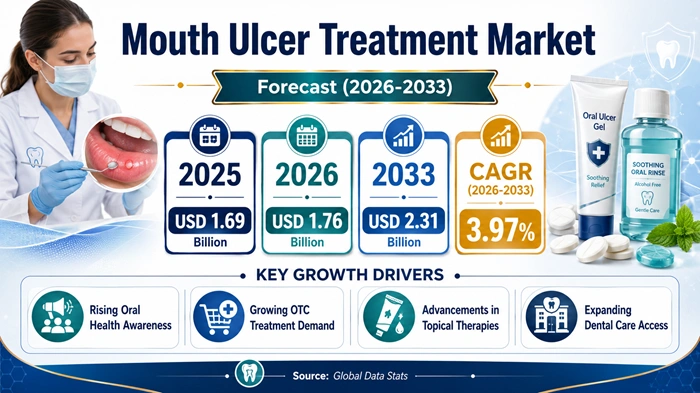
The global mouth ulcer treatment market size is valued at USD 1.69 billion in 2025 and is predicted to increase from USD 1.76 billion in 2026 to approximately USD 2.31 billion by 2033, growing at a CAGR of 3.97% from 2026 to 2033.
This steady growth reflects the widespread prevalence of recurrent aphthous stomatitis and other oral ulcerative conditions, alongside growing consumer preference for fast-acting topical gels, mouthwashes, and over-the-counter remedies. As oral health awareness continues rising globally and pharmaceutical companies expand their portfolio of pain-relieving and healing formulations, demand for effective mouth ulcer treatment products keeps expanding across both retail pharmacy and hospital channels.
AI Impact on the Mouth Ulcer Treatment Industry
Artificial Intelligence Is Enhancing Oral Lesion Diagnosis, Supporting Personalized Formulation Development, and Strengthening Consumer Product Recommendations Across the Mouth Ulcer Treatment Landscape — Fundamentally Changing How Patients and Practitioners Approach Oral Care
Artificial intelligence has increasingly found its way into oral health diagnostics, with image recognition tools now capable of analyzing photographs of oral lesions to distinguish common aphthous ulcers from more serious conditions requiring specialist referral, helping patients and dentists make faster, more informed treatment decisions. This diagnostic support matters considerably since many consumers self-treat minor mouth ulcers without professional guidance, and AI-assisted screening apps are helping identify cases that warrant clinical attention rather than simple over-the-counter management. Companies integrating AI-powered lesion recognition into telehealth and consumer health apps are increasingly differentiating themselves through improved patient triage accuracy.
Beyond diagnostics, AI is also supporting more personalized formulation development, with data analytics tools now able to identify which active ingredient combinations, whether corticosteroids, antimicrobials, or natural extracts, deliver the fastest symptom relief across different patient demographics and ulcer types. This capability helps manufacturers refine product formulations more efficiently, reducing the trial-and-error typically involved in developing new topical treatments. As these AI-driven diagnostic and formulation tools continue advancing, they are becoming an increasingly useful factor shaping product innovation across the broader mouth ulcer treatment market.
Growth Factors
Rising Prevalence of Oral Ulcerative Conditions and Growing Consumer Preference for OTC Remedies Continue Driving Sustained Demand
The most significant growth factor supporting the mouth ulcer treatment market is the persistently high prevalence of recurrent aphthous stomatitis, commonly known as canker sores, which affects a substantial share of the global population at some point during their lifetime due to factors including stress, nutritional deficiencies, and minor oral trauma. This consistently high incidence rate ensures a steady, recurring demand base for both preventive and symptomatic treatment products across all age groups.
A second important growth factor is the growing consumer preference for convenient, fast-acting over-the-counter remedies such as topical gels, medicated patches, and antiseptic mouthwashes, as more people seek immediate relief without requiring a doctor's visit for what is typically a self-limiting condition. This growing self-care trend, combined with expanding retail and e-commerce distribution channels making these products more accessible, has broadened the addressable consumer base considerably. This combination of rising ulcer prevalence and growing OTC preference continues to strengthen demand across the mouth ulcer treatment market.
Market Outlook
Advanced Formulation Innovation and Expanding E-Commerce Distribution Point Toward Sustained Growth Through 2033
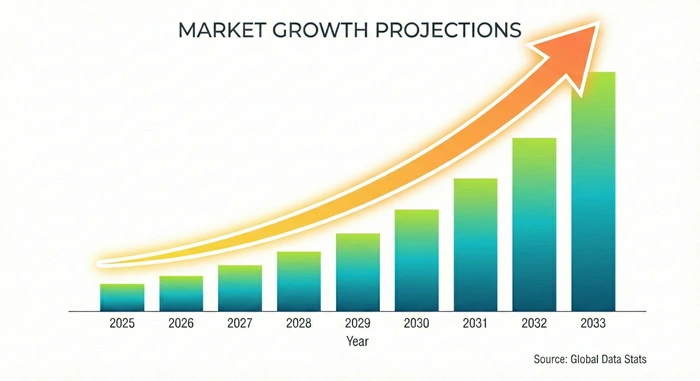
Looking ahead through the forecast period, the mouth ulcer treatment industry is expected to benefit substantially from continued innovation in advanced formulation technology, as manufacturers develop novel drug delivery systems including medicated patches and bioadhesive gels that provide longer-lasting relief and improved active ingredient absorption at the ulcer site. This technology evolution is likely to reshape consumer purchasing preferences considerably as more sophisticated products reach retail shelves.
At the same time, expanding e-commerce and telemedicine access is expected to create substantial new demand, as consumers increasingly research symptoms online and purchase treatment products through digital channels without needing to visit a physical pharmacy. Companies that can deliver both clinically effective formulations and strong digital retail presence are increasingly well positioned to capture this growth. Manufacturers combining strong product innovation with broad distribution reach are likely to lead growth within the broader mouth ulcer treatment market through 2033.
Expert Speaks
-
"Our continued investment in oral care innovation reflects our commitment to giving consumers fast, effective relief for everyday conditions like mouth ulcers." — CEO, GSK plc
-
"As consumer preference shifts toward convenient self-care solutions, our oral health portfolio continues evolving to meet growing demand for effective over-the-counter remedies." — CEO, Haleon plc
-
"We remain focused on advancing formulation science to deliver oral care products that genuinely improve everyday quality of life for our consumers." — CEO, Reckitt Benckiser Group plc
Key Report Takeaways
-
North America leads the global mouth ulcer treatment market, holding approximately 35% market share in 2025, supported by high consumer awareness and strong retail pharmacy penetration
-
Asia Pacific is the fastest-growing region, projected to expand at a CAGR near 6.2% through 2033, driven by rising oral health awareness and expanding pharmaceutical retail infrastructure across China and India
-
Adults represent the dominant age group segment, accounting for roughly 55% share, given higher reported incidence of stress-related and dietary-triggered ulcers among working-age populations
-
Topical gel formulations contribute the most to overall demand, reflecting consumer preference for direct, localized pain relief application
-
Antimicrobial drug classes remain the most widely adopted treatment type, valued for their effectiveness in preventing secondary infection at the ulcer site
-
Analgesics and corticosteroid segments will grow the fastest among drug class categories, holding close to 24% market share with a CAGR near 5.8% through the forecast period, driven by rising demand for rapid pain relief formulations
Market Scope
| Report Coverage | Details |
|---|---|
| Market Size by 2033 | USD 2.31 Billion |
| Market Size by 2025 | USD 1.69 Billion |
| Market Size by 2026 | USD 1.76 Billion |
| Market Growth Rate from 2026 to 2033 | CAGR of 3.97% |
| Dominating Region | North America |
| Fastest Growing Region | Asia Pacific |
| Base Year | 2025 |
| Forecast Period | 2026 to 2033 |
| Segments Covered | Drug Class, Formulation, Distribution Channel, Region |
| Regions Covered | North America, Europe, Asia Pacific, Latin America, Middle East & Africa |
Market Dynamics
Drivers Impact Analysis
Rising Ulcer Prevalence and Growing OTC Self-Care Preference Remain the Two Strongest Forces Behind Market Momentum
| Driver | (≈) % Impact on CAGR Forecast | Geographic Relevance | Impact Timeline |
|---|---|---|---|
| High persistent prevalence of recurrent aphthous stomatitis across all age groups | ~34% | Global | Short to long-term |
| Growing consumer preference for convenient over-the-counter treatment options | ~28% | Global, strongest in North America, Europe | Medium to long-term |
| Expanding retail pharmacy and e-commerce distribution infrastructure | ~24% | Global | Short to medium-term |
| Rising oral health awareness campaigns encouraging proactive self-treatment | ~14% | Asia Pacific, Latin America | Medium-term |
High persistent prevalence of recurrent aphthous stomatitis continues to serve as the primary engine behind sustained growth in the mouth ulcer treatment market, as this common condition affects a substantial share of the population repeatedly throughout their lives due to stress, dietary triggers, and minor oral trauma. This consistently recurring patient base has translated directly into steady, dependable demand across retail and pharmacy channels worldwide.
Growing consumer preference for convenient over-the-counter treatment represents the second major driver, as more people seek fast, accessible relief without requiring a physician visit for what is typically a self-limiting condition. This self-care driven demand, combined with expanding retail and e-commerce distribution reach, continues reinforcing steady demand growth across the broader mouth ulcer treatment market.
Restraints Impact Analysis
Limited Product Differentiation and Availability of Home Remedies Continue to Moderate Broader Adoption
| Restraint | (≈) % Impact on CAGR Forecast | Geographic Relevance | Impact Timeline |
|---|---|---|---|
| Widespread availability of home remedies reducing reliance on commercial products | ~35% | Global, particularly emerging markets | Short to medium-term |
| Limited product differentiation among competing over-the-counter brands | ~29% | Global | Medium-term |
| Short-lived nature of most ulcer episodes reducing repeat purchase urgency | ~22% | Global | Short to medium-term |
| Price sensitivity limiting adoption of premium advanced formulation products | ~14% | Emerging markets | Short to medium-term |
The most persistent restraint facing the mouth ulcer treatment market is the widespread availability and continued use of home remedies such as salt water rinses and honey applications, which many consumers still turn to instead of purchasing commercial treatment products for minor, self-limiting ulcers. This reliance on traditional remedies remains particularly common in price-sensitive emerging markets.
Limited product differentiation among competing over-the-counter brands represents a second significant restraint, since many available gels and mouthwashes offer similar active ingredients and comparable efficacy, making it difficult for manufacturers to command premium pricing or build strong brand loyalty. Combined with the naturally short-lived duration of most ulcer episodes, these restraints continue moderating how quickly broader premium product adoption spreads across the global mouth ulcer treatment market.
Opportunities Impact Analysis
Advanced Drug Delivery Innovation and Expanding Natural Formulation Demand Represent the Clearest Paths to Growth
| Opportunity | (≈) % Impact on CAGR Forecast | Geographic Relevance | Impact Timeline |
|---|---|---|---|
| Developing advanced drug delivery formats including medicated patches and bioadhesive gels | ~37% | North America, Europe | Short to medium-term |
| Growing consumer demand for herbal and natural ingredient-based formulations | ~33% | Global | Medium to long-term |
| Expanding pharmaceutical retail and e-commerce infrastructure across Asia Pacific | ~30% | Asia Pacific | Medium-term |
Developing advanced drug delivery formats represents one of the most substantial opportunities within the mouth ulcer treatment market, as manufacturers creating medicated patches and bioadhesive gels that offer longer-lasting relief stand to capture significant share from consumers seeking more effective alternatives to traditional topical creams. This formulation innovation is expected to meaningfully reshape competitive positioning among leading oral care manufacturers over the coming years.
Growing consumer demand for herbal and natural ingredient-based formulations presents a second substantial opportunity, as more health-conscious buyers seek plant-derived alternatives to synthetic corticosteroids and antimicrobials for treating minor oral lesions. Expanding pharmaceutical retail and e-commerce infrastructure across Asia Pacific further broadens the opportunity landscape, particularly as growing middle-class populations gain easier access to branded treatment products. Companies pursuing these parallel opportunities are well positioned to capture meaningful growth within the broader mouth ulcer treatment market through the forecast period.
Segment Analysis
By Drug Class: Antimicrobial
Antimicrobial Treatments Continue to Anchor the Drug Class Landscape, Reflecting Their Broad Effectiveness Against Secondary Infection
Antimicrobial drug classes hold the largest share within the drug class segment of the mouth ulcer treatment market, accounting for approximately 42% of total segment revenue in 2025. This dominance reflects the widespread and long-established use of antiseptic mouthwashes and topical antimicrobial gels, which help prevent secondary bacterial infection at the ulcer site while supporting the natural healing process. In markets like the United States and the United Kingdom, consumers increasingly favor combination antimicrobial and pain-relief products that address both infection risk and symptomatic discomfort in a single application. Leading suppliers such as GSK, Colgate-Palmolive, and Church & Dwight continue to dominate this segment through continuous formulation improvements and expanded retail distribution.
Growth within this segment remains particularly strong in North America, where high consumer awareness and strong retail pharmacy penetration continue driving broad access to established antimicrobial treatment brands across drugstore and grocery channels alike. The region's combination of strong brand recognition and deep retail infrastructure has helped antimicrobial products maintain their leading position despite growing interest in analgesic and natural alternative formulations. As formulation innovation continues improving antimicrobial efficacy, this drug class is expected to remain the dominant category within the broader mouth ulcer treatment market throughout the forecast period.
By Drug Class: Analgesics and Corticosteroids
Analgesics and Corticosteroids Represent the Fastest-Growing Drug Category, Reflecting Rising Demand for Rapid Pain Relief
Analgesics and corticosteroids represent the fastest-growing drug class within the mouth ulcer treatment market, holding close to 24% share in 2025 with a projected CAGR near 5.8% through the forecast period as consumers increasingly prioritize fast symptomatic relief alongside healing support. These formulations work by numbing the affected area and reducing inflammation, offering more immediate comfort than antimicrobial products alone, which particularly appeals to consumers dealing with painful ulcers that interfere with eating and speaking. This pain-relief focus has generated substantial consumer interest, especially among adults managing recurrent stress-related ulcer episodes during demanding periods.
Growth in this segment remains especially strong in North America, where strong retail pharmacy distribution and comprehensive over-the-counter product availability continue expanding consumer access to advanced analgesic gel and spray formulations. Companies like Bristol-Myers Squibb and Church & Dwight have expanded their pain-relief product portfolios significantly to serve this growing consumer demand, often emphasizing fast-acting formulas in their marketing to differentiate from slower-acting alternatives. As consumer preference continues shifting toward immediate symptom relief, this drug segment is expected to remain the fastest-growing category within the broader mouth ulcer treatment market.
Regional Insights
North America
High Consumer Awareness and Strong Retail Pharmacy Penetration Keep North America Firmly in the Lead
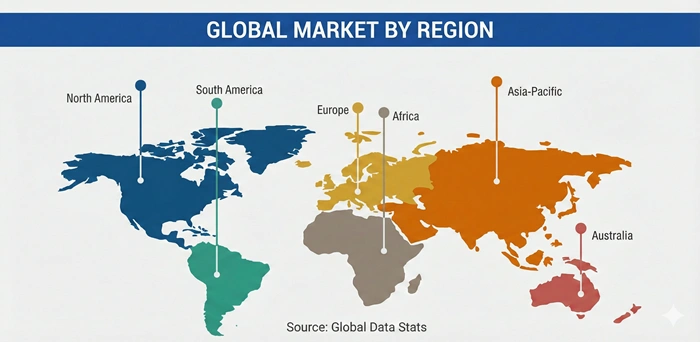
North America commands the leading position in the global mouth ulcer treatment market, holding approximately 35% share in 2025, supported by high consumer awareness, strong retail pharmacy penetration, and a dense concentration of leading oral care manufacturers. The United States drives the overwhelming majority of regional demand, backed by widespread availability of branded over-the-counter products across drugstore, grocery, and online retail channels. Companies with strong regional presence include GSK, Colgate-Palmolive, Bristol-Myers Squibb, and Church & Dwight, each maintaining deep relationships with major retail distribution networks across the country.
Canada also contributes meaningfully to regional demand, supported by growing consumer self-care trends and expanding pharmacy retail availability of oral health treatment products. The region's combination of strong brand recognition, deep retail infrastructure, and continuous product innovation ensures North America's leadership position within the mouth ulcer treatment market remains firmly intact through the remainder of the forecast period.
Asia Pacific
Rising Oral Health Awareness and Expanding Pharmaceutical Retail Infrastructure Position Asia Pacific as the Fastest-Growing Region
Asia Pacific is projected to register the fastest CAGR within the global mouth ulcer treatment market through 2033, expanding at a rate near 6.2% as rising oral health awareness and expanding pharmaceutical retail infrastructure create substantial new demand across the region. China and India lead much of this regional growth, supported by growing middle-class disposable income and expanding modern retail and e-commerce pharmacy channels reaching previously underserved consumers. Regional and international oral care companies alike have expanded their presence to serve this growing consumer base, often launching affordable formulations tailored to local preferences.
Japan and South Korea contribute further depth to regional growth, both bringing well-established oral health consciousness that continues driving demand for premium topical treatment formulations. Growing awareness of oral hygiene and preventive dental care across several Asia Pacific countries continues to accelerate treatment product adoption among expanding consumer bases alike. This combination of rising disposable income, expanding retail access, and growing oral health awareness positions Asia Pacific as the clear growth leader within the broader mouth ulcer treatment market through the forecast period.
Customization Available for This Report
Region-Specific and Country-Specific Versions of This Report Are Available to Deliver a Sharper, More Localized View of Market Dynamics
This report can be tailored on a region-by-region and country-by-country basis, providing localized market sizing, competitive mapping, and consumer adoption trend analysis that a global overview alone cannot fully capture.
Clients seeking a more focused breakdown can request a customized version covering any of the following regions and countries, complete with demand forecasting, competitor landscape review, and adoption trend analysis tied specifically to the mouth ulcer treatment keyword focus:
North America
-
U.S. — Detailed review of retail pharmacy distribution and consumer preference trends
-
Canada — Coverage of self-care trend adoption and retail availability patterns
-
Mexico — Analysis of emerging oral care retail infrastructure modernization trends
Europe
-
U.K. — Review of oral care product regulation and consumer adoption trends
-
Germany — Coverage of retail investment among leading oral care manufacturers
-
France — Insights into antimicrobial and analgesic formulation adoption patterns
-
Italy — Analysis of regional oral care treatment investment trends
-
Rest of Europe — Country-level view of emerging demand across Eastern Europe and the Nordics
Asia Pacific
-
China — Coverage of expanding retail infrastructure and consumer adoption
-
India — Analysis of growing oral health awareness and treatment access
-
Japan — Review of established oral health consciousness and adoption trends
-
South Korea — Assessment of oral care product investment and adoption
-
Australia — Insights into premium formulation adoption trends
-
Rest of Asia Pacific — Country-level breakdown covering Thailand, Vietnam, Indonesia, and Malaysia
Latin America
-
Brazil — Coverage of expanding oral care treatment access and adoption
-
Argentina — Analysis of early-stage retail infrastructure modernization trends
-
Rest of Latin America — Country-level sizing across Colombia, Peru, and Chile
Middle East & Africa
-
UAE — Review of oral care retail investment and consumer adoption trends
-
Saudi Arabia — Coverage of expanding oral care market modernization initiatives
-
Rest of MEA — Country-level view of Sub-Saharan Africa oral care retail expansion
Top Key Players
-
GSK plc (United Kingdom)
-
Colgate-Palmolive Company (United States)
-
Church & Dwight Co Inc (United States)
-
Bristol-Myers Squibb Company (United States)
-
Pfizer Inc (United States)
-
Haleon plc (United Kingdom)
-
Reckitt Benckiser Group plc (United Kingdom)
-
Johnson & Johnson (United States)
-
3M Company (United States)
-
Sanofi SA (France)
-
Taro Pharmaceutical Industries Ltd (Israel)
-
Sunstar Americas Inc (United States)
Recent Developments
-
In 2025, Haleon expanded its oral care product line with new fast-acting topical gel formulations targeting rapid ulcer pain relief
-
In 2025, Colgate-Palmolive strengthened its oral health portfolio through continued investment in antimicrobial mouthwash formulation improvements
-
In 2026, Reckitt Benckiser deepened its investment in natural and herbal-based oral care alternatives to meet growing consumer preference
-
In 2025, GSK advanced its consumer oral health division with expanded distribution partnerships across emerging Asia Pacific retail markets
-
In 2025, Church & Dwight broadened its analgesic and corticosteroid product range to address rising demand for combination pain-relief formulations
Market Trends
Natural Formulation Demand and Advanced Drug Delivery Innovation Are Reshaping Product Development Priorities
One of the clearest trends shaping the mouth ulcer treatment market is the growing consumer shift toward herbal and natural ingredient-based formulations, as health-conscious buyers increasingly seek plant-derived alternatives to synthetic corticosteroids and antimicrobials for treating everyday oral lesions. Manufacturers are investing heavily in natural product research, recognizing that clean-label formulations have become an increasingly important purchasing consideration as consumer wellness trends continue strengthening.
A second significant trend is the emergence of advanced drug delivery formats including medicated patches and bioadhesive gel technology, which offer longer contact time at the ulcer site and improved active ingredient absorption compared to traditional topical creams. This trend toward more sophisticated delivery mechanisms is particularly meaningful for consumers seeking longer-lasting relief between applications, continuing to support steady expansion across the broader mouth ulcer treatment market as formulation technology continues advancing.
Segments Covered in the Report
By Drug Class
-
Antimicrobial
-
Analgesics and Corticosteroids
-
Antihistamine
-
Other Drug Classes
By Formulation
-
Gels
-
Mouthwash
-
Sprays
-
Lozenges
-
Medicated Patches
By Distribution Channel
-
Retail Pharmacies
-
Hospital Pharmacies
-
Online Pharmacies
By Region
-
North America (U.S., Canada, Mexico)
-
Europe (U.K., Germany, France, Italy, Rest of Europe)
-
Asia Pacific (China, India, Japan, South Korea, Australia, Rest of Asia Pacific)
-
Latin America (Brazil, Argentina, Rest of Latin America)
-
Middle East & Africa (UAE, Saudi Arabia, Rest of MEA)
❝ Built for Every Level — From Startups to Industry Giants ❞
Here Is Exactly How This Report Works for You
-
For tier 1 companies, investors, and established market leaders, this report delivers detailed competitor revenue analysis, product innovation trend mapping, and geopolitical risk context that support confident decisions around product expansion, pricing strategy, and long-term positioning within the mouth ulcer treatment space
-
For tier 2 and tier 3 companies, startups, and mid-sized suppliers, this report highlights the most commercially promising formulation categories and underserved regional opportunities, giving you a practical framework to compete against larger established players without overextending limited resources
-
For every decision maker across the value chain, this report explains exactly how consumer preference shifts, formulation innovation developments, and competitor product launches are shaping market direction through 2033, equipping you to plan investment and go-to-market decisions with genuine confidence
Frequently Asked Questions
Question 1: How large is the global mouth ulcer treatment market expected to become by 2033?
Answer: The global mouth ulcer treatment market was valued at USD 1.69 billion in 2025 and is projected to reach USD 2.31 billion by 2033. This growth is driven largely by high ulcer prevalence and growing consumer preference for OTC remedies.
Question 2: What is driving growth in the mouth ulcer treatment market right now?
Answer: Growth in the mouth ulcer treatment market is being driven by persistent aphthous stomatitis prevalence and rising consumer self-care preferences. Expanding e-commerce and retail pharmacy distribution is further reinforcing this expansion.
Question 3: Which region currently dominates the mouth ulcer treatment market?
Answer: North America currently leads the mouth ulcer treatment market with roughly 35% share, supported by high consumer awareness. Asia Pacific is growing the fastest, driven by rising oral health awareness and expanding retail infrastructure.
Question 4: Which drug class generates the most revenue in the mouth ulcer treatment market?
Answer: Antimicrobial treatments generate the largest share of revenue in the mouth ulcer treatment market, reflecting their broad effectiveness against secondary infection. Analgesics and corticosteroids remain the fastest-growing drug category.
Question 5: Who are the leading companies competing in the mouth ulcer treatment market?
Answer: Leading companies in the mouth ulcer treatment market include GSK, Colgate-Palmolive, Church & Dwight, Bristol-Myers Squibb, and Haleon. These companies compete through continuous innovation in formulation technology and retail distribution reach.