
Molecular Diagnostics Market Overview
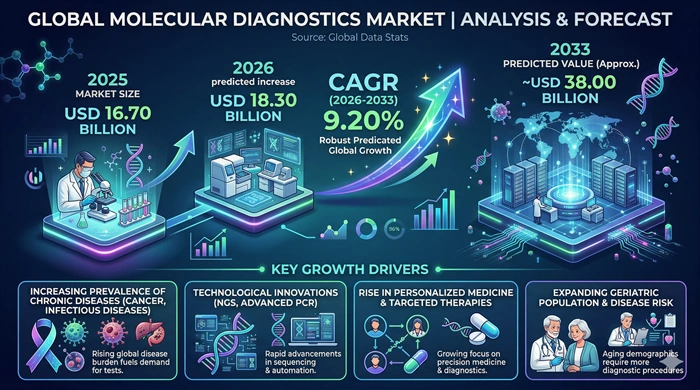
The global Molecular Diagnostics market size is valued at USD 16.70 billion in 2025 and is predicted to increase from USD 18.30 billion in 2026 to approximately USD 38.00 billion by 2033, growing at a CAGR of 9.20% from 2026 to 2033.
Molecular diagnostics is a rapidly advancing segment of in-vitro diagnostics that uses techniques such as polymerase chain reaction, next-generation sequencing, in situ hybridization, and microarray analysis to detect and analyze nucleic acid sequences — DNA and RNA — in patient samples for the purpose of diagnosing infectious diseases, identifying cancer-related genetic mutations, screening blood donations, and guiding precision medicine treatment decisions. This technology category has evolved from a research-only domain into a critical pillar of routine clinical laboratory practice — now informing treatment decisions across oncology, infectious disease, inherited genetic disorders, pharmacogenomics, and reproductive medicine in hospitals, reference laboratories, and point-of-care settings globally. The Molecular Diagnostics market is experiencing strong and sustained growth driven by the progressive expansion of PCR and NGS platforms into mainstream clinical use, the growing role of liquid biopsy in cancer management, rising infectious disease surveillance needs post-pandemic, and the accelerating adoption of companion diagnostics alongside targeted cancer therapies that mandate molecular testing before treatment selection.
AI Impact on the Molecular Diagnostics Industry
Artificial Intelligence Is Transforming Genomic Data Interpretation, Pathogen Identification, Biomarker Discovery, Liquid Biopsy Analysis, and Clinical Decision Support in Ways That Are Fundamentally Accelerating the Clinical Utility and Commercial Scale of Molecular Diagnostic Testing Across Global Healthcare Settings*
Artificial intelligence is delivering its most immediately impactful contributions to the Molecular Diagnostics market through machine learning-powered genomic sequence interpretation — where AI algorithms analyze next-generation sequencing outputs to identify clinically actionable genetic variants, classify tumor mutation profiles, detect resistance mutations in infectious pathogens, and prioritize variants of uncertain significance for further clinical review with a speed and consistency that far exceeds manual bioinformatics analysis. These AI-powered variant interpretation platforms — developed by companies including Illumina, Tempus, Foundation Medicine, and Fabric Genomics — are enabling clinical molecular diagnostic laboratories to process and report whole exome, whole genome, and targeted panel sequencing results within clinically meaningful timeframes, transforming NGS from a research technology into a viable routine clinical diagnostic tool that is progressively being adopted for oncology, rare disease, and infectious disease applications in hospital and reference laboratory settings globally. The progressive regulatory acceptance of AI-assisted molecular diagnostic interpretation tools by the FDA and equivalent global regulatory agencies is creating a favorable framework that is accelerating institutional adoption of AI-powered molecular testing workflows as an evolving standard of genomically-informed care.
AI is simultaneously advancing pathogen detection and infectious disease diagnostic capabilities within the molecular diagnostics market — where machine learning models trained on large pathogen genomic databases can identify novel viral and bacterial variants, predict antimicrobial resistance patterns from whole genome sequencing data, and differentiate closely related pathogens with a diagnostic precision that traditional culture-based and antigen-based methods cannot achieve. The COVID-19 pandemic demonstrated the extraordinary public health value of rapid molecular diagnostic scalability — and the AI-powered bioinformatics infrastructure built to support pandemic-scale sequencing programs is now being redirected toward routine respiratory pathogen surveillance, antimicrobial resistance monitoring, and outbreak detection programs that generate sustained demand for molecular diagnostic instrumentation, reagents, and AI interpretation services. AI-guided liquid biopsy analysis — where machine learning algorithms detect cancer-associated cell-free DNA fragments, methylation patterns, and copy number variations within low-concentration plasma samples — is additionally enabling multi-cancer early detection capabilities that are progressively expanding the clinical application landscape and commercial addressable market for molecular diagnostics.
Growth Factors
Rising Infectious Disease Surveillance Demands, Expanding Oncology Precision Diagnostics Adoption, Falling NGS Sequencing Costs, Companion Diagnostic Mandates, and Growing Point-of-Care Molecular Testing Penetration Are the Core Growth Drivers of the Molecular Diagnostics Market*
The most structurally significant and commercially durable growth driver sustaining the Molecular Diagnostics market is the rising global demand for fast, accurate, and multiplexed infectious disease detection — where the lessons of the COVID-19 pandemic have permanently elevated infectious disease preparedness as a healthcare system priority, driving sustained investment in molecular diagnostic platform capacity, pathogen surveillance infrastructure, and rapid turnaround testing capabilities across hospital, public health, and point-of-care settings globally. PCR-based respiratory pathogen panels — simultaneously detecting influenza A and B, RSV, SARS-CoV-2, and other respiratory viruses from a single patient sample — are progressively becoming standard of care in hospital emergency departments, urgent care centers, and outpatient settings, generating large and recurring molecular diagnostic reagent and instrument revenue that is independent of pandemic-driven demand spikes. The progressive expansion of multiplexed molecular testing panels across gastrointestinal, sexually transmitted infection, and central nervous system infection indications is simultaneously broadening the clinical application portfolio of molecular diagnostics — creating new testing volume categories that collectively sustain strong market revenue growth throughout the forecast period.
The extraordinary expansion of precision oncology — where targeted therapy and immunotherapy treatment selection is increasingly dependent on companion diagnostic molecular testing to identify actionable genomic alterations in tumor tissue or liquid biopsy — represents the second most commercially significant and structurally growing driver of the Molecular Diagnostics market. The FDA has approved more than 300 targeted therapies with mandatory companion diagnostic testing requirements — each generating a recurring molecular testing mandate that creates predictable and growing molecular diagnostic revenue alongside therapeutic sales — with hundreds of additional targeted therapy candidates in clinical development expected to generate further companion diagnostic market expansion as they achieve regulatory approval in the coming years. The progressive mainstreaming of comprehensive genomic profiling panels — where a single next-generation sequencing test simultaneously evaluates hundreds of clinically actionable genomic alterations across solid tumors and liquid biopsies — is both expanding the clinical utility of oncology molecular diagnostics and increasing the average revenue per molecular diagnostic test in the oncology segment.
Market Outlook
With NGS Costs Continuing to Fall, Liquid Biopsy Multi-Cancer Detection Approaching Commercial Mainstream, Point-of-Care Molecular Testing Penetrating New Settings, and Emerging Market Healthcare Infrastructure Expanding, the Molecular Diagnostics Market Outlook Is Strongly Positive Through 2033*
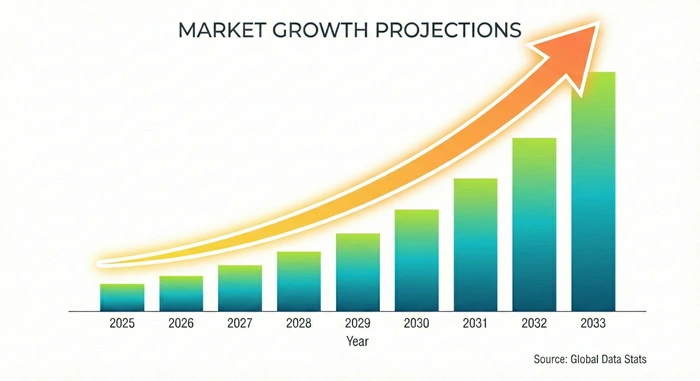
The long-term outlook for the Molecular Diagnostics market is firmly positive and structurally well-supported — with a strong combination of technology cost reduction, clinical application expansion, point-of-care platform penetration, and geographic market development collectively expected to sustain the market's strong near double-digit revenue growth throughout the 2026–2033 forecast period. The most commercially transformative near-term clinical development within molecular diagnostics is the emergence of multi-cancer early detection liquid biopsy tests — where cell-free DNA methylation pattern analysis enables simultaneous screening for multiple cancer types from a single blood draw — with Grail's Galleri test and competing platforms from Exact Sciences, Guardant Health, and Foundation Medicine approaching commercial mainstream adoption as large prospective clinical trial evidence supporting their clinical utility progressively accumulates. Successful mainstream adoption of multi-cancer early detection liquid biopsy would represent one of the most commercially significant molecular diagnostics market expansions in history — potentially adding tens of millions of annual tests globally and generating a large new revenue category that does not yet exist at commercial scale within the molecular diagnostics ecosystem.
The progressive miniaturization and cost reduction of molecular diagnostic platforms — enabling PCR and isothermal amplification technologies to be deployed in point-of-care settings including physician offices, pharmacies, emergency departments, and resource-limited settings — is simultaneously expanding the geographic and clinical setting reach of molecular testing far beyond centralized reference and hospital laboratories. Companies including Abbott (ID NOW), Cepheid (GeneXpert), bioMérieux, and Danaher are driving point-of-care molecular platform innovation that progressively makes near-patient molecular testing a viable and economically practical alternative to specimen transport and centralized laboratory processing across both developed and emerging healthcare markets. Emerging market healthcare system investment in molecular diagnostic infrastructure — particularly in China, India, Brazil, and Southeast Asia — is creating large new geographic molecular diagnostics markets currently in early development but carrying transformative long-term revenue potential as local laboratory capacity, reimbursement frameworks, and physician awareness of molecular testing clinical utility progressively mature throughout the forecast period.
Expert Speaks
-
Robert Ford, CEO, Abbott Laboratories — "The continued evolution of molecular diagnostics — where testing accuracy, turnaround time, and platform accessibility are simultaneously improving — is creating a fundamentally stronger foundation for patient-centered care across infectious disease, oncology, and genetic medicine than at any prior point in diagnostics industry history. Abbott is deeply committed to advancing molecular testing capabilities at the point of care — making fast, accurate molecular diagnosis accessible to patients and healthcare providers across every care setting and geography where clinical decisions depend on reliable pathogen and genomic information."
-
Rainer Blair, CEO, Danaher Corporation — "Molecular diagnostics represents one of the most dynamic and commercially compelling segments within the broader life sciences and diagnostics ecosystem — where the convergence of NGS cost reduction, liquid biopsy clinical validation, and AI-powered genomic data interpretation is creating new diagnostic applications and commercial opportunities at a pace that is genuinely transforming clinical laboratory medicine. Danaher's portfolio of molecular diagnostic platforms — spanning point-of-care, clinical laboratory, and research sequencing applications — positions us to capture a significant share of the molecular diagnostics market growth we expect to continue throughout this decade."
-
Thomas Lynch Jr., CEO, Illumina — "The falling cost of next-generation sequencing, combined with the growing clinical evidence base supporting genomic testing across oncology, rare disease, and infectious disease, is accelerating the transition of molecular diagnostics from a specialized research application into a foundational component of routine clinical practice that informs treatment decisions for millions of patients globally. Illumina is focused on making sequencing-based molecular diagnostics more accessible, more actionable, and more affordable — ensuring that the genomic insights that have transformed research medicine are progressively translated into clinical value across the full continuum of patient care."
Key Report Takeaways
-
North America dominates the Molecular Diagnostics market, holding approximately 44.50% of global market share in 2025, driven by the highest clinical molecular testing adoption rates globally, the most extensive FDA companion diagnostic approval framework, the greatest concentration of leading molecular diagnostic companies including Roche, Abbott, Illumina, Hologic, and Exact Sciences, the most mature payer reimbursement infrastructure for NGS-based oncology testing, and the strongest academic and pharmaceutical research investment in molecular biomarker development and clinical validation programs that continuously generate new molecular testing clinical applications.
-
Asia Pacific is the fastest-growing regional market for molecular diagnostics, projected to expand at a CAGR of approximately 11.40% from 2026 to 2033, driven by China's enormous government investment in genomic medicine and laboratory infrastructure through national health initiatives, India's rapidly growing clinical laboratory sector and cancer patient population generating molecular testing demand, and Japan and South Korea's progressive integration of NGS-based oncology testing and pharmacogenomics into national healthcare reimbursement frameworks.
-
PCR technology is the dominant technology segment, accounting for approximately 45.20% of total market revenue in 2025, reflecting PCR's foundational clinical role across infectious disease testing, oncology mutation detection, prenatal genetic screening, and pharmacogenomics — with real-time quantitative PCR and multiplex PCR platforms from Roche, Abbott, bioMérieux, and QIAGEN collectively generating the largest technology revenue category within the molecular diagnostics ecosystem.
-
Reagents and consumables are the dominant product segment, contributing approximately 58.60% of total market revenue in 2025, reflecting the highly recurring and consumable-intensive nature of molecular diagnostic testing workflows — where every molecular test performed requires proprietary extraction reagents, amplification master mixes, sequencing library preparation kits, and detection probes that generate continuous and predictable revenue streams independent of capital equipment sales cycles.
-
Oncology and cancer diagnostics is the fastest-growing application segment, projected to expand at a CAGR of approximately 12.80% through 2033, driven by the progressive mandatory companion diagnostic testing requirements associated with targeted oncology therapy approvals, the expanding clinical adoption of comprehensive genomic profiling panels for solid tumor and hematological malignancy management, and the commercialization of liquid biopsy for minimal residual disease monitoring and early cancer detection that are together generating strong and accelerating molecular diagnostic test volume growth in oncology care settings globally.
-
Next-generation sequencing is the fastest-growing technology segment, expected to expand at a CAGR of approximately 13.60% through 2033, driven by continuously falling sequencing costs, expanding clinical validation of NGS across oncology, rare disease, reproductive health, and infectious disease applications, and the growing adoption of comprehensive tumor genomic profiling that is progressively establishing NGS as the preferred molecular testing platform for applications requiring simultaneous analysis of multiple genomic targets in a single diagnostic workflow.
Market Scope
| Report Coverage | Details |
|---|---|
| Market Size by 2033 | USD 38.00 Billion |
| Market Size by 2025 | USD 16.70 Billion |
| Market Size by 2026 | USD 18.30 Billion |
| Market Growth Rate (2026–2033) | CAGR of 9.20% |
| Dominating Region | North America |
| Fastest Growing Region | Asia Pacific |
| Base Year | 2025 |
| Forecast Period | 2026–2033 |
| Segments Covered | Technology, Product, Application, End User |
| Regions Covered | North America, Europe, Asia Pacific, Latin America, Middle East & Africa |
Market Dynamics
Drivers Impact Analysis
Rising Infectious Disease Surveillance Demand, Expanding Oncology Companion Diagnostic Mandates, Falling NGS Costs Enabling Clinical Mainstreaming, and Point-of-Care Molecular Platform Penetration Are Collectively Powering the Molecular Diagnostics Market's Strong Revenue Growth*
| Driver | ≈ % Impact on CAGR Forecast | Geographic Relevance | Impact Timeline |
|---|---|---|---|
| Rising infectious disease surveillance demand and post-pandemic molecular testing infrastructure investment | ~30% | Global | Short to Long-term |
| Expanding precision oncology companion diagnostic mandates and comprehensive genomic profiling adoption | ~27% | North America, Europe | Short to Long-term |
| Continuously falling NGS sequencing costs enabling clinical laboratory mainstreaming | ~25% | North America, Europe, Asia Pacific | Short to Medium-term |
| Point-of-care molecular platform penetration expanding testing settings and patient access | ~18% | Global | Short to Medium-term |
The most commercially durable and structurally significant growth driver of the Molecular Diagnostics market is the permanent elevation of infectious disease diagnostic preparedness as a healthcare system priority following the COVID-19 pandemic experience — where the catastrophic consequences of delayed pathogen detection and insufficient molecular testing capacity have driven sustained government, hospital system, and laboratory network investment in molecular diagnostic platform installation, consumable supply chain security, and testing throughput capacity that generates continuous and recurring molecular diagnostics market revenue well beyond pandemic-period demand levels. The progressive adoption of syndromic multiplex molecular panels — simultaneously detecting dozens of potential pathogens from a single clinical sample across respiratory, gastrointestinal, bloodstream, and meningitis/encephalitis infection indications — is generating a growing molecular test volume category that replaces less sensitive and less specific culture-based and antigen-based testing approaches in hospital and reference laboratory settings, driving meaningful molecular diagnostics market revenue expansion across high-volume infectious disease testing applications. The global expansion of antimicrobial resistance surveillance programs — mandating molecular identification of resistance genes alongside pathogen identification — is additionally generating new molecular testing volume requirements across public health, hospital infection control, and clinical laboratory settings that contribute to sustained market growth.
The mandatory molecular testing requirements associated with the growing portfolio of FDA-approved targeted therapies — where companion diagnostic tests must confirm the presence of a specific genomic alteration before patients are eligible for the associated therapy — create a powerful and policy-mandated demand floor for oncology molecular diagnostics that is structurally independent of market adoption dynamics or payer coverage variability. Each new targeted therapy approval with a companion diagnostic requirement effectively creates a new captive molecular testing market — generating recurring revenue from tumor tissue and liquid biopsy testing for the actionable mutations targeted by that therapy — with the cumulative effect of hundreds of approved targeted therapies creating an enormous and continuously expanding mandated testing volume in oncology care settings. The growing clinical adoption of comprehensive genomic profiling — particularly Foundation Medicine's FoundationOne CDx and similar comprehensive solid tumor NGS panels — that simultaneously tests for all relevant companion diagnostic biomarkers and additional exploratory markers in a single assay is additionally increasing the average revenue per molecular diagnostic encounter in oncology significantly, amplifying the revenue growth impact of expanding test volumes on the overall Molecular Diagnostics market.
Restraints Impact Analysis
High Capital Equipment Investment Requirements, Reimbursement Coverage Variability for NGS Testing, Skilled Workforce Shortages, Sample Quality and Pre-Analytical Variability Challenges Moderating Faster Molecular Diagnostics Market Penetration*
| Restraint | ≈ % Impact on CAGR Forecast | Geographic Relevance | Impact Timeline |
|---|---|---|---|
| High capital equipment investment requirements for NGS and advanced molecular platforms | ~32% | Emerging markets, Smaller labs | Short to Long-term |
| Inconsistent payer reimbursement coverage for NGS-based and advanced molecular tests | ~29% | Global — especially emerging markets | Short to Long-term |
| Skilled molecular laboratory workforce shortages limiting testing capacity expansion | ~25% | Global | Short to Long-term |
| Sample quality, pre-analytical variability, and contamination challenges affecting test reliability | ~14% | Global | Short to Medium-term |
The most broadly experienced and commercially limiting barrier constraining faster molecular diagnostics market penetration is the substantial capital investment required to establish and operate advanced molecular diagnostic laboratory infrastructure — where NGS sequencing platforms from Illumina, Pacific Biosciences, and Oxford Nanopore require investment of USD 150000 to USD 1 million or more per instrument, alongside substantial investments in sample preparation automation, bioinformatics software, data storage infrastructure, and laboratory information system integration that collectively make advanced molecular diagnostic capability inaccessible to smaller community hospitals, regional laboratories, and healthcare systems in resource-constrained environments. The regulatory complexity of molecular diagnostic test validation and laboratory accreditation requirements — particularly for laboratory-developed tests operating under CLIA regulations in the United States and equivalent quality framework requirements globally — creates substantial compliance burden and operational cost that raises the effective entry barrier for new molecular testing applications and contributes to the concentration of advanced molecular testing capability in large academic medical centers and specialized reference laboratories rather than distributed community laboratory networks. These infrastructure and regulatory barriers collectively slow the geographic and institutional diffusion of molecular diagnostic capabilities that would otherwise accelerate overall market revenue growth.
The highly variable and often inadequate payer reimbursement coverage for advanced molecular diagnostic tests — particularly comprehensive genomic profiling panels and whole exome/genome sequencing — represents a critical commercial barrier across both United States and international healthcare markets. Medicare coverage for advanced molecular tests is governed by MAC-specific Local Coverage Determinations that create geographic variability in test reimbursement eligibility, while the FDA and CMS parallel review process for companion diagnostics creates reimbursement lag behind clinical availability that limits the commercial test volume achievable for newly approved molecular tests. The global shortage of trained molecular biologists, clinical geneticists, and bioinformatics specialists capable of operating advanced molecular diagnostic platforms and interpreting complex genomic data is simultaneously limiting the testing capacity that molecular diagnostic laboratories can practically deploy — constraining overall market volume growth relative to clinical demand levels across high-income markets.
Opportunities Impact Analysis
Multi-Cancer Early Detection Liquid Biopsy Commercialization, Decentralized Point-of-Care Molecular Testing, Pharmacogenomics Mainstreaming, Biosimilar Reagent Entry, and Emerging Market Laboratory Infrastructure Investment Create Significant Molecular Diagnostics Market Opportunities*
| Opportunity | ≈ % Impact on CAGR Forecast | Geographic Relevance | Impact Timeline |
|---|---|---|---|
| Multi-cancer early detection liquid biopsy test commercialization and mainstream adoption | ~34% | North America, Europe | Short to Medium-term |
| Decentralized and point-of-care molecular testing platform penetration into new care settings | ~27% | Global | Short to Long-term |
| Pharmacogenomics clinical adoption generating routine molecular testing for medication selection | ~22% | North America, Europe, Asia Pacific | Short to Long-term |
| Emerging market laboratory infrastructure investment expanding global molecular testing access | ~17% | Asia Pacific, Latin America, MEA | Medium to Long-term |
The most commercially transformative near-term opportunity within the Molecular Diagnostics market is the progressive commercialization of multi-cancer early detection liquid biopsy tests — where cell-free DNA methylation pattern analysis enables simultaneous population-level screening for multiple cancer types from a single annual blood draw — representing a potentially enormous new test volume category that could generate tens of millions of additional molecular diagnostic tests annually across North American and European preventive healthcare markets as clinical evidence supporting clinical utility, payer reimbursement coverage, and physician adoption progressively develop. Grail's Galleri test, Exact Sciences' platform, Guardant Health's Shield test, and Foundation Medicine's competing approaches are all advancing through clinical validation programs — with the successful commercial mainstream adoption of any multi-cancer early detection platform representing a step-change in molecular diagnostics market revenue scale that would meaningfully accelerate the overall market growth trajectory. The establishment of multi-cancer early detection as a recommended component of routine preventive healthcare — analogous to existing established cancer screening programs — would represent a permanent structural expansion of the molecular diagnostics market addressable patient population to encompass the entire adult screening-eligible population in major markets.
The progressive mainstreaming of pharmacogenomics testing — where molecular analysis of patient drug metabolism gene variants guides medication selection and dosing across psychiatry, cardiology, pain management, oncology supportive care, and infectious disease treatment — represents a large and currently underpenetrated molecular diagnostics market opportunity with strong clinical evidence supporting its clinical utility and cost-effectiveness in reducing adverse drug reactions and optimizing treatment response. Growing payer coverage for pharmacogenomics testing — driven by accumulating cost-effectiveness evidence demonstrating that pharmacogenomic-guided prescribing reduces hospitalizations, adverse events, and treatment failures — is progressively expanding the commercially reimbursed pharmacogenomics testing market beyond oncology pharmacogenomics into general medicine applications that collectively represent a large new molecular diagnostics revenue category. The enormous laboratory infrastructure investment currently underway across China, India, Brazil, and Southeast Asian healthcare systems — driven by government-led universal health coverage expansion, rising non-communicable disease burden, and growing molecular medicine awareness — is simultaneously creating new geographic precision medicine diagnostics markets that will generate substantial molecular diagnostics revenue during the latter years of the 2026–2033 forecast period.
Segment Analysis
By Technology
PCR Technology Dominates the Molecular Diagnostics Market Revenue While Next-Generation Sequencing Registers the Fastest Technology Segment Growth Globally*
Polymerase chain reaction technology holds the dominant position in the Molecular Diagnostics market, accounting for approximately 45.20% of total market revenue in 2025, driven by PCR's foundational role across the highest-volume clinical molecular testing applications — including respiratory pathogen detection, sexually transmitted infection diagnosis, oncology mutation testing, and infectious disease monitoring — where the combination of exceptional sensitivity and specificity, established laboratory workflow integration, broad regulatory approval framework, and progressively falling reagent costs makes PCR the preferred molecular testing platform for the majority of routine clinical molecular diagnostic applications. Real-time quantitative PCR platforms from Roche (cobas), Abbott (Alinity m), and bioMérieux (VIDAS) collectively dominate PCR-based clinical molecular testing globally — with their established installed base in hospital and reference laboratory settings generating large and recurring reagent and consumable revenue streams that sustain PCR's commercial dominance within the broader Molecular Diagnostics market. North America generates the largest PCR technology segment revenue — driven by the highest hospital laboratory PCR platform density and the most extensive multiplex respiratory panel testing adoption — while Asia Pacific is the fastest-growing PCR technology region, supported by large-scale post-pandemic PCR infrastructure installation across Chinese, Indian, and Southeast Asian laboratory networks that continues to generate growing reagent consumption.
Next-generation sequencing represents the fastest-growing technology segment in the molecular diagnostics market, projected to expand at a CAGR of approximately 13.60% through 2033 as continuously falling sequencing costs, expanding clinical validation evidence, and growing oncology companion diagnostic NGS requirements progressively establish NGS as the preferred molecular testing platform for applications requiring simultaneous analysis of multiple genomic targets. The falling cost of sequencing — where Illumina's NovaSeq X Plus platform has reduced per-genome costs below USD 200 — is enabling clinical oncology programs and academic medical centers to adopt comprehensive tumor genomic profiling as routine practice, generating large and rapidly growing NGS reagent, instrument, and bioinformatics service revenue across clinical and research settings. North America leads NGS segment revenue — with Foundation Medicine (a Roche subsidiary), Illumina, and Tempus collectively generating substantial clinical NGS revenue through oncology tumor profiling and liquid biopsy services — while Asia Pacific and Europe represent the fastest-growing NGS adoption regions, with China's government-backed genomic medicine programs and European national health system NGS coverage expansions progressively driving NGS adoption into mainstream clinical laboratory workflows across these regions.
By Application
Infectious Disease Testing Remains the Largest Application While Oncology Molecular Diagnostics Registers the Fastest Adoption Growth*
Infectious disease testing represents the largest application segment in the Molecular Diagnostics market, accounting for approximately 46.80% of total market revenue in 2025, reflecting molecular testing's established and expanding role as the highest-accuracy diagnostic standard across viral, bacterial, and fungal pathogen detection — where PCR and isothermal amplification technologies consistently outperform culture-based and antigen-based testing approaches in sensitivity, specificity, and time-to-result across a growing range of clinically important infection indications. The post-pandemic healthcare environment has permanently elevated molecular testing as the preferred infectious disease diagnostic approach in hospital emergency departments, intensive care units, and public health surveillance programs — with syndromic multiplex molecular panels from Biofire (a bioMérieux subsidiary), Luminex (acquired by DiaSorin), and GenMark becoming standard diagnostic tools in hospital laboratories globally for respiratory, gastrointestinal, and central nervous system infection workups. North America leads infectious disease molecular testing revenue — with the highest hospital molecular panel adoption rates and the most mature multiplex testing reimbursement frameworks — while Asia Pacific is the fastest-growing infectious disease molecular testing region, driven by growing investment in hospital laboratory molecular testing infrastructure across China, India, and Southeast Asia. Key companies serving the infectious disease molecular diagnostics segment include Roche, Abbott, Hologic, bioMérieux, QIAGEN, and Becton Dickinson, each maintaining competitive positions across multiple infection testing categories.
Oncology and cancer diagnostics represents the fastest-growing application segment in the molecular diagnostics market, projected to expand at a CAGR of approximately 12.80% from 2026 to 2033 — driven by the progressive mandatory companion diagnostic testing requirements accompanying targeted cancer therapy approvals, the growing clinical adoption of comprehensive tumor genomic profiling panels for treatment selection and clinical trial eligibility assessment, and the commercialization of liquid biopsy for minimal residual disease monitoring, treatment response assessment, and early recurrence detection across multiple tumor types. Foundation Medicine, Guardant Health, Exact Sciences, Tempus, and Illumina collectively lead the oncology molecular diagnostics segment in North America — generating substantial revenue through comprehensive genomic profiling services, liquid biopsy testing, and clinical sequencing partnerships with major cancer centers and pharmaceutical clinical trial programs. Asia Pacific is the fastest-growing oncology molecular diagnostics region — where China's enormous and rapidly growing cancer patient population, combined with government investment in precision oncology infrastructure and progressive national health insurance coverage expansion for tumor NGS testing, is generating accelerating clinical oncology molecular testing demand that is attracting major investment from both global and domestic Chinese molecular diagnostic companies.
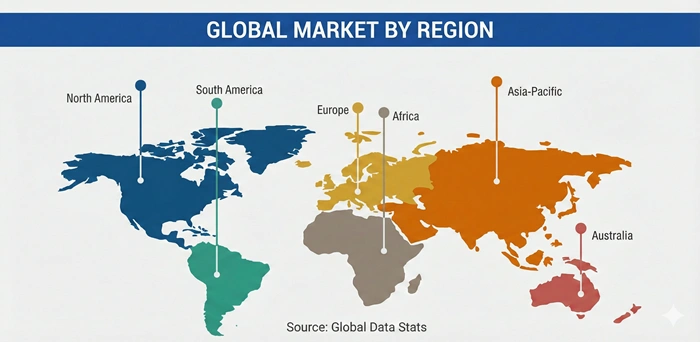
Regional Insights
North America
North America Leads the Global Molecular Diagnostics Market With the Highest Clinical Molecular Testing Adoption Rates, Most Comprehensive Companion Diagnostic Regulatory Framework, and Strongest Concentration of Leading Molecular Diagnostic Technology Companies*
North America holds the dominant position in the global Molecular Diagnostics market, accounting for approximately 44.50% of total global market revenue in 2025, and is projected to sustain market leadership at a CAGR of approximately 8.60% from 2026 to 2033. The United States drives the overwhelming majority of North American revenue — where the combination of the highest clinical molecular testing adoption rates, the most comprehensive FDA companion diagnostic approval framework requiring molecular testing before targeted therapy initiation, the world's most commercially productive pharmaceutical development ecosystem generating continuous new companion diagnostic testing mandates, and the highest per-capita clinical laboratory spending collectively create the world's most commercially valuable molecular diagnostics market. Leading companies commanding the North American Molecular Diagnostics market include Roche (cobas molecular systems and Foundation Medicine), Abbott (Alinity m platform), Illumina (NextSeq and NovaSeq platforms), Hologic (Panther Fusion platform), Exact Sciences (Oncotype DX and multi-cancer detection), Guardant Health, and Tempus — collectively maintaining dominant commercial positions across PCR, NGS, liquid biopsy, and companion diagnostic testing categories.
Canada contributes meaningfully to North American molecular diagnostics market revenue — through its provincial public laboratory networks' progressive adoption of multiplex molecular infectious disease panels, and growing national cancer genomics programs integrating NGS-based tumor profiling into standard oncology care pathways. The North American molecular diagnostics market is leading global adoption of comprehensive genomic profiling, liquid biopsy, and multi-cancer early detection technologies — establishing the region as the primary commercial validation market for molecular diagnostic innovation that subsequently diffuses to European and Asian markets. North America's combination of FDA regulatory leadership in companion diagnostic approvals, payer reimbursement infrastructure maturity, and concentration of molecular diagnostic technology development investment positions it to sustain clear market leadership through 2033.
Asia Pacific
Asia Pacific Is the Fastest-Growing Molecular Diagnostics Market, Driven by China's Genomic Infrastructure Investment, India's Expanding Clinical Laboratory Sector, and Progressive National Health Insurance Coverage Expansion for Molecular Testing*
Asia Pacific is the fastest-growing regional segment in the Molecular Diagnostics market, projected to expand at a CAGR of approximately 11.40% from 2026 to 2033 — the highest regional growth rate in the global market. China is the most commercially significant and rapidly growing Asia Pacific molecular diagnostics market — where government investment in precision medicine initiatives, hospital laboratory modernization programs, and national genomic database projects is generating rapidly growing demand for NGS platforms, PCR-based clinical panels, and molecular oncology testing services. India represents the second-largest and equally dynamic Asia Pacific molecular diagnostic market — where the country's enormous and growing infectious disease burden, rapidly expanding private hospital sector, and rising cancer patient population are collectively generating strong demand for molecular testing infrastructure that Indian diagnostic laboratory companies including Thyrocare, Dr. Lal PathLabs, and SRL Diagnostics are progressively building out. Key companies serving the Asia Pacific Molecular Diagnostics market include Roche, Abbott, Illumina, QIAGEN, bioMérieux, Thermo Fisher Scientific, and domestic companies including BGI Genomics and MGI Tech in China that are developing competitive molecular diagnostic platforms for Asian market deployment.
Japan and South Korea represent the most technically advanced Asia Pacific molecular diagnostics markets — with well-established NGS-based oncology testing reimbursement frameworks, high domestic molecular diagnostic innovation capacity, and strong academic research programs generating continuous new molecular biomarker validation studies. Southeast Asian markets — including Singapore, Malaysia, Thailand, and Indonesia — are experiencing progressive molecular diagnostic adoption as healthcare system infrastructure investment, rising chronic disease burden, and growing physician awareness of molecular testing clinical benefits collectively drive clinical laboratory capacity expansion. The scale of Asia Pacific's infectious disease burden, cancer patient population, and genomics investment programs positions the region as the most commercially dynamic and fastest-growing molecular diagnostics market globally through 2033.
Top Key Players
-
Roche Diagnostics (Switzerland)
-
Abbott Laboratories (United States)
-
Illumina Inc. (United States)
-
Hologic Inc. (United States)
-
bioMérieux SA (France)
-
QIAGEN N.V. (Netherlands)
-
Thermo Fisher Scientific Inc. (United States)
-
Becton Dickinson and Company (United States)
-
Exact Sciences Corporation (United States)
-
Guardant Health Inc. (United States)
-
DiaSorin S.p.A. (Italy)
-
BGI Genomics Co. Ltd. (China)
Recent Developments
-
Roche Diagnostics (2025) — Received FDA approval for a next-generation cobas molecular diagnostics platform offering significantly expanded multiplexing capability and faster time-to-result for syndromic infectious disease panel testing — while simultaneously advancing Foundation Medicine's comprehensive genomic profiling liquid biopsy platform through expanded oncology indication approvals and reporting strong global growth in tissue-based and ctDNA molecular oncology testing that reinforced Roche's position as the world's largest molecular diagnostics company by revenue.
-
Illumina Inc. (2025) — Launched the NovaSeq X Series platform offering substantially reduced cost-per-genome sequencing relative to predecessor platforms — while simultaneously completing its strategic portfolio restructuring following the divestiture of GRAIL (Galleri multi-cancer early detection) to comply with FTC and EU regulatory divestiture orders — with Illumina refocusing its core strategy on sequencing instrument and reagent commercial growth across clinical oncology, reproductive health, and infectious disease genomics applications.
-
Exact Sciences Corporation (2024) — Reported strong commercial momentum for its Oncotype DX breast cancer recurrence score test and Cologuard colorectal cancer screening test — while advancing its multi-cancer early detection liquid biopsy program through pivotal clinical trial enrollment and announcing commercial laboratory capacity expansion investments to prepare for anticipated multi-cancer early detection test commercial launch upon completion of clinical validation and regulatory submission.
-
Guardant Health (2024) — Received FDA approval for the Shield blood test as the first FDA-authorized blood-based colorectal cancer screening test — representing a landmark regulatory milestone for liquid biopsy-based cancer screening that established a new commercial molecular diagnostics category — while simultaneously reporting continued adoption growth for its Guardant360 comprehensive liquid biopsy oncology testing platform across medical oncology clinical practice and pharmaceutical companion diagnostic programs globally.
-
QIAGEN N.V. (2025) — Launched the QIAstat-Dx Rise syndromic testing platform offering automated high-throughput multiplex molecular testing for hospital laboratories — while reporting continued global adoption growth for its QIAsymphony sample preparation automation platform and advancing its oncology companion diagnostic portfolio through multiple FDA co-development submissions for targeted therapy companion diagnostic indications across solid tumor and hematological oncology applications.
Market Trends
The Convergence of Liquid Biopsy Multi-Cancer Early Detection, AI-Powered Genomic Interpretation, and Decentralized Point-of-Care Molecular Testing Are the Three Most Commercially Defining Trends Reshaping the Molecular Diagnostics Market Through 2033*
The most commercially transformative structural trend reshaping the Molecular Diagnostics market is the progressive convergence of liquid biopsy technology, AI-powered genomic data interpretation, and multi-cancer early detection — where the combination of increasingly sensitive cell-free DNA detection methods, machine learning-powered methylation pattern analysis, and large prospective clinical validation study outcomes is progressively establishing blood-based cancer screening as a clinically validated and commercially viable complement to existing tissue-based and imaging-based cancer detection approaches. This multi-cancer early detection convergence represents not just an incremental expansion of existing molecular testing categories but a potential step-change in the total molecular diagnostics market scale — where the transition of cancer screening from a condition-specific, symptom-triggered activity to a routine annual preventive health screen for the entire adult population would expand the molecular diagnostics addressable patient population by orders of magnitude relative to current clinical testing volumes. The AI bioinformatics infrastructure being developed to support multi-cancer early detection clinical programs is simultaneously advancing the analytical capabilities of the broader molecular diagnostics ecosystem — improving variant interpretation quality, reducing false positive rates, and progressively enabling molecular diagnostic laboratories to extract more clinically actionable insights from the same genomic data.
The progressive miniaturization, automation, and cost reduction of molecular diagnostic platforms — enabling high-accuracy PCR and isothermal amplification testing to be deployed in point-of-care settings including emergency departments, physician offices, retail pharmacies, and community health clinics — is simultaneously decentralizing molecular testing from centralized reference and hospital laboratories into a much broader range of patient access settings. Abbott's ID NOW platform, Cepheid's GeneXpert Omni, and bioMérieux's BioFire Torch system are leading this point-of-care molecular diagnostics platform innovation — progressively making near-patient molecular testing practical, affordable, and clinically actionable across settings where the 6–24 hour turnaround of centralized laboratory testing is clinically unacceptable for treatment decision purposes. The integration of point-of-care molecular diagnostic results with electronic health record systems, clinical decision support algorithms, and antimicrobial stewardship programs is additionally increasing the clinical value and institutional adoption of decentralized molecular testing — creating a reinforcing adoption cycle where improved workflow integration drives higher utilization, generating expanding molecular diagnostics market revenue across an increasingly distributed testing landscape.
Segments Covered in the Report
By Technology:
-
Polymerase Chain Reaction (PCR)
-
Real-Time PCR
-
Digital PCR
-
Multiplex PCR
-
Next-Generation Sequencing (NGS)
-
Whole Genome Sequencing
-
Targeted Gene Sequencing
-
RNA Sequencing
-
In Situ Hybridization
-
FISH (Fluorescence In Situ Hybridization)
-
CISH (Chromogenic In Situ Hybridization)
-
Isothermal Nucleic Acid Amplification Technology
-
Microarray Technology
-
Others
By Product:
-
Instruments
-
Reagents and Consumables
-
Software and Services
By Application:
-
Infectious Disease Testing
-
Oncology and Cancer Diagnostics
-
Genetic and Rare Disease Testing
-
Pharmacogenomics
-
Blood Screening
-
Others
By End User:
-
Hospitals and Clinical Laboratories
-
Academic and Research Institutes
-
Pharmaceutical and Biotechnology Companies
-
Diagnostic Laboratories
-
Others
By Region:
-
North America
-
Europe
-
Asia Pacific
-
Latin America
-
Middle East & Africa
Frequently Asked Questions
Question 1: What is the current size of the Molecular Diagnostics market and what is its projected value by 2033?
Answer: The Molecular Diagnostics market was valued at USD 16.70 billion in 2025 and is projected to reach USD 38.00 billion by 2033, growing at a CAGR of 9.20% from 2026 to 2033. This strong growth is driven by rising infectious disease surveillance demand, expanding oncology companion diagnostic mandates, falling NGS costs enabling clinical mainstreaming, and progressive point-of-care molecular testing platform penetration across diverse healthcare settings globally.
Question 2: What technologies are most widely used in molecular diagnostics testing today?
Answer: PCR — including real-time quantitative PCR and multiplex PCR — remains the dominant technology in the Molecular Diagnostics market, accounting for approximately 45.20% of total revenue in 2025, given its combination of exceptional accuracy, established laboratory workflow integration, and broad clinical application coverage across infectious disease, oncology, and genetic testing. Next-generation sequencing is the fastest-growing technology at approximately 13.60% CAGR — progressively being adopted for comprehensive tumor genomic profiling, rare disease diagnosis, and infectious disease genomic surveillance applications where simultaneous multi-target analysis is required.
Question 3: Which region leads the Molecular Diagnostics market and which is growing the fastest?
Answer: North America leads the Molecular Diagnostics market with approximately 44.50% of global revenue in 2025 — driven by the highest clinical molecular testing adoption rates, the most comprehensive FDA companion diagnostic regulatory framework, and the strongest concentration of leading molecular diagnostic companies. Asia Pacific is the fastest-growing region at approximately 11.40% CAGR through 2033 — driven by China's genomic medicine infrastructure investment, India's expanding clinical laboratory sector, and progressive national health insurance coverage expansion for molecular testing across major Asian economies.
Question 4: How is liquid biopsy changing the future of the Molecular Diagnostics market?
Answer: Liquid biopsy — where molecular analysis of cell-free DNA, circulating tumor DNA, and other nucleic acid biomarkers in blood samples enables non-invasive cancer detection, treatment monitoring, and minimal residual disease assessment — is emerging as one of the most commercially transformative applications within the Molecular Diagnostics market, particularly through multi-cancer early detection tests that screen for multiple cancer types simultaneously from a single annual blood draw. The commercialization of platforms like Guardant Health's Shield test and Grail's Galleri test is progressively establishing liquid biopsy-based cancer screening as a clinically validated new diagnostic category that could dramatically expand the molecular diagnostics addressable market over the coming years.
Question 5: What role does AI play in advancing molecular diagnostics capabilities?
Answer: Artificial intelligence is fundamentally transforming the Molecular Diagnostics market by enabling machine learning-powered genomic sequence interpretation that identifies clinically actionable variants, classifies tumor mutation profiles, and detects pathogen resistance genes with speed and consistency far exceeding manual bioinformatics analysis — making NGS-based molecular diagnostics clinically practical in routine laboratory settings. AI-powered multi-cancer early detection liquid biopsy analysis, real-world pharmacovigilance monitoring, and clinical decision support integration are additional dimensions where AI is meaningfully expanding the clinical utility and commercial scale of molecular diagnostic testing across diverse healthcare applications.