
Molecular Cytogenetics Market Overview
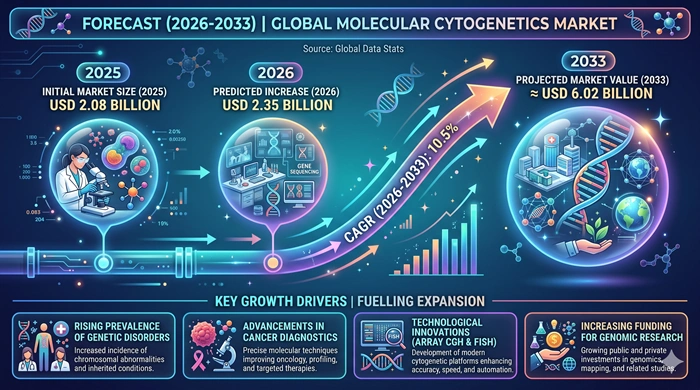
The global molecular cytogenetics market size is valued at USD 2.08 billion in 2025 and is predicted to increase from USD 2.35 billion in 2026 to approximately USD 6.02 billion by 2033, growing at a CAGR of 10.5% from 2026 to 2033.
Molecular cytogenetics sits at the intersection of genomic science and clinical diagnostics, providing the advanced tools and techniques — including fluorescence in situ hybridization (FISH), array comparative genomic hybridization (aCGH), and chromosomal microarray analysis (CMA) — that enable clinicians and researchers to detect chromosomal abnormalities, gene copy number variations, and genomic rearrangements with remarkable precision. The growing global burden of cancer, the increasing prevalence of genetic disorders, and the accelerating shift toward precision medicine and companion diagnostics are collectively driving robust demand for molecular cytogenetics products and services. These technologies are becoming indispensable tools in oncology staging and treatment selection, prenatal genetic diagnosis, and inherited disorder investigation — creating a broad and expanding clinical market with strong growth foundations.
AI Impact on the Molecular Cytogenetics Industry
Artificial Intelligence Is Revolutionizing Molecular Cytogenetics Image Analysis, Chromosomal Pattern Recognition, Automated FISH Scoring, and Integrated Genomic Diagnostic Reporting Across Oncology and Genetics Laboratories
Artificial intelligence is beginning to transform the molecular cytogenetics market in ways that were technically impossible just a few years ago. AI-powered digital image analysis systems — trained on large repositories of annotated FISH and aCGH images — are enabling automated identification of hybridization signal patterns, copy number variations, and chromosomal rearrangements with a speed, consistency, and throughput that manual microscopy-based review cannot approach. These systems are particularly valuable in high-volume clinical cytogenetics laboratories where FISH testing for common oncological markers — including HER2 amplification, BCR-ABL translocation, and EGFR copy number changes — requires repetitive and time-intensive manual signal counting by trained laboratory personnel. AI automation of this workflow both reduces turnaround time and significantly lowers inter-observer variability in reporting.
Beyond automating existing workflows, AI is enabling new analytical capabilities within molecular cytogenetics that are expanding what these technologies can deliver clinically. Machine learning models trained on integrated genomic data — combining FISH signal patterns, chromosomal microarray copy number profiles, and clinical phenotype data — are beginning to identify complex genomic signatures associated with specific cancer subtypes, prognosis, and therapy sensitivity with greater precision than single-technology analysis allows. AI-driven platforms integrating molecular cytogenetics data with next-generation sequencing results, clinical history, and imaging findings are creating increasingly comprehensive and clinically actionable genomic diagnostic reports — an evolution toward truly integrated molecular pathology that is expected to be a major commercial driver for the molecular cytogenetics market through the forecast period.
Growth Factors
Rising Global Cancer Incidence Driving FISH and aCGH Testing, Expanding Prenatal Genetic Screening Adoption, and the Broad Penetration of Precision Oncology Companion Diagnostics Are the Primary Growth Drivers of the Molecular Cytogenetics Market
Cancer remains the most powerful commercial driver of the molecular cytogenetics market. Molecular cytogenetic testing has become an integral part of modern oncology diagnostic workups — providing essential information about tumor biology, chromosomal instability, specific gene amplifications and deletions, and chromosomal translocations that directly guide treatment decisions. The growing adoption of targeted cancer therapies — where therapy eligibility depends on specific genomic biomarkers detectable by FISH or aCGH — is creating a tightly coupled commercial relationship between oncology drug launches and molecular cytogenetics test utilization. As the pipeline of targeted therapies with companion diagnostic requirements continues to expand across breast cancer, lung cancer, hematological malignancies, and solid tumors, the volume of molecular cytogenetics testing ordered in clinical oncology settings grows proportionally.
The growing global adoption of prenatal genetic screening and diagnostic testing is the second major structural growth driver for the molecular cytogenetics market. Increasing awareness among expectant parents and obstetricians about the clinical value of chromosomal microarray analysis for detecting submicroscopic copy number variants, the growing availability of non-invasive prenatal testing (NIPT) platforms that incorporate cytogenetic analysis components, and progressive expansion of insurance coverage for prenatal genetic diagnostic testing in developed markets are all driving sustained growth in the prenatal testing segment of the molecular cytogenetics market. In parallel, the accelerating adoption of chromosomal microarray analysis for postnatal evaluation of children with developmental delay, intellectual disability, autism spectrum disorder, and congenital anomalies is creating a growing clinical genetics application that complements the oncology-dominated revenue base of the market.
Market Outlook
The Molecular Cytogenetics Market Is on Track for Consistent Double-Digit Expansion Through 2033, Underpinned by Precision Oncology Adoption, NGS Integration, and Emerging Market Clinical Genetics Infrastructure Development
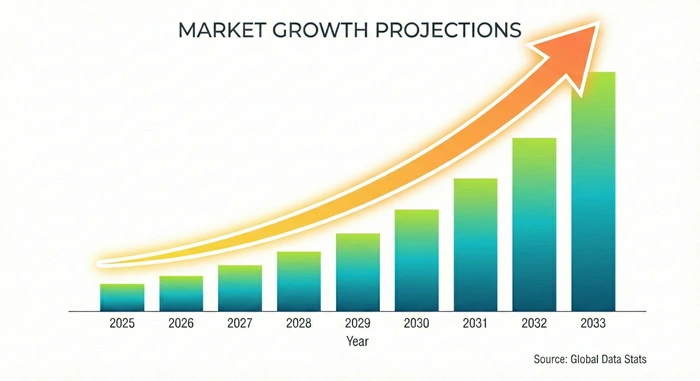
The commercial outlook for the molecular cytogenetics market through 2033 is highly favorable, driven by multiple reinforcing growth vectors across oncology, reproductive medicine, and clinical genetics. The continued expansion of precision oncology — where treatment selection increasingly relies on comprehensive molecular profiling of tumor genomic characteristics — is creating a growing and well-reimbursed clinical mandate for molecular cytogenetics testing across cancer types. Companion diagnostics aligned with targeted therapies from major pharmaceutical companies are generating standardized, high-volume testing requirements that create predictable and growing revenue for commercial molecular cytogenetics laboratories and reagent manufacturers globally.
The progressive integration of molecular cytogenetics technologies with next-generation sequencing (NGS) and digital pathology platforms is expanding the clinical utility and commercial scope of this market. Hybrid analytical workflows — where FISH or aCGH data are integrated with NGS-derived somatic mutation profiles and RNA expression data to generate comprehensive tumor genomic portraits — are becoming standard in major academic cancer centers and are progressively being adopted by advanced commercial laboratories. This integration trend is both expanding the addressable market for molecular cytogenetics products and increasing the average complexity and value of each laboratory workstation installation — creating positive commercial dynamics for vendors with comprehensive, integrated molecular cytogenetics and NGS solution portfolios.
Expert Speaks
-
Kevin March, CFO → replaced by: Thomas Lynch, President of Life Sciences, Thermo Fisher Scientific — "The molecular cytogenetics market is at an exciting inflection point where AI-assisted image analysis, integrated genomic platforms, and expanding clinical applications across oncology and genetics are driving a meaningful acceleration in demand for precision cytogenetic tools. Our investment in comprehensive molecular cytogenetics product portfolios reflects our conviction that this market will remain a central pillar of clinical molecular diagnostics for decades."
-
Sam Sampath, President, Molecular Diagnostics, Abbott — "Molecular cytogenetics continues to be one of the most clinically impactful diagnostic disciplines, providing the chromosomal and genomic insights that define treatment pathways for cancer patients and clarify diagnoses for families affected by genetic disorders. The integration of automation and AI into cytogenetics workflows is transforming laboratory productivity and consistency — and we are actively investing in next-generation solutions that deliver these capabilities to clinical laboratories globally."
-
Francis deSouza, CEO, Illumina — "The boundaries between molecular cytogenetics and next-generation sequencing continue to blur as integrated genomic analysis platforms become standard in precision medicine workflows. The clinical and commercial opportunity in molecular cytogenetics is being substantially expanded by the convergence of these technologies, and we see this market as a critical growth driver within the broader clinical genomics ecosystem through 2030 and beyond."
Key Report Takeaways
-
North America leads the molecular cytogenetics market, holding approximately 40% of global revenue in 2025, supported by the most advanced clinical genetics and molecular pathology infrastructure globally, comprehensive insurance reimbursement for oncology and prenatal cytogenetic testing, strong regulatory pathway for companion diagnostics, and the concentration of leading market participants including Abbott, Agilent Technologies, Illumina, Thermo Fisher Scientific, and Bio-Rad Laboratories
-
Asia-Pacific is the fastest-growing regional market, projected to expand at a CAGR of over 12.7% through 2033, driven by rapidly increasing cancer prevalence and diagnosis rates across China, India, Japan, and South Korea, growing government investment in genomics and precision medicine infrastructure, and progressive expansion of clinical genetics services and newborn screening programs across the region
-
Kits and reagents dominate the product segment, accounting for approximately 47% of total product revenue in 2025, reflecting the high-volume consumable demand generated by FISH probes, hybridization buffers, blocking reagents, and aCGH microarray kits that are consumed in every molecular cytogenetics testing procedure and repurchased continuously across the global installed base of clinical cytogenetics laboratories
-
Oncology is the dominant application segment in the molecular cytogenetics market, contributing approximately 61% of total application revenue in 2025, driven by the clinical mandate for chromosomal and genomic biomarker testing in cancer diagnosis, treatment selection, and monitoring across multiple cancer types including breast, lung, leukemia, lymphoma, and colorectal cancers
-
Clinical laboratories are the leading end-user segment, holding approximately 41.9% of total end-user revenue in 2025, reflecting the concentration of routine clinical cytogenetic testing services within commercial reference laboratories, hospital-based molecular pathology labs, and academic medical center cytogenetics departments that perform the majority of oncology, prenatal, and postnatal molecular cytogenetics testing
-
FISH-based molecular cytogenetics software and digital cytogenetics platforms are the fastest-growing segment in the molecular cytogenetics market, projected to grow at a CAGR of 14.1% through 2033 and expected to capture approximately 22% of total product revenue by 2033, driven by the accelerating adoption of AI-powered automated FISH scoring systems, digital slide scanning platforms, and cloud-native cytogenetics reporting and analytics tools that are progressively replacing manual slide microscopy in high-throughput clinical cytogenetics laboratory settings
Market Scope
| Report Coverage | Details |
|---|---|
| Market Size by 2033 | USD 6.02 Billion |
| Market Size by 2025 | USD 2.08 Billion |
| Market Size by 2026 | USD 2.35 Billion |
| Market Growth Rate (2026–2033) | CAGR of 10.5% |
| Dominating Region | North America |
| Fastest Growing Region | Asia-Pacific |
| Base Year | 2025 |
| Forecast Period | 2026 – 2033 |
| Segments Covered | Product, Technique, Application, End User |
| Regions Covered | North America, Europe, Asia-Pacific, Latin America, Middle East & Africa |
Market Dynamics
Drivers Impact Analysis
Rising Cancer and Genetic Disorder Prevalence, Accelerating Companion Diagnostic Adoption in Precision Oncology, Expanding Prenatal Genetic Testing, and AI-Driven Laboratory Automation Are the Core Engines of the Molecular Cytogenetics Market
| Driver | ≈ % Impact on CAGR Forecast | Geographic Relevance | Impact Timeline |
|---|---|---|---|
| Rising global cancer incidence driving FISH and aCGH testing in oncology | ~29% | Global, especially North America and Asia-Pacific | Short to Long-term |
| Expanding companion diagnostic requirements for targeted oncology therapies | ~24% | North America, Europe | Short to Long-term |
| Growing prenatal and postnatal genetic screening adoption | ~21% | North America, Europe, Asia-Pacific | Short to Long-term |
| AI and automation integration improving laboratory throughput and quality | ~16% | North America, Europe | Short to Medium-term |
| Precision medicine policy support and genomics infrastructure investment | ~10% | Global | Medium to Long-term |
The companion diagnostic relationship between molecular cytogenetics testing and targeted cancer therapies is one of the most powerful commercial dynamics driving the molecular cytogenetics market today. Regulatory approvals of targeted therapies by the FDA and EMA increasingly come paired with companion diagnostic requirements — mandating that specific molecular cytogenetics tests be performed to identify patients eligible for treatment. HER2 FISH testing for trastuzumab eligibility, BCR-ABL FISH testing for imatinib therapy, and ALK FISH testing for crizotinib eligibility are well-established examples that generate large, recurring testing volumes in clinical oncology settings. As the pipeline of targeted therapies with companion diagnostic requirements continues to expand — with new approvals anticipated across tumor types including FGFR-positive cholangiocarcinoma, RET-positive thyroid cancer, and NTRK fusion-positive solid tumors — the volume of molecular cytogenetics testing mandated by precision oncology care pathways will continue to grow substantially.
The proliferation of clinical genetics services — driven by growing awareness of heritable genetic conditions, expanding newborn screening programs, and the increasing availability of genetic counseling services — is creating a steady and growing stream of molecular cytogenetics referrals for postnatal workup of children with developmental concerns, autism spectrum disorder, congenital abnormalities, and intellectual disability. Chromosomal microarray analysis (CMA) has become the first-tier diagnostic tool recommended by the American College of Medical Genetics for evaluation of these indications — replacing conventional karyotyping in many clinical contexts due to its superior ability to detect submicroscopic copy number variants and complex chromosomal rearrangements. This clinical guideline-driven shift toward CMA creates growing demand for aCGH platform products and associated analysis software within the molecular cytogenetics market's clinical genetics segment.
Restraints Impact Analysis
High Cost of Molecular Cytogenetics Instruments and Reagents, Skilled Workforce Shortages in Cytogenetics Laboratories, Complex Regulatory Approval Requirements, and Emerging Competition From Comprehensive NGS Panels Are the Primary Market Constraints
| Restraint | ≈ % Impact on CAGR Forecast | Geographic Relevance | Impact Timeline |
|---|---|---|---|
| High cost of instruments and specialized reagents limiting adoption in resource-limited settings | ~32% | Emerging markets, community laboratories | Ongoing |
| Shortage of trained cytogeneticists and molecular genetics laboratory professionals | ~26% | Global | Ongoing |
| Complex regulatory requirements for companion diagnostic validation and laboratory accreditation | ~22% | Global | Ongoing |
| Increasing competition from comprehensive NGS-based genomic profiling panels | ~14% | North America, Europe | Medium to Long-term |
| Reimbursement limitations for newer cytogenetic testing methodologies in some markets | ~6% | Emerging markets, payer-controlled settings | Short to Medium-term |
The high cost of establishing and operating a molecular cytogenetics laboratory — encompassing FISH probe inventories, fluorescence microscope systems, digital scanning hardware, array hybridization platforms, and the bioinformatics infrastructure for data analysis — creates a significant capital barrier that concentrates advanced cytogenetics capabilities in large academic medical centers and well-resourced commercial reference laboratories. This concentration means that patients in underserved regions and community hospital settings frequently lack convenient access to the full spectrum of molecular cytogenetics testing services, limiting market penetration and creating geographic disparities in cytogenetics service availability that persist as a structural restraint on global market growth. Addressing this access barrier through centralized reference laboratory models, sample shipping logistics optimization, and eventually cloud-based digital cytogenetics remote review platforms is an important ongoing market development challenge.
The growing clinical capability of comprehensive next-generation sequencing panels — which can simultaneously detect single nucleotide variants, insertions/deletions, copy number variations, and chromosomal rearrangements across the entire exome or targeted gene panels in a single test — represents a meaningful competitive threat to certain molecular cytogenetics testing applications. As NGS-based panels become more affordable, faster, and more broadly reimbursed, clinical ordering patterns in some applications — particularly for constitutional genetic disorder evaluation — may shift away from stand-alone FISH or CMA toward comprehensive NGS-based workflows that subsume some traditional cytogenetics test volumes. Molecular cytogenetics laboratories that successfully integrate NGS capabilities alongside traditional cytogenetics platforms are best positioned to navigate this competitive dynamic within the evolving molecular diagnostics market.
Opportunities Impact Analysis
Digital Cytogenetics and AI-Automated Scanning Adoption, Emerging Market Clinical Genetics Infrastructure Buildout, Liquid Biopsy Cytogenetics Applications, and Integrated Oncology Genomic Profiling Are the Most Compelling Growth Opportunities
| Opportunity | ≈ % Impact on CAGR Forecast | Geographic Relevance | Impact Timeline |
|---|---|---|---|
| Digital cytogenetics, AI-automated FISH scanning, and cloud analytics platform adoption | ~31% | North America, Europe | Short to Long-term |
| Emerging market clinical genetics laboratory buildout and cytogenetics test adoption | ~27% | Asia-Pacific, Latin America, MEA | Medium to Long-term |
| Liquid biopsy cytogenetics for non-invasive tumor chromosomal analysis | ~21% | North America, Europe | Medium to Long-term |
| Integrated oncology genomic profiling combining cytogenetics with NGS and IHC | ~14% | North America, Europe | Short to Medium-term |
| Expanded newborn screening programs adopting chromosomal microarray | ~7% | Global | Medium to Long-term |
Digital cytogenetics — encompassing digital slide scanning systems, AI-automated FISH signal counting, remote review platforms, and cloud-native laboratory information management systems — represents the most immediately actionable commercial opportunity within the molecular cytogenetics market. The transition from manual microscopy to digital and AI-automated workflows is already underway at leading clinical cytogenetics laboratories, delivering measurable improvements in throughput, inter-observer consistency, and operational efficiency. Vendors that can deliver validated, FDA-cleared AI-assisted FISH scoring systems with user-friendly interfaces and reliable performance across diverse probe types are uniquely positioned to capture significant incremental revenue as laboratories across North America and Europe invest in laboratory modernization programs that include digital cytogenetics infrastructure.
Liquid biopsy applications for cytogenetics represent an exciting longer-term opportunity that is beginning to enter clinical translation. Cell-free DNA and circulating tumor cell analysis techniques that can detect chromosomal copy number variations, chromosomal instability signatures, and tumor-derived chromosomal rearrangements from blood samples — without invasive tissue biopsy — could significantly expand the clinical applicability of cytogenetics approaches to scenarios where tumor tissue sampling is not feasible or desirable. Early clinical studies demonstrating the utility of liquid biopsy chromosomal analysis for treatment response monitoring, minimal residual disease assessment, and relapse detection in solid tumors and hematological malignancies are generating interest that is expected to drive meaningful new product development investment within the molecular cytogenetics market over the medium to long term.
Segment Analysis
By Product
Kits and Reagents Dominate the Molecular Cytogenetics Market as the Most Essential and High-Volume Consumable Category, While Software and Digital Cytogenetics Platforms Emerge as the Fastest-Growing Product Segment
Kits and reagents are the dominant product segment in the molecular cytogenetics market, accounting for approximately 47% of total product revenue in 2025. This segment is projected to maintain a strong CAGR of 9.8% through 2033, driven by the inherently consumable nature of FISH probes, hybridization solutions, aCGH microarrays, and associated reagent kits that are consumed at fixed rates proportional to laboratory testing volume — creating a recurring, high-frequency revenue stream that grows in direct proportion to the overall expansion of molecular cytogenetics test utilization globally. North America is the dominant region for kits and reagents revenue, where high per-test probe consumption across the densely distributed clinical cytogenetics laboratory network — encompassing major academic medical centers, NCI-designated cancer centers, and commercial reference laboratories — generates the largest national revenue base for FISH probes and aCGH reagent kits. Key companies leading the kits and reagents segment of the molecular cytogenetics market include Abbott (Vysis FISH probes), Agilent Technologies (SureSelect, CGH+ SNP microarrays), Thermo Fisher Scientific, and Bio-Rad Laboratories.
Europe is the second-largest region for molecular cytogenetics kits and reagents, with strong adoption across German, French, British, and Dutch academic medical centers and clinical genetics laboratories. Asia-Pacific is the fastest-growing region for reagent consumption, driven by the rapid expansion of clinical oncology and genetics testing services in China, Japan, India, and South Korea — and the increasing adoption of FISH and microarray testing in newly established clinical cytogenetics laboratories at major tertiary care hospitals across the region. Instruments represent the second-largest product segment, driven by the installed base of fluorescence microscope systems, array scanners, and hybridization workstations required for molecular cytogenetics testing, while software and services is the fastest-growing product segment — expanding rapidly as laboratories invest in digital cytogenetics platforms, AI-powered analysis tools, and laboratory information management systems that are redefining the operational architecture of modern molecular cytogenetics departments.
By Application
Oncology Is the Overwhelmingly Dominant Application Segment in the Molecular Cytogenetics Market, Encompassing the Broad Spectrum of FISH and aCGH Testing Used for Cancer Diagnosis, Biomarker Assessment, and Companion Diagnostic Testing
The oncology application segment holds the dominant position in the molecular cytogenetics market, contributing approximately 61% of total application revenue in 2025 and projected to grow at a CAGR of 10.9% through 2033. This segment's dominance reflects the clinical mandate for molecular cytogenetics testing at multiple points in the oncological care pathway — from initial cancer diagnosis and subtype classification, through biomarker-guided treatment selection, to treatment response monitoring and disease progression assessment. Hematological malignancies — including acute leukemias, chronic myeloid leukemia, lymphomas, and multiple myeloma — have particularly long-established and guideline-mandated molecular cytogenetics testing requirements, with specific chromosomal translocations and copy number changes serving as essential diagnostic and prognostic biomarkers. North America leads the oncology application segment of the molecular cytogenetics market, where the combination of the highest cancer diagnosis rates, most advanced oncology care infrastructure, and most comprehensive companion diagnostic testing requirements generates the largest oncology cytogenetics test volume globally. Key companies serving this segment include Abbott (Vysis probes for BCR-ABL, HER2, ALK, and other targets), Agilent Technologies, Illumina, and Thermo Fisher Scientific.
The genetic disorders application segment is the second-largest in the molecular cytogenetics market, accounting for approximately 29.6% of total application revenue in 2025 and projected to grow at a CAGR of 10.2% through 2033. This segment encompasses prenatal cytogenetics testing — including chromosomal microarray analysis of chorionic villus sampling and amniocentesis specimens — as well as postnatal CMA for evaluation of children with developmental delay, autism, and congenital anomalies. Asia-Pacific is the fastest-growing region for the genetic disorders application segment within the molecular cytogenetics market, where rapidly increasing awareness of heritable genetic conditions among expectant parents, progressive expansion of prenatal genetic testing availability in urban tertiary care obstetrics departments, and growing newborn screening program scope are creating a rapidly enlarging clinical genetics testing market that is expected to contribute meaningfully to overall molecular cytogenetics market growth across the forecast period.
Regional Insights
North America
North America Leads the Global Molecular Cytogenetics Market With the Largest Revenue Share, Driven by World-Class Clinical Genetics Infrastructure, Strong Companion Diagnostic Regulatory Framework, and Established Precision Oncology Testing Standards
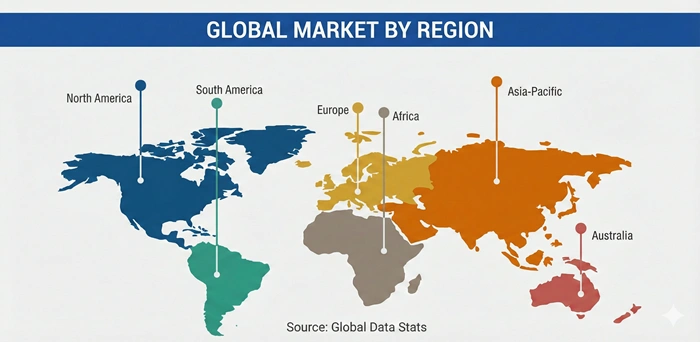
North America holds the dominant position in the global molecular cytogenetics market, accounting for approximately 40% of total global revenue in 2025 and projected to maintain a CAGR of 9.9% through 2033. The United States is overwhelmingly the primary national market, home to the world's most advanced clinical cytogenetics infrastructure — encompassing more than 300 CAP/CLIA-accredited cytogenetics laboratories in academic medical centers, NCI-designated cancer centers, and commercial reference laboratory networks. The comprehensive FDA companion diagnostic approval pathway, robust insurance reimbursement coverage for oncology-related FISH testing and constitutional CMA, and strong physician adoption of molecular cytogenetics in clinical decision-making collectively create a high-volume, well-reimbursed testing market that generates the majority of global molecular cytogenetics market revenue. Leading companies driving North American molecular cytogenetics market growth include Abbott (Vysis), Agilent Technologies, Illumina, Thermo Fisher Scientific, Bio-Rad Laboratories, and PerkinElmer.
The College of American Pathologists (CAP) and the American College of Medical Genetics (ACMG) play critical roles in setting quality standards and clinical utilization guidelines that ensure consistent and rigorous molecular cytogenetics practice across North American laboratories. ACMG's guideline endorsement of chromosomal microarray as the first-tier test for developmental evaluation has been particularly important in driving sustained growth of the aCGH and SNP array segment of the North American molecular cytogenetics market, generating a well-established and growing clinical genetics testing demand base that complements the larger oncology application segment.
Asia-Pacific
Asia-Pacific Is the Fastest-Growing Regional Market in the Molecular Cytogenetics Landscape, Driven by Rapidly Increasing Cancer Burden, Expanding Clinical Genetics Services, and Growing Government Investment in Genomics Infrastructure
Asia-Pacific is the most dynamic regional growth market in the global molecular cytogenetics landscape, projected to expand at a CAGR of 12.7% from 2026 to 2033. The region currently accounts for approximately 27% of global molecular cytogenetics market revenue, with Japan, China, South Korea, India, and Australia representing the primary national markets. Japan has the most mature and technically sophisticated molecular cytogenetics market in Asia-Pacific, characterized by advanced clinical genetics laboratory infrastructure, strong adoption of international molecular cytogenetics platforms from companies including Abbott, Agilent Technologies, and Sysmex (Japan), and a long-standing commitment to precision oncology approaches in cancer management. China is the fastest-growing national molecular cytogenetics market within the region, driven by a government-sponsored precision medicine initiative that is dramatically expanding genomic and cytogenetic testing capabilities at major cancer centers and genetics laboratories across the country. Key companies active in the Asia-Pacific molecular cytogenetics market include Agilent Technologies, Thermo Fisher Scientific, Abbott, Beijing Genomics Institute (BGI), and Sysmex Corporation.
India represents a substantial and rapidly developing opportunity within the Asia-Pacific molecular cytogenetics market. A growing network of accredited molecular pathology and genetic testing laboratories in major metropolitan centers — combined with increasing awareness of prenatal genetic screening among urban middle-class families and rising cancer diagnosis rates — is creating accelerating demand for molecular cytogenetics testing services and products. The regulatory framework for laboratory diagnostics in India is progressively maturing, creating a more structured environment for the quality-assured adoption of advanced molecular cytogenetics technologies that supports both clinical and commercial market development across the region's largest emerging national market.
Top Key Players
-
Abbott Laboratories (Vysis) (United States)
-
Agilent Technologies Inc. (United States)
-
Illumina Inc. (United States)
-
Thermo Fisher Scientific Inc. (United States)
-
Bio-Rad Laboratories Inc. (United States)
-
PerkinElmer Inc. (United States)
-
F. Hoffmann-La Roche Ltd. (Switzerland)
-
Oxford Gene Technology (United Kingdom)
-
Applied Spectral Imaging Ltd. (Israel)
-
Metasystems GmbH (Germany)
-
Sysmex Corporation (Japan)
-
Danaher Corporation (United States)
Recent Developments
-
Abbott Laboratories (2025) — Expanded its Vysis molecular cytogenetics FISH probe portfolio with new oncology-targeted probes for emerging companion diagnostic applications, while also investing in digital pathology integration capabilities that connect Vysis FISH testing workflows with digital slide scanning platforms — positioning Abbott's molecular cytogenetics solutions for the growing market demand for AI-assisted automated FISH signal analysis and digital laboratory workflows
-
Agilent Technologies (2025) — Launched updated versions of its SureGuide CRISPR CGH microarray platform and advanced aCGH analysis software, incorporating new AI-assisted copy number variation calling algorithms that improve variant classification accuracy and reduce analysis time for constitutional and oncological chromosomal microarray testing — reinforcing Agilent's position as the leading provider of comprehensive array-based cytogenetics solutions globally
-
Illumina (2025) — Advanced its integrated genomic profiling strategy through expanded commercial partnerships with major cancer center networks for comprehensive tumor profiling workflows that combine NGS-based mutation detection with copy number variation analysis — creating integrated oncology genomic profiling solutions where molecular cytogenetics data contributes to multi-modal tumor characterization reports that support precision oncology treatment selection
-
Thermo Fisher Scientific (2024–2025) — Expanded production capacity for molecular cytogenetics reagents and probes through manufacturing capacity investments at key production facilities, while also launching new cloud-connected laboratory information management system capabilities for cytogenetics laboratories that improve workflow efficiency, enable remote case review, and support quality management compliance with CAP and CLIA accreditation requirements
-
Roche (2025) — Strengthened its molecular cytogenetics position through expanded tissue-based companion diagnostic development programs aligned with Roche's targeted oncology drug pipeline, with new ISH-based companion diagnostic submissions under development for emerging targeted therapy indications — reinforcing the strategic importance of molecular cytogenetics testing as a foundational companion diagnostic platform within Roche's integrated oncology diagnostics strategy across the molecular cytogenetics market
Market Trends
Digital Cytogenetics and AI-Automated FISH Analysis Adoption and the Convergence of Molecular Cytogenetics With Next-Generation Sequencing in Integrated Oncology Profiling Are the Most Transformative Trends in the Molecular Cytogenetics Market Today
The most commercially impactful trend reshaping the molecular cytogenetics market is the rapid adoption of digital cytogenetics — encompassing automated digital slide scanning, AI-powered FISH signal counting and karyotype analysis, and cloud-based remote case review and reporting platforms. Leading companies including MetaSystems, Applied Spectral Imaging, and major instrument vendors are investing heavily in validated, FDA-cleared AI-assisted cytogenetics systems that are progressively being adopted by high-volume clinical cytogenetics laboratories seeking to improve throughput, standardize reporting quality, and reduce the labor-intensive manual microscopy burden on trained cytogeneticists. This digital transformation is not merely a workflow efficiency improvement — it is enabling new business models including centralized hub-and-spoke laboratory networks, telegenetics services, and quality-controlled high-volume testing centers that can serve broad geographic areas with consistent analytical standards.
The second major trend is the convergence of molecular cytogenetics with next-generation sequencing in comprehensive, multi-modal tumor genomic profiling platforms. Rather than displacing traditional cytogenetics testing, NGS integration is extending its clinical value by enabling laboratories to generate combined reports that integrate chromosomal copy number information from aCGH or FISH with somatic mutation data from targeted NGS panels, immunohistochemistry biomarker results, and RNA expression profiles — providing oncologists with a multi-dimensional tumor molecular portrait that no single technique can deliver alone. This convergence is driving investment in integrated molecular cytogenetics laboratory information systems that can manage complex multi-platform data workflows and generate clinically interpretable integrated genomic reports — creating substantial commercial opportunity for informatics and software vendors serving the molecular cytogenetics market.
Segments Covered in the Report
By Product:
-
Kits and Reagents (FISH Probes, Hybridization Buffers, CGH Microarray Kits, Others)
-
Instruments (Fluorescence Microscopes, Array Scanners, Digital Slide Scanners, Hybridization Systems)
-
Software and Services (Analysis Software, Laboratory Information Management Systems, Digital Cytogenetics Platforms, AI-Assisted Analysis Tools)
-
Consumables
By Technique:
-
Fluorescence In Situ Hybridization (FISH)
-
Array Comparative Genomic Hybridization (aCGH)
-
Comparative Genomic Hybridization (CGH)
-
Chromosomal Microarray Analysis (CMA/SNP Array)
-
Karyotyping
-
Others
By Application:
-
Oncology
-
Genetic Disorders (Prenatal and Postnatal)
-
Drug Discovery and Development
-
Others
By End User:
-
Clinical Laboratories and Reference Labs
-
Academic and Research Institutes
-
Hospitals and Cancer Centers
-
Pharmaceutical and Biotechnology Companies
-
Others
By Region:
-
North America (United States, Canada, Mexico)
-
Europe (Germany, United Kingdom, France, Netherlands, Italy, Spain, Rest of Europe)
-
Asia-Pacific (Japan, China, India, South Korea, Australia, Rest of Asia-Pacific)
-
Latin America (Brazil, Argentina, Rest of Latin America)
-
Middle East & Africa (UAE, Saudi Arabia, South Africa, Rest of MEA)
Frequently Asked Questions
Question 1: What is the current size of the global molecular cytogenetics market?
Answer: The global molecular cytogenetics market is valued at USD 2.08 billion in 2025 and is projected to reach USD 6.02 billion by 2033. The market is growing at a CAGR of 10.5% from 2026 to 2033, driven by rising cancer and genetic disorder prevalence, expanding precision oncology companion diagnostic requirements, growing prenatal genetic testing adoption, and accelerating AI and digital cytogenetics platform adoption.
Question 2: Which technique dominates the molecular cytogenetics market?
Answer: Fluorescence in situ hybridization (FISH) is the dominant technique in the molecular cytogenetics market, accounting for approximately 58% of technique-based revenue in 2025, driven by its universal clinical adoption across oncology companion diagnostic testing, hematological malignancy workup, and solid tumor biomarker assessment. Array comparative genomic hybridization (aCGH) is the fastest-growing technique segment, gaining increasing clinical adoption for constitutional chromosomal microarray analysis in pediatric genetics and prenatal diagnosis applications.
Question 3: Which application leads the molecular cytogenetics market?
Answer: Oncology is the dominant application in the molecular cytogenetics market, contributing approximately 61% of total application revenue in 2025, driven by the clinical mandate for FISH and aCGH testing across multiple cancer types where specific chromosomal abnormalities guide diagnosis, prognosis, and targeted therapy selection. The expansion of companion diagnostic requirements for new targeted oncology therapies is consistently generating new high-volume cytogenetics testing mandates that sustain oncology's leadership within the molecular cytogenetics market.
Question 4: What role does AI play in the molecular cytogenetics market?
Answer: AI is transforming the molecular cytogenetics market by enabling automated FISH signal detection and counting, AI-powered karyotype analysis, automated copy number variation classification in aCGH data, and integrated multi-modal genomic report generation — dramatically improving laboratory throughput, analytical consistency, and turnaround time compared to manual microscopy-based approaches. The adoption of AI-assisted digital cytogenetics platforms is one of the most commercially significant trends in the market, creating substantial new software and digital infrastructure revenue opportunities for vendors with validated AI cytogenetics analysis tools.
Question 5: Which region is the fastest growing in the molecular cytogenetics market?
Answer: Asia-Pacific is the fastest-growing regional market for molecular cytogenetics, projected to expand at a CAGR of 12.7% through 2033, driven by rapid cancer incidence growth in China and India, expanding clinical genetics service availability, government precision medicine investment programs, and the progressive establishment of accredited molecular cytogenetics laboratories at major tertiary care hospitals and cancer centers across the region. Japan, China, South Korea, and India are the primary national markets contributing to Asia-Pacific's above-average growth rate within the global molecular cytogenetics market.