
Mining Equipment Market Overview
Heavy Machinery and Automation Technologies Transform Global Mineral Extraction and Processing Operations
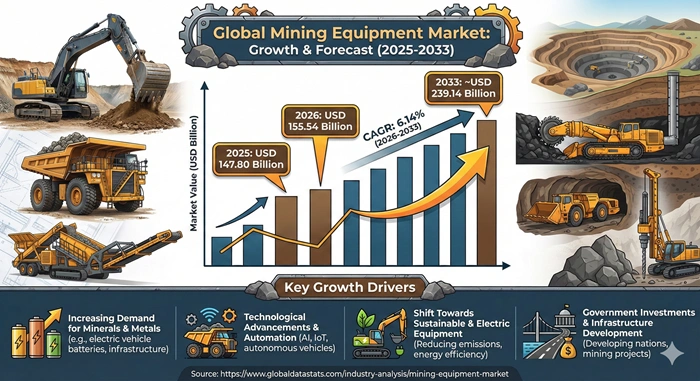
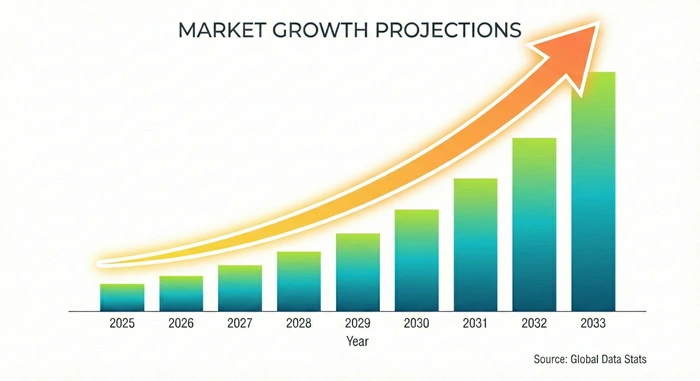
The global mining equipment market size is valued at USD 147.80 billion in 2025 and is predicted to increase from USD 155.54 billion in 2026 to approximately USD 239.14 billion by 2033, growing at a CAGR of 6.14% from 2026 to 2033. This industry encompasses specialized machinery, tools, and vehicles essential for extracting minerals, metals, coal, and other geological materials from earth through surface and underground operations. Mining equipment includes trucks, excavators, drills, loaders, crushers, conveyors, and processing machinery enabling efficient resource extraction while maintaining operational safety and environmental compliance across diverse mining applications.
The mining equipment market addresses escalating global demand for minerals and metals driven by industrialization, urbanization, and technological advancement requiring copper, iron ore, lithium, rare earths, and other critical materials. These specialized machines demonstrate exceptional durability, payload capacity, and operational efficiency in harsh environments where temperatures, dust, vibration, and corrosive conditions challenge conventional equipment. Major mining operations spanning coal extraction, metallic ore production, and industrial mineral processing deploy substantial equipment fleets achieving production rates exceeding millions of tons annually while pursuing cost optimization through automation, electrification, and predictive maintenance technologies.
AI Impact on the Mining Equipment Industry
Machine Learning and Autonomous Systems Revolutionize Operational Efficiency and Safety Across Mining Operations
Artificial intelligence transforms the mining equipment market through autonomous haulage systems deploying self-driving trucks, loaders, and drills that operate continuously without human intervention, dramatically improving productivity while eliminating operator exposure to hazardous conditions. Machine learning algorithms optimize haul routes, equipment allocation, and maintenance schedules by analyzing real-time data from thousands of sensors monitoring engine performance, tire pressure, payload weights, and fuel consumption identifying efficiency improvements worth millions in annual savings. These AI-powered systems enable predictive maintenance forecasting component failures 7-14 days before occurrence based on vibration patterns, temperature anomalies, and wear indicators allowing scheduled repairs during planned downtime rather than catastrophic breakdowns halting production. Computer vision integrated into drilling equipment performs automated ore sensing identifying mineral concentrations guiding real-time drill pattern adjustments maximizing recovery while minimizing waste rock extraction.
Advanced AI applications extend beyond autonomous equipment to revolutionize mine planning and resource optimization within the mining equipment market landscape. Neural networks analyze geological survey data, historical production records, and commodity price forecasts recommending optimal extraction sequences maximizing net present value across multi-decade mine life spans. Digital twin technology creates virtual replicas of mining operations enabling scenario testing for equipment configurations, production schedules, and processing parameters before implementing changes in physical operations reducing risk and capital waste. Natural language processing mines maintenance logs, safety reports, and operator feedback identifying patterns correlating equipment design features with operational issues guiding manufacturers toward reliability improvements in next-generation machinery. These AI-driven capabilities position mining companies to achieve 20-30% productivity improvements while reducing energy consumption, maintenance costs, and safety incidents throughout operational lifespans.
Growth Factors
Critical Mineral Demand and Infrastructure Development Drive Unprecedented Mining Equipment Adoption Globally
The mining equipment market experiences robust growth propelled by surging demand for critical minerals including lithium, cobalt, nickel, and rare earth elements essential for electric vehicle batteries, renewable energy systems, and advanced electronics driving new mine development and capacity expansions. Electric vehicle production projected to exceed 40 million units annually by 2030 creates sustained lithium demand requiring mining equipment fleets at hard rock spodumene operations and brine evaporation facilities across Australia, Chile, Argentina, and emerging African deposits. Wind turbine and solar panel manufacturing consume substantial copper, steel, and specialty minerals necessitating equipment investments at established mines while stimulating greenfield exploration projects in politically stable jurisdictions offering favorable mining regulations. Semiconductor industry growth requiring ultra-pure silicon, gallium, germanium, and other specialty materials drives precision mining and processing equipment adoption where contamination control and yield optimization justify premium capital expenditures.
Infrastructure development across emerging economies drives mining equipment market expansion through construction material demand including cement, aggregates, and industrial minerals supporting urbanization and transportation network buildout. India's infrastructure investment exceeding 100 billion dollars annually stimulates limestone mining for cement production, granite and marble extraction for building materials, and coal mining for power generation requiring substantial equipment procurement. Southeast Asian nations including Vietnam, Indonesia, and Philippines develop industrial capacity consuming copper, nickel, bauxite, and coal extracted through mechanized operations replacing artisanal methods. African mineral belt development attracting foreign investment in copper-cobalt deposits, platinum group metals, and gold operations creates equipment demand as international mining companies implement best practices requiring modern machinery meeting Western safety and efficiency standards. These converging demand drivers create favorable market dynamics sustaining above-average growth rates throughout forecast period.
Market Outlook
Electrification and Automation Investments Position Industry for Sustained Long-Term Expansion and Transformation
The mining equipment market outlook remains exceptionally positive as manufacturers invest substantially in electrification technologies addressing emissions regulations, ventilation costs, and operational efficiency challenges particularly acute in underground operations. Battery-electric load-haul-dump vehicles, drills, and personnel carriers eliminate diesel particulate matter reducing underground ventilation requirements by 50-70% enabling deeper mining at lower capital and operating costs. Trolley-assist systems deployed on haul trucks at surface operations electrify uphill segments reducing fuel consumption by 20-30% while extending brake and engine life through regenerative systems. Hydrogen fuel cell equipment under development promises zero-emission operations with rapid refueling supporting continuous production schedules though commercial viability awaits infrastructure development and cost reductions below diesel-electric parity. Major equipment manufacturers including Caterpillar, Komatsu, Sandvik, and Epiroc maintain robust research budgets advancing power train technologies, energy storage systems, and charging infrastructure enabling transition toward sustainable mining operations.
Investment trends within the mining equipment market reflect growing confidence in long-term demand fundamentals as commodity producers pursue capacity expansion, modernization, and automation projects delivering measurable productivity improvements. Autonomous haulage fleets deployed at Pilbara iron ore operations and Western Australian gold mines demonstrate 15-20% productivity gains compared to manned operations while eliminating fatigue-related incidents and enabling 24/7 operations. Integrated digital platforms combining mine planning software, equipment monitoring systems, and automated dispatch algorithms optimize fleet utilization achieving 10-15% throughput increases without additional capital investment. Mining companies increasingly adopt equipment-as-a-service models where manufacturers retain ownership while charging per-ton rates aligning incentives around uptime, reliability, and performance rather than initial purchase price. These business model innovations expand addressable markets enabling smaller producers to access advanced equipment without substantial capital outlays throughout forecast period.
Expert Speaks
-
Joseph E. Creed, Chief Executive Officer of Caterpillar, emphasized strategic priorities: "We achieved record sales, revenues, and backlog in 2025 driven by order strength across all businesses. Our strategic measures enhance capacity, particularly in Power and Energy, meeting increasing demand from data center expansions and infrastructure investments while maintaining focus on shareholder returns through significant dividends and share repurchases".
-
Peter Salditt, President of Komatsu Mining Business Division, articulated acquisition strategy: "The talented GHH staff are now part of Komatsu, and our new combined team will work together to expand offerings and increase customer access to products in new territories. This strategic investment bolsters our position in the underground mining sector, supporting both new and existing customer operations worldwide".
-
Stefan Widing, President and CEO of Sandvik, highlighted transformation commitment: "We continue advancing our strategic plan through targeted acquisitions strengthening core competencies across mining and rock processing solutions. Our focus remains on innovation, operational excellence, and delivering superior customer value through integrated hardware-software offerings enabling autonomous and sustainable mining operations".
Key Report Takeaways
-
Asia Pacific dominates the mining equipment market with commanding share exceeding 38%, driven by concentrated mineral extraction capacity across China, India, and Australia where coal, iron ore, copper, and rare earth mining operations consume substantial equipment volumes supported by industrialization and infrastructure development.
-
North America emerges as the fastest-growing regional market with projected CAGR approaching 6.8% through 2033, propelled by critical mineral development initiatives, coal mine modernization, metals mining expansion, and government funding exceeding 355 million dollars supporting domestic production and next-generation mining technology adoption.
-
Surface mining equipment represents the dominant segment accounting for approximately 69% market share due to prevalence of open-pit copper, iron ore, coal, and bauxite operations depending on large truck, shovel, and dragline fleets where bulk commodity extraction at scale exceeding 200 million tons annually maintains equipment demand.
-
Metal mining applications constitute the largest end-use segment capturing over 51% market share, driven by copper, gold, iron ore, and battery metal extraction requiring specialized equipment for hard rock mining, ore processing, and tailings management across surface and underground operations.
-
Mining trucks command equipment type leadership representing approximately 59% of market revenue, reflecting indispensable role of ultra-class haulage at large copper and iron ore pits where payloads exceed 360 tonnes and haul distances stretch beyond 5 kilometers despite autonomous fleet optimization reducing absolute unit counts.
-
Mineral processing equipment exhibits highest growth trajectory with anticipated CAGR exceeding 8.1% through 2033, attributed to strategic focus on downstream value capture as operators confront volatile commodity pricing and declining ore grades requiring high-capacity crushers, energy-efficient SAG mills, and modular flotation cells.
Market Scope
| Report Coverage Details | |
|---|---|
| Market Size by 2033 | USD 239.14 Billion |
| Market Size by 2025 | USD 147.80 Billion |
| Market Size by 2026 | USD 155.54 Billion |
| Market Growth Rate from 2026 to 2033 | CAGR of 6.14% |
| Dominating Region | Asia Pacific |
| Fastest Growing Region | North America |
| Base Year | 2025 |
| Forecast Period | 2026 to 2033 |
| Segments Covered | Equipment Type, Mining Type, Application, Power Source, Region |
| Regions Covered | North America, Europe, Asia Pacific, Latin America, Middle East & Africa |
Market Dynamics
Drivers Impact Analysis
Critical Mineral Requirements and Automation Adoption Accelerate Equipment Investment Across Global Mining Operations
| Impact Factor | (≈) % Impact on CAGR Forecast | Geographic Relevance | Impact Timeline |
|---|---|---|---|
| Critical Minerals Demand Growth | +2.1% | Global, Led by North America and Asia Pacific | 2026-2033 |
| Automation and Digitalization | +1.7% | Developed Mining Regions | 2026-2033 |
| Infrastructure Development | +1.4% | Asia Pacific, Middle East | 2026-2031 |
| Coal Mine Modernization | +0.9% | Asia, North America | 2026-2029 |
The mining equipment market benefits substantially from unprecedented demand for battery metals and critical minerals essential for energy transition technologies including electric vehicles, renewable energy systems, and grid storage infrastructure. Lithium-ion battery production capacity expanding to 5 terawatt-hours annually by 2030 requires lithium carbonate, nickel sulfate, cobalt hydroxide, and graphite extracted through mechanized mining operations at scales previously unimaginable. Australian spodumene hard rock operations deploy fleets of hydraulic excavators, rigid dump trucks, and crushing equipment extracting lithium-bearing ore processed through dense media separation and flotation requiring specialized mineral processing machinery. Chilean and Argentine brine operations utilize pumps, evaporation ponds, and chemical processing equipment extracting lithium from subsurface aquifers. Copper demand for electric vehicle wiring, charging infrastructure, and renewable energy transmission creates sustained equipment procurement at established Chilean, Peruvian, and Zambian copper belts while stimulating greenfield development across Democratic Republic of Congo, Mongolia, and Canadian provinces.
Automation and digitalization initiatives drive mining equipment market expansion as operators pursue productivity improvements, safety enhancements, and labor cost optimization through autonomous equipment deployment and integrated mine management systems. Autonomous haulage systems implemented at Rio Tinto's Pilbara iron ore operations and Fortescue's Christmas Creek mine demonstrate 15-20% productivity gains through continuous 24/7 operations eliminating operator shift changes, fatigue management, and commute delays. Autonomous drills equipped with real-time ore sensing technology optimize blast patterns improving fragmentation while reducing oversize requiring secondary breakage, directly impacting downstream crusher throughput and energy consumption. Integrated mine control systems combining fleet management software, equipment health monitoring, and automated dispatch algorithms optimize load-haul-dump cycles achieving 10-15% throughput increases without additional equipment investment. These digital transformation initiatives create compelling return-on-investment cases where premium equipment incorporating advanced sensors, connectivity, and automation capabilities commands higher prices while delivering measurable productivity improvements throughout operational lifespans.
Restraints Impact Analysis
Capital Intensity and Commodity Price Volatility Challenge Equipment Investment Cycles and Market Growth
| Restraint Factor | (≈) % Impact on CAGR Forecast | Geographic Relevance | Impact Timeline |
|---|---|---|---|
| High Equipment Capital Costs | -1.3% | Emerging Mining Regions | 2026-2033 |
| Commodity Price Volatility | -1.0% | Global Mining Operations | 2026-2030 |
| Skilled Labor Shortages | -0.8% | Developed Markets | 2026-2033 |
| Environmental Regulations | -0.6% | Europe, North America | 2026-2033 |
The mining equipment market faces growth constraints from substantial capital requirements where ultra-class haul trucks cost 5-7 million dollars per unit, hydraulic shovels exceed 10 million dollars, and complete processing plants require investments exceeding 500 million dollars limiting procurement to well-capitalized producers. Smaller mining operations across Africa, South America, and Southeast Asia struggle to access financing for modern equipment relying instead on aging fleets, refurbished machinery, and labor-intensive methods constraining productivity and safety while limiting addressable market opportunities. Mining companies operating under debt covenants and shareholder return commitments face capital allocation tensions between equipment replacement, sustaining capital investments, exploration spending, and dividend payments creating procurement deferrals during periods of commodity price weakness or economic uncertainty. Equipment depreciation periods extending 10-20 years create replacement cycle challenges where technological obsolescence precedes physical wear-out but economic justification for premature retirement requires compelling productivity improvements or regulatory compliance pressures.
Commodity price volatility creates equipment procurement uncertainty as mining companies adjust capital expenditures in response to copper, iron ore, coal, and gold price fluctuations that directly impact revenue forecasts and investment returns. Copper price swings between 3.50-10.00 dollars per pound over 5-year cycles create feast-or-famine equipment demand as producers accelerate expansion during high-price periods while canceling orders and deferring maintenance during downturns. Coal price volatility driven by natural gas competition, renewable energy penetration, and Chinese import policies creates particularly acute challenges where equipment suppliers maintain substantial exposure to thermal coal mining segments experiencing structural decline in developed markets. Iron ore price dependence on Chinese steel production creates boom-bust cycles affecting Australian and Brazilian equipment procurement where spot prices ranging 60-220 dollars per ton over 36-month periods drive dramatic capital budget adjustments. These cyclical dynamics constrain mining equipment market growth as manufacturers struggle to maintain production capacity, engineering talent, and supply chain partnerships through multi-year downturns between investment cycles.
Opportunities Impact Analysis
Electrification Transition and Circular Economy Initiatives Create Substantial Growth Avenues Beyond Traditional Markets
| Opportunity Factor | (≈) % Impact on CAGR Forecast | Geographic Relevance | Impact Timeline |
|---|---|---|---|
| Battery-Electric Equipment Adoption | +1.6% | Underground Operations Globally | 2027-2033 |
| Equipment-as-a-Service Models | +1.2% | Mid-Tier Mining Operations | 2026-2033 |
| Recycling and Urban Mining | +0.9% | Developed Markets | 2027-2033 |
| Deep-Sea Mining Equipment | +0.7% | Coastal Nations | 2028-2033 |
The mining equipment market stands to capture substantial value from electrification transition as underground operators pursue battery-electric load-haul-dump vehicles, drills, and utility vehicles eliminating diesel particulate matter reducing ventilation requirements by 50-70% enabling deeper mining. Underground ventilation systems representing 30-50% of operating costs and 30-40% of total energy consumption create compelling economics for electric equipment where elimination of diesel exhaust enables reduced airflow volumes directly translating to capital and operating savings exceeding equipment premium costs within 2-3 years. Battery technology improvements delivering 500-1000 kWh energy storage enable 8-12 hour shifts between charging cycles matching operational requirements while fast-charging infrastructure supporting 30-minute turnarounds maintains fleet utilization comparable to diesel alternatives. Major manufacturers including Sandvik, Epiroc, Caterpillar, and Komatsu commercialize comprehensive electric equipment portfolios addressing hauling, drilling, bolting, and auxiliary applications creating integrated solutions eliminating mixed-fleet operational complexities throughout forecast period.
Equipment-as-a-service business models present exceptional growth opportunities for the mining equipment market as manufacturers transition from transactional sales toward recurring revenue relationships where payment structures align with production outcomes rather than initial capital outlays. Per-ton service agreements where equipment suppliers charge fixed rates per material moved eliminate upfront capital requirements enabling smaller producers to access advanced autonomous and electric equipment previously economically unattainable. Comprehensive maintenance contracts incorporating predictive analytics, parts replacement, and operator training transfer operational risk to equipment manufacturers while guaranteeing availability exceeding 90% compared to 75-80% achievable through traditional ownership. Subscription models for digital platforms including fleet management systems, mine planning software, and optimization algorithms create incremental revenue streams while strengthening customer relationships through integrated ecosystems locking in long-term equipment specifications. These alternative business models expand addressable markets beyond traditional capital equipment sales accessing operational budgets and enabling junior miners to implement technologies historically reserved for major producers throughout forecast period.
Segment Analysis
By Equipment Type: Surface Mining Equipment
Open-Pit Operations and Bulk Commodity Extraction Sustain Surface Equipment Segment Market Leadership Position
Surface mining equipment commands the largest share within the mining equipment market, accounting for approximately 69% of global revenue with continued expansion projected at steady CAGR of 5.9% through 2033. This equipment category encompasses trucks, excavators, shovels, draglines, drills, dozers, and auxiliary machinery essential for open-pit copper, iron ore, coal, and bauxite operations where overburden removal and ore extraction occur from near-surface deposits. The mining equipment market benefits from surface mining's economic advantages where lower capital intensity per ton, higher productivity rates, and operational flexibility compared to underground methods favor this extraction approach for suitable ore bodies. Ultra-class haul trucks with 400-ton payload capacities, rope shovels with 100-cubic-yard buckets, and autonomous drilling fleets enable production rates exceeding 200 million tons annually at individual mine sites including Vale's Carajás, Rio Tinto's Pilbara, and Escondida copper operations.
Asia Pacific leads surface mining equipment consumption within the market, driven by concentrated coal mining across China and India, iron ore extraction in Australia and India, and copper production across developing deposits in Mongolia, Indonesia, and emerging Southeast Asian nations. Leading equipment suppliers including Caterpillar, Komatsu, Liebherr, and Hitachi Construction Machinery maintain regional manufacturing facilities, distribution networks, and service centers supporting Australian iron ore operations consuming hundreds of ultra-class trucks and shovels across Pilbara region. Chinese coal mines transition toward mechanized longwall and highwall systems incorporating draglines, continuous miners, and conveyor systems replacing labor-intensive room-and-pillar methods. Indian coal and iron ore operations modernize fleets with 240-ton and 320-ton class haul trucks improving productivity while addressing environmental regulations requiring dust suppression and emission controls. North American surface equipment applications emphasize oil sands extraction, copper mining, and metallurgical coal production where aging fleet replacement cycles and autonomous technology adoption drive procurement. Latin American copper belt operations across Chile and Peru maintain substantial surface equipment investments where mine life extensions, expansion projects, and productivity initiatives sustain capital expenditures throughout forecast period.
By Application: Metal Mining
Copper, Gold, and Battery Metal Extraction Position Metallic Ores as Dominant Application Segment
Metal mining represents the largest application segment within the mining equipment market, accounting for approximately 51% of global consumption with robust expansion anticipated at CAGR of 6.3% through 2033. This sector encompasses copper, gold, iron ore, nickel, zinc, silver, platinum group metals, and battery minerals including lithium and cobalt requiring specialized equipment for hard rock mining, ore processing, and tailings management. The mining equipment market benefits from metal mining's technical complexity where deep underground operations, low-grade ore processing, and stringent recovery requirements necessitate advanced drilling equipment, high-capacity hauling systems, and sophisticated processing machinery. Copper mining particularly drives equipment demand as global production approaching 25 million tons annually requires substantial fleet investments at major operations including Chile's Escondida, Indonesia's Grasberg, and emerging deposits across Democratic Republic of Congo and Zambia.
North America and Latin America lead metal mining equipment adoption within the market, driven by established copper, gold, and silver operations across Western United States, Chile, Peru, and Mexico where equipment replacement cycles, expansion projects, and automation initiatives sustain procurement. Chilean copper operations maintain world's largest equipment fleets with hundreds of ultra-class trucks, dozens of rope shovels, and comprehensive processing plants employing semi-autogenous grinding mills, flotation cells, and concentrate filtration systems. Peruvian gold and copper mines deploy underground equipment including jumbo drills, load-haul-dump vehicles, and ventilation systems at depths exceeding 1500 meters below surface. Canadian gold mines across Ontario, Quebec, and British Columbia modernize underground fleets with battery-electric equipment eliminating diesel emissions while nickel operations in Sudbury and Thompson utilize specialized rock mechanics equipment for pillarless mining methods. Australian gold sector particularly drives underground equipment demand as operations pursue depth extensions and exploration discoveries requiring modern jumbo drills, mechanized development equipment, and paste backfill systems. Leading equipment suppliers including Sandvik, Epiroc, Joy Global (Komatsu), and Atlas Copco compete intensively for metal mining specifications offering integrated equipment packages, automation capabilities, and comprehensive service support throughout forecast period.
Regional Insights
Asia Pacific
Manufacturing Concentration and Mineral Resource Development Establish Regional Dominance in Mining Equipment Consumption
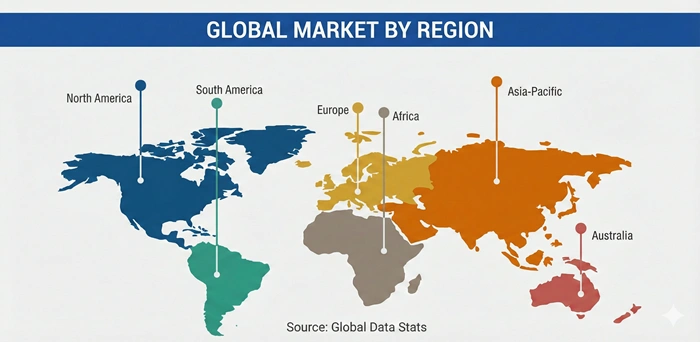
Asia Pacific commands the mining equipment market with dominant share exceeding 38%, driven by concentrated mineral extraction across China, India, Australia, and Indonesia where coal, iron ore, copper, and rare earth mining operations consume substantial equipment volumes supporting industrialization and infrastructure development. China alone accounts for over 50% of global coal production and substantial steel manufacturing capacity requiring ongoing equipment investments at operations throughout Shanxi, Inner Mongolia, and Xinjiang provinces. The region benefits from vertical integration spanning equipment manufacturing through end-user mining operations, with Chinese producers including SANY, XCMG, and Zoomlion competing against established Western brands on price while improving quality and technology sophistication. Australian mining sector particularly drives high-value equipment procurement through Pilbara iron ore operations, Queensland coal mines, and Western Australian gold, nickel, and lithium deposits where international operators implement best practices requiring premium equipment meeting stringent safety and productivity standards.
India represents fastest-growing market within Asia Pacific driven by coal mining expansion supporting power generation, iron ore development for steel production, and emerging battery mineral exploration across mineral-rich states including Jharkhand, Odisha, and Chhattisgarh. Leading equipment suppliers including Caterpillar, Komatsu, Hitachi, and Volvo Construction Equipment maintain regional manufacturing operations, technical centers, and extensive dealer networks supporting diverse customer base spanning Coal India Limited subsidiaries, private coal blocks, and metallic ore producers. Indonesian coal, nickel, and copper operations drive equipment demand as international mining companies develop deposits across Kalimantan, Sulawesi, and Papua provinces. Southeast Asian nations including Vietnam, Philippines, and Myanmar develop mineral resources requiring modern equipment replacing artisanal methods. The region's market dominance continues strengthening through 2033 as domestic consumption growth, export-oriented mining development, and equipment manufacturing capacity create self-reinforcing dynamics supporting continued expansion.
North America
Critical Mineral Development and Technology Leadership Position Region as Fastest-Growing Geographic Market
North America emerges as the fastest-growing regional mining equipment market with projected CAGR of 6.8% through 2033, propelled by government initiatives supporting critical mineral development, coal mine modernization, metals mining expansion, and advanced automation technology adoption. The United States dominates regional market activity through established coal operations across Wyoming, West Virginia, and Pennsylvania, copper mining in Arizona and Utah, gold extraction across Nevada and Alaska, and emerging lithium development in Nevada, North Carolina, and California. Department of Energy funding exceeding 355 million dollars announced November 2025 accelerates domestic critical mineral production and next-generation mining technology advancement creating favorable investment climate. Mine of the Future initiatives launched September 2025 demonstrate federal commitment to technological leadership in autonomous systems, electrification, and sustainable extraction methods positioning United States as innovation center for global mining equipment development.
United States mining equipment market specifically benefits from reshoring initiatives and supply chain security concerns driving domestic mineral development reducing dependence on Chinese and other foreign sources for strategic materials. Lithium Americas' Thacker Pass project, MP Materials' Mountain Pass rare earth facility, and numerous copper development projects across Arizona Copper Belt drive substantial equipment procurement including excavation machinery, processing plants, and tailings management systems. Canadian mining operations contribute to North American growth through established gold mines across Ontario and Quebec, base metal operations in British Columbia, potash mines in Saskatchewan, and emerging battery mineral projects including lithium in Quebec and Manitoba. Mexican silver, gold, and copper operations maintain substantial equipment fleets supporting production from established mining districts. Leading equipment manufacturers including Caterpillar, Joy Global (Komatsu), Sandvik, and Epiroc maintain North American headquarters, manufacturing operations, and comprehensive dealer networks enabling close customer collaboration advancing automation, electrification, and digital integration throughout forecast period.
Top Key Players
-
Caterpillar Inc. (United States)
-
Komatsu Ltd. (Japan)
-
Sandvik AB (Sweden)
-
Hitachi Construction Machinery Co., Ltd. (Japan)
-
Liebherr Group (Switzerland)
-
Epiroc AB (Sweden)
-
Volvo Construction Equipment (Sweden)
-
Metso Outotec Corporation (Finland)
-
Terex Corporation (United States)
-
Doosan Infracore Co., Ltd. (South Korea)
-
FLSmidth & Co. A/S (Denmark)
-
Atlas Copco AB (Sweden)
-
SANY Heavy Industry Co., Ltd. (China)
-
XCMG Group (China)
-
Zoomlion Heavy Industry Science & Technology Co., Ltd. (China)
Recent Developments
-
Komatsu Ltd. (2024): Completed strategic acquisition of GHH Group GmbH, leading manufacturer of underground mining, tunnelling, and special civil engineering equipment, strengthening production and service capabilities globally through facilities in Europe, Southern Africa, India, and Chile while expanding customer access to underground mining products in new territories.
-
Caterpillar Inc. (2025): Achieved record full-year sales and revenues of 73.1 billion dollars in 2025, representing 18% increase compared to 2024, with fourth-quarter sales reaching 19.1 billion dollars driven by order strength across all business segments including Resource Industries despite 7% decline in mining sales due to reduced coal demand linked to lower commodity prices.
-
Sandvik AB (2024): Acquired Universal Field Robots for 80 million SEK strengthening mining automation portfolio, along with completing multiple strategic acquisitions across machining, rock processing, and mining segments totaling over 400 million SEK expanding technological capabilities and market reach throughout 2024-2025 period.
-
Caterpillar Inc. (2025): Announced organizational restructuring moving mining division from Resource Industries to newly established Power and Energy segment in future financial reporting, reflecting strategic shift toward integrated energy solutions while maintaining mining equipment manufacturing and support capabilities serving global customer base.
-
U.S. Department of Energy (2025): Launched Mine of the Future initiatives in September 2025 advancing U.S. mining industry technological leadership, followed by November 2025 announcement of 355 million dollars funding boost for domestic critical minerals production and next-generation mining technology development supporting equipment manufacturers and mining operators.
Market Trends
Autonomous Operations and Battery-Electric Equipment Reshape Industry Competitive Dynamics and Technology Roadmaps
The mining equipment market experiences transformative trends centered on autonomous equipment deployment as major mining companies implement driverless truck fleets, automated drilling systems, and remote-controlled loaders eliminating operator exposure to hazardous conditions while achieving 15-20% productivity improvements through continuous 24/7 operations. Rio Tinto's autonomous haulage fleet exceeding 400 trucks across Pilbara iron ore operations demonstrates commercial viability at scale, with expanded deployments at Fortescue, BHP, and emerging implementations at copper and coal operations worldwide. Autonomous drilling technology incorporating real-time ore sensing and automated pattern optimization improves blast fragmentation by 10-15% reducing downstream crushing energy while maximizing mill throughput. Integrated mine control systems combining autonomous equipment with centralized dispatch algorithms, real-time equipment health monitoring, and predictive maintenance scheduling optimize fleet utilization achieving measurable productivity gains without incremental capital investment. These automation initiatives position mining companies to address skilled labor shortages, improve safety records, and enhance operational consistency across variable ore conditions and environmental factors.
Electrification trends reshape the mining equipment market as manufacturers commercialize battery-electric alternatives to diesel equipment particularly targeting underground operations where ventilation cost savings justify premium equipment pricing. Sandvik's Toro battery-electric load-haul-dump family, Epiroc's battery-electric drilling jumbos, and emerging electric trucks from Caterpillar and Komatsu demonstrate technical maturity with energy storage, charging infrastructure, and operational integration challenges systematically addressed through pilot deployments at progressive mining operations. Surface mining electrification progresses through trolley-assist systems where overhead catenary supplies power to haul trucks on uphill segments reducing fuel consumption by 20-30% while extending component life through regenerative braking. Fast-charging infrastructure developments supporting 30-minute recharge cycles for 500 kWh battery packs enable electric equipment integration matching operational requirements of intensive mining schedules. Hydrogen fuel cell equipment development promises zero-emission operations with rapid refueling though commercial viability awaits infrastructure establishment and cost reductions enabling total-cost-of-ownership parity with diesel alternatives throughout forecast period.
Segments Covered in the Report
By Equipment Type
-
Surface Mining Equipment (Trucks, Excavators, Shovels, Drills, Dozers)
-
Underground Mining Equipment (Load-Haul-Dump, Jumbos, Bolters, Utility Vehicles)
-
Mineral Processing Equipment (Crushers, Mills, Flotation, Filtration)
-
Others
By Mining Type
-
Surface Mining
-
Underground Mining
By Application
-
Metal Mining (Copper, Gold, Iron Ore, Nickel, Others)
-
Coal Mining
-
Industrial Minerals
-
Others
By Power Source
-
Diesel
-
Electric
-
Hybrid
-
Others
By Region
-
North America (United States, Canada, Mexico)
-
Europe (Germany, United Kingdom, Sweden, Finland, Russia, Rest of Europe)
-
Asia Pacific (China, India, Australia, Indonesia, Japan, Rest of Asia Pacific)
-
Latin America (Chile, Peru, Brazil, Rest of Latin America)
-
Middle East & Africa (South Africa, Saudi Arabia, Rest of MEA)
Frequently Asked Questions
Question 1: What is the projected size of the mining equipment market by 2033?
Answer: The global mining equipment market is expected to reach approximately USD 239.14 billion by 2033, growing from USD 155.54 billion in 2026. This substantial expansion reflects increasing demand for critical minerals, automation technology adoption, and infrastructure development across emerging economies.
Question 2: Which region dominates the mining equipment market currently?
Answer: Asia Pacific leads the mining equipment market with over 38% share, driven by concentrated coal, iron ore, copper, and rare earth mining across China, India, and Australia. Leading manufacturers including Caterpillar, Komatsu, Hitachi, and SANY maintain dominant regional positions.
Question 3: What are the primary drivers of mining equipment market growth?
Answer: Key growth drivers include critical minerals demand for electric vehicles and renewable energy, automation and digitalization adoption improving productivity, infrastructure development in emerging markets, and coal mine modernization programs. Government initiatives supporting domestic mineral production further accelerate equipment investments.
Question 4: Which equipment type holds the largest mining equipment market share?
Answer: Surface mining equipment dominates with approximately 69% market share due to prevalence of open-pit copper, iron ore, coal, and bauxite operations requiring large truck, shovel, and dragline fleets. Mining trucks alone represent 59% of equipment revenue reflecting their indispensable role in bulk material handling.
Question 5: How does automation impact the mining equipment market?
Answer: Automation delivers 15-20% productivity improvements through continuous 24/7 autonomous truck operations, optimized drilling patterns, and integrated fleet management systems. Major mining companies deploy hundreds of autonomous vehicles eliminating operator exposure to hazards while addressing skilled labor shortages and improving operational consistency.