
Microinsurance Market Overview
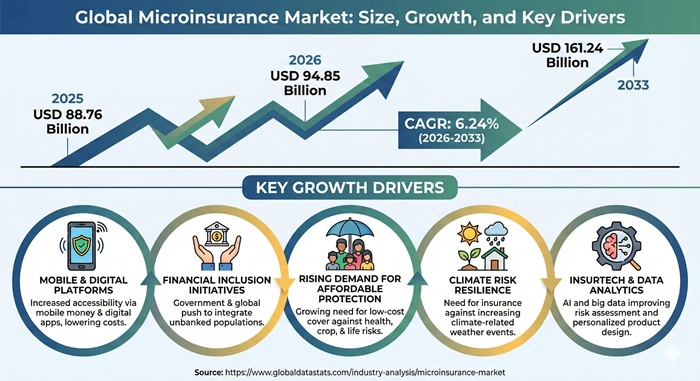
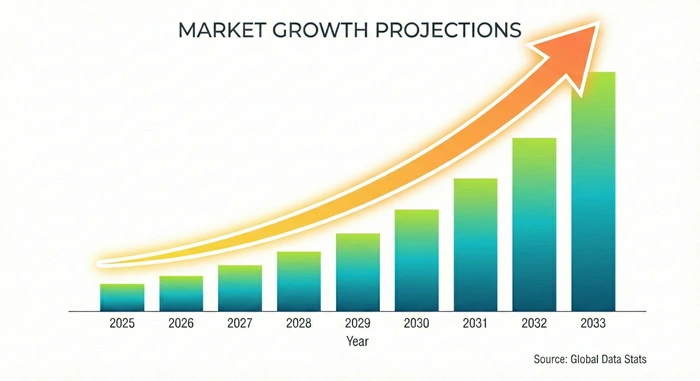
The global microinsurance market size is valued at USD 88.76 billion in 2025 and is predicted to increase from USD 94.85 billion in 2026 to approximately USD 161.24 billion by 2033, growing at a CAGR of 6.24% from 2026 to 2033.
Microinsurance represents specialized financial protection designed specifically for low-income individuals and underserved communities who traditionally lack access to conventional insurance products. These affordable coverage solutions address critical risks including health emergencies, death, disability, property damage, and agricultural losses through simplified policies with low premium amounts typically ranging from USD 1 to USD 10 monthly. The products utilize innovative distribution channels including mobile money platforms, microfinance institutions, community organizations, and digital applications to reach populations in remote rural areas and urban informal settlements. Modern microinsurance leverages technological advancements including smartphone penetration, artificial intelligence-driven underwriting, and automated claims processing to deliver efficient low-cost protection. This financial service plays essential roles in poverty alleviation, economic resilience building, and achieving financial inclusion goals by providing vulnerable populations with safety nets against unexpected life events that could otherwise push families into severe financial distress.
AI Impact on the Microinsurance Industry
Machine Learning and Data Analytics Revolutionizing Risk Assessment and Policy Customization
Artificial intelligence fundamentally transforms the microinsurance market through enhanced risk assessment capabilities utilizing alternative data sources. Traditional insurance underwriting relies on credit histories and medical records frequently unavailable among low-income populations, creating barriers preventing coverage access. AI-driven analytics overcome these limitations by analyzing mobile usage patterns, digital wallet transaction histories, agricultural sensor data, and satellite imagery to accurately evaluate risks in markets lacking conventional data infrastructure. Machine learning algorithms identify correlations between behavioral indicators and risk profiles, enabling insurers to make informed underwriting decisions without requiring extensive documentation from applicants. Natural language processing systems analyze customer interactions through chatbots and voice interfaces, providing policy information and support in local languages without requiring literacy. Computer vision technologies process satellite images and drone footage to assess agricultural conditions, property damage, and natural disaster impacts, accelerating claims validation and payout processes particularly critical for parametric insurance products serving vulnerable communities.
The deployment of AI throughout microinsurance operations dramatically reduces administrative costs making previously unviable low-premium products financially sustainable. Automated underwriting systems process thousands of applications simultaneously, eliminating manual review expenses that would exceed premium revenues collected from individual policies. Fraud detection algorithms analyze patterns across vast datasets identifying suspicious claims requiring investigation while expediting legitimate payouts to customers facing emergencies. Predictive analytics forecast claim frequencies and severities across different customer segments and geographic regions, enabling more accurate pricing that balances affordability with profitability. AI-powered chatbots handle routine customer inquiries including policy information requests, premium payment reminders, and basic claims submissions without human agent involvement, reducing operational costs by 60-70% according to industry reports. The microinsurance market benefits from these technological innovations as they enable commercially viable business models serving populations previously considered too expensive to reach, expanding financial protection access to hundreds of millions of underserved individuals across developing markets worldwide.
Growth Factors
Smartphone Penetration and Mobile Money Adoption Enabling Unprecedented Market Access
The microinsurance market experiences substantial growth driven by explosive smartphone adoption and mobile money platform proliferation across developing regions. Global smartphone penetration exceeds 6.8 billion users in 2024, with fastest growth occurring in Asia Pacific, Africa, and Latin America where microinsurance demand concentrates. Mobile money services including M-Pesa, GoPay, Airtel Money, and MTN Mobile Money reach over 1.6 billion registered accounts, providing transaction infrastructure essential for premium collection and claims disbursement. These digital platforms overcome traditional barriers including geographic remoteness, lack of banking infrastructure, and high transaction costs that previously prevented insurance companies from serving low-income populations profitably. Customers purchase policies through simple USSD codes or mobile applications without visiting physical offices, while automated premium deductions from digital wallets eliminate collection challenges. The convergence of mobile connectivity and digital payment systems creates unprecedented opportunities to distribute microinsurance products efficiently at scale, reducing distribution costs by up to 80% compared to agent-based models while expanding reach into previously inaccessible rural and informal settlement populations.
Government initiatives and international development agency programs significantly accelerate microinsurance market expansion through financial inclusion mandates and subsidized schemes. India's Pradhan Mantri Suraksha Bima Yojana enrolls over 510 million individuals as of April 2025, representing world's largest microinsurance program providing accidental death coverage for annual premiums equivalent to USD 0.36. Similar government-backed initiatives operate across Africa, Latin America, and Southeast Asia, collectively covering approximately 344 million people in 37 countries as of 2024, representing 70% increase from 2021 levels. Regulatory reforms simplify licensing requirements and establish specialized microinsurance frameworks recognizing that traditional insurance regulations designed for conventional products create inappropriate barriers for low-premium, high-volume business models. The World Bank reports financial inclusion improvements reduced unbanked adults from 2.5 billion in 2011 to 1.4 billion in 2021, with 76% of global adults now holding accounts providing foundation for insurance product distribution. These coordinated policy efforts create favorable environments propelling sustained microinsurance market growth as governments recognize social protection value and economic development contributions delivered through expanded insurance access.
Market Outlook
Climate Risk Management and Health Coverage Expansion Creating Transformative Opportunities
The microinsurance market demonstrates exceptional expansion potential supported by increasing natural disasters and climate-related events creating urgent protection needs. Vulnerable populations in developing regions face disproportionate exposure to floods, droughts, hurricanes, and other weather extremes threatening agricultural livelihoods and property. Parametric insurance products utilizing satellite data and weather station measurements deliver rapid automatic payouts when predefined trigger events occur, eliminating lengthy claims investigation processes. Agricultural microinsurance protects smallholder farmers representing 475 million farms worldwide from crop failures and livestock losses that could otherwise devastate family incomes. Kenya and Ghana lead Africa's microinsurance adoption with mobile-based agricultural and disaster coverage supported by fintech partnerships and NGO initiatives. Latin America experiences robust growth with Mexico, Brazil, and Colombia generating USD 279.8 billion in total premium income representing 14.2% year-over-year increase in 2024. Climate adaptation financing from international development banks increasingly incorporates microinsurance components, recognizing risk transfer mechanisms as essential climate resilience tools complementing adaptation infrastructure investments.
Healthcare cost escalation and pandemic awareness drive accelerating demand for health microinsurance products addressing critical protection gaps. Sub-Saharan Africa reports over 90% of populations lack formal health insurance coverage according to industry data, leaving families vulnerable to catastrophic medical expenses. Health microinsurance provides coverage for hospitalization, medication, and preventive care services at premiums affordable for low-income households, typically ranging USD 2-5 monthly. The Swiss Re Foundation 2024 report identifies health microinsurance as key factor enhancing healthcare access for marginalized populations, improving overall community health outcomes and productivity. COVID-19 pandemic heightened awareness regarding health risks and insurance value, accelerating adoption among populations previously considering coverage unnecessary. The microinsurance market benefits from strategic collaborations between insurers, microfinance institutions, healthcare providers, and development agencies creating integrated ecosystems. Digital health platforms combining telemedicine services with insurance coverage deliver comprehensive solutions addressing both affordability and access barriers. Market outlook remains exceptionally positive as technology costs decline, regulatory frameworks mature, and distribution partnerships expand, positioning microinsurance to reach additional 500 million underserved individuals by 2033.
Expert Speaks
-
Peter Zaffino, Chairman and CEO of American International Group Inc. stated during AIG's 2025 Investor Day that the company is accelerating its growth strategy with performance metrics targeting 20%+ Operating EPS CAGR and 10-13% Core Operating ROE from 2025-2027, emphasizing unprecedented turnaround with unparalleled opportunity ahead while focusing on operational excellence and strategic market positioning.
-
Oliver Bäte, Group CEO of Allianz SE emphasized in a recent Business Times interview that Allianz's goal in Asia isn't just to increase revenue but to establish highly profitable business operations, noting the company focuses on offering products that meet minimum value standards for clients while avoiding ventures that may appear impressive in volume but lack actual value creation.
-
Dr. Kenneth Oyolla, CEO of Microinsurance Network highlighted during the Inclusive Finance 2025 event in Luxembourg that the collaboration between microinsurance and mobile money sectors marks the first time these industries have partnered to explore growth opportunities, stating that mobile technology integration enables scaling resilience through mobile-enabled microinsurance reaching vulnerable communities effectively.
Key Report Takeaways
-
Asia Pacific dominates the microinsurance market with 37% revenue share in 2024, driven by massive underserved populations, increasing smartphone and mobile money penetration, supportive government financial inclusion policies, and successful programs including India's Pradhan Mantri Suraksha Bima Yojana enrolling over 510 million individuals
-
North America emerges as fastest-growing regional market during forecast period, propelled by developed financial infrastructure, high insurance literacy levels, strategic partnerships between established insurers and technology companies, and expanding gig economy creating demand for flexible microinsurance covering health, liability, and income protection
-
Life insurance segment leads product category with 48% market share in 2025, attributed to growing focus among low-income populations on financial security against mortality risks, digital technology facilitating policy issuance and claims payment, and products serving dual roles as both protection and investment vehicles
-
Microinsurance commercially viable provider segment accounts for 69% market share in 2024, driven by digital platforms and mobile technology enabling massive cost reductions in distribution, ability to provide affordable scalable insurance services while remaining profitable, and increased trust and adoption by underserved communities
-
Health insurance segment demonstrates fastest product growth rate during forecast period, fueled by inaccessibility of quality healthcare services in developing countries, rising medical costs creating urgent protection needs, and recognition of health microinsurance as key factor achieving sustainable development objectives
-
Digital distribution channels represent fastest-growing segment with highest CAGR projection, propelled by mobile technology development, higher internet penetration rates exceeding 60% in urban areas, and convenience enabling affordable microinsurance product access for low-income populations through online enrollment and automated premium collection
Market Scope
| Report Coverage | Details |
|---|---|
| Market Size by 2033 | USD 161.24 Billion |
| Market Size by 2025 | USD 88.76 Billion |
| Market Size by 2026 | USD 94.85 Billion |
| Market Growth Rate from 2026 to 2033 | CAGR of 6.24% |
| Dominating Region | Asia Pacific |
| Fastest Growing Region | North America |
| Base Year | 2025 |
| Forecast Period | 2026 to 2033 |
| Segments Covered | Product Type, Provider, Model Type, Distribution Channel, End Use, Region |
| Regions Covered | North America, Europe, Asia Pacific, Latin America, Middle East & Africa |
Market Dynamics
Drivers Impact Analysis
Financial Inclusion Initiatives and Regulatory Reforms Accelerating Widespread Adoption
| Impact Factor | ≈ % Impact on CAGR Forecast | Geographic Relevance | Impact Timeline |
|---|---|---|---|
| Mobile money and smartphone penetration | 1.8-2.2% | Global, particularly Africa and Asia Pacific | 2026-2033 |
| Government financial inclusion programs | 1.5-1.9% | Emerging markets, developing economies | 2026-2033 |
| Climate risk and agricultural protection needs | 1.2-1.6% | Agricultural regions, climate-vulnerable areas | 2026-2033 |
| Healthcare cost escalation | 1.0-1.4% | Global, acute in developing markets | 2026-2033 |
The microinsurance market benefits enormously from expanding financial inclusion initiatives recognized globally as critical development priorities. World Bank data demonstrates significant progress with financially included adults increasing from 49% in 2011 to 76% in 2021, reducing unbanked populations from 2.5 billion to 1.4 billion over this period. Governments across developing economies implement comprehensive financial inclusion policies establishing microinsurance frameworks as essential components of social protection systems. India's Pradhan Mantri Suraksha Bima Yojana exemplifies successful large-scale implementation with over 510 million enrollments providing accidental death coverage at ultra-low annual premiums. Similar government-backed schemes operate throughout Africa, Southeast Asia, and Latin America, collectively expanding coverage to previously excluded populations. Regulatory reforms recognize that traditional insurance requirements designed for conventional products create inappropriate barriers for microinsurance business models requiring specialized licensing frameworks, simplified product approval processes, and flexible distribution channel regulations. International development agencies including World Bank, International Labour Organisation, and United Nations Development Programme provide technical assistance and funding supporting microinsurance ecosystem development across vulnerable regions.
Technological innovations particularly mobile money platform proliferation enable efficient low-cost distribution previously impossible through traditional agent networks. Mobile money accounts exceed 1.6 billion registrations globally with strongest growth in markets where microinsurance demand concentrates, including Kenya's M-Pesa serving 30 million users and Indonesia's GoPay reaching 20 million customers. These digital payment systems eliminate physical cash collection challenges, reduce transaction costs to fractions of cents, and enable automated recurring premium deductions maintaining policy coverage without customer action. The microinsurance market growth accelerates as insurers leverage existing mobile money infrastructure reaching remote rural populations without establishing expensive branch networks or agent forces. Smartphone penetration exceeding 6.8 billion devices globally creates opportunities for sophisticated mobile applications delivering enhanced customer experiences including policy comparison tools, instant enrollment, digital policy documents, and self-service claims submission. Artificial intelligence integration enables automated underwriting processing thousands of applications simultaneously while machine learning algorithms analyze alternative data sources including mobile usage patterns and digital wallet transactions assessing creditworthiness and risk profiles for populations lacking traditional financial histories.
Restraints Impact Analysis
Limited Awareness and Infrastructure Gaps Hindering Market Penetration
| Impact Factor | ≈ % Impact on CAGR Forecast | Geographic Relevance | Impact Timeline |
|---|---|---|---|
| Low insurance awareness and literacy | -1.0 to -1.4% | Rural areas, least developed countries | 2026-2033 |
| Regulatory complexity and restrictions | -0.8 to -1.2% | Markets with fragmented regulations | 2026-2033 |
| Limited digital infrastructure | -0.6 to -1.0% | Remote regions, low connectivity areas | 2026-2033 |
The microinsurance market faces significant constraints related to limited awareness and understanding of insurance concepts among target populations. Many low-income individuals lack basic financial literacy and familiarity with insurance mechanisms including premium payments, coverage terms, and claims processes. Cultural perceptions in some regions view insurance as unnecessary expense or mistrust formal financial institutions due to negative past experiences. Industry estimates suggest 88% of target populations globally remain uncovered by microinsurance despite growing product availability, demonstrating massive awareness gaps. Educational barriers including low literacy rates in rural areas complicate product explanations requiring simplified communication approaches and local language support. Community skepticism emerges when early microinsurance programs experience operational issues including delayed claim payments or perceived unfair denials, damaging reputation and hindering adoption. Building trust requires sustained engagement through community organizations, transparent operations, and demonstrated value through successful claims experiences shared among peer networks. The microinsurance market must invest substantially in consumer education campaigns, financial literacy programs, and testimonial-based marketing overcoming awareness barriers preventing market penetration.
Infrastructure limitations particularly inconsistent internet connectivity and electricity access constrain digital distribution model effectiveness in remote regions. While mobile phone ownership reaches impressive levels, smartphone penetration remains lower in poorest communities where basic feature phones dominate, limiting application-based enrollment capabilities. Network coverage gaps in rural mountainous regions and remote islands prevent reliable mobile transactions necessary for premium collection and claims processing. Regulatory restrictions in some markets prohibit recurring automatic payments from mobile money accounts, forcing insurers to develop workarounds or rely on less efficient manual collection processes. The microinsurance market growth faces headwinds from fragmented regulatory environments where multiple agencies govern different aspects creating compliance complexities and operational inefficiencies. Some jurisdictions maintain traditional insurance regulations unsuited for microinsurance business models, requiring lobbying efforts and pilot program demonstrations convincing regulators to establish appropriate frameworks. Product sustainability challenges emerge when premium levels prove insufficient covering claims and operational costs, particularly for health insurance facing adverse selection where primarily sick individuals purchase coverage. These infrastructure and regulatory constraints require collaborative solutions involving governments, technology providers, and insurance companies addressing systemic barriers limiting market expansion potential.
Opportunities Impact Analysis
Gig Economy Expansion and Public-Private Partnerships Creating New Market Segments
| Impact Factor | ≈ % Impact on CAGR Forecast | Geographic Relevance | Impact Timeline |
|---|---|---|---|
| Gig and informal economy coverage | +1.2 to +1.6% | Urban centers, platform economy markets | 2026-2033 |
| Climate adaptation financing integration | +1.0 to +1.4% | Climate-vulnerable regions globally | 2026-2033 |
| Reinsurance partnerships and risk pooling | +0.8 to +1.2% | Emerging markets, high-risk regions | 2026-2033 |
The microinsurance market presents substantial opportunities through expanding gig economy and informal sector employment creating demand for flexible insurance products. Gig workers including ride-hailing drivers, delivery personnel, and platform-based freelancers exceed 60 million in United States alone according to 2023 industry reports, with significantly higher numbers across developing markets. These workers lack employer-provided benefits including health insurance, disability coverage, and life protection, creating massive addressable market for tailored microinsurance solutions. Digital platforms including Grab in Thailand integrate travel insurance covering lost earnings and delay impacts from flooding directly into ride transactions, demonstrating seamless embedded insurance models. JazzCash in Pakistan offers travel insurance bundled with long-distance bus ticket purchases, with claim payouts credited directly to customers' mobile wallets. Major insurers including MetLife and Prudential Financial introduce specialized microinsurance plans targeting gig workers, recognizing this demographic's unique needs for affordable pay-as-you-go coverage matching irregular income patterns. The microinsurance market benefits from platform partnerships where ride-hailing, delivery, and freelance marketplaces integrate protection products within existing user experiences, eliminating separate enrollment friction.
Climate adaptation financing creates expanding opportunities for agricultural and disaster microinsurance products protecting vulnerable populations. International climate funds including Green Climate Fund and Adaptation Fund increasingly incorporate risk transfer mechanisms recognizing insurance as cost-effective climate resilience tool. Parametric insurance utilizing weather data and satellite imagery delivers rapid automatic payouts when drought, flood, or storm intensity exceeds predefined triggers, providing immediate liquidity for recovery without lengthy damage assessment processes. Kenya and Ghana demonstrate successful mobile-based agricultural microinsurance models achieving significant adoption through fintech partnerships and NGO support, establishing replicable frameworks for other markets. Reinsurance partnerships between global players including Swiss Re, Munich Re, and Hannover Re with local insurers enable risk pooling across geographic regions, improving product sustainability and encouraging market entry. The microinsurance market outlook improves substantially as climate financing mechanisms mature, creating dedicated funding streams supporting premium subsidies, infrastructure investments, and capacity building initiatives that collectively expand coverage reaching additional hundreds of millions of climate-vulnerable individuals through forecast period.
Segment Analysis
Product Type - Life Insurance Segment
Financial Security Focus and Digital Innovation Driving Dominant Market Position
The life insurance segment commands the microinsurance market with leading 48% revenue share in 2025, reflecting fundamental protection priorities among low-income populations. This product category provides financial security to beneficiaries upon policyholder death, offering peace of mind that families receive monetary support covering funeral expenses, outstanding debts, and basic living costs during bereavement periods. Microinsurance life products feature simplified designs with sum assured amounts typically ranging USD 500 to USD 5,000, matching income replacement needs for low-income households without requiring extensive medical examinations or complex underwriting. Whole life and universal life variants incorporate cash value accumulation components, enabling policies to serve dual purposes as both protection and savings vehicles particularly attractive to populations lacking access to formal banking products. Digital technology revolutionizes life microinsurance distribution and administration, with mobile applications enabling instant policy purchases, automated premium collection through digital wallet integrations, and streamlined claims processing requiring only death certificate submissions photographed and uploaded via smartphones. These operational efficiencies reduce acquisition and servicing costs below 20% of premiums, enabling commercially viable business models serving previously unprofitable market segments.
The segment demonstrates particularly strong performance across Asia Pacific where India, Indonesia, and Philippines report robust adoption driven by government programs and cultural acceptance of life protection. Leading providers including SBI Life, ICICI Prudential, and Bharti AXA Life Insurance dominate Indian market through extensive distribution networks leveraging partnerships with microfinance institutions and self-help groups reaching rural populations. Bangladesh successfully implements community-based microinsurance models covering approximately 10 million individuals through cooperative structures fostering trust and participation. The life insurance segment within microinsurance market projects sustained growth throughout forecast period as awareness campaigns educate populations about financial planning importance, regulatory frameworks establish clear consumer protection standards building confidence, and product innovations introduce flexible premium payment options matching seasonal income patterns common among agricultural workers and informal sector employees. Regional expansion concentrates in Africa where life microinsurance penetration remains below 5% despite substantial demand, with mobile money platforms including MTN Mobile Money and Airtel Money providing distribution infrastructure enabling rapid scale-up reaching underserved populations across sub-Saharan markets.
Provider - Microinsurance Commercially Viable Segment
Profitability Focus and Technology Integration Establishing Provider Category Leadership
The microinsurance commercially viable provider segment maintains commanding market dominance with 69% revenue share in 2024, representing insurance products delivered by private companies and specialized entities operating on for-profit sustainable business models. These providers design products achieving financial viability without significant external subsidies or donor funding, leveraging market-based approaches and innovative technologies reaching low-income populations efficiently. Digital platforms and mobile technology enable massive distribution cost reductions, with customer acquisition expenses declining from USD 50-100 per policy through traditional agent channels to under USD 5 through automated mobile enrollment. Commercial microinsurance providers utilize data analytics and artificial intelligence assessing risks accurately using alternative information sources including mobile usage patterns, digital transaction histories, and social network data unavailable to traditional underwriters. This technological sophistication enables precise pricing that balances affordability for customers with profitability for insurers, creating sustainable business models attracting substantial private investment and driving market expansion. The segment benefits from increasing recognition among major insurance companies including Allianz, AIG, and Prudential that microinsurance represents viable growth opportunity rather than purely corporate social responsibility activity.
Geographic performance demonstrates exceptional strength across North America where United States accounts for nearly quarter of global market share according to 2024 data. Major American insurers including MetLife, Prudential, and AIG establish dedicated microinsurance divisions targeting gig economy workers, immigrant communities, and underbanked populations through partnerships with technology platforms. The commercially viable provider segment within microinsurance market experiences rapid adoption throughout Asia Pacific where private insurers compete aggressively for market share in high-growth markets including Vietnam issuing over 3 million policies in 2024, and Indonesia where digital platforms including GoPay integrate insurance offerings reaching 20 million users. Leading regional players including BIMA operating across 16 emerging markets, Pula specializing in agricultural microinsurance across Africa, and MicroEnsure focusing on mobile-distributed products demonstrate scalable business models achieving profitability while serving millions of low-income customers. The segment's projected fastest growth trajectory reflects commercial sector's superior operational efficiency, innovation capacity, and capital availability enabling continued investment in technology infrastructure, product development, and market expansion initiatives driving sustained market leadership through forecast period.
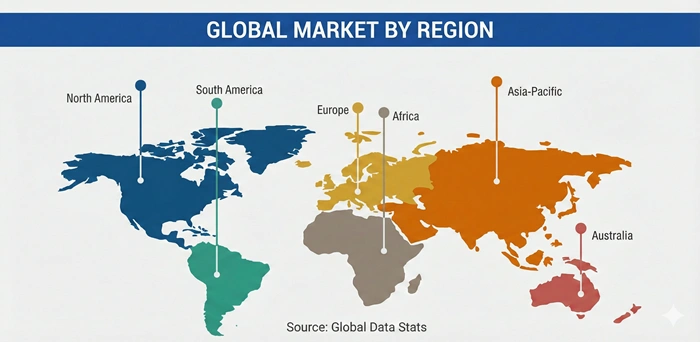
Regional Insights
Asia Pacific
Massive Underserved Population and Government Programs Establishing Regional Market Dominance
Asia Pacific dominates the microinsurance market with commanding 37% revenue share in 2024, driven by region's massive underserved populations and aggressive government financial inclusion initiatives. The region houses over 1.6 billion individuals lacking adequate access to social health protection according to International Labour Organisation estimates, creating enormous addressable market for affordable insurance products. India leads global microinsurance enrollment with approximately 35% of worldwide policies, propelled by government-backed schemes including Pradhan Mantri Suraksha Bima Yojana covering over 510 million individuals and Pradhan Mantri Jeevan Jyoti Bima Yojana providing life insurance to low-income households. China implements rural cooperative insurance schemes reaching hundreds of millions of agricultural workers, while Indonesia launches national health insurance initiatives expanding coverage to previously excluded populations. The microinsurance market in Asia Pacific benefits from world's highest mobile money penetration rates, with platforms including GoPay, M-Pesa, and Airtel Money facilitating premium collection and claims disbursement across remote rural areas lacking traditional banking infrastructure. Regional market size reaches USD 32.97 billion in 2025 and projects growth to USD 60.58 billion by 2034, expanding at 6.98% CAGR reflecting sustained momentum.
Major industry participants including Bharti AXA, SBI Life Insurance, ICICI Prudential, BIMA, and numerous domestic insurers compete vigorously throughout the region. India's insurance companies leverage extensive distribution networks through partnerships with over 75,000 agents and microfinance institutions including Turtlemint and innovative direct-to-consumer platforms including Toffee Insurance serving 115,000 customers with 80% representing first-time insurance buyers. The Philippines demonstrates strong microinsurance adoption through CLIMBS Life and General Insurance Cooperative offering affordable cooperative-based coverage fostering community-driven sustainable protection models. Bangladesh successfully implements microinsurance programs covering 10 million individuals through NGO collaborations and community-based mutual models. Vietnam's rapidly expanding market issues over 3 million policies in 2024, driven by mobile platform integration and fintech partnerships enhancing accessibility. The Asia Pacific microinsurance market maintains fastest regional growth trajectory exceeding 11% CAGR in select high-potential markets, supported by favorable demographics including large youth populations embracing digital financial services, continuous improvements in mobile connectivity reaching previously isolated rural communities, and sustained government commitment to achieving universal financial inclusion and social protection objectives through forecast period.
North America
Advanced Infrastructure and Digital Innovation Driving Rapid Regional Expansion
North America emerges as fastest-growing regional market during forecast period, propelled by developed financial infrastructure, high insurance literacy, and strategic technology partnerships. The United States dominates regional performance capturing approximately 25% of global microinsurance market share in 2024, reflecting sophisticated financial sector capabilities and innovative distribution models. Over 25 million Americans lack adequate insurance coverage according to industry reports, creating substantial addressable market for affordable microinsurance products addressing health, life, and property risks. Rising healthcare costs exceeding USD 4.9 trillion in 2023 according to Centers for Medicare & Medicaid Services data drive urgent demand for accessible protection options among low-income households. Digital transformation revolutionizes regional market with over 75% of customers purchasing policies through online channels, enabled by collaborations between established insurers and fintech companies developing mobile applications and digital platforms. The expanding gig economy exceeds 60 million workers in 2023, creating massive demand for flexible microinsurance covering health, liability, and income protection tailored to irregular earnings patterns common among platform-based workers.
Leading North American insurers including MetLife, Prudential Financial, AIG, and specialized providers develop targeted microinsurance offerings leveraging advanced technologies. Major companies partner with technology giants including Google Cloud and AWS implementing AI-based risk assessment tools, automated underwriting systems, and fraud prevention capabilities accelerating policy management and claims processing. The microinsurance market benefits from sophisticated data analytics infrastructure enabling precise customer segmentation, personalized product recommendations, and dynamic pricing optimizing affordability and profitability. Regulatory environment supports innovation through established insurance frameworks balanced with consumer protection provisions building trust and confidence. Financial institutions including banks and credit unions actively incorporate microinsurance into product portfolios, distributing coverage to existing customer bases through trusted relationships. Regional market demonstrates sustained strong performance as insurers recognize commercial viability of previously underserved segments, with specialized platforms targeting immigrant communities, underbanked populations, and rural residents lacking access to traditional insurance products. North America's projected fastest growth trajectory reflects combination of favorable market conditions, technological sophistication, and strategic industry focus positioning region as critical growth engine alongside Asia Pacific through forecast period.
Top Key Players
-
The Hollard Insurance Company (South Africa)
-
AFPGen - Armed Forces and Police General Insurance Corporation (Philippines)
-
American International Group Inc. (United States)
-
Bharti AXA Life Insurance Company Limited (India)
-
SBI Life Insurance Company Limited (India)
-
ICICI Prudential Life Insurance Company Ltd. (India)
-
Banco do Nordeste Brasil S.A. (Brazil)
-
CLIMBS Life and General Insurance Cooperative (Philippines)
-
Allianz SE (Germany)
-
Bajaj Allianz Life Insurance Company Ltd. (India)
-
MetLife Inc. (United States)
-
Prudential Financial Inc. (United States)
-
BIMA (Sweden)
-
MicroEnsure (United Kingdom)
-
Pula (Kenya)
Recent Developments
-
2025 - Life Insurance Corporation of India launched two new microinsurance plans in October named Jan Suraksha and Bima Lakshmi, offering guaranteed additions and financial protection features specifically tailored to meet diverse needs of low-income customer segments across rural and urban areas, expanding company's affordable insurance product portfolio
-
2025 - CoverSure, consumer-focused insurtech platform, introduced short-term Firecracker Insurance plan in October priced at just INR 5 (approximately USD 0.06), providing financial protection against accidental death and fire-related burns during high-risk festive periods, demonstrating innovative ultra-low-premium product design
-
2025 - AXA partnered with Egypt Post in October to launch Egypt's first dedicated microinsurance company, initiative made possible by new Unified Insurance Law designed to provide affordable insurance products to low-income citizens, furthering Egypt's financial inclusion efforts through accessible distribution network
-
2024 - PALIC (Philippine American Life and General Insurance Company) completed strategic acquisition expanding microinsurance capabilities, significantly amplifying operational scale, market reach, and diversification of investment portfolio within United States while strengthening product offerings in personal life insurance solutions segment
-
2024 - Microinsurance Network partnered with GSMA launching comprehensive report titled "From Connectivity to Coverage: Scaling Resilience through Mobile-Enabled Microinsurance" in December, marking first collaboration between microinsurance and mobile money sectors exploring growth opportunities through integrated distribution strategies
Market Trends
Mobile-First Distribution Models and Embedded Insurance Integration Reshaping Market Dynamics
The microinsurance market demonstrates accelerating shift toward mobile-first distribution strategies leveraging smartphone ubiquity and digital payment infrastructure. Mobile platforms including M-Pesa in Kenya, GoPay in Indonesia, JazzCash in Pakistan, and Airtel Money across Africa enable seamless insurance integration within existing financial service ecosystems customers already trust and utilize daily. Embedded insurance models gain traction where coverage automatically attaches to specific transactions or activities, eliminating separate enrollment friction while providing contextually relevant protection. Singapore's Singtel Dash offers free life coverage for deposits, while Thailand's Grab integrates travel insurance covering drivers and passengers against flooding-related delays and lost earnings. These frictionless distribution approaches achieve adoption rates 5-10 times higher than traditional product offerings requiring separate applications and payments. The rise of super apps combining payments, e-commerce, transportation, and financial services creates powerful distribution channels reaching hundreds of millions of users with existing payment credentials and trust relationships. Digital-first models reduce customer acquisition costs from USD 50-100 through agent channels to under USD 5 through automated enrollment, fundamentally improving microinsurance unit economics and enabling viable business models serving ultra-low-premium segments.
Parametric insurance products utilizing satellite data, weather sensors, and Internet of Things devices transform agricultural and disaster coverage. These innovative designs eliminate subjective claims assessment by automatically triggering payouts when objective parameters including rainfall levels, temperature extremes, or earthquake intensity exceed predetermined thresholds. Farmers receive claim payments within days or weeks rather than months required for traditional damage assessments, providing critical liquidity for recovery and preventing asset sales during emergencies. The microinsurance market benefits from reinsurance partnerships between global players including Swiss Re, Munich Re, and Hannover Re supporting local insurers with risk pooling across geographic regions, improving product sustainability through diversification. Climate adaptation financing from international development institutions increasingly incorporates microinsurance components, recognizing risk transfer as essential complement to resilience infrastructure investments. Latin America reports total premium income reaching USD 279.8 billion representing 14.2% year-over-year increase driven by cross-border reinsurance partnerships and parametric product innovation. These technological and structural innovations position microinsurance market for continued transformation beyond traditional product designs, encompassing data-driven automated solutions delivering superior customer experiences while improving operational efficiency and financial sustainability through forecast period.
Segments Covered in the Report
By Product Type
-
Life Insurance
-
Health Insurance
-
Property Insurance
-
Index Insurance (Agricultural, Weather, Catastrophe)
-
Accidental Death and Disability Insurance
-
Others
By Provider
-
Microinsurance (Commercially Viable)
-
Microinsurance Through Aid/Government Support
By Model Type
-
Partner Agent Model
-
Full-Service Model
-
Provider Driven Model
-
Community-Based/Mutual Model
-
Others
By Distribution Channel
-
Direct Sales
-
Financial Institutions (Banks, Microfinance Institutions)
-
Digital Channels (Mobile Apps, USSD, Online Platforms)
-
Others
By End Use
-
Business (Small and Medium Enterprises, Cooperatives)
-
Personal (Individual, Family)
By Region
-
North America (United States, Canada, Mexico)
-
Europe (Germany, United Kingdom, France, Italy, Spain)
-
Asia Pacific (India, China, Indonesia, Philippines, Bangladesh, Vietnam, Thailand)
-
Latin America (Brazil, Mexico, Colombia, Argentina)
-
Middle East & Africa (Kenya, Ghana, Egypt, Nigeria, South Africa, UAE)
Frequently Asked Questions
Question 1: What is the projected microinsurance market size by 2033?
Answer: The global microinsurance market is expected to reach approximately USD 161.24 billion by 2033. This growth reflects increasing smartphone penetration, mobile money adoption, government financial inclusion initiatives, and rising awareness about financial protection among low-income populations.
Question 2: Which region dominates the microinsurance market currently?
Answer: Asia Pacific leads the microinsurance market with 37% revenue share in 2024. The region benefits from massive underserved populations, government-backed schemes like India's Pradhan Mantri Suraksha Bima Yojana, high mobile money penetration, and supportive regulatory frameworks.
Question 3: What drives growth in the microinsurance market?
Answer: Key microinsurance market drivers include smartphone and mobile money platform proliferation enabling low-cost distribution, government financial inclusion programs expanding coverage, climate risks creating agricultural protection needs, healthcare cost escalation, and AI-driven underwriting using alternative data sources. Digital transformation dramatically reduces operational costs making products commercially viable.
Question 4: Which product type leads the microinsurance market?
Answer: Life insurance dominates with 48% market share in 2025, driven by low-income populations' focus on financial security for beneficiaries. Digital technology simplifies policy issuance and claims processing while products serve dual roles as protection and savings vehicles.
Question 5: What are major challenges facing the microinsurance market?
Answer: Key microinsurance market challenges include limited awareness and financial literacy among target populations, regulatory restrictions preventing recurring automatic payments in some markets, inconsistent internet connectivity in remote areas, trust deficits from negative past experiences, and product sustainability issues when premiums prove insufficient covering claims and operational costs. Infrastructure gaps and fragmented regulations require collaborative solutions.