
Methyl Methacrylate (MMA) Monomer Market Overview
Lightweight Material Innovation and Sustainable Production Transform Acrylic Applications Across Automotive, Construction, and Electronics Industries
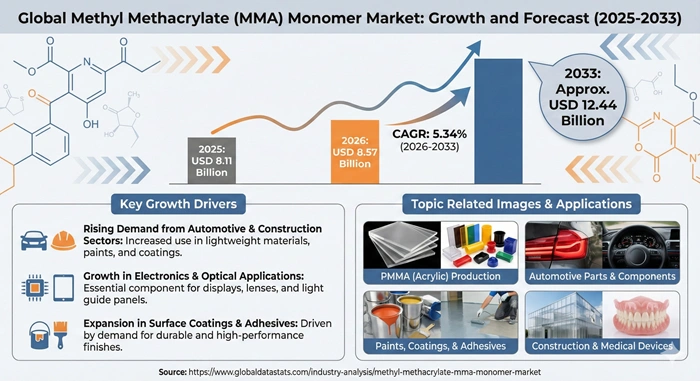
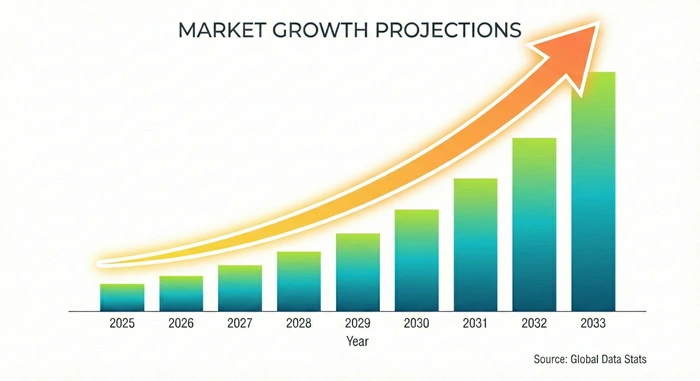
The global methyl methacrylate (MMA) monomer market size is valued at USD 8.11 billion in 2025 and is predicted to increase from USD 8.57 billion in 2026 to approximately USD 12.44 billion by 2033, growing at a CAGR of 5.34% from 2026 to 2033. This specialized chemical industry encompasses production, distribution, and application of MMA monomers—organic compounds serving as fundamental building blocks for polymethyl methacrylate (PMMA) resins, acrylic sheets, coatings, adhesives, and specialty polymers demonstrating exceptional optical clarity, weather resistance, and mechanical strength. MMA monomers deliver critical performance benefits including superior transparency, excellent surface hardness, outstanding UV stability, and versatile processing capabilities supporting diverse applications across transportation, construction, electronics, and medical device manufacturing requiring reliable acrylic material solutions.
The methyl methacrylate (MMA) monomer market addresses escalating demand for lightweight materials where automotive fuel efficiency standards, sustainable construction practices, electronics miniaturization, and medical device innovation drive consumption across developed and emerging markets. This essential monomer produced primarily through acetone cyanohydrin (ACH) process or emerging bio-based routes enables PMMA production delivering glass-like transparency at fraction of weight creating competitive advantages across diverse end-use applications. Major industries including automotive manufacturing, building construction, signage production, electronics assembly, and healthcare sectors consume substantial MMA monomer volumes as companies pursue weight reduction, design flexibility, and sustainable material alternatives throughout manufacturing operations requiring proven polymer chemistry and technical support capabilities.
AI Impact on the Methyl Methacrylate (MMA) Monomer Industry
Process Optimization and Predictive Analytics Revolutionize Production Efficiency and Quality Control Systems
Artificial intelligence transforms the methyl methacrylate (MMA) monomer market through advanced process control systems monitoring polymerization reactions, temperature profiles, and catalyst dosing optimizing yield efficiency and product purity across manufacturing operations. Machine learning algorithms analyze thousands of processing variables including feedstock quality, reaction kinetics, distillation parameters, and environmental conditions identifying optimal settings achieving target specifications while minimizing energy consumption and waste generation. These AI-powered platforms enable real-time adjustments preventing off-specification production, reducing raw material losses, and improving overall equipment effectiveness particularly critical given energy-intensive synthesis processes and hazardous intermediate handling requirements. Predictive quality models correlating process parameters with final monomer characteristics enable proactive interventions maintaining consistent specifications meeting stringent PMMA production standards, coating formulation requirements, and adhesive performance criteria throughout production cycles.
Advanced AI applications extend beyond manufacturing optimization to revolutionize supply chain management and market forecasting within the methyl methacrylate (MMA) monomer market landscape. Neural networks analyze automotive production schedules, construction activity indices, and electronics manufacturing trends predicting regional demand fluctuations enabling optimized inventory positioning and capacity planning. Computer vision systems inspect storage tanks, pipelines, and handling equipment identifying potential safety hazards, corrosion risks, and maintenance requirements supporting operational reliability and regulatory compliance. Automated logistics systems incorporating route optimization, carrier selection, and dynamic scheduling improve delivery performance while reducing transportation costs particularly bulk chemical shipments requiring specialized handling. These AI-driven capabilities position producers to achieve superior operational efficiency while reducing production costs by 15-20% and improving customer satisfaction throughout forecast period.
Growth Factors
Automotive Lightweighting and Construction Growth Drive Unprecedented MMA Monomer Demand
The methyl methacrylate (MMA) monomer market experiences robust growth propelled by automotive industry expansion where vehicle lightweighting initiatives, electric vehicle adoption, and premium interior applications require advanced acrylic materials supporting fuel efficiency and design differentiation. Global automotive production exceeding 90 million vehicles annually with growing EV segment creates substantial PMMA demand derived from MMA monomers. Automotive lighting systems particularly LED headlamps, tail lights, and interior illumination utilize PMMA delivering 92% light transmission exceeding glass or alternative plastics. Exterior glazing applications including sunroofs, side windows, and panoramic roof panels incorporate lightweight PMMA reducing vehicle weight by 40-50% compared to conventional glass contributing to improved fuel economy and extended electric vehicle range. Interior trim components including instrument panels, center consoles, and decorative elements utilize PMMA molding compounds providing design flexibility, surface aesthetics, and scratch resistance. These diverse automotive applications create sustained baseline demand supporting market growth throughout forecast period.
Construction sector innovation accelerates methyl methacrylate (MMA) monomer market expansion as architectural glazing, skylights, sound barriers, and decorative panels leverage acrylic material advantages including weather resistance, design versatility, and energy efficiency. Global construction spending projected to exceed 15 trillion dollars annually by 2030 creates substantial PMMA consumption particularly emerging markets pursuing infrastructure modernization and urbanization. Architectural applications including facade panels, canopies, and interior partitions utilize extruded or cast acrylic sheets delivering exceptional optical clarity, UV stability, and impact resistance. Sound barrier installations along highways and railways incorporate transparent PMMA panels reducing noise pollution while maintaining visibility and aesthetic appeal. Skylights and roofing applications utilize impact-modified PMMA grades providing natural daylighting, thermal insulation, and hail resistance. Green building initiatives promoting energy-efficient glazing, durable materials, and sustainable construction drive PMMA adoption requiring consistent MMA monomer supply. These construction applications demonstrate exceptional growth supporting sustained consumption throughout forecast period.
Market Outlook
Sustainable Production Technologies and Bio-Based Routes Position Industry for Long-Term Transformation
The methyl methacrylate (MMA) monomer market outlook remains exceptionally positive as manufacturers invest substantially in sustainable production technologies including bio-based feedstocks, improved process efficiency, and circular economy initiatives addressing environmental regulations and corporate sustainability commitments. Next-generation production routes incorporating non-ACH catalytic processes, bio-derived methacrylic acid, and renewable feedstocks eliminate hazardous intermediates while reducing lifecycle carbon intensity meeting stricter environmental mandates. Mitsubishi Chemical Methacrylates pioneering bio-based MMA technology utilizing plant-derived feedstocks demonstrates commercial viability with pilot operations progressing toward full-scale production reducing fossil resource dependency. Röhm introducing LiMA production technology at Texas facility enables methacrylate monomer manufacturing with significantly lower product carbon footprint and improved environmental impact. Chemical recycling technologies converting post-consumer PMMA waste back to MMA monomers through depolymerization processes create circular material flows supporting sustainability objectives throughout forecast period.
Investment trends within the methyl methacrylate (MMA) monomer market reflect growing confidence in long-term demand fundamentals as chemical companies expand capacity, upgrade infrastructure, and pursue vertical integration strategies. Leading manufacturers including Mitsubishi Chemical, Röhm, BASF, and Evonik maintain capital expenditure programs modernizing production facilities, implementing cleaner technologies, and developing application-specific product portfolios. Acquisition activity intensifies as specialty chemical companies pursue market consolidation through strategic acquisitions of MMA producers, PMMA manufacturers, and downstream processing capabilities accessing established customer relationships and technical expertise. Vertical integration strategies connecting monomer production with polymer manufacturing and end-product fabrication create streamlined value chains reducing costs and ensuring supply reliability. Research collaborations between chemical producers, automotive OEMs, and material science institutions advance application development particularly automotive glazing, medical devices, and optical components supporting market diversification through 2033.
Expert Speaks
-
Evonik Leadership, emphasized portfolio optimization: "The divestment of our Methacrylates business including MMA and PMMA operations is fully on track as part of our strategic portfolio management supporting financial targets and operational focus. This disciplined approach enables concentration on high-growth, high-margin specialty chemical segments while ensuring the Methacrylates business thrives under new ownership delivering continued value to customers and stakeholders".
-
Mitsubishi Chemical Methacrylates, highlighted sustainability innovation: "Mitsubishi Chemical Methacrylates is among the first adopting a sustainable approach for MMA production with our R&D team designing bio-based feedstock manufacturing technology utilizing plant-derived materials. Our pilot plant progressing toward commercial production in 2026 will greatly reduce fossil resource dependence and carbon emissions, strengthening the circular economy within the plastics industry".
-
Röhm Management, articulated clean production technology: "OCI Global and Röhm announce pioneering MMA production using bio-ammonia at our ISCC PLUS certified plants, utilizing biomethane from waste achieving over 70% GHG reduction compared to conventional ammonia production. Combined with our new LiMA production technology enabling significantly lower carbon footprint, we are transforming methacrylate monomer manufacturing for sustainable future".
Key Report Takeaways
-
Asia Pacific dominates the methyl methacrylate (MMA) monomer market with commanding share exceeding 45%, driven by concentrated automotive manufacturing, construction expansion, and electronics production across China, Japan, and South Korea where rapid industrialization, urbanization, and export-oriented manufacturing consume substantial MMA monomer volumes supporting regional economic development.
-
North America emerges as fastest-growing regional market with projected CAGR approaching 6.2% through 2033, propelled by automotive innovation, construction recovery, and sustainable material adoption where United States maintains advanced PMMA processing capabilities, stringent quality standards, and premium automotive applications.
-
Polymethyl methacrylate (PMMA) production represents dominant application segment accounting for approximately 65% market share due to acrylic sheet manufacturing, molding compound production, and specialty resin applications demonstrating sustained consumption across automotive, construction, and electronics requiring reliable MMA monomer feedstock.
-
Automotive and transportation sector exhibits exceptional growth potential with anticipated CAGR exceeding 6.8% through 2033, attributed to vehicle lightweighting mandates, electric vehicle adoption, and premium glazing applications where PMMA derived from MMA monomers delivers weight savings and design flexibility.
-
Acetone cyanohydrin (ACH) process maintains substantial production share representing approximately 60% of manufacturing capacity driven by established technology, cost-effectiveness, and production scale where major producers operate integrated facilities despite environmental concerns and regulatory pressures.
-
Bio-based and sustainable MMA production demonstrates fastest technology growth with projected CAGR of 12.5% through 2033, driven by environmental regulations, carbon footprint reduction initiatives, and circular economy adoption where renewable feedstocks and chemical recycling create market differentiation.
Market Scope
| Report Coverage Details | |
|---|---|
| Market Size by 2033 | USD 12.44 Billion |
| Market Size by 2025 | USD 8.11 Billion |
| Market Size by 2026 | USD 8.57 Billion |
| Market Growth Rate from 2026 to 2033 | CAGR of 5.34% |
| Dominating Region | Asia Pacific |
| Fastest Growing Region | North America |
| Base Year | 2025 |
| Forecast Period | 2026 to 2033 |
| Segments Covered | Production Process, Application, End-Use Industry, Region |
| Regions Covered | North America, Europe, Asia Pacific, Latin America, Middle East & Africa |
Market Dynamics
Drivers Impact Analysis
Electric Vehicle Adoption and Lightweight Material Mandates Accelerate MMA Monomer Consumption
| Impact Factor | (≈) % Impact on CAGR Forecast | Geographic Relevance | Impact Timeline |
|---|---|---|---|
| Automotive Lightweighting | +2.8% | Global Markets | 2026-2033 |
| Construction Sector Growth | +2.2% | Emerging Markets | 2026-2033 |
| Electronics Miniaturization | +1.6% | Asia Pacific | 2027-2033 |
| Medical Device Innovation | +1.2% | Developed Regions | 2027-2033 |
The methyl methacrylate (MMA) monomer market benefits substantially from automotive lightweighting initiatives where global fuel efficiency regulations, carbon emission reduction targets, and electric vehicle range optimization drive adoption of lightweight PMMA materials derived from MMA monomers. Corporate Average Fuel Economy (CAFE) standards in United States, European Union CO2 emission limits, and Chinese New Energy Vehicle policies mandate vehicle weight reduction creating substantial demand for acrylic glazing, lighting systems, and interior components. Electric vehicle manufacturers particularly Tesla, BYD, and emerging EV brands prioritize weight reduction maximizing battery range and performance where PMMA glazing delivers 40-50% weight savings compared to conventional glass. Autonomous vehicle development incorporating advanced sensor systems, LiDAR units, and camera arrays requires optically clear PMMA enclosures maintaining sensor functionality. Premium automotive interiors emphasizing design aesthetics, ambient lighting, and digital displays utilize PMMA molding compounds. These automotive applications create sustained baseline demand supporting market growth throughout forecast period.
Construction sector expansion accelerates methyl methacrylate (MMA) monomer market adoption as urbanization, infrastructure investment, and sustainable building practices drive architectural glazing and specialty material consumption. Developing nations particularly India planning smart cities initiatives, China pursuing urban renewal programs, and Southeast Asian countries implementing infrastructure master plans create concentrated PMMA demand requiring substantial MMA monomer supply. Green building certifications including LEED and BREEAM promote energy-efficient glazing materials where PMMA skylights and windows deliver superior thermal insulation and natural daylighting. Sound barrier installations protecting residential areas from traffic and railway noise utilize transparent PMMA panels providing acoustic performance while maintaining visibility. Outdoor signage and advertising displays incorporate weather-resistant cast acrylic sheets delivering vibrant colors, excellent UV stability, and long service life. Architectural applications emphasizing curved surfaces, complex geometries, and translucent structures leverage PMMA thermoforming capabilities. These construction applications demonstrate exceptional growth supporting sustained consumption throughout forecast period.
Restraints Impact Analysis
Production Cost Volatility and Environmental Regulations Challenge Market Penetration Across Price-Sensitive Segments
| Restraint Factor | (≈) % Impact on CAGR Forecast | Geographic Relevance | Impact Timeline |
|---|---|---|---|
| Raw Material Price Fluctuations | -1.8% | Global Manufacturing | 2026-2033 |
| Environmental Compliance Costs | -1.4% | Developed Markets | 2026-2031 |
| ACH Process Hazards | -1.2% | Regulatory Regions | 2026-2030 |
| Alternative Material Competition | -0.9% | Cost-Sensitive Applications | 2027-2033 |
The methyl methacrylate (MMA) monomer market faces growth constraints from raw material cost volatility where acetone prices, hydrogen cyanide availability, and sulfuric acid costs fluctuate significantly impacting production economics particularly ACH process facilities representing majority of global capacity. Acetone representing primary feedstock for traditional ACH production experiences periodic supply tightness and price spikes affecting manufacturing margins. Hydrogen cyanide classified as hazardous chemical faces regulatory restrictions, handling complexities, and safety requirements creating supply chain vulnerabilities. Energy costs particularly natural gas, electricity, and steam consumption representing substantial portion of production expenses create profitability challenges during periods of elevated energy prices. Transportation expenses particularly bulk chemical logistics, specialized handling requirements, and safety compliance add delivered cost burdens. These cost dynamics create profitability challenges particularly commodity MMA monomer producers competing primarily on price rather than differentiation throughout forecast period.
Environmental regulations constrain methyl methacrylate (MMA) monomer market development where hazardous intermediate handling, cyanide stream management, and emissions control requirements impose substantial compliance investments affecting production economics. Legacy ACH processes involving hydrogen cyanide and ammonium bisulfate byproducts face increasing regulatory scrutiny particularly developed markets implementing stricter chemical safety standards. European Union REACH regulations requiring chemical registration, risk assessments, and exposure monitoring create compliance barriers. United States EPA oversight of hazardous air pollutants, wastewater discharge standards, and community right-to-know reporting increases operational complexity and documentation requirements. ESG disclosure expectations and sustainability rating pressures force capital expenditures for emissions control equipment, waste treatment systems, and process modifications. These regulatory requirements favor established manufacturers with proven compliance capabilities and financial resources for technology upgrades while constraining market entry for smaller producers particularly developing regions throughout forecast period.
Opportunities Impact Analysis
Circular Economy Initiatives and Advanced Applications Create Substantial Growth Avenues Beyond Traditional Markets
| Opportunity Factor | (≈) % Impact on CAGR Forecast | Geographic Relevance | Impact Timeline |
|---|---|---|---|
| Chemical Recycling Technologies | +2.0% | Sustainability Markets | 2027-2033 |
| Bio-Based Production Routes | +1.8% | Environmental Regions | 2027-2033 |
| Medical Device Applications | +1.4% | Healthcare Sectors | 2026-2033 |
| Optical Components Demand | +1.0% | Electronics Industry | 2027-2033 |
The methyl methacrylate (MMA) monomer market stands to capture substantial value from chemical recycling technologies where depolymerization processes convert post-consumer PMMA waste back to MMA monomers enabling circular material flows and reducing virgin monomer requirements. End-of-life PMMA from automotive glazing, construction materials, and electronic displays represents growing feedstock opportunity particularly as product lifecycles complete and recycling infrastructure develops. Chemical recycling through thermal depolymerization, catalytic cracking, or dissolution-precipitation processes achieves high-purity MMA recovery maintaining molecular integrity and performance characteristics identical to virgin material. Regeneration processes offering reduced production costs, lower carbon footprints, and waste valorization create competitive advantages as automotive OEMs, construction companies, and electronics manufacturers pursue closed-loop material systems. Life cycle assessment quantifying environmental benefits, carbon reduction credits, and sustainability metrics supports marketing claims and customer preferences. These circular economy initiatives position recycled MMA as environmentally responsible alternative supporting continued market relevance throughout forecast period.
Bio-based MMA production presents exceptional growth opportunities as renewable feedstock utilization, sustainable chemistry principles, and carbon neutrality commitments drive technology development and commercialization. Emerging production routes utilizing bio-derived itaconic acid, lactic acid, or ethanol as feedstocks replace petroleum-based intermediates reducing fossil resource dependency and lifecycle greenhouse gas emissions. Mitsubishi Chemical pioneering bio-based technology demonstrates commercial pathway with pilot operations progressing toward full-scale manufacturing. Biotechnology processes incorporating enzymatic conversion, microbial fermentation, and metabolic engineering create novel synthesis routes. Government incentives including renewable chemical tax credits, carbon pricing mechanisms, and green chemistry grants support technology development and capital investment. Sustainability-focused customers particularly European automotive OEMs, premium electronics brands, and medical device manufacturers prioritize bio-based materials meeting corporate environmental commitments. These sustainable innovations command premium pricing and demonstrate exceptional growth supporting market diversification throughout forecast period.
Segment Analysis
By Application: Polymethyl Methacrylate (PMMA) Production
Acrylic Sheet Manufacturing and Molding Compound Applications Sustain PMMA Segment Market Leadership
Polymethyl methacrylate (PMMA) production commands the largest share within the methyl methacrylate (MMA) monomer market, accounting for approximately 65% of global consumption with continued expansion projected at robust CAGR of 5.6% through 2033. This application category encompasses cast acrylic sheet manufacturing, extruded sheet production, molding compound formulation, and specialty PMMA resin development utilizing MMA monomers as fundamental building blocks. The methyl methacrylate (MMA) monomer market benefits from PMMA advantages including exceptional optical clarity achieving 92% light transmission, superior weather resistance maintaining properties after decades outdoor exposure, excellent surface hardness preventing scratching, and versatile processing enabling diverse fabrication methods. Automotive glazing applications particularly sunroofs, side windows, and lighting lenses consume substantial PMMA volumes. Construction applications including architectural panels, skylights, and sound barriers demonstrate consistent demand. Electronics sectors utilizing display covers, LED encapsulation, and optical components create specialized PMMA requirements.
Asia Pacific and Europe lead PMMA-related MMA monomer consumption within the market, driven by concentrated acrylic sheet manufacturing, automotive component production, and specialty molding compound formulation. China operating extensive cast and extruded acrylic sheet capacity serving domestic construction, signage, and export markets consumes substantial MMA monomer volumes. Japanese precision PMMA manufacturing particularly optical grades, specialty compounds, and high-purity resins maintains consistent consumption. German automotive industry particularly premium vehicle manufacturers incorporating PMMA glazing and interior components creates specialized demand. Leading MMA producers including Mitsubishi Chemical, Röhm, Sumitomo Chemical, and LG MMA maintain integrated operations connecting monomer production with PMMA polymerization and sheet fabrication. Automotive OEMs including Mercedes-Benz utilizing natural fiber roof frames with acrylic components and Tesla incorporating panoramic glass alternatives demonstrate growing applications. Sustainability initiatives promoting recycled PMMA, bio-based monomers, and circular material systems drive innovation supporting continued segment leadership throughout forecast period.
By End-Use Industry: Automotive and Transportation
Lightweighting Mandates and Electric Vehicle Growth Position Automotive Segment for Exceptional Expansion
Automotive and transportation applications represent fastest-growing segment within the methyl methacrylate (MMA) monomer market, anticipated to expand at exceptional CAGR of 6.8% through 2033 driven by vehicle lightweighting regulations, electric vehicle adoption, and premium material preferences. This sector encompasses automotive glazing systems, exterior lighting assemblies, interior trim components, and specialty automotive applications utilizing PMMA materials derived from MMA monomers. The methyl methacrylate (MMA) monomer market benefits from automotive advantages including significant weight reduction delivering 40-50% savings versus glass, design flexibility enabling complex shapes and integration, scratch resistance maintaining appearance quality, and shatter resistance improving occupant safety. Electric vehicle manufacturers prioritizing range optimization through weight reduction create concentrated PMMA demand. Autonomous vehicle development requiring transparent sensor housings, camera enclosures, and LiDAR covers drives specialty application growth.
North America and Europe lead automotive-related MMA monomer adoption within the market, driven by stringent fuel efficiency regulations, premium vehicle production, and advanced material implementation. United States automotive industry particularly Detroit manufacturers and Southern production facilities implementing lightweighting strategies creates substantial PMMA demand requiring consistent MMA monomer supply. European automotive sector particularly German premium brands including Mercedes-Benz, BMW, and Audi incorporating advanced glazing systems and innovative interior components demonstrates growing consumption. Leading automotive suppliers including International Automotive Components developing natural fiber composites with acrylic binders and tier-one lighting manufacturers producing LED assemblies with PMMA lenses maintain technical collaboration with MMA producers. Asian automotive manufacturing particularly Japanese quality focus, Korean design innovation, and Chinese electric vehicle expansion creates growing opportunities. Regulatory mandates including Corporate Average Fuel Economy (CAFE) standards, European CO2 emission targets, and Chinese New Energy Vehicle credits incentivize lightweight material adoption. These favorable dynamics position automotive segment for continued growth leadership throughout forecast period.
Regional Insights
Asia Pacific
Manufacturing Concentration and Automotive Production Establish Regional Dominance in MMA Monomer Consumption
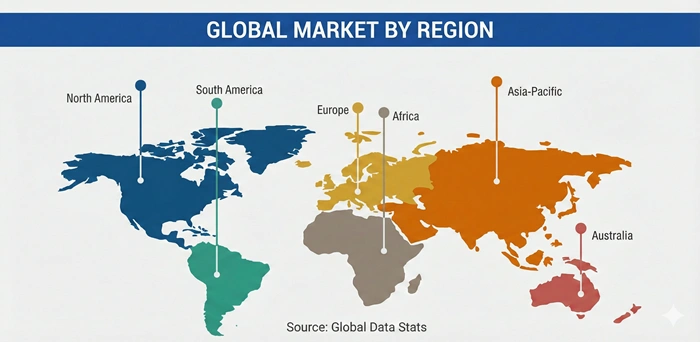
Asia Pacific commands the methyl methacrylate (MMA) monomer market with dominant share exceeding 45%, driven by concentrated automotive manufacturing, construction expansion, and electronics production across China, Japan, and South Korea where rapid industrialization and export-oriented manufacturing consume substantial MMA monomer volumes. China alone accounts for approximately 50% of Asia Pacific market share with automotive production exceeding 25 million vehicles annually and construction sector producing massive acrylic sheet demand. Domestic MMA production capacity operated by Chinese manufacturers including Longxin Chemical and Shandong Hongxu serves regional consumption and export markets. Japanese precision manufacturing particularly Mitsubishi Chemical operations and technology leadership maintains substantial production supporting automotive, electronics, and specialty applications. South Korean integrated chemical complexes operated by LG Chem connecting petrochemical feedstocks with MMA synthesis and PMMA production demonstrate vertical integration advantages.
Regional industrial policies strengthen Asia Pacific's market position through manufacturing incentives, infrastructure investment, and automotive industry support promoting domestic chemical production capabilities. Chinese industrial policy emphasizing advanced materials, electric vehicle development, and sustainable chemistry maintains substantial MMA production and consumption growth. Japanese government programs supporting innovation, quality leadership, and export competitiveness promote technology advancement. South Korean economic development strategies emphasizing chemical industry competitiveness and automotive sector strength create favorable conditions. Leading regional players including Mitsubishi Chemical, Sumitomo Chemical, LG MMA, and Asahi Kasei operate extensive manufacturing facilities, research centers, and application development capabilities serving automotive OEMs, construction material producers, and electronics manufacturers. Automotive industry particularly Chinese electric vehicle production, Japanese quality focus, and Korean design innovation creates specialized MMA demand. The region's market dominance continues through 2033 as automotive growth, construction expansion, and electronics manufacturing create sustained demand supporting continued leadership throughout forecast period.
North America
Innovation Leadership and Sustainable Technology Adoption Drive Fastest Regional Market Growth
North America emerges as fastest-growing regional methyl methacrylate (MMA) monomer market with projected CAGR of 6.2% through 2033, propelled by automotive innovation, construction recovery, sustainable production technology adoption, and premium application development. United States dominates regional market accounting for approximately 85% of North American consumption with automotive industry, construction sector, and specialty applications creating concentrated demand. Leading MMA producers including Röhm constructing advanced Bay City Texas facility implementing LiMA production technology and established operations by Dow Chemical, Evonik, and specialty chemical companies maintain North American manufacturing footprint. Automotive industry particularly Detroit automotive cluster and Southern manufacturing facilities implementing aggressive lightweighting strategies creates substantial PMMA demand requiring consistent MMA monomer supply.
Regional market characteristics emphasize innovation focus, environmental compliance, and quality standards supporting premium segments and advanced applications. United States fuel efficiency regulations including Corporate Average Fuel Economy (CAFE) standards mandate vehicle weight reduction driving PMMA glazing adoption. Environmental regulations including EPA oversight and state-level sustainability requirements promote cleaner MMA production technologies and bio-based alternatives. Green building certifications including LEED promoting energy-efficient materials create architectural glazing opportunities. Automotive innovation particularly electric vehicle development by Tesla, General Motors, and Ford incorporating lightweight materials creates growing consumption. Leading chemical companies investing in sustainable production including Röhm's LiMA technology delivering lower carbon footprint and Mitsubishi Chemical's bio-based initiatives demonstrate technology leadership. Research institutions including universities, national laboratories, and corporate R&D centers advance production technology, application development, and sustainability innovations. The region's exceptional growth continues through 2033 as automotive advancement, sustainable technology adoption, and premium application development create favorable dynamics supporting sustained market expansion throughout forecast period.
Top Key Players
-
Mitsubishi Chemical Corporation (Japan)
-
Röhm GmbH (Germany)
-
Evonik Industries AG (Germany)
-
BASF SE (Germany)
-
Sumitomo Chemical Co. Ltd. (Japan)
-
LG MMA (South Korea)
-
Asahi Kasei Corporation (Japan)
-
Arkema SA (France)
-
The Dow Chemical Company (United States)
-
Kuraray Co. Ltd. (Japan)
-
Chi Mei Corporation (Taiwan)
-
Formosa Plastics Corporation (Taiwan)
-
INEOS Group Holdings SA (United Kingdom)
-
Longxin Chemical Co. Ltd. (China)
-
Shandong Hongxu Chemical Co. Ltd. (China)
Recent Developments
-
Röhm (2023-2024): Announced construction of advanced MMA production facility at Bay City Texas site implementing proprietary LiMA production technology enabling methacrylate monomer manufacturing with significantly lower product carbon footprint and improved environmental impact compared to traditional ACH process, demonstrating commitment to sustainable production and technological leadership while expanding North American capacity serving growing automotive and construction demand.
-
Mitsubishi Chemical (2023-2026): Progressed bio-based MMA production technology development with pilot plant operations advancing toward commercial production scheduled for 2026 utilizing plant-derived feedstocks reducing fossil resource dependency and achieving substantial carbon emission reductions, pioneering sustainable monomer manufacturing strengthening circular economy within plastics industry and demonstrating environmental leadership.
-
Röhm and OCI Global (2023): Announced pioneering MMA production partnership utilizing bio-ammonia at ISCC PLUS certified manufacturing plants where OCI's bio-ammonia derived from biomethane waste achieves over 70% greenhouse gas reduction compared to conventional grey ammonia, combined with Röhm's sustainable production capabilities creating environmentally responsible methacrylate monomer solutions meeting customer sustainability requirements.
-
Evonik (2024-2025): Continued execution of Methacrylates business divestment including MMA and PMMA operations as part of strategic portfolio management under Winning Ways strategy, focusing corporate resources on high-growth high-margin specialty chemical segments while ensuring Methacrylates business continues serving customers effectively under new ownership structure supporting long-term value creation.
-
BASF (2022-2024): Advanced automotive lightweighting innovations partnering with International Automotive Components Group developing world's first natural fiber roof frame utilizing Acrodur binder system for Mercedes-Benz E-class achieving 40% weight reduction compared to metal counterpart, demonstrating lightweight material leadership and application development supporting automotive industry sustainability objectives.
Market Trends
Sustainable Production Routes and Circular Material Systems Reshape Industry Competitive Dynamics
The methyl methacrylate (MMA) monomer market experiences transformative trends centered on sustainable production technologies as environmental regulations, carbon neutrality commitments, and circular economy principles drive innovation across manufacturing processes and feedstock strategies. Producers implement bio-based production routes utilizing renewable feedstocks including plant-derived itaconic acid, bio-ethanol, and waste biomass reducing petroleum dependency and lowering greenhouse gas emissions. Mitsubishi Chemical pioneering commercial-scale bio-based MMA technology demonstrates feasibility while Röhm introducing LiMA process technology significantly reduces carbon footprint compared to traditional ACH methods. Non-ACH catalytic processes eliminating hazardous hydrogen cyanide intermediates improve safety profiles, reduce regulatory compliance burdens, and enhance community acceptance. Chemical recycling technologies incorporating depolymerization processes convert post-consumer PMMA waste back to MMA monomers creating closed-loop material systems. These sustainability initiatives create competitive advantages as automotive OEMs, construction specifiers, and electronics manufacturers increasingly prioritize suppliers demonstrating environmental stewardship, transparent lifecycle assessments, and supply chain responsibility throughout forecast period.
Vertical integration trends reshape the methyl methacrylate (MMA) monomer market as producers pursue strategic connections with downstream PMMA manufacturers, acrylic sheet fabricators, and end-use applications creating streamlined value chains and enhanced market positioning. Leading chemical companies integrate MMA monomer production with PMMA polymerization facilities, acrylic sheet manufacturing plants, and specialty compound formulation capabilities ensuring captive consumption, quality control, and application development support. Strategic partnerships between MMA producers and automotive OEMs, construction material suppliers, and electronics manufacturers strengthen customer relationships, enable co-development projects, and secure long-term supply agreements. Acquisitions and joint ventures consolidating regional market positions, accessing technology platforms, and expanding geographic reach create industry restructuring. Supply chain resilience initiatives including localized production, diversified feedstock sourcing, and strategic inventory positioning address lessons learned from recent supply disruptions. These integration strategies expand beyond cost optimization to enable rapid innovation response, customized product development, and differentiated market positioning supporting competitive advantages throughout forecast period.
Segments Covered in the Report
By Production Process
-
Acetone Cyanohydrin (ACH) Process (Traditional Route, Integrated Operations)
-
Ethylene Route (Alternate Chemistry, Emerging Technology)
-
Isobutylene Route (C4 Chemistry, Specialty Applications)
-
Bio-Based Routes (Renewable Feedstocks, Sustainable Production)
By Application
-
Polymethyl Methacrylate (PMMA) Production (Cast Sheet, Extruded Sheet, Molding Compounds)
-
Coatings and Adhesives (Acrylic Coatings, MMA Adhesives, Surface Treatments)
-
Impact Modifiers (PVC Modification, Polymer Blending)
-
Others (Emulsion Polymers, Specialty Chemicals)
By End-Use Industry
-
Automotive and Transportation (Glazing Systems, Lighting, Interior Components)
-
Construction and Building Materials (Architectural Glazing, Skylights, Sound Barriers)
-
Electronics and Electrical (Display Covers, LED Encapsulation, Optical Components)
-
Medical and Healthcare (Medical Devices, Prosthetics, Dental Materials)
-
Signage and Displays (Outdoor Signs, Light Boxes, Retail Displays)
-
Others (Furniture, Sanitary Ware, Consumer Products)
By Region
-
North America (United States, Canada, Mexico)
-
Europe (Germany, France, United Kingdom, Italy, Spain, Rest of Europe)
-
Asia Pacific (China, Japan, South Korea, India, Southeast Asia, Rest of Asia Pacific)
-
Latin America (Brazil, Argentina, Rest of Latin America)
-
Middle East & Africa (UAE, Saudi Arabia, South Africa, Rest of MEA)
Frequently Asked Questions
Question 1: What is the projected size of the methyl methacrylate (MMA) monomer market by 2033?
Answer: The global methyl methacrylate (MMA) monomer market is expected to reach approximately USD 12.44 billion by 2033, growing from USD 8.57 billion in 2026. This substantial expansion reflects automotive lightweighting adoption, construction sector growth, electronics manufacturing expansion, and sustainable production technology implementation across diverse end-use industries worldwide.
Question 2: Which region dominates the methyl methacrylate (MMA) monomer market currently?
Answer: Asia Pacific leads the methyl methacrylate (MMA) monomer market with over 45% share, driven by concentrated automotive manufacturing, construction expansion, and electronics production across China, Japan, and South Korea. Leading producers including Mitsubishi Chemical, Sumitomo Chemical, LG MMA, and regional manufacturers maintain dominant positions serving domestic and export markets.
Question 3: What are the primary drivers of methyl methacrylate (MMA) monomer market growth?
Answer: Key growth drivers include automotive lightweighting mandates requiring PMMA materials, construction sector expansion demanding architectural glazing solutions, electronics miniaturization utilizing optical components, and medical device innovation incorporating biocompatible acrylic materials. Sustainable production technology development including bio-based routes and chemical recycling creates additional growth opportunities throughout forecast period.
Question 4: Which application segment holds the largest methyl methacrylate (MMA) monomer market share?
Answer: Polymethyl methacrylate (PMMA) production dominates the methyl methacrylate (MMA) monomer market with approximately 65% share due to acrylic sheet manufacturing, molding compound production, and specialty resin applications demonstrating sustained consumption. Automotive glazing, construction materials, and electronics components drive consistent PMMA demand supporting market leadership position.
Question 5: How do sustainability trends impact the methyl methacrylate (MMA) monomer market?
Answer: Sustainability trends drive bio-based production route development, chemical recycling technology adoption, and carbon footprint reduction initiatives addressing environmental regulations and corporate commitments. Automotive OEMs and construction specifiers increasingly prioritize suppliers demonstrating sustainable manufacturing, lifecycle assessment transparency, and circular economy participation. These initiatives create competitive advantages while meeting customer sustainability requirements supporting market transformation throughout forecast period.