
Mental Health Apps Market Overview
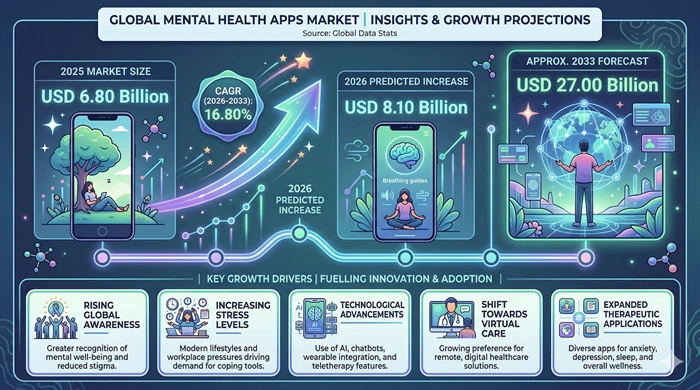
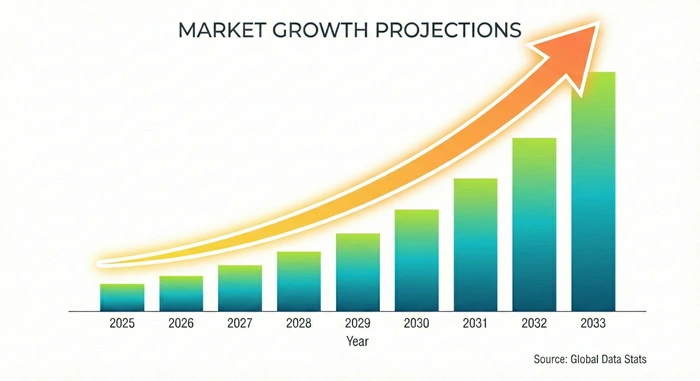
The global Mental Health Apps market size is valued at USD 6.80 billion in 2025 and is predicted to increase from USD 8.10 billion in 2026 to approximately USD 27.00 billion by 2033, growing at a CAGR of 16.80% from 2026 to 2033.
Mental health apps are smartphone and web-based digital platforms designed to support psychological wellbeing through a wide range of tools including guided meditation, mood journaling, cognitive behavioral therapy exercises, AI-powered chatbot therapy, stress management techniques, crisis intervention resources, teletherapy connections, and sleep improvement programs — making professional-grade mental health support accessible to individuals anytime, anywhere, without the cost and scheduling barriers associated with in-person clinical care. This rapidly expanding product category spans from consumer wellness applications available freely on app stores to clinically validated digital therapeutics prescribed by healthcare providers as adjunct or standalone treatments for diagnosed anxiety disorders, depression, PTSD, substance use disorders, and other mental health conditions. The Mental Health Apps market is experiencing exceptional growth driven by the global mental health crisis — where depression and anxiety disorders collectively affect more than one billion people worldwide — combined with persistent shortages of mental health professionals, rapidly growing smartphone penetration, the destigmatization of mental health help-seeking behavior, and the progressive clinical validation of app-based interventions that are gaining credibility with healthcare providers and regulatory bodies globally.
AI Impact on the Mental Health Apps Industry
Artificial Intelligence Is Transforming Personalized Mental Health Support Delivery, Conversational Therapy Accessibility, Crisis Detection Capabilities, Clinical Outcome Prediction, and Treatment Pathway Personalization in Ways That Are Fundamentally Expanding the Clinical Effectiveness and Commercial Scale of the Mental Health Apps Market*
Artificial intelligence is delivering its most transformative contributions to the Mental Health Apps market through the development of AI-powered conversational therapy companions — where large language model-based chatbot systems including Woebot, Wysa, and Youper engage users in structured therapeutic conversations modeled on cognitive behavioral therapy, dialectical behavior therapy, and acceptance and commitment therapy frameworks — providing evidence-informed emotional support and coping skill development at scale, at any hour, without the wait times or cost barriers that limit access to human therapists. These AI therapy platforms are progressively demonstrating clinically meaningful reductions in self-reported anxiety, depression symptom severity, and emotional distress in randomized controlled trial evaluations — generating the clinical evidence base required for healthcare provider recommendation, payer coverage consideration, and regulatory digital therapeutic designation that are collectively expanding their commercial addressable market beyond direct-to-consumer sales into employer wellness program contracts and healthcare system partnerships. The progressive integration of natural language processing sentiment analysis into mental health app user interaction monitoring — where AI systems detect linguistic patterns, conversation tone shifts, and topic emergence signals associated with worsening mental state, suicidal ideation, or crisis risk — is enabling proactive in-app crisis intervention prompting, care team alert generation, and emergency resource surfacing capabilities that address a critical safety challenge in digital mental health support delivery.
AI is additionally transforming clinical outcome personalization within the mental health apps market — where machine learning algorithms analyze individual user engagement patterns, symptom trajectory data, therapy exercise completion rates, and validated clinical assessment responses to dynamically customize content sequencing, intervention intensity, notification timing, and therapeutic modality recommendations for each user based on what is demonstrably working for their specific presentation. This AI-powered personalization capability is progressively differentiating premium mental health app platforms from generic content libraries — generating meaningfully higher user engagement, retention, and clinical outcome metrics that support premium subscription pricing and employer program contract value propositions. The growing application of multimodal AI — combining voice pattern analysis, typing behavior metrics, sleep data from wearable integrations, and physical activity patterns — into mental health app clinical assessment functions is additionally enabling passive continuous mental state monitoring capabilities that complement active user self-report assessments, providing more comprehensive and less burden-intensive longitudinal mental health tracking across user populations.
Growth Factors
Global Mental Health Crisis Scale, Persistent Therapist Shortages, Smartphone Penetration Growth, Mental Health Destigmatization, Employer Wellness Investment, and Clinical Validation Progress Driving the Mental Health Apps Market's Exceptional Revenue Expansion*
The most structurally powerful and commercially consequential growth driver of the Mental Health Apps market is the overwhelming scale of the global mental health burden — where the World Health Organization estimates that depression and anxiety disorders alone affect more than one billion people worldwide, creating an enormous population with unmet mental health support needs that the global mental health professional workforce — estimated at fewer than 10 psychiatrists per 100000 people in most high-income countries, and far fewer in low- and middle-income markets — is structurally incapable of serving through traditional in-person care delivery models alone. This vast treatment gap — where the majority of individuals experiencing clinically significant depression, anxiety, trauma responses, substance use issues, and other mental health challenges never access professional mental health treatment — represents the most compelling and structurally durable demand driver for scalable, accessible, and affordable digital mental health support tools that smartphone-based applications can deliver at a fraction of the cost and with none of the access barriers of traditional mental health care. The permanent behavioral changes accelerated by the COVID-19 pandemic — including the normalization of remote and digital health service delivery, the dramatic growth of telehealth mental health consultations, and the meaningful reduction in mental health help-seeking stigma across many demographic groups — have created a lasting expansion of consumer openness to digital mental health support that continues to generate strong and growing Mental Health Apps market demand well beyond the pandemic period.
The rapidly growing employer mental health benefit investment — where corporations facing rising workforce mental health costs including absenteeism, presenteeism, turnover, and disability claims are progressively investing in employer-sponsored mental health app access programs as cost-effective workforce wellbeing interventions — represents the second most commercially significant and structurally growing driver of the Mental Health Apps market. Major employers including Fortune 500 companies across technology, financial services, healthcare, and manufacturing sectors are progressively including mental health app access — through partnerships with platforms including Calm for Business, Headspace for Work, Lyra Health, and Spring Health — as standard employee benefits in recognition of the evidence demonstrating employee mental health support programs' return on investment through reduced healthcare claims costs, lower employee turnover, and improved productivity metrics. The growing integration of mental health apps into healthcare system care pathways — where primary care physicians, psychiatrists, and therapists are progressively recommending evidence-based apps as between-session support tools, stepped care alternatives for patients on therapy waitlists, and self-management resources for mild-to-moderate mental health conditions — is additionally legitimizing the clinical role of digital mental health tools and expanding their adoption beyond self-directed consumer wellness users into formally recommended clinical tool categories.
Market Outlook
With AI Therapy Capabilities Maturing, Clinical Prescription App Pathways Expanding, Employer Mental Health Benefit Investment Growing, and Emerging Market Smartphone Penetration Creating New User Populations, the Mental Health Apps Market Outlook Is Exceptionally Strong Through 2033*
The long-term outlook for the Mental Health Apps market is exceptionally positive — supported by the convergence of escalating global mental health burden, persistent mental health professional workforce shortages, rapidly advancing AI therapeutic capability, growing clinical and regulatory recognition of digital mental health interventions, and the progressive expansion of payer and employer coverage for app-based mental health support. The most commercially transformative near-term development within the mental health apps ecosystem is the progressive pathway development for FDA-cleared and prescription digital therapeutics — where Pear Therapeutics established the early framework for app-based cognitive behavioral therapy receiving FDA breakthrough device designation and prescription clearance — and subsequent platforms are advancing through regulatory validation programs that, upon successful completion, would unlock healthcare provider prescription, pharmacy dispensing, and insurance reimbursement channels that dramatically expand the accessible patient population and willingness-to-pay beyond the current self-pay consumer market. The growing body of randomized controlled trial evidence supporting the efficacy of specific mental health app interventions for anxiety, depression, insomnia, and PTSD — published in peer-reviewed clinical journals and increasingly cited in clinical practice guidelines — is progressively building the clinical community trust and healthcare provider recommendation behavior that translates academic validation into commercial prescription and recommendation volume.
The ongoing demographic expansion of digital health engagement — where younger millennial and Gen Z populations demonstrate the strongest affinity for smartphone-based mental health support tools and simultaneously face some of the highest rates of anxiety, depression, and psychological distress of any demographic cohort — creates a structurally growing and digitally native core user base for the Mental Health Apps market that will expand in absolute scale and purchasing power throughout the forecast period. The progressive development of mental health app reimbursement frameworks — where Germany's DiGA (Digital Health Applications) national prescription app reimbursement program has established a regulatory model being actively studied and partially emulated by healthcare authorities in France, the United Kingdom, Australia, and other countries — is progressively creating new revenue pathways for clinically validated mental health app developers that supplement direct-to-consumer subscription revenue with insurance-reimbursed prescription volume. Emerging market smartphone penetration growth — particularly across India, Southeast Asia, Latin America, and Sub-Saharan Africa — is simultaneously creating enormous new user populations for accessible mental health support tools that do not require clinic visits, therapist availability, or high out-of-pocket healthcare expenditure to access.
Expert Speaks
-
Andy Jassy, CEO, Amazon (AWS Health Division) — "The convergence of large language model AI capabilities and the global mental health treatment gap is creating a genuine opportunity to deliver meaningful psychological support at a scale and accessibility level that traditional care delivery could never approach — and the cloud, AI, and voice interface infrastructure that Amazon is building is directly enabling the next generation of personalized, responsive digital mental health tools that users can access wherever they are. We see mental health apps as one of the most socially impactful and commercially promising digital health application categories — and the quality of AI-powered therapeutic experiences is advancing at a pace that is genuinely surprising even to those of us building the underlying platform capabilities."
-
Sundar Pichai, CEO, Alphabet (Google) — "Mental health represents one of the most significant healthcare challenges of our generation — and the smartphone platforms, AI models, and digital health data infrastructure that Google is developing have real potential to make evidence-based mental health support more accessible, more personalized, and more continuously available to the billions of people who currently lack meaningful access to professional mental health care. The responsible development of AI-powered mental wellness tools — where clinical evidence, user safety, privacy protection, and ethical AI principles guide development decisions — is a priority we take seriously as these capabilities become progressively more powerful and widely used."
-
Tim Cook, CEO, Apple Inc. — "Apple's Health platform has always been built around the belief that the best thing we can do for our users is give them tools that genuinely improve their wellbeing — and mental health is an area where we believe technology can make a profound positive difference for millions of people who struggle to access or afford traditional professional care. The mental health app ecosystem developing on iPhone and Apple Watch — where meditation, mood tracking, sleep monitoring, and AI-assisted emotional support tools are being developed and refined by talented teams — represents one of the most exciting and important areas of innovation on our platform today."
Key Report Takeaways
-
North America dominates the Mental Health Apps market, holding approximately 40.20% of global market share in 2025, driven by the highest smartphone penetration rates, the most mature digital health consumer market, the strongest corporate mental health benefit investment culture, the greatest concentration of leading mental health app developers including Calm, Headspace, Lyra Health, Spring Health, and BetterHelp, and the most developed employer and payer coverage infrastructure for digital mental health tools across the United States and Canada.
-
Asia Pacific is the fastest-growing regional market for mental health apps, projected to expand at a CAGR of approximately 19.20% from 2026 to 2033, driven by India and China's enormous and rapidly growing smartphone user populations, rapidly rising mental health awareness and destigmatization trends among younger Asian demographics, growing middle-class consumer willingness to invest in personal wellness technology, and the scale of the mental health treatment gap across Asian markets where psychiatrist-to-population ratios are among the lowest globally.
-
Anxiety and stress management apps are the dominant app type segment, accounting for approximately 34.60% of total market revenue in 2025, reflecting the enormous global prevalence of anxiety disorders as the most common mental health condition category affecting an estimated 301 million people worldwide — combined with the strong evidence base supporting digital cognitive behavioral therapy and mindfulness-based stress reduction interventions for anxiety management that gives this category the strongest clinical validation credentials among all mental health app types.
-
Subscription-based business model is the dominant revenue model, contributing approximately 58.40% of total market revenue in 2025, reflecting the strong recurring revenue generation, user engagement sustainability, and content update flexibility advantages of subscription pricing — with platforms including Calm and Headspace demonstrating the commercial viability of direct-to-consumer premium subscription mental health content in generating hundreds of millions of dollars in annual recurring revenue from large and loyal subscriber bases.
-
Individual users represent the dominant end user segment, contributing approximately 52.80% of total market revenue in 2025, reflecting the large and growing direct-to-consumer mental wellness app market where individuals proactively seek accessible and affordable mental health support tools through app store discovery, social media recommendation, and word-of-mouth referral channels that collectively drive broad consumer adoption independent of formal clinical prescription or employer sponsorship pathways.
-
Employer and payer sponsored business model is the fastest-growing revenue segment, expected to expand at a CAGR of approximately 21.40% through 2033, driven by rapidly growing corporate mental health benefit investment, expanding insurance coverage for digital mental health tools, and the progressively larger contract values achievable through enterprise and payer distribution channels compared to individual consumer subscription economics — with enterprise mental health platforms including Lyra Health, Spring Health, and Modern Health demonstrating strong growth in annual recurring contract revenue from large employer and health plan partnerships.
Market Scope
| Report Coverage | Details |
|---|---|
| Market Size by 2033 | USD 27.00 Billion |
| Market Size by 2025 | USD 6.80 Billion |
| Market Size by 2026 | USD 8.10 Billion |
| Market Growth Rate (2026–2033) | CAGR of 16.80% |
| Dominating Region | North America |
| Fastest Growing Region | Asia Pacific |
| Base Year | 2025 |
| Forecast Period | 2026–2033 |
| Segments Covered | App Type, Platform, Business Model, Age Group, End User |
| Regions Covered | North America, Europe, Asia Pacific, Latin America, Middle East & Africa |
Market Dynamics
Drivers Impact Analysis
Global Mental Health Treatment Gap, Smartphone Accessibility, AI Therapy Advancement, Employer Wellness Investment, and Destigmatization of Digital Mental Health Help-Seeking Are the Core Pillars Driving the Mental Health Apps Market's Exceptional Revenue Growth*
| Driver | ≈ % Impact on CAGR Forecast | Geographic Relevance | Impact Timeline |
|---|---|---|---|
| Global mental health treatment gap and persistent therapist workforce shortage | ~32% | Global | Short to Long-term |
| Rapid AI therapy chatbot and personalization capability advancement | ~26% | North America, Europe, Asia Pacific | Short to Long-term |
| Growing corporate mental health benefit investment and employer app sponsorship | ~24% | North America, Europe | Short to Medium-term |
| Smartphone penetration growth and digital health behavior normalization | ~18% | Asia Pacific, Latin America, MEA | Short to Long-term |
The most commercially powerful and structurally enduring driver of the Mental Health Apps market is the extraordinary scale of the global mental health treatment gap — where more than 75% of people in low- and middle-income countries and more than 50% of individuals in high-income countries experiencing diagnosable mental health conditions never access professional treatment, creating an enormous population with unmet psychological support needs that digital tools are uniquely positioned to address at scale. Traditional mental health care delivery is constrained by the absolute scarcity of licensed mental health professionals — with waitlists for outpatient therapy extending to six months or longer in many North American and European healthcare markets — combined with cost barriers including out-of-pocket therapy session costs of USD 100–300 per hour that place regular professional mental health support beyond the financial reach of most individuals globally. Mental health apps offering evidence-informed CBT exercises, mindfulness practices, AI-supported emotional check-ins, and crisis resources at USD 0–15 per month represent a qualitatively different accessibility and affordability profile that addresses the treatment gap in ways that expanding the clinical workforce alone cannot achieve within any commercially relevant timeframe.
The rapidly advancing capability of AI-powered therapeutic conversation systems — where large language models trained on clinical therapy transcripts and validated psychological intervention protocols are enabling apps to deliver structured, responsive, and personalized mental health support interactions that were not technically achievable even three years ago — is generating a step-change in the clinical credibility and user engagement quality of AI-assisted mental health apps. Early randomized controlled trial evidence for platforms including Woebot and Wysa has demonstrated statistically significant reductions in PHQ-9 depression scores and GAD-7 anxiety scores among users — providing the clinical validation foundation that healthcare providers, employers, and payers increasingly require before recommending or reimbursing digital mental health tools. The combination of AI capability advancement and growing clinical evidence is progressively converting the mental health app category from a consumer wellness content product into a clinically credible digital therapeutic platform — a transition that unlocks substantially larger and more stable revenue streams from healthcare system, payer, and employer distribution channels that complement direct-to-consumer subscription revenue.
Restraints Impact Analysis
Clinical Efficacy Evidence Gaps, Data Privacy Concerns, App Quality Variability, User Engagement and Retention Challenges, and Regulatory Framework Inconsistency Restraining Faster Mental Health Apps Market Growth*
| Restraint | ≈ % Impact on CAGR Forecast | Geographic Relevance | Impact Timeline |
|---|---|---|---|
| Inconsistent clinical efficacy evidence across the vast majority of available mental health apps | ~34% | Global | Short to Long-term |
| User data privacy concerns and mental health data sensitivity limiting adoption willingness | ~27% | North America, Europe | Short to Long-term |
| Poor user engagement and high app abandonment rates undermining therapeutic outcome potential | ~24% | Global | Short to Medium-term |
| Inconsistent regulatory frameworks and unclear digital therapeutic classification pathways | ~15% | Global | Short to Medium-term |
The most broadly experienced and commercially limiting barrier facing the Mental Health Apps market is the significant clinical evidence quality gap that characterizes the vast majority of the more than 20000 mental health-related apps currently available in major app stores — where only a small proportion have undergone rigorous randomized controlled clinical trial evaluation, leaving the overwhelming majority lacking the peer-reviewed efficacy evidence that healthcare providers, healthcare systems, and payers increasingly require before formally recommending or reimbursing app-based mental health interventions. This evidence gap creates a two-tier market dynamic — where a small group of clinically validated platforms including Woebot, Wysa, Headspace, and Calm command premium positioning, employer contract eligibility, and payer coverage consideration — while the vast majority of apps compete purely on consumer marketing, app store discovery, and social media recommendation without meaningful clinical differentiation. The sensitivity of mental health data — encompassing mood histories, therapy conversation content, crisis event records, and mental health diagnosis information — creates substantial and legitimate user privacy concerns about data collection, storage, sharing with third parties, and potential use by insurers or employers that represent meaningful adoption barriers, particularly among users in higher-risk populations whose mental health data could have discriminatory consequences if inadequately protected.
High user engagement attrition represents a significant clinical and commercial challenge for mental health app developers — where studies consistently show that the majority of downloaded mental health apps are abandoned within the first two weeks of use, with engagement declining sharply after initial exploration regardless of app quality or clinical evidence basis. This abandonment pattern reflects the inherent motivational challenges of sustained mental health self-management practice — where the effort and emotional discomfort involved in regular therapeutic exercises competes with entertainment and social media alternatives for finite smartphone attention — limiting the therapeutic dose accumulation required for meaningful clinical outcome improvement. The inconsistent global regulatory environment for digital mental health tools — where the FDA digital health software precertification program remains incompletely developed, EU MDR mental health app classification criteria lack clear consensus, and individual country regulatory approaches vary considerably — creates compliance uncertainty that increases development costs and delays market entry for innovative mental health app platforms seeking regulatory authorization across multiple geographic markets simultaneously.
Opportunities Impact Analysis
Prescription Digital Therapeutics Regulatory Pathway Development, Payer Reimbursement Expansion, Workplace Mental Health Mandates, Emerging Market Smartphone User Growth, and Wearable Integration Create Significant Mental Health Apps Market Opportunities*
| Opportunity | ≈ % Impact on CAGR Forecast | Geographic Relevance | Impact Timeline |
|---|---|---|---|
| Prescription digital therapeutic regulatory clearance unlocking healthcare reimbursement | ~31% | North America, Europe | Short to Medium-term |
| Employer mental health benefit mandate expansion and enterprise platform adoption | ~27% | North America, Europe | Short to Long-term |
| Emerging market smartphone penetration creating large new accessible user populations | ~25% | Asia Pacific, Latin America, MEA | Short to Long-term |
| Wearable device integration enabling passive continuous mental state monitoring | ~17% | North America, Europe, Asia Pacific | Short to Medium-term |
The most commercially transformative near-term opportunity within the Mental Health Apps market is the progressive development of regulatory cleared prescription digital therapeutic pathways — where FDA de novo authorization, FDA 510(k) clearance, or EU CE marking for clinically validated mental health digital therapeutics would unlock formal healthcare provider prescribing, pharmacy dispensing, and health insurance reimbursement channels that dramatically expand the commercially accessible patient population and monetization potential beyond current direct-to-consumer subscription and employer contract revenue models. The German DiGA pathway — where clinically validated digital health applications receive national prescription reimbursement through statutory health insurance — has already demonstrated the commercial potential of regulated prescription mental health app reimbursement, with several mental health DiGA applications generating substantial prescription volume through the German national health insurance system and generating interest from healthcare regulators in France, the United Kingdom, Australia, and Japan studying similar framework development. Success in developing equivalent prescription digital therapeutic pathways across major healthcare markets would represent a step-change in mental health app market revenue scale and commercial sustainability — transforming app revenue from consumer discretionary spending to clinically prescribed and insurance-reimbursed healthcare expenditure.
The enormous and currently largely underpenetrated mental health app opportunity across rapidly developing Asian, Latin American, and Middle Eastern markets — where the combination of rapidly growing smartphone penetration, rising youth mental health awareness, large and growing populations experiencing anxiety and depression with essentially no access to professional mental health care, and growing digital consumer spending capability — represents perhaps the most commercially significant long-term geographic growth opportunity for the global Mental Health Apps market throughout and beyond the 2026–2033 forecast period. Localized mental health app development — incorporating culturally relevant therapeutic content, local language AI therapy conversations, regionally specific stress and cultural identity topics, and locally appropriate pricing tiers — is a critical commercial success factor for achieving meaningful user adoption and retention in diverse emerging market populations where Western-developed app content may lack the cultural resonance required for sustained engagement. The progressive integration of mental health app platforms with wearable fitness and health monitoring devices — where Apple Watch, Fitbit, and Garmin biometric data including heart rate variability, sleep quality metrics, and physical activity patterns feed AI mental state assessment models — is simultaneously creating more comprehensive and less self-report-dependent mental wellness monitoring capabilities that meaningfully enhance app clinical credibility and user value perception.
Segment Analysis
By App Type
Anxiety and Stress Management Apps Lead the Mental Health Apps Market Revenue While AI-Powered Therapy and Counseling Apps Drive the Fastest Category Growth*
Anxiety and stress management apps hold the dominant position in the Mental Health Apps market, accounting for approximately 34.60% of total global market revenue in 2025, driven by the extraordinary global prevalence of anxiety disorders as the world's most common mental health condition — combined with the strong evidence base supporting digital mindfulness, cognitive behavioral therapy, and relaxation response training interventions for anxiety symptom management that has made anxiety-focused apps the most clinically credible and commercially validated category within the broader mental health app ecosystem. Platforms including Headspace, Calm, and Woebot — which combine mindfulness meditation content, breathing exercise tools, CBT thought restructuring exercises, and AI-supported anxiety check-ins — collectively generate the majority of anxiety app category revenue through a mix of direct consumer subscriptions, employer wellness program contracts, and healthcare provider recommendation channels. North America generates the largest anxiety app revenue — driven by high anxiety disorder prevalence among the US adult population, the most mature employer mental wellness program market, and the highest concentration of leading anxiety app developers — while Asia Pacific is the fastest-growing anxiety app region, driven by rapidly rising stress and anxiety awareness among young professional populations in China, India, and South Korea who are progressively embracing digital wellness tools as accessible mental health management resources. Key companies including Headspace (Headspace Health), Calm, Woebot Health, and Wysa collectively lead the anxiety and stress management Mental Health Apps market segment globally.
AI-powered therapy and counseling apps represent the fastest-growing app type segment within the mental health apps market, projected to expand at a CAGR of approximately 22.60% through 2033 as rapidly advancing large language model conversational AI capabilities enable progressively more sophisticated, empathetic, and clinically structured AI therapy interactions that are demonstrating meaningful clinical efficacy in randomized controlled trial evaluations. This segment encompasses AI chatbot therapy platforms including Woebot, Wysa, and Youper that deliver structured CBT and positive psychology exercises through natural conversation interfaces, as well as hybrid human-AI platforms including Lyra Health and Spring Health that combine AI-powered user assessment and care matching with human therapist video session delivery for users who advance beyond app-only care levels. North America leads AI therapy app segment revenue — driven by the most advanced AI development ecosystem, the largest venture capital investment in digital mental health platforms, and the strongest employer demand for scalable, accessible mental health benefit solutions that AI-assisted platforms can deliver more cost-effectively than purely human-therapist-dependent models. The combination of accelerating AI capability improvement, growing clinical evidence publication, and expanding employer and payer interest in scalable mental health solutions positions AI therapy apps as the most commercially dynamic and fastest-growing segment within the broader mental health apps ecosystem through 2033.
By Business Model
Subscription-Based Models Dominate the Mental Health Apps Market Revenue While Employer and Payer Sponsored Models Register the Fastest Commercial Growth*
Subscription-based business models hold the dominant position in the Mental Health Apps market, accounting for approximately 58.40% of total global market revenue in 2025, reflecting the strong recurring revenue generation, user engagement sustainability advantages, and content update flexibility that subscription pricing models enable for mental health app developers — where platforms including Calm (approximately USD 69.99 annually), Headspace (approximately USD 69.99 annually), and BetterHelp (approximately USD 240–360 monthly for therapy access) have collectively demonstrated the commercial viability of premium direct-to-consumer subscription mental health content and services at scale. The subscription model's recurring revenue predictability provides mental health app companies with the financial stability required for sustained clinical content development, AI system investment, regulatory validation programs, and clinical research partnerships that collectively improve platform quality and clinical credibility over time — creating a commercially reinforcing dynamic where subscription revenue funds the evidence-generation investments that justify premium subscription retention and employer contract value. North America and Europe generate the majority of direct-to-consumer subscription revenue — driven by the highest willingness to pay for premium digital wellness content among middle and upper-income demographics — while Asia Pacific is the fastest-growing subscription region as rising disposable incomes and digital content spending maturity among younger Asian consumer demographics drive premium mental health app subscription adoption. Leading subscription model companies including Calm, Headspace, and BetterHelp collectively represent the dominant consumer subscription mental health app platforms globally.
Employer and payer sponsored business models represent the fastest-growing revenue segment within the Mental Health Apps market — projected to expand at a CAGR of approximately 21.40% through 2033 — as the convergence of rapidly growing corporate mental health awareness, evidence demonstrating digital mental health program ROI for employers, and payer interest in cost-effective mental health benefit expansion drives progressive migration of mental health app distribution from individual consumer channels toward large enterprise and health plan contract channels. Enterprise mental health platforms including Lyra Health, Spring Health, Modern Health, and Headspace for Work are demonstrating strong growth in annual recurring revenue from Fortune 500 employer partnerships — offering employers comprehensive mental health benefit solutions combining app-based self-guided tools, AI assessment, and in-network human therapist access that address the full spectrum of employee mental health support needs at per-employee-per-month pricing that is highly cost-effective relative to the productivity and healthcare cost savings generated. North America leads the employer sponsored mental health app segment — driven by the strongest corporate mental health benefit investment culture, the largest enterprise HR technology procurement infrastructure, and the most developed payer digital mental health coverage frameworks — while Europe is the fastest-growing employer sponsored segment as corporate wellness investment culture progressively strengthens across UK, German, and Nordic corporate markets.
Regional Insights
North America
North America Leads the Global Mental Health Apps Market at 40.20% Revenue Share, Driven by the Highest Digital Mental Health Consumer Adoption, Strongest Employer Benefit Investment, and Greatest Concentration of Leading App Developers*
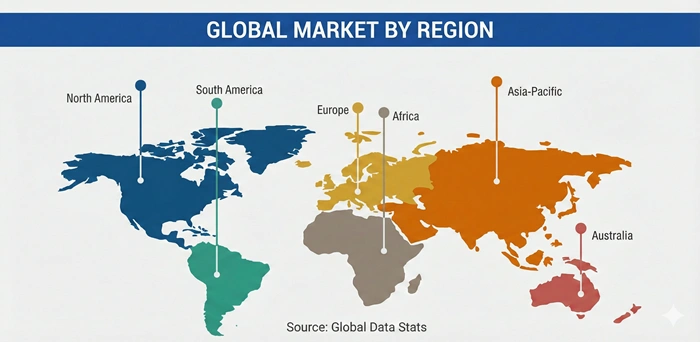
North America holds the dominant position in the global Mental Health Apps market, accounting for approximately 40.20% of total global market revenue in 2025, and is projected to sustain market leadership at a CAGR of approximately 15.80% from 2026 to 2033. The United States drives the overwhelming majority of North American revenue — where the combination of the highest mental health app consumer awareness rates, the most mature corporate mental health benefit investment culture, the most developed venture capital ecosystem funding mental health app innovation, and the largest concentration of leading mental health app companies including Calm, Headspace Health, Lyra Health, Spring Health, BetterHelp, Woebot Health, and Wysa collectively generate the world's largest and most commercially sophisticated mental health app market. The North American market is leading global adoption of AI-powered therapy platforms, prescription digital therapeutic development programs, and employer enterprise mental health benefit package structures that position it as the primary commercial validation and innovation hub for mental health app business models that subsequently diffuse to European and Asian markets.
Canada contributes meaningfully to North American mental health app revenue — through a combination of high smartphone penetration, growing public mental health awareness campaigns, and progressive provincial public health authority interest in digital mental health tools as scalable complements to underfunded public mental health services. The United States federal government's growing Medicaid and Medicare digital mental health reimbursement framework development — where CMS is progressively expanding reimbursement codes for remote mental health monitoring and digital therapeutic prescriptions — is expected to generate significant new payer-covered revenue pathways for clinically validated Mental Health Apps market participants throughout the forecast period. North America's combination of consumer market maturity, enterprise contract infrastructure, regulatory framework development leadership, and innovation ecosystem concentration positions it to sustain clear mental health app market leadership through 2033.
Asia Pacific
Asia Pacific Is the Fastest-Growing Mental Health Apps Market at 19.20% CAGR, Driven by India and China's Smartphone Scale, Rising Youth Mental Health Awareness, and Growing Digital Wellness Consumer Investment*
Asia Pacific is the fastest-growing regional segment in the Mental Health Apps market, projected to expand at a CAGR of approximately 19.20% from 2026 to 2033 — the highest regional growth rate globally. India represents the most dynamically growing Asia Pacific mental health app market — where a population of more than 500 million smartphone users, rapidly rising awareness of anxiety and depression among young professional and student populations, extremely limited access to professional mental health care given a severe psychiatrist shortage, and growing middle-class digital content spending are collectively generating explosive growth in mental health app downloads and active user numbers. China's rapidly expanding mental health app market — driven by rising awareness of psychological wellbeing, progressive reduction of mental health stigma among younger urban demographics, and strong domestic digital health ecosystem development — is producing a growing portfolio of locally developed mental health applications addressing Chinese cultural and linguistic contexts that complement international platform entries. Key companies serving the Asia Pacific Mental Health Apps market include Wysa (India), InnerHour (India), Youper (United States, strong Asia presence), and domestic platforms including MindFi (Singapore) and Melon (Thailand) that are developing culturally adapted digital mental wellness tools for diverse Asian market populations.
Japan and South Korea represent the most technically mature Asia Pacific mental health app markets — with Japan's corporate wellness culture driving strong employer mental health technology investment and South Korea's high smartphone penetration and youth mental health awareness campaign investments progressively normalizing digital mental health support among younger demographics. Australia has established one of the world's most advanced national digital mental health infrastructure programs — with government-funded platforms including Beyond Blue and Black Dog Institute providing evidence-based digital mental health resources — creating a mature and clinically credible digital mental health ecosystem that is informing Asia Pacific market development standards more broadly. The scale of Asia Pacific's smartphone user base, combined with the enormous mental health treatment gap across the region's densely populated and underserved markets, positions Asia Pacific as the most commercially dynamic and fastest-growing Mental Health Apps market geography globally through 2033.
Top Key Players
-
Calm.com Inc. (United States)
-
Headspace Health Inc. (United States)
-
Lyra Health Inc. (United States)
-
Spring Health Inc. (United States)
-
BetterHelp Inc. (United States)
-
Woebot Health Inc. (United States)
-
Wysa Inc. (United Kingdom / India)
-
Youper Inc. (United States)
-
Modern Health Inc. (United States)
-
Sanvello Health Inc. (United States)
-
MindDoc Health GmbH (Germany)
-
InnerHour Technologies Pvt. Ltd. (India)
Recent Developments
-
Headspace Health (2025) — Completed the rebranding of its combined Headspace and Ginger platform under the unified Headspace Health brand following their merger completion — while reporting strong growth in employer enterprise contract annual recurring revenue, advancing clinical research partnerships with leading academic medical centers to generate peer-reviewed evidence for its workplace mental health program clinical efficacy, and launching an AI-powered mental health coaching feature incorporating large language model conversational support designed for between-session user engagement between scheduled human coach interactions.
-
Lyra Health (2025) — Announced a new strategic partnership with a major US health insurance carrier to integrate Lyra's comprehensive mental health benefit platform into the insurer's commercial employer plan mental health benefit structure — significantly expanding Lyra's addressable employer client base through the insurer's existing corporate account relationships — while simultaneously reporting strong year-over-year growth in covered lives across its employer client portfolio and expanding its international operations across European and Asia Pacific employer markets.
-
Spring Health (2024) — Raised a significant Series E funding round valuing the company above USD 3.3 billion — reflecting strong investor confidence in the enterprise mental health platform's growth trajectory and business model — while reporting continued rapid expansion of its employer client base across Fortune 500 companies and announcing the launch of enhanced AI-powered care navigation features that further reduce time-to-first-appointment for employees accessing mental health care through employer Spring Health benefits.
-
Calm.com (2025) — Launched Calm Health — a clinical-grade version of its platform designed specifically for healthcare provider and health plan partnerships — featuring validated clinical assessment tools, EHR integration capabilities, and clinically curated content pathways for specific mental health conditions including anxiety, depression, insomnia, and chronic pain — while simultaneously reporting continued strong growth in its direct-to-consumer subscriber base and announcing expanded strategic distribution partnerships with major US health systems seeking scalable digital mental health support tools for their patient populations.
-
Woebot Health (2024) — Published results from a large randomized controlled clinical trial demonstrating statistically significant reductions in PHQ-9 depression scores and GAD-7 anxiety scores among users completing a structured Woebot CBT program — significantly strengthening the clinical evidence base for its AI-powered conversational therapy platform — while announcing new strategic healthcare system partnerships for Woebot deployment within post-discharge patient support pathways for patients with comorbid mental health and chronic medical conditions in major US hospital systems.
Market Trends
AI-Powered Personalized Therapy Advancement, Prescription Digital Therapeutic Pathway Development, Employer Mental Health Benefit Mainstreaming, and Wearable Integration Creating Continuous Mental Wellness Monitoring Are the Most Commercially Defining Trends Reshaping the Mental Health Apps Market Through 2033*
The most commercially transformative trend reshaping the Mental Health Apps market is the rapid advancement of AI-powered conversational therapy capability — where large language model systems are enabling mental health apps to deliver progressively more nuanced, contextually aware, and therapeutically structured interactions that increasingly approach the quality and responsiveness of human therapist conversations for mild-to-moderate mental health presentations. This AI therapy capability leap is simultaneously expanding the clinical credibility of app-based mental health interventions — generating the randomized controlled trial evidence that healthcare providers, payers, and regulators require for formal recommendation and reimbursement — and enabling more sophisticated personalization of therapeutic content sequencing, intervention intensity, and support modality matching that improves user engagement retention and clinical outcome achievement. As AI model quality continues to improve and clinical validation evidence accumulates, the boundary between consumer wellness apps and prescription digital therapeutics is expected to progressively blur — with the most clinically rigorous AI therapy platforms pursuing regulatory authorization pathways that unlock healthcare reimbursement and position them as formal components of stepped mental health care delivery systems.
The progressive mainstreaming of employer mental health benefit programs — where corporate investment in comprehensive digital mental health support tools has moved from an early-adopter differentiation strategy to a broadly expected standard employee benefit in many industries — is generating sustained and growing enterprise revenue for mental health app platforms that can demonstrate measurable workforce mental health outcome improvements, healthcare cost reduction, and employee satisfaction impact to corporate HR and benefits decision-makers. The integration of mental health app data with wearable biometric monitoring — where heart rate variability, sleep architecture, activity patterns, and stress indicators from Apple Watch, Fitbit, and Garmin devices feed AI mental state models within mental health apps — is simultaneously creating more comprehensive and passive continuous mental wellness monitoring capabilities that reduce the self-report burden on users while generating richer longitudinal mental health data for personalized intervention optimization. These converging trends — AI advancement, enterprise adoption mainstreaming, wearable integration, and clinical validation investment — collectively position the mental health apps market for sustained exceptional growth throughout the 2026–2033 forecast period.
Segments Covered in the Report
By App Type:
-
Meditation and Mindfulness Apps
-
Mood Tracking Apps
-
Anxiety and Stress Management Apps
-
Depression Management Apps
-
Therapy and Counseling Apps (AI-Powered and Human-Hybrid)
-
Sleep Disorder Management Apps
-
Substance Use Disorder Apps
-
Others
By Platform:
-
iOS
-
Android
-
Web-Based
By Business Model:
-
Subscription-Based
-
Freemium
-
One-Time Purchase
-
Employer and Payer Sponsored
By Age Group:
-
Adolescents and Teens
-
Adults
-
Geriatric Population
By End User:
-
Individual Users
-
Healthcare Providers and Clinicians
-
Corporate Enterprises and Employers
-
Government and Public Health Organizations
By Region:
-
North America
-
Europe
-
Asia Pacific
-
Latin America
-
Middle East & Africa
Frequently Asked Questions
Question 1: What is the current size of the Mental Health Apps market and what is its projected value by 2033?
Answer: The Mental Health Apps market was valued at USD 6.80 billion in 2025 and is projected to reach USD 27.00 billion by 2033, growing at a CAGR of 16.80% from 2026 to 2033. This exceptional growth is driven by the global mental health treatment gap, persistent therapist shortages, rapidly advancing AI therapy capabilities, growing employer mental health benefit investment, and progressive clinical validation of digital mental health interventions.
Question 2: What types of apps are included in the Mental Health Apps market?
Answer: The Mental Health Apps market encompasses a broad spectrum of application types including meditation and mindfulness apps, anxiety and stress management apps, mood tracking tools, AI-powered therapy and counseling platforms, depression management apps, sleep disorder management apps, and substance use disorder support applications — each targeting distinct mental health support needs across consumer, clinical, and employer wellness program deployment contexts. Anxiety and stress management apps represent the largest revenue category at approximately 34.60% of total market revenue in 2025, while AI-powered therapy and counseling apps are the fastest-growing type segment at approximately 22.60% CAGR through 2033.
Question 3: How do Mental Health Apps generate revenue and which model is growing fastest?
Answer: The Mental Health Apps market generates revenue through multiple business models — including direct-to-consumer subscription services where users pay monthly or annual fees for premium content access, freemium models offering basic free access with paid premium upgrades, one-time purchase app purchases, and employer and payer sponsored enterprise contracts where corporations or health plans pay per-employee-per-month fees for workforce mental health benefit access. Employer and payer sponsored models represent the fastest-growing revenue segment at approximately 21.40% CAGR through 2033 — driven by rapidly growing corporate mental health benefit investment and expanding health insurance coverage frameworks for digital mental health tools globally.
Question 4: Which region leads the Mental Health Apps market and which is experiencing the fastest growth?
Answer: North America leads the Mental Health Apps market with approximately 40.20% of global revenue in 2025 — driven by the highest digital mental health consumer adoption rates, the strongest corporate mental health benefit investment culture, and the greatest concentration of leading mental health app developers including Calm, Headspace, Lyra Health, Spring Health, and BetterHelp. Asia Pacific is the fastest-growing region at approximately 19.20% CAGR through 2033 — driven by India and China's enormous smartphone user bases, rapidly rising youth mental health awareness, and the enormous mental health treatment gap across Asian markets where access to professional mental health care remains severely limited.
Question 5: Are Mental Health Apps clinically effective and how is evidence evolving?
Answer: Clinical evidence for mental health apps varies significantly across the more than 20000 available platforms — with a small but growing number of rigorously evaluated platforms including Woebot, Wysa, Headspace, and Calm demonstrating statistically significant improvements in validated anxiety and depression symptom measures through randomized controlled trials published in peer-reviewed medical journals. The progressive development of prescription digital therapeutic regulatory pathways — including FDA de novo clearance and Germany's DiGA national reimbursement program — is creating formal clinical validation requirements that are driving higher-quality evidence generation among serious clinical mental health app developers, progressively building the evidence base that healthcare providers, payers, and regulators need to formally recommend and reimburse app-based mental health interventions as part of structured care pathways.