
Medium Voltage Transformer Market Overview
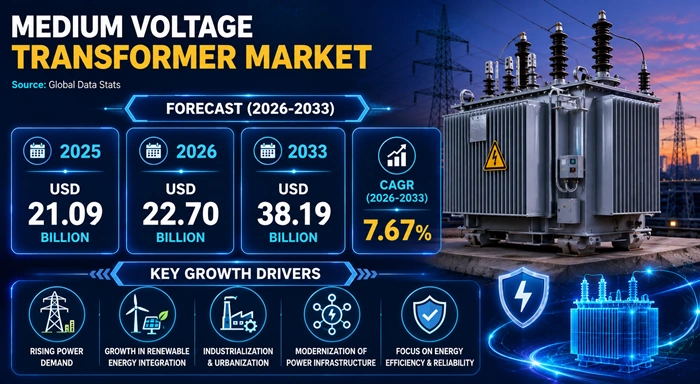
The global medium voltage transformer market size is valued at USD 21.09 billion in 2025 and is predicted to increase from USD 22.70 billion in 2026 to approximately USD 38.19 billion by 2033, growing at a CAGR of 7.67% from 2026 to 2033.
Medium voltage transformers operate within the 1 kV to 52 kV range and serve as critical links between high-voltage transmission grids and industrial, commercial, and residential end-users. Accelerating grid modernization investment, large-scale renewable energy integration, surging data center power demands, and widespread replacement of decades-old transformer fleets are together propelling sustained commercial expansion across the medium voltage transformer sector through the forecast period.
AI Impact on the Medium Voltage Transformer Industry
Digital Twin Technology, AI-Powered Predictive Maintenance, and Real-Time Load Optimization Are Fundamentally Transforming How the Medium Voltage Transformer Market Delivers Reliability, Efficiency, and Operational Uptime
Artificial intelligence is reshaping every operational dimension of the medium voltage transformer market by enabling a transition from periodic, calendar-based maintenance schedules to condition-based, predictive interventions driven by real-time sensor data. IoT-enabled smart transformers embedded with temperature, vibration, dissolved-gas, and partial-discharge sensors continuously stream operational data to AI analytical engines that monitor health parameters, detect early-stage anomaly patterns, and generate predictive maintenance alerts weeks or months before a fault manifests as an unplanned outage. Utilities and industrial operators deploying AI-powered monitoring platforms report unplanned downtime reductions of 20–35% and maintenance cost savings of 15–25% compared to conventional inspection approaches. Digital twin models — virtual replicas of physical transformer units calibrated with real operational data — allow manufacturers and grid operators to simulate performance under peak load, extreme temperature, and fault scenarios without taking equipment offline, enabling smarter asset lifecycle management and replacement planning across large installed transformer fleets.
Beyond maintenance, AI is actively transforming transformer design and manufacturing processes within the medium voltage transformer sector. Machine learning algorithms analyze historical failure data, thermal performance records, and field test results to optimize core geometry, winding configurations, and insulation material selection in new transformer designs — reducing design cycle times by up to 40% while improving energy efficiency outcomes. AI-based real-time voltage regulation systems embedded within smart transformers automatically adjust tap changer positions in response to grid voltage fluctuations caused by variable renewable generation — maintaining supply quality without manual intervention. These capabilities are collectively elevating the intelligence quotient of the medium voltage transformer from a passive electrical conversion device to an active, communicating grid management component, driving premium pricing for smart-enabled units and creating recurring software and analytics service revenue streams for leading transformer manufacturers.
Growth Factors
Grid Modernization Investment, Renewable Energy Integration at Scale, and the Explosive Growth of Data Center Power Infrastructure Are the Three Structural Forces Sustaining Strong Medium Voltage Transformer Market Expansion Through 2033
The global urgency to modernize aging power grid infrastructure is the most commercially consequential growth driver in the medium voltage transformer market. More than 70% of installed transformers in the United States were commissioned before 2000, and Western European utilities face a similarly acute equipment obsolescence challenge as transformer populations installed during 1970s–1990s grid expansion programs approach or exceed their designed service lives simultaneously. This creates what industry analysts describe as a "replacement super-cycle" — a period of abnormally elevated demand where utilities must procure and install new transformer capacity at a pace significantly above the historical norm for routine maintenance replacement. The scale of this replacement requirement is lengthening delivery lead times to 115–130 weeks for standard units and beyond 200 weeks for large-capacity models, enabling manufacturers to operate production facilities at near-maximum utilization and build multi-year order books that provide revenue visibility and pricing power through the mid-2030s.
The integration of utility-scale renewable energy — particularly solar farms exceeding 500 MW and offshore wind complexes now routinely exceeding 2 GW — is the second independent structural growth driver that operates with multi-decade investment horizons. Each large renewable installation requires multiple step-up transformers to connect generation output to transmission backbones, plus collection substations managing the aggregated output of dozens of generation units. Battery energy storage systems paired with renewable generation create additional transformer requirements for bidirectional power conversion between AC and DC systems. Corporate power purchase agreements and industrial self-generation programs behind the meter are creating equivalent demand in the commercial and industrial end-user segments. Data center construction — particularly hyperscale AI training facilities consuming 80–130 MW per campus — is a third fast-growing demand source, requiring dedicated medium-voltage transformer infrastructure with N-1 redundancy and availability guarantees that exceed utility grid standards, driving premium product specifications and above-average selling prices.
Market Outlook
The Medium Voltage Transformer Market Outlook Through 2033 Is Defined by Sustained Supply Tightness, Accelerating Dry-Type Adoption, and the Commercial Emergence of AI-Integrated Smart Transformer Platforms
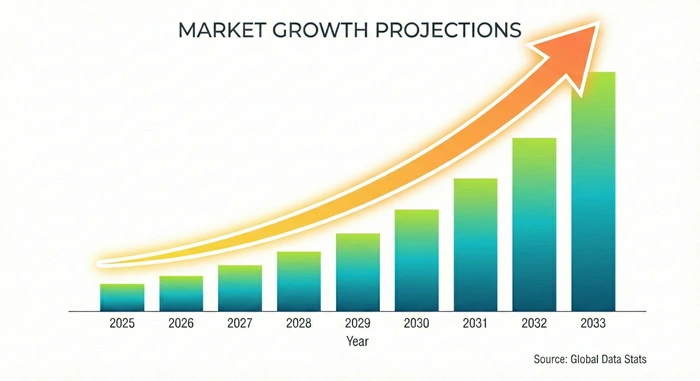
The commercial trajectory of the medium voltage transformer market through 2033 will be shaped by the interaction of three structural forces: persistent supply-demand imbalance, technology mix transition toward eco-safe and smart designs, and geographic demand diversification as emerging markets accelerate grid investment. On the supply side, announced manufacturing capacity expansions totaling USD 1.8 billion in North America alone are substantial but will only reach operational scale progressively from 2026 onward — meaning that order backlogs will remain elevated, delivery lead times will stay above historical norms, and manufacturers will retain pricing leverage throughout most of the forecast period. This supply constraint environment supports above-average profitability for established manufacturers and creates meaningful barriers to market entry that limit the pace at which new competitive supply can erode incumbents' pricing positions.
The technology transition from conventional mineral-oil-cooled transformers to dry-type, natural-ester, and eventually solid-state alternatives will reshape the competitive landscape meaningfully through 2033. EU EcoDesign Tier 2 efficiency mandates enforced from mid-2025 are compelling European utilities and commercial buyers to specify ultra-low-loss amorphous-core designs at premium price points. Wildfire risk mitigation requirements in North America and Southern Europe are accelerating dry-type adoption in fire-prone regions. Meanwhile, the commercialization of silicon-carbide-based solid-state transformers — which eliminate moving parts, enable instantaneous fault isolation, and support high-frequency conversion for DC microgrids — is progressing from prototype to early commercial deployment by the end of the forecast period, positioning early-adopting manufacturers for a technology transition wave that will materially expand average selling prices across the medium voltage transformer market.
Expert Speaks
-
"The demand environment for medium voltage transformers is unlike anything we have experienced in our industry in decades. Grid modernization, renewable integration, and data center electrification are creating simultaneous demand surges across multiple customer segments and geographies that are stretching global manufacturing capacity to its limits. Our investments in expanded production and smart transformer technology reflect our conviction that this elevated demand environment will persist well into the 2030s." — CEO, Hitachi Energy Ltd.
-
"The medium voltage transformer market is experiencing a structural shift, not a cyclical bump. Utilities replacing 30-year-old fleets, renewable developers commissioning gigawatt-scale solar and wind facilities, and hyperscale data center operators all need reliable, intelligent transformer solutions simultaneously — and the manufacturing ecosystem needs time to scale to meet that demand. The companies that invest in eco-design compliance, digital monitoring, and supply chain localization now will be the ones best positioned for leadership through the decade." — CEO, Siemens Energy AG
-
"We see the electrification of industry and the build-out of EV charging infrastructure creating multi-decade demand tailwinds for medium voltage power systems. Our focus on energy-efficient, fire-safe, and digitally integrated transformer solutions positions us to serve the evolving needs of utilities, industrial operators, and commercial real estate developers who are all investing in modernized power infrastructure at the same time." — CEO, Schneider Electric SE
Key Report Takeaways
-
Asia Pacific leads the global medium voltage transformer market with approximately 48–49% revenue share in 2025, driven by China's aggressive renewable capacity addition and UHV grid corridor expansion, India's Production-Linked Incentive scheme accelerating domestic manufacturing, and Southeast Asian nations' electrification and metro rail investments — making Asia Pacific simultaneously the largest and fastest-growing regional market by revenue
-
North America is the fastest-growing developed market, expanding at approximately 8.2% CAGR through 2033 as more than 70% of the U.S. installed transformer fleet ages past its intended service life simultaneously, federal Infrastructure Investment and Jobs Act funding accelerates grid resilience investment, and hyperscale data center and EV charging infrastructure construction generates premium-specification transformer demand
-
Oil-cooled transformers dominate with approximately 61–62% of cooling type segment revenue in 2025, valued for their superior thermal efficiency and cost-effectiveness in high-capacity substation applications — while air-cooled units are the fastest-growing cooling segment at approximately 7.75% CAGR, driven by wildfire risk mitigation, data center adoption, and urban rail infrastructure applications where fire safety and minimal maintenance are paramount
-
Three-phase transformers lead the phase segment with approximately 63–64% of total phase segment revenue in 2025, reflecting global distribution grid architecture dominance, while the single-phase segment maintains steady growth driven by rural electrification programs across Asia Pacific and Africa
-
Distribution transformers account for approximately 60% of transformer type segment revenue in 2025 — anchored by urban grid upgrade programs — while power transformers are growing at the fastest rate at approximately 7.78% CAGR, driven by massive utility-scale renewable connections requiring high-MVA step-up solutions in Saudi Arabia, India, and Australia
-
Power utilities remain the dominant end-user segment at approximately 59% revenue share in 2025, though the commercial segment is growing at approximately 8.12% CAGR as hyperscale AI data centers requiring N-1 redundant medium-voltage infrastructure and urban EV charging depots consuming multi-megawatt feeds drive premium transformer procurement across North America and Europe
Market Scope
| Report Coverage | Details |
|---|---|
| Market Size by 2033 | USD 38.19 Billion |
| Market Size by 2025 | USD 21.09 Billion |
| Market Size by 2026 | USD 22.70 Billion |
| Market Growth Rate from 2026 to 2033 | CAGR of 7.67% |
| Dominating Region | Asia Pacific |
| Fastest Growing Region | North America |
| Base Year | 2025 |
| Forecast Period | 2026 to 2033 |
| Segments Covered | Cooling Type, Phase, Transformer Type, End-User, Voltage Range, Region |
| Regions Covered | North America, Europe, Asia Pacific, Latin America, Middle East & Africa |
Market Dynamics
Drivers Impact Analysis
Grid Modernization's Aging-Fleet Replacement Super-Cycle and Renewable Energy's Insatiable Step-Up Transformer Demand Are the Two Most Commercially Powerful Compounding Growth Drivers in the Medium Voltage Transformer Market
| Driver | ≈ % Impact on CAGR Forecast | Geographic Relevance | Impact Timeline |
|---|---|---|---|
| Grid modernization and aging-asset replacement | ~32% | North America, Europe, Global spillover | Medium to long-term |
| Renewable energy integration requiring step-up and collection transformers | ~28% | Asia Pacific, Middle East, Europe | Long-term |
| Urban and industrial electrification demand growth | ~20% | Asia Pacific, Middle East, North America | Medium to long-term |
| Data center and EV charging infrastructure build-out | ~14% | North America, Europe, Advanced Asia Pacific | Short to medium-term |
| Green hydrogen electrolyzer projects | ~6% | Middle East, Europe, Selective Asia Pacific | Long-term |
The aging-infrastructure replacement super-cycle driving the medium voltage transformer market is unique in its simultaneous, geographically broad, and temporally compressed character. Unlike normal equipment replacement patterns where asset retirements are distributed evenly across a range of vintages, the concentrated installation of large transformer fleets during the 1970s–1990s grid expansion era means that a high proportion of the installed base across North America, Western Europe, and parts of Asia Pacific is reaching end-of-life in the same narrow window. This creates demand that exceeds what global manufacturing capacity can satisfy in normal delivery timeframes — as evidenced by lead times extending beyond 200 weeks for large capacity models. Utilities responding to this situation are implementing early procurement strategies, establishing multi-vendor supply relationships, and in some cases accepting equipment deliveries years ahead of planned project commissioning dates simply to secure supply. This behavior itself amplifies apparent demand within the market and sustains elevated order backlog levels that support manufacturer pricing leverage throughout the forecast period.
Renewable energy integration is the second structural demand driver operating on a multi-decade investment horizon that makes it one of the most durable commercial tailwinds in the medium voltage transformer market. Global solar and wind capacity additions reached record levels in 2024 and are forecast to continue accelerating as national net-zero commitments translate into project pipelines and grid connection agreements. Each gigawatt of utility-scale solar or wind capacity requires transformer infrastructure for both unit-level collection and substation-level step-up to transmission voltages — creating a direct, volume-linked relationship between renewable capacity addition and medium voltage transformer demand. Battery energy storage systems paired with renewable generation introduce additional bidirectional transformer requirements that standard distribution units were not designed for, driving demand for intelligent, bidirectional-capable units at premium price points. Corporate power purchase agreements and distributed industrial self-generation programs further multiply this demand across commercial and industrial end-user categories, ensuring that renewable-driven transformer demand is broadly distributed across customer types and geographic markets.
Restraints Impact Analysis
Copper and Electrical-Steel Price Volatility and Extended Supply-Chain Lead Times Are the Two Most Operationally Disruptive Constraints on Medium Voltage Transformer Market Growth Rate
| Restraint | ≈ % Impact on CAGR Forecast | Geographic Relevance | Impact Timeline |
|---|---|---|---|
| Copper and electrical-steel raw material price volatility | ~38% | Global, most acute in emerging markets | Short to medium-term |
| Manufacturing capacity constraints and extreme delivery lead times | ~32% | North America, Europe | Medium-term |
| Wildfire-risk insurance premiums on oil-filled installations | ~18% | North America, Australia, Southern Europe | Medium to long-term |
| PCB-legacy contamination liability on refurbishment programs | ~12% | North America, Europe | Long-term |
Copper and grain-oriented electrical steel together constitute approximately 35–40% of a medium voltage transformer's total bill of materials, making raw material price volatility one of the most immediate and operationally disruptive constraints on the medium voltage transformer market. Copper pricing is sensitive to demand signals from the EV, renewables, and construction sectors — all of which are simultaneously expanding — while supply is constrained by limited new mine development and permitting timelines that extend beyond a decade. Grain-oriented electrical steel, critical for efficient transformer core fabrication, is produced by a limited number of mills globally, creating geographic supply concentration risk and periodic shortage conditions. These dynamics force transformer manufacturers to shorten tender quotation validity periods from 90 days to as little as 30 days and to incorporate material price adjustment clauses in long-term supply contracts — adding procurement complexity and budget uncertainty for utility buyers managing multi-year capital programs.
Manufacturing capacity constraints represent the second most operationally significant restraint in the medium voltage transformer market. Even as manufacturers announce USD 1.8 billion of new North American capacity investment, the timeline from greenfield factory announcement to full-scale qualified production typically spans four to six years when accounting for site selection, permitting, construction, tooling, workforce recruitment and training, and IEEE/IEC product certification requirements. This means that near-term supply tightness cannot be resolved quickly regardless of investment commitment levels — and the certification requirements that govern transformer procurement in regulated industries create meaningful barriers against rapid new-entrant supply responses that would otherwise moderate the supply imbalance. Project developers and utilities experiencing these constraints are adapting through early procurement commitments, bridge engineering using smaller available units, and in some cases redesigning project electrical systems to accommodate available transformer specifications — all of which add cost and schedule complexity to infrastructure projects dependent on medium voltage transformer supply.
Opportunities Impact Analysis
Smart Grid Digital Transformer Commercialization, Green Hydrogen Electrolyzer Infrastructure, and Emerging Market Rural Electrification Programs Are the Three Highest-Value Growth Opportunities
| Opportunity | ≈ % Impact on CAGR Forecast | Geographic Relevance | Impact Timeline |
|---|---|---|---|
| Smart and digital transformer commercialization in grid modernization | ~44% | Global, led by North America, Europe, Japan | Medium to long-term |
| Green hydrogen and electrolyzer power infrastructure | ~34% | Middle East, Europe, Selective Asia Pacific | Long-term |
| Emerging market rural electrification and urban grid expansion | ~22% | Sub-Saharan Africa, Southeast Asia, India | Medium to long-term |
The commercialization of smart and digital transformers equipped with IoT sensors, AI-powered analytics, digital tap changers, and cybersecurity hardening represents the most financially significant opportunity within the medium voltage transformer market through the forecast period. Smart transformer units command price premiums of 15–30% over conventional equivalents, and the associated software, monitoring services, and maintenance contracts generate recurring revenue streams that improve the lifetime customer value of each installation considerably above the one-time hardware sale value. As utilities execute grid modernization programs that explicitly require real-time asset monitoring, predictive maintenance, and cybersecurity compliance — driven by regulatory mandates from NERC CIP in North America and NIS2 in Europe — the proportion of transformer procurement specifying digital capabilities is rising sharply. Manufacturers including Hitachi Energy, Siemens Energy, and Schneider Electric are positioning their smart transformer platforms as integrated grid intelligence solutions rather than commodity electrical components — a strategic repositioning that supports premium pricing, higher gross margins, and more durable customer relationships than traditional hardware supply.
Green hydrogen electrolyzer infrastructure represents a longer-horizon but commercially substantial opportunity as national hydrogen strategies in the Middle East, Europe, Germany, and Japan translate large-scale capacity targets into concrete project pipelines. Electrolyzer complexes consuming 100–500 MW of power require dedicated medium-voltage transformer infrastructure for rectification and power quality management — with specialized technical requirements including harmonic filtering, rapid load-following capability, and fire-safe insulation systems that command significant specification premiums over standard distribution units. The Middle East alone is directing USD 9.5 billion into solar-plus-storage and green hydrogen complexes that each employ custom medium-voltage step-ups, creating a high-value, geographically concentrated demand pool that specialized transformer manufacturers are well-positioned to serve through the latter half of the forecast period.
Segment Analysis
By Cooling Type
Oil-Cooled Transformers Dominate with Over 61% Market Share While Air-Cooled Units Lead in Growth Rate, Driven by Fire Safety Mandates and Urban Data Center Adoption Across the Medium Voltage Transformer Market
The oil-cooled segment holds the dominant position in the medium voltage transformer market by cooling type, accounting for approximately 61–62% of total cooling type revenue in 2025. Oil-cooled units' leadership reflects their established advantages in thermal efficiency, load-handling capacity, and total cost of ownership for high-capacity substation applications where the infrastructure for containment pits and regular oil monitoring is already in place. Heavy industrial facilities including steel mills, chemical plants, and mining operations rely on the durability and overload tolerance of oil-immersed designs for continuous high-power operations. Companies including Hitachi Energy, Siemens Energy, Schneider Electric, Eaton, and General Electric maintain the dominant oil-cooled product positions globally, continuously upgrading their mineral-oil designs with natural-ester fluid alternatives that improve fire safety and biodegradability while maintaining the thermal performance advantages of liquid-cooled architectures. Asia Pacific leads oil-cooled revenue, driven by the large-scale substation construction programs in China and India that favor oil-immersed units for their cost-competitiveness at high capacity ratings.
The air-cooled (dry-type) segment is growing at the fastest rate within the medium voltage transformer market at approximately 7.75% CAGR through 2033, driven by a converging set of regulatory, insurance, and application-specific demands. Wildfire-prone regions across North America, Australia, and Southern Europe are increasingly mandating or incentivizing dry-type installations that eliminate fire propagation risk from mineral oil spills — with insurers attaching materially higher premium structures to oil-filled equipment in high fire-risk zones that change the total cost calculation in favor of dry-type alternatives. Hyperscale data centers, metro rail systems, and urban commercial real estate developers consistently specify dry-type or cast-resin units because they require no oil containment infrastructure, simplify permitting processes, and fit into space-constrained indoor electrical rooms that cannot accommodate the footprint requirements of oil-cooled alternatives. Advanced vacuum-cast coil technology and amorphous metal core designs are progressively narrowing the efficiency gap between air-cooled and oil-cooled units — reducing the historical energy-loss penalty that was the primary commercial disadvantage of dry-type designs in high-load applications.
By End-User
Power Utilities Command Nearly 59% of End-User Revenue While Commercial Applications Are the Fastest-Growing End-User Segment, Powered by Data Center AI Infrastructure and EV Charging Deployment
The power utilities end-user segment holds the commanding revenue position in the medium voltage transformer market at approximately 59% of total end-user segment revenue in 2025. Power utilities' dominant share reflects their role as the anchor customers for both replacement procurement across aging grid assets and new installation procurement for renewable energy integration, smart grid modernization, and transmission capacity expansion programs. Government-directed grid resilience funding — including the U.S. Infrastructure Investment and Jobs Act, EU cohesion fund grid investments, and India's Revamped Distribution Sector Scheme — creates direct, policy-supported procurement volumes that provide utilities with predictable capital budgets for transformer investment. The presence of global leaders including Hitachi Energy, Siemens Energy, and Schneider Electric with dedicated utility sales teams, long-term framework agreements, and financing partnership capabilities reinforces utilities' position as the most commercially significant and reliably recurring customer segment in the medium voltage transformer sector.
The commercial end-user segment is growing at the fastest CAGR of approximately 8.12% within the medium voltage transformer market, driven by the extraordinary power demands of hyperscale AI computing facilities and the expanding rollout of high-power electric vehicle charging infrastructure. Hyperscale data centers for AI model training now routinely specify 80–130 MW per campus with N-1 transformer redundancy — meaning each facility may require two to four medium-voltage transformer installations at 50–70 MVA ratings, generating procurement values that significantly exceed typical utility distribution feeder projects. Urban EV charging depots equipped with megawatt-class chargers require dedicated 13.2 kV medium-voltage feeds with dedicated step-down transformer infrastructure. North America and Europe are leading commercial segment demand growth, with Hammond Power Solutions, Eaton, and General Electric among the most active commercial segment suppliers — while Asia Pacific's rapid commercial real estate development and expanding data center market is emerging as the next high-growth commercial geography for medium voltage transformer suppliers.
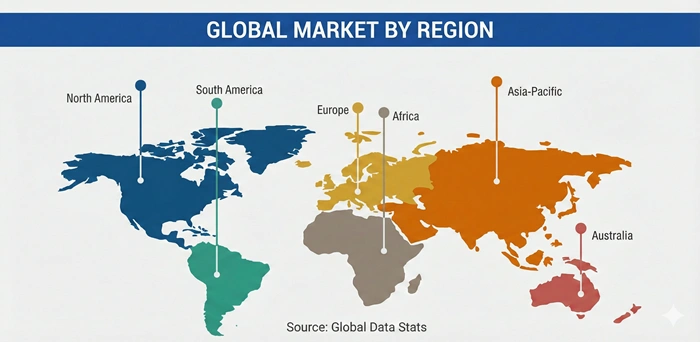
Regional Insights
Asia Pacific
Asia Pacific Commands Nearly Half of Global Medium Voltage Transformer Market Revenue, Driven by China's Grid Expansion, India's Manufacturing Incentives, and Southeast Asia's Electrification Investment
Asia Pacific holds approximately 48–49% of global medium voltage transformer market revenue in 2025, expanding at a regional CAGR of approximately 7.63% through 2033 — making it simultaneously the largest and among the most dynamic regions globally. China is the single most important country within the region, directing massive investment into ultra-high-voltage grid corridors that evacuate renewable power from inland solar and wind provinces to eastern demand centers, data center infrastructure supporting the world's second-largest AI computing buildout, and high-speed rail electrification that requires dedicated traction power substations along thousands of kilometers of new track. Domestic Chinese manufacturers including TBEA Co. Ltd. and China XD Group operate with the world's highest production volumes, serving both the enormous domestic demand base and selective export markets — though international vendors including Hitachi Energy and Siemens Energy maintain competitive positions in premium smart transformer segments.
India is emerging as one of the market's highest-growth individual country opportunities, with the government's Production-Linked Incentive scheme driving domestic transformer manufacturing capacity expansion and state utility procurement programs investing in distribution network modernization across both urban and rural service territories. CG Power, Bharat Heavy Electricals Limited (BHEL), and Toshiba Transmission & Distribution Systems India are expanding production capacity to capture both domestic demand and growing export opportunities in Southeast Asia and the Middle East. Japan and South Korea contribute technically sophisticated demand for smart, ester-filled, and compact transformer designs for urban rail, data center, and industrial applications, with Mitsubishi Electric, Hyosung Heavy Industries, and Hyundai Electric among the leading regional suppliers serving both domestic and international markets from their Asia Pacific manufacturing bases.
North America
North America Is the Fastest-Growing Developed Market in the Medium Voltage Transformer Sector, Propelled by the Most Acute Grid Aging Crisis Globally and Unprecedented Federal Infrastructure Investment
North America is the fastest-growing developed regional market in the medium voltage transformer market, expanding at approximately 8.20% CAGR through 2033, driven by a grid aging crisis of unusual severity and scale. The United States faces a situation where more than 70% of its installed distribution and power transformer fleet was commissioned before the year 2000 — with a significant proportion originally designed for 25–30 year service lives that are already exceeded or approaching expiration simultaneously. Federal funding programs including the Infrastructure Investment and Jobs Act have channeled billions of dollars into grid resilience investment, and DOE efficiency standards enacted in 2024 are requiring replacement units to meet new loss performance thresholds that legacy equipment fails to satisfy — creating a mandatory upgrade cycle layered on top of the normal replacement demand. Hitachi Energy, Siemens Energy, Eaton Corporation, and General Electric are the dominant commercial players in the North American market, each investing in regional manufacturing capacity expansion to reduce the 115–130 week standard delivery lead times that are constraining project schedules across the region.
Canada contributes regional demand through utility grid modernization investment, offshore wind development in Atlantic provinces, and Alberta's energy transition from coal to natural gas and renewables requiring substation transformer upgrades. Mexico's growing manufacturing sector — particularly automotive and electronics assembly facilities operating under nearshoring programs — is driving industrial transformer demand as manufacturers invest in dedicated medium-voltage power supply infrastructure for production facilities. North America's market is also evolving qualitatively, with wildfire risk considerations in California, Colorado, and the Pacific Northwest driving rapid adoption of dry-type and natural-ester units that eliminate mineral oil fire risk — while cybersecurity directives under NERC CIP are requiring buyers to specify transformer designs with hardened control interfaces and tamper-evident communications architecture for critical grid assets.
Customization Available for This Report
This report offers comprehensive region-wise and country-wise customization, providing tailored market intelligence specifically aligned to medium voltage transformer market demand trends, regulatory frameworks, manufacturing ecosystem competitiveness, and growth opportunities for your selected geography.
Customized versions of this report are available for each region and country listed below, delivering actionable, geography-specific intelligence for utilities, transformer manufacturers, engineering procurement contractors, grid infrastructure investors, and policy advisors:
North America
-
U.S. — Aging fleet replacement demand analysis, DOE efficiency standard compliance impact, NERC CIP cybersecurity requirements, data center and EV charging transformer demand, federal funding program investment analysis, and key manufacturer competitive landscape
-
Canada — Provincial utility grid modernization investment, offshore wind transformer procurement, nearshoring-driven industrial demand, and competitive market analysis
-
Mexico — Manufacturing sector industrial transformer demand, nearshoring investment impact, utility grid expansion, and market entry opportunity analysis
Europe
-
U.K. — Offshore wind North Sea transformer demand, National Grid modernization investment, EcoDesign Tier 2 compliance impact, and competitive transformer supplier landscape
-
Germany — Energiewende grid integration transformer demand, industrial electrification investment, hydrogen infrastructure transformer requirements, and EcoDesign compliance analysis
-
France — Nuclear grid interconnection transformer demand, renewable integration investment, EDF modernization programs, and key competitive dynamics
-
Italy — Renewable energy integration investment, grid reliability upgrades, EU cohesion fund-supported infrastructure, and competitive transformer market analysis
-
Rest of Europe — Eastern European grid reliability upgrades, cross-border interconnector transformer demand, and EU cohesion fund infrastructure investment analysis
Asia Pacific
-
China — UHV corridor expansion, solar and wind step-up transformer demand, domestic manufacturing competitive landscape, and data center infrastructure transformer investment
-
India — RDSS distribution modernization investment, Production-Linked Incentive scheme manufacturing growth, state utility procurement analysis, and rural electrification transformer demand
-
Japan — Smart transformer adoption, urban rail traction power demand, ester-filled unit adoption, and domestic manufacturer competitive landscape
-
South Korea — Industrial electrification demand, utility grid modernization investment, offshore wind transformer demand, and competitive market analysis
-
Australia — Renewable energy integration, wildfire-driven dry-type adoption, mining sector industrial demand, and competitive market landscape
-
Rest of Asia Pacific — Southeast Asian electrification investment, metro rail development transformer demand, and country-level market analysis for Vietnam, Indonesia, Thailand, and the Philippines
Latin America
-
Brazil — Distributed generation transformer demand, mining sector electrification, utility grid investment, and competitive market analysis
-
Argentina — Energy sector investment, economic environment impact on infrastructure spending, and medium voltage transformer market opportunity analysis
-
Rest of Latin America — Chile mining electrification, Colombia utility investment, and emerging medium voltage transformer market growth analysis
Middle East & Africa
-
UAE — Data center and smart city transformer demand, clean energy project infrastructure, and international manufacturer competitive landscape
-
Saudi Arabia — Vision 2030 renewable energy and hydrogen infrastructure transformer demand, utility grid investment, and competitive market analysis
-
Rest of MEA — Sub-Saharan Africa rural electrification, donor-funded grid infrastructure investment, and medium voltage transformer market opportunity analysis
Top Key Players
-
Hitachi Energy Ltd. (Switzerland / Japan)
-
Siemens Energy AG (Germany)
-
Schneider Electric SE (France)
-
Eaton Corporation PLC (Ireland / United States)
-
General Electric Company (United States)
-
Mitsubishi Electric Corporation (Japan)
-
CG Power and Industrial Solutions Limited (India)
-
Hyosung Heavy Industries Co. Ltd. (South Korea)
-
TBEA Co. Ltd. (China)
-
Hyundai Electric and Energy Systems Co. Ltd. (South Korea)
-
WEG S.A. (Brazil)
-
Hammond Power Solutions Inc. (Canada)
-
Toshiba Energy Systems and Solutions Corporation (Japan)
-
SGB-SMIT Group (Germany)
-
Bharat Heavy Electricals Limited (BHEL) (India)
-
SPX Transformer Solutions Inc. (United States)
Recent Developments
-
In January 2025, HD Hyundai Electric committed USD 274 million to expand transformer manufacturing capacity at its facilities in Montgomery, Alabama (USA) and Ulsan (South Korea) by approximately 30%, targeting the acute North American transformer supply shortage driven by grid modernization, renewable integration, and data center buildout demand — with Alabama capacity expansion specifically designed to qualify for domestically manufactured product preferences in U.S. federal infrastructure procurement programs
-
In December 2024, Samsung C&T and Hitachi Energy signed a Memorandum of Understanding for a USD 2.4 billion HVDC subsea transmission project in the UAE, incorporating medium and high-voltage transformer supply as a key component — representing one of the largest single project MoUs in the region and signaling the growing strategic importance of the Middle East as a premium transformer procurement market for leading global manufacturers
-
In March 2025, Hyosung Heavy Industries announced plans to double its U.S. transformer production output to address the critical supply shortage affecting U.S. utility grid modernization and renewable energy integration projects, with capacity expansion targeting both distribution-class and power-class units across its Montgomery, Alabama production facility to reduce the 115–130 week lead times affecting domestic infrastructure project schedules
-
In January 2025, Virginia Transformer Corporation confirmed it was exploring a potential USD 6 billion transaction involving strategic sale or partnership to secure growth capital for manufacturing capacity expansion — reflecting the exceptional commercial value that investors are placing on established North American transformer manufacturing capabilities amid the regional supply shortage
-
In December 2025, Giga Energy designated its 60,000 square foot Houston, Texas facility as the company's primary U.S. site for medium-voltage transformer production, targeting production capacity of over 3,000 units annually representing 15 GW of installed capacity, with full production launch scheduled for Q1 2026 — specifically addressing transformer supply bottlenecks that have been preventing timely deployment of renewable energy and AI data center power infrastructure projects
Market Trends
Two Defining Trends Are Reshaping the Medium Voltage Transformer Market: The Accelerating Commercial Adoption of Eco-Safe Natural-Ester and Dry-Type Insulation Systems and the Rapid Proliferation of IoT-Integrated Smart Transformer Platforms Across Utility and Commercial Applications
The accelerating transition from conventional mineral-oil insulation to eco-safe alternatives — including natural-ester fluids, synthetic esters, and dry-type cast-resin systems — is one of the most commercially impactful trends reshaping product mix, average selling prices, and competitive positioning within the medium voltage transformer market. Natural-ester fluids derived from refined vegetable oils offer fire point temperatures exceeding 300°C compared to approximately 160°C for mineral oil — a critical safety advantage in wildfire-prone regions, dense urban substations, and indoor commercial electrical rooms where fire containment infrastructure is limited. Hitachi Energy's successful validation of ester-fluid technology at 765 kV demonstrated that performance barriers previously associated with fire-safe fluids at very high voltage ratings can be overcome — broadening the addressable application range for eco-safe designs. EU EcoDesign Tier 2 efficiency standards enforced from mid-2025 are simultaneously pushing buyers toward amorphous metal cores and premium low-loss winding designs that command 12–18% price premiums over conventional silicon-steel core alternatives, lifting market average selling prices even in segments not directly impacted by safety-driven insulation substitution.
The rapid commercialization of IoT-integrated smart transformer platforms is the second defining trend, simultaneously creating new product revenue categories and reshaping the competitive dynamics between established electrical equipment manufacturers and digital technology challengers. Smart transformers equipped with dissolved-gas-in-oil analyzers, fiber-optic temperature monitors, vibration sensors, and embedded edge computing modules are enabling utility operators to shift from time-based to condition-based transformer maintenance programs — reducing unnecessary maintenance interventions by 30–40% while virtually eliminating unplanned outages caused by undetected insulation degradation. Hammond Power Solutions' launch of its HPS Smart Transformer platform with IIoT-enabled power monitors in October 2024 exemplified the commercial momentum of this trend at the mid-market level, following earlier smart platform introductions from Hitachi Energy and Siemens Energy at the premium utility scale. The associated digital services business — including monitoring subscriptions, predictive analytics platforms, and remote technical support contracts — is creating software revenue streams for transformer manufacturers that were structurally absent from traditional hardware-only business models, improving long-term customer retention and lifetime account value in the medium voltage transformer market.
Segments Covered in the Report
By Cooling Type
-
Oil-Cooled
-
Mineral Oil-Immersed Transformers
-
Natural-Ester and Synthetic-Ester Fluid-Filled Transformers
-
-
Air-Cooled
-
Dry-Type (Cast Resin) Transformers
-
Air-Forced Cooling Designs
-
By Phase
-
Three-Phase
-
Balanced Three-Phase Distribution and Power Units
-
-
Single-Phase
-
Rural Electrification and Residential Step-Down Units
-
By Transformer Type
-
Distribution Transformers
-
Pad-Mount Distribution Units
-
Pole-Mount and Network Distribution Units
-
-
Power Transformers
-
Utility-Scale Step-Up Transformers for Renewable Generation
-
Substation Power Transformers
-
By End-User
-
Power Utilities
-
Transmission and Distribution Utilities
-
Renewable Energy Developers
-
-
Industrial
-
Heavy Manufacturing (Steel, Chemicals, Mining)
-
Green Hydrogen and Electrolyzer Facilities
-
-
Commercial
-
Hyperscale Data Centers and AI Computing Campuses
-
EV Charging Infrastructure and Urban Transportation
-
-
Residential
-
Urban and Suburban Residential Distribution
-
Rural Electrification Programs
-
By Voltage Range
-
1 kV – 15 kV
-
15 kV – 35 kV
-
35 kV – 52 kV
By Region
-
North America (U.S., Canada, Mexico)
-
Europe (U.K., Germany, France, Italy, Rest of Europe)
-
Asia Pacific (China, India, Japan, South Korea, Australia, Rest of Asia Pacific)
-
Latin America (Brazil, Argentina, Rest of Latin America)
-
Middle East and Africa (UAE, Saudi Arabia, Rest of MEA)
❝ Built for Every Level — From Startups to Industry Giants ❞
Here Is Exactly How This Report Works for You
-
For tier 1 global electrical equipment manufacturers, utility procurement executives, and infrastructure investors, this report delivers granular competitor revenue analysis including product-line and geography-level breakdowns for Hitachi Energy, Siemens Energy, Schneider Electric, Eaton, and GE — alongside a comprehensive geopolitical and supply-chain risk assessment covering how copper tariff dynamics, grain-oriented electrical steel availability constraints, and U.S. domestic content requirements are reshaping procurement strategies, pricing trajectories, and competitive positioning across the medium voltage transformer market through 2033
-
For tier 2 and tier 3 transformer manufacturers, regional distributors, electrical equipment resellers, and grid infrastructure EPC contractors, this report maps the highest-growth product categories including smart transformer platforms, natural-ester eco-design units, and dry-type commercial installations, the most commercially accessible geographic expansion markets, and the specification trend data that is driving premium product adoption — providing an evidence-based competitive strategy roadmap through the forecast period
-
For all decision-makers across the medium voltage transformer value chain — from chief procurement officers and capital program directors to technology investors and market entry strategists — this report translates complex market signals including lead time dynamics, regulatory efficiency mandate timelines, renewable capacity addition forecasts, and data center power demand trajectories into actionable strategic intelligence that supports smarter procurement, manufacturing investment, partnership, and market expansion decisions through 2033
Frequently Asked Questions
Question 1: What is the current size of the global medium voltage transformer market and how large will it be by 2033?
Answer: The global medium voltage transformer market was valued at USD 21.09 billion in 2025 and is projected to reach approximately USD 38.19 billion by 2033, growing at a CAGR of 7.67% from 2026 to 2033. This sustained growth reflects simultaneous demand from aging grid asset replacement, large-scale renewable energy integration, data center power infrastructure expansion, and the electrification of industrial processes across both developed and emerging economies.
Question 2: Which cooling type dominates the medium voltage transformer market and which is growing fastest?
Answer: Oil-cooled transformers dominate the medium voltage transformer market with approximately 61–62% of cooling type segment revenue in 2025, valued for their superior thermal efficiency, load tolerance, and cost-effectiveness for high-capacity substation applications. Air-cooled (dry-type) units are growing at the fastest rate at approximately 7.75% CAGR, driven by wildfire risk mitigation mandates, data center safety requirements, and urban infrastructure applications where fire-safe, low-maintenance designs are increasingly specified over conventional oil-filled alternatives.
Question 3: Which region leads the medium voltage transformer market and which is growing fastest?
Answer: Asia Pacific leads the medium voltage transformer market with approximately 48–49% of global revenue in 2025, driven by China's renewable grid expansion, India's manufacturing and distribution modernization programs, and Southeast Asia's electrification investment. North America is the fastest-growing developed market at approximately 8.20% CAGR through 2033, propelled by the most severe grid aging replacement requirement globally, federal infrastructure investment program funding, and surging data center and EV charging transformer demand.
Question 4: How long are current delivery lead times for medium voltage transformers?
Answer: Standard medium voltage transformer units currently require 115–130 weeks for delivery, with larger high-capacity power-class models extending beyond 200 weeks due to manufacturing capacity constraints that exceed current global production output. Utilities and project developers are responding with early procurement strategies, multi-vendor supply frameworks, and in some cases project redesigns to accommodate available equipment specifications — with delivery times expected to normalize only gradually as new factory capacity investments reach operational scale from 2027 onward.
Question 5: What are the key growth opportunities in the medium voltage transformer market through 2033?
Answer: The most commercially significant opportunities in the medium voltage transformer market include the smart and digital transformer segment — where IoT-integrated units commanding 15–30% price premiums are growing rapidly as utilities implement condition-based maintenance programs — and the green hydrogen electrolyzer infrastructure segment in the Middle East and Europe. The commercialization of natural-ester and dry-type eco-safe designs driven by wildfire mitigation requirements and EU EcoDesign efficiency mandates represents a third high-value opportunity, lifting market average selling prices and rewarding manufacturers with proven fire-safe and high-efficiency product portfolios.