
Medical Washers Disinfectors Market Overview
The global medical washers disinfectors market size is valued at USD 3.50 billion in 2025 and is predicted to increase from USD 3.82 billion in 2026 to approximately USD 7.99 billion by 2033, growing at a CAGR of 8.90% from 2026 to 2033.
Medical washers disinfectors represent automated cleaning and decontamination systems designed to process reusable surgical instruments, endoscopes, medical devices, and anesthesia equipment in healthcare facilities. These advanced systems combine thermal and chemical disinfection processes to eliminate pathogens, reduce hospital-acquired infections, and ensure compliance with stringent sterilization protocols across hospitals, ambulatory surgical centers, diagnostic laboratories, and specialty clinics worldwide.

AI Impact on the Medical Washers Disinfectors Industry
Intelligent Automation Transforms Traditional Cleaning Protocols into Data-Driven Infection Control Ecosystems
Artificial intelligence is revolutionizing the medical washers disinfectors market by introducing machine learning algorithms that adapt sterilization parameters based on contamination levels and instrument types. Smart systems equipped with AI-powered sensors monitor wash cycles in real time, detecting temperature fluctuations, chemical concentrations, and water quality to ensure consistent high-level disinfection. These intelligent platforms eliminate human error through automated cycle adjustments and provide predictive maintenance alerts that prevent costly equipment downtime in busy healthcare environments.
The integration of IoT-enabled connectivity allows healthcare administrators to access comprehensive audit trails and compliance documentation remotely, streamlining regulatory inspections and quality assurance processes. AI-driven analytics help facilities optimize detergent usage, reduce water consumption, and lower operational costs while maintaining superior infection control standards. This technological transformation is particularly valuable for central sterile supply departments managing high-volume instrument processing, where automated tracking systems ensure complete traceability from contamination through final sterilization verification.
Growth Factors
Rising Surgical Volumes and Stringent Hygiene Regulations Drive Automated Disinfection Adoption
The escalating number of surgical procedures worldwide is creating unprecedented demand for efficient instrument reprocessing solutions across healthcare facilities. Hospitals and ambulatory surgical centers are replacing manual cleaning methods with automated medical washers disinfectors to handle increasing throughput requirements while ensuring standardized infection prevention protocols. The expansion of minimally invasive and robotic-assisted surgical procedures necessitates specialized cleaning systems capable of processing complex instruments with intricate channels and delicate components that require validated high-level disinfection.
Healthcare-associated infections continue to impose significant clinical and financial burdens on medical institutions, prompting regulatory bodies to enforce stricter sterilization compliance standards. Organizations such as the FDA, CDC, and WHO have established comprehensive guidelines mandating validated decontamination processes with complete documentation and traceability. This regulatory pressure is accelerating investments in advanced washer-disinfector technologies that provide automated cycle monitoring, digital record-keeping, and ISO-compliant validation protocols. The growing emphasis on patient safety combined with the operational efficiency benefits of automated systems is fundamentally reshaping instrument reprocessing practices across developed and emerging healthcare markets.

Market Outlook
Technological Innovation and Decentralized Care Models Shape Future Market Trajectories
The medical washers disinfectors market is experiencing a fundamental shift toward compact, high-performance systems designed for decentralized healthcare environments. The rapid proliferation of ambulatory surgical centers and specialty clinics is driving demand for benchtop and mobile units that deliver hospital-grade disinfection in space-constrained settings. Manufacturers are developing energy-efficient models with closed-loop water recycling systems and biodegradable chemical formulations that align with corporate sustainability initiatives while reducing operational costs for healthcare providers.
Smart connectivity features are becoming standard across new product launches, with IoT-enabled platforms offering real-time telemetry tracking of cycle parameters and automated compliance reporting. The market is witnessing increased adoption of ultrasonic cleaning technologies that complement traditional thermal disinfection methods, particularly for processing delicate endoscopic equipment and robotic surgical instruments. Geographic expansion into Asia-Pacific regions presents substantial growth opportunities as emerging economies invest in healthcare infrastructure modernization and medical tourism sectors that demand internationally recognized sterilization standards. These converging trends position the medical washers disinfectors market for sustained expansion through innovative product development and strategic market penetration initiatives.
Expert Speaks
-
Bob White, CEO of Olympus Corporation, emphasized the company's commitment to intelligent, integrated care solutions, stating that Olympus is building on its industry-leading installed base of endoscopy systems to move beyond hardware toward a future defined by AI-powered innovation and cloud-connected technologies that set new standards in endoscopy-enabled care and patient safety.
-
Scott Whitaker, President and CEO of AdvaMed, highlighted the critical importance of balancing regulatory compliance with patient access, noting that the medtech industry welcomes updated sterilization regulations but emphasizes that rules must be implemented with surgical precision to ensure lifesaving medical equipment remains available without disrupting healthcare delivery.
-
Industry leaders across major medical device manufacturers consistently emphasize the strategic importance of investing in differentiated innovation and advanced sterilization technologies that address unmet clinical needs while driving sustainable value creation for healthcare systems and improving patient outcomes worldwide.
Key Report Takeaways
-
North America leads the medical washers disinfectors market with the largest regional share of approximately 39%, driven by advanced healthcare infrastructure, stringent infection control regulations, and high adoption rates of automated cleaning systems across hospitals and surgical centers
-
Asia-Pacific is emerging as the fastest-growing region with the highest projected CAGR during the forecast period, fueled by expanding healthcare infrastructure, rising surgical volumes, growing medical tourism sectors, and increasing government investments in hospital modernization across China, India, Japan, and Southeast Asian nations
-
Hospitals and surgical centers represent the dominant end-user segment, accounting for approximately 62% market share in 2025, due to high-volume instrument processing requirements and the critical need for validated decontamination systems that ensure patient safety and regulatory compliance
-
The automated endoscope reprocessors segment is expected to experience the fastest growth rate during the forecast period, driven by increasing endoscopic procedures globally and the imperative to eliminate human error through digitalized, FDA-compliant automation that ensures validated high-level disinfection
-
Thermo-disinfection systems technology holds the largest market share at approximately 51% in 2025, attributed to superior cleaning efficacy using moist heat penetration, automation capabilities for high-volume loads, and cost-effective operation with reduced chemical dependency
-
The ambulatory care and specialty clinics segment is projected to grow at the fastest CAGR, with market share expanding significantly as decentralized healthcare facilities adopt compact, traceable decontamination technologies that optimize instrument turnaround for same-day procedures while maintaining rigorous infection control standards
Market Scope
| Report Coverage | Details |
|---|---|
| Market Size by 2033 | USD 7.99 Billion |
| Market Size by 2025 | USD 3.50 Billion |
| Market Size by 2026 | USD 3.82 Billion |
| Market Growth Rate from 2026 to 2033 | CAGR of 8.90% |
| Dominating Region | North America |
| Fastest Growing Region | Asia-Pacific |
| Base Year | 2025 |
| Forecast Period | 2026 to 2033 |
| Segments Covered | Product Type, Technology, End-User, Application, Distribution Channel, and Region |
| Regions Covered | North America, Europe, Asia-Pacific, Latin America, and Middle East & Africa |
Market Dynamics
Drivers Impact Analysis
Escalating Hospital-Acquired Infections and Regulatory Mandates Accelerate Automated Disinfection Adoption
| Impact Factor | Details |
|---|---|
| ≈ % Impact on CAGR Forecast | +2.5% to +3.2% |
| Geographic Relevance | Global, strongest in North America and Europe |
| Impact Timeline | Immediate and sustained through 2033 |
Hospital-acquired infections continue to represent a critical patient safety challenge that significantly increases morbidity, mortality rates, and healthcare expenditure across medical facilities worldwide. The Centers for Disease Control reports that approximately one in thirty-one hospitalized patients contracts at least one healthcare-associated infection during their stay, creating urgent demand for validated sterilization protocols. This persistent infection burden is driving healthcare administrators to replace variable manual cleaning methods with automated medical washers disinfectors that deliver standardized, traceable decontamination cycles with comprehensive digital documentation for regulatory audits and quality assurance programs.
Stringent regulatory frameworks established by organizations including the FDA, CDC, WHO, and international standards bodies mandate rigorous compliance with validated reprocessing protocols for all reusable medical instruments. These regulations require healthcare facilities to implement automated systems capable of consistent thermal disinfection temperatures, precise chemical concentration monitoring, and complete cycle verification with audit-ready documentation. The regulatory imperative combined with liability concerns related to inadequate sterilization is compelling hospitals, surgical centers, and specialty clinics to invest in advanced washer-disinfector technologies that ensure patient safety while protecting institutional reputations and minimizing legal exposure from infection-related adverse events.
Restraints Impact Analysis
High Capital Investment and Operational Costs Limit Market Penetration in Resource-Constrained Settings
| Impact Factor | Details |
|---|---|
| ≈ % Impact on CAGR Forecast | -1.2% to -1.8% |
| Geographic Relevance | Primarily emerging markets in Asia, Latin America, and Africa |
| Impact Timeline | Ongoing challenge, gradual mitigation expected post-2028 |
The substantial upfront capital expenditure required for advanced medical washers disinfectors presents a significant barrier to adoption, particularly among smaller healthcare facilities and resource-limited institutions in developing regions. Premium automated systems equipped with intelligent control interfaces, IoT connectivity, and multi-chamber configurations carry price points that exceed budget constraints for many outpatient clinics, dental practices, and rural hospitals. This financial limitation is further compounded by ongoing operational expenses including specialized detergent formulations, regular maintenance requirements, utility consumption, and the need for trained personnel to operate sophisticated equipment according to manufacturer specifications and regulatory guidelines.
Beyond initial purchase costs, medical washers disinfectors demand continuous investment in validation services, calibration procedures, and preventive maintenance programs to ensure compliance with international sterilization standards and manufacturer warranty conditions. Water treatment systems, electrical infrastructure upgrades, and facility modifications necessary to accommodate these units add additional expense layers that discourage adoption. In many low-to-middle-income healthcare environments, administrators opt for manual disinfection protocols or refurbished equipment as cost-saving alternatives despite inferior standardization and increased infection risks. These economic constraints create market access challenges that manufacturers are addressing through flexible financing programs, modular system designs, and compact models with reduced operational overhead suitable for budget-conscious facilities.
Opportunities Impact Analysis
Expanding Ambulatory Care Infrastructure and Medical Tourism Create Lucrative Market Segments
| Impact Factor | Details |
|---|---|
| ≈ % Impact on CAGR Forecast | +1.8% to +2.5% |
| Geographic Relevance | High-growth in Asia-Pacific, Middle East, and Latin America |
| Impact Timeline | Accelerating from 2026, peak impact 2028-2033 |
The rapid expansion of ambulatory surgical centers and outpatient specialty clinics represents a transformative opportunity for the medical washers disinfectors market as these facilities seek compact, efficient sterilization solutions. These decentralized healthcare environments perform increasingly complex minimally invasive procedures that require same-day instrument turnaround with hospital-grade disinfection standards. Manufacturers are developing benchtop and mobile washer-disinfector models specifically designed for space-constrained settings, offering automated cycles, digital traceability, and regulatory compliance features in footprints suitable for ASCs, dental offices, and endoscopy centers that lack centralized sterile processing departments.
Medical tourism industries across Southeast Asia, India, Turkey, and Latin America are experiencing substantial growth as patients seek cost-effective surgical procedures in internationally accredited facilities. These destination hospitals must demonstrate adherence to Western sterilization standards to attract international patients and maintain global accreditation status from organizations such as Joint Commission International. This requirement is driving significant investments in validated automated decontamination systems that provide documented proof of infection control compliance. Government healthcare infrastructure modernization initiatives in emerging economies further amplify this opportunity as new hospital construction projects and facility upgrades include central sterile supply departments equipped with advanced washer-disinfector technologies. The convergence of decentralized care expansion and medical tourism growth creates substantial addressable market potential for manufacturers offering scalable, compliant solutions.
Segment Analysis
Product Type Analysis
Automated Endoscope Reprocessors Emerge as Fastest-Growing Segment Driven by Procedural Volume Surge
Automated endoscope reprocessors are experiencing exceptional growth momentum within the medical washers disinfectors market, driven by the exponential increase in diagnostic and therapeutic endoscopic procedures globally. These specialized systems address the critical challenge of reprocessing complex endoscopes with intricate internal channels that manual cleaning methods cannot adequately decontaminate. The imperative to eliminate human error and ensure validated high-level disinfection is accelerating facility transitions from manual reprocessing to digitalized, FDA-compliant automation that provides rigorous infection control and seamless audit readiness across gastroenterology, pulmonology, and surgical departments.
The segment is particularly robust in North America and Europe, where regulatory scrutiny following high-profile infection outbreaks has mandated stringent endoscope reprocessing protocols with complete traceability documentation. Leading manufacturers including Olympus Corporation, Cantel Medical, and STERIS dominate this space with sophisticated AER platforms featuring automated leak testing, enzymatic cleaning cycles, and high-level disinfection verification. Asia-Pacific markets are witnessing accelerated adoption as healthcare facilities expand colonoscopy screening programs and interventional endoscopy services, creating substantial demand for efficient, validated reprocessing solutions. The segment is projected to maintain the highest CAGR throughout the forecast period, with market share expanding significantly as endoscopic procedural volumes continue their upward trajectory and regulatory requirements become increasingly stringent worldwide.
End-User Analysis
Hospitals and Surgical Centers Maintain Dominance Through High-Volume Instrument Processing Requirements
Hospitals and surgical centers command the largest share of the medical washers disinfectors market, reflecting the massive instrument reprocessing demands generated by operating room suites, emergency departments, and intensive care units. These facilities typically process thousands of surgical instruments daily through centralized sterile supply departments equipped with multi-chamber washer-disinfector systems capable of handling high-throughput loads efficiently. The segment's dominance stems from critical patient safety mandates, regulatory compliance obligations, and the operational imperative to maintain continuous instrument availability for scheduled and emergency surgical procedures across multiple specialty departments.
North American hospitals lead global adoption with approximately 62% segment share in 2025, driven by advanced healthcare infrastructure, substantial capital equipment budgets, and stringent Joint Commission accreditation standards for instrument reprocessing. Major academic medical centers and large hospital networks partner with STERIS, Getinge, and Olympus to implement integrated sterilization workflows with IoT-enabled tracking systems that ensure complete instrument traceability from contamination through final sterilization verification. European markets demonstrate similar patterns with strong emphasis on centralized sterile processing department efficiency and validated decontamination protocols. The segment's growth trajectory remains robust through 2033 as hospital consolidation trends, surgical volume increases, and robotic-assisted procedure adoption continue driving investments in automated, high-capacity washer-disinfector technologies that deliver consistent infection control performance at institutional scale.
Regional Insights
North America Regional Analysis
Advanced Healthcare Infrastructure and Stringent Regulatory Environment Sustain Regional Market Leadership
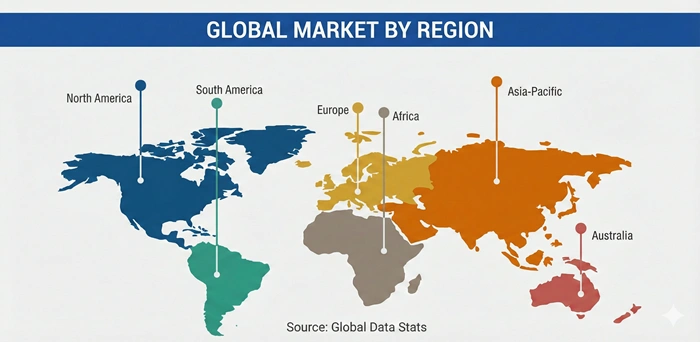
North America maintains commanding leadership in the medical washers disinfectors market with approximately 39% regional share, valued at USD 1.37 billion in 2025 and projected to reach USD 2.79 billion by 2033, growing at a CAGR of 9.24% during the forecast period. The region's dominance stems from sophisticated healthcare infrastructure, substantial capital equipment budgets, and comprehensive regulatory frameworks mandating validated instrument reprocessing across all clinical settings. The United States drives regional growth with over 50 million annual surgical procedures creating massive demand for high-capacity automated decontamination systems in hospitals, ambulatory surgical centers, and specialty clinics throughout the country.
Stringent FDA regulations, CDC guidelines, and OSHA requirements enforce rigorous compliance standards that compel healthcare facilities to invest in advanced washer-disinfector technologies offering digital cycle monitoring, automated documentation, and complete audit traceability. The rapid proliferation of ambulatory surgical centers performing outpatient procedures is accelerating adoption of compact, energy-efficient units designed for high-turnover environments with space constraints. Leading manufacturers including STERIS, Getinge, and Cantel Medical maintain strong market presence through extensive distribution networks, comprehensive service programs, and continuous product innovation addressing evolving infection control challenges. Regional growth is further supported by increasing adoption of robotic surgical systems requiring specialized instrument reprocessing and the ongoing transition toward smart, IoT-enabled sterilization platforms that integrate seamlessly with hospital information management systems.
Asia-Pacific Regional Analysis
Healthcare Infrastructure Expansion and Medical Tourism Growth Drive Fastest Regional Market Acceleration
Asia-Pacific represents the fastest-growing region in the medical washers disinfectors market, projected to achieve the highest CAGR during the forecast period driven by substantial healthcare infrastructure investments and expanding medical tourism industries. Countries including China, India, Japan, South Korea, and Southeast Asian nations are witnessing rapid hospital construction, facility modernization programs, and growing surgical procedure volumes that necessitate efficient, validated instrument reprocessing solutions. Government initiatives promoting universal healthcare access combined with rising middle-class populations are fueling demand for quality medical services with international sterilization standards across public and private healthcare sectors.
The region's burgeoning medical tourism industry is particularly influential in driving adoption of advanced washer-disinfector technologies as destination hospitals seek international accreditation credentials from organizations such as Joint Commission International. Facilities in Thailand, Singapore, India, and Malaysia are investing heavily in centralized sterile processing departments equipped with automated systems that demonstrate compliance with Western infection control protocols to attract international patients. Major manufacturers including Olympus Corporation, SHINVA Medical, and Getinge are expanding regional operations through strategic partnerships, local manufacturing facilities, and tailored product offerings designed for emerging market requirements. The integration of IoT-enabled smart technologies allows these facilities to scale operations efficiently while ensuring rigorous hygiene standards required for complex, robotic-assisted procedures, positioning Asia-Pacific for sustained market expansion through 2033.
Top Key Players
-
STERIS (United States)
-
Getinge AB (Sweden)
-
Olympus Corporation (Japan)
-
Tuttnauer (Netherlands)
-
ECOLAB (United States)
-
Steelco S.p.A. (Italy)
-
MELAG Medizintechnik GmbH & Co. KG (Germany)
-
SHINVA Medical Instrument Co., Ltd. (China)
-
Skytron, LLC (United States)
-
COLTENE Group (Switzerland)
-
AT-OS S.r.l. (Italy)
-
Belimed AG (Switzerland)
-
Miele Professional (Germany)
-
Cantel Medical (United States)
Recent Developments
-
Getinge AB (2025) - Launched the Aquadis 44 washer-disinfector model emphasizing utility efficiency and sustainability through dynamic water filling and heat recovery features that minimize resource consumption and operational costs for healthcare facilities
-
SHINVA Medical Instrument Co., Ltd. (2024) - Signed a strategic Memorandum of Understanding with South Korean imaging company Genoray to expand cooperation and strengthen market presence in the Chinese healthcare market through collaborative initiatives
-
Getinge AB (2024) - Introduced Aquadis Index multi-chamber washer-disinfector offering high capacity of up to 18 DIN trays per load with intuitive user interface and full connectivity for data access and real-time monitoring capabilities
-
Olympus Corporation (2025) - Announced comprehensive corporate strategy transformation focusing on AI-powered endoscopy innovation, robotics integration, and cloud-connected solutions to advance endoscopy-enabled care under new CEO leadership
-
STERIS Corporation (2024) - Expanded product portfolio with smart washer-disinfector systems featuring advanced IoT connectivity, predictive maintenance capabilities, and enhanced traceability functions for centralized sterile processing departments
Market Trends
Smart Connectivity and Sustainability Initiatives Reshape Medical Washers Disinfectors Market Landscape
The medical washers disinfectors market is experiencing significant transformation driven by the integration of smart connectivity features and environmental sustainability priorities across healthcare facilities. Manufacturers are developing IoT-enabled platforms that provide real-time telemetry tracking of cycle parameters, chemical consumption patterns, and equipment performance metrics accessible through cloud-based dashboards. These intelligent systems facilitate predictive maintenance scheduling that prevents unexpected downtime, optimize detergent usage to reduce operational costs, and generate automated compliance documentation that streamlines regulatory audits. Healthcare administrators increasingly prioritize connected equipment that integrates seamlessly with hospital information management systems, enabling comprehensive instrument tracking from contamination through final sterilization verification across centralized sterile processing departments.
Sustainability considerations are fundamentally influencing product development strategies as healthcare organizations pursue environmental, social, and governance objectives while managing operational expenses. Advanced washer-disinfector models incorporate closed-loop water recycling systems, energy-efficient heating technologies, and compatibility with biodegradable chemical formulations that substantially reduce utility consumption and environmental impact. Manufacturers are engineering high-efficiency systems that meet corporate sustainability mandates without compromising disinfection efficacy or cycle speed, addressing the dual priorities of infection control excellence and responsible resource stewardship. This convergence of digital transformation and sustainability innovation is reshaping competitive dynamics and purchasing decisions throughout the global medical washers disinfectors market.
Segments Covered in the Report
By Product Type
-
Medical Washer-Disinfectors
-
Automated Endoscope Reprocessors
-
Ultrasonic and Auxiliary Cleaners
-
Accessories and Consumables
By Technology
-
Thermo-Disinfection Systems
-
Ultrasonic Cleaning Systems
-
High-Pressure Spray and Cascade Washers
-
Other Technology Types
By End-User
-
Hospitals and Surgical Centers
-
Ambulatory Care and Specialty Clinics
-
Diagnostic and Imaging Centers
-
Diagnostic Laboratories
-
Other End-Users
By Application
-
General Surgery Instrument Processing
-
Endoscope Cleaning and Reprocessing
-
Dental and ENT Instruments Cleaning
-
Anesthesia and Critical Care Accessories
-
Other Clinical Instrument Processing
By Distribution Channel
-
Direct OEM Sales
-
Distributors and Dealers
-
Online and E-Commerce Platforms
By Region
-
North America (United States, Canada, Mexico)
-
Europe (Germany, United Kingdom, France, Italy, Spain, Rest of Europe)
-
Asia-Pacific (China, India, Japan, South Korea, Australia, Southeast Asia, Rest of Asia-Pacific)
-
Latin America (Brazil, Argentina, Rest of Latin America)
-
Middle East and Africa (GCC Countries, South Africa, Rest of MEA)
Frequently Asked Questions
Question 1: What is the projected market size for medical washers disinfectors by 2033?
Answer: The global medical washers disinfectors market is expected to reach approximately USD 7.99 billion by 2033. The market is growing at a CAGR of 8.90% during the forecast period from 2026 to 2033.
Question 2: Which region dominates the medical washers disinfectors market currently?
Answer: North America leads the medical washers disinfectors market with the largest regional share of approximately 39% in 2025. The region's dominance is attributed to advanced healthcare infrastructure and stringent infection control regulations.
Question 3: What are the primary growth drivers for the medical washers disinfectors market?
Answer: The medical washers disinfectors market growth is driven by rising hospital-acquired infections, increasing surgical procedure volumes, stringent regulatory compliance requirements, and expanding ambulatory surgical center infrastructure. Technological advancements in automated sterilization systems further accelerate market expansion.
Question 4: Which end-user segment holds the largest share in the medical washers disinfectors market?
Answer: Hospitals and surgical centers represent the dominant end-user segment with approximately 62% market share in 2025. This leadership reflects high-volume instrument processing requirements and critical patient safety mandates in these facilities.
Question 5: What is the fastest-growing product type in the medical washers disinfectors market?
Answer: Automated endoscope reprocessors are experiencing the fastest growth in the medical washers disinfectors market during the forecast period. This acceleration is driven by increasing endoscopic procedures globally and the need for validated high-level disinfection that eliminates human error.