
Medical Textiles Market Overview
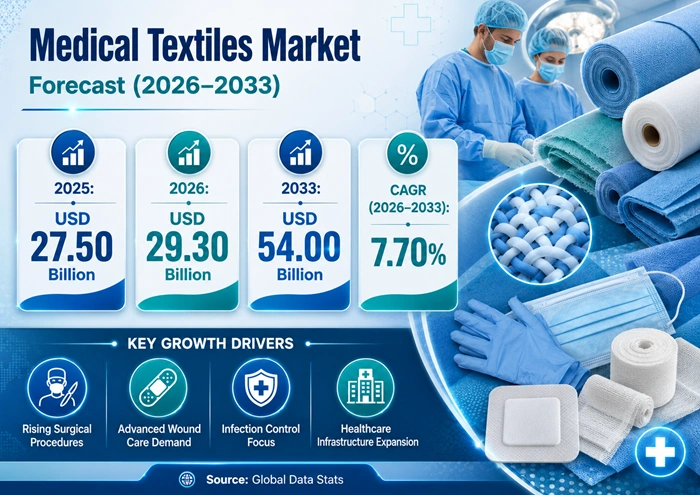
The global Medical Textiles market size is valued at USD 27.50 billion in 2025 and is predicted to increase from USD 29.30 billion in 2026 to approximately USD 54.00 billion by 2033, growing at a CAGR of 7.70% from 2026 to 2033.
Medical textiles are a specialized category of technical textiles designed and engineered for use in healthcare and medical applications — encompassing a broad spectrum of products ranging from wound dressings, surgical drapes, and protective garments to implantable devices such as sutures, vascular grafts, hernia meshes, and cardiac support fabrics. These materials are developed to meet stringent biocompatibility, sterility, durability, and performance standards mandated by healthcare regulatory bodies globally — combining textile engineering expertise with advanced biomaterial science to produce functional clinical products that support patient care across surgical, wound management, orthopedic, cardiovascular, and hygiene applications. The Medical Textiles market is experiencing robust and sustained growth driven by rising surgical procedure volumes globally, growing aging populations with complex wound care and orthopedic needs, expanding hygiene product consumption in emerging markets, and the progressive development of advanced fiber technologies including smart textiles, bioactive fibers, and antimicrobial fabrics that are expanding the functional capability and clinical application range of healthcare textile products.
AI Impact on the Medical Textiles Industry
Artificial Intelligence Is Transforming Smart Textile Development, Wound Monitoring Capabilities, Predictive Inventory Management, Quality Control Automation, and Personalized Implantable Textile Design in Ways That Are Meaningfully Advancing the Clinical Performance and Commercial Scale of Medical Textile Products Across Global Healthcare Settings*
Artificial intelligence is delivering commercially significant contributions to the Medical Textiles market through the development of AI-enabled smart textile platforms — where sensor-integrated fabrics combined with machine learning algorithms can continuously monitor wound healing parameters including temperature, moisture levels, exudate composition, pH changes, and microbial activity in real time — enabling clinicians and remote monitoring systems to detect wound infection or healing complications earlier than traditional visual wound assessment allows. Companies including Smith+Nephew, Mölnlycke Health Care, and technology-textile hybrid startups are advancing AI-integrated wound monitoring textile platforms that combine biosensor-embedded dressings with cloud-connected data analytics — creating a new generation of intelligent wound care products that generate continuous clinical data, support remote patient monitoring programs, and enable earlier clinical intervention when wound healing deviates from expected trajectories. The integration of AI-powered quality control systems into medical textile manufacturing — where machine vision and deep learning algorithms inspect fabric weave consistency, fiber density uniformity, surface contamination, and dimensional accuracy at production line speeds — is simultaneously improving the quality assurance standards and reducing defect rates in medical textile manufacturing operations, supporting the stringent regulatory compliance requirements that govern medical-grade textile production globally.
AI is additionally transforming personalized implantable textile design within the medical textiles market — where machine learning models analyze patient anatomical imaging data, tissue mechanical property measurements, and biomechanical simulation outputs to optimize the structural design, fiber architecture, and material selection of patient-specific implantable textile devices such as hernia meshes, vascular grafts, and ligament repair scaffolds. This AI-guided personalized implant design capability is enabling medical textile engineers to develop implants better matched to individual patient anatomy and tissue mechanical requirements — reducing complication rates, improving long-term implant performance, and differentiating premium implantable textile products in the competitive medical device market. The progressive application of generative AI to advanced fiber material discovery — where AI systems explore vast chemical space to identify novel bioabsorbable polymer formulations, antimicrobial surface treatment chemistries, and smart material compositions — is further accelerating the pace of medical textile product innovation, shortening development timelines and expanding the functional capability of next-generation healthcare textile materials.
Growth Factors
Rising Surgical Procedure Volumes, Growing Aging Population with Chronic Wound and Orthopedic Needs, Expanding Healthcare Infrastructure in Emerging Markets, and Advanced Fiber Technology Innovation Driving the Medical Textiles Market's Sustained Revenue Growth*
The most structurally significant and commercially durable growth driver sustaining the Medical Textiles market is the continuous global increase in surgical procedure volumes — driven by the expanding elderly population requiring elective orthopedic, cardiovascular, and general surgical interventions, rising chronic disease burden generating growing surgical caseloads across oncology, diabetes-related wound surgery, and vascular disease, and expanding access to surgical care in emerging market healthcare systems that are progressively building hospital infrastructure and training surgical specialist workforces. Every surgical procedure generates demand for medical textile products including surgical gowns, drapes, and packs used in the operating room, as well as post-operative wound dressings, sutures, and — in the case of hernia repair, cardiovascular, and orthopedic procedures — implantable textile devices that represent higher-value segments within the broader medical textiles product portfolio. The progressive shift toward minimally invasive and robotic-assisted surgical techniques — while reducing the tissue trauma and recovery time of individual procedures — is simultaneously increasing the total number of procedures performed annually by making surgery accessible to older and more medically complex patients who would not have tolerated open surgical approaches, sustainably expanding the total surgical textile consumption base.
The rapidly growing global aging population represents the second most structurally important growth driver for the Medical Textiles market — where the progressive increase in the proportion of adults aged 65 and over across North America, Europe, Japan, and increasingly China and India is generating expanding demand for chronic wound care textiles, orthopedic support garments, incontinence products, compression therapy products, and hygiene textiles that address the specific clinical needs of elderly patient populations with higher rates of diabetes, peripheral vascular disease, mobility impairment, and skin fragility. Diabetic foot ulcers alone — affecting approximately 15–25% of the global 537 million diabetic population — generate enormous and growing demand for advanced wound care textile products including antimicrobial dressings, moisture management wound interfaces, and compression bandaging systems that are among the highest-value per-unit product categories in the medical textiles portfolio. The convergence of aging population growth, rising diabetes and obesity prevalence, and expanding clinical evidence supporting advanced wound dressing superiority over traditional gauze-based wound care is collectively generating a large and continuously expanding addressable market for premium medical textile wound care products.
Market Outlook
With Smart Textile Technology Maturing, Bioabsorbable Implant Material Innovation Expanding, Emerging Market Healthcare Infrastructure Growing, and Sustainability-Driven Material Innovation Accelerating, the Medical Textiles Market Outlook Is Strongly Positive Through 2033*
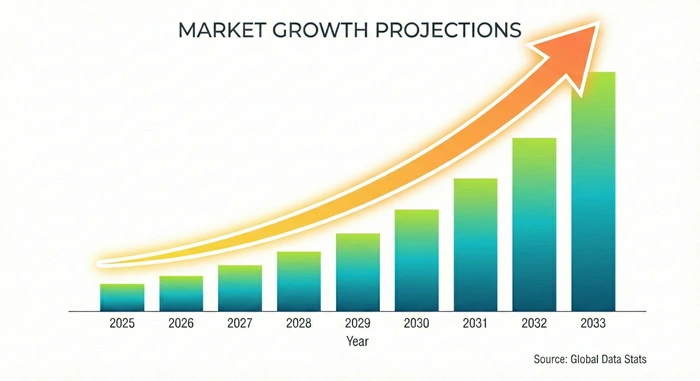
The long-term outlook for the Medical Textiles market is firmly positive and well-supported — with a compelling combination of technology innovation across smart textiles, advanced biomaterials, antimicrobial fiber technologies, and sustainable production methods collectively expected to sustain the market's strong near double-digit revenue growth throughout the 2026–2033 forecast period. The most commercially transformative product development direction within medical textiles is the progressive maturation of smart textile platforms — where electronically integrated fabrics incorporating biosensors, drug delivery mechanisms, thermoregulation systems, and wireless communication capabilities are transitioning from laboratory research demonstrations into commercially viable clinical products validated for wound monitoring, patient physiological monitoring, and controlled drug release applications across hospital and home care settings. As manufacturing costs for electronic textile integration decline and miniaturization advances enable sensor embedding without compromising textile comfort and mechanical performance, smart medical textiles are expected to progressively capture premium market segments — particularly in chronic wound management, post-surgical monitoring, and elderly care applications — generating meaningfully higher average revenue per product unit than conventional medical textile products.
The growing healthcare system emphasis on infection prevention and control — driven by the mounting clinical and economic burden of healthcare-associated infections globally — is generating sustained demand for antimicrobial medical textiles incorporating silver-based, copper-based, and quaternary ammonium compound antimicrobial surface treatments that reduce pathogen transmission through clinical contact surfaces including patient gowns, bed linen, surgical drapes, and wound dressings. The progressive development and clinical validation of bioabsorbable synthetic fiber implants — where polymer chemistry innovations enable precise control of implant mechanical properties and degradation timelines matched to tissue healing requirements — is simultaneously expanding the premium implantable medical textiles segment with new products offering superior clinical performance compared to existing permanent synthetic mesh and suture products in hernia, tendon, ligament, and cardiovascular repair applications. Emerging market healthcare system development across Asia Pacific, Latin America, and the Middle East is additionally creating large new geographic medical textiles markets — driven by hospital infrastructure construction, rising surgical volumes, growing hygiene product consumption, and expanding medical device regulatory framework development — that will generate substantial market revenue growth during the latter years of the 2026–2033 forecast period.
Expert Speaks
-
Roland Diggelmann, CEO, Roche Diagnostics (Healthcare Division) — "The intersection of advanced material science and digital health technology in medical textiles is creating genuinely new clinical capabilities — where intelligent wound monitoring fabrics, biosensor-integrated patient garments, and drug-eluting implantable textiles are progressively expanding what textile-based medical products can contribute to patient care outcomes. We are actively observing this space as smart medical textiles move from research demonstration into commercial clinical deployment — recognizing that digitally integrated textile platforms represent an important frontier of medical device innovation with meaningful implications for remote patient monitoring, surgical outcome optimization, and chronic disease management."
-
Marc Casper, CEO, Thermo Fisher Scientific — "The demand for advanced biomaterials — including specialized medical-grade fibers, bioabsorbable polymers, and antimicrobial surface treatment systems — is a growing and strategically important segment of the broader life sciences and healthcare materials market that reflects healthcare providers' increasing expectations for higher-performance, clinically validated technical textile solutions. Material innovation in medical textiles — particularly the development of next-generation bioabsorbable implant polymers and smart fiber composites — requires exactly the kind of precision material science and application development expertise where Thermo Fisher's advanced materials capabilities can deliver meaningful value to medical textile manufacturers."
-
Gary Guthart, CEO, Intuitive Surgical — "As robotic-assisted surgical procedures become progressively more prevalent globally — expanding access to minimally invasive surgery across a broader range of surgical indications and patient populations — the demand for high-performance surgical textile consumables including surgical drapes, gowns, and instrument protection fabrics optimized for robotic surgical workflows is growing in parallel with robotic system adoption. Medical textile manufacturers that develop products specifically engineered for the performance requirements of robotic and minimally invasive surgical environments will find strong commercial demand as this surgical technology transition continues to accelerate."
Key Report Takeaways
-
Europe dominates the Medical Textiles market, holding approximately 37.20% of global market share in 2025, driven by the region's strong technical textile manufacturing heritage and advanced textile engineering expertise across Germany, France, the United Kingdom, and Switzerland, the most stringent medical device regulatory quality standards under EU MDR that drive adoption of premium-quality medical textile products, the largest concentration of specialized medical textile manufacturers including Freudenberg Performance Materials, Ahlstrom, and Beaulieu International, and the high healthcare expenditure per capita that supports strong adoption of advanced wound care, implantable, and smart textile healthcare products.
-
Asia Pacific is the fastest-growing regional market for medical textiles, projected to expand at a CAGR of approximately 9.60% from 2026 to 2033, driven by China's enormous and rapidly expanding hospital construction program generating growing surgical textile and hygiene product demand, India's rapidly growing healthcare infrastructure and surgical volume, the large and growing elderly populations of Japan and South Korea generating chronic wound care and orthopedic textile needs, and the progressive development of domestic medical textile manufacturing capabilities across China, India, and Southeast Asia that are expanding regional supply capacity and market penetration.
-
Non-implantable textiles are the dominant product type segment, accounting for approximately 54.80% of total market revenue in 2025, reflecting the high-volume and recurring consumption of wound dressings, bandages, surgical gowns, drapes, and hygiene products that generate continuous and predictable medical textile revenue across hospital, ambulatory care, home care, and institutional hygiene settings globally.
-
Wound care is the dominant application segment, contributing approximately 32.60% of total market revenue in 2025, driven by the enormous global burden of chronic wounds including diabetic foot ulcers, pressure injuries, venous leg ulcers, and post-surgical wounds that generate large and recurring advanced wound dressing consumption across hospital, outpatient, and home care settings — with premium advanced wound care textile products increasingly displacing traditional gauze-based wound management approaches as clinical evidence supporting superior healing outcomes accumulates.
-
Nonwoven technology is the dominant manufacturing technology segment, contributing approximately 48.30% of total market revenue in 2025, reflecting the cost-effectiveness, fluid barrier performance, sterility maintenance, and disposability advantages of nonwoven fabrics for high-volume single-use medical textile applications including surgical drapes, gowns, wound dressings, and hygiene products — making nonwoven manufacturing the most commercially scaled technology within the medical textiles production ecosystem.
-
Smart and electrospun textiles represent the fastest-growing technology segment, expected to expand at a CAGR of approximately 12.40% through 2033, driven by the progressive maturation and clinical commercialization of sensor-integrated wound monitoring fabrics, drug-eluting nanofibrous wound dressings, and electrospun scaffold materials for tissue engineering applications — collectively establishing electrospinning and smart textile integration as the most innovation-intensive and highest-value growth frontier within the medical textiles technology portfolio.
Market Scope
| Report Coverage | Details |
|---|---|
| Market Size by 2033 | USD 54.00 Billion |
| Market Size by 2025 | USD 27.50 Billion |
| Market Size by 2026 | USD 29.30 Billion |
| Market Growth Rate (2026–2033) | CAGR of 7.70% |
| Dominating Region | Europe |
| Fastest Growing Region | Asia Pacific |
| Base Year | 2025 |
| Forecast Period | 2026–2033 |
| Segments Covered | Product Type, Raw Material, Technology, Application, End User |
| Regions Covered | North America, Europe, Asia Pacific, Latin America, Middle East & Africa |
Market Dynamics
Drivers Impact Analysis
Rising Global Surgical Volumes, Aging Population Chronic Care Needs, Emerging Market Healthcare Infrastructure Expansion, and Advanced Fiber Technology Innovation Are the Core Pillars Driving the Medical Textiles Market's Strong Revenue Growth*
| Driver | ≈ % Impact on CAGR Forecast | Geographic Relevance | Impact Timeline |
|---|---|---|---|
| Rising global surgical procedure volumes and hospital infrastructure investment | ~31% | Global | Short to Long-term |
| Growing aging population with chronic wound, orthopedic, and hygiene textile needs | ~28% | North America, Europe, Asia Pacific | Short to Long-term |
| Advanced fiber technology innovation — smart textiles, antimicrobial fibers, bioabsorbable polymers | ~24% | North America, Europe | Short to Medium-term |
| Emerging market healthcare infrastructure development generating new textile consumption | ~17% | Asia Pacific, Latin America, MEA | Short to Long-term |
The most commercially durable and structurally significant driver of the Medical Textiles market is the continuous global increase in surgical procedure volumes — driven by aging populations requiring growing rates of orthopedic joint replacement, cardiovascular intervention, hernia repair, and cancer surgery, combined with expanding healthcare access in emerging markets that are progressively bringing surgical care to previously underserved patient populations across Asia, Africa, and Latin America. Each surgical procedure generates demand across multiple medical textile product categories — from single-use operating room protective textile products consumed in large volumes per procedure, to implantable textile devices such as hernia meshes and vascular grafts that represent higher-value per-unit revenue contributors — making surgical volume growth a broad and multi-category driver of medical textiles market revenue expansion. The progressive adoption of robotic and minimally invasive surgical techniques — while changing procedure dynamics — is simultaneously increasing total annual procedure volumes by enabling surgery for older and more complex patients, sustainably expanding the medical textile consumption base throughout the forecast period.
The advanced fiber technology innovation wave within the medical textiles market — encompassing antimicrobial fiber treatments, bioabsorbable polymer development, nanofiber electrospinning, smart sensor integration, and drug-eluting fabric systems — is generating a premium product innovation layer that delivers meaningfully higher average revenue per unit compared to conventional medical textile products, amplifying the revenue growth impact of volume expansion with a simultaneous per-unit revenue expansion effect. Antimicrobial medical textiles — incorporating silver nanoparticles, copper ions, or chitosan-based biocidal surface treatments into wound dressings, surgical drapes, and patient care fabrics — are commanding premium pricing over conventional uncoated medical textiles as clinical evidence supporting their infection prevention benefits in high-risk clinical settings accumulates and infection control program managers incorporate antimicrobial textile specifications into procurement requirements. This technology premium effect is progressively improving the revenue per unit metrics across the medical textiles portfolio — sustaining market value growth at rates meaningfully above underlying volume growth rates as product mix shifts toward advanced, functional, and smart textile categories.
Restraints Impact Analysis
High Regulatory Compliance Requirements, Raw Material Price Volatility, Environmental Sustainability Pressure on Single-Use Products, and Reimbursement Limitations for Advanced Wound Textile Products Restraining Faster Medical Textiles Market Growth*
| Restraint | ≈ % Impact on CAGR Forecast | Geographic Relevance | Impact Timeline |
|---|---|---|---|
| Stringent medical device regulatory compliance requirements increasing development costs and timelines | ~33% | Global | Short to Long-term |
| Raw material price volatility for synthetic fibers, specialty polymers, and natural fiber inputs | ~27% | Global | Short to Long-term |
| Environmental sustainability pressure and single-use medical textile waste management concerns | ~25% | Europe, North America | Short to Medium-term |
| Reimbursement limitations for premium advanced wound care textile products in cost-constrained markets | ~15% | Emerging markets, Rural settings | Short to Medium-term |
The most broadly experienced commercial barrier constraining faster medical textiles market growth is the highly demanding and increasingly complex global medical device regulatory compliance landscape — where medical textile products classified as medical devices under EU MDR, FDA 510(k)/PMA requirements, and equivalent national regulatory frameworks must navigate extensive biocompatibility testing, clinical performance validation, quality management system implementation, and post-market surveillance requirements that increase product development costs and extend time-to-market timelines, particularly for innovative implantable textile devices and smart textile platforms that lack established regulatory pathways. The transition to EU MDR from the less demanding MDD requirements has created particular compliance burden for European medical textile manufacturers — requiring retroactive clinical evidence generation for legacy products and implementation of more comprehensive post-market clinical follow-up systems that represent significant ongoing operational investment. These regulatory compliance investments disproportionately burden smaller and medium-sized medical textile manufacturers that lack the dedicated regulatory affairs resources of large multinational medical device companies — creating market consolidation pressure and potentially slowing the pace at which innovative small company textile technologies achieve market entry.
The significant environmental sustainability challenges posed by the large-scale consumption and disposal of single-use medical textile products — including surgical gowns, drapes, wound dressings, and hygiene products that collectively generate substantial medical waste — are progressively generating regulatory, institutional, and societal pressure on healthcare systems and medical textile manufacturers to develop more sustainable product formats. European healthcare sustainability initiatives — including the EU's healthcare decarbonization strategy and hospital sustainability procurement programs — are progressively mandating reprocessable or biodegradable alternatives to single-use synthetic medical textile products in applications where clinical safety equivalence can be demonstrated — creating both compliance costs and product reformulation investment requirements for medical textile manufacturers serving European healthcare markets. The raw material price volatility experienced in petroleum-derived synthetic fiber feedstocks — particularly polypropylene and polyester — combined with natural fiber supply chain disruptions creates margin pressure for medical textile manufacturers that must balance cost management with quality consistency requirements in a regulated healthcare product environment where material specification changes require regulatory revalidation.
Opportunities Impact Analysis
Smart Textile Commercialization, Bioabsorbable Implant Material Innovation, Sustainable Medical Textile Development, Emerging Market Penetration, and Antimicrobial Textile Adoption Create Significant Medical Textiles Market Opportunities*
| Opportunity | ≈ % Impact on CAGR Forecast | Geographic Relevance | Impact Timeline |
|---|---|---|---|
| Smart textile commercial deployment for wound monitoring and patient physiological sensing | ~32% | North America, Europe | Short to Medium-term |
| Bioabsorbable and biodegradable implantable textile material innovation for premium implant applications | ~25% | North America, Europe | Short to Long-term |
| Sustainable and eco-friendly medical textile development addressing regulatory and institutional demands | ~26% | Europe, North America | Short to Medium-term |
| Emerging market healthcare textile penetration through affordable product development and local manufacturing | ~17% | Asia Pacific, Latin America, MEA | Medium to Long-term |
The most commercially transformative near-term opportunity within the Medical Textiles market is the progressive commercialization of smart textile platforms — where sensor-integrated fabrics for wound monitoring, patient vital sign tracking, and drug-delivery applications are transitioning from research development into clinical product validation and early commercial deployment. The convergence of wearable electronics miniaturization, flexible circuit manufacturing cost reduction, and growing clinical evidence for smart textile diagnostic capability is enabling the development of commercially viable intelligent medical textile products at price points approaching those of current premium conventional medical textile products — creating a real and near-term commercial market opportunity that leading wound care companies including Smith+Nephew, Mölnlycke, and Coloplast are actively pursuing through internal development and strategic acquisition of smart textile technology companies. Smart wound monitoring textiles that enable real-time wound status assessment and remote clinical decision support represent a premium product category that addresses a major clinical unmet need in chronic wound management — where current wound assessment relies on subjective visual inspection at discrete clinical visit intervals — creating strong clinical and economic rationale for adoption in chronic wound care programs across hospital and home care settings.
The growing healthcare system investment in infection prevention and control — driven by the mounting clinical burden of drug-resistant healthcare-associated infections globally — is creating a large and rapidly expanding commercial opportunity for antimicrobial medical textiles across surgical protective clothing, patient care fabrics, wound dressings, and hospital linen applications. The clinical evidence supporting antimicrobial surface-treated medical textiles' effectiveness in reducing bacterial colonization and healthcare-associated infection transmission is progressively strengthening — driving adoption by hospital infection control programs, surgical services procurement departments, and long-term care facility operators seeking measurable infection rate reductions through environmental textile management. The enormous and largely underpenetrated emerging market opportunity — where rapidly expanding healthcare infrastructure investment across China, India, Southeast Asia, Latin America, and the Middle East is generating large new demand for medical grade textile products across wound care, surgical, hygiene, and implantable device categories — represents perhaps the most commercially significant long-term geographic growth opportunity for the global Medical Textiles market throughout and beyond the 2026–2033 forecast period.
Segment Analysis
By Product Type
Non-Implantable Textiles Lead the Medical Textiles Market Revenue While Implantable Textiles Registers the Highest Value Per Unit and Fastest Premium Segment Growth*
Non-implantable textiles hold the dominant position in the Medical Textiles market, accounting for approximately 54.80% of total global market revenue in 2025, driven by the exceptionally high consumption volumes of wound dressings, bandages, surgical gowns, drapes, sterilization wraps, and hygiene products that are used in enormous quantities across global healthcare settings on a single-use or limited-reuse basis — generating continuous, high-frequency, and highly predictable purchasing demand from hospital procurement departments, outpatient care facilities, home health agencies, and institutional hygiene product distributors. Wound dressings represent the largest and most innovation-active subcategory within non-implantable medical textiles — where the transition from simple gauze-based wound management toward advanced moisture management dressings, antimicrobial wound care fabrics, foam dressings, hydrocolloid interfaces, and silver-containing wound treatment textiles is progressively increasing the average revenue per dressing unit and generating premium market growth within the overall high-volume wound dressing segment. North America and Europe collectively generate the majority of non-implantable medical textile revenue — driven by the highest per-capita advanced wound dressing adoption rates, most comprehensive payer reimbursement for premium wound care products, and the highest clinical awareness of advanced wound management textile evidence — while Asia Pacific is the fastest-growing non-implantable textile region, driven by hospital infrastructure expansion and rapidly growing hygiene product consumption across China, India, and Southeast Asian markets. Key companies including Smith+Nephew, Mölnlycke Health Care, Coloplast, 3M Health Care, and Hartmann Group dominate the non-implantable medical textiles segment globally.
Implantable textiles represent the highest-value and most innovation-intensive segment within the Medical Textiles market — where products including sutures, hernia repair meshes, vascular grafts, ligament reconstruction scaffolds, and cardiac support devices must meet the most stringent biocompatibility, mechanical performance, and long-term in vivo durability standards of any medical textile application. This segment is estimated to hold approximately 22.40% of total medical textiles market revenue in 2025 with strong projected growth driven by rising surgical intervention rates and increasing adoption of premium bioabsorbable and antimicrobial implant variants that command higher unit prices than conventional permanent synthetic implants. North America leads implantable medical textile segment revenue — driven by the highest hernia repair, vascular surgery, and orthopedic reconstruction procedure rates, combined with the most advanced regulatory framework for novel implantable textile device approval and the strongest clinical demand for premium implant material innovations. Key companies including Johnson & Johnson MedTech (Ethicon), BD (Bard), Gore Medical, and Cousin Biotech maintain dominant positions in the implantable medical textiles segment through their extensive suture, mesh, and graft product portfolios supported by decades of clinical outcome evidence.
By Application
Wound Care Leads the Medical Textiles Application Revenue While Surgical Applications Maintain Critical Commercial Importance*
Wound care represents the dominant application segment in the Medical Textiles market, accounting for approximately 32.60% of total market revenue in 2025, reflecting the enormous and continuously growing global burden of acute and chronic wounds that generate large, recurring, and high-frequency medical textile product consumption across hospital inpatient, outpatient wound clinics, long-term care, and home care settings. The global diabetic wound burden alone — encompassing the estimated 15–25% of 537 million diabetics who develop foot ulcers requiring active wound management — generates enormous and growing demand for advanced wound care textiles including antimicrobial dressings, moisture-managing foam and hydrocolloid wound interfaces, compression bandaging systems, and advanced biological wound matrix products. North America leads wound care medical textile revenue globally — driven by the highest rates of diabetes-related wound complications, the most comprehensive Medicare and private insurance coverage for advanced wound care products, and the greatest concentration of specialized wound care centers that drive premium wound textile adoption. Asia Pacific is the fastest-growing wound care medical textile region — driven by rapidly rising diabetes prevalence, growing hospital wound care program infrastructure, and increasing physician awareness of advanced wound dressing clinical evidence across China, India, and Southeast Asian healthcare systems. Leading companies including Smith+Nephew, Mölnlycke, Coloplast, Hartmann, and 3M Health Care dominate the wound care medical textile application segment.
Surgical applications represent the second-largest and commercially critical application segment within the medical textiles market — encompassing single-use surgical protective clothing including gowns, drapes, and sterile field covers consumed in large volumes per procedure across hospital operating rooms globally, as well as the growing portfolio of advanced surgical site infection prevention textile products. The surgical textile segment benefits from the consistent and high-volume demand generated by growing global surgical caseloads — where every surgical procedure requires a defined set of textile consumables regardless of procedure type, creating a large, predictable, and continuously growing demand floor. Europe leads surgical application medical textile revenue — driven by the highest per-capita robotic and minimally invasive surgical adoption rates, most stringent surgical site infection prevention program requirements, and the largest concentration of premium surgical textile manufacturers. Key companies including Mölnlycke (Barrier surgical textile brand), Medline Industries, Cardinal Health, and Steris maintain strong positions in the surgical application medical textile segment through comprehensive single-use surgical suite product portfolios.
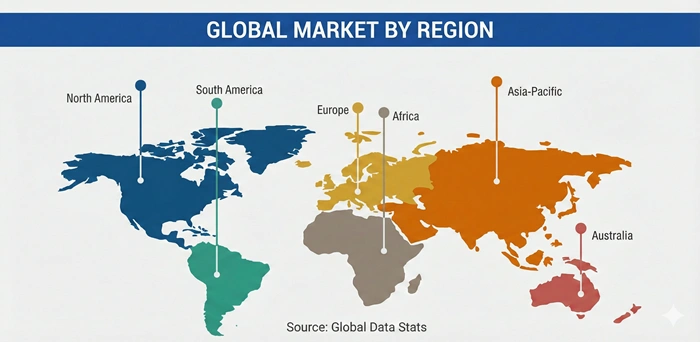
Regional Insights
Europe
Europe Leads the Global Medical Textiles Market With the Strongest Technical Textile Manufacturing Heritage, Most Stringent Regulatory Quality Standards, and Highest Concentration of Specialized Medical Textile Companies*
Europe holds the dominant position in the global Medical Textiles market, accounting for approximately 37.20% of total global market revenue in 2025, and is projected to sustain market leadership at a CAGR of approximately 7.20% from 2026 to 2033. Germany, France, the United Kingdom, and Switzerland collectively account for the majority of European medical textile revenue — driven by these countries' combination of advanced technical textile manufacturing capabilities, the most stringent EU MDR regulatory quality framework driving adoption of premium medical textile products, the highest healthcare expenditure per capita in the EU zone supporting strong demand for advanced wound care, implantable, and smart textile healthcare products, and the largest concentration of specialized medical textile manufacturers. Leading companies commanding the European Medical Textiles market include Freudenberg Performance Materials (Germany), Ahlstrom (Finland), Beaulieu International Group (Belgium), Mölnlycke Health Care (Sweden), Paul Hartmann AG (Germany), Lohmann & Rauscher (Germany), and Smith+Nephew (United Kingdom) — collectively covering the full spectrum of wound care, surgical, implantable, and hygiene medical textile product categories.
The EU Medical Device Regulation's progressive enforcement — with its more demanding clinical evidence requirements, enhanced post-market surveillance mandates, and qualified person for regulatory compliance requirements — is driving European medical textile manufacturers toward higher-quality, better-clinically-validated product portfolios that command premium pricing and support stronger customer loyalty from European hospital procurement departments and regulatory bodies. The strong sustainability focus of European healthcare system procurement programs is additionally stimulating innovation in reusable, biodegradable, and low-environmental-impact medical textile product development within the European market — generating a distinctive product innovation direction that is progressively differentiating European medical textile manufacturers from Asian commodity competitors in global premium market segments. Europe's combination of manufacturing excellence, regulatory leadership, and innovation investment positions it to maintain clear medical textiles market leadership through 2033.
Asia Pacific
Asia Pacific Is the Fastest-Growing Medical Textiles Market at 9.60% CAGR, Driven by China's Hospital Infrastructure Expansion, India's Growing Healthcare Sector, and Rising Hygiene Product Demand Across the Region*
Asia Pacific is the fastest-growing regional segment in the Medical Textiles market, projected to expand at a CAGR of approximately 9.60% from 2026 to 2033 — the highest regional growth rate globally. China is the most commercially significant and rapidly growing Asia Pacific medical textiles market — where the government's ongoing program of hospital construction and upgrading — adding hundreds of new hospital facilities annually — is generating growing demand for surgical textile consumables, wound care products, and hygiene textiles, while simultaneously developing domestic medical textile manufacturing capabilities that are progressively increasing local supply chain depth and cost competitiveness. India represents the second-largest and equally dynamic Asia Pacific medical textiles market — where the country's rapidly expanding private hospital sector, growing surgical volumes driven by rising middle-class healthcare utilization, and large and underserved chronic wound and diabetic foot ulcer patient population collectively create strong demand for medical textile products across wound care, surgical, and hygiene categories. Key companies active in the Asia Pacific Medical Textiles market include 3M India, Johnson & Johnson India, Cardinal Health Asia, Toray Industries (Japan), Asahi Kasei (Japan), and domestic companies including Gujarat Ambuja Exports (India) and Shaoxing Huamei Medical (China) that are developing competitive medical textile capabilities for regional market deployment.
Japan and South Korea represent the most technically advanced Asia Pacific medical textiles markets — with well-established reimbursement coverage for premium wound care and implantable textile products, strong domestic medical textile innovation capabilities in advanced fiber engineering and functional material development, and high clinical awareness of advanced medical textile product clinical evidence. Southeast Asian markets — including Indonesia, Thailand, Malaysia, and Vietnam — are experiencing progressive medical textile adoption growth as healthcare infrastructure investment accelerates, surgical volumes increase, and growing middle-class populations generate rising demand for hospital-quality healthcare services that require standard medical textile consumables. The scale of Asia Pacific's healthcare infrastructure investment programs, combined with its large patient populations and growing clinical sophistication, positions the region as the most commercially dynamic and fastest-growing medical textiles market globally through 2033.
Top Key Players
-
Freudenberg Performance Materials GmbH & Co. KG (Germany)
-
Mölnlycke Health Care AB (Sweden)
-
Smith+Nephew plc (United Kingdom)
-
Paul Hartmann AG (Germany)
-
Ahlstrom Corporation (Finland)
-
Johnson & Johnson MedTech — Ethicon (United States)
-
Cardinal Health Inc. (United States)
-
3M Health Care (United States)
-
Medline Industries LP (United States)
-
Toray Industries Inc. (Japan)
-
Lohmann & Rauscher GmbH & Co. KG (Germany)
-
Coloplast A/S (Denmark)
Recent Developments
-
Smith+Nephew (2025) — Announced the commercial launch of its next-generation PICO 14 single-use negative pressure wound therapy device — integrating a new antimicrobial wound interface textile with enhanced fluid management properties — while reporting strong global growth in its advanced wound management division driven by expanding adoption of its ALLEVYN LIFE foam dressing range in chronic wound care programs across North American and European hospital and home care markets.
-
Mölnlycke Health Care (2024) — Completed the acquisition of a smart wound monitoring technology startup to accelerate development of its next-generation connected wound dressing platform — combining Mölnlycke's established clinical wound management textile expertise with the acquired company's biosensor integration and data analytics capabilities — while simultaneously expanding its Biogel surgical glove and Barrier surgical drape product ranges across Asian and Latin American healthcare markets experiencing strong surgical volume growth.
-
Paul Hartmann AG (2025) — Launched a new line of sustainability-optimized single-use surgical textile products incorporating partially bio-based polypropylene fiber content — addressing growing European hospital sustainability procurement requirements while maintaining full clinical performance compliance with EN 13795 surgical textile standards — and announced a major production capacity expansion at its German manufacturing sites to serve growing global demand for its Foliodress and Hartmann surgical textile product ranges.
-
3M Health Care (2024) — Advanced its Tegaderm wound dressing portfolio with a new antimicrobial transparent film dressing incorporating silver-based active compound surface treatment — addressing growing clinical demand for transparent wound monitoring dressings that simultaneously provide infection prevention protection — while reporting continued strong adoption of its Steri-Drape surgical drape product range in US and European operating room markets and announcing integration of its Health Care division within the newly spun-off Solventum Corporation brand structure.
-
Cardinal Health Inc. (2025) — Strengthened its medical textiles and surgical supply portfolio through a strategic supply agreement with a leading Asian nonwoven fabric manufacturer to secure long-term access to competitively priced medical-grade nonwoven material inputs — while simultaneously expanding its PRO-TECH surgical gown and drape product range with new fluid protection performance tiers designed to meet evolving European EN 13795 and US ANSI/AAMI PB70 surgical textile barrier performance standards at multiple hospital price points.
Market Trends
The Convergence of Smart Textile Sensor Integration, Antimicrobial Fiber Technology Advancement, and Sustainable Medical Textile Development Are the Three Most Commercially Defining Trends Reshaping the Medical Textiles Market Through 2033*
The most commercially transformative structural trend reshaping the Medical Textiles market is the progressive integration of digital sensing and connectivity capabilities into functional medical textile products — where sensor-embedded wound dressings, vital sign monitoring patient garments, and drug-eluting smart implants are transitioning from laboratory concepts into clinically validated commercial products that enable a new generation of data-driven, remotely monitored patient care workflows. This smart textile integration trend is being driven simultaneously by the maturation of flexible biosensor electronics manufacturing, the falling cost of Bluetooth and cellular wireless connectivity module integration, the growing clinical evidence base for remote patient monitoring value in chronic wound and post-surgical care, and the healthcare system demand for cost-effective alternatives to frequent in-person clinical wound assessment visits that smart textile monitoring platforms can meaningfully complement or reduce. The companies that successfully navigate the complex regulatory validation pathway for smart medical textile platforms and demonstrate compelling clinical and economic outcome evidence will establish defensible premium market positions in high-value chronic care textile segments that conventional dressing and garment manufacturers cannot easily replicate.
The growing healthcare system focus on antimicrobial stewardship and infection prevention — driven by the global antimicrobial resistance crisis and the mounting clinical burden of drug-resistant healthcare-associated infections — is simultaneously generating strong and sustained commercial demand for antimicrobial medical textiles across wound care, surgical protective clothing, patient care fabrics, and hospital linen applications. The clinical evidence supporting antimicrobial textile effectiveness is progressively strengthening across multiple infection prevention contexts — from silver-containing wound dressings demonstrating reduced wound biofilm formation and infection rates in chronic wound management trials, to copper-impregnated patient care fabrics demonstrating reduced bacterial surface contamination in hospital ward environment studies — collectively building the evidence base that healthcare procurement programs and infection control specialists require to justify the premium pricing of antimicrobial medical textile products. The integration of antimicrobial textile performance data into hospital infection control monitoring programs — facilitated by digital infection surveillance platforms — is progressively enabling healthcare institutions to quantify the return on investment of antimicrobial textile adoption, accelerating purchasing decisions and supporting the commercial growth of premium antimicrobial medical textile products across global healthcare markets.
Segments Covered in the Report
By Product Type:
-
Non-implantable Textiles
-
Wound Dressings
-
Bandages and Plasters
-
Surgical Gowns and Drapes
-
Bed Linen
-
Implantable Textiles
-
Sutures
-
Vascular Grafts
-
Hernia Mesh
-
Ligament Repair Fabrics
-
Heart Valve Fabrics
-
Extracorporeal Textiles
-
Artificial Kidneys
-
Liver Dialysis Components
-
Heart-Lung Machine Components
-
Healthcare and Hygiene Products
-
Diapers and Incontinence Products
-
Sanitary Napkins
-
Protective Clothing
By Raw Material:
-
Natural Fibers (Cotton, Silk)
-
Synthetic Fibers (Polyester, Polypropylene, Nylon, PTFE)
-
Specialty Fibers (Carbon Fiber, Ceramic Fiber, Absorbable Polymers)
By Technology:
-
Woven
-
Nonwoven
-
Knitted
-
Braided
-
Electrospun
By Application:
-
Wound Care
-
Surgical Applications
-
Orthopedic and Rehabilitation
-
Cardiovascular
-
Hygiene and Infection Control
-
Others
By End User:
-
Hospitals and Clinics
-
Ambulatory Surgical Centers
-
Home Care Settings
-
Research and Academic Institutes
By Region:
-
North America
-
Europe
-
Asia Pacific
-
Latin America
-
Middle East & Africa
Frequently Asked Questions
Question 1: What is the current size of the Medical Textiles market and what is its projected value by 2033?
Answer: The Medical Textiles market was valued at USD 27.50 billion in 2025 and is projected to reach USD 54.00 billion by 2033, growing at a CAGR of 7.70% from 2026 to 2033. This strong growth is driven by rising global surgical procedure volumes, growing aging population chronic wound and orthopedic care needs, advanced fiber technology innovation, and expanding emerging market healthcare infrastructure development.
Question 2: What are the main types of products covered in the Medical Textiles market?
Answer: The Medical Textiles market encompasses four major product type categories — non-implantable textiles including wound dressings, bandages, surgical gowns, and drapes; implantable textiles including sutures, hernia meshes, vascular grafts, and ligament repair scaffolds; extracorporeal device textiles used in dialysis and heart-lung machines; and healthcare and hygiene products including incontinence products, diapers, sanitary napkins, and protective clothing. Each product category serves distinct clinical applications and patient populations — with non-implantable textiles representing the largest revenue segment at approximately 54.80% of total market revenue in 2025, driven by their high-volume and recurring consumption patterns across global healthcare settings.
Question 3: Which region leads the Medical Textiles market and which is growing the fastest?
Answer: Europe leads the Medical Textiles market with approximately 37.20% of global revenue in 2025 — driven by the region's strong technical textile manufacturing heritage, most stringent EU MDR regulatory quality standards, and the highest concentration of specialized medical textile manufacturers including Freudenberg, Mölnlycke, and Hartmann. Asia Pacific is the fastest-growing region at approximately 9.60% CAGR through 2033 — driven by China's hospital infrastructure expansion, India's growing healthcare sector, and rising hygiene product and wound care textile demand across the region's large and rapidly developing healthcare markets.
Question 4: How are smart textiles expected to change the Medical Textiles market in the coming years?
Answer: Smart medical textiles — integrating biosensors, wireless connectivity, and drug delivery systems into functional textile structures — are expected to create a significant premium product category within the Medical Textiles market by enabling real-time wound monitoring, patient physiological sensing, and remotely supervised chronic care management that conventional textile products cannot support. As manufacturing costs for electronic textile integration decline and clinical validation evidence for smart wound monitoring and patient monitoring garments strengthens, smart medical textiles are projected to capture growing market share particularly in chronic wound management and post-surgical monitoring applications — contributing meaningfully to the electrospun and smart textile segment's projected CAGR of approximately 12.40% through 2033.
Question 5: What role does antimicrobial fiber technology play in driving Medical Textiles market growth?
Answer: Antimicrobial fiber technologies — incorporating silver nanoparticles, copper ions, chitosan, or quaternary ammonium compound surface treatments into medical textile products — are driving a significant premium product innovation wave within the Medical Textiles market by addressing the growing clinical priority of healthcare-associated infection prevention across wound care, surgical, and patient care textile applications. Growing healthcare system investment in antimicrobial stewardship programs, combined with strengthening clinical evidence for antimicrobial textile infection prevention effectiveness, is progressively driving adoption of premium antimicrobial medical textile products that command higher pricing than conventional untreated equivalents — contributing to overall medical textiles market revenue growth through improved per-unit revenue realization alongside volume expansion.