
Medical Device Packaging Market Overview
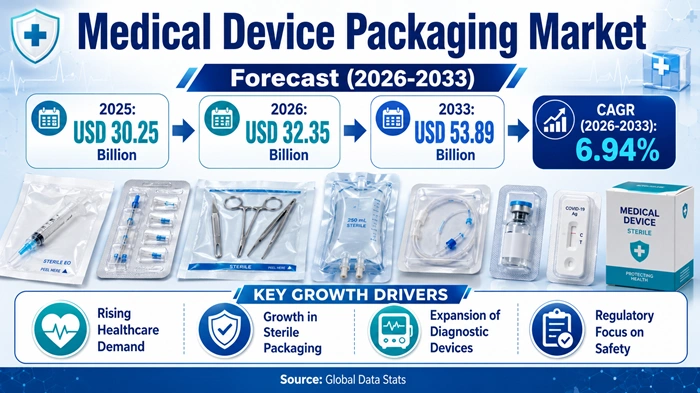
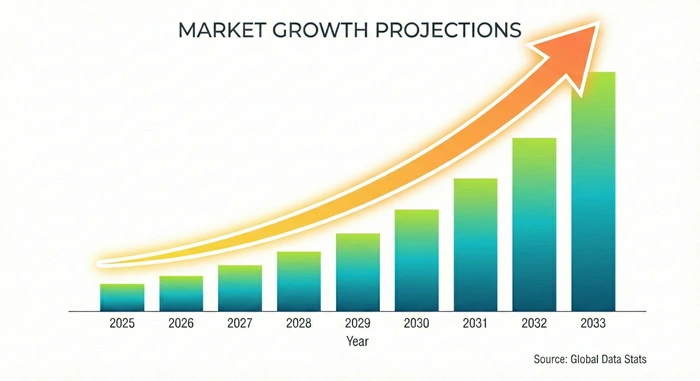
The global medical device packaging market size is valued at USD 30.25 billion in 2025 and is predicted to increase from USD 32.35 billion in 2026 to approximately USD 53.89 billion by 2033, growing at a CAGR of 6.94% from 2026 to 2033.
The medical device packaging market encompasses specialized protective solutions designed to maintain sterility, functionality, and safety of medical equipment throughout manufacturing, distribution, and storage. These packaging systems serve critical functions including physical protection against damage, contamination prevention through sterile barriers, regulatory compliance through proper labeling, and shelf life preservation for diverse medical devices. The packaging must withstand sterilization processes including ethylene oxide, gamma radiation, and autoclave treatments while maintaining seal integrity and providing clear visibility for inspection purposes.
Market expansion is driven by increasing surgical procedure volumes, rising prevalence of chronic diseases requiring medical intervention, and stringent regulatory standards emphasizing patient safety through contamination-free devices. The growing adoption of single-use medical devices, minimally invasive surgical instruments, and home healthcare equipment creates sustained demand for reliable packaging that extends product shelf life while ensuring sterility until point of use. Advanced packaging technologies incorporating smart features, sustainable materials, and enhanced barrier properties are transforming the industry landscape as healthcare providers and manufacturers prioritize both patient safety and environmental responsibility.
AI Impact on the Medical Device Packaging Industry
Revolutionizing Quality Control and Production Efficiency Through Intelligent Systems
Artificial intelligence is transforming the medical device packaging market by introducing advanced quality assurance systems that detect packaging defects with precision exceeding human capabilities. Machine learning algorithms analyze thousands of packages per minute, identifying microscopic seal defects, material inconsistencies, and contamination risks that could compromise sterility and patient safety. AI-powered vision systems verify label accuracy, inspect packaging integrity, and ensure regulatory compliance by cross-referencing specifications with production output in real time. These intelligent monitoring systems reduce rejection rates, minimize waste, and ensure consistent quality standards across high-volume manufacturing operations serving hospitals and healthcare facilities worldwide.
Predictive maintenance enabled by artificial intelligence is optimizing equipment performance and reducing costly downtime in the medical device packaging market. Smart sensors collect operational data from packaging machinery, analyzing vibration patterns, temperature fluctuations, and performance metrics to predict potential failures before they occur. AI-driven scheduling algorithms coordinate complex multi-product operations, balancing production priorities to maximize throughput while meeting stringent delivery commitments for time-sensitive medical supplies. This technological integration enables packaging manufacturers to offer faster turnaround times, higher accuracy, and more competitive pricing that attracts medical device companies seeking reliable outsourcing partners capable of meeting demanding regulatory requirements while maintaining operational efficiency.
Growth Factors
Rising Surgical Volumes and Chronic Disease Prevalence Driving Packaging Demand
The accelerating global burden of chronic diseases and increasing surgical intervention rates are fundamentally reshaping demand patterns in the medical device packaging market. According to the World Health Organization, approximately 234 million major surgical procedures are performed worldwide annually, creating substantial requirements for sterile packaging that ensures device integrity until point of use. The aging global population characterized by longer life expectancies and higher prevalence of age-related conditions including cardiovascular disease, diabetes, and orthopedic disorders generates sustained demand for medical devices requiring specialized packaging. This demographic shift is particularly pronounced in developed markets where healthcare infrastructure supports advanced treatments while emerging economies invest heavily in healthcare system expansion to serve growing patient populations.
The medical device packaging market benefits from fundamental shifts toward minimally invasive procedures and single-use devices that prioritize patient safety through contamination prevention. Modern surgical techniques emphasizing smaller incisions, faster recovery, and reduced infection risks require specialized instruments packaged in sterile formats ensuring immediate usability without reprocessing. The COVID-19 pandemic accelerated adoption of single-use devices across healthcare settings, with facilities prioritizing infection control measures that minimize cross-contamination risks through disposable equipment. Increased healthcare expenditure globally, with spending reaching unprecedented levels as governments and private payers invest in healthcare infrastructure, creates favorable market conditions for continued growth in medical device production and corresponding packaging requirements throughout the forecast period.
Market Outlook
Sustainability Imperatives Reshaping Material Selection and Design Philosophy
The medical device packaging market is experiencing fundamental transformation as sustainability considerations become central to material selection, process design, and end-of-life management strategies. Environmental consciousness among healthcare providers, regulatory pressure from government agencies, and corporate commitments to carbon neutrality are compelling manufacturers to develop recyclable plastics, paper-based solutions, and low-waste design formats that maintain sterility requirements while reducing environmental impact. Industry leaders are establishing ambitious targets including carbon-neutral packaging by 2030, driving innovation in bio-based materials, recycled content integration, and circular economy principles that address mounting concerns about medical waste accumulation in landfills and oceans.
Smart packaging integration incorporating radio frequency identification, near field communication, and Internet of Things technologies is opening new frontiers in the medical device packaging market. These advanced solutions enable real-time tracking and traceability throughout supply chains, ensuring compliance with regulatory requirements while improving inventory management and preventing counterfeit devices from entering healthcare facilities. IoT-enabled packaging monitors environmental conditions including temperature and humidity during shipping and storage, particularly critical for sensitive products like biologics, vaccines, and diagnostic devices requiring controlled environments. The convergence of packaging with digital technologies reflects broader healthcare digitization trends where packaging becomes an active participant in supply chain visibility, patient safety assurance, and regulatory compliance demonstration throughout the product lifecycle.
Expert Speaks
-
Peter Konieczny, CEO of Amcor, stated that the company is gaining momentum with synergy realization and has solid pipelines which continue to grow, emphasizing that they are now seeing the quality of the combined business as the global leader in consumer packaging and dispensing solutions for nutrition, health, beauty, and wellness.
-
Michael A. Mussallem, Chairman and CEO of Edwards Lifesciences, emphasized that their strong year-to-date financial performance demonstrates the strength of their market-leading product portfolio, believing their strategy of focused innovation can transform patient care and drive value into the healthcare system and to shareholders.
-
David Dvorak, President and CEO of Zimmer Biomet, highlighted that the combination allows them to repurpose dollars into more differentiated innovation and address unmet clinical needs in a more aggressive way because of the scale they have as a business, not just in large joints but in other faster-growing product categories.
Key Report Takeaways
-
Europe dominates the medical device packaging market with the largest regional share accounting for approximately 43% of global market value in 2025, driven by stringent regulatory standards, advanced healthcare infrastructure, concentration of leading medical technology companies, and strong emphasis on sustainable packaging solutions across Germany, France, and the United Kingdom.
-
Asia Pacific represents the fastest-growing regional market with projected CAGR of 8.08% during the forecast period from 2026 to 2033, fueled by expanding healthcare infrastructure in emerging economies including China and India, rising medical tourism, increasing domestic medical device manufacturing, and growing patient populations requiring affordable yet compliant packaging solutions.
-
Pouches and bags segment commands the dominant product position holding approximately 47% market share in 2025, preferred for their flexible packaging capabilities serving small to large medical devices, excellent barrier properties against moisture and gases, cost-effectiveness, and high product-to-package ratios enabling efficient storage and transportation.
-
Sterile packaging applications lead the application segment representing over 58% of total market consumption, driven by critical requirements for contamination prevention in surgical implants, invasive devices, and medical supplies requiring sterility maintenance throughout distribution and storage until point of use.
-
Plastic materials dominate the material segment accounting for approximately 52% market share in 2025, favored for their lightweight characteristics, flexibility, cost-effectiveness, excellent barrier properties, and compatibility with various sterilization methods including ethylene oxide and gamma radiation.
-
In-vitro diagnostics segment positioned as fastest-growing application category with anticipated CAGR of 7.2% through 2033, driven by increasing adoption of diagnostic testing for chronic disease monitoring, infectious disease detection, and personalized medicine applications requiring specialized packaging protecting sensitive reagents and testing components.
Market Scope
| Report Coverage | Details |
|---|---|
| Market Size by 2033 | USD 53.89 Billion |
| Market Size by 2025 | USD 30.25 Billion |
| Market Size by 2026 | USD 32.35 Billion |
| Market Growth Rate from 2026 to 2033 | CAGR of 6.94% |
| Dominating Region | Europe |
| Fastest Growing Region | Asia Pacific |
| Base Year | 2025 |
| Forecast Period | 2026 to 2033 |
| Segments Covered | By Material, By Product, By Application, By End User, and By Region |
| Regions Covered | North America, Europe, Asia Pacific, Latin America, and Middle East & Africa |
Market Dynamics
Drivers Impact Analysis
Stringent Regulatory Requirements Elevating Packaging Standards Globally
| Factor | (≈) % Impact on CAGR Forecast | Geographic Relevance | Impact Timeline |
|---|---|---|---|
| Regulatory Compliance | +1.1% | Global, strongest in North America and Europe | 2025-2033 |
| Surgical Volume Growth | +1.0% | Global | 2026-2033 |
| Single-Use Device Adoption | +0.9% | North America, Europe, Asia Pacific | 2025-2032 |
Increasingly stringent regulatory frameworks governing medical device safety and packaging compliance are driving substantial investments and innovation in the medical device packaging market. Regulatory bodies including the FDA in the United States, EMA in Europe, and PMDA in Japan enforce comprehensive standards addressing packaging material biocompatibility, sterilization validation, seal integrity testing, and labeling requirements that ensure patient safety throughout product lifecycles. These regulations mandate extensive documentation, quality management systems, and regular audits that create significant compliance burdens while simultaneously elevating industry standards and eliminating substandard packaging that could compromise device sterility or functionality.
The medical device packaging market benefits from regulatory emphasis on contamination prevention and device sterilization that necessitates advanced sterile packaging solutions. Healthcare-associated infections affecting millions of patients annually drive regulatory focus on packaging systems maintaining sterility barriers protecting devices from microbial contamination during storage and handling. Manufacturers invest heavily in validation protocols demonstrating packaging performance under various sterilization methods, environmental conditions, and distribution scenarios to satisfy regulatory requirements. This regulatory pressure creates competitive advantages for established packaging providers with proven compliance track records while presenting barriers to entry for new market participants lacking resources to navigate complex regulatory landscapes across multiple jurisdictions.
Restraints Impact Analysis
High Material Costs and Sterilization Compatibility Challenges Constraining Growth
| Factor | (≈) % Impact on CAGR Forecast | Geographic Relevance | Impact Timeline |
|---|---|---|---|
| Material Costs | -0.7% | Global | 2025-2033 |
| Sterilization Limitations | -0.6% | Global | 2026-2032 |
| Environmental Regulations | -0.5% | Europe, North America | 2026-2033 |
The medical device packaging market faces significant challenges from elevated material costs associated with specialized packaging substrates meeting stringent safety and performance requirements. Medical-grade materials including high-barrier films, Tyvek-based materials, and specialty polymers command premium pricing compared to conventional packaging substrates due to biocompatibility testing, regulatory compliance documentation, and quality assurance processes ensuring suitability for medical applications. These material costs create pricing pressures particularly for smaller medical device manufacturers operating on thin margins while attempting to maintain competitive positioning in cost-sensitive healthcare markets where procurement departments scrutinize packaging expenditures alongside device costs.
Sterilization compatibility requirements present ongoing technical challenges in the medical device packaging market as different sterilization methods impose distinct demands on packaging materials. Ethylene oxide sterilization requires packaging porosity allowing gas penetration while maintaining microbial barriers, gamma radiation demands materials resistant to degradation from high-energy exposure, and autoclave processing necessitates heat and moisture resistance without seal failure or material deformation. These diverse requirements limit material options and complicate packaging design, particularly for novel medical devices employing innovative materials or configurations lacking established packaging precedents. Additionally, growing environmental regulations targeting plastic waste and single-use packaging create tensions between sustainability mandates and medical safety requirements demanding sterile barriers with proven contamination prevention performance.
Opportunities Impact Analysis
Smart Packaging Technologies Creating Value-Added Differentiation
| Factor | (≈) % Impact on CAGR Forecast | Geographic Relevance | Impact Timeline |
|---|---|---|---|
| Smart Packaging Integration | +0.9% | North America, Europe, Asia Pacific | 2027-2033 |
| Home Healthcare Expansion | +0.8% | Global | 2026-2033 |
| Emerging Market Growth | +1.0% | Asia Pacific, Latin America | 2025-2032 |
The integration of smart packaging technologies including RFID, NFC, and IoT capabilities presents substantial differentiation opportunities in the medical device packaging market. These advanced solutions enable real-time tracking throughout complex supply chains, providing visibility from manufacturing facilities through distribution networks to healthcare providers ensuring regulatory compliance and preventing counterfeit devices. Temperature and humidity monitoring capabilities embedded in smart packaging protect sensitive devices including biologics and diagnostics requiring controlled environments, alerting stakeholders to storage condition deviations that could compromise device performance or patient safety. The data generated by smart packaging systems supports predictive analytics improving inventory management, reducing waste from expired products, and optimizing supply chain efficiency throughout healthcare delivery systems.
The expanding home healthcare market driven by aging populations, chronic disease prevalence, and cost containment initiatives creates growing opportunities for the medical device packaging market. Home-use medical devices including glucose monitors, insulin delivery systems, wound care products, and remote patient monitoring equipment require packaging designed for consumer handling rather than clinical settings, emphasizing ease of use, clear instructions, and packaging durability withstanding home storage conditions. This shift toward distributed healthcare delivery necessitates packaging innovations addressing unique challenges including child-resistant features, senior-friendly opening mechanisms, and compact formats suitable for residential environments with limited storage space. Manufacturers developing expertise in consumer-oriented medical packaging position themselves to capture expanding market segments as healthcare delivery models evolve toward home-based care supported by telemedicine and remote monitoring technologies.
Segment Analysis
By Product
Pouches and Bags Maintaining Dominant Market Position Through Versatile Applications
Pouches and bags secured the leading position in the medical device packaging market in 2025 with approximately 47% market share, growing at a projected CAGR of 6.5% through 2033. This segment's dominance reflects the exceptional versatility of flexible packaging formats accommodating diverse medical device sizes from small diagnostic components to larger surgical instruments while maintaining sterile barriers essential for contamination prevention. The high product-to-package ratio characteristic of pouches and bags delivers space efficiency benefits during storage and transportation, reducing logistics costs and warehousing requirements for healthcare facilities managing extensive medical supply inventories. When manufactured using appropriate materials including LLDPE, PET, and high-barrier laminates, pouches provide excellent protection against light, moisture, and gases that could compromise device functionality or sterility.
Regional growth patterns show particularly strong adoption across Asia Pacific and North America where expanding healthcare infrastructure and increasing surgical volumes drive robust demand for cost-effective packaging solutions. Leading manufacturers including Amcor, Berry Global, Constantia Flexibles, and Oliver Healthcare Packaging continuously enhance pouch designs through innovations including peel-open features for easy access, transparent windows for product visibility, and compatibility with various sterilization methods. The segment benefits from ongoing miniaturization trends in medical devices where manufacturers develop smaller, more user-friendly instruments that fit efficiently within flexible packaging formats. Growing demand for single-use devices prioritizing infection control in healthcare settings sustains pouches and bags adoption as these formats provide reliable sterile barriers at competitive price points compared to rigid packaging alternatives throughout the forecast period.
Sterile Packaging Applications Commanding Critical Market Segment
Sterile packaging dominates the application segment in the medical device packaging market with approximately 58% market share in 2025, growing at a steady CAGR of 6.8% through 2033. This leadership position reflects critical safety requirements for invasive medical devices, surgical instruments, and implantable products where contamination risks pose serious patient health threats including surgical site infections and device-related complications. Sterile packaging must maintain microbial barriers throughout distribution and storage while withstanding sterilization processes including ethylene oxide, gamma radiation, and steam autoclave treatments that impose demanding performance requirements on packaging materials and seal integrity. The packaging serves as the final barrier protecting devices from environmental contamination until healthcare providers open packages in sterile fields during surgical procedures or medical interventions.
Europe and North America represent the strongest regional markets for sterile packaging driven by stringent regulatory oversight, high surgical procedure volumes, and established quality standards emphasizing patient safety. Major packaging providers including DuPont, Amcor, WestRock, and TC Transcontinental maintain specialized manufacturing facilities with cleanroom environments, validated sterilization compatibility, and ISO-certified quality management systems meeting regulatory requirements. The segment shows robust growth trajectories as healthcare systems globally prioritize infection prevention through single-use sterile devices over reprocessed equipment with cross-contamination risks. Increasing prevalence of chronic diseases requiring surgical intervention, expanding minimally invasive procedure adoption, and rising healthcare expenditure in emerging economies support sustained sterile packaging demand. Technological advancements including breathable materials facilitating sterilization gas penetration, enhanced seal strength preventing package breaches, and transparent films enabling pre-use inspection drive continuous innovation throughout the medical device packaging market serving critical patient safety objectives.
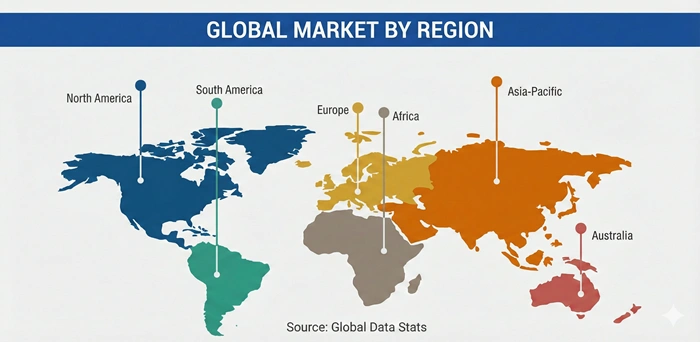
Regional Insights
Europe
Regional Leadership Through Regulatory Excellence and Innovation Focus
Europe dominates the global medical device packaging market with approximately 43% market share in 2025, growing at a projected CAGR of 6.76% through the forecast period. This leadership position reflects the region's concentration of leading medical technology companies, stringent regulatory frameworks emphasizing patient safety, and established healthcare systems with substantial medical device consumption supporting extensive packaging requirements. Countries including Germany, France, and the United Kingdom host major pharmaceutical and medical device manufacturers demanding exceptionally high packaging standards for sterility maintenance, regulatory compliance, and sustainability performance. The region's emphasis on environmental responsibility drives early adoption of recyclable materials, bio-based substrates, and circular economy principles that increasingly define global packaging standards as healthcare systems worldwide address mounting concerns about medical waste environmental impacts.
European market strength is supported by continuous innovation investments by leading packaging companies headquartered throughout the region. Amcor, Constantia Flexibles (Austria), Gerresheimer (Germany), and TC Transcontinental operate advanced facilities developing cutting-edge packaging solutions incorporating smart technologies, sustainable materials, and enhanced barrier properties. The region shows particular strength in specialty materials including Tyvek-based medical packaging, high-barrier laminates, and sterilization-compatible films engineered for demanding healthcare applications. Sustainability mandates within the European Union including single-use plastics directives and circular economy action plans push companies toward responsible packaging development balancing environmental objectives with sterility and patient safety requirements. Market dynamics indicate continued European leadership through 2033, supported by regulatory excellence, innovation culture, and concentration of medical technology expertise driving global packaging standards evolution.
Asia Pacific
Fastest Regional Growth Through Healthcare Infrastructure Expansion
Asia Pacific represents the fastest-growing regional market in the medical device packaging sector with anticipated CAGR of 8.08% from 2026 through 2033, driven by rapid healthcare infrastructure development and expanding medical device manufacturing capabilities. This exceptional growth rate reflects fundamental economic transformations throughout China, India, Southeast Asian nations, and developed markets like Japan and South Korea where rising disposable incomes enable increasing healthcare spending and growing middle-class populations demand access to modern medical treatments. The region is emerging as a global medical device manufacturing hub with companies establishing production facilities leveraging lower labor costs, growing technical expertise, and proximity to rapidly expanding healthcare markets creating substantial packaging demand.
Regional growth dynamics show particularly robust momentum in China and India where government initiatives supporting healthcare system expansion drive medical device adoption across hospitals, clinics, and diagnostic centers. Medical tourism growth in Thailand, India, and Singapore creates additional demand for high-quality medical devices packaged to international standards ensuring sterility and safety for patients traveling from developed markets seeking cost-effective treatments. Leading companies operating in Asia Pacific including Rengo Co., Ltd. (Japan), Mitsubishi Chemical Holdings Corporation (Japan), Uflex Limited (India), and Huhtamaki Oyj facilities throughout the region provide specialized capabilities addressing local market requirements while maintaining compliance with global regulatory standards. Increasing regulatory alignment with international frameworks strengthens adoption of advanced packaging solutions as emerging economies implement safety standards protecting patients from substandard devices. The Asia Pacific medical device packaging market shows exceptional growth potential through 2033, supported by favorable demographics, expanding retail and healthcare infrastructure, rising environmental awareness, and increasing integration with global medical device supply chains serving worldwide healthcare delivery systems.
Top Key Players
-
Amcor plc (Australia)
-
Berry Global Inc. (United States)
-
DuPont (United States)
-
WestRock Company (United States)
-
Sonoco Products Company (United States)
-
Constantia Flexibles Group GmbH (Austria)
-
Klöckner Pentaplast Group (Luxembourg)
-
CCL Industries Inc. (Canada)
-
3M Company (United States)
-
Mitsubishi Chemical Holdings Corporation (Japan)
-
TC Transcontinental (Canada)
-
Oliver Healthcare Packaging (United States)
-
Gerresheimer AG (Germany)
-
Tekni-Plex, Inc. (United States)
-
Nelipak Healthcare Packaging (United States)
Recent Developments
-
In January 2025, Berry Global announced plans to showcase new packaging innovations at Pharmapack, with attendees discovering the company's latest healthcare products including the recently launched ClariPPil jars and bottles for oral solid dose applications designed to meet evolving pharmaceutical packaging requirements.
-
In June 2024, Evertis launched the Evercare brand as a leading provider of specialty and innovative medical-grade films designed to deliver superior performance and support regulatory compliance for the healthcare market, offering unique value proposition through innovation, sustainability, and supply chain security.
-
In April 2024, Klöckner Pentaplast launched kpNext MDR1, a new medical device packaging film designed to meet growing demand for sustainable packaging options in healthcare while maintaining performance characteristics required for sterility and device protection.
-
In February 2024, Spectrum Plastics Group, a DuPont Business, announced expansion of its Heredia, Costa Rica manufacturing facility from 36000 to 52000 square feet, increasing capacity for medical packaging tubing, pouches, and sterile packaging to meet growing global demand.
-
In January 2024, Sanner Group, a healthcare packaging company, acquired Springboard, a medical device design and development specialist for regulated markets, aligning with Sanner's goal to expand drug delivery, diagnostics, and medtech services capabilities.
Market Trends
Sustainability Transformation Driving Circular Economy Adoption
The medical device packaging market is experiencing comprehensive sustainability transformation as manufacturers respond to environmental pressures, regulatory mandates, and corporate commitments toward carbon-neutral operations. Leading companies are investing extensively in research programs developing recyclable plastics, paper-based alternatives, and bio-based materials that maintain sterility requirements while reducing environmental footprints. The industry embraces circular economy principles including design for recyclability, recycled content integration, and packaging waste reduction initiatives addressing mounting concerns about medical waste accumulation in landfills. This sustainability evolution reflects broader healthcare sector recognition that environmental responsibility and patient safety objectives are increasingly compatible through material science innovations, process optimization, and collaborative industry efforts establishing collection and recycling infrastructure specifically addressing medical packaging challenges.
Collaboration between packaging manufacturers, medical device companies, and waste management providers is accelerating as stakeholders recognize that achieving sustainability goals requires systemic solutions extending beyond individual corporate capabilities. Forward-thinking companies participate in industry consortiums developing best practices for sustainable medical packaging, support legislative frameworks incentivizing material recovery, and implement take-back programs demonstrating environmental stewardship to healthcare customers prioritizing sustainability in procurement decisions. This transformation positions sustainability as a competitive differentiator in the medical device packaging market as healthcare systems globally establish environmental targets and evaluate suppliers based on demonstrated progress toward reducing packaging environmental impacts without compromising sterility, safety, or regulatory compliance requirements essential for patient protection throughout the healthcare delivery continuum.
Segments Covered in the Report
By Material
-
Plastic
-
PE
-
HDPE
-
LDPE
-
LLDPE
-
PET
-
PP
-
PS
-
PVC
-
Others
-
-
Paper and Paperboard
-
Foils
-
Glass
-
Metal
By Product
-
Pouches and Bags
-
Boxes
-
Trays
-
Clamshells
-
Blisters
-
Others
By Application
-
Sterile Packaging
-
Non-Sterile Packaging
By End User
-
Medical Manufacturing
-
Contract Packaging
-
Retail Packaging
-
Others
By Region
-
North America
-
United States
-
Canada
-
Mexico
-
-
Europe
-
Germany
-
United Kingdom
-
France
-
Italy
-
Spain
-
Rest of Europe
-
-
Asia Pacific
-
China
-
India
-
Japan
-
South Korea
-
Australia
-
Southeast Asia
-
Rest of Asia Pacific
-
-
Latin America
-
Brazil
-
Argentina
-
Rest of Latin America
-
-
Middle East and Africa
-
GCC Countries
-
South Africa
-
Rest of Middle East and Africa
-
Frequently Asked Questions
Question 1: What is the projected size of the medical device packaging market by 2033?
Answer: The global medical device packaging market is projected to reach USD 53.89 billion by 2033, growing from USD 30.25 billion in 2025. This expansion reflects increasing surgical volumes, stringent regulatory requirements, and rising adoption of single-use medical devices worldwide.
Question 2: Which region dominates the medical device packaging market currently?
Answer: Europe dominates the medical device packaging market with approximately 43% market share in 2025, driven by stringent regulatory frameworks and concentration of leading medical technology companies. The region benefits from advanced healthcare infrastructure and strong emphasis on sustainable packaging solutions.
Question 3: What is the expected growth rate for the medical device packaging market from 2026 to 2033?
Answer: The medical device packaging market is anticipated to grow at a CAGR of 6.94% from 2026 to 2033. This growth is fueled by increasing chronic disease prevalence, expanding healthcare infrastructure, and rising demand for sterile packaging protecting medical devices from contamination.
Question 4: Which product segment leads the medical device packaging market?
Answer: Pouches and bags dominate the medical device packaging market with approximately 47% market share in 2025. This leadership stems from versatile applications, excellent barrier properties, cost-effectiveness, and high product-to-package ratios enabling efficient storage and transportation.
Question 5: What are the primary growth drivers in the medical device packaging market?
Answer: Key growth drivers in the medical device packaging market include stringent regulatory compliance requirements, increasing surgical procedure volumes, rising adoption of single-use devices, and growing emphasis on sterility maintenance. Expanding healthcare infrastructure and aging populations also contribute significantly.