
Materials for Bone Implants Market Overview
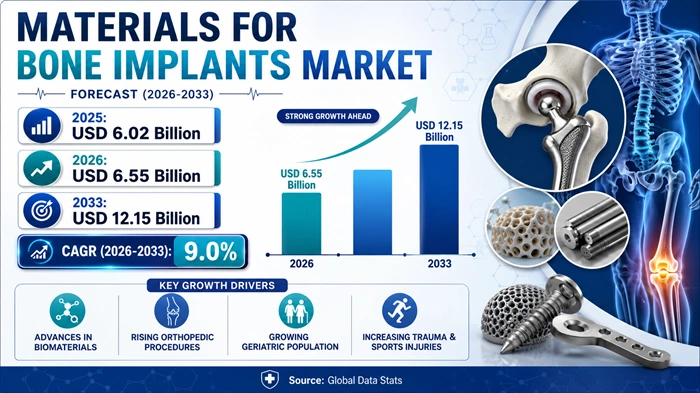
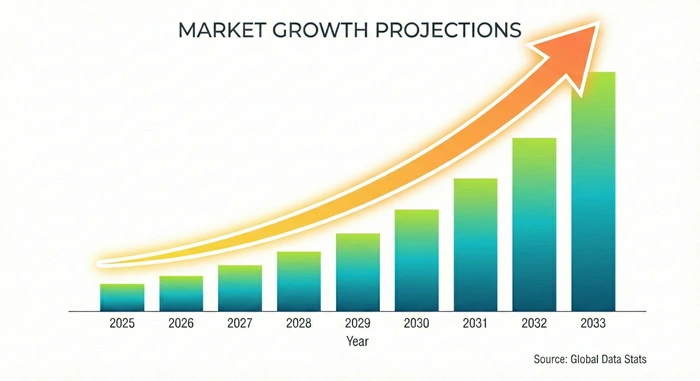
The global materials for bone implants market size is valued at USD 6.02 billion in 2025 and is predicted to increase from USD 6.55 billion in 2026 to approximately USD 12.15 billion by 2033, growing at a CAGR of 9.0% from 2026 to 2033. This market encompasses a broad range of biomaterials — including titanium alloys, stainless steel, cobalt-chromium alloys, PEEK polymers, ceramics, and biodegradable polymers — used to manufacture implants that support, repair, or replace damaged bone tissue. Rising incidences of orthopedic conditions, dental disorders, sports injuries, and fractures among the aging global population are creating consistent and growing demand for high-performance bone implant materials across multiple clinical settings.
AI Impact on the Materials for Bone Implants Industry
Artificial Intelligence Is Revolutionizing How Bone Implants Are Designed, Personalized, and Monitored — Enabling Faster Healing, Better Outcomes, and a New Standard in Orthopedic Care
Artificial intelligence is reshaping the entire lifecycle of bone implant development — from early material selection through surgical planning to post-operative recovery monitoring. By processing large volumes of patient imaging data, including CT scans and X-rays, AI systems are enabling clinicians and engineers to design patient-specific implants that align precisely with individual bone geometry. This level of customization was previously time-consuming and expensive, but AI-driven workflows are making it faster and more accessible. The result is a higher standard of implant fit, improved osseointegration outcomes, and reduced risk of post-surgical complications — all of which contribute to growing adoption of advanced implant materials across hospitals and specialty clinics worldwide.
On the manufacturing and research side, AI-powered tools are accelerating the development of next-generation biomaterials by identifying promising material combinations, predicting mechanical performance, and optimizing surface coatings for improved biocompatibility. Machine learning algorithms are being used to analyze clinical trial data and real-world performance metrics, shortening the time from laboratory development to regulatory approval. Companies like Stryker and Zimmer Biomet are already integrating AI into their surgical planning platforms, enabling surgeons to simulate implant placement and evaluate biomechanical load distribution before performing actual procedures. As these technologies continue to mature, AI's role in driving the materials for bone implants market forward is expected to grow substantially through the forecast period.
Growth Factors
An Aging Global Population, Rising Bone Disorder Prevalence, and Rapid Advances in Biomaterials Science Are Powering Sustained Demand for Bone Implant Materials Worldwide
The most powerful growth engine for the materials for bone implants market is the rapid expansion of the global aging population. As people live longer, age-related conditions such as osteoporosis, arthritis, spinal degeneration, and joint deterioration are becoming increasingly common, driving significant demand for orthopedic and dental implant procedures. Older adults represent the highest per-capita consumers of bone implant materials, and with the number of people aged 65 and older expected to nearly double globally by 2050, this demographic shift creates a structural, long-term demand foundation that will sustain market growth well beyond 2033. Simultaneously, rising rates of obesity and sedentary lifestyles are increasing the incidence of musculoskeletal disorders in younger populations, further broadening the patient base.
Technological advancement in biomaterials science is the second critical growth driver. Innovations in titanium alloy processing, surface coating technologies, ceramic composites, and biodegradable polymer formulations are dramatically improving the mechanical performance, biocompatibility, and durability of bone implants. The introduction of 3D printing in implant manufacturing has enabled the production of highly complex, porous scaffolds that mimic natural bone architecture, promoting faster osseointegration and reducing recovery times. The growing adoption of minimally invasive surgical techniques has also raised the demand for precision-grade materials that can perform reliably through smaller incisions and under complex anatomical constraints. These converging technological and demographic forces are creating strong and diversified growth momentum across the bone implant materials landscape.
Market Outlook
Rising Surgical Volumes, Expanding Healthcare Access in Emerging Markets, and the Shift Toward Smart and Bioresorbable Implant Materials Are Setting the Stage for Robust Long-Term Market Expansion
The outlook for the materials for bone implants market through 2033 is highly favorable, supported by a combination of increasing procedural volumes, broader geographic market development, and a diversifying materials technology landscape. North America is expected to maintain its leadership position, driven by high surgical volumes, significant healthcare expenditure, and strong R&D investment by leading medical device companies. Europe will continue to represent a mature but stable revenue base, with growing adoption of advanced implant materials across Germany, France, and the UK. Asia Pacific stands out as the most dynamic growth region, with healthcare infrastructure expansion, rising medical tourism, and strong domestic manufacturing capacity contributing to a projected regional CAGR of approximately 9.8% through the forecast period.
Looking ahead, the market is poised to benefit from the accelerating development of smart orthopedic implants embedded with biosensors that can monitor healing progress, mechanical stress, and infection indicators in real time. The growing clinical interest in bioresorbable and biodegradable implant materials — which eliminate the need for revision surgeries — is reshaping material development priorities and offering new commercial opportunities for producers. Regulatory evolution in the U.S., EU, and Asia Pacific is also becoming more accommodating of innovative materials and manufacturing techniques, reducing time-to-market for novel implant solutions. Companies that strategically invest in product innovation, manufacturing scalability, and digital health integration will be best positioned to capture the expanding market opportunity through 2033.
Expert Speaks
-
"We are seeing a profound shift in how orthopedic implants are being developed and deployed — digital technologies, advanced materials, and AI-driven surgical planning are converging to redefine patient outcomes across musculoskeletal care, and this is only the beginning of what we can achieve," — Kevin A. Lobo, Chairman & CEO, Stryker Corporation, highlighting the transformative impact of innovation in the implant materials sector.
-
"The medical device industry is entering a new era of personalization — from patient-specific implant designs powered by imaging data to next-generation biomaterials that integrate seamlessly with living tissue, our ability to deliver better outcomes for patients has never been greater," — Ivan Tornos, President & CEO, Zimmer Biomet Holdings, underscoring the growing importance of advanced bone implant materials in modern orthopedic surgery.
-
"As global demand for orthopedic and spinal procedures rises, our priority remains delivering materials and implant systems that combine clinical reliability with cutting-edge innovation — because when it comes to bone repair, there is no room for compromise," — Geoffrey Martha, Chairman & CEO, Medtronic, emphasizing the critical role of high-performance biomaterials in advancing surgical care outcomes.
Key Report Takeaways
-
North America leads the global materials for bone implants market with a dominant share of approximately 38% in 2025, supported by high healthcare expenditure, an aging population prone to orthopedic conditions, advanced surgical infrastructure, and the strong presence of leading implant material manufacturers including Stryker, Zimmer Biomet, and DePuy Synthes
-
Asia Pacific is the fastest-growing region, projected to expand at a CAGR of approximately 9.8% through 2033, driven by rapidly expanding healthcare access, rising prevalence of musculoskeletal disorders, strong government investment in medical infrastructure, and growing domestic manufacturing capabilities in China and India
-
Hospitals represent the highest-consuming end-user segment, commanding a 55% market share in 2025, attributed to the availability of multidisciplinary surgical teams, comprehensive pre- and post-operative care capabilities, and the concentration of complex orthopedic and dental procedures within hospital settings
-
The orthopedic plates and screws application contributes the most to overall implant type revenue with a 30% share in 2025, driven by the widespread use of locking plates, non-locking plates, cortical screws, and cancellous screws across trauma and reconstructive orthopedic procedures
-
Titanium and titanium alloys is the most widely used material segment, holding a 35% share in 2025, owing to titanium's exceptional biocompatibility, corrosion resistance, lightweight properties, and proven clinical performance in joint replacement and spinal fusion applications
-
The PEEK (Polyetheretherketone) material segment is the fastest-growing future segment, expected to expand at a CAGR of approximately 7.0% through 2033 with a current share of 12%, fueled by its growing adoption in spinal implants, dental prosthetics, and finger prostheses — where its elastic modulus closely matches natural bone, reducing stress shielding and improving long-term implant stability
Market Scope
| Report Coverage | Details |
|---|---|
| Market Size by 2025 | USD 6.02 Billion |
| Market Size by 2026 | USD 6.55 Billion |
| Market Size by 2033 | USD 12.15 Billion |
| Market Growth Rate from 2026 to 2033 | CAGR of 9.0% |
| Dominating Region | North America |
| Fastest Growing Region | Asia Pacific |
| Base Year | 2025 |
| Forecast Period | 2026 to 2033 |
| Segments Covered | By Material Type, By Implant Type, By End-User, By Region |
| Regions Covered | North America, Europe, Asia Pacific, Latin America, Middle East & Africa |
Market Dynamics
Drivers Impact Analysis
Rising Orthopedic Surgical Volumes and Technological Breakthroughs in Biomaterials Are Delivering Measurable Upward Pressure on the Materials for Bone Implants Market's Growth Trajectory
| Driver | ≈ % Impact on CAGR Forecast | Geographic Relevance | Impact Timeline |
|---|---|---|---|
| Rising Incidence of Orthopedic & Dental Disorders | ~2.8% | Global, primarily North America & Asia Pacific | Near to Long Term |
| Technological Advances in Biomaterials & Implant Design | ~2.2% | North America, Europe, Asia Pacific | Medium to Long Term |
| Growing Aging Population Globally | ~1.8% | North America, Europe, Asia Pacific | Long Term |
| Expansion of Minimally Invasive Surgical Procedures | ~1.2% | North America, Europe | Medium to Long Term |
| Increasing Sports-Related Injuries & Trauma Cases | ~1.0% | Asia Pacific, North America, Latin America | Near to Medium Term |
The rising incidence of bone disorders — including osteoporosis, fractures, joint degeneration, and dental conditions — stands as the most powerful driver in the materials for bone implants market. As these conditions affect a widening patient base across both aging and active populations, the frequency of orthopedic, dental, and reconstructive surgeries is increasing steadily across all major geographies. Hospitals and specialty clinics are investing in advanced implant systems to meet growing surgical demand, and this directly translates into consistent procurement of high-quality bone implant materials. The growing awareness among patients about the availability and long-term benefits of implant-based treatments further reinforces this demand trend, creating a strong and self-sustaining market growth cycle.
Technological advancement in implant materials science is equally transformative. The development of bioactive ceramic coatings, titanium alloy surface treatments that promote osseointegration, and PEEK composites tailored for specific anatomical sites is dramatically improving clinical outcomes and implant longevity. The integration of 3D printing technology has allowed manufacturers to create patient-specific, porous implant structures that replicate natural bone morphology — reducing rejection rates and accelerating healing timelines. These innovations are not only widening the clinical applicability of implant materials but also increasing the per-unit value of advanced implant products, contributing positively to overall market revenue growth.
Restraints Impact Analysis
Infection Risks, Implant Rejection Concerns, and High Cost Barriers Are Slowing Full Market Penetration Across Price-Sensitive and Emerging Geographies
| Restraint | ≈ % Impact on CAGR Forecast | Geographic Relevance | Impact Timeline |
|---|---|---|---|
| Risk of Post-Surgical Infection and Implant Rejection | ~-1.5% | Global | Near to Long Term |
| High Cost of Advanced Implant Materials | ~-1.2% | Latin America, MEA, Southeast Asia | Near to Medium Term |
| Stringent Regulatory Approval Processes | ~-0.8% | North America, Europe | Medium Term |
| Stress Shielding in Metal Implants | ~-0.5% | Global | Medium to Long Term |
Infection and rejection risks associated with metal implants remain the most critical clinical restraint in the materials for bone implants market. Metal implants — particularly those made from cobalt-chromium alloys — can trigger inflammatory responses, periprosthetic infections, or outright rejection in some patients, leading to painful revision surgeries and extended recovery periods. The limited osseointegration potential of certain metal alloys, combined with the known immunogenic properties of cobalt-chrome wear particles, continues to limit the broader clinical adoption of these materials in high-wear applications. These concerns are driving investment in alternative materials such as PEEK, ceramics, and bioresorbable polymers, but the transition is gradual and adds development costs for manufacturers.
The high cost of premium implant materials and procedures creates a significant access gap in price-sensitive markets across Latin America, Southeast Asia, and sub-Saharan Africa. Advanced titanium alloy implants, PEEK-based spinal systems, and custom 3D-printed bone scaffolds remain financially inaccessible for large segments of the patient population in these regions, despite the growing prevalence of orthopedic conditions. While government healthcare programs and insurance coverage are expanding, the pace of reimbursement policy development often lags behind clinical adoption rates, limiting market penetration. Manufacturers that fail to develop cost-optimized product lines for emerging markets risk missing a significant pool of untapped revenue.
Opportunities Impact Analysis
3D-Printed Bioceramic Implants, Bioresorbable Materials, and Smart Sensor-Enabled Implants Are Creating High-Value Commercial Opportunities in the Materials for Bone Implants Market
| Opportunity | ≈ % Impact on CAGR Forecast | Geographic Relevance | Impact Timeline |
|---|---|---|---|
| 3D-Printed Personalized Implants & Ceramic Scaffolds | ~+2.5% | North America, Europe, Asia Pacific | Medium to Long Term |
| Development of Bioresorbable Implant Materials | ~+2.0% | North America, Europe | Medium to Long Term |
| Smart Implants with Biosensor Technology | ~+1.5% | North America, Europe, Asia Pacific | Long Term |
| Expansion of Healthcare Infrastructure in Emerging Markets | ~+1.2% | Asia Pacific, MEA, Latin America | Near to Medium Term |
3D printing of personalized ceramic and polymer implants is perhaps the most exciting commercial opportunity in the current materials for bone implants market landscape. These technologies allow manufacturers to create bespoke implants that match the exact anatomical dimensions of individual patients, dramatically improving surgical fit and osseointegration outcomes. Ceramic scaffolds produced through additive manufacturing closely mimic the porous microstructure of natural bone, supporting cell attachment, vascularization, and new bone tissue formation. Companies that invest in scalable 3D printing infrastructure and digital workflow integration will be positioned to capture significant premium revenue from hospitals and orthopedic centers willing to pay for superior patient outcomes.
Bioresorbable and biodegradable implant materials offer a transformative opportunity for markets currently dominated by permanent metal implants. These materials — including polylactic acid (PLA), polyglycolic acid (PGA), and bioresorbable ceramics — gradually break down within the body as new bone tissue regenerates, eliminating the need for secondary removal surgeries and reducing long-term complication risks. The growing clinical evidence supporting bioresorbable implants in pediatric orthopedics, craniofacial surgery, and small bone fracture management is expanding their acceptance among surgeons. As regulatory frameworks in the U.S. and EU continue to evolve to accommodate these materials, market participants that establish clinical validation programs early will gain significant first-mover advantages.
Segment Analysis
By Material Type
Titanium Alloys Continue to Define the Market's Material Backbone While PEEK Rises as the Fastest-Growing Segment Driven by Spinal, Dental, and Prosthetic Innovation
The titanium and titanium alloys segment is the dominant material category in the materials for bone implants market, holding a 35% revenue share in 2025 and generating approximately USD 2.11 billion in revenue. Titanium's exceptional combination of biocompatibility, corrosion resistance, lightweight mechanical properties, and proven long-term clinical performance makes it the material of choice for the vast majority of orthopedic procedures, including total hip arthroplasty, intramedullary nailing, and shoulder arthroplasty. The two primary commercial forms — commercially pure titanium and titanium 6Al-4V alloy — offer versatile performance characteristics that align with the needs of both trauma fixation and elective joint replacement surgery. North America and Europe account for the largest consumption of titanium-based implant materials, supported by the presence of leading manufacturers such as Stryker, Zimmer Biomet, and DePuy Synthes, who rely extensively on titanium alloy processing for their orthopedic product portfolios. This segment is expected to grow at a CAGR of around 6.0% through 2033.
The PEEK (Polyetheretherketone) segment is the fastest-growing material category with a current share of 12% in 2025 and a projected CAGR of 7.0% through the forecast period. PEEK's elastic modulus closely matches that of cortical bone, making it significantly less prone to stress shielding compared to stiffer metal implants — a critical clinical advantage in spinal fusion and load-bearing applications. The material is increasingly being adopted in spinal interbody cages, dental implant frameworks, and finger prosthetics, where its radiolucency also provides a distinct diagnostic advantage by allowing post-operative imaging without artifact interference. Asia Pacific is the fastest-growing regional market for PEEK-based bone implant materials, driven by rapid expansion of spine surgery volumes in China and India, and the growing presence of specialty orthopedic centers equipped with advanced polymer processing capabilities. Companies such as Invibio Ltd. (a dedicated PEEK biomaterials supplier) and B. Braun Melsungen AG are active players developing PEEK-based implant systems for next-generation orthopedic and dental applications.
By End-User
Hospitals Dominate End-User Consumption While Orthopedic and Dental Clinics Emerge as the Fastest-Growing Care Setting for Bone Implant Material Adoption
Hospitals represent the largest end-user segment in the materials for bone implants market, commanding a 55% market share in 2025 and generating approximately USD 3.31 billion in revenue. This dominance is attributable to the concentration of complex, high-volume orthopedic and dental surgical procedures within hospital settings, where multidisciplinary teams, advanced imaging infrastructure, and comprehensive perioperative care capabilities are all available under one roof. Hospitals also benefit from established procurement relationships with major implant suppliers, volume-based pricing advantages, and reimbursement frameworks that favor inpatient procedures. The hospitals segment is projected to grow at a CAGR of around 6.0% through 2033, with North America and Europe maintaining the highest per-procedure revenue contribution due to their advanced surgical ecosystems and high-value implant procurement practices. Key players such as Medtronic, Smith & Nephew, and Arthrex supply hospitals extensively across both geographies.
Orthopedic and dental clinics represent the fastest-growing end-user segment, expected to expand at a CAGR of 7.0% through 2033 with a current share of 18% in 2025. This growth is driven by the increasing shift toward outpatient orthopedic and dental procedures — a trend accelerated by advancements in minimally invasive surgical techniques, improved anesthesia protocols, and patient preference for more convenient care settings. Specialty clinics offer lower operating costs, faster appointment availability, and more personalized patient experiences than large hospital systems, driving growing patient volumes. Asia Pacific is the most dynamic growth region for this segment, as expanding middle-class populations in China, India, and Southeast Asia increasingly seek specialty orthopedic and dental care in private clinic settings. Companies like Osstem Implant and Dentsply Sirona are actively expanding their distribution presence through dental and orthopedic specialty clinic channels across the Asia Pacific region.
Regional Insights
North America
North America's Mature Orthopedic Infrastructure and High Procedural Volumes Solidify Its Position as the Revenue Leader in the Global Materials for Bone Implants Market
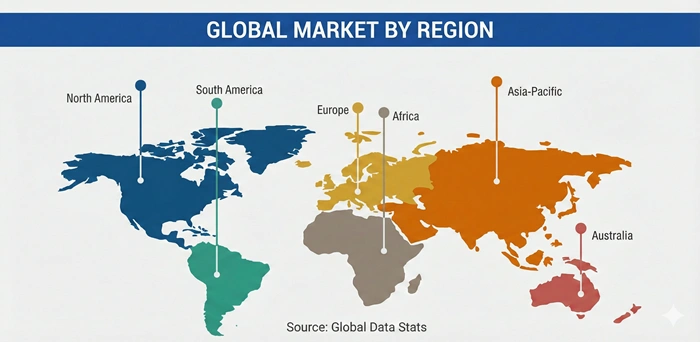
North America dominates the global materials for bone implants market with a 38% revenue share in 2025, generating approximately USD 2.29 billion, and is expected to grow at a CAGR of 6.5% through 2033. The United States is the primary driver within the region, anchored by its world-leading healthcare expenditure, high volume of elective orthopedic and dental procedures, and an aging population with elevated incidence of hip fractures, knee deterioration, and spinal disorders. The region benefits from a strong regulatory framework administered by the FDA, which — while rigorous — provides clear approval pathways for innovative implant materials and encourages investment in clinical validation. Leading industry players including Stryker Corporation, Zimmer Biomet Holdings, DePuy Synthes, and Arthrex maintain headquarters and primary manufacturing operations in the United States, creating a dense innovation and supply chain ecosystem that reinforces the region's market leadership.
Canada contributes meaningfully to North America's performance through its publicly funded healthcare system, which maintains high volumes of orthopedic procedures in urban centers, and its growing investment in medical technology innovation at research universities and hospital innovation centers. Mexico is an emerging growth market within the region, with rising adoption of advanced orthopedic implants driven by improvements in healthcare insurance coverage and the expansion of private hospital infrastructure in major metropolitan areas. The increasing adoption of titanium alloy implants, PEEK spinal systems, and bioresorbable fixation devices across all three North American countries reflects the region's ongoing appetite for high-performance bone implant materials that deliver superior clinical outcomes and long-term implant reliability.
Asia Pacific
Asia Pacific's Explosive Healthcare Growth and Massive Patient Population Make It the Most Strategically Important Region for Future Investment in the Bone Implant Materials Market
Asia Pacific is the fastest-growing region in the materials for bone implants market, holding a 25% market share in 2025 and projected to expand at the highest regional CAGR of approximately 9.8% through 2033. China leads the regional market, driven by massive and ongoing investment in healthcare infrastructure modernization, a large and rapidly aging population, and the rapid scaling of domestic medical device manufacturing — enabling competitive pricing that expands procedural access across both urban and rural healthcare settings. India is the second-largest growth engine within the region, with a booming orthopedic surgery market driven by a young and active population experiencing high rates of sports-related bone injuries, combined with increasing medical tourism that draws international patients seeking quality orthopedic care at competitive costs. Key players active in the region include Osstem Implant (South Korea), Shanghai Kinetic Medical (China), and global leaders like Stryker and Zimmer Biomet who have established dedicated Asia Pacific distribution and manufacturing operations.
South Korea, Japan, and Australia represent additional high-value markets within Asia Pacific, characterized by advanced healthcare systems, high per-capita surgical volumes, and strong clinical demand for premium bone implant materials. Japan's aging demographic profile — among the world's oldest — generates sustained demand for hip, knee, and spinal implant procedures, while South Korea's advanced electronics and materials manufacturing capabilities are being increasingly leveraged to develop next-generation smart implants and surface-coated titanium products. The regional trend toward government-backed healthcare expansion programs across Southeast Asian countries — including Thailand, Indonesia, and Vietnam — is expected to open significant new market opportunities through 2033, as improving healthcare access translates directly into growing volumes of bone repair and reconstruction procedures.
Report Customization: Region-Wise and Country-Wise Insights Available on Request
This Report Can Be Fully Customized to Deliver Targeted Market Intelligence Across Every Region and Country — Giving Your Team the Localized Data Needed to Make High-Confidence Business Decisions in the Bone Implant Materials Space
Customized versions of this report are available for all regions and countries listed below. Each customized version delivers in-depth market analysis, local demand trends, competitive landscape, regulatory environment, investment opportunities, key players, and forecast data specific to the selected geography and the materials for bone implants market. Reports can be tailored for individual countries or multi-country combinations based on your strategic focus area.
North America
-
U.S. — comprehensive analysis of orthopedic surgical volumes, FDA regulatory landscape, and dominant implant material categories by end-user
-
Canada — public healthcare system procurement trends, leading orthopedic centers, and advanced biomaterials adoption rates
-
Mexico — private hospital expansion, orthopedic implant market growth, and evolving insurance coverage dynamics
Europe
-
U.K. — NHS procurement pathways, NICE guidance on implant materials, and private orthopedic market growth
-
Germany — Europe's leading orthopedic market, advanced clinical research infrastructure, and strong domestic manufacturing base
-
France — pharmaceutical-grade biomaterials adoption, clinical trial activity, and rising demand for dental implants
-
Italy — dental implant market dynamics, specialty clinic penetration, and biomaterial innovation partnerships
-
Rest of Europe — emerging orthopedic markets in Eastern Europe, cross-border healthcare trends, and regulatory harmonization updates
Asia Pacific
-
China — domestic manufacturing scale-up, government healthcare reform impact, and EPDM joint replacement volume analysis
-
India — medical tourism landscape, public-private healthcare partnerships, and orthopedic implant affordability trends
-
Japan — aging population demand drivers, premium implant material adoption, and regulatory environment for medical devices
-
South Korea — smart implant innovation, advanced surface coating technologies, and growing export of orthopedic materials
-
Australia — TGA regulatory pathways, healthcare expenditure trends, and specialty orthopedic care market analysis
-
Rest of Asia Pacific — Southeast Asian healthcare infrastructure development and emerging demand for bone implant materials
Latin America
-
Brazil — largest Latin American orthopedic market, growing surgical volumes, and domestic biomaterial manufacturing capacity
-
Argentina — specialty orthopedic centers, adoption of imported implant materials, and healthcare reimbursement trends
-
Rest of Latin America — regional growth patterns, supply chain access, and opportunities for affordable implant solutions
Middle East & Africa
-
UAE — medical tourism hub dynamics, premium orthopedic care infrastructure, and growing demand for advanced implant materials
-
Saudi Arabia — Vision 2030 healthcare investment programs, expanding orthopedic surgical capacity, and implant procurement trends
-
Rest of MEA — infrastructure development, increasing healthcare investment, and emerging market demand for bone repair materials
Top Key Players
-
Stryker Corporation (United States)
-
Zimmer Biomet Holdings Inc. (United States)
-
Medtronic plc (Ireland)
-
Smith & Nephew plc (United Kingdom)
-
DePuy Synthes (Johnson & Johnson) (United States)
-
Globus Medical Inc. (United States)
-
NuVasive Inc. (United States)
-
B. Braun Melsungen AG (Germany)
-
Arthrex Inc. (United States)
-
Invibio Ltd. (United Kingdom)
-
Orthofix Medical Inc. (United States)
-
Dentsply Sirona (United States)
-
Osstem Implant (South Korea)
-
Amedica Corporation (United States)
-
Cook Medical (United States)
Recent Developments
-
In March 2026, researchers at Georgetown University began developing 3D-printed bone grafts made from natural biomaterials, with early results indicating a significant improvement in implant safety and osseointegration effectiveness — representing a meaningful step toward eliminating synthetic material rejection in bone reconstruction procedures.
-
In May 2026, scientists announced the development of a hybrid titanium-zinc implant designed to provide mechanical support during healing while gradually bioresorbing as new bone tissue regenerates, combining the strength of titanium alloys with the natural biodegradation properties of zinc to address the long-standing challenge of revision surgery need.
-
In 2025, Stryker Corporation expanded its digital surgery platform capabilities, integrating AI-assisted preoperative planning tools with its orthopedic implant systems — enabling more precise implant sizing, positioning, and material selection aligned with individual patient anatomy and surgical requirements.
-
In 2024, Zimmer Biomet Holdings announced a strategic partnership focused on advancing the development of smart orthopedic implants equipped with embedded biosensors, aimed at enabling real-time post-operative monitoring of bone healing progress and implant biomechanical performance.
-
In 2025, DePuy Synthes (Johnson & Johnson) launched an expanded line of bioresorbable fixation devices targeting pediatric orthopedic procedures, leveraging advances in PLA and PGA polymer formulations to deliver strong initial mechanical support with predictable, safe in-body resorption timelines.
Market Trends
Bioresorbable Materials, Smart Implant Technologies, and the Shift Toward Patient-Specific Implant Design Are Defining the Next Competitive Frontier in the Bone Implant Materials Market
One of the most consequential trends reshaping the materials for bone implants market is the growing clinical adoption of bioresorbable and biodegradable implant materials. These materials — including polylactic acid, polyglycolic acid, and bioresorbable ceramics — dissolve naturally within the body over time as bone regeneration progresses, removing the need for a second surgical procedure to retrieve the implant. Growing clinical evidence supporting their efficacy in pediatric bone repair, craniofacial reconstruction, and small fracture fixation is steadily shifting surgeon preferences, and ongoing improvements in bioresorbable material mechanical properties are now making them viable for a wider range of load-bearing applications. This trend is encouraging material manufacturers to invest heavily in polymer chemistry and ceramic processing R&D, opening new high-growth product development avenues across the industry.
A second defining trend is the rise of smart orthopedic implants — devices embedded with microsensors, wireless communication modules, and data processing capabilities that can transmit real-time information about implant performance, healing progression, and patient activity. These next-generation systems represent a convergence of advanced biomaterials science, electronics miniaturization, and digital health infrastructure, and they are attracting growing investment from both established orthopedic companies and technology start-ups. The integration of sensor-enabled implants with remote patient monitoring platforms creates entirely new value propositions for orthopedic care delivery, enabling clinicians to detect early signs of implant loosening, infection, or stress fracture before they escalate into serious complications. As digital health reimbursement policies mature across major markets, smart implants are expected to become an increasingly significant commercial segment within the broader bone implant materials ecosystem.
Segments Covered in the Report
By Material Type
-
Titanium & Titanium Alloys
-
Commercially Pure Titanium
-
Titanium 6Al-4V Alloy
-
-
Stainless Steel
-
316L Stainless Steel
-
Martensitic Stainless Steel
-
-
Cobalt-Chromium Alloys
-
Co-Cr-Mo Alloy
-
Co-Cr Alloy
-
-
Polyetheretherketone (PEEK)
-
Standard PEEK
-
Reinforced PEEK
-
-
Ceramic-Based Materials
-
Alumina
-
Zirconia
-
-
Biodegradable Polymers
-
Polylactic Acid (PLA)
-
Polyglycolic Acid (PGA)
-
By Implant Type
-
Orthopedic Plates & Screws
-
Locking Plates
-
Non-Locking Plates
-
Cortical Screws
-
Cancellous Screws
-
-
Intramedullary Nails
-
Titanium Nails
-
Stainless Steel Nails
-
-
Joint Prostheses
-
Hip Prostheses
-
Knee Prostheses
-
Shoulder Prostheses
-
-
Spinal Implants
-
Rods
-
Screws
-
Interbody Cages
-
-
Bone Cements & Fillers
-
PMMA Cements
-
Calcium Phosphate Cements
-
-
Dental Implants
-
Endosseous Implants
-
Subperiosteal Implants
-
By End-User
-
Hospitals
-
Ambulatory Surgical Centers
-
Orthopedic & Dental Clinics
-
Research & Academic Institutes
By Region
-
North America (U.S., Canada, Mexico)
-
Europe (U.K., Germany, France, Italy, Rest of Europe)
-
Asia Pacific (China, India, Japan, South Korea, Australia, Rest of Asia Pacific)
-
Latin America (Brazil, Argentina, Rest of Latin America)
-
Middle East & Africa (UAE, Saudi Arabia, Rest of MEA)
❝ Built for Every Level — From Startups to Industry Giants ❞
Here Is Exactly How This Report Works for You
-
For Tier 1 medical device corporations, major hospital procurement teams, and institutional investors, this report delivers a granular competitor revenue analysis — breaking down revenue sources, market positioning, and strategic moves by leading companies like Stryker, Zimmer Biomet, and Medtronic, while explaining how geopolitical developments such as U.S.-China trade policy shifts, EU Medical Device Regulation (MDR) compliance timelines, and emerging market healthcare reform programs are directly impacting supply chains, pricing strategies, and long-term investment decisions in the materials for bone implants market.
-
For Tier 2 and Tier 3 manufacturers, mid-level distributors, specialty orthopedic clinics, and growth-stage startups, this report maps the current supply-demand balance across all major material categories and geographies — identifying where unmet demand is creating pricing power opportunities, which application segments are experiencing the fastest volume growth, and how smaller players can position themselves competitively against well-resourced incumbents through material innovation, niche segment focus, or geographic market entry strategies.
-
For private equity investors, venture capital firms, and strategic acquirers evaluating the bone implant materials sector, this report provides a rigorous, data-backed view of segment-level CAGR projections, technology maturity assessments, and key M&A activity — equipping investment decision-makers with the market intelligence needed to evaluate company valuations, identify acquisition targets, and assess which emerging biomaterial technologies are on track to capture significant commercial share through 2033.
Frequently Asked Questions
Question 1: What is the projected market size of the materials for bone implants market by 2033?
Answer: The materials for bone implants market is projected to reach approximately USD 12.15 billion by 2033. The market is growing from USD 6.55 billion in 2026, expanding at a CAGR of 9.0% over the forecast period.
Question 2: Which material type dominates the materials for bone implants market?
Answer: Titanium and titanium alloys lead the materials for bone implants market with a 35% share in 2025, driven by their superior biocompatibility, mechanical durability, and long clinical track record. These alloys are the material of choice for most orthopedic joint replacements, spinal implants, and intramedullary fixation devices.
Question 3: What are the key growth drivers of the materials for bone implants market?
Answer: The primary drivers of the materials for bone implants market include the rising global incidence of orthopedic and dental disorders, an expanding aging population, and rapid advances in biomaterials technology including PEEK, bioresorbable polymers, and 3D-printed ceramics. Growing adoption of minimally invasive surgical procedures is also increasing the demand for precision-grade implant materials.
Question 4: Which region is expected to grow the fastest in the materials for bone implants market?
Answer: Asia Pacific is the fastest-growing region in the materials for bone implants market, with a projected CAGR of approximately 9.8% through 2033. This growth is driven by expanding healthcare infrastructure, a large and aging population, and increasing domestic manufacturing capabilities in China and India.
Question 5: What challenges could restrain growth in the materials for bone implants market?
Answer: The most significant restraints in the materials for bone implants market include the risk of post-surgical infection and implant rejection — particularly with metal-based materials — and the high cost of advanced implant systems that limits access in price-sensitive emerging markets. Stringent regulatory approval processes and the technical challenges of developing reliable bioresorbable alternatives to permanent metal implants also pose ongoing barriers to accelerated market growth.