
Life Science Logistics Market Overview
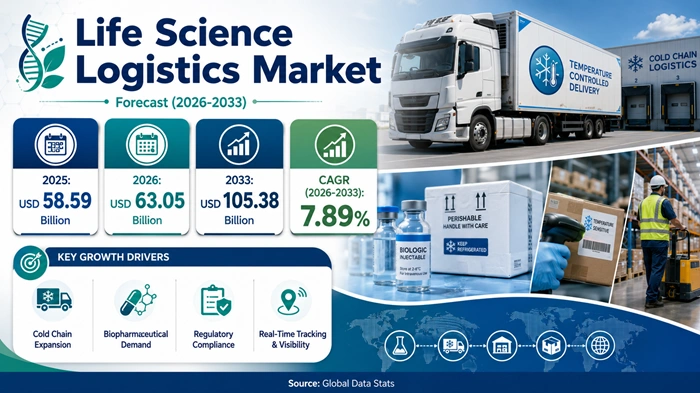
The global life science logistics market size is valued at USD 58.59 billion in 2025 and is predicted to increase from USD 63.05 billion in 2026 to approximately USD 105.38 billion by 2033, growing at a CAGR of 7.89% from 2026 to 2033.
This steady growth reflects the pharmaceutical and biotechnology industry's expanding reliance on specialized cold chain transportation, regulatory-compliant warehousing, and time-critical shipping networks needed to move sensitive drugs, vaccines, and clinical trial materials safely across the globe. As biologics and cell and gene therapies become a larger share of the drug development pipeline, demand for temperature-controlled and highly monitored logistics infrastructure continues expanding across pharmaceutical manufacturers, biotechnology firms, and contract logistics providers worldwide.
AI Impact on the Life Science Logistics Industry
Artificial Intelligence Is Optimizing Cold Chain Route Planning, Enhancing Real-Time Shipment Monitoring, and Strengthening Predictive Risk Management Across the Life Science Logistics Landscape — Fundamentally Changing How Pharmaceutical Shipments Move From Manufacturer to Patient
Artificial intelligence has become an increasingly valuable tool for optimizing cold chain route planning, with predictive routing algorithms now capable of analyzing weather patterns, customs delays, and carrier performance history to select shipping paths that minimize temperature excursion risk for sensitive biologics and vaccines. This precision matters considerably since even brief temperature deviations can render an entire shipment of expensive biologic therapy unusable, and AI-assisted routing tools are helping logistics providers reduce costly product loss during transit. Companies building AI-driven route optimization directly into their logistics platforms are increasingly differentiating themselves through measurably lower spoilage rates and stronger pharmaceutical client trust.
Beyond routing, AI is also improving real-time shipment monitoring capability, with sensor-driven analytics now able to flag developing temperature or humidity anomalies mid-transit and trigger automatic corrective action before a shipment reaches unacceptable conditions. This capability has proven valuable for pharmaceutical companies managing complex global distribution networks, since earlier anomaly detection allows intervention before an entire shipment must be discarded. As these AI-driven monitoring and predictive risk management tools continue maturing, they are becoming an increasingly important factor shaping supply chain reliability across the broader life science logistics market.
Growth Factors
Rising Biologics Production and Expanding Clinical Trial Activity Continue Driving Sustained Demand
The most significant growth factor supporting the life science logistics market is the accelerating global production of biologics, cell therapies, and gene therapies, as these advanced treatment categories require far more rigorous temperature-controlled handling than traditional small-molecule pharmaceuticals, creating substantial new demand for specialized cold chain infrastructure. With biopharmaceutical pipelines expanding rapidly across major drug developers, this production-driven demand has become an increasingly important growth driver for logistics providers equipped to handle ultra-low temperature and time-sensitive shipments.
A second important growth factor is the continued expansion of global clinical trial activity, as pharmaceutical companies increasingly conduct multi-country trials that require precise, compliant transportation of investigational drugs and biological samples across international borders under strict chain-of-custody documentation. This growing trial-related shipping demand, combined with rising vaccine distribution programs across emerging markets, has broadened the addressable market for specialized life science logistics considerably. This combination of rising biologics production and expanding clinical trial activity continues to strengthen demand across the life science logistics market.
Market Outlook
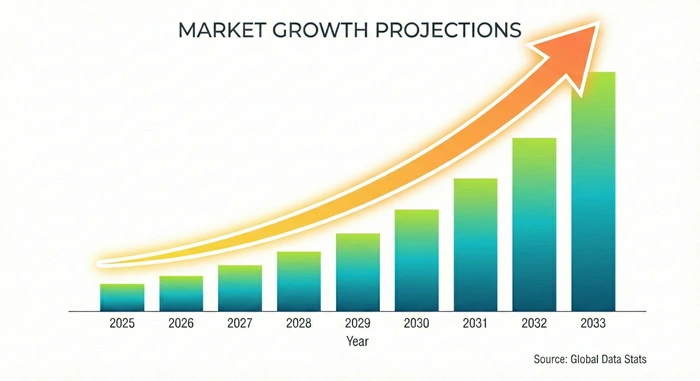
Digital Supply Chain Visibility and Expanding Emerging Market Infrastructure Point Toward Sustained Growth Through 2033
Looking ahead through the forecast period, the life science logistics industry is expected to benefit substantially from continued investment in digital supply chain visibility platforms, as pharmaceutical shippers increasingly demand end-to-end tracking capability that provides real-time location and condition data throughout a shipment's entire journey rather than periodic checkpoint updates. This visibility-focused shift is likely to reshape provider selection considerably as more pharmaceutical companies prioritize transparency and traceability in their logistics partnerships.
At the same time, expanding cold chain and regulatory-compliant warehousing infrastructure across emerging markets is expected to create substantial new demand, as growing healthcare access initiatives across Asia Pacific and Latin America require reliable last-mile distribution networks capable of maintaining product integrity in regions with historically limited cold storage capacity. Companies that can deliver both proven temperature reliability and strong regulatory compliance credentials are increasingly well positioned to capture this growth. Providers combining strong global network coverage with specialized pharmaceutical handling expertise are likely to lead growth within the broader life science logistics market through 2033.
Expert Speaks
-
"Our continued investment in temperature-controlled logistics infrastructure reflects our commitment to helping pharmaceutical partners deliver life-saving therapies safely to patients worldwide." — CEO, DHL Group
-
"As biologics and cell therapies reshape modern medicine, our cold chain network remains focused on delivering the reliability that healthcare systems depend on." — CEO, FedEx Corporation
-
"We remain dedicated to advancing digital visibility and compliance solutions that support both pharmaceutical innovation and patient access worldwide." — CEO, UPS Inc
Key Report Takeaways
-
North America leads the global life science logistics market, holding approximately 36% market share in 2025, supported by extensive pharmaceutical manufacturing activity and well-established cold chain infrastructure
-
Asia Pacific is the fastest-growing region, projected to expand at a CAGR near 10.8% through 2033, driven by expanding pharmaceutical manufacturing capacity and rising vaccine distribution needs across China and India
-
Pharmaceutical manufacturers represent the dominant end-user segment, accounting for roughly 44% share, given their extensive global distribution requirements for both finished drugs and clinical trial materials
-
Transportation services contribute the most to overall demand, reflecting the continuous need for temperature-controlled shipping across international pharmaceutical supply chains
-
Air freight remains the most widely used transportation mode, valued for its speed in moving time-sensitive biologics and vaccines across long distances
-
Cell and gene therapy logistics segments will grow the fastest among application categories, holding close to 21% market share with a CAGR near 12.6% through the forecast period, driven by rising demand for ultra-low temperature handling capability
Market Scope
| Report Coverage | Details |
|---|---|
| Market Size by 2033 | USD 105.38 Billion |
| Market Size by 2025 | USD 58.59 Billion |
| Market Size by 2026 | USD 63.05 Billion |
| Market Growth Rate from 2026 to 2033 | CAGR of 7.89% |
| Dominating Region | North America |
| Fastest Growing Region | Asia Pacific |
| Base Year | 2025 |
| Forecast Period | 2026 to 2033 |
| Segments Covered | Service Type, Mode of Transportation, End User, Region |
| Regions Covered | North America, Europe, Asia Pacific, Latin America, Middle East & Africa |
Market Dynamics
Drivers Impact Analysis
Rising Biologics Production and Expanding Clinical Trial Shipping Needs Remain the Two Strongest Forces Behind Market Momentum
| Driver | (≈) % Impact on CAGR Forecast | Geographic Relevance | Impact Timeline |
|---|---|---|---|
| Accelerating global production of biologics and cell and gene therapies | ~35% | North America, Europe | Medium to long-term |
| Expanding multi-country clinical trial activity requiring compliant transport | ~27% | Global | Short to medium-term |
| Rising vaccine distribution programs across emerging markets | ~24% | Asia Pacific, Latin America | Medium-term |
| Growing pharmaceutical e-commerce and direct-to-patient delivery models | ~14% | North America, Europe | Short to medium-term |
Accelerating global production of biologics and advanced cell and gene therapies continues to serve as the primary engine behind sustained growth in the life science logistics market, as these treatment categories demand far more rigorous temperature-controlled handling than traditional pharmaceuticals ever required. This production-driven momentum has translated directly into rising demand for specialized cold chain providers equipped to handle ultra-low temperature shipments reliably across long distances.
Expanding multi-country clinical trial activity represents the second major driver, as pharmaceutical companies increasingly coordinate complex international trials requiring precise, documented transport of investigational drugs and biological samples across borders. This trial-driven demand, combined with rising vaccine distribution programs across emerging markets, continues reinforcing steady momentum across the broader life science logistics market.
Restraints Impact Analysis
High Infrastructure Costs and Complex Regulatory Compliance Continue to Moderate Broader Expansion
| Restraint | (≈) % Impact on CAGR Forecast | Geographic Relevance | Impact Timeline |
|---|---|---|---|
| High capital cost of specialized cold chain infrastructure and equipment | ~36% | Global, particularly emerging markets | Short to medium-term |
| Complex and varying regulatory compliance requirements across countries | ~28% | Global | Medium to long-term |
| Limited cold storage and last-mile distribution capacity in developing regions | ~22% | Asia Pacific, Latin America, MEA | Medium-term |
| Rising fuel and freight costs affecting overall transportation expenses | ~14% | Global | Short to medium-term |
The most persistent restraint facing the life science logistics market is the substantial capital cost associated with building and maintaining specialized cold chain infrastructure, including temperature-controlled warehouses and refrigerated transport fleets, which creates significant barriers for smaller logistics providers competing against established global carriers. This cost sensitivity remains particularly pronounced in emerging markets where cold storage infrastructure development requires substantial upfront investment.
Complex and varying regulatory compliance requirements across different countries represent a second significant restraint, since pharmaceutical shipments must satisfy differing documentation, customs, and handling standards that can delay cross-border movement and increase administrative overhead considerably. Combined with limited cold storage and last-mile distribution capacity across parts of Asia Pacific, Latin America, and the Middle East, these restraints continue moderating how quickly broader infrastructure expansion occurs across the global life science logistics market.
Opportunities Impact Analysis
Digital Visibility Platform Adoption and Expanding Emerging Market Infrastructure Represent the Clearest Paths to Growth
| Opportunity | (≈) % Impact on CAGR Forecast | Geographic Relevance | Impact Timeline |
|---|---|---|---|
| Expanding adoption of end-to-end digital shipment visibility platforms | ~37% | Global | Short to medium-term |
| Growing cold chain infrastructure investment across emerging markets | ~34% | Asia Pacific, Latin America | Medium to long-term |
| Rising demand for specialized cell and gene therapy logistics capability | ~29% | North America, Europe | Medium-term |
Expanding adoption of end-to-end digital shipment visibility platforms represents one of the most substantial opportunities within the life science logistics market, as pharmaceutical shippers seeking greater transparency stand to benefit significantly from providers offering real-time location and condition monitoring throughout the entire distribution journey. This visibility-driven differentiation is expected to meaningfully reshape competitive positioning among leading logistics providers over the coming years.
Growing cold chain infrastructure investment across emerging markets presents a second substantial opportunity, as expanding healthcare access initiatives across Asia Pacific and Latin America create demand for reliable last-mile distribution networks capable of serving previously underserved populations. Rising demand for specialized cell and gene therapy logistics capability further broadens the opportunity landscape, particularly for providers able to offer ultra-low temperature handling alongside strict chain-of-custody documentation. Companies pursuing these parallel opportunities are well positioned to capture meaningful growth within the broader life science logistics market through the forecast period.
Segment Analysis
By Service Type: Transportation Services
Transportation Services Continue to Anchor the Service Landscape, Reflecting Continuous Demand for Temperature-Controlled Shipping
Transportation services hold the largest share within the service type segment of the life science logistics market, accounting for approximately 48% of total segment revenue in 2025. This dominance reflects the continuous need for temperature-controlled air, ground, and ocean shipping to move pharmaceuticals, vaccines, and clinical trial materials safely across both domestic and international supply chains. In markets like the United States and Germany, pharmaceutical shippers increasingly favor integrated providers offering combined air freight and last-mile ground delivery under a single monitored chain of custody. Leading suppliers such as DHL, FedEx, and UPS continue to dominate this segment through expanded cold chain fleet capacity and continuous monitoring technology improvements.
Growth within this segment remains particularly strong in North America, where extensive pharmaceutical manufacturing activity and well-established cold chain infrastructure continue generating sustained demand for reliable transportation services across thousands of shipment routes daily. The region's combination of dense manufacturing concentration and mature logistics networks has helped transportation services maintain their leading position despite growing interest in warehousing and value-added service alternatives. As biologics production continues expanding, transportation services are expected to remain the dominant category within the broader life science logistics market throughout the forecast period.
By Application: Cell and Gene Therapy Logistics
Cell and Gene Therapy Logistics Represent the Fastest-Growing Application Segment, Reflecting Rising Demand for Ultra-Low Temperature Handling
Cell and gene therapy logistics represent the fastest-growing application segment within the life science logistics market, holding close to 21% share in 2025 with a projected CAGR near 12.6% through the forecast period as these advanced treatment categories require far more specialized handling than conventional biologics or small-molecule drugs ever demanded. Unlike traditional pharmaceutical shipping, cell and gene therapy logistics often involve ultra-low temperature cryogenic transport, precise chain-of-identity tracking for patient-specific treatments, and extremely narrow delivery windows that leave little room for delay. This specialized handling requirement has generated substantial interest among logistics providers investing heavily in cryogenic capability to serve pharmaceutical companies developing next-generation cell-based therapies.
Growth in this segment remains especially strong in North America, where a dense concentration of cell and gene therapy developers and specialized treatment centers continues driving strong demand for providers capable of managing these complex, high-value shipments reliably. Companies like DHL and specialized pharmaceutical logistics providers have expanded their cryogenic and ultra-cold capability significantly to serve this growing demand, often partnering directly with therapy developers on dedicated logistics protocols. As cell and gene therapy approvals continue expanding globally, this application segment is expected to remain the fastest-growing category within the broader life science logistics market.
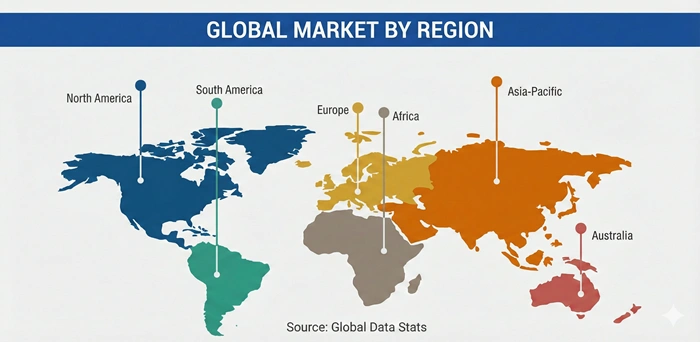
Regional Insights
North America
Extensive Pharmaceutical Manufacturing and Mature Cold Chain Infrastructure Keep North America Firmly in the Lead
North America commands the leading position in the global life science logistics market, holding approximately 36% share in 2025, supported by extensive pharmaceutical manufacturing activity, well-established cold chain infrastructure, and a dense concentration of leading logistics providers. The United States drives the overwhelming majority of regional demand, backed by substantial biopharmaceutical production and hundreds of clinical trial sites requiring reliable, compliant transportation networks. Companies with strong regional presence include DHL, FedEx, UPS, and Kuehne+Nagel, each maintaining deep relationships with pharmaceutical manufacturers across the country.
Canada also contributes meaningfully to regional demand, supported by growing biotechnology cluster activity and expanding vaccine manufacturing capacity requiring dependable cold chain distribution. The region's combination of mature logistics infrastructure, deep regulatory compliance expertise, and continuous technology innovation ensures North America's leadership position within the life science logistics market remains firmly intact through the remainder of the forecast period.
Asia Pacific
Expanding Pharmaceutical Manufacturing Capacity and Rising Vaccine Distribution Needs Position Asia Pacific as the Fastest-Growing Region
Asia Pacific is projected to register the fastest CAGR within the global life science logistics market through 2033, expanding at a rate near 10.8% as expanding pharmaceutical manufacturing capacity and rising vaccine distribution needs create substantial new demand across the region. China and India lead much of this regional growth, supported by rapidly growing domestic pharmaceutical production and expanding government vaccination programs that require dependable cold chain distribution networks reaching both urban and rural populations. Regional and international logistics providers alike have expanded their presence to serve this growing demand, often establishing local cold storage facilities to reduce dependence on longer international supply routes.
Japan and South Korea contribute further depth to regional growth, both bringing established pharmaceutical manufacturing infrastructure and growing biotechnology export activity requiring reliable international shipping networks. Growing government investment in healthcare infrastructure across several Asia Pacific markets continues to accelerate cold chain adoption among expanding pharmaceutical distribution networks alike. This combination of expanding manufacturing capacity, rising vaccination programs, and growing infrastructure investment positions Asia Pacific as the clear growth leader within the broader life science logistics market through the forecast period.
Customization Available for This Report
Region-Specific and Country-Specific Versions of This Report Are Available to Deliver a Sharper, More Localized View of Market Dynamics
This report can be tailored on a region-by-region and country-by-country basis, providing localized market sizing, competitive mapping, and cold chain infrastructure trend analysis that a global overview alone cannot fully capture.
Clients seeking a more focused breakdown can request a customized version covering any of the following regions and countries, complete with demand forecasting, competitor landscape review, and adoption trend analysis tied specifically to the life science logistics keyword focus:
North America
-
U.S. — Detailed review of pharmaceutical manufacturing and cold chain infrastructure trends
-
Canada — Coverage of biotechnology cluster activity and vaccine distribution patterns
-
Mexico — Analysis of emerging pharmaceutical logistics investment trends
Europe
-
U.K. — Review of cold chain regulation and pharmaceutical distribution trends
-
Germany — Coverage of logistics infrastructure investment among leading providers
-
France — Insights into biologics transport and warehousing adoption patterns
-
Italy — Analysis of regional life science logistics investment trends
-
Rest of Europe — Country-level view of emerging demand across Eastern Europe and the Nordics
Asia Pacific
-
China — Coverage of expanding pharmaceutical manufacturing and cold chain deployment
-
India — Analysis of growing vaccine distribution and logistics infrastructure demand
-
Japan — Review of established pharmaceutical manufacturing and export logistics trends
-
South Korea — Assessment of biotechnology export logistics investment and adoption
-
Australia — Insights into pharmaceutical distribution and cold chain adoption trends
-
Rest of Asia Pacific — Country-level breakdown covering Indonesia, Vietnam, and Malaysia
Latin America
-
Brazil — Coverage of expanding vaccine distribution access and cold chain adoption
-
Argentina — Analysis of early-stage pharmaceutical logistics modernization trends
-
Rest of Latin America — Country-level sizing across Colombia, Peru, and Chile
Middle East & Africa
-
UAE — Review of pharmaceutical logistics investment and cold chain adoption trends
-
Saudi Arabia — Coverage of expanding healthcare logistics modernization initiatives
-
Rest of MEA — Country-level view of African cold chain infrastructure expansion
Top Key Players
-
DHL Group (Germany)
-
FedEx Corporation (United States)
-
United Parcel Service Inc (United States)
-
Kuehne+Nagel International AG (Switzerland)
-
DB Schenker (Germany)
-
CEVA Logistics (France)
-
Agility Logistics (Kuwait)
-
World Courier Group Inc (United States)
-
Marken Ltd (United Kingdom)
-
Cold Chain Technologies Inc (United States)
-
SF Express Co Ltd (China)
-
Nippon Express Co Ltd (Japan)
Recent Developments
-
In 2025, DHL expanded its life sciences and healthcare logistics network with new temperature-controlled facilities to support growing biologics distribution demand
-
In 2025, FedEx strengthened its cold chain fleet capacity through continued investment in specialized packaging and monitoring technology for pharmaceutical shipments
-
In 2026, Kuehne+Nagel advanced its digital visibility platform capabilities to provide enhanced real-time tracking for time-sensitive pharmaceutical cargo
-
In 2025, Marken deepened its cell and gene therapy logistics partnerships to support expanding cryogenic transport requirements across clinical trial networks
-
In 2025, World Courier broadened its emerging market cold chain presence with new facility investments across Asia Pacific and Latin America
Market Trends
Digital Visibility Expansion and Cell and Gene Therapy Logistics Demand Are Reshaping Provider Priorities
One of the clearest trends shaping the life science logistics market is the accelerating adoption of end-to-end digital shipment visibility platforms, as pharmaceutical shippers increasingly demand real-time location and condition monitoring throughout the entire distribution journey rather than relying on periodic checkpoint updates. Providers are investing heavily in tracking technology, recognizing that transparency has become an increasingly important competitive differentiator as pharmaceutical companies prioritize supply chain accountability.
A second significant trend is the growing specialization in cell and gene therapy logistics capability, as advanced treatment categories requiring ultra-low temperature handling and strict chain-of-identity tracking continue expanding across drug development pipelines worldwide. This trend toward specialized therapy logistics is particularly meaningful for providers serving biotechnology companies pursuing next-generation treatments, continuing to support steady expansion across the broader life science logistics market as advanced therapy approvals continue increasing.
Segments Covered in the Report
By Service Type
-
Transportation Services
-
Warehousing and Storage
-
Value-Added Services
By Mode of Transportation
-
Air Freight
-
Ocean Freight
-
Road and Rail Transport
By End User
-
Pharmaceutical Manufacturers
-
Biotechnology Companies
-
Medical Device Companies
-
Contract Research Organizations
By Region
-
North America (U.S., Canada, Mexico)
-
Europe (U.K., Germany, France, Italy, Rest of Europe)
-
Asia Pacific (China, India, Japan, South Korea, Australia, Rest of Asia Pacific)
-
Latin America (Brazil, Argentina, Rest of Latin America)
-
Middle East & Africa (UAE, Saudi Arabia, Rest of MEA)
❝ Built for Every Level — From Startups to Industry Giants ❞
Here Is Exactly How This Report Works for You
-
For tier 1 companies, investors, and established market leaders, this report delivers detailed competitor revenue analysis, cold chain infrastructure trend mapping, and geopolitical risk context that support confident decisions around service expansion, pricing strategy, and long-term positioning within the life science logistics space
-
For tier 2 and tier 3 companies, startups, and mid-sized providers, this report highlights the most commercially promising service categories and underserved regional opportunities, giving you a practical framework to compete against larger established players without overextending limited resources
-
For every decision maker across the value chain, this report explains exactly how regulatory compliance trends, freight cost fluctuations, and competitor network expansions are shaping market direction through 2033, equipping you to plan investment and go-to-market decisions with genuine confidence
Frequently Asked Questions
Question 1: How large is the global life science logistics market expected to become by 2033?
Answer: The global life science logistics market was valued at USD 58.59 billion in 2025 and is projected to reach USD 105.38 billion by 2033. This growth is driven largely by rising biologics production and expanding clinical trial shipping needs.
Question 2: What is driving growth in the life science logistics market right now?
Answer: Growth in the life science logistics market is being driven by accelerating biologics and cell and gene therapy production alongside expanding clinical trial activity. Rising vaccine distribution programs across emerging markets are further reinforcing this expansion.
Question 3: Which region currently dominates the life science logistics market?
Answer: North America currently leads the life science logistics market with roughly 36% share, supported by extensive pharmaceutical manufacturing activity. Asia Pacific is growing the fastest, driven by expanding manufacturing capacity and rising vaccine distribution needs.
Question 4: Which service segment generates the most revenue in the life science logistics market?
Answer: Transportation services generate the largest share of revenue in the life science logistics market, reflecting continuous demand for temperature-controlled shipping. Cell and gene therapy logistics remain the fastest-growing application segment.
Question 5: Who are the leading companies competing in the life science logistics market?
Answer: Leading companies in the life science logistics market include DHL, FedEx, UPS, Kuehne+Nagel, and DB Schenker. These companies compete through continuous innovation in cold chain technology and digital shipment visibility.