
L-Alanine Market Overview
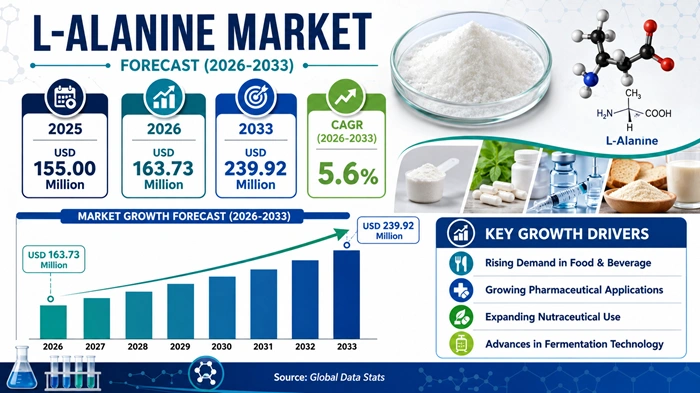
The global L-Alanine market size is valued at USD 155.00 million in 2025 and is predicted to increase from USD 163.73 million in 2026 to approximately USD 239.92 million by 2033, growing at a CAGR of 5.6% from 2026 to 2033. L-Alanine is a non-essential alpha-amino acid that plays a critical biochemical role in glucose metabolism, energy production, and protein synthesis within the human body. It is commercially produced through microbial fermentation and chemical synthesis and finds extensive application across food and beverage formulation, pharmaceutical manufacturing, animal feed supplementation, cosmetics, and biochemical research. The steady expansion of the global dietary supplement industry, growing pharmaceutical research into amino acid therapeutics, increasing demand for clean-label food ingredients, and the rising adoption of L-Alanine in sports nutrition and infant formula products are collectively driving a healthy and sustained growth trajectory for the global amino acid market through the forecast period.
AI Impact on the L-Alanine Industry
Artificial Intelligence Is Revolutionizing L-Alanine Production Efficiency, Fermentation Process Optimization, and Supply Chain Intelligence — Driving Down Costs While Improving Quality and Traceability Across the Entire Amino Acid Value Chain
Artificial intelligence is beginning to transform how L-Alanine is produced, monitored, and distributed across global supply chains. In fermentation-based production — the dominant manufacturing method for L-Alanine — AI-powered process monitoring systems are analyzing real-time sensor data from bioreactors to optimize critical fermentation parameters including temperature, pH, dissolved oxygen levels, and nutrient feed rates. These intelligent control systems reduce batch variability, improve amino acid yield per unit of feedstock, and enable predictive maintenance of fermentation equipment — lowering the production cost per kilogram of L-Alanine and improving the consistency of product quality standards that pharmaceutical and food-grade customers demand. Machine learning models are also being deployed to accelerate the screening and selection of high-yield microbial strains for fermentation, dramatically reducing the timeline for production strain development.
On the commercial side, AI-driven demand forecasting and supply chain optimization tools are helping L-Alanine producers anticipate purchasing patterns from their key food, pharmaceutical, and animal nutrition customers — enabling more efficient inventory management, shorter order lead times, and improved working capital efficiency. Predictive analytics platforms are helping producers navigate raw material price volatility and logistics disruptions by identifying alternative sourcing options and distribution routes in real time. As sustainability pressures grow across the chemical and amino acid industry, AI tools are also being used to optimize energy consumption in fermentation and purification processes, reducing the carbon footprint of L-Alanine manufacturing and helping producers meet the increasingly stringent environmental standards required by global food and pharmaceutical customers. These combined applications of AI are expected to accelerate margin improvement and competitive differentiation in the L-Alanine market over the forecast period.
Growth Factors
Rising Demand from Pharmaceutical and Nutraceutical Applications, Growing Sports Nutrition Industry Adoption, and the Expanding Use of L-Alanine in Functional Food and Beverage Formulations Are Driving Consistent Market Growth
The pharmaceutical industry represents one of the most reliable and highest-value growth drivers for the L-Alanine market. L-Alanine serves as a critical building block in the synthesis of pharmaceutical intermediates, amino acid infusion solutions, antiviral drugs, and peptide-based therapeutics — applications that require consistently high purity grades and reliable supply chains. The growing global prevalence of chronic metabolic diseases, including diabetes and metabolic syndrome, is driving increased clinical interest in amino acid metabolism pathways, supporting research investment and commercial demand for pharmaceutical-grade L-Alanine. The expansion of the injectable nutrition market — particularly parenteral nutrition formulations used in hospital ICU and surgical settings — represents a particularly consistent and growing demand stream for high-purity L-Alanine, as these formulations require precisely balanced amino acid profiles for clinical effectiveness.
The global sports nutrition and dietary supplement market represents a rapidly growing commercial demand channel for the L-Alanine market. L-Alanine is commonly used in combination with beta-alanine — a metabolic precursor — in sports nutrition formulations targeting endurance improvement, lactic acid buffering, and muscle recovery. The dramatic growth of fitness culture globally, the mainstream adoption of protein supplementation among non-athlete health-conscious consumers, and the proliferation of functional food and beverage products incorporating amino acid ingredients are all driving increased formulation activity that includes L-Alanine as a key component. The clean-label trend — which favors naturally fermented, non-GMO, and allergen-free amino acid ingredients over synthetically derived alternatives — is also creating product differentiation opportunities for fermentation-based L-Alanine producers who can credibly market the natural origin and clean processing profile of their products to premium food and supplement brands.
Market Outlook
A Deepening Application Landscape, Ongoing Capacity Expansion by Asian Producers, and Growing Pharmaceutical Industry Demand Are Setting the Stage for Steady and Diversified L-Alanine Market Growth Through 2033
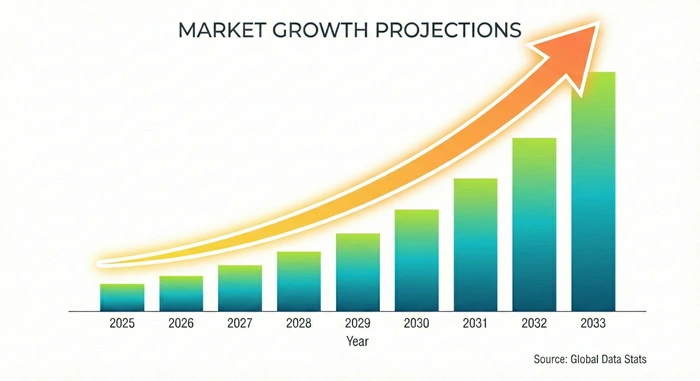
The L-Alanine market is well-positioned for steady, diversified growth through 2033, supported by expanding applications across multiple high-value end-use sectors and ongoing investment in production capacity by major amino acid manufacturers in China, Japan, and Europe. The pharmaceutical and nutraceutical sectors are expected to remain the strongest quality-driven demand channels, with growth in these segments supported by aging global populations, rising chronic disease prevalence, and expanding clinical use of amino acid-based therapeutic and nutritional products. The food and beverage industry represents the highest-volume application, with L-Alanine used as a flavor enhancer, sweetness modifier, and nutritional fortification ingredient in a wide range of processed food, infant formula, sports beverage, and functional food products.
Looking toward 2033, the development of new fermentation technologies — including continuous fermentation processes and next-generation biocatalytic synthesis routes — is expected to improve production efficiency and reduce manufacturing costs, supporting competitive pricing in commoditized food-grade market segments while enabling premium positioning in pharmaceutical and biotech applications. The growing global demand for animal protein — driving feed amino acid inclusion in livestock, poultry, and aquaculture nutrition — is also creating incremental demand for L-Alanine in the animal nutrition segment. Environmental sustainability considerations are becoming an increasingly important factor in amino acid procurement decisions, and producers investing in renewable energy-powered fermentation, lower-water-consumption processes, and certified sustainable supply chains will gain competitive advantages with sustainability-focused customers in Europe and North America through the forecast period.
Expert Speaks
-
"The amino acid ingredients market — including L-Alanine and related products — continues to demonstrate resilient growth fundamentals driven by expanding pharmaceutical formulation activity, the global sports nutrition boom, and growing institutional demand for precision nutritional therapies in clinical settings, all of which require consistent, high-purity amino acid supply chains that our business is well-positioned to serve," — Mark Macus, President, Ajinomoto Co. Inc. Americas Division, highlighting the diversified demand drivers sustaining growth across the amino acid specialty ingredients market.
-
"We see ongoing and growing demand for fermentation-derived amino acids like L-Alanine across food, pharmaceutical, and nutrition applications — and our investments in next-generation fermentation technology and sustainable production capacity are designed to ensure we can reliably meet customer quality and supply requirements as demand continues to scale globally," — Günter Bachmann, CEO, Evonik Nutrition & Care GmbH, emphasizing the strategic importance of production investment in sustaining competitive positioning across the L-Alanine and broader amino acid market.
-
"The clean-label trend and growing consumer preference for naturally sourced food and nutrition ingredients is creating real commercial differentiation in the amino acid market — customers are increasingly asking us to verify the fermentation origin, purity specifications, and sustainability credentials of ingredients like L-Alanine, and companies that can credibly deliver on all three dimensions will earn premium pricing and deeper customer partnerships," — Liam Condon, President, Bayer Crop Science and Nutrition Division, underscoring the market differentiation value of sustainable, fermentation-derived amino acid production in an increasingly quality-conscious buyer landscape.
Key Report Takeaways
-
Asia Pacific leads the global L-Alanine market with approximately 48% revenue share in 2025, anchored by China's dominant position as the world's largest producer and exporter of fermentation-derived amino acids, supported by low-cost glucose feedstock availability, established large-scale fermentation infrastructure, and the presence of major producers including Changzhou Yabang Chemical and Anhui Huaheng Biotechnology
-
Europe is the fastest-growing region, projected to expand at a CAGR of approximately 6.8% through 2033, driven by the stringent quality requirements of European pharmaceutical and food-grade amino acid buyers, growing demand for high-purity L-Alanine in parenteral nutrition and pharmaceutical synthesis applications, and increasing adoption of fermentation-derived clean-label amino acid ingredients by European functional food manufacturers
-
Pharmaceutical-grade L-Alanine represents the highest-value application segment, commanding approximately 35% of total market revenue in 2025 despite lower volume compared to food-grade applications, due to the premium pricing associated with the ultra-high purity standards, rigorous quality certification requirements, and specialized packaging and handling protocols demanded by pharmaceutical manufacturers
-
Food and beverage is the largest application segment by volume, contributing approximately 42% of total market consumption in 2025, driven by widespread use of L-Alanine as a flavor enhancer, nutritional fortifier, and sweetness modifier in processed foods, sports beverages, infant formula, and functional food products across global markets
-
Fermentation-based production is the dominant manufacturing method, holding a 72% share of the production technology segment in 2025, supported by its ability to produce L-amino acid stereoisomers with the precise chirality required for pharmaceutical and food safety applications, superior product purity consistency, and growing buyer preference for naturally produced amino acid ingredients
-
Animal nutrition is the fastest-growing application segment, expected to grow at a CAGR of approximately 7.5% through 2033 with a current share of 15%, driven by global expansion of intensive livestock, poultry, and aquaculture production and the growing adoption of precision feed amino acid formulation strategies that improve feed conversion efficiency, reduce nitrogen excretion, and support animal health outcomes
Market Scope
| Report Coverage | Details |
|---|---|
| Market Size by 2025 | USD 155.00 Million |
| Market Size by 2026 | USD 163.73 Million |
| Market Size by 2033 | USD 239.92 Million |
| Market Growth Rate from 2026 to 2033 | CAGR of 5.6% |
| Dominating Region | Asia Pacific |
| Fastest Growing Region | Europe |
| Base Year | 2025 |
| Forecast Period | 2026 to 2033 |
| Segments Covered | By Grade, By Application, By Production Method, By End-User Industry, By Region |
| Regions Covered | North America, Europe, Asia Pacific, Latin America, Middle East & Africa |
Market Dynamics
Drivers Impact Analysis
Expanding Pharmaceutical and Nutraceutical Demand, Rising Sports Nutrition Industry Growth, and Increasing Functional Food Formulation Activity Are Collectively Driving Consistent Upward Momentum in the L-Alanine Market
| Driver | ≈ % Impact on CAGR Forecast | Geographic Relevance | Impact Timeline |
|---|---|---|---|
| Growing Pharmaceutical and Nutraceutical Applications | ~1.8% | Global, primarily North America & Europe | Near to Long Term |
| Expanding Sports Nutrition and Dietary Supplement Industry | ~1.5% | North America, Europe, Asia Pacific | Near to Long Term |
| Rising Demand for Functional Foods and Clean-Label Ingredients | ~1.2% | North America, Europe | Near to Medium Term |
| Growing Animal Feed Amino Acid Inclusion Rates | ~0.7% | Asia Pacific, Latin America | Medium to Long Term |
| Expansion of Parenteral Nutrition in Clinical Settings | ~0.4% | Global | Near to Long Term |
The pharmaceutical and nutraceutical sectors represent the highest-value demand drivers in the L-Alanine market. The growing clinical adoption of amino acid-based parenteral nutrition formulations in hospital settings — particularly for ICU patients, surgical recovery patients, and individuals with gastrointestinal absorption disorders — creates consistent demand for pharmaceutical-grade L-Alanine with purity levels exceeding 99% and compliance with USP/EP pharmacopoeial specifications. The expanding global market for injectable amino acid solutions, driven by rising hospitalization rates in aging global populations and the growing adoption of home parenteral nutrition programs, provides a particularly stable and structurally growing end-market for premium L-Alanine producers. Additionally, ongoing pharmaceutical research into the therapeutic potential of amino acids in metabolic disease management, neurology, and oncology is creating early-stage demand signals that could expand into significant commercial volumes over the medium term.
The sports nutrition and dietary supplement industry is driving meaningful incremental demand for the L-Alanine market, particularly as amino acid-enriched formulations become standard components of mainstream health and wellness product lines rather than niche athlete supplements. Consumer awareness of amino acid's role in muscle maintenance, immune function, and metabolic health is growing rapidly through health media, social media influencers, and expanding nutritional literacy, driving demand for both standalone L-Alanine supplements and complex multi-amino acid formulations that include L-Alanine as a key component. The trend toward plant-based and vegan nutrition products is also supporting demand for fermentation-derived L-Alanine as a suitable amino acid source for consumers avoiding animal-derived protein concentrates — creating a natural product differentiation opportunity for fermentation-based amino acid producers targeting the premium plant-based nutrition market segment.
Restraints Impact Analysis
Raw Material Price Volatility, Intense Competition from Chinese Commodity Producers, and Stringent Regulatory Compliance Requirements Are Creating Meaningful Growth Constraints in the L-Alanine Market
| Restraint | ≈ % Impact on CAGR Forecast | Geographic Relevance | Impact Timeline |
|---|---|---|---|
| Raw Material (Glucose/Sugar Feedstock) Price Volatility | ~-1.0% | Global | Near Term |
| Intense Price Competition from Chinese Commodity Producers | ~-0.8% | Global | Near to Medium Term |
| Stringent Pharmaceutical Regulatory Compliance Costs | ~-0.6% | North America, Europe | Near to Long Term |
| Limited Consumer Awareness of L-Alanine Benefits vs. Other Amino Acids | ~-0.3% | Global | Near Term |
Raw material cost volatility is a persistent structural challenge for the L-Alanine market. The primary feedstock for microbial fermentation-based L-Alanine production is glucose derived from corn, cassava, or sugarcane — commodities whose prices fluctuate significantly based on weather conditions, energy costs, agricultural policy changes, and global demand dynamics from the biofuel sector. These price fluctuations directly impact the production economics of fermentation-based amino acid manufacturers, compressing margins when feedstock prices spike and creating pricing instability for downstream buyers. Producers that achieve greater fermentation efficiency — producing more L-Alanine per unit of glucose consumed — or that invest in long-term supply agreements for feedstock procurement are better positioned to manage this challenge, but raw material cost risk remains a fundamental constraint on producer profitability across the L-Alanine value chain.
Intense price competition from Chinese commodity amino acid producers creates persistent margin pressure across the L-Alanine market, particularly in the food-grade and feed-grade segments where product differentiation through quality certification is less pronounced. China's low-cost production advantage — rooted in low feedstock costs, large-scale fermentation infrastructure, low labor costs, and government support for amino acid export industries — makes it extremely challenging for higher-cost producers in North America, Europe, and Japan to compete on price in standard commodity-grade market segments. This pricing pressure constrains value growth and forces non-Chinese producers to focus on premium pharmaceutical-grade, GMP-certified, and sustainability-credentialed product segments where Chinese commodity producers are less competitive — a strategy that limits addressable market size for premium-positioned players.
Opportunities Impact Analysis
Growing Biotech and Peptide Synthesis Applications, Expanding Infant Formula Fortification Demand, and Rising Adoption of Precision Animal Nutrition Are Creating High-Value Growth Pathways for the L-Alanine Market
| Opportunity | ≈ % Impact on CAGR Forecast | Geographic Relevance | Impact Timeline |
|---|---|---|---|
| Growing Biotech and Peptide-Based Drug Manufacturing | ~+1.5% | North America, Europe, Asia Pacific | Medium to Long Term |
| Expanding Infant Formula Amino Acid Fortification Market | ~+1.2% | Asia Pacific, North America | Near to Long Term |
| Precision Animal Nutrition and Feed Efficiency Programs | ~+1.0% | Asia Pacific, Latin America | Medium to Long Term |
| Cosmetics and Personal Care Amino Acid Ingredient Demand | ~+0.5% | North America, Europe, Asia Pacific | Near to Medium Term |
The rapidly growing biotechnology and peptide-based pharmaceutical sector represents a high-value growth opportunity for pharmaceutical-grade L-Alanine suppliers. The explosion of peptide drug development — GLP-1 agonists being the most commercially prominent recent example — and the growing pipeline of amino acid-containing biopharmaceuticals requires large and growing supplies of high-purity amino acids as both active pharmaceutical ingredients and synthesis substrates. As the global peptide therapeutics market continues to expand at high growth rates, demand for pharmaceutical-grade L-Alanine as a key building block in solid-phase peptide synthesis is expected to grow substantially. Manufacturers that can achieve the purity, documentation, and supply reliability standards demanded by pharmaceutical peptide manufacturers will have access to the highest-margin segment of the L-Alanine market for the foreseeable future.
The infant formula market presents a consistent and growing opportunity for high-purity L-Alanine, as amino acid-based infant formulas represent the gold standard nutritional option for infants with cow's milk protein allergy and other gastrointestinal conditions requiring extensively hydrolyzed or elemental formula products. These specialty formulas require precisely controlled amino acid profiles, including L-Alanine, formulated to meet the specific nutritional requirements of infants — creating demand for pharmaceutical-grade purity standards and strict contaminant-free specifications. Asia Pacific — particularly China, where infant formula safety and nutritional quality are extremely high-priority consumer concerns following historical food safety incidents — is the fastest-growing regional market for amino acid-based specialty infant formulas, representing a significant and commercially attractive demand growth channel for premium L-Alanine producers.
Segment Analysis
By Grade
Pharmaceutical-Grade L-Alanine Leads in Revenue Value While Food-Grade Dominates Volume and the Fastest Commercial Growth Is Emerging in Biotech and Research-Grade Applications
Pharmaceutical-grade L-Alanine commands the highest revenue share among grade segments at approximately 35% of market value in 2025, generating around USD 54.25 million, despite representing a smaller proportion of total volume compared to food-grade products. Pharmaceutical-grade L-Alanine must meet stringent purity standards set by pharmacopoeial authorities including the U.S. Pharmacopeia (USP), European Pharmacopoeia (EP), and Japanese Pharmacopoeia (JP), requiring impurity profiles, heavy metal specifications, and microbiological limits that demand significantly more sophisticated purification infrastructure and quality systems. The production of pharmaceutical-grade L-Alanine for parenteral nutrition formulations, active pharmaceutical ingredient synthesis, and injectable drug manufacturing creates premium pricing that can range from two to five times the cost of food-grade equivalents. Europe and North America represent the dominant markets for this segment, where GMP-compliant pharmaceutical manufacturers demand local or certified international supply partners for their critical amino acid ingredients. Leading companies including Ajinomoto Co. Inc. (Japan), Evonik Industries (Germany), and Sigma-Aldrich (Merck KGaA) are the primary pharmaceutical-grade L-Alanine suppliers. This segment is projected to grow at a CAGR of approximately 6.2% through 2033.
Food-grade L-Alanine represents the largest volume segment at approximately 42% of total market consumption in 2025, driven by widespread use as a flavor enhancer, sweetness modifier, and amino acid fortification ingredient across processed foods, sports nutrition products, infant formula, and functional beverages. The segment is well-established in Japan and China, where L-Alanine has been used as a food additive and flavor ingredient for decades, and is growing steadily in Western markets as clean-label amino acid fortification becomes more mainstream in premium food and nutrition products. Asia Pacific dominates food-grade L-Alanine consumption, supported by the large-scale food processing industry in China and Japan and the strong cultural tradition of amino acid-enhanced food and beverage products. Changzhou Yabang Chemical (China), Anhui Huaheng Biotechnology (China), and Shijiazhuang Donghua Jinlong Chemical (China) are among the largest food-grade L-Alanine producers serving both domestic and international markets. This segment grows at a steady CAGR of approximately 5.2% through 2033 in the L-Alanine market.
By Application
Food and Beverage Fortification Leads Total Consumption While Pharmaceutical and Nutraceutical Applications Drive Premium Revenue Growth in the Expanding L-Alanine Landscape
Food and beverage applications represent the largest single end-use category for L-Alanine, accounting for approximately 42% of global market volume in 2025 and generating around USD 65.10 million in revenue. L-Alanine's unique flavor profile — providing a mild sweetness and umami-enhancing effect — makes it a valued ingredient in savory foods, seafood flavoring, beverages, and prepared meal products where it improves taste depth and palatability without adding sugar or artificial flavor compounds. Its use in sports nutrition beverages, energy drinks, and recovery formulas has grown significantly as product developers recognize its role in muscle metabolism support and its ability to balance the bitter taste profile of other amino acid ingredients. Japan continues to lead global per-capita consumption of L-Alanine in food applications, but North American and European functional food markets are growing rapidly as amino acid fortification becomes an increasingly accepted and mainstream product development strategy. Ajinomoto Co. Inc. and Kyowa Hakko Bio Co. Ltd. (Japan) are among the most technically sophisticated suppliers serving premium food and beverage application requirements in this segment.
Pharmaceutical and nutraceutical applications collectively account for approximately 35% of total L-Alanine revenue in 2025, representing around USD 54.25 million, and are projected to grow at a CAGR of approximately 6.4% through 2033 — the fastest among major application segments. Within this category, parenteral nutrition represents the most structurally growing sub-segment, supported by rising rates of clinical conditions requiring intravenous nutritional support including cancer treatment side effects, surgical recovery, and critical illness malnutrition. The nutraceutical sub-segment — including amino acid dietary supplements, functional nutrition products, and clinical nutritional formulas — is growing rapidly as consumer and clinical interest in targeted amino acid supplementation expands. North America leads this application segment by revenue, supported by the size and sophistication of the U.S. pharmaceutical and nutraceutical industries and the strong clinical and consumer culture around nutritional supplementation. Key companies active in this segment include Fresenius Kabi (Germany), Baxter International (United States), and B. Braun Melsungen AG (Germany) as pharmaceutical amino acid solution manufacturers, and various nutraceutical ingredient suppliers supporting supplement formulation.
Regional Insights
Asia Pacific
Asia Pacific's Dominant Fermentation Production Infrastructure, World's Largest Amino Acid Manufacturing Base, and Growing Domestic Pharmaceutical and Nutrition Markets Make It the Global Leader in the L-Alanine Market
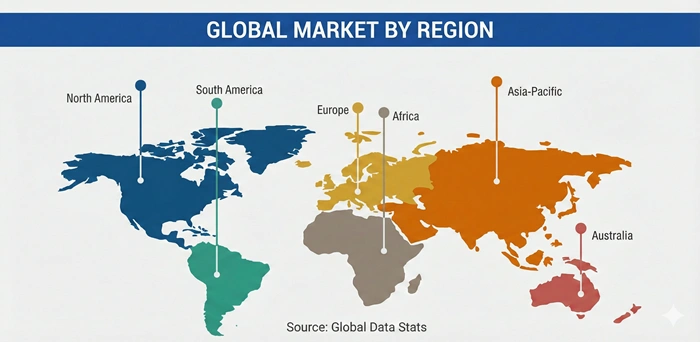
Asia Pacific holds the largest share of the global L-Alanine market at approximately 48% in 2025, generating around USD 74.40 million in revenue, and is expected to grow at a CAGR of 5.4% through 2033. China is the undisputed production leader, home to the largest concentration of fermentation-based amino acid manufacturing capacity in the world — with major producers including Changzhou Yabang Chemical, Anhui Huaheng Biotechnology, and Shijiazhuang Donghua Jinlong Chemical collectively supplying a significant share of the global food-grade and feed-grade L-Alanine market at highly competitive price points. Japan is the region's most sophisticated amino acid market, characterized by premium pharmaceutical and food-grade production standards, advanced fermentation biotechnology, and deep global customer relationships at companies like Ajinomoto Co. Inc. and Kyowa Hakko Bio Co. Ltd. that have shaped the global amino acid industry for decades.
South Korea and India are emerging as important growth markets within Asia Pacific, with growing domestic pharmaceutical and nutraceutical industries creating increasing demand for locally sourced high-purity L-Alanine that meets international quality standards. The region's dominance in fermentation technology, combined with relatively low production costs compared to Western manufacturers, ensures that Asia Pacific will maintain its position as both the largest production base and a major consumption market for L-Alanine through 2033. The growing sophistication of Asian pharmaceutical manufacturing — particularly in India, where the generic drug industry continues to expand globally — is creating increasing regional demand for pharmaceutical-grade amino acid inputs, supporting both local production investment and imports from Japanese and Chinese premium suppliers.
Europe
Europe's Stringent Quality Standards, Strong Pharmaceutical Industry Demand, and Growing Preference for Certified Sustainable and Clean-Label Amino Acid Ingredients Are Driving Its Position as the Fastest-Growing L-Alanine Regional Market
Europe is the fastest-growing region in the L-Alanine market, holding approximately 22% market share in 2025 and projected to grow at the highest regional CAGR of approximately 6.8% through 2033. The region's growth is driven primarily by the size and quality standards of the European pharmaceutical and clinical nutrition industries, where L-Alanine is an essential component in parenteral nutrition solutions and pharmaceutical synthesis — applications that require the highest purity grades and the most rigorous supply chain documentation and audit standards. Germany is the leading European market, supported by its world-class pharmaceutical and specialty chemical industries, with Evonik Industries and Merck KGaA (Sigma-Aldrich) among the most prominent European players in pharmaceutical-grade amino acid production and distribution. The United Kingdom, France, and the Netherlands are also significant markets for both production and consumption of high-purity L-Alanine.
Europe's clean-label and sustainability-driven food industry is creating growing demand for fermentation-origin, non-GMO, and certified organic L-Alanine for use in premium food, beverage, and sports nutrition product formulations that appeal to environmentally and health-conscious European consumers. EU food additive regulations and the growing adoption of sustainability certification standards — including organic certification, RSPO-equivalent fermentation substrate standards, and carbon footprint labeling — are creating competitive advantages for producers that can credibly demonstrate clean and sustainable production practices. The high regulatory and quality bar of the European market effectively protects premium-positioned producers from the most intense Chinese commodity price competition, as importers of food and pharmaceutical ingredients must meet EU standards that are among the most rigorous globally — creating a natural market segmentation that sustains premium pricing for certified European and Japanese L-Alanine suppliers.
Report Customization: Region-Wise and Country-Wise Insights Available on Request
This Report Can Be Fully Customized for Every Region and Country — Providing Detailed L-Alanine Market Intelligence, Regulatory Analysis, Competitive Landscape, and Growth Opportunity Assessments Tailored to the Specific Geography and Application Focus That Matters Most to Your Business
Customized versions of this report are available for all major regions and countries listed below, delivering in-depth market analysis, production and consumption data, regulatory environment assessment, competitive landscape profiles, and application-specific demand insights tailored to the L-Alanine market in each selected geography.
North America
-
U.S. — FDA regulatory landscape for amino acid food additives and pharmaceutical excipients, domestic consumption analysis by application, key pharmaceutical and nutraceutical industry demand trends, and competitive landscape for L-Alanine ingredient suppliers
-
Canada — Health Canada regulatory framework, domestic food and pharmaceutical industry demand, and import sourcing trends for L-Alanine and related amino acid ingredients
-
Mexico — COFEPRIS regulatory environment, growing pharmaceutical manufacturing sector demand, and food industry amino acid formulation trends
Europe
-
U.K. — MHRA and FSA regulatory landscape for amino acid ingredients, post-Brexit import dynamics, pharmaceutical industry L-Alanine demand analysis, and key market participant profiles
-
Germany — Europe's largest pharmaceutical and specialty chemical market analysis, Evonik and Merck competitive positioning, and regulatory framework under BfArM and EFSA
-
France — ANSES regulatory environment, food and pharmaceutical industry amino acid demand trends, and functional food formulation market analysis
-
Italy — pharmaceutical manufacturing demand for amino acid excipients, food-grade consumption trends, and domestic production landscape
-
Rest of Europe — Nordic clean-label food industry demand, Eastern European pharmaceutical manufacturing growth, and regional regulatory harmonization impacts on L-Alanine trade flows
Asia Pacific
-
China — domestic production capacity analysis, major manufacturer profiles, export volume and pricing trends, and growing domestic pharmaceutical and functional food demand for L-Alanine
-
India — pharmaceutical API manufacturing demand for L-Alanine, domestic nutraceutical market growth, and emerging production capacity investment analysis
-
Japan — premium production standards and key player analysis for Ajinomoto and Kyowa Hakko, domestic food and pharmaceutical application demand, and export market development
-
South Korea — growing pharmaceutical and functional food industry demand, domestic production capabilities, and import sourcing dynamics for L-Alanine
-
Australia — TGA regulatory environment, domestic food and supplement industry demand, and import market analysis for amino acid ingredients
-
Rest of Asia Pacific — Southeast Asian pharmaceutical manufacturing growth demand, animal nutrition market expansion, and regional trade flow analysis
Latin America
-
Brazil — ANVISA regulatory framework, animal nutrition sector amino acid demand, and pharmaceutical industry L-Alanine consumption analysis
-
Argentina — domestic pharmaceutical and food industry demand dynamics, import sourcing trends, and emerging nutraceutical market analysis
-
Rest of Latin America — regional animal feed amino acid market growth, pharmaceutical manufacturing development, and import market opportunity analysis
Middle East & Africa
-
UAE — ESMA regulatory standards, pharmaceutical industry demand at JAFZA and healthcare hub facilities, and functional food market amino acid ingredient trends
-
Saudi Arabia — Vision 2030 pharmaceutical manufacturing development, growing clinical nutrition demand, and food industry amino acid ingredient market analysis
-
Rest of MEA — Sub-Saharan African pharmaceutical market growth, animal nutrition demand, and Middle Eastern food processing industry L-Alanine consumption trends
Top Key Players
-
Ajinomoto Co. Inc. (Japan)
-
Evonik Industries AG (Germany)
-
Kyowa Hakko Bio Co. Ltd. (Japan)
-
Sigma-Aldrich Corporation (Merck KGaA) (Germany)
-
Changzhou Yabang Chemical Co. Ltd. (China)
-
Anhui Huaheng Biotechnology Co. Ltd. (China)
-
Shijiazhuang Donghua Jinlong Chemical Co. Ltd. (China)
-
Fresenius Kabi AG (Germany)
-
Baxter International Inc. (United States)
-
B. Braun Melsungen AG (Germany)
-
Hebei Huayang Chemical Co. Ltd. (China)
-
Wuhan Grand Hoyo Co. Ltd. (China)
-
Hangzhou Sartort Biosciences Co. Ltd. (China)
-
TCI Chemicals (India) Pvt. Ltd. (India)
-
Brenntag AG (Germany)
Recent Developments
-
In 2025, Ajinomoto Co. Inc. announced a significant capacity expansion at its amino acid fermentation facilities in Brazil and Thailand, targeting growth in both food-grade and pharmaceutical-grade amino acid production — including L-Alanine — to meet rising demand from South American animal nutrition markets and Southeast Asian pharmaceutical and functional food customers.
-
In 2025, Evonik Industries AG expanded its pharmaceutical amino acid portfolio with new GMP-certified production documentation packages for multiple amino acids including L-Alanine, enhancing its ability to serve European and North American pharmaceutical manufacturers with the comprehensive regulatory support materials required for drug master file submissions and GMP compliance audits.
-
In 2026, Kyowa Hakko Bio Co. Ltd. (a subsidiary of Kirin Holdings) unveiled a new generation of its proprietary microbial fermentation strain platform for amino acid production, demonstrating significantly improved L-Alanine yield efficiency that is expected to reduce production costs and support more competitive pricing for its pharmaceutical-grade and food-grade product lines in international markets.
-
In 2025, Changzhou Yabang Chemical Co. Ltd. completed a major facility upgrade to increase L-Alanine production capacity and implement enhanced quality management systems to meet EU food safety and pharmaceutical excipient standards, enabling the company to strengthen its position as a key export supplier to European and North American food and nutrition ingredient buyers.
-
In 2024, Sigma-Aldrich (Merck KGaA) expanded its biochemical research-grade L-Alanine product range with new high-purity isotope-labeled and specialty-grade variants targeted at academic and industrial biochemical research applications, responding to growing demand from protein chemistry, metabolomics, and peptide synthesis research programs at universities and biopharmaceutical companies globally.
Market Trends
The Shift Toward Fermentation-Derived Clean-Label Amino Acids and the Growing Integration of L-Alanine in Precision Nutrition and Peptide Pharmaceutical Applications Are Defining the Market's Next Growth Phase
One of the most commercially significant trends shaping the L-Alanine market is the accelerating shift toward fermentation-origin, non-GMO, and sustainably produced amino acid ingredients across food, beverage, and supplement applications. Buyers in Europe, North America, and premium Asia Pacific markets are increasingly specifying fermentation-derived L-Alanine over chemically synthesized alternatives, driven by clean-label consumer demands, retail customer sustainability commitments, and regulatory guidance that favors naturally produced food ingredients. This trend is creating meaningful product differentiation opportunities for certified fermentation-based producers and pressuring synthetic route manufacturers to either transition production methods or accept positioning in lower-value commodity segments. For leading fermentation amino acid producers, the clean-label premium represents an important margin expansion lever that is expected to become more commercially significant as sustainable ingredient sourcing requirements tighten across the global food and nutrition supply chain through 2033.
A second major trend driving demand evolution in the L-Alanine market is the growing integration of L-Alanine in targeted precision nutrition programs and advanced pharmaceutical peptide synthesis. Clinical nutrition research increasingly recognizes the specific metabolic roles of individual amino acids in glucose homeostasis, muscle protein turnover, and immune function, driving more sophisticated prescription and medical nutrition product formulations that include precisely dosed L-Alanine. In pharmaceutical drug development, the explosion of GLP-1 receptor agonists, peptide oncology drugs, and other amino acid-containing biopharmaceuticals is creating growing demand for ultra-high-purity L-Alanine as both a synthesis substrate and a pharmaceutical excipient. As the global peptide drug pipeline continues to expand and advance toward commercial approval, the demand signal for pharmaceutical-grade L-Alanine from the biotechnology and pharmaceutical sector is expected to become an increasingly important and high-growth revenue driver through the forecast period.
Segments Covered in the Report
By Grade
-
Pharmaceutical Grade
-
USP/EP/JP Compliant
-
GMP-Certified Pharmaceutical Grade
-
-
Food Grade
-
Standard Food Grade
-
Organic / Non-GMO Certified
-
-
Feed Grade
-
Biochemical / Research Grade
By Application
-
Food and Beverages
-
Flavor Enhancer
-
Nutritional Fortification
-
Sports Nutrition Products
-
Infant Formula
-
-
Pharmaceuticals and Nutraceuticals
-
Parenteral Nutrition
-
Pharmaceutical Synthesis
-
Dietary Supplements
-
-
Animal Feed and Nutrition
-
Livestock Feed
-
Poultry Feed
-
Aquaculture Feed
-
-
Cosmetics and Personal Care
-
Biochemical Research
By Production Method
-
Fermentation-Based Production
-
Microbial Fermentation
-
Enzymatic Conversion
-
-
Chemical Synthesis
-
Extraction from Protein Hydrolysis
By End-User Industry
-
Pharmaceutical and Biotech Companies
-
Food and Beverage Manufacturers
-
Animal Nutrition Companies
-
Dietary Supplement Manufacturers
-
Cosmetics and Personal Care Companies
-
Research Institutions and Laboratories
By Region
-
North America (U.S., Canada, Mexico)
-
Europe (U.K., Germany, France, Italy, Rest of Europe)
-
Asia Pacific (China, India, Japan, South Korea, Australia, Rest of Asia Pacific)
-
Latin America (Brazil, Argentina, Rest of Latin America)
-
Middle East & Africa (UAE, Saudi Arabia, Rest of MEA)
❝ Built for Every Level — From Startups to Industry Giants ❞
Here Is Exactly How This Report Works for You
-
For Tier 1 global amino acid manufacturers, large pharmaceutical companies, and institutional raw material procurement teams, this report delivers a granular competitor production capacity, revenue, and market share analysis — covering the strategic positioning of Ajinomoto, Evonik, Kyowa Hakko, and Chinese commodity producers — alongside a detailed assessment of how geopolitical dynamics including U.S.-China trade restrictions on chemical and food ingredient imports, EU food additive regulatory changes, and feedstock commodity price cycles are directly impacting global L-Alanine supply chain decisions and pricing strategies, enabling senior procurement and business development leaders to make forward-looking sourcing and investment decisions with confidence.
-
For Tier 2 and Tier 3 specialty chemical distributors, regional amino acid ingredient traders, nutraceutical and pharmaceutical contract manufacturers, and emerging market food ingredient suppliers, this report maps detailed supply-demand dynamics across all major grade categories, applications, and geographies — identifying where quality certification gaps, logistics barriers, or supply concentration risks are creating commercial opportunities for well-positioned mid-market participants who can offer reliable supply, competitive quality, and responsive service to underserved customer segments in growing regional markets.
-
For private equity investors, strategic corporate development teams, and specialty chemical sector fund managers evaluating acquisition, investment, or partnership opportunities in the amino acid ingredients space, this report provides rigorous forecast data with segment-level CAGR projections, a structured M&A and capacity investment activity review for the past two years, and a forward-looking assessment of how fermentation technology innovation, pharmaceutical peptide market growth, clean-label ingredient demand, and precision animal nutrition trends are reshaping competitive dynamics and creating attractive value creation opportunities in the global L-Alanine market through 2033.
Frequently Asked Questions
Question 1: What is the current market size of the L-Alanine market and what is its projected value by 2033?
Answer: The L-Alanine market is valued at USD 155.00 million in 2025 and is projected to reach approximately USD 239.92 million by 2033. The market is expected to grow at a CAGR of 5.6% from 2026 to 2033, supported by increasing demand from pharmaceutical, food, and animal nutrition applications globally.
Question 2: What are the key applications driving growth in the L-Alanine market?
Answer: The L-Alanine market is primarily driven by food and beverage fortification, pharmaceutical parenteral nutrition formulations, sports nutrition product development, and growing animal feed amino acid inclusion programs. Pharmaceutical-grade applications command the highest unit value, while food and beverage represents the largest consumption volume and animal nutrition is the fastest-growing application segment.
Question 3: Which production method dominates the L-Alanine market and why?
Answer: Fermentation-based production holds approximately 72% of the L-Alanine market's production technology share, favored for its ability to produce the L-stereoisomer form required for biological activity with high purity consistency and growing alignment with clean-label buyer preferences. Chemical synthesis remains important for certain applications but is increasingly challenged by buyer preference for naturally fermented amino acid ingredients in food, pharmaceutical, and nutrition markets.
Question 4: Which region leads the L-Alanine market and which is growing fastest?
Answer: Asia Pacific leads the L-Alanine market with approximately 48% revenue share in 2025, driven by China's dominant fermentation production base and Japan's premium amino acid manufacturing expertise. Europe is the fastest-growing region at approximately 6.8% CAGR through 2033, propelled by strong pharmaceutical industry demand, stringent quality standards that support premium pricing, and growing clean-label food ingredient adoption.
Question 5: How is the L-Alanine market being impacted by pharmaceutical industry growth?
Answer: The L-Alanine market is experiencing growing demand from the pharmaceutical industry, particularly for parenteral nutrition solutions, peptide drug synthesis, and pharmaceutical excipient applications that require ultra-high purity grades meeting USP/EP specifications. The explosive growth of the global peptide therapeutics sector — including GLP-1 receptor agonists and oncology peptides — is creating an accelerating demand signal for pharmaceutical-grade L-Alanine that is expected to drive above-average growth in the premium pharmaceutical segment through the forecast period.