
Interventional Cardiology Devices Market Overview
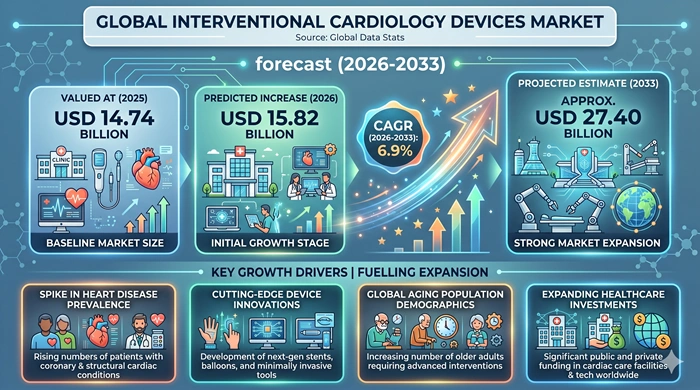
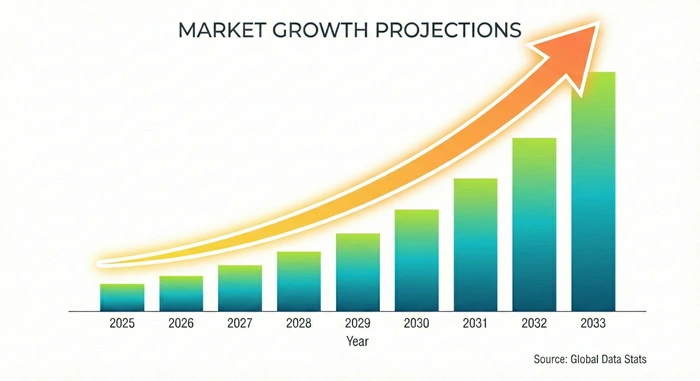
The global interventional cardiology devices market size is valued at USD 14.74 billion in 2025 and is predicted to increase from USD 15.82 billion in 2026 to approximately USD 27.40 billion by 2033, growing at a CAGR of 6.9% from 2026 to 2033.
The rising global burden of cardiovascular diseases, which remain the leading cause of mortality worldwide, is creating consistent and growing demand for advanced cardiac intervention tools, minimally invasive surgical devices, and image-guided treatment systems. Growing adoption of percutaneous coronary intervention procedures, rapid technological innovation in stent design, transcatheter valve therapies, and structural heart solutions are collectively driving the market's sustained expansion across both developed and emerging economies.
AI Impact on the Interventional Cardiology Devices Industry
Artificial Intelligence Is Enhancing Procedural Precision, Real-Time Decision Support, and Predictive Patient Outcomes Across the Interventional Cardiology Ecosystem*
Artificial intelligence is increasingly influencing every dimension of the interventional cardiology devices landscape, from pre-procedural planning to intraoperative guidance and post-procedural outcome monitoring. AI-powered imaging analysis platforms can now automatically detect coronary artery stenosis, quantify lesion severity, and suggest optimal stent sizing from angiographic images — tasks that previously relied entirely on the subjective judgment of experienced interventional cardiologists. These tools are not only improving procedural accuracy and consistency but are also helping less experienced clinicians in lower-resource settings deliver outcomes that approach those of high-volume cardiac centers.
Beyond imaging, AI is enabling predictive risk stratification that helps clinicians identify which patients are most likely to benefit from early intervention versus conservative medical management. Machine learning models trained on large real-world registries of PCI outcomes, stent thrombosis events, and TAVI procedure data are informing clinical decision-making in ways that were previously not possible. As regulatory approvals for AI-assisted cardiac diagnostic and treatment planning tools accelerate — particularly from the FDA and CE Mark pathways — the integration of AI into interventional cardiology devices and supporting software platforms is expected to become a defining competitive differentiator through 2033.
Growth Factors
Surging Cardiovascular Disease Prevalence, Aging Populations, and Rapid Expansion of Minimally Invasive Cardiac Procedures Are the Core Growth Engines of the Interventional Cardiology Devices Market*
The interventional cardiology devices market is growing on the back of an accelerating global cardiovascular disease epidemic. Cardiovascular conditions — including coronary artery disease, heart failure, valvular heart disease, and arrhythmias — collectively account for nearly 18 million deaths annually worldwide, and the patient population requiring intervention continues to grow as populations age, obesity rates rise, and metabolic disorders including diabetes become more prevalent. Older patients in particular tend to require multiple cardiac interventions over their lifetime, creating a durable base of repeat-use demand for stents, balloons, catheters, and structural heart devices that sustains market growth through every economic cycle.
The shift from open-heart surgery toward minimally invasive catheter-based procedures has been one of the most powerful structural drivers reshaping the cardiac device market over the past two decades, and this trend continues with force. Procedures such as percutaneous coronary intervention, transcatheter aortic valve replacement, and left atrial appendage closure can now be performed with greatly reduced procedural risk, shorter hospital stays, and faster patient recovery compared to traditional cardiac surgery — making them increasingly preferred by both patients and clinicians. This growing procedural volume is directly translating into expanding demand for the full range of devices, disposables, imaging systems, and hemodynamic monitoring tools that support the delivery of these interventions at scale.
Market Outlook
From Bioresorbable Stents to AI-Guided TAVI Procedures, Next-Generation Innovation Is Set to Redefine the Future of the Interventional Cardiology Devices Market Through 2033*
The long-term outlook for the interventional cardiology devices market is exceptionally positive, underpinned by a pipeline of disruptive innovations that are steadily moving from clinical trials into commercial use. Bioresorbable vascular scaffolds — which dissolve naturally within the coronary artery after fulfilling their scaffolding function, eliminating the long-term risks associated with permanent metallic implants — represent one of the most watched next-generation developments in coronary intervention. While first-generation bioresorbable stents faced clinical setbacks, second-generation devices from multiple manufacturers are showing significantly improved outcomes in ongoing trials and are expected to re-enter the mainstream market during the forecast period.
Structural heart intervention is another segment that is reshaping the long-term growth outlook for the market. TAVI procedures are now being performed in low-surgical-risk patients — not just the high-risk elderly population for whom the technology was originally developed — dramatically expanding the addressable patient population. Innovations in transcatheter mitral and tricuspid valve repair, left ventricular assist devices for bridge-to-transplant indications, and leadless cardiac pacing systems are creating an entirely new category of structural and electrophysiology device revenue. Companies that invest in building comprehensive structural heart and cardiac rhythm management portfolios alongside their traditional coronary intervention device lines will be best positioned to capture the broadest share of market growth through 2033.
Expert Speaks
Executives from leading medical device companies are expressing strong confidence in the interventional cardiology devices market's trajectory:
-
"We are at a remarkable moment in cardiac care — the combination of advanced imaging, next-generation device design, and AI-powered decision support is enabling us to treat more patients, more precisely, with better outcomes than at any point in history. The innovation runway ahead is extraordinary." — CEO, Medtronic plc
-
"Our structural heart and electrophysiology platforms continue to demonstrate outstanding clinical results, and we are seeing accelerating adoption of our TAVI and cardiac ablation systems globally. The interventional cardiology space is one of the most dynamic and high-growth areas across all of medical technology." — CEO, Abbott Laboratories
-
"The shift toward minimally invasive cardiac procedures is permanent and it is accelerating. We are investing heavily in next-generation stent platforms, imaging catheters, and AI-enabled hemodynamic monitoring tools to ensure we remain the partner of choice for interventional cardiologists worldwide." — CEO, Boston Scientific Corporation
Key Report Takeaways
-
North America leads the global interventional cardiology devices market, holding the largest regional market share of approximately 44–45% in 2025, driven by extremely high cardiovascular disease prevalence, a well-developed cardiac catheterization laboratory network, strong reimbursement frameworks, and the headquarters presence of major device companies including Medtronic, Abbott, and Boston Scientific
-
Asia Pacific is the fastest-growing region, recording the highest regional CAGR during 2026–2033, propelled by rapidly expanding cardiac care infrastructure, a massive and aging patient population across China, India, and Japan, and growing government investment in interventional cardiovascular treatment access
-
Hospitals represent the dominant end-user segment, accounting for approximately 83% of total procedure volume as large tertiary care centers with dedicated cardiac catheterization laboratories continue to serve as the primary sites for PCI, TAVI, and structural heart interventions globally
-
Coronary stents — particularly drug-eluting stents — contribute the highest share of product-level revenue, driven by their central role in percutaneous coronary intervention and the ongoing shift from bare-metal to drug-eluting and biodegradable polymer stent platforms across all major markets
-
Percutaneous coronary intervention remains the most commonly performed interventional cardiac procedure, accounting for the largest share of procedure-level demand as PCI continues to be the first-line revascularization strategy for coronary artery disease patients who meet clinical eligibility criteria
-
Structural heart devices represent the fastest-growing product sub-segment, projected to expand at a notably higher CAGR than coronary intervention devices through 2033, with TAVI procedures alone expected to account for over 28% of total structural heart device market share as clinical indications broaden to include intermediate-risk patient populations — growing at an estimated CAGR of approximately 9.5%
Market Scope
| Report Coverage | Details |
|---|---|
| Market Size by 2025 | USD 14.74 Billion |
| Market Size by 2026 | USD 15.82 Billion |
| Market Size by 2033 | USD 27.40 Billion |
| Market Growth Rate (2026–2033) | CAGR of 6.9% |
| Dominating Region | North America |
| Fastest Growing Region | Asia Pacific |
| Base Year | 2025 |
| Forecast Period | 2026 to 2033 |
| Segments Covered | Product, Procedure, End User |
| Regions Covered | North America, Europe, Asia Pacific, Latin America, Middle East & Africa |
Market Dynamics
Drivers Impact Analysis
Rising Cardiovascular Disease Burden, Expanding PCI Procedure Volumes, and Rapid Stent Technology Innovation Are Driving Sustained Growth in the Interventional Cardiology Devices Market*
| Driver | ≈ % Impact on CAGR Forecast | Geographic Relevance | Impact Timeline |
|---|---|---|---|
| Rising global prevalence of coronary artery disease and heart failure | ~32% | Global, especially North America & Europe | Short to Long-Term |
| Growing adoption of minimally invasive PCI and structural heart procedures | ~27% | North America, Asia Pacific, Europe | Short to Mid-Term |
| Rapid advancement in drug-eluting stent and bioresorbable scaffold technology | ~20% | North America, Europe | Mid to Long-Term |
| Expansion of TAVI and transcatheter structural heart device indications | ~13% | North America, Europe | Mid to Long-Term |
| Improving cardiac catheterization lab infrastructure in emerging markets | ~8% | Asia Pacific, Latin America, MEA | Mid-Term |
The global cardiovascular disease burden is the single most powerful structural driver behind the growth of the interventional cardiology devices market. With coronary artery disease, acute myocardial infarction, and valvular heart disease collectively affecting hundreds of millions of people worldwide, the demand for catheter-based diagnosis and treatment continues to grow at a steady pace. The aging of global populations — particularly the rapid demographic shift occurring across Europe, Japan, and China — is compounding this effect, as older patients carry significantly higher cardiovascular risk and often require multiple procedural interventions over the course of their disease management. This demographic-driven demand growth is largely independent of economic cycles, providing a stable and predictable foundation for device manufacturers.
The rapid technological evolution of coronary stent platforms has simultaneously expanded the eligible patient population for PCI and improved clinical outcomes, further accelerating market growth. Modern drug-eluting stents deliver anti-proliferative medications directly to the vessel wall to prevent restenosis, and ongoing improvements in stent strut thickness, polymer biocompatibility, and drug delivery kinetics are consistently reducing the rates of procedure-related complications. New-generation devices including ultrathin strut DES platforms, drug-coated balloons for bifurcation lesions, and intravascular lithotripsy systems for calcified lesions are extending PCI to patient subgroups previously considered unsuitable for catheter-based treatment, meaningfully growing the interventional cardiology addressable market.
Restraints Impact Analysis
High Device Costs, Stringent Regulatory Pathways, and Procedural Complication Risks Continue to Create Barriers to Full Market Growth in Interventional Cardiology*
| Restraint | ≈ % Impact on CAGR Forecast | Geographic Relevance | Impact Timeline |
|---|---|---|---|
| High cost of advanced interventional cardiology devices and procedures | ~34% | Developing regions, Latin America, MEA | Short to Mid-Term |
| Stringent FDA and CE Mark regulatory requirements for new cardiac devices | ~28% | North America, Europe | Mid to Long-Term |
| Risk of procedural complications including stent thrombosis and vascular injury | ~22% | Global | Short to Mid-Term |
| Shortage of trained interventional cardiologists in emerging markets | ~16% | Asia Pacific, Africa, Latin America | Mid-Term |
The high cost of interventional cardiology devices — particularly advanced drug-eluting stents, structural heart implants, and intravascular imaging systems — remains one of the most significant barriers to broader market penetration, especially in middle- and low-income countries across Asia, Africa, and Latin America. A single TAVI procedure, for example, can cost USD 30,000 or more in high-income markets, placing it entirely out of reach for the majority of patients with severe aortic stenosis in developing regions where the disease burden is also high. Even in markets with partial public health coverage, budget constraints and device reimbursement limitations mean that the most advanced cardiac intervention technologies often remain accessible only to privately insured or high-income patients.
Regulatory complexity represents another persistent challenge for interventional cardiology device manufacturers. The FDA's rigorous premarket approval pathway for Class III cardiac devices — which includes coronary stents, mechanical heart valves, and transcatheter cardiac devices — requires extensive clinical trial data, often spanning several years and multiple geographies, before market authorization is granted. The European Union's new Medical Device Regulation has similarly increased the clinical evidence requirements for cardiac device CE certification, raising development costs and extending time-to-market timelines. These regulatory hurdles, while essential for patient safety, slow the commercialization of innovative technologies and increase the financial barriers for smaller companies seeking to compete with established cardiac device giants.
Opportunities Impact Analysis
Emerging Market Expansion, Next-Generation Structural Heart Devices, and AI-Powered Intravascular Imaging Represent Transformative Growth Opportunities in the Interventional Cardiology Devices Market*
| Opportunity | ≈ % Impact on CAGR Forecast | Geographic Relevance | Impact Timeline |
|---|---|---|---|
| Expansion of cardiac catheterization infrastructure in emerging markets | ~30% | Asia Pacific, Latin America, MEA | Mid to Long-Term |
| Growing TAVI adoption in intermediate and low-risk surgical patients | ~27% | North America, Europe, Asia Pacific | Short to Mid-Term |
| AI-assisted intravascular imaging and hemodynamic assessment | ~22% | North America, Europe | Short to Long-Term |
| Development of bioresorbable scaffolds and biodegradable polymer stents | ~21% | North America, Europe, Asia Pacific | Mid to Long-Term |
Emerging markets across Asia Pacific, Latin America, and the Middle East represent a vast and largely untapped opportunity for interventional cardiology device manufacturers. Rapid urbanization, improving public health infrastructure, growing per-capita healthcare spending, and increasing awareness of cardiovascular risk factors among middle-class populations in countries like India, China, Brazil, Indonesia, and Saudi Arabia are creating first-time demand for PCI, cardiac imaging, and structural heart interventions at scale. Governments across these regions are investing in catheterization laboratory expansion, cardiologist training programs, and cardiovascular disease awareness campaigns, all of which will accelerate procedural volume growth and device adoption over the 2026–2033 forecast period.
The broadening of TAVI indications beyond high-surgical-risk patients into intermediate and now low-risk populations represents perhaps the single largest near-term revenue opportunity within the structural heart devices segment. Multiple landmark clinical trials, including PARTNER 3 and Evolut Low Risk, have demonstrated non-inferiority or superiority of TAVI compared to surgical aortic valve replacement in low-risk patients, leading guideline bodies in the United States and Europe to endorse TAVI for a substantially larger proportion of patients with severe aortic stenosis. This guideline evolution is dramatically expanding the annual patient population eligible for transcatheter valve procedures — and with it, the market opportunity for valve delivery systems, procedural imaging catheters, vascular closure devices, and supporting accessories.
Segment Analysis
By Product
Drug-Eluting Stents Dominate Interventional Cardiology Product Revenue While Structural Heart Devices Emerge as the Fastest-Growing Sub-Segment Driven by TAVI Expansion*
The coronary stents segment holds the dominant position within the interventional cardiology devices market, accounting for approximately 38% of total product revenue in 2026, anchored by the widespread use of drug-eluting stents as the standard of care in percutaneous coronary intervention. DES platforms combine a metallic scaffold with a polymer coating that elutes anti-proliferative drugs — most commonly everolimus, zotarolimus, or sirolimus — directly into the coronary artery wall to prevent neointimal hyperplasia and the associated risk of in-stent restenosis. North America is the largest regional market for coronary stents, where high PCI procedure volumes at tertiary cardiac centers drive consistent product demand, with major suppliers including Medtronic (USA), Abbott (USA), and Boston Scientific (USA) collectively commanding the majority of market share. The growing adoption of ultrathin strut DES platforms and drug-coated balloons as an alternative to repeat stenting in in-stent restenosis cases is further expanding the stent segment's addressable market.
Structural heart devices are the most rapidly expanding product category within the broader interventional cardiology ecosystem, growing at a CAGR that significantly exceeds the overall market rate during the forecast period. This segment encompasses transcatheter aortic valve replacement systems, transcatheter mitral and tricuspid repair platforms, left atrial appendage occlusion devices, and septal defect closure systems — all of which are enabling cardiologists to treat complex structural cardiac conditions through catheter-based approaches that were historically addressed only through open-heart surgery. Europe is the leading regional market for structural heart devices, where early adoption of TAVI and strong national reimbursement support in Germany, France, and the United Kingdom have created deeply embedded clinical workflows. Leading companies including Edwards Lifesciences (USA) and Medtronic are driving the structural heart market's commercial and clinical momentum globally through their SAPIEN and Evolut platform families respectively.
By End User
Hospitals Command the Largest Share of Interventional Cardiology Device Utilization While Cardiac Catheterization Laboratories Represent the Most Procedure-Intensive Care Setting*
Hospitals represent the dominant end-user segment in the interventional cardiology devices market, accounting for approximately 83% of total procedure volume in 2025, as large academic medical centers and tertiary care hospitals with fully staffed cardiac catheterization laboratories continue to handle the overwhelming majority of complex coronary and structural heart interventions globally. The concentration of interventional cardiology procedures in hospital settings reflects the high clinical complexity, specialized equipment requirements, and multidisciplinary team support needed to safely perform PCI, TAVI, and electrophysiology procedures. North America leads in hospital-based interventional cardiology utilization, where dedicated 24/7 cardiac catheterization laboratories at major health systems — supported by market leaders such as Boston Scientific (USA), GE HealthCare (USA), and Philips Healthcare (Netherlands) — manage some of the world's highest annual PCI case volumes. The continued expansion of hybrid operating room facilities, which combine the capabilities of a cardiac catheterization laboratory with those of a full surgical suite, is further driving investment in interventional cardiology device procurement at large hospital systems.
Ambulatory surgical centers and freestanding cardiac catheterization facilities are the fastest-growing end-user sub-segment within the interventional cardiology market, driven by healthcare system pressures to shift lower-acuity procedures out of expensive inpatient settings into more cost-effective outpatient environments. Regulatory changes in the United States — particularly CMS's expansion of approved ambulatory PCI procedures — have opened a significant new care delivery channel for coronary intervention, with same-day discharge radial access PCI becoming increasingly feasible and clinically validated for stable angina patients. Asia Pacific is the fastest-growing region for this end-user sub-segment, where private cardiac specialty centers and day surgery facilities are expanding rapidly in China, India, and South Korea to absorb growing procedure demand from insured urban populations at lower total episode cost.
Regional Insights
North America
North America Holds the Leading Position in the Global Interventional Cardiology Devices Market, Backed by High Procedure Volumes, Mature Reimbursement Systems, and World-Class Cardiac Device Innovation*
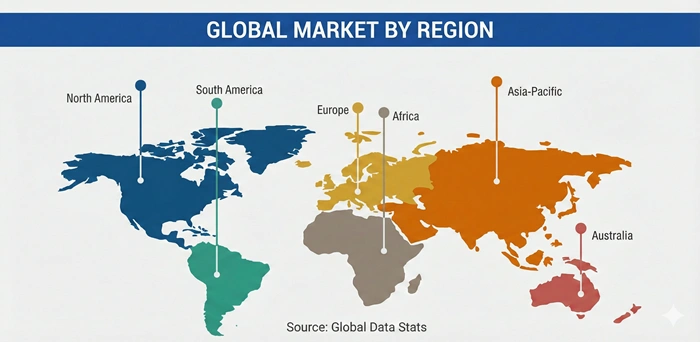
North America commands the dominant position in the global interventional cardiology devices market, accounting for approximately 44–45% of total global revenue in 2025 and sustaining a consistent CAGR broadly in line with the global average through 2033. The United States is the primary revenue engine within the region, benefiting from one of the world's highest per-capita rates of cardiovascular disease intervention, a densely networked system of cardiac catheterization laboratories at major health systems, and a deeply favorable reimbursement environment that covers PCI, TAVI, electrophysiology ablation, and structural heart procedures under Medicare and commercial insurance. The United States is also home to the world's leading interventional cardiology device companies — including Medtronic (USA), Abbott (USA), Boston Scientific (USA), and Edwards Lifesciences (USA) — giving the region an unparalleled concentration of R&D investment, clinical innovation, and first-in-human trial activity. Canada contributes meaningfully to the regional market as well, with a publicly funded cardiac care system driving steady device procurement volumes.
The United States has been at the forefront of TAVI adoption since the initial approval of the Edwards SAPIEN valve in 2011, and American cardiac centers now perform among the highest annual TAVI volumes globally, with the procedure rapidly becoming standard of care for severe aortic stenosis across all surgical risk tiers. Ongoing FDA approval activity for next-generation transcatheter mitral valve replacement and repair devices, as well as accelerating regulatory clearance of AI-powered intravascular imaging and physiology assessment platforms, continues to reinforce North America's position as the global leader in both clinical and commercial interventional cardiology innovation. The region's robust medical device investment ecosystem, centered in states like California, Minnesota, and Massachusetts, ensures that the next generation of breakthrough cardiac intervention technologies will continue to emerge and achieve early commercial validation here before expanding globally.
Asia Pacific
Asia Pacific Records the Highest CAGR in the Interventional Cardiology Devices Market, Fueled by Rapidly Expanding Cardiac Infrastructure, Aging Demographics, and Government Healthcare Investment*
Asia Pacific is the fastest-growing region in the global interventional cardiology devices market, recording the highest regional CAGR during the 2026–2033 forecast period, driven by an enormous and rapidly growing patient population with cardiovascular disease, accelerating healthcare infrastructure development, and expanding government investment in interventional cardiac care capacity across China, India, Japan, South Korea, and Australia. China alone represents one of the world's largest markets for coronary stents and PCI procedures, with tens of millions of patients diagnosed with coronary artery disease and a government-backed national cardiac care program driving rapid catheterization laboratory construction and cardiologist training expansion. Leading global players including Medtronic, Abbott, and Boston Scientific have established significant commercial and manufacturing operations in China, while domestic Chinese stent manufacturers such as MicroPort Medical and Lepu Medical are rapidly expanding their market presence with competitively priced DES platforms that are capturing growing procedural volume.
India is emerging as one of Asia Pacific's most dynamic sub-markets for interventional cardiology devices, driven by a rapidly expanding network of private cardiac hospitals, growing penetration of health insurance, rising middle-class awareness of heart disease risk, and a government push to extend cardiovascular care to rural and semi-urban populations through the Ayushman Bharat program. Companies including Terumo Corporation (Japan), B. Braun SE (Germany), and domestic Indian cardiac device distributors are actively expanding their footprints to serve the country's growing PCI and structural heart device needs. Japan and South Korea are mature but consistently growing sub-markets within the region, characterized by high procedural quality standards, strong public health coverage for cardiac intervention, and active clinical research environments that generate real-world evidence supporting the adoption of next-generation devices.
Top Key Players
-
Medtronic plc (Ireland / United States)
-
Abbott Laboratories (United States)
-
Boston Scientific Corporation (United States)
-
Edwards Lifesciences Corporation (United States)
-
Johnson & Johnson MedTech (United States)
-
B. Braun SE (Germany)
-
Terumo Corporation (Japan)
-
Cook Medical LLC (United States)
-
Becton Dickinson and Company (United States)
-
Teleflex Incorporated (United States)
-
MicroPort Scientific Corporation (China)
-
Lepu Medical Technology Co. Ltd. (China)
-
Penumbra Inc. (United States)
-
Cardiovascular Systems Inc. (United States)
-
Philips Healthcare (Netherlands)
Recent Developments
-
2025 – Teleflex Incorporated completed the acquisition of Biotronik's vascular intervention business unit for approximately EUR 760 million, gaining access to an established portfolio of drug-coated balloons and drug-eluting stents — significantly expanding Teleflex's position in the global coronary intervention device market.
-
2025 – Abbott Laboratories received FDA approval for the TAVI-capable next-generation Navitor transcatheter aortic valve system, expanding its structural heart portfolio with a device that offers improved hemodynamic performance and expanded sizing options for a broader range of patient anatomies.
-
2025 – Boston Scientific Corporation announced the strategic acquisition of Axonics Inc. and continued to advance its WATCHMAN FLX left atrial appendage closure device franchise, reporting record structural heart procedure volumes and reaffirming its market leadership position in the electrophysiology and structural heart segments.
-
2026 – Medtronic plc launched the Evolut FX+ TAVI system with next-generation delivery catheter technology, designed to improve operator control and reduce procedural complications during transcatheter aortic valve implantation, targeting the growing low- and intermediate-risk surgical patient population globally.
-
2026 – Edwards Lifesciences announced positive pivotal trial results for its EVOQUE transcatheter tricuspid valve replacement system, positioning the company to expand its structural heart portfolio into the tricuspid valve segment and potentially address a large unmet patient population estimated at several million globally.
Market Trends
From Robotic-Assisted Cardiac Catheterization to Physiological Lesion Assessment, Precision Technology Is Defining the Next Wave of Innovation in the Interventional Cardiology Devices Market*
One of the most impactful emerging trends in the interventional cardiology devices market is the growing adoption of physiological lesion assessment tools — particularly fractional flow reserve and instantaneous wave-free ratio measurements — to guide PCI decision-making beyond simple angiographic anatomy. Multiple landmark clinical trials have demonstrated that physiology-guided PCI reduces unnecessary stenting, lowers procedural costs, and improves long-term patient outcomes compared to anatomy-guided approaches. Pressure wire technology from companies including Abbott and Philips, as well as newer pullback-based FFR mapping systems, are rapidly becoming the standard of care for coronary lesion evaluation in high-volume cardiac centers globally, creating a meaningful and growing sub-segment of the cardiology devices market.
Robotic-assisted percutaneous coronary intervention is another trend gaining traction that could meaningfully reshape how PCI is performed over the coming years. Robotic PCI systems — such as the CorPath GRX platform — allow interventional cardiologists to perform catheter navigation and device deployment with high precision from a radiation-shielded workstation, reducing operator radiation exposure and improving procedural consistency. Intravascular imaging technologies including IVUS and OCT are also being increasingly integrated into routine PCI workflow, driven by growing clinical evidence that imaging-guided stent optimization significantly improves outcomes. The convergence of physiological assessment, intravascular imaging, and AI-powered analytical tools is creating a new paradigm of precision-guided cardiac intervention that is expected to define the most competitive and innovative segment of the interventional cardiology market through the 2033 forecast period.
Segments Covered in the Report
By Product:
-
Stents (Drug-Eluting Stents, Bare-Metal Stents, Bioresorbable Vascular Scaffolds)
-
Angioplasty Balloons (Conventional Balloons, Drug-Coated Balloons, Cutting/Scoring Balloons)
-
Catheters (Diagnostic Catheters, Guiding Catheters, IVUS/OCT Imaging Catheters)
-
Plaque Modification Devices (Atherectomy Devices, Thrombectomy Devices, Intravascular Lithotripsy)
-
Structural Heart Devices (TAVI Systems, Transcatheter Mitral & Tricuspid Repair Devices, LAA Closure Devices, Septal Defect Closure)
-
Hemodynamic Flow Alteration Devices (Embolic Protection Devices, Pressure Wires, Intra-Aortic Balloon Pumps)
-
Guidewires
-
Introducer Sheaths & Vascular Access Devices
By Procedure:
-
Percutaneous Coronary Intervention (PCI)
-
Transcatheter Valve Replacement & Repair (TAVI, TMVR, TTVR)
-
Electrophysiology & Cardiac Ablation Procedures
-
Left Atrial Appendage Closure
-
Others (Septal Defect Closure, Congenital Heart Interventions)
By End User:
-
Hospitals & Academic Medical Centers
-
Cardiac Catheterization Laboratories (Freestanding)
-
Ambulatory Surgical Centers
-
Others (Specialty Cardiac Clinics, Research Institutions)
By Region:
-
North America (United States, Canada, Mexico)
-
Europe (Germany, France, United Kingdom, Italy, Spain, Rest of Europe)
-
Asia Pacific (China, Japan, South Korea, India, Australia, Rest of Asia Pacific)
-
Latin America (Brazil, Argentina, Rest of Latin America)
-
Middle East & Africa (UAE, Saudi Arabia, South Africa, Rest of MEA)
Frequently Asked Questions
Question 1: What is the current size of the global interventional cardiology devices market and how fast is it expected to grow?
Answer: The global interventional cardiology devices market was valued at USD 14.74 billion in 2025 and is projected to reach USD 27.40 billion by 2033. The market is expected to grow at a CAGR of 6.9% from 2026 to 2033.
Question 2: Which region dominates the global interventional cardiology devices market?
Answer: North America leads the interventional cardiology devices market with approximately 44–45% of global revenue in 2025, supported by high PCI and TAVI procedure volumes, mature reimbursement structures, and the presence of major device manufacturers including Medtronic, Abbott, and Boston Scientific. The United States is the primary revenue contributor within the region.
Question 3: What are the key factors driving growth in the interventional cardiology devices market?
Answer: The primary drivers of the interventional cardiology devices market include rising global cardiovascular disease prevalence, growing adoption of minimally invasive PCI and structural heart procedures, and rapid advancement in drug-eluting stent and TAVI device technology. The demographic shift toward aging populations globally is also creating durable, long-term demand for cardiac intervention devices.
Question 4: Which product segment holds the largest share of the interventional cardiology devices market?
Answer: Coronary stents — particularly drug-eluting stents — hold the largest share of interventional cardiology devices market revenue, accounting for approximately 38% of total product revenue in 2026. Their central role in PCI as the standard treatment for coronary artery disease drives consistent, high-volume demand at cardiac centers globally.
Question 5: How is the structural heart devices segment impacting the future of the interventional cardiology devices market?
Answer: Structural heart devices are the fastest-growing sub-segment within the interventional cardiology devices market, driven by expanding TAVI indications and the growing pipeline of transcatheter mitral and tricuspid repair solutions. As clinical evidence supports TAVI use in lower-risk patients, the addressable patient population is expanding significantly, creating one of the largest near-term commercial opportunities in all of medical devices.