
In-Vitro Fertilization Market Overview
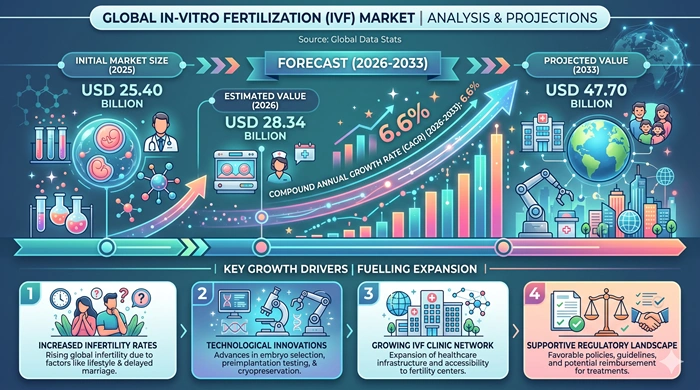
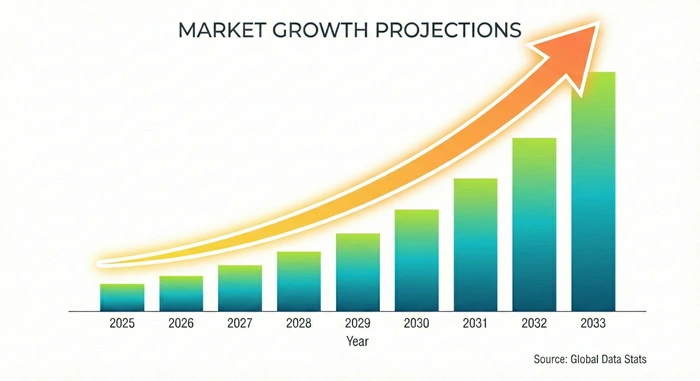
The global in-vitro fertilization market size is valued at USD 25.40 billion in 2025 and is predicted to increase from USD 28.34 billion in 2026 to approximately USD 47.70 billion by 2033, growing at a CAGR of 6.6% from 2026 to 2033.
Rising infertility rates driven by lifestyle changes, delayed parenthood, increasing prevalence of conditions such as polycystic ovary syndrome and endometriosis, and growing awareness about assisted reproductive technology options are collectively fueling demand for IVF treatments worldwide. Continuous improvements in laboratory techniques, embryo cryopreservation success rates, and genetic screening technologies are making fertility treatments more accessible, affordable, and successful for a broader segment of the global population.
AI Impact on the In-Vitro Fertilization Industry
Artificial Intelligence Is Revolutionizing Embryo Selection, Treatment Personalization, and Clinical Outcomes Across the Global Fertility Treatment Landscape*
Artificial intelligence is making a transformative impact on the in-vitro fertilization industry, particularly in the critical area of embryo selection and assessment. AI-powered imaging and time-lapse monitoring systems can now analyze thousands of embryo development data points within seconds, helping embryologists identify the embryos with the highest implantation potential with far greater accuracy than traditional visual assessment alone. Leading fertility technology companies have developed machine learning algorithms trained on vast libraries of embryo development images, enabling more objective, reproducible, and consistent grading — a development that is meaningfully improving live birth rates at IVF clinics globally.
Beyond embryo selection, AI is also helping fertility specialists personalize ovarian stimulation protocols based on individual patient hormone profiles, age, and response history, reducing the risk of ovarian hyperstimulation syndrome while optimizing egg yield. Predictive analytics tools powered by AI are enabling clinicians to forecast treatment outcomes more accurately, empowering patients to make better-informed decisions about their fertility journey. As AI tools become more deeply integrated into clinic management software, laboratory information systems, and patient communication platforms, the entire IVF care continuum is becoming more efficient, data-driven, and patient-centered.
Growth Factors
Delayed Childbearing, Rising Infertility Prevalence, and Expanding Insurance Coverage Are Driving Sustained Growth in the In-Vitro Fertilization Market*
The in-vitro fertilization market is benefiting from a powerful convergence of demographic, social, and medical trends. One of the most consistent growth drivers is the global trend toward delayed parenthood, particularly among women in their late 30s and early 40s who increasingly turn to IVF as a primary path to conception. According to global reproductive health studies, infertility affects approximately one in six couples worldwide, a rate that has been steadily rising due to increased rates of obesity, sexually transmitted infections, stress-related hormonal disruption, and environmental toxin exposure. This growing patient population is creating a durable, expanding base of demand for IVF and related assisted reproductive technology services.
Government policy and insurance reforms are also playing a significant role in expanding market access. Several U.S. states, European countries, and Asian nations have introduced mandates requiring insurance providers to cover IVF treatment cycles, dramatically reducing out-of-pocket costs for patients who would otherwise be unable to afford treatment. Israel, for example, provides fully state-funded IVF to all eligible citizens, while several Nordic countries and parts of Australia have similarly robust public fertility treatment coverage. These policy shifts are broadening the addressable market for IVF services and clinic operators, while also driving demand for the instruments, culture media, disposables, and genetic testing products that support treatment delivery.
Market Outlook
From Genetic Screening Integration to Fertility Preservation for Cancer Patients, the IVF Market's Future Is Defined by Expanding Indications and Improving Technology*
The long-term market outlook for in-vitro fertilization remains very positive, with innovation at multiple levels of the treatment pathway driving both clinical quality improvements and expanding patient populations. The integration of preimplantation genetic testing (PGT) into standard IVF protocols is one of the most significant developments reshaping the market, enabling clinicians to screen embryos for chromosomal abnormalities before transfer and substantially improving the probability of a healthy live birth. As PGT technology becomes more accurate, faster, and more cost-effective, its adoption within the broader IVF treatment workflow is expected to become near-universal in developed markets by the end of the forecast period.
Fertility preservation is another rapidly growing area within the in-vitro fertilization ecosystem. The increasing use of oocyte and embryo cryopreservation by cancer patients prior to chemotherapy or radiation therapy — as well as by healthy women seeking to extend their reproductive window for professional or personal reasons — is creating a large and growing segment of elective fertility preservation clients for IVF clinics. The social egg freezing trend, now widely accepted and marketed by fertility clinics across the United States, Europe, and urban Asia, is expected to contribute meaningfully to the growth of the IVF consumables, cryopreservation equipment, and fertility clinic services market through 2033.
Expert Speaks
Industry executives from leading healthcare and life sciences companies are expressing strong optimism about the future of fertility treatment markets:
-
"We are seeing unprecedented demand for advanced fertility solutions globally. The intersection of genetic science, laboratory innovation, and patient-centered care is opening new possibilities for families that would not have existed even a decade ago. This is one of the most meaningful growth areas in all of healthcare." — CEO, Thermo Fisher Scientific
-
"Investments in IVF technology and laboratory consumables are delivering real, measurable improvements in patient outcomes. Our focus is on making high-quality fertility treatment accessible to more people across more geographies, and the momentum we are seeing in Asia Pacific and Europe is extremely encouraging." — CEO, CooperSurgical (CooperCompanies)
-
"The fertility treatment market is at a genuine inflection point. Advances in AI-driven embryo selection, vitrification, and genetic testing are converging to meaningfully improve success rates, and we believe this will continue to expand the market significantly over the coming years." — CEO, Merck KGaA
Key Report Takeaways
-
Europe leads the global in-vitro fertilization market, holding the largest regional revenue share of approximately 39% in 2025, driven by widespread public funding for IVF cycles, strong regulatory frameworks supporting fertility treatment, and a high density of well-equipped fertility clinics, particularly in countries like Spain, Denmark, Czech Republic, and the United Kingdom
-
Asia Pacific is the fastest-growing region, recording the highest regional CAGR during 2026–2033, fueled by rising infertility awareness, growing disposable incomes, expanding private fertility clinic networks, and the emergence of medical tourism for IVF treatment in countries like India, Thailand, and Malaysia
-
Fertility clinics represent the dominant end-user segment, accounting for the largest share of global IVF service delivery, as dedicated reproductive medicine centers offer the specialized staff, laboratory infrastructure, and patient volumes needed to achieve optimal treatment outcomes at scale
-
Fresh IVF cycles contribute the highest share of procedure-level revenue, as the majority of first-time IVF patients undergo fresh embryo transfer protocols; however, frozen embryo transfer cycles are growing rapidly due to improved cryopreservation outcomes and the clinical benefits of freeze-all strategies
-
Conventional IVF and ICSI together represent the most widely used technology combination in global fertility clinics, with ICSI in particular dominating treatment protocols due to its superior results in cases involving male factor infertility, which accounts for up to 50% of all infertility diagnoses globally
-
The preimplantation genetic testing segment is the fastest-growing technology sub-segment, projected to expand at a notably higher CAGR through 2033 compared to other IVF technologies, capturing increasing market share as PGT-A and PGT-M testing becomes a standard step in embryo selection at premium fertility clinics — with this segment estimated to hold over 28% of technology-level market share by 2033
Market Scope
| Report Coverage | Details |
|---|---|
| Market Size by 2025 | USD 25.40 Billion |
| Market Size by 2026 | USD 28.34 Billion |
| Market Size by 2033 | USD 47.70 Billion |
| Market Growth Rate (2026–2033) | CAGR of 6.6% |
| Dominating Region | Europe |
| Fastest Growing Region | Asia Pacific |
| Base Year | 2025 |
| Forecast Period | 2026 to 2033 |
| Segments Covered | Product, Procedure, End User, Technology |
| Regions Covered | North America, Europe, Asia Pacific, Latin America, Middle East & Africa |
Market Dynamics
Drivers Impact Analysis
Rising Global Infertility Rates, Expanding Public and Private Insurance Coverage, and Rapid Technological Advancement Are the Primary Engines Driving In-Vitro Fertilization Market Growth*
| Driver | ≈ % Impact on CAGR Forecast | Geographic Relevance | Impact Timeline |
|---|---|---|---|
| Rising infertility prevalence driven by lifestyle and demographic changes | ~30% | Global, especially North America & Europe | Short to Long-Term |
| Growing insurance mandates and public funding for IVF treatment | ~25% | North America, Europe, Australia | Short to Mid-Term |
| Advancements in embryo cryopreservation and genetic screening | ~22% | North America, Europe, Asia Pacific | Mid to Long-Term |
| Increasing social acceptance and awareness of fertility treatment | ~13% | Asia Pacific, Latin America, MEA | Mid-Term |
| Rising medical tourism for affordable high-quality IVF services | ~10% | Asia Pacific, Eastern Europe | Short to Mid-Term |
The rising global rate of infertility is the single most powerful driver sustaining growth in the in-vitro fertilization market. Lifestyle-related factors including sedentary behavior, obesity, smoking, chronic stress, and exposure to endocrine-disrupting chemicals are increasingly impacting reproductive health in both men and women across all income levels and geographies. Delayed family formation — particularly the growing trend of first-time parenthood after age 35 — has further compounded fertility challenges, as natural conception rates decline significantly with maternal age while IVF success rates with donor eggs or preimplantation genetic testing remain relatively more favorable. These demographic and behavioral shifts are creating a structurally expanding patient population seeking fertility treatment solutions.
Insurance and reimbursement expansion is creating a second major growth wave for the IVF market by making treatment accessible to patient populations that previously could not afford it. In the United States, the number of states mandating insurance coverage for IVF has grown significantly over the past five years, with major employers including Apple, Google, and Amazon also offering fertility benefits as part of competitive employee wellness programs. In Europe, countries including France, Sweden, and Belgium provide multiple publicly funded IVF cycles to eligible patients, driving high treatment utilization rates and a robust market for the laboratory consumables, medications, and monitoring equipment required to support those cycles. This policy-driven demand expansion is expected to remain a key growth force through the 2033 forecast horizon.
Restraints Impact Analysis
High Treatment Costs, Emotional and Physical Burden, and Ethical and Regulatory Constraints Continue to Limit the Full Growth Potential of the In-Vitro Fertilization Market*
| Restraint | ≈ % Impact on CAGR Forecast | Geographic Relevance | Impact Timeline |
|---|---|---|---|
| High cost of IVF treatment in uninsured markets | ~35% | Latin America, MEA, parts of Asia Pacific | Short to Mid-Term |
| Psychological and physical burden associated with IVF cycles | ~25% | Global | Short-Term |
| Strict regulatory and ethical frameworks around embryo use | ~22% | Europe, North America | Mid to Long-Term |
| Low awareness of IVF options in developing markets | ~18% | Sub-Saharan Africa, rural Asia | Short to Mid-Term |
Despite strong market tailwinds, the in-vitro fertilization market faces persistent constraints related to cost and accessibility. In markets without meaningful insurance coverage, a single IVF cycle can cost between USD 10,000 and USD 20,000 or more, placing treatment financially out of reach for millions of infertile couples. This cost barrier is especially pronounced in Latin America, the Middle East, Africa, and lower-income segments of Asian markets, where fertility treatment remains largely a privilege of the affluent. The multi-cycle nature of IVF treatment — with many patients requiring two or more attempts before achieving a live birth — further compounds the financial burden and limits sustained market penetration in price-sensitive regions.
The physical and emotional demands of IVF treatment are also a meaningful restraint on market growth, particularly for repeat cycles. Hormone injection protocols, egg retrieval procedures, the uncertainty of embryo development outcomes, and the emotional toll of treatment failures collectively contribute to high treatment abandonment rates among IVF patients globally. Regulatory complexity around embryo storage limits, third-party reproduction (surrogacy, egg donation), and the use of genetic screening adds another layer of friction, as clinics operating across multiple markets must navigate inconsistent legal frameworks that can restrict service offerings and increase compliance costs. These combined factors moderate the market's growth trajectory in certain regions and patient segments.
Opportunities Impact Analysis
Fertility Tourism, AI-Enhanced Success Rates, and Growing Male Infertility Treatment Demand Are Creating Compelling New Opportunities in the IVF Market*
| Opportunity | ≈ % Impact on CAGR Forecast | Geographic Relevance | Impact Timeline |
|---|---|---|---|
| Expansion of fertility tourism to low-cost, high-quality markets | ~30% | Eastern Europe, Asia Pacific, Latin America | Short to Mid-Term |
| AI and machine learning integration improving success rates | ~28% | North America, Europe | Short to Long-Term |
| Rising demand for male infertility diagnosis and ICSI treatment | ~22% | Global, especially Asia Pacific | Mid-Term |
| Growth of social egg freezing and elective fertility preservation | ~20% | North America, Europe, urban Asia Pacific | Mid to Long-Term |
Fertility tourism is emerging as one of the most dynamic and high-growth opportunity areas within the broader in-vitro fertilization market. Countries including Spain, the Czech Republic, Greece, and Cyprus have established themselves as leading destinations for European fertility tourists seeking donor egg IVF cycles that are either restricted in their home country or available at significantly lower cost. Similarly, Thailand, India, and Malaysia are attracting increasing numbers of patients from Australia, the UK, and the United States who are drawn by lower treatment costs, high clinical standards, and favorable regulatory environments for donor-assisted reproduction. This cross-border fertility treatment market is driving investment in clinic capacity, language services, and international patient coordination capabilities at leading fertility centers globally.
The growing recognition of male infertility as a co-equal contributor to conception failure is also creating significant new demand for specialized IVF-related diagnostic and treatment services. Male factor infertility accounts for approximately 40–50% of all infertility cases, yet it has historically been under-diagnosed and under-treated. Advances in sperm DNA fragmentation testing, surgical sperm retrieval techniques, and ICSI protocols are making it possible to achieve successful fertilization even in severe male infertility cases, expanding the eligible treatment population for IVF significantly. Fertility clinics that invest in specialized male reproductive medicine capabilities are expected to capture outsized growth in this underserved segment through 2033.
Segment Analysis
By Procedure
Fresh IVF Cycles Lead Total Procedure Revenue While Frozen Embryo Transfer Cycles Record the Fastest Growth as Cryopreservation Technology Achieves Parity With Fresh Transfer Outcomes*
The fresh IVF cycles segment holds the largest share of the in-vitro fertilization market by procedure type, accounting for approximately 49% of total procedure revenue in 2026, driven by the fact that fresh cycles remain the standard first-line approach for most IVF patients worldwide. Fresh cycles involve ovarian stimulation, egg retrieval, fertilization in the laboratory, and immediate embryo transfer within the same treatment protocol, making them the foundation of IVF service delivery at fertility clinics globally. Europe is the largest regional contributor to fresh IVF cycle volume, particularly in Spain, France, and Denmark, where publicly funded treatment programs and high clinic density drive large patient throughput. Leading companies serving this segment include CooperSurgical (USA), Vitrolife (Sweden), and Cook Medical (USA), which supply the culture media, catheters, incubators, and disposables that support fresh cycle procedures at scale.
Frozen embryo transfer cycles are recording the fastest growth rate among IVF procedure types, driven by the widespread clinical adoption of the "freeze-all" embryo strategy, which involves freezing all viable embryos in a given stimulation cycle and transferring them in a subsequent natural or medicated cycle. This approach has demonstrated equivalent or superior pregnancy rates compared to fresh transfers in many patient subgroups, particularly those at risk of ovarian hyperstimulation syndrome, while also offering greater scheduling flexibility and the ability to perform preimplantation genetic testing before transfer. Asia Pacific is the fastest-growing region for frozen IVF cycles, led by China, Japan, and South Korea, where advanced vitrification platforms from companies like Kitazato (Japan) and Cryotech (Japan) are widely used in both public and private fertility centers.
By Technology
ICSI Dominates Global IVF Technology Adoption While Preimplantation Genetic Testing Emerges as the Fastest-Growing Technology Segment Driven by Demand for Genetically Healthy Embryos*
Intracytoplasmic sperm injection (ICSI) has established itself as the dominant technology in global IVF practice, used in approximately 65–70% of all IVF cycles performed worldwide, reflecting its broad applicability across both male and female infertility diagnoses. ICSI involves the direct injection of a single sperm cell into a mature egg, bypassing the need for natural sperm-egg binding and dramatically improving fertilization rates in cases of severe oligospermia, poor sperm motility, or prior fertilization failure. North America and Europe account for the highest ICSI utilization rates, with leading laboratory equipment suppliers including Eppendorf (Germany), Hamilton Thorne (USA), and Research Instruments (UK) providing the micromanipulation systems, heated stages, and inverted microscopes essential for ICSI performance in clinical settings. The growing global prevalence of male infertility continues to reinforce ICSI's dominant position within the IVF technology landscape.
Preimplantation genetic testing has emerged as the most rapidly expanding technology sub-segment within the in-vitro fertilization ecosystem, growing at a CAGR that meaningfully exceeds the overall market rate. PGT-A (aneuploidy screening) and PGT-M (monogenic disease testing) are increasingly offered as standard components of premium IVF protocols, allowing embryologists to select only chromosomally normal embryos for transfer and significantly reducing the risk of implantation failure, miscarriage, and the birth of children with genetic disorders. North America leads in PGT adoption, with companies such as Natera (USA), Igenomix (USA/Spain), and CooperSurgical's Genomics division offering next-generation sequencing-based testing platforms that integrate directly with clinic laboratory workflows. As the cost of next-generation sequencing continues to decline and clinical evidence supporting PGT outcomes accumulates, adoption is expected to expand rapidly into mid-tier fertility markets across Asia Pacific and Latin America through 2033.
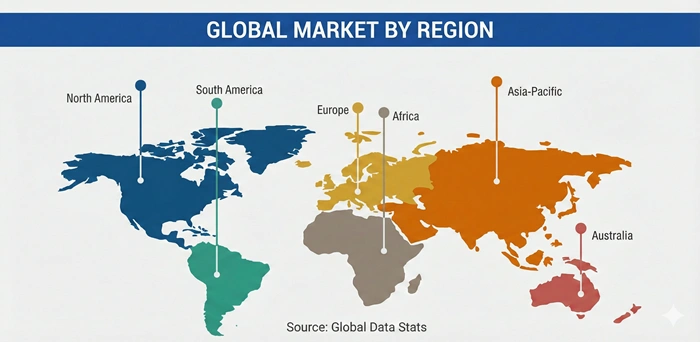
Regional Insights
Europe
Europe Leads the Global In-Vitro Fertilization Market With the Highest Regional Revenue Share, Supported by Public Funding Programs, High Treatment Standards, and a Dense Fertility Clinic Network*
Europe holds the dominant position in the global in-vitro fertilization market, accounting for approximately 39% of total global market revenue in 2025, and advancing at a steady CAGR through 2033 that reflects the region's mature but continually expanding fertility treatment ecosystem. Spain is Europe's largest IVF destination both for domestic patients and international fertility tourists, with Barcelona and Madrid hosting some of the world's highest-volume fertility clinics. Established European players including Vitrolife AB (Sweden), Origio (Denmark), and Institut Marquès (Spain) are among the leading contributors to the region's strong clinical and commercial performance. Government-funded IVF programs in countries like France, Denmark, Belgium, and the United Kingdom ensure high treatment utilization rates, creating steady demand for the laboratory consumables, culture media, incubators, and genetic testing services that underpin IVF service delivery.
The United Kingdom's Human Fertilisation and Embryology Authority provides one of the world's most comprehensive regulatory frameworks for fertility treatment, ensuring that IVF clinics operate at consistently high standards of safety and effectiveness. This regulatory maturity, combined with strong clinical research output from European fertility academic centers, reinforces Europe's position as the global benchmark for IVF quality and innovation. The Czech Republic and Greece have also emerged as fast-growing fertility tourism hubs within the European market, attracting patients from across the continent and beyond for donor egg IVF cycles at internationally competitive pricing — a trend that is contributing to meaningful revenue growth in these markets and driving investment in new clinic capacity.
Asia Pacific
Asia Pacific Records the Highest CAGR Among All Regions in the In-Vitro Fertilization Market, Fueled by Government Initiatives, Medical Tourism, and Rapidly Expanding Private Fertility Clinic Networks*
Asia Pacific is the fastest-growing region in the in-vitro fertilization market, recording the highest regional CAGR of approximately 11% during the 2026–2033 forecast period, driven by a combination of rising infertility awareness, improving healthcare infrastructure, government reproductive health initiatives, and a rapidly expanding middle class with growing willingness to invest in family planning solutions. China's national two-child and three-child policy reforms have directly stimulated fertility treatment demand, with state-backed hospitals and a growing network of private IVF centers serving a patient population that is among the largest in the world. Japan, South Korea, and Australia also contribute significantly to regional market volume, with government subsidies for fertility treatment, advanced clinical standards, and a strong domestic base of fertility technology companies including Kitazato Corporation (Japan) and Genea (Australia) supporting market development.
India is emerging as one of the most dynamic individual country markets within the Asia Pacific IVF landscape, with a rapidly growing network of fertility clinic chains including Indira IVF, Nova IVF Fertility, and Oasis Fertility expanding access to IVF treatment across major metropolitan and secondary cities. India's large and growing infertile population, relatively affordable treatment costs compared to Western markets, and a burgeoning medical tourism infrastructure are positioning the country as a significant long-term growth contributor to regional IVF market expansion. Southeast Asian markets including Thailand, Malaysia, and Singapore are also benefiting from cross-border fertility patient flows, particularly from markets with restrictive egg donation regulations or very high domestic treatment costs, further accelerating regional market growth through 2033.
Top Key Players
-
Thermo Fisher Scientific Inc. (United States)
-
CooperSurgical, Inc. (United States)
-
Vitrolife AB (Sweden)
-
Merck KGaA (Germany)
-
ESCO Medical (Singapore)
-
Genea Limited (Australia)
-
Cook Medical LLC (United States)
-
Kitazato Corporation (Japan)
-
Hamilton Thorne, Inc. (United States)
-
Nidacon International AB (Sweden)
-
Igenomix S.L. (Spain / United States)
-
Natera, Inc. (United States)
-
Origio A/S (Denmark)
-
IVFtech ApS (Denmark)
-
Rocket Medical plc (United Kingdom)
Recent Developments
-
2025 – Thermo Fisher Scientific expanded its IVF consumables and cell culture media portfolio through the acquisition of a European reproductive biology company, significantly strengthening its position in the global fertility laboratory supplies market and adding new cryopreservation product lines to its offering.
-
2025 – CooperSurgical (CooperCompanies) launched an updated version of its EmbryoScope time-lapse incubator with integrated AI embryo grading software, enabling fertility laboratories to automate routine embryo assessment tasks and reduce variability in embryo selection decisions across clinical staff.
-
2025 – Vitrolife AB completed a strategic integration of its acquisition of Igenomix, combining its embryo culture and monitoring capabilities with Igenomix's leading preimplantation genetic testing platform to offer fertility clinics a fully integrated end-to-end IVF laboratory solution.
-
2026 – Merck KGaA announced a major investment in expanding manufacturing capacity for its Gonal-f and Ovitrelle fertility hormone product lines in response to growing global demand for ovarian stimulation medications, with new production facilities planned for both Europe and Asia Pacific markets.
-
2026 – Natera, Inc. reported strong commercial momentum for its Anora and Spectrum PGT platforms, with a record number of IVF cycle analyses processed in the first quarter of 2026, reflecting accelerating adoption of comprehensive chromosomal screening among fertility clinic partners across the United States and internationally.
Market Trends
From AI-Driven Embryo Viability Prediction to the Rise of the Freeze-All Strategy, the In-Vitro Fertilization Market Is Being Shaped by Technology-Led Clinical Innovation*
One of the most influential trends currently shaping the in-vitro fertilization market is the rapid adoption of AI-powered time-lapse imaging and embryo selection systems in clinical IVF laboratories. These systems use deep learning algorithms to analyze continuous video footage of developing embryos captured inside specialized incubators, identifying subtle morphokinetic patterns — the timing and quality of cell division events — that are predictive of implantation success. Clinics that have implemented AI-assisted embryo selection tools report measurable improvements in embryo prioritization accuracy and, in several published studies, improved clinical pregnancy rates compared to conventional static morphology assessment. As this technology becomes more affordable and clinically validated, its adoption is expected to become standard practice at fertility clinics worldwide.
The growing trend of "elective single embryo transfer" (eSET), driven by the dual goals of reducing multiple pregnancy risk and improving individual embryo viability assessment, is creating increased demand for high-performance embryo culture systems, genetic testing, and AI selection tools. Combined with the broader adoption of freeze-all and segmented IVF cycles — in which stimulation, egg retrieval, genetic testing, and embryo transfer are separated into distinct episodes to optimize both ovarian response and endometrial receptivity — these clinical protocol innovations are fundamentally changing the equipment, consumable, and service needs of IVF laboratories. Companies that can provide integrated solutions supporting these evolving protocols — from advanced vitrification systems to seamless PGT workflow integration — are well-positioned to capture the strongest share of market growth through the end of the 2033 forecast period.
Segments Covered in the Report
By Product:
-
Instruments (Incubators, Ovum Aspiration Pumps, Sperm Analyzers, Micromanipulators, Cabinet Systems)
-
Reagents & Media (Culture Media, Cryopreservation Media, Sperm Preparation Media)
-
Disposables & Accessories (Catheters, Petri Dishes, Pipettes, IVF Workstations)
By Procedure:
-
Fresh IVF Cycles
-
Frozen IVF Cycles (Frozen Embryo Transfer)
-
Donor Egg IVF Cycles
-
Embryo Donation Cycles
By End User:
-
Fertility Clinics
-
Hospitals & Reproductive Medicine Centers
-
Clinical Research Institutes
-
Cryobanks & Sperm Banks
By Technology:
-
Conventional IVF
-
Intracytoplasmic Sperm Injection (ICSI)
-
Preimplantation Genetic Testing (PGT-A, PGT-M, PGT-SR)
-
Blastocyst Culture & Transfer
-
Frozen Embryo Transfer (FET)
By Region:
-
North America (United States, Canada, Mexico)
-
Europe (Spain, France, United Kingdom, Germany, Denmark, Czech Republic, Rest of Europe)
-
Asia Pacific (China, Japan, South Korea, India, Australia, Rest of Asia Pacific)
-
Latin America (Brazil, Argentina, Rest of Latin America)
-
Middle East & Africa (UAE, Saudi Arabia, Israel, South Africa, Rest of MEA)
Frequently Asked Questions
Question 1: What is the current size of the global in-vitro fertilization market and how fast is it projected to grow?
Answer: The global in-vitro fertilization market was valued at USD 25.40 billion in 2025 and is expected to reach USD 47.70 billion by 2033. It is projected to grow at a CAGR of 6.6% from 2026 to 2033.
Question 2: Which region dominates the global in-vitro fertilization market?
Answer: Europe leads the in-vitro fertilization market with approximately 39% of global revenue in 2025, supported by extensive public IVF funding programs and a high density of specialized fertility clinics. Spain, France, Denmark, and the United Kingdom are among the region's top contributors.
Question 3: What are the major factors driving growth in the in-vitro fertilization market?
Answer: The primary growth drivers of the in-vitro fertilization market include rising global infertility rates, delayed parenthood trends, expanding insurance coverage for fertility treatments, and continuous advancements in embryo cryopreservation and genetic screening technologies. Growing awareness of IVF options in emerging markets is also contributing to demand expansion.
Question 4: How is artificial intelligence impacting the in-vitro fertilization market?
Answer: AI is transforming the in-vitro fertilization market through the development of machine learning-based embryo selection platforms that analyze time-lapse imaging data to identify the embryos with the highest implantation potential. AI is also improving patient matching to optimal stimulation protocols, predicting treatment outcomes, and streamlining laboratory workflows at fertility clinics globally.
Question 5: Which technology segment is expected to grow the fastest in the in-vitro fertilization market through 2033?
Answer: Preimplantation genetic testing is the fastest-growing technology segment in the in-vitro fertilization market, driven by rising demand for chromosomal screening before embryo transfer to improve live birth rates and reduce miscarriage risk. Falling costs of next-generation sequencing and growing clinical evidence supporting PGT outcomes are accelerating its adoption across fertility clinics in North America, Europe, and Asia Pacific.