
Image Signal Processor and Vision Processor Market Overview
The global image signal processor and vision processor market size is valued at USD 4.29 billion in 2025 and is predicted to increase from USD 4.89 billion in 2026 to approximately USD 18.75 billion by 2033, growing at a CAGR of 13.92% from 2026 to 2033. Image signal processors convert raw sensor data into high-quality viewable images through advanced processing tasks including noise reduction, white balance correction, sharpening, and lens distortion compensation, while vision processors leverage artificial intelligence and machine learning algorithms to perform sophisticated tasks like object recognition, scene understanding, edge detection, and real-time image analysis. These specialized semiconductor components enable cameras and imaging systems to deliver superior visual experiences across consumer electronics, automotive safety systems, industrial automation, medical diagnostics, and security surveillance applications.
The image signal processor and vision processor market continues transforming industries through integration of AI-powered imaging capabilities, enabling devices to understand visual information with human-like perception. Organizations increasingly deploy ISP and VPU technologies to enhance smartphone camera quality, enable autonomous vehicle navigation through real-time environment sensing, improve medical diagnosis accuracy through enhanced imaging clarity, and automate industrial quality control through computer vision systems detecting manufacturing defects invisible to human inspectors. The proliferation of multi-camera systems, advancement of computational photography techniques, and growing emphasis on edge processing rather than cloud-based analysis drive sustained demand for increasingly sophisticated image signal processors and vision processing units.
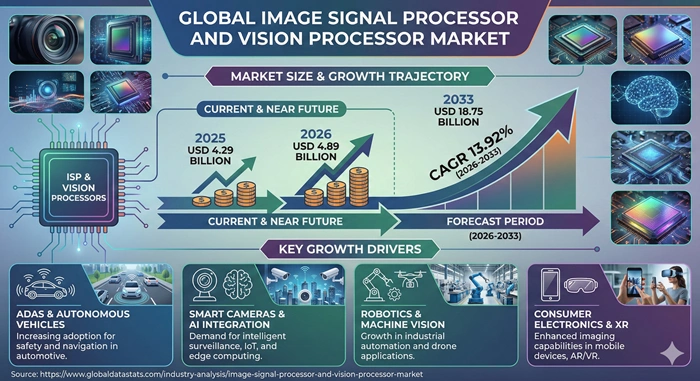
AI Impact on the Image Signal Processor and Vision Processor Industry
Revolutionizing Image Quality and Enabling Intelligent Visual Understanding
Artificial intelligence fundamentally transforms the image signal processor and vision processor market by enabling sophisticated automatic tuning systems that optimize image capture parameters across varying lighting conditions, scene types, and subject matter without manual intervention. Traditional ISPs relied on predefined algorithms with fixed parameters requiring extensive manual calibration, whereas AI-powered systems continuously learn from millions of images to automatically adjust exposure, focus, white balance, and post-processing settings delivering optimal results across diverse scenarios. Technologies like neural processing units integrated directly within image signal processors enable real-time scene recognition identifying landscapes, portraits, night scenes, or action shots and applying appropriate enhancements matching photographer intent, while machine learning algorithms reduce noise, enhance dynamic range, and reconstruct fine details exceeding capabilities of conventional signal processing approaches.
Furthermore, AI integration enables image signal processors and vision processors to perform advanced computational photography techniques including multi-frame noise reduction combining information from several exposures, HDR imaging merging different exposures into balanced compositions, and bokeh effects simulating professional lens characteristics through depth sensing and intelligent background blurring. Vision processors equipped with convolutional neural networks execute complex computer vision tasks including facial recognition securing device access, object detection enabling augmented reality applications, gesture control facilitating hands-free interaction, and semantic segmentation understanding scene composition at pixel level. The convergence of AI capabilities with image processing hardware creates intelligent imaging systems that not only capture superior photographs but understand visual context, extract meaningful information from scenes, and enable applications ranging from autonomous navigation to medical diagnosis support that require deep visual comprehension beyond simple image quality enhancement.
Growth Factors
Smartphone Camera Evolution and Automotive Safety Regulations Drive Demand
The image signal processor and vision processor market experiences robust growth driven by continuous smartphone camera evolution as manufacturers compete through photography capabilities, implementing multi-lens systems with wide-angle, telephoto, and macro options requiring sophisticated ISPs coordinating image fusion from multiple sensors simultaneously. Flagship smartphones incorporate computational photography features including night mode capturing usable images in near-darkness, portrait mode creating professional depth-of-field effects, and pro modes offering manual control rivaling dedicated cameras, all dependent on powerful image signal processors executing complex algorithms in real-time. Consumer expectations continuously rise as social media platforms prioritize visual content, with users demanding smartphones producing Instagram-worthy photographs and high-quality videos without requiring photography expertise or professional equipment, pushing manufacturers to invest heavily in ISP and VPU capabilities differentiating their devices in saturated markets.
Automotive safety regulations mandating advanced driver assistance systems globally accelerate image signal processor and vision processor adoption as vehicles incorporate camera-based technologies detecting lane markings, identifying traffic signs, monitoring blind spots, and recognizing pedestrians enabling collision avoidance features. European New Car Assessment Programme and similar organizations worldwide increasingly require ADAS capabilities for top safety ratings, compelling automakers to standardize camera systems across vehicle lineups rather than limiting to premium models. The transition toward autonomous driving demands even more sophisticated vision processing analyzing multiple camera feeds simultaneously to create comprehensive environmental understanding, identify objects at various distances, predict movement trajectories, and enable split-second decision-making preventing accidents. Surround-view systems providing 360-degree vehicle visualization, driver monitoring systems detecting drowsiness or distraction, and parking assistance technologies all require dedicated image signal processors optimized for automotive environments withstanding temperature extremes, vibrations, and stringent reliability requirements exceeding consumer electronics standards.
Market Outlook
Strong Growth Trajectory Supported by AI Integration and Edge Computing
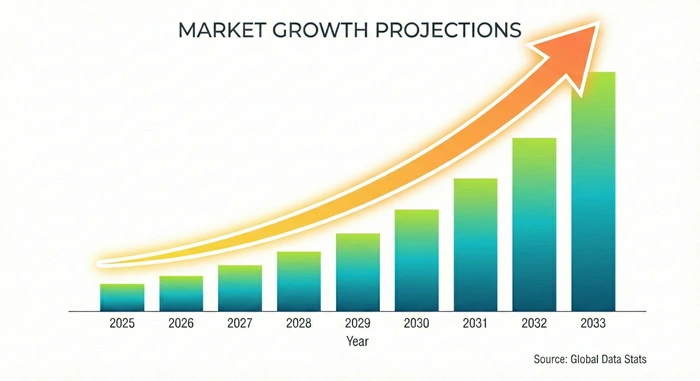
The image signal processor and vision processor market demonstrates exceptional growth prospects through the forecast period, supported by accelerating AI integration enabling on-device processing reducing latency and privacy concerns compared to cloud-based approaches, while edge computing infrastructure deployment brings computational resources closer to imaging sensors improving real-time responsiveness. North America maintains significant market presence through technology leadership, substantial R&D investments, and early adoption across automotive and healthcare sectors, while Asia Pacific exhibits fastest growth rates driven by massive smartphone production, expanding automotive manufacturing, and government initiatives supporting semiconductor development. The market benefits from technological convergence as traditional ISP vendors integrate AI capabilities while specialized AI chip manufacturers add image processing features, creating competitive dynamics driving continuous innovation and capability enhancement.
Investment in the image signal processor and vision processor market spans strategic collaborations between AI algorithm developers and semiconductor manufacturers combining software expertise with hardware optimization, acquisitions consolidating fragmented competitive landscapes, and substantial R&D expenditures advancing next-generation architectures. The proliferation of imaging applications beyond traditional cameras including drones requiring stabilization and obstacle avoidance, augmented reality glasses demanding low-latency scene understanding, security cameras performing intelligent video analytics, and medical imaging devices enhancing diagnostic capabilities expands addressable markets driving component demand. Regulatory developments around autonomous vehicles, data privacy affecting facial recognition deployments, and medical device certifications increasingly influence market dynamics as organizations navigate compliance requirements while pursuing innovation, with companies demonstrating responsible AI practices and robust security gaining competitive advantages attracting customers concerned about ethical technology deployment and data protection.
Expert Speaks
-
Jensen Huang, CEO of NVIDIA, stated that "the future is neural rendering. It is basically DLSS. That's the way graphics ought to be. I would expect that the ability for us to generate imagery of almost any style from photo realism to cartoon shading at 500 frames per second, that entire range is going to be quite sensible to expect".
-
Dor Zepeniuk, CEO of Inuitive, emphasized that "we are excited to showcase how Inuitive's vision processors seamlessly integrate advanced components to create transformative solutions for XR headsets. Our NU4100 processor delivers real-time, high-resolution foveated video streaming, underscoring the potential of combining state-of-the-art vision technology with best-in-class optics".
-
Kelly Yan, Senior Product Marketing Manager at OmniVision, highlighted that "humanoid robotic systems demand high processing capabilities for AI. OmniVision's total camera solution supports four cameras simultaneously capturing high-resolution color images with an integrated ISP, which serves as a backend resource to support more AI functions for flexible robotic camera placement".
Key Report Takeaways
-
North America leads the image signal processor and vision processor market with the largest regional share of 38% in 2024, driven by advanced semiconductor manufacturing capabilities, strong R&D investments, and widespread adoption of AI-enabled imaging technologies across automotive, consumer electronics, and healthcare sectors
-
Asia Pacific emerges as the fastest-growing region during the forecast period, fueled by rapid smartphone penetration, expanding automotive and surveillance industries, increasing investments in AI and imaging technologies, supportive government initiatives, and growing base of tech-savvy consumers across emerging economies
-
Consumer electronics holds the largest application segment share in 2024, driven by growing demand for advanced smartphone cameras, integration of AI technologies, high-resolution imaging capabilities, and rising disposable incomes enabling adoption of premium imaging devices globally
-
Automotive application demonstrates the fastest growth rate during the forecast period, propelled by rising investments in advanced driver assistance systems, autonomous driving development requiring sophisticated vision processing, regulatory mandates for safety features, and integration of multiple camera systems for comprehensive environmental sensing
-
Digital signal processing dominates the technology segment with the largest market share in 2024, driven by ability to optimize image quality through noise reduction, color correction, HDR processing, and advanced computational photography features across consumer electronics and automotive applications
-
Smartphones command the largest device type segment share in 2024 due to continuous camera evolution, multi-lens implementations, AI-powered photography features, and consumer demand for professional-quality imaging capabilities in pocket-sized devices, while CCTV systems exhibit significant growth driven by security and surveillance expansion
Market Scope
| Report Coverage | Details |
|---|---|
| Market Size by 2033 | USD 18.75 Billion |
| Market Size by 2025 | USD 4.29 Billion |
| Market Size by 2026 | USD 4.89 Billion |
| Market Growth Rate from 2026 to 2033 | CAGR of 13.92% |
| Dominating Region | North America |
| Fastest Growing Region | Asia Pacific |
| Base Year | 2025 |
| Forecast Period | 2026 to 2033 |
| Segments Covered | Application, Technology, Device Type, End Use, Region |
| Regions Covered | North America, Europe, Asia Pacific, Latin America, Middle East & Africa |
Market Dynamics
Drivers Impact Analysis
Rising Demand for High-Resolution Imaging and AI-Powered Features
The increasing consumer demand for high-resolution imaging technologies across smartphones, digital cameras, and professional photography equipment drives image signal processor and vision processor market expansion as users expect devices capturing detailed photographs rivaling dedicated camera systems while maintaining compact form factors. Smartphone manufacturers respond by implementing 48-megapixel, 64-megapixel, and even 108-megapixel sensors requiring powerful ISPs processing massive data volumes in real-time without introducing lag affecting user experience. High-resolution sensors generate more noise requiring sophisticated processing algorithms, demand precise color reproduction maintaining accuracy across lighting conditions, and enable advanced cropping maintaining image quality when digitally zooming, all placing substantial computational demands on image signal processors that must balance performance with power consumption preventing battery drain.
The integration of AI and machine learning capabilities into image signal processors and vision processors creates competitive differentiation as vendors develop proprietary algorithms delivering unique imaging experiences. AI-powered scene recognition automatically identifies subject matter applying appropriate enhancements transforming ordinary snapshots into compelling photographs, while computational photography techniques including multi-frame processing combine information from multiple exposures reducing noise, expanding dynamic range, and reconstructing detail exceeding single-shot capabilities of even larger sensors. Portrait mode uses depth sensing separating subjects from backgrounds applying selective blur mimicking expensive prime lenses, night mode employs long exposures with stabilization capturing usable images in darkness previously requiring dedicated low-light cameras, and smart HDR intelligently balances highlights and shadows preventing blown-out skies or crushed shadow detail. These AI-driven features become key purchasing factors as consumers increasingly base smartphone selections on camera performance demonstrated through comparative photography samples and third-party testing rather than traditional specifications alone.
| Driver | ≈ Impact on CAGR Forecast | Geographic Relevance | Impact Timeline |
|---|---|---|---|
| High-Resolution Imaging and Computational Photography Demand | High (+4-5%) | Global, particularly Asia Pacific and North America | Immediate to Long-term (2026-2033) |
| AI Integration and Machine Learning Capabilities | High (+3-4%) | Global, particularly developed markets | Immediate to Long-term (2026-2033) |
Restraints Impact Analysis
High Development Costs and Technical Complexity Challenges
The substantial costs associated with developing advanced image signal processor and vision processor solutions represent significant restraints affecting market participation particularly among smaller companies lacking capital resources for multi-year development cycles. Designing competitive ISPs requires specialized engineering teams with expertise across digital signal processing, semiconductor design, software algorithm development, and machine learning implementation, with development costs reaching tens of millions of dollars before generating first revenue. Companies must invest in expensive electronic design automation tools, maintain relationships with foundry partners manufacturing chips at cutting-edge process nodes, and conduct extensive testing validating performance across countless scenarios ensuring products meet quality standards and competitive benchmarks. The rapid pace of technological advancement creates additional financial risks as products under development risk obsolescence before reaching market if competitors introduce superior solutions, while pricing pressures from established vendors with economies of scale make profitable market entry difficult for newcomers.
Technical complexity implementing AI-powered automatic ISP tuning systems creates barriers to widespread image signal processor and vision processor market adoption across diverse applications and use cases. Ensuring compatibility with varied sensor technologies from different manufacturers requires extensive integration efforts, while optimizing performance across different lighting conditions, scene types, and subject matter demands massive training datasets and sophisticated neural network architectures consuming substantial computational resources. The integration of ISPs and VPUs with existing camera systems, application processors, and software frameworks involves complex interface specifications, timing requirements, and power management considerations requiring deep system-level expertise. Rapidly evolving imaging technologies including new sensor designs, advanced lens systems, and novel computational photography techniques necessitate continuous algorithm updates and hardware revisions, shortening product lifecycles and increasing development costs as vendors must maintain multiple product generations simultaneously supporting customers with different replacement cycles and compatibility requirements.
| Restraint | ≈ Impact on CAGR Forecast | Geographic Relevance | Impact Timeline |
|---|---|---|---|
| High Development Costs and R&D Investment Requirements | Medium (-2-3%) | Global, particularly SMEs and new entrants | Immediate to Long-term (2026-2033) |
| Technical Complexity and Integration Challenges | Medium (-2-3%) | Global, particularly emerging applications | Immediate to Medium-term (2026-2030) |
Opportunities Impact Analysis
Military Imaging Applications and Medical Diagnostics Expansion
The growing adoption of AI and machine learning in military imaging systems presents significant opportunities for the image signal processor and vision processor market as defense organizations invest in advanced technologies enabling faster threat detection, autonomous decision-making, and enhanced situational awareness critical for modern warfare. Military applications demand specialized ISPs and VPUs operating reliably under extreme conditions including temperature variations, shock and vibration, electromagnetic interference, and contested environments where jamming or cyber attacks threaten system functionality. The need for real-time processing supporting autonomous platforms including unmanned aerial vehicles, ground robots, and maritime drones drives demand for compact, power-efficient vision processors executing sophisticated AI models enabling navigation, target recognition, and mission execution without human intervention or reliance on vulnerable communication links. Defense agencies prioritize domestic suppliers meeting stringent security requirements, creating opportunities for companies establishing trusted relationships and demonstrating compliance with rigorous certification processes.
Medical imaging represents another substantial growth opportunity as healthcare providers deploy image signal processors and vision processors enhancing diagnostic capabilities across radiology, pathology, ophthalmology, and surgical applications. Advanced ISPs integrated into medical imaging devices improve image quality enabling physicians to detect subtle abnormalities, while AI-powered vision processors analyze scans identifying potential tumors, lesions, or other pathologies supporting radiologists making faster, more accurate diagnoses. Surgical microscopes incorporating intelligent image processing provide surgeons with enhanced visualization through noise reduction, contrast enhancement, and overlaid information from preoperative imaging guiding precise interventions. The aging global population increases demand for medical imaging services, while telemedicine adoption requires high-quality image capture enabling remote consultations, and preventive care emphasis drives adoption of screening programs requiring efficient processing of large patient volumes. Regulatory approval processes create barriers to entry protecting established vendors, while successful navigation of medical device certification requirements provides access to high-margin markets where performance and reliability justify premium pricing compared to consumer electronics applications.
| Opportunity | ≈ Impact on CAGR Forecast | Geographic Relevance | Impact Timeline |
|---|---|---|---|
| Military Imaging and Defense Applications | High (+3-4%) | North America, Europe, Asia Pacific | Medium to Long-term (2027-2033) |
| Medical Diagnostics and Healthcare Imaging | High (+4-5%) | Global, particularly developed markets | Immediate to Long-term (2026-2033) |
Segment Analysis
Application Analysis
Consumer Electronics Dominates While Automotive Exhibits Fastest Expansion
The consumer electronics segment holds the largest share in the 2024 image signal processor and vision processor market, driven by massive smartphone production volumes exceeding one billion units annually worldwide, each incorporating sophisticated ISPs enabling multi-camera systems, computational photography features, and AI-powered enhancements differentiating devices in competitive markets. Smartphones represent the primary growth driver within consumer electronics as manufacturers continuously upgrade camera capabilities responding to consumer preferences prioritizing photography performance when purchasing devices, with flagship models incorporating advanced features including optical image stabilization, variable apertures, dedicated telephoto and ultra-wide lenses, and specialized processors handling image fusion from multiple sensors simultaneously. Beyond smartphones, the segment benefits from digital camera market premiumization as enthusiasts invest in high-end mirrorless and DSLR systems requiring powerful ISPs processing 40-megapixel+ sensors at continuous shooting rates, while emerging categories including action cameras, 360-degree cameras, and webcams for content creation drive incremental demand.
The automotive application segment demonstrates the fastest projected CAGR during the forecast period as vehicles transform from mechanical transportation into software-defined platforms incorporating dozens of cameras supporting advanced driver assistance systems, autonomous navigation capabilities, and surround-view parking assistance. The image signal processor and vision processor market benefits from regulatory mandates including European Union requirements for automatic emergency braking, lane-keeping assistance, and driver monitoring systems becoming standard across new vehicles, while voluntary safety rating programs incentivize automakers implementing comprehensive ADAS suites earning top scores influencing consumer purchasing decisions. Autonomous vehicle development drives demand for specialized automotive-grade ISPs and VPUs processing multiple high-resolution camera feeds in real-time identifying pedestrians, vehicles, traffic signals, lane markings, and obstacles under all weather and lighting conditions with reliability exceeding consumer electronics standards. North America leads automotive ISP adoption through Tesla's camera-based autonomous driving approach, General Motors' Super Cruise expansion, and substantial venture capital investment in autonomous vehicle startups, while Asia Pacific exhibits rapid growth as Chinese automakers including NIO, Xpeng, and BYD aggressively deploy ADAS features competing with established manufacturers through technology differentiation.
Technology Analysis
Digital Signal Processing Leads While Analog Processing Demonstrates Growth
The digital signal processing segment holds the largest market share in 2024 within the image signal processor and vision processor market, driven by DSP algorithms' versatility performing complex tasks including demosaicing converting raw sensor data into full-color images, noise reduction removing artifacts from low-light captures, color correction ensuring accurate reproduction across lighting conditions, and image sharpening enhancing perceived detail without introducing artifacts. Digital signal processors enable sophisticated computational photography techniques impossible through analog processing, including multi-frame super-resolution combining information from multiple shots increasing effective resolution, HDR processing merging different exposures creating balanced images, and advanced autofocus analyzing contrast across image regions identifying optimal focus points. The segment benefits from continuous algorithm innovation as vendors develop proprietary processing pipelines delivering unique image characteristics differentiating their products, while machine learning integration enables adaptive processing automatically adjusting parameters based on scene analysis rather than fixed algorithms.
The analog signal processing segment exhibits significant projected growth during the forecast period despite digital dominance, driven by analog circuits' essential role in initial signal conditioning converting electrical charges from image sensors into digital format suitable for subsequent processing. Analog-to-digital conversion quality fundamentally determines maximum achievable image quality regardless of sophisticated digital processing algorithms applied subsequently, with high-performance ADCs enabling greater dynamic range capturing detail in both highlights and shadows, lower noise floors improving low-light performance, and faster conversion supporting high-speed burst photography. The image signal processor and vision processor market increasingly emphasizes hybrid approaches combining analog and digital processing optimally, with analog circuits handling initial amplification, filtering, and conversion while digital systems execute complex enhancement algorithms. Asia Pacific leads analog signal processing adoption through massive consumer electronics manufacturing requiring cost-effective yet capable imaging solutions, while automotive applications demand robust analog front-ends tolerating temperature extremes and voltage fluctuations in harsh vehicular environments where pure digital approaches prove insufficiently resilient.
Regional Insights
North America
Technology Leadership and Automotive Innovation Drive Regional Dominance
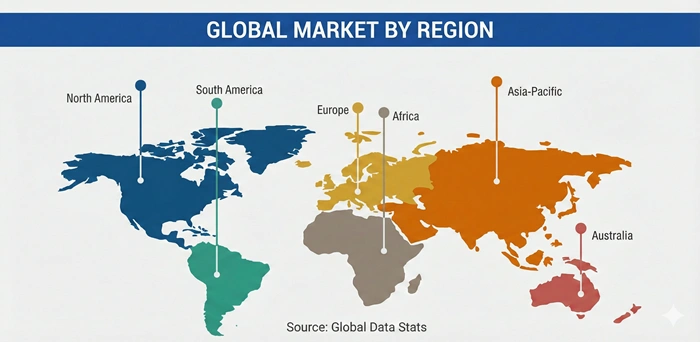
North America dominates the global image signal processor and vision processor market with 38% market share in 2024, supported by presence of leading semiconductor companies including Qualcomm, Texas Instruments, ON Semiconductor, and Intel developing cutting-edge ISP and VPU technologies, substantial corporate R&D investments exceeding billions annually, and sophisticated ecosystem combining hardware vendors, algorithm developers, and system integrators. The United States leads North American activity with market value reaching USD 2.46 billion in 2025, driven by strong automotive sector incorporating advanced camera systems, robust consumer electronics demand for premium imaging capabilities, and significant defense spending supporting military imaging applications. The region benefits from close collaboration between academia and industry advancing fundamental research in computer vision, machine learning, and semiconductor design, with universities including MIT, Stanford, and Carnegie Mellon producing specialized talent recruited by technology companies and startups.
The North American image signal processor and vision processor market thrives due to early adoption of emerging technologies across autonomous vehicles, augmented reality applications, and AI-powered imaging systems creating demand for next-generation processors supporting novel use cases. Silicon Valley concentration of technology companies, venture capital firms, and entrepreneurial talent fosters innovation ecosystem where startups develop specialized vision processors targeting niche applications, established semiconductor vendors acquire promising technologies accelerating development timelines, and system companies including Apple and Tesla design custom chips optimized for their specific product requirements. Government support through initiatives including the CHIPS Act providing over fifty billion dollars incentivizing domestic semiconductor manufacturing strengthens regional competitiveness, while defense agencies fund advanced imaging research supporting military applications including autonomous systems, surveillance technologies, and threat detection platforms. Leading regional players including Qualcomm dominate mobile ISP markets through Snapdragon platforms powering majority of premium Android smartphones, while NVIDIA leverages GPU expertise developing vision processors for automotive and robotics applications demonstrating regional technological leadership.
Asia Pacific
Rapid Manufacturing Growth and Technology Adoption Fuel Regional Expansion
Asia Pacific emerges as the fastest-growing region for the image signal processor and vision processor market during the forecast period, driven by massive smartphone manufacturing concentrated in China, Taiwan, South Korea, and Southeast Asian nations producing over 70% of global device volumes creating enormous demand for imaging components. The region's growth stems from presence of world's largest semiconductor foundries including TSMC and Samsung Foundry manufacturing advanced ISP and VPU chips for global customers, alongside fabless design companies including MediaTek, HiSilicon, and numerous Chinese startups developing competitive solutions. Government initiatives across multiple countries prioritize semiconductor self-sufficiency through substantial subsidies, R&D funding, and talent development programs, with China's Made in China 2025 targeting domestic technology leadership, India's semiconductor manufacturing incentives attracting international investment, and Japan's support for advanced materials and equipment development.
The Asia Pacific image signal processor and vision processor market benefits from rapidly expanding middle class across emerging economies increasing demand for smartphones, digital cameras, and automotive safety features, while technology-savvy younger demographics embrace latest imaging innovations driving upgrade cycles. China dominates regional market activity through combination of massive domestic consumption supporting local brands including Xiaomi, OPPO, and Vivo aggressively competing through camera capabilities, alongside export-oriented manufacturing serving global customers. The region demonstrates particular strength in surveillance and security applications with extensive CCTV deployments across smart cities, transportation infrastructure, and commercial facilities requiring intelligent video analytics capabilities powered by advanced vision processors. Japan maintains leadership in professional imaging through companies including Sony and Canon dominating camera sensor and high-end photography markets, while South Korea leverages Samsung's vertical integration across displays, semiconductors, and consumer electronics creating synergies accelerating ISP innovation. Southeast Asian nations including Vietnam, Thailand, and Indonesia exhibit rapid growth as electronics manufacturing relocates from China seeking cost advantages and supply chain diversification.
Top Key Players
-
Qualcomm Technologies Inc. (United States)
-
Sony Semiconductor Solutions Corporation (Japan)
-
Samsung Electronics Co. Ltd. (South Korea)
-
STMicroelectronics NV (Switzerland)
-
Texas Instruments Incorporated (United States)
-
ON Semiconductor Corporation (United States)
-
Intel Corporation (United States)
-
NVIDIA Corporation (United States)
-
MediaTek Inc. (Taiwan)
-
Broadcom Inc. (United States)
-
Analog Devices Inc. (United States)
-
Renesas Electronics Corporation (Japan)
-
OmniVision Technologies Inc. (United States)
-
Canon Inc. (Japan)
-
Panasonic Corporation (Japan)
Recent Developments
-
March 2025: VeriSilicon launched AcuityPercept, an AI-based automatic ISP tuning system enhancing object recognition accuracy for automotive, robotics, and AIoT applications while reducing development time and optimizing imaging performance across complex environmental conditions
-
March 2025: IMDT launched System-on-Module and Single-Board Computer products built on Renesas RZ/V2N processor, providing energy-efficient and cost-effective solutions making vision-AI applications more accessible to developers across industrial and commercial segments
-
January 2025: Nullmax collaborated with Black Sesame Technologies launching multimodal vision-based smart driving solution featuring the Huashan A2000 chip family integrated with AI and multi-function units including ISP, DSP, and CV enabling memory driving, parking, and navigation capabilities
-
November 2024: Samsung Electronics partnered with Nota AI integrating optimization technology into Exynos AI Studio, boosting on-device generative AI performance for the Exynos 2500 processor enhancing mobile imaging and processing capabilities
-
October 2024: Sony Semiconductor Solutions launched ISX038 CMOS image sensor for automotive cameras enabling simultaneous processing and output of RAW and YUV images, advancing capabilities for ADAS and autonomous driving applications
Market Trends
3D Image Processing and Edge AI Deployment Transform Capabilities
The image signal processor and vision processor market demonstrates clear trends toward 3D image signal processing capabilities enabling depth sensing, augmented reality applications, and immersive experiences beyond traditional two-dimensional photography. Three-dimensional imaging technologies including time-of-flight sensors, structured light systems, and stereo camera arrays generate depth maps providing spatial information enabling applications from portrait mode photography creating realistic bokeh effects to facial recognition providing secure biometric authentication resistant to photo-based spoofing. Automotive applications leverage 3D vision processors creating detailed environmental models identifying object distances enabling precise collision avoidance and parking assistance, while industrial automation deploys depth sensing for robotic guidance ensuring accurate part manipulation and quality inspection detecting dimensional defects. The proliferation of AR glasses, VR headsets, and mixed reality devices drives demand for specialized 3D vision processors executing real-time scene reconstruction, spatial mapping, and hand tracking enabling natural interaction with digital content overlaid onto physical environments.
Edge AI deployment represents another significant trend as image signal processors and vision processors increasingly incorporate dedicated neural processing units executing machine learning models directly on imaging devices rather than transmitting data to cloud servers for analysis. On-device AI processing delivers substantial advantages including reduced latency supporting real-time applications like autonomous navigation requiring instant decision-making, enhanced privacy by processing sensitive visual information locally without network transmission, improved reliability maintaining functionality during network outages, and lower operational costs eliminating continuous data transmission and cloud computing fees. Smartphone manufacturers integrate AI accelerators within ISPs enabling features including real-time background replacement during video calls, instant language translation overlaying text on camera views, and intelligent photo organization automatically categorizing images by content, people, and locations. Industrial and automotive applications benefit from edge vision processors executing defect detection, object recognition, and anomaly detection locally without dependence on potentially unreliable wireless connectivity, while security systems perform facial recognition and behavioral analysis at camera locations reducing bandwidth requirements and centralized processing infrastructure costs.
Segments Covered in the Report
By Application
-
Consumer Electronics (Smartphones, Digital Cameras, Action Cameras, Webcams)
-
Automotive (ADAS, Autonomous Vehicles, Surround View, Driver Monitoring)
-
Surveillance and Security (CCTV Systems, Access Control, Perimeter Security)
-
Industrial Automation (Quality Inspection, Robotic Guidance, Process Monitoring)
-
Healthcare (Medical Imaging, Surgical Visualization, Diagnostic Equipment)
-
Aerospace and Defense (UAVs, Targeting Systems, Reconnaissance)
By Technology
-
Digital Signal Processing
-
Analog Signal Processing
-
Computer Vision
-
Machine Learning
-
Image Enhancement
-
Multi-Sensor Fusion
By Device Type
-
Smartphones and Tablets
-
Digital Cameras (DSLR, Mirrorless, Compact)
-
CCTV and Security Cameras
-
Drones and UAVs
-
Medical Imaging Devices
-
Automotive Cameras
-
AR/VR Headsets
By End Use
-
Personal Use (Photography, Social Media, Entertainment)
-
Commercial Use (Retail, Transportation, Smart Cities)
-
Industrial Use (Manufacturing, Logistics, Quality Control)
-
Professional Use (Broadcasting, Film Production, Photography Studios)
By Region
-
North America (United States, Canada, Mexico)
-
Europe (Germany, United Kingdom, France, Italy, Spain)
-
Asia Pacific (China, Japan, South Korea, Taiwan, India, Southeast Asia)
-
Latin America (Brazil, Argentina, Chile)
-
Middle East & Africa (UAE, Saudi Arabia, South Africa)
Frequently Asked Questions
Question 1: What is the image signal processor and vision processor market size and projected growth?
Answer: The global image signal processor and vision processor market is valued at USD 4.29 billion in 2025 and is predicted to reach USD 18.75 billion by 2033, growing at a CAGR of 13.92% from 2026 to 2033. This growth reflects increasing adoption across consumer electronics, automotive ADAS, surveillance systems, and industrial automation applications worldwide.
Question 2: Which region dominates the image signal processor and vision processor market currently?
Answer: North America leads the image signal processor and vision processor market with 38% market share in 2024, supported by advanced semiconductor manufacturing and strong R&D investments. Asia Pacific demonstrates the fastest growth rate driven by massive smartphone production, expanding automotive manufacturing, and supportive government initiatives across China, Japan, and India.
Question 3: What applications drive the image signal processor and vision processor market expansion?
Answer: Consumer electronics holds the largest application share through smartphone camera systems requiring advanced ISP capabilities, while automotive exhibits the fastest growth rate. Advanced driver assistance systems, autonomous vehicles, surveillance security, and industrial automation applications also contribute significantly to market development and technology advancement.
Question 4: How does the image signal processor and vision processor market benefit from AI integration?
Answer: The image signal processor and vision processor market leverages AI through automatic tuning systems optimizing image quality, scene recognition enabling context-aware enhancements, and neural processing units executing machine learning models. AI integration enables computational photography, real-time object detection, and intelligent image analysis supporting applications from smartphone cameras to autonomous navigation systems.
Question 5: What challenges affect image signal processor and vision processor market adoption?
Answer: The image signal processor and vision processor market faces challenges including high development costs exceeding tens of millions of dollars and technical complexity requiring specialized expertise. Sensor compatibility issues, rapid technology evolution shortening product lifecycles, and substantial R&D investment requirements create barriers particularly for smaller companies entering the competitive imaging semiconductor market.