
Humanoid Robot Market Overview
The global humanoid robot market size is valued at USD 2.32 billion in 2025 and is predicted to increase from USD 3.15 billion in 2026 to approximately USD 19.68 billion by 2033, growing at a CAGR of 41.8% from 2026 to 2033. This remarkable expansion reflects the accelerating integration of intelligent automation across multiple industries worldwide.
Humanoid robots are increasingly transforming how businesses operate and how people interact with technology in their daily lives. These advanced machines mimic human form and behavior, equipped with sophisticated sensors, actuators, and artificial intelligence systems that enable them to perform tasks traditionally requiring human intervention. The surge in market adoption stems from breakthrough developments in machine learning algorithms, natural language processing capabilities, and enhanced mobility systems that allow these robots to navigate complex environments designed for humans. Industries ranging from healthcare facilities to manufacturing plants are recognizing the potential of humanoid robots to address critical challenges such as labor shortages, aging populations, and the need for precision in repetitive tasks.
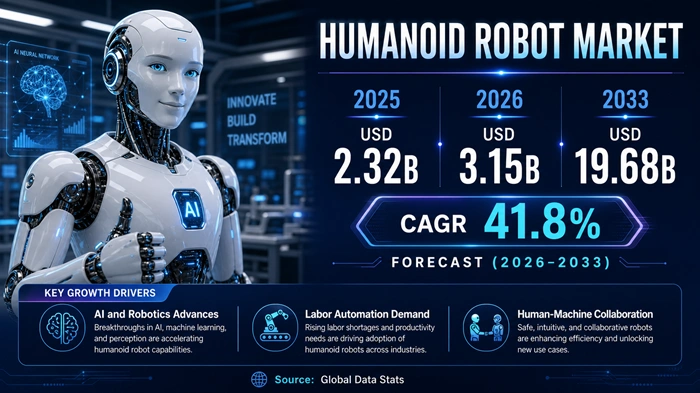
Transforming Industries Through Advanced Human-Robot Collaboration and Intelligent Automation Solutions
The humanoid robot market continues to gain momentum as organizations worldwide seek innovative solutions to workforce challenges and operational efficiency demands. Rising investments from both private sector companies and government initiatives are accelerating research and development activities, particularly in regions like Asia Pacific, North America, and Europe. The technology has evolved from experimental prototypes confined to research laboratories into commercially viable products that are being deployed in real-world applications across healthcare, retail, logistics, and personal assistance sectors. Companies are increasingly leveraging humanoid robots for tasks that require dexterity, human-like interaction, and adaptive decision-making capabilities, driving substantial growth in market adoption and creating new opportunities for technological advancement and commercial expansion.
AI Impact on the Humanoid Robot Industry
Artificial Intelligence Revolutionizes Cognitive Capabilities and Autonomous Decision-Making in Humanoid Robotics
Artificial intelligence has emerged as the fundamental catalyst transforming humanoid robots from programmable machines into intelligent systems capable of learning, adapting, and making autonomous decisions. Advanced AI technologies including deep learning neural networks, computer vision systems, and natural language understanding have dramatically enhanced the cognitive abilities of humanoid robots, enabling them to recognize human emotions, interpret complex verbal commands, and respond appropriately to unpredictable situations. Machine learning algorithms allow these robots to continuously improve their performance through experience, learning from interactions with humans and their environment to refine their behavioral patterns and task execution strategies. This AI integration has expanded the practical applications of humanoid robots beyond simple repetitive tasks to sophisticated roles requiring judgment, problem-solving, and nuanced human interaction.
The convergence of generative AI with humanoid robotics represents a paradigm shift that is reshaping industry expectations and accelerating commercial deployment timelines. AI-powered perception systems enable humanoid robots to understand spatial relationships, identify objects with precision, and navigate dynamic environments safely alongside human workers. Natural language processing capabilities have advanced to the point where humanoid robots can engage in meaningful conversations, understand context and intent, and provide personalized responses that enhance user experience across customer service, healthcare, and educational applications. These AI advancements are reducing development costs while simultaneously improving functionality, making humanoid robots increasingly viable for mainstream adoption across sectors that previously considered the technology too experimental or expensive to implement at scale.
Growth Factors
Rising Global Workforce Shortages and Demographic Shifts Drive Accelerated Humanoid Robot Adoption
The humanoid robot market is experiencing unprecedented growth driven by fundamental shifts in global demographics and labor market dynamics. Countries across developed and developing regions face acute shortages of workers willing or able to perform physically demanding, repetitive, or dangerous tasks, particularly in manufacturing, logistics, and healthcare sectors. The aging population phenomenon, especially pronounced in Japan, Germany, and other industrialized nations, is creating massive demand for eldercare support while simultaneously shrinking the available workforce. Humanoid robots offer a compelling solution to these challenges by providing consistent, tireless assistance for tasks ranging from material handling in warehouses to patient monitoring in hospitals and companionship for isolated elderly individuals. Organizations are increasingly viewing humanoid robots not as replacement workers but as collaborative partners that augment human capabilities, handle routine responsibilities, and free human workers to focus on tasks requiring creativity, emotional intelligence, and complex decision-making.
Technological maturation and cost reduction trajectories are accelerating market penetration across diverse industry verticals and geographic markets. Production volumes for key components such as advanced actuators, sophisticated sensor arrays, and specialized computing hardware are increasing dramatically, driving down per-unit costs through economies of scale. Manufacturing capabilities that were limited to specialized robotics companies are now expanding to include automotive giants, technology conglomerates, and innovative startups, intensifying competition while broadening the range of available solutions tailored to specific industry needs. Investment activity in the humanoid robot market has surged, with venture capital firms, corporate strategic investors, and government funding agencies committing billions of dollars to accelerate development timelines and scale commercial deployments. This capital influx is supporting critical advancements in battery technology, AI algorithm development, and human-robot interaction interfaces that are essential for achieving the reliability, safety, and user-friendliness required for widespread adoption across consumer and enterprise markets.
Market Outlook
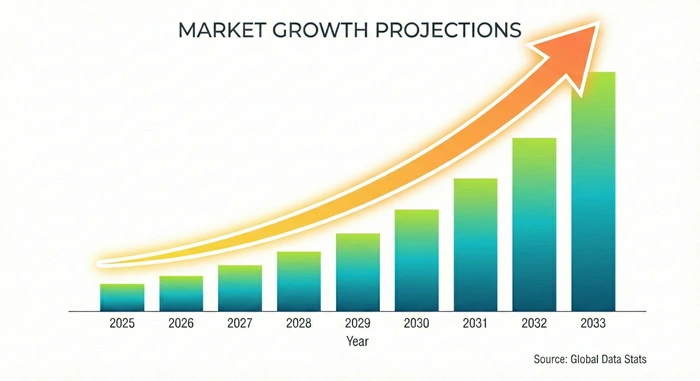
Humanoid Robot Market Poised for Exponential Growth Through Strategic Industrial Deployments and Consumer Applications
The outlook for the humanoid robot market through 2033 reflects a trajectory of accelerating adoption driven by technological breakthroughs, expanding use cases, and growing acceptance among both enterprise customers and individual consumers. Industry analysts project that the market will transition from early adopter phase to mainstream deployment during this forecast period, with production volumes reaching scales that enable price points accessible to mid-market businesses and eventually affluent consumers. The manufacturing sector is expected to remain the largest application area, with humanoid robots increasingly deployed for assembly operations, quality inspection, and material handling tasks that benefit from human-like dexterity and adaptability. Healthcare applications will experience particularly robust growth as hospitals, rehabilitation centers, and eldercare facilities deploy humanoid robots for patient assistance, therapeutic support, and routine monitoring tasks that address staffing shortages while improving care quality.
Commercial success stories emerging from pilot deployments are building confidence among potential customers and accelerating purchasing decisions across industries. Retail chains are testing humanoid robots for customer service, inventory management, and checkout assistance, with early results demonstrating improved customer engagement and operational efficiency. Educational institutions are incorporating humanoid robots into curricula for both teaching programming concepts and providing interactive learning experiences that engage students more effectively than traditional methods. The hospitality industry is deploying humanoid robots in hotels and restaurants for guest services, creating memorable experiences while addressing chronic labor shortages. These diverse applications are collectively driving market expansion and attracting new entrants who see opportunities to develop specialized solutions for niche markets, further accelerating innovation and market growth throughout the forecast period to 2033.
Expert Speaks
-
Elon Musk, CEO of Tesla, has emphasized that humanoid robots like Optimus have the potential to become the biggest product in history, with Tesla targeting production of one million robots annually as demand for autonomous workforce solutions accelerates across manufacturing and service industries.
-
Marc Raibert, Executive Director of Boston Dynamics, highlighted at CES 2026 that the Atlas humanoid robot entering mass production represents a pivotal moment for the industry, demonstrating that commercially viable humanoid robots are now ready for real-world industrial deployment rather than remaining confined to research laboratories.
-
Jensen Huang, CEO of NVIDIA, stated in recent technology conferences that artificial intelligence and advanced computing platforms are fundamentally enabling the humanoid robot revolution, with AI-driven perception and decision-making capabilities transforming robots from programmed machines into intelligent collaborators.
Key Report Takeaways
-
Asia Pacific leads the humanoid robot market in terms of both current market share and growth velocity, driven by aggressive commercialization strategies, substantial government backing, and integrated domestic supply chains in China, Japan, and South Korea that enable competitive mass production at scale.
-
Asia Pacific is also the fastest-growing region with accelerating adoption across manufacturing, healthcare, and service sectors, supported by favorable regulatory environments and extensive research and development ecosystems that are advancing humanoid robot capabilities.
-
Biped robots dominate the type segment with the highest utilization, particularly in applications requiring navigation of complex human-designed environments including multi-story buildings, staircases, and spaces with obstacles that limit wheeled alternatives.
-
Personal assistance and caregiving represents the application contributing most significantly to market revenue, accounting for approximately 38% market share, fueled by demographic trends toward aging populations and increasing demand for in-home health monitoring and companionship solutions.
-
Software is emerging as the fastest-growing offering segment, projected to expand at a CAGR of 43.2%, driven by continuous advancements in artificial intelligence, machine learning algorithms, computer vision systems, and natural language processing that enhance robot capabilities and enable new applications.
-
Healthcare applications are positioned for rapid future growth with strong expansion potential, expected to capture increasing market share as hospitals and medical facilities deploy humanoid robots for rehabilitation therapy, patient monitoring, medication delivery, and elder care support.
Market Scope
| Report Coverage | Details |
|---|---|
| Market Size by 2033 | USD 19.68 Billion |
| Market Size by 2025 | USD 2.32 Billion |
| Market Size by 2026 | USD 3.15 Billion |
| Market Growth Rate from 2026 to 2033 | CAGR of 41.8% |
| Dominating Region | Asia Pacific |
| Fastest Growing Region | Asia Pacific |
| Base Year | 2025 |
| Forecast Period | 2026 to 2033 |
| Segments Covered | Type, Offering, Application, Region |
| Regions Covered | North America, Europe, Asia Pacific, Rest of the World |
Market Dynamics
Drivers Impact Analysis
| Impact Factor | (≈) % Impact on CAGR Forecast | Geographic Relevance | Impact Timeline |
|---|---|---|---|
| Advancements in AI and Machine Learning | +8.5% | Global | 2026-2033 |
| Rising Labor Shortages Across Industries | +6.2% | North America, Europe, Asia Pacific | 2026-2030 |
| Growing Elderly Population Worldwide | +5.8% | Japan, Europe, North America | 2027-2033 |
Artificial Intelligence Integration Accelerates Humanoid Robot Capabilities and Market Viability
Breakthrough advancements in artificial intelligence and machine learning technologies are fundamentally reshaping the capabilities of humanoid robots, driving unprecedented market growth throughout the forecast period. Modern AI systems enable humanoid robots to process visual information through sophisticated computer vision algorithms, understand and respond to natural language commands with contextual awareness, and make autonomous decisions in complex, unpredictable environments. Deep learning neural networks allow these robots to recognize patterns, learn from experience, and continuously improve their performance without explicit reprogramming, making them increasingly valuable for applications requiring adaptability and intelligent behavior. The integration of generative AI technologies is further enhancing humanoid robot capabilities, enabling more natural conversational abilities, creative problem-solving approaches, and personalized interaction patterns that significantly improve user acceptance and satisfaction across both enterprise and consumer applications.
The rapid pace of AI development is creating a virtuous cycle where improved algorithms enable new applications, which in turn generate data that further refines AI performance and expands potential use cases. Cloud-based AI platforms are making sophisticated machine learning capabilities accessible to smaller robotics companies, democratizing advanced functionality and accelerating innovation across the industry. Edge computing advancements allow humanoid robots to process AI workloads locally, reducing latency, improving response times, and enabling operation in environments without reliable internet connectivity. These technological developments are collectively reducing the barriers to commercial deployment while simultaneously expanding the range of tasks that humanoid robots can perform effectively, driving adoption across industries from manufacturing and logistics to healthcare and hospitality sectors throughout the global humanoid robot market.
Restraints Impact Analysis
| Impact Factor | (≈) % Impact on CAGR Forecast | Geographic Relevance | Impact Timeline |
|---|---|---|---|
| High Capital Investment Requirements | -4.2% | Emerging Markets | 2026-2029 |
| Safety and Regulatory Concerns | -3.5% | Global | 2026-2030 |
| Limited Technical Expertise and Support Infrastructure | -2.8% | Developing Regions | 2026-2028 |
Significant Capital Investment Barriers Slow Adoption Among Cost-Sensitive Organizations
The substantial capital investment required for humanoid robot acquisition, deployment, and maintenance presents a significant restraint limiting market penetration, particularly among small and medium-sized enterprises and organizations in cost-sensitive markets. Initial purchase prices for commercially available humanoid robots currently range from tens of thousands to several hundred thousand dollars, representing a major financial commitment that requires careful justification through projected productivity gains and labor cost savings. Beyond acquisition costs, organizations must invest in supporting infrastructure including charging stations, maintenance facilities, specialized training programs for staff, and ongoing software updates that ensure optimal performance. The extended return on investment timelines associated with these high upfront costs create hesitation among potential customers, particularly in industries with thin profit margins or uncertain demand forecasts that make long-term capital commitments risky.
Development costs for humanoid robot manufacturers remain elevated due to the complexity of integrating advanced sensors, sophisticated actuators, powerful computing platforms, and cutting-edge AI software into cohesive systems that meet reliability and safety standards. Research and development expenditures consume substantial resources as companies work to improve mobility, enhance manipulation capabilities, refine human-robot interaction interfaces, and address technical challenges related to battery life, durability, and environmental adaptability. These high development costs create barriers to entry for new market participants and limit the number of companies capable of competing effectively in the humanoid robot market. While economies of scale are expected to reduce per-unit costs as production volumes increase, the current pricing structure remains prohibitive for many potential customers, particularly in price-sensitive geographic markets and industry segments where labor costs are relatively low, slowing overall market growth rates during the early forecast period.
Opportunities Impact Analysis
| Impact Factor | (≈) % Impact on CAGR Forecast | Geographic Relevance | Impact Timeline |
|---|---|---|---|
| Logistics and Warehouse Automation Expansion | +7.3% | North America, Asia Pacific | 2026-2032 |
| Consumer Market Entry at Accessible Price Points | +6.5% | Global | 2028-2033 |
| Disaster Response and Hazardous Environment Applications | +4.2% | Global | 2027-2031 |
Logistics Sector Transformation Creates Massive Opportunities for Humanoid Robot Deployment
The explosive growth of e-commerce and the corresponding expansion of logistics infrastructure present enormous opportunities for humanoid robot market growth, with warehouses, distribution centers, and last-mile delivery operations representing ideal deployment environments. Humanoid robots offer distinct advantages in logistics applications due to their ability to navigate spaces designed for human workers, manipulate packages of varying sizes and shapes, and adapt to changing warehouse layouts without requiring extensive infrastructure modifications. The physical form factor of humanoid robots allows them to operate existing equipment including doors, elevators, and conveyor systems, significantly reducing the integration costs compared to specialized automation solutions that require custom infrastructure. Major logistics companies and e-commerce giants are actively piloting humanoid robot deployments for order picking, inventory management, package sorting, and facility maintenance tasks, with early results demonstrating productivity improvements and cost reductions that justify broader rollouts.
The chronic labor shortages affecting the logistics industry globally are accelerating adoption timelines as companies struggle to maintain service levels during peak demand periods and face increasing wage pressures in competitive labor markets. Humanoid robots provide 24/7 operational capability without fatigue, benefits, or turnover concerns, offering compelling economic advantages that improve with each year of operation. Advancements in manipulation technology are enabling humanoid robots to handle increasingly diverse package types, while improved navigation systems allow safe operation in dynamic warehouse environments alongside human workers. As production volumes increase and prices decline, the total cost of ownership for humanoid robots in logistics applications is approaching parity with human labor costs in developed markets, positioning the sector for rapid adoption acceleration throughout the humanoid robot market forecast period to 2033.
Segment Analysis
By Type: Biped Robots
Human-Like Mobility Enables Superior Adaptability Across Diverse Operating Environments
Biped robots represent the dominant type segment in the humanoid robot market, capturing approximately 62% market share with growth projected at a CAGR of 43.5% through 2033, driven by their unparalleled ability to navigate environments specifically designed for human locomotion. These robots replicate the natural walking patterns of humans, enabling them to climb stairs, step over obstacles, traverse uneven terrain, and operate in confined spaces where wheeled alternatives face insurmountable limitations. The human-like form factor of biped robots facilitates intuitive interaction with people, as their body language and movement patterns align with human expectations, reducing anxiety and improving acceptance in customer-facing applications across retail, hospitality, and healthcare sectors. Manufacturing facilities designed around human workers can integrate biped robots seamlessly without costly infrastructure modifications, as these machines utilize existing doors, elevators, workstations, and pathways, providing operational flexibility that justifies their higher initial costs compared to wheeled alternatives.
Asia Pacific leads biped robot adoption with particularly strong growth in Japan, where companies like Honda, Toyota, and SoftBank Robotics have pioneered commercial applications, and China, where aggressive government support and massive manufacturing capabilities are driving rapid scaling. The region accounts for over 55% of global biped robot deployments, supported by cultural acceptance of robots, substantial research funding, and advanced supply chains for critical components. Leading companies in the segment include Boston Dynamics with its Atlas platform now in mass production for industrial applications, Tesla with its Optimus robot targeting manufacturing and eventually consumer markets, and Agility Robotics with its Digit robot focused on logistics and warehouse automation. Japanese firms including ASIMO's successor projects and humanoid initiatives from automotive manufacturers are advancing bipedal locomotion technology, while Chinese companies like UBTECH Robotics and Unitree are bringing increasingly capable biped robots to market at competitive price points. The segment benefits from continuous improvements in actuator efficiency, balance control algorithms, and energy management systems that are extending operational duration and expanding viable use cases across the humanoid robot market.
By Application: Personal Assistance and Caregiving
Demographic Trends and Healthcare Challenges Drive Rapid Adoption in Care Applications
Personal assistance and caregiving represents the largest and fastest-growing application segment in the humanoid robot market, accounting for 38% market share with expansion projected at a CAGR of 44.2% from 2026 to 2033, fueled by powerful demographic trends and escalating healthcare demands worldwide. The global population aged 65 and older is growing at unprecedented rates, with the World Health Organization projecting this age group to reach 1.5 billion by 2050, creating massive demand for eldercare support that far exceeds available human caregiver capacity. Humanoid robots address critical gaps in care delivery by providing companionship to isolated elderly individuals, monitoring vital signs and detecting health emergencies, assisting with daily living activities including medication reminders and mobility support, and offering cognitive stimulation through interactive conversations and activities. Healthcare facilities including hospitals, rehabilitation centers, and nursing homes are deploying humanoid robots to reduce staff workload, ensure consistent patient monitoring, and provide personalized attention that improves outcomes while controlling costs.
Japan and European nations lead adoption in this segment due to their particularly pronounced aging demographics and high labor costs that make humanoid robot economics compelling, with Asia Pacific overall capturing 48% of the personal assistance and caregiving market share. North America follows closely with growing deployments driven by similar demographic pressures and increasing acceptance of technological solutions in healthcare settings. Major companies active in this segment include SoftBank Robotics with its Pepper robot widely deployed in care facilities, PAL Robotics with specialized healthcare assistance platforms, and emerging players like Blue Frog Robotics developing robots specifically for elderly companionship. The segment benefits from favorable regulatory developments as healthcare authorities recognize the potential of humanoid robots to address care shortages, with several countries establishing frameworks for robot integration in medical settings. Advancements in emotional intelligence capabilities, natural language processing for multiple languages and dialects, and gentle manipulation systems designed for safe physical assistance are expanding the range of caregiving tasks that humanoid robots can perform effectively throughout the humanoid robot market.
Regional Insights
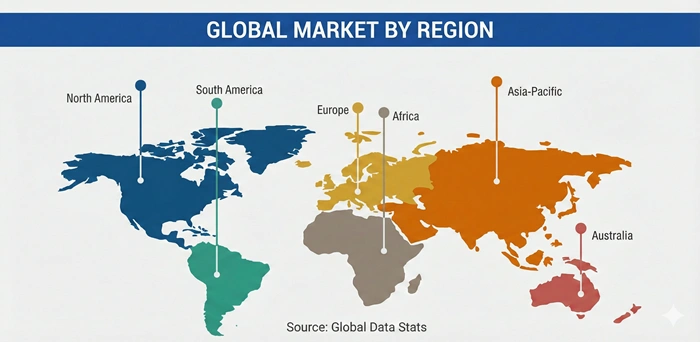
Asia Pacific
Integrated Ecosystems and Government Support Establish Asia Pacific as Global Humanoid Robot Leader
Asia Pacific dominates the humanoid robot market with 52% regional market share, valued at approximately USD 1.21 billion in 2025 and projected to reach USD 10.58 billion by 2033, expanding at the highest regional CAGR of 45.2% during the forecast period. This leadership position stems from the convergence of multiple strategic advantages including aggressive government-backed automation initiatives, extensive domestic supply chains for critical components, advanced manufacturing capabilities, and substantial research ecosystems concentrated in China, Japan, and South Korea. China has emerged as the global manufacturing hub for humanoid robots, with production capacity expanding exponentially as companies like UBTECH Robotics, Unitree, and numerous well-funded startups scale operations supported by state funding and integrated component suppliers. The Chinese government has designated robotics as a strategic priority industry, providing subsidies, research grants, and favorable policies that accelerate development and deployment across manufacturing, service, and consumer sectors.
Japan maintains its position as a technology leader in humanoid robotics, building on decades of research excellence and cultural acceptance of robots in daily life. Japanese corporations including SoftBank Robotics, Honda, and Toyota continue advancing humanoid capabilities through substantial R&D investments, while the government supports adoption through healthcare and eldercare initiatives addressing the nation's rapidly aging population. South Korea is emerging as a significant player with companies like ROBOTIS developing advanced humanoid platforms and components, supported by government programs promoting AI integration and smart manufacturing. Leading companies in the Asia Pacific humanoid robot market include UBTECH Robotics (China), SoftBank Robotics (Japan), ROBOTIS (South Korea), Unitree Robotics (China), and PAL Robotics with significant regional operations. The region benefits from cost advantages in manufacturing, rapid iteration cycles that accelerate innovation, and large domestic markets that provide scale for commercial validation before global expansion, positioning Asia Pacific to maintain market leadership throughout the forecast period to 2033.
North America
Innovation Excellence and Enterprise Adoption Drive North American Market Growth
North America represents the second-largest regional market for humanoid robots with 28% market share, valued at USD 0.65 billion in 2025 and expected to reach USD 5.31 billion by 2033, growing at a CAGR of 39.5% driven by technological leadership, substantial venture capital investment, and strong enterprise adoption across logistics, manufacturing, and healthcare sectors. The United States leads regional growth with Silicon Valley technology companies, established robotics firms, and well-funded startups pushing the boundaries of AI integration, manipulation capabilities, and autonomous navigation systems. American companies have pioneered commercial applications in logistics and warehouse automation, with major deployments underway at e-commerce facilities, distribution centers, and manufacturing plants where humanoid robots are proving their value in real-world operating conditions. The region benefits from close collaboration between industry, academic research institutions including MIT, Carnegie Mellon, and Stanford, and government agencies supporting robotics advancement through defense and infrastructure applications.
Canada contributes to regional growth with emerging robotics companies and research excellence in AI and machine learning that enhances humanoid robot capabilities, while Mexico's manufacturing sector represents a growing deployment market for industrial applications. Leading companies in the North American humanoid robot market include Agility Robotics with its Digit platform gaining traction in logistics applications, Boston Dynamics leveraging its decades of research to commercialize Atlas, Tesla with ambitious plans for Optimus production scaling, and Apptronik developing versatile humanoid platforms for multiple industries. The region's market growth is supported by favorable business environments that encourage innovation, access to venture capital funding that enables rapid scaling, and enterprises willing to adopt emerging technologies that provide competitive advantages. Regulatory frameworks in North America are evolving to accommodate humanoid robot deployment in workplaces and public spaces, with safety standards and liability guidelines taking shape to enable broader adoption throughout the humanoid robot market forecast period.
Top Key Players
-
SoftBank Robotics Group (Japan)
-
ROBOTIS Co. Ltd. (South Korea)
-
Agility Robotics (United States)
-
UBTECH Robotics Corp. Ltd. (China)
-
PAL Robotics (Spain)
-
Boston Dynamics (United States)
-
Hanson Robotics (Hong Kong)
-
Tesla Inc. (United States)
-
Honda Motor Co. Ltd. (Japan)
-
Engineered Arts Ltd. (United Kingdom)
-
Unitree Robotics (China)
-
Apptronik (United States)
-
Kawada Robotics Corporation (Japan)
-
Figure AI (United States)
-
Fourier Intelligence (China)
Recent Developments
-
January 2026: Boston Dynamics announced that its Atlas humanoid robot has entered mass production, with deployments planned for Hyundai and Google facilities throughout 2026, marking the first large-scale commercial rollout of a fully autonomous bipedal industrial humanoid robot capable of shared workspace operation.
-
December 2025: Samsung increased its stake in Rainbow Robotics to 35% by exercising a call option to make the company its subsidiary, accelerating development of advanced humanoid robots building on Rainbow's legacy as the developer of Korea's first two-legged walking robot Hubo.
-
November 2025: ROBOTIS partnered with MIT to develop Physical AI technology focusing on human-level physical intelligence for robotics, with support from Korean government agencies, applying advanced reflexive AI and sensing systems to collaborative robot platforms including the OpenMANIPULATOR-Y.
-
October 2025: Kawada Robotics Corporation launched the NEXTAGE Fillie humanoid robot at the Monozukuri World Osaka exhibition, showcasing advanced capabilities in robotics automation designed for manufacturing and industrial applications with enhanced dexterity and human-robot collaboration features.
-
August 2025: Tesla announced accelerated production plans for Optimus humanoid robots with targets to deploy thousands of units in Tesla factories throughout 2026, while CEO Elon Musk projected the robot could eventually account for 80% of the company's total value as production scales toward one million units annually.
Market Trends
Integration of Generative AI Creates New Paradigms for Human-Robot Interaction and Capability
The integration of generative artificial intelligence into humanoid robot systems represents a transformative trend that is fundamentally changing how these machines interact with humans and adapt to new situations. Generative AI technologies enable humanoid robots to engage in more natural conversations with contextual understanding, generate appropriate responses to unexpected questions or scenarios, and even exhibit forms of creative problem-solving when confronting novel challenges. This advancement moves humanoid robots beyond scripted responses and preprogrammed behaviors toward genuine adaptability that makes them far more useful across diverse applications. Language models embedded in humanoid robots allow them to understand nuanced instructions, ask clarifying questions when faced with ambiguity, and provide explanations of their actions in ways that build user trust and acceptance. The ability to generate human-like speech with appropriate emotional tones, combined with facial expressions and body language generated through AI systems, creates interaction experiences that feel remarkably natural and reduce the psychological barriers that have historically limited humanoid robot adoption in customer-facing and caregiving applications throughout the humanoid robot market.
Rapid Cost Reductions and Production Scaling Enable Mass Market Accessibility
Production costs for humanoid robots are declining dramatically as manufacturing volumes increase and supply chains mature, with industry leaders targeting price points below $20,000 per unit by 2028 that would open vast new market opportunities. Several Chinese manufacturers have already announced humanoid robots priced under $30,000, with some models available for under $20,000, representing order-of-magnitude reductions compared to prices just three years ago. This cost trajectory is being driven by economies of scale as production volumes shift from hundreds to thousands and eventually millions of units annually, combined with component cost reductions as suppliers invest in specialized production facilities and standardization efforts reduce custom engineering requirements. Battery technology improvements are lowering energy storage costs while extending operational duration, actuator manufacturers are achieving higher torque-to-weight ratios at lower price points, and computing hardware is delivering increased processing power at reduced costs and energy consumption. These cost reductions are making humanoid robots economically viable for an expanding range of applications and customer segments, accelerating adoption timelines and driving market growth throughout the forecast period to 2033 across the global humanoid robot market.
Segments Covered in the Report
By Type:
-
Biped Robots
-
Wheel Drive Robots
By Offering:
-
Hardware
-
Sensors (Gyroscopes, Accelerometers, Position Sensors, Vision Sensors, Torque Sensors)
-
Actuators (Electrical, Pneumatic, Hydraulic, Piezoelectric)
-
Power Systems
-
Control Systems
-
Structural Components
-
-
Software
-
AI and Machine Learning Platforms
-
Navigation and Control Software
-
Natural Language Processing Systems
-
Computer Vision Software
-
-
Services
-
Integration and Deployment
-
Maintenance and Support
-
Training and Consulting
-
By Application:
-
Personal Assistance and Caregiving
-
Healthcare and Rehabilitation
-
Manufacturing and Industrial
-
Education and Entertainment
-
Research and Space Exploration
-
Retail and Hospitality
-
Search and Rescue
-
Public Relations and Customer Service
By Region:
-
North America (United States, Canada, Mexico)
-
Europe (Germany, United Kingdom, France, Spain, Italy, Rest of Europe)
-
Asia Pacific (China, Japan, South Korea, India, Australia, Rest of Asia Pacific)
-
Rest of the World (Middle East, Africa, South America)
Frequently Asked Questions
Question 1: What is the humanoid robot market size and growth forecast?
Answer: The humanoid robot market is valued at USD 2.32 billion in 2025 and projected to reach USD 19.68 billion by 2033, growing at a CAGR of 41.8% from 2026 to 2033. This growth is driven by technological advancements, expanding applications, and increasing adoption across multiple industries worldwide.
Question 2: Which region dominates the humanoid robot market currently?
Answer: Asia Pacific dominates the humanoid robot market with approximately 52% market share, led by China, Japan, and South Korea. The region benefits from strong government support, integrated supply chains, advanced manufacturing capabilities, and substantial investments in robotics research and development.
Question 3: What are the primary applications driving humanoid robot market growth?
Answer: Personal assistance and caregiving represents the largest application segment at 38% market share, driven by aging demographics and healthcare demands. Manufacturing, logistics, healthcare, and education sectors are also experiencing rapid humanoid robot adoption for workforce augmentation and operational efficiency improvements.
Question 4: How is artificial intelligence impacting the humanoid robot market?
Answer: Artificial intelligence is fundamentally transforming the humanoid robot market by enabling advanced perception, natural language understanding, autonomous decision-making, and adaptive learning capabilities. AI integration is expanding viable applications, improving human-robot interaction, and accelerating commercial adoption across industries.
Question 5: What are the key challenges facing humanoid robot market expansion?
Answer: High capital investment requirements, safety concerns, regulatory uncertainties, and limited technical expertise represent primary challenges. However, declining costs, improving reliability, evolving standards, and expanding support ecosystems are progressively addressing these barriers throughout the forecast period.