
Human High-Density Lipoprotein Market Overview
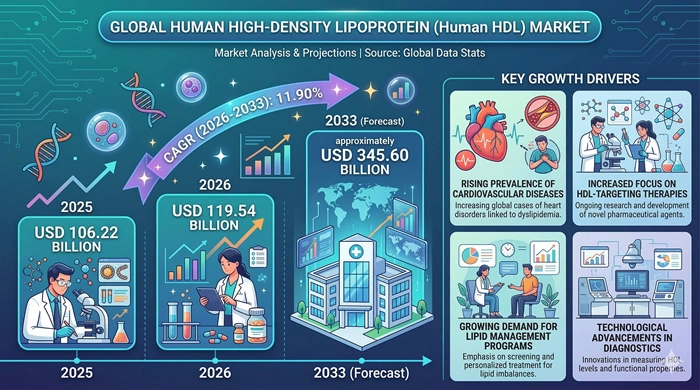
The global Human High-Density Lipoprotein market size is valued at USD 106.22 billion in 2025 and is predicted to increase from USD 119.54 billion in 2026 to approximately USD 345.60 billion by 2033, growing at a CAGR of 11.90% from 2026 to 2033.
The market is witnessing accelerated expansion driven by the growing global prevalence of cardiovascular diseases, a rising shift in research focus from HDL quantity to HDL functionality, and increasing pharmaceutical investments in HDL-targeted therapeutic development. The demand for human HDL products — including reference materials, research-grade isolates, and reconstituted formats — is rising consistently across hospitals, academic institutions, pharmaceutical companies, and IVD manufacturers worldwide.
AI Impact on the Human HDL Industry
Artificial Intelligence Is Reshaping Every Layer of Human HDL Research — From Molecular Discovery and Drug Screening to Diagnostic Precision and Clinical Risk Stratification
Artificial intelligence is becoming a transformative force in the Human High-Density Lipoprotein market, particularly in the areas of drug discovery and lipid proteomics. AI-powered platforms are now capable of analyzing vast HDL particle datasets in a fraction of the time traditional methods require, enabling researchers to identify novel HDL subfractions and their unique roles in cardiovascular protection. Machine learning algorithms are also being used to predict HDL cholesterol efflux capacity from patient biochemistry profiles, which is opening new frontiers in personalized cardiovascular risk management.
On the diagnostics front, AI integration in automated lipid analyzers is significantly improving the accuracy of HDL particle size and concentration measurements, which were previously difficult to standardize across labs. These tools are helping clinical teams make faster, better-informed treatment decisions and are reducing variability in lipid profiling results. As AI technologies become more affordable and scalable, even mid-tier research institutions and regional diagnostic centers are beginning to integrate these capabilities into their HDL analysis workflows, expanding the addressable market considerably.
Growth Factors
Surging Cardiovascular Disease Burden, Expanding Clinical Research Pipelines, and a Global Shift Toward Preventive Healthcare Are the Core Engines Powering Human HDL Market Growth
The primary driver behind the rapid expansion of the Human High-Density Lipoprotein market is the unprecedented global rise in cardiovascular diseases, which now represent the leading cause of mortality worldwide. HDL cholesterol is clinically recognized as a key protective marker against atherosclerosis and coronary artery disease, making it a central focus of both diagnostic testing and therapeutic development. As more health systems move toward preventive care and regular lipid screening, the demand for high-quality HDL reference materials, calibrators, and diagnostic kits continues to grow at a sustained pace.
Pharmaceutical and biotechnology companies are simultaneously channeling significant R&D investment into understanding HDL functionality — particularly its cholesterol efflux capacity, anti-inflammatory properties, and apolipoprotein composition. This has created a robust demand pipeline for research-grade human HDL products used in preclinical studies, mechanism-of-action experiments, and clinical trial sample analysis. The growing number of active clinical trials investigating reconstituted HDL and HDL mimetics as cardiovascular therapeutics is further fueling market demand, ensuring that growth momentum will continue throughout the forecast period.
Market Outlook
With Pharmaceutical Pipelines Maturing, Diagnostics Infrastructure Expanding, and Emerging Economies Accelerating Adoption, the Human HDL Market Is Set for a Decade of Strong Expansion
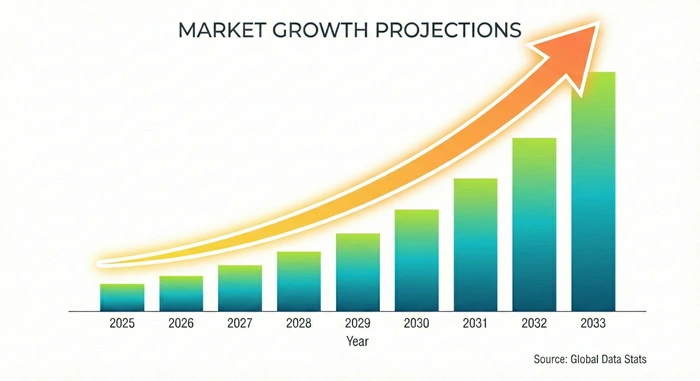
The long-term outlook for the Human High-Density Lipoprotein market is exceptionally strong. The forecast period from 2026 to 2033 is expected to be characterized by significant pharmaceutical breakthroughs in HDL-targeted therapies, with several late-stage clinical programs anticipated to reach regulatory decision points within this window. Successful approvals could dramatically accelerate commercial demand for human HDL products across multiple end-user segments. At the same time, healthcare infrastructure investments in Asia Pacific, Latin America, and the Middle East are broadening the global diagnostic and research base, extending the market's geographic reach.
The increasing use of HDL subfractionation and functional assays in clinical practice is also reshaping market dynamics. Physicians and researchers are moving beyond measuring simple HDL-C levels toward assessing the biological activity of HDL particles, creating demand for more specialized, higher-value products. This functional shift, combined with growing CRO outsourcing activity and expanding IVD manufacturing globally, positions the Human High-Density Lipoprotein market for consistent, broad-based growth across all major regions and end-user categories through 2033 and beyond.
Expert Speaks
-
Vas Narasimhan, CEO, Novartis — "Lipid biology — and specifically the functional role of HDL — remains a compelling area of cardiovascular innovation. Our commitment to developing HDL-modulating therapies reflects the significant unmet need that still exists despite current standard-of-care options."
-
Albert Bourla, CEO, Pfizer — "Understanding HDL at a molecular and functional level is foundational to building the next generation of heart health medicines. We see meaningful commercial and scientific potential in this space as clinical programs continue to mature."
-
Pascal Soriot, CEO, AstraZeneca — "Residual cardiovascular risk in patients already on therapy remains one of the most important challenges in medicine. Advancing the science around HDL functionality is essential to closing that gap, and it is a strategic priority for our cardiovascular research programs."
Key Report Takeaways
-
North America dominates the Human High-Density Lipoprotein market, accounting for approximately 39.70% of global market share in 2025, supported by high cardiovascular disease prevalence, a large base of pharmaceutical R&D companies, and a mature diagnostic infrastructure that routinely incorporates advanced lipid profiling.
-
Asia Pacific is the fastest-growing region, expanding at a strong CAGR during the forecast period, driven by rapidly rising lifestyle-related disease incidence, improving healthcare access, and increasing government investment in cardiovascular diagnostics in China, India, South Korea, and Japan.
-
IVD manufacturers are the leading end-user segment, commanding approximately 28.60% of market share in 2025, as they are the largest consumers of human HDL reference materials and calibrators for use in developing and validating in-vitro diagnostic assay systems.
-
Pharmaceutical and biotechnology companies represent the fastest-growing end-user segment, projected to expand at approximately 11.10% CAGR from 2026 to 2033, driven by expanding clinical trial activity and HDL-targeted drug discovery programs.
-
Cardiovascular and atherosclerosis research is the leading application segment, contributing approximately 34.10% of global revenue in 2025, reflecting the market's strong research focus on HDL dysfunction, cholesterol efflux capacity, and the biology of dysfunctional HDL particles.
-
Native Human HDL is the most widely used product type, holding approximately 32.60% of global market share in 2025, favored for its biological authenticity and suitability for in vitro and preclinical cardiovascular studies.
-
HDL cholesterol reference materials and calibrators represent the fastest-growing product sub-segment, forecast to grow at a CAGR of 11.20% through 2033, driven by expanding IVD manufacturer needs and growing clinical standardization requirements across diagnostic laboratories globally.
-
Research grade products dominate the grade segment with a 52.80% share in 2025, while the clinical reference material grade sub-segment is gaining traction rapidly at a 10.70% CAGR, reflecting the market's gradual shift toward regulated clinical and diagnostic end uses.
Market Scope
| Report Coverage | Details |
|---|---|
| Market Size by 2033 | USD 345.60 Billion |
| Market Size by 2025 | USD 106.22 Billion |
| Market Size by 2026 | USD 119.54 Billion |
| Market Growth Rate (2026–2033) | CAGR of 11.90% |
| Dominating Region | North America |
| Fastest Growing Region | Asia Pacific |
| Base Year | 2025 |
| Forecast Period | 2026–2033 |
| Segments Covered | Product Type, Grade, Application, Sales Channel, End User |
| Regions Covered | North America, Europe, Asia Pacific, Latin America, Middle East & Africa |
Market Dynamics
Drivers Impact Analysis
Rising Global Cardiovascular Disease Burden, Pharmaceutical R&D Expansion, and Increasing Adoption of Functional HDL Diagnostics Are Collectively Accelerating the Human HDL Market's Growth Trajectory
| Driver | ≈ % Impact on CAGR Forecast | Geographic Relevance | Impact Timeline |
|---|---|---|---|
| Rising cardiovascular disease and dyslipidemia prevalence | ~36% | Global — especially North America, Europe | Short to Long-term |
| Expanding pharmaceutical R&D in HDL-targeted therapeutics | ~30% | North America, Europe, Asia Pacific | Medium to Long-term |
| Growing adoption of lipid profiling in preventive healthcare | ~20% | Asia Pacific, North America, Europe | Short to Medium-term |
| Increasing IVD manufacturing and diagnostic standardization | ~14% | Global | Short to Medium-term |
The growing global burden of cardiovascular diseases remains the most dominant driver in the Human High-Density Lipoprotein market. As healthcare systems worldwide place increasing emphasis on early detection and preventive cardiovascular management, HDL cholesterol testing has become a standard component of routine lipid panels administered during health screenings. The shift from purely reactive treatment to proactive disease prevention is generating a large, sustained demand base for human HDL calibrators, reference standards, and diagnostic-grade materials across hospitals, diagnostic labs, and IVD manufacturers globally.
Simultaneously, the pharmaceutical industry's intensifying focus on HDL functionality — rather than simply HDL-C quantity — is creating a deeper and more sophisticated demand for research-grade human HDL products. Companies are investing in understanding the relationship between HDL particle composition, apolipoprotein structure, and cholesterol efflux capacity, which requires high-quality, well-characterized HDL materials as experimental tools. The growing pipeline of HDL-modulating and HDL-mimetic drug candidates in clinical trials is translating directly into higher consumption of human HDL products across pharmaceutical and biotechnology end users worldwide.
Restraints Impact Analysis
High Purification Costs, Failed HDL-Raising Drug Precedents, and Stringent Regulatory Oversight Are Creating Real Headwinds That the Human HDL Market Must Actively Navigate
| Restraint | ≈ % Impact on CAGR Forecast | Geographic Relevance | Impact Timeline |
|---|---|---|---|
| High cost of HDL isolation, purification, and characterization | ~32% | Global — disproportionate in emerging markets | Short to Medium-term |
| Limited clinical success of HDL-raising therapeutic programs | ~30% | North America, Europe | Long-term |
| Complex regulatory requirements for clinical-grade HDL products | ~28% | North America, Europe | Medium to Long-term |
| Low HDL awareness and diagnostic access in developing regions | ~10% | Latin America, MEA, parts of Asia Pacific | Short-term |
One of the most significant structural restraints in the Human High-Density Lipoprotein market is the high technical and financial barrier associated with producing research- and clinical-grade human HDL. The isolation and purification of native HDL from human plasma requires ultracentrifugation equipment, stringent quality controls, and highly trained personnel — making it a cost-intensive process that limits accessibility for smaller research laboratories and institutions in lower-income markets. This creates an uneven competitive landscape where only well-capitalized companies can consistently deliver GMP-grade or clinical reference material-grade HDL products.
The historical track record of HDL-raising clinical drug programs has also introduced a degree of investor and pharmaceutical caution into this space. Several high-profile programs — including CETP inhibitors that successfully elevated HDL-C levels — failed to deliver corresponding reductions in cardiovascular events. While the scientific community is now moving toward HDL functionality rather than HDL-C quantity as the relevant target, the legacy of these clinical failures continues to temper aggressive pharmaceutical investment in HDL-targeted therapeutics, moderating the upper ceiling of market growth in the short to medium term.
Opportunities Impact Analysis
HDL Mimetic Therapeutics, Personalized Cardiovascular Medicine, CRO Expansion, and Emerging Market Healthcare Growth Are Creating Significant Untapped Opportunities in the Human HDL Market
| Opportunity | ≈ % Impact on CAGR Forecast | Geographic Relevance | Impact Timeline |
|---|---|---|---|
| Clinical advancement of HDL mimetics and reconstituted HDL therapies | ~38% | North America, Europe, Asia Pacific | Medium to Long-term |
| Personalized medicine and HDL particle subfractionation in clinical practice | ~28% | North America, Europe | Medium-term |
| Healthcare infrastructure expansion and diagnostic adoption in Asia Pacific | ~22% | China, India, South Korea, Japan | Short to Medium-term |
| Growth of CRO and CDMO outsourcing in lipid biology research | ~12% | Global — Asia Pacific, North America | Short-term |
The most significant near-to-mid-term opportunity in the Human High-Density Lipoprotein market lies in the advancing clinical pipeline of HDL mimetics and reconstituted HDL therapeutics. Several candidates are progressing through Phase II and Phase III clinical trials, and regulatory approvals — if achieved — would generate a large, new commercial demand channel for human HDL reference materials used in comparator studies and quality control. This opportunity is particularly concentrated in North America and Europe, where the majority of these clinical programs are based and where regulatory pathways are best defined.
The broader global adoption of personalized cardiovascular medicine is creating additional high-value opportunities in HDL subfractionation and functional assay services. As clinicians increasingly demand information about HDL particle number, size distribution, and cholesterol efflux capacity — rather than simple HDL-C values — the market for specialized human HDL testing tools and analytical platforms is expanding meaningfully. This trend is being reinforced by the rapid growth of contract research organizations in Asia Pacific, which are establishing lipid biology service capabilities to meet pharmaceutical outsourcing demand, creating new commercial channels for human HDL product suppliers across the region.
Segment Analysis
By Product Type
Native Human HDL Continues to Lead as the Reference Standard in Cardiovascular Research, Even as HDL Cholesterol Reference Materials Drive the Fastest Segment Growth Globally
Native Human HDL holds the largest share within the product type segment, accounting for approximately 32.60% of global market revenue in 2025. This product category is the backbone of cardiovascular and atherosclerosis research, as it provides biologically intact HDL particles that accurately replicate the in vivo behavior needed for mechanism-of-action studies and drug interaction testing. North America is the dominant region for native HDL consumption, where a dense network of academic medical centers, cardiovascular research hospitals, and pharmaceutical companies rely on high-purity native isolates for preclinical and translational research. Key suppliers such as Kalen Biomedical, Thermo Fisher Scientific, and Sigma-Aldrich (Merck KGaA) maintain strong market positions in this region by offering highly characterized native HDL products with rigorous documentation. The segment is expanding at a stable CAGR, reinforced by the growing number of research programs investigating HDL functionality, dysfunctional HDL particles, and the molecular mechanisms of reverse cholesterol transport.
HDL Cholesterol Reference Materials and Calibrators represent the fastest-growing sub-segment, projected to expand at a CAGR of 11.20% from 2026 to 2033. The growth of this sub-segment is directly linked to the rapid expansion of IVD manufacturing globally, as every new diagnostic assay or lipid analyzer requires validated reference materials for calibration and performance verification. Human High-Density Lipoprotein reference standards are essential tools in the quality management systems of diagnostic kit manufacturers, regulatory submissions, and interlaboratory standardization programs. Europe is a key growth market for this sub-segment, driven by strong regulatory requirements from bodies such as the European Medicines Agency and national metrology institutes that enforce rigorous diagnostic accuracy standards. Companies such as Sekisui Medical (Japan) and Bio-Rad Laboratories (U.S.) are among the prominent players supplying certified HDL reference materials to IVD manufacturers across Europe and Asia Pacific, capitalizing on the rapidly growing demand from both established and emerging diagnostic kit producers.
By End User
IVD Manufacturers Command the Largest Revenue Share as Pharmaceutical and Biotechnology Companies Emerge as the Single Fastest-Growing Consumer Group in the Human HDL Market
IVD manufacturers are the leading end-user segment in the Human High-Density Lipoprotein market, accounting for approximately 28.60% of global market share in 2025. Their consistent, high-volume demand for HDL reference materials and calibrators is driven by the need to develop, validate, and maintain performance standards for lipid diagnostic assay kits deployed across clinical laboratories worldwide. The U.S. and Germany are the two largest national markets within this end-user category, home to some of the world's most significant IVD manufacturers who collectively produce the majority of global lipid testing products. The segment benefits from structural, recurring demand — every new assay generation, every reagent lot change, and every new market entry in diagnostics requires fresh validation against certified human HDL standards. Companies such as Thermo Fisher Scientific, Roche Diagnostics, and Sysmex Corporation are key market participants serving the IVD manufacturer base across North America, Europe, and Asia Pacific respectively.
Pharmaceutical and biotechnology companies represent the fastest-growing end-user segment in the Human High-Density Lipoprotein market, with a projected CAGR of approximately 11.10% from 2026 to 2033. Their growing demand is anchored in expanding cardiovascular drug development pipelines, where human HDL serves as an essential research tool in compound screening, target engagement assays, and clinical sample analysis. Asia Pacific is emerging as an increasingly important geography within this end-user segment, as China, India, and South Korea are witnessing rapid growth in domestic pharmaceutical and biotechnology industries with active cardiovascular research programs. Local biotechnology firms in Shanghai and Bangalore are setting up sophisticated lipid biology research capabilities, directly consuming human HDL products for preclinical studies and creating new demand channels that supplement the more mature North American and European pharmaceutical markets.
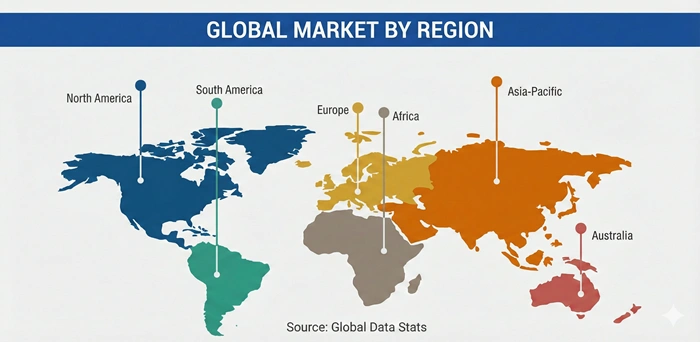
Regional Insights
North America
North America Maintains Its Commanding Leadership in the Human HDL Market Through World-Class Research Infrastructure, Deep Pharmaceutical Investment, and Advanced Diagnostic Adoption
North America is the dominant region in the Human High-Density Lipoprotein market, holding approximately 39.70% of global market share in 2025, and is projected to continue expanding at a CAGR of approximately 12.58% from 2026 to 2033. The United States is the primary revenue contributor within the region, driven by the highest per-capita healthcare expenditure globally, a dense concentration of leading pharmaceutical and biotechnology companies, and a robust network of academic cardiovascular research centers at institutions such as the Cleveland Clinic, Johns Hopkins, and Harvard Medical School. The region benefits from consistent NIH funding for lipid biology and cardiovascular research, which sustains demand for research-grade Human High-Density Lipoprotein materials year over year. Key players with strong North American operations include Thermo Fisher Scientific, Bio-Rad Laboratories, Kalen Biomedical, BioVision Inc., and Cell Biolabs — all of which maintain extensive product portfolios and well-established distribution networks across the U.S. and Canada.
Canada contributes meaningfully to the regional market, with several university hospitals and government-funded cardiovascular research programs investing in advanced lipid subfractionation and HDL functionality studies. The U.S. human HDL market alone is estimated at USD 31.72 billion in 2025 and is expected to reach nearly USD 104.46 billion by 2035, reflecting the extraordinary scale of cardiovascular research and diagnostic activity concentrated in the country. The FDA's structured regulatory environment for diagnostic products and cardiovascular therapeutics provides market participants with a clear commercialization pathway, encouraging continued product innovation and investment in the North American human HDL space.
Asia Pacific
Asia Pacific Is the Fastest-Growing Region for Human HDL Products, Powered by Surging Cardiovascular Disease Rates, Expanding Healthcare Investment, and a Rapidly Maturing Pharmaceutical Industry
Asia Pacific is the fastest-growing regional segment in the Human High-Density Lipoprotein market, driven by a combination of rising cardiovascular disease incidence, rapidly improving healthcare infrastructure, and strong government commitment to expanding diagnostic and research capabilities. China and India are at the forefront of this regional growth, with both countries experiencing sharp increases in lifestyle-related cardiovascular risk factors including obesity, diabetes, and hypertension linked to urbanization and changing dietary habits. Governments in both countries are making substantial investments in national screening programs, hospital infrastructure, and biomedical research parks — all of which are directly increasing consumption of lipid profiling products and human HDL research materials. Key players active in the region include Sekisui Medical Co., Ltd. (Japan), Sysmex Corporation (Japan), and a growing ecosystem of Chinese domestic biotechnology firms that are beginning to develop and commercialize HDL assay kits for both domestic and export markets.
Japan and South Korea represent mature sub-markets within Asia Pacific, where advanced lipid profiling, including HDL subfractionation, is already integrated into routine clinical and research practice. Japan's well-established diagnostic industry — anchored by companies like Sysmex and Sekisui Medical — continues to drive innovation in automated lipid analysis platforms with enhanced Human High-Density Lipoprotein measurement capabilities. South Korea's dynamic biotech sector is also contributing to regional market growth, with several companies developing next-generation cardiovascular diagnostics for global export. The combination of rapidly growing disease burden in developing Asian economies and advanced research and manufacturing capabilities in more mature markets makes Asia Pacific uniquely positioned to accelerate its share of global human HDL market revenue through 2033.
Top Key Players
-
Thermo Fisher Scientific (United States)
-
Bio-Rad Laboratories (United States)
-
Kalen Biomedical (United States)
-
Merck KGaA / Sigma-Aldrich (Germany)
-
BioVision Inc. (United States)
-
Calzyme Laboratories (United States)
-
Sekisui Medical Co., Ltd. (Japan)
-
Sysmex Corporation (Japan)
-
MyBioSource, Inc. (United States)
-
Abcam plc (United Kingdom)
-
Creative Diagnostics (United States)
-
Cell Biolabs, Inc. (United States)
-
Roche Diagnostics (Switzerland)
-
Abbott Laboratories (United States)
-
Randox Laboratories (United Kingdom)
Recent Developments
-
Thermo Fisher Scientific (2025) — Expanded its cardiovascular biomarker and lipoprotein reference standards portfolio by introducing a new series of ultra-high-purity human HDL isolates specifically designed for use in next-generation IVD assay development and regulatory validation submissions, strengthening its position as the leading global supplier of research-grade human HDL materials.
-
Bio-Rad Laboratories (2024) — Announced a strategic academic collaboration with a leading European cardiovascular research hospital to co-develop advanced HDL particle characterization kits focused on cholesterol efflux capacity measurement, targeting growing demand from pharmaceutical companies assessing HDL functionality in drug discovery programs.
-
Merck KGaA (2025) — Completed the acquisition of a specialty lipid biology research tools company, significantly expanding its human HDL and lipoprotein product portfolio and reinforcing its competitive position in the life science reagents market across North America, Europe, and Asia Pacific.
-
Sysmex Corporation (2024) — Launched an upgraded automated lipid profiling analyzer in key Asia Pacific markets — including Japan, China, and South Korea — featuring improved HDL particle quantification algorithms and enhanced integration with laboratory information management systems, targeting hospital networks and large diagnostic laboratory chains.
-
Abcam plc (2025) — Introduced a validated suite of human HDL functionality assay kits, including standardized cholesterol efflux capacity measurement tools and apolipoprotein characterization panels, directly addressing growing pharmaceutical R&D demand for well-characterized functional HDL assays in cardiovascular drug development workflows.
Market Trends
The Human HDL Market Is Shifting Fundamentally From Quantity-Based Diagnostics to Functionality-Based Assessment, While HDL's Emerging Role in Drug Delivery Is Creating Entirely New Commercial Horizons
The most consequential trend reshaping the Human High-Density Lipoprotein market is the industry-wide transition from measuring HDL cholesterol concentration to evaluating HDL particle functionality. Clinical researchers and pharmaceutical scientists have established that cholesterol efflux capacity — the ability of HDL particles to draw excess cholesterol out of arterial macrophages — is a far more reliable predictor of cardiovascular risk than HDL-C levels alone. This paradigm shift is generating substantial demand for functional HDL assay kits, particle characterization platforms, and specialized HDL subfractionation tools that were not widely used in standard clinical or research workflows a decade ago. The Human High-Density Lipoprotein market is responding with rapid product innovation, as both established players and emerging biotechnology companies race to develop validated, scalable tools that measure HDL biological activity rather than just its cholesterol content.
A second major trend gaining significant momentum is the use of reconstituted human HDL as a platform for targeted drug delivery. The natural properties of HDL — including its tissue selectivity, small particle size, biocompatibility, and ability to carry both lipophilic and hydrophilic cargo — make it an attractive vehicle for delivering anti-inflammatory agents, siRNA-based therapeutics, and targeted cancer drugs to specific tissues. While this application area remains largely in preclinical and early clinical research phases, it is attracting growing investment from pharmaceutical companies and venture capital alike, with several startups and large pharma players building HDL nanoparticle-based drug delivery programs. This trend is expected to broaden the addressable market for human HDL products well beyond cardiovascular research into oncology, inflammatory diseases, and metabolic medicine during the 2026–2033 forecast period.
Segments Covered in the Report
By Product Type:
-
Native Human HDL
-
Reconstituted HDL (rHDL)
-
HDL Mimetics
-
HDL Cholesterol Reference Materials and Calibrators
-
HDL Subfractions
By Grade:
-
Research Grade
-
Clinical Reference Material Grade
-
GMP Grade
By Application:
-
Cardiovascular and Atherosclerosis Research
-
Drug Development and Screening
-
Lipid Profiling and Diagnostics
-
Biomarker Discovery
-
Clinical Trials
By Sales Channel:
-
Direct Sales
-
Distributors
-
Online Channels
By End User:
-
IVD Manufacturers
-
Pharmaceutical and Biotechnology Companies
-
Hospitals and Diagnostic Laboratories
-
Academic and Research Institutes
-
Contract Research Organizations (CROs)
By Region:
-
North America
-
U.S.
-
Canada
-
Mexico
-
-
Europe
-
Germany
-
U.K.
-
France
-
Italy
-
Spain
-
Rest of Europe
-
-
Asia Pacific
-
China
-
Japan
-
India
-
South Korea
-
Australia
-
Rest of Asia Pacific
-
-
Latin America
-
Brazil
-
Argentina
-
Rest of Latin America
-
-
Middle East & Africa
-
GCC Countries
-
South Africa
-
Rest of MEA
-
Frequently Asked Questions
Question 1: What is the current size of the Human High-Density Lipoprotein market and where is it headed by 2033?
Answer: The Human High-Density Lipoprotein market was valued at USD 106.22 billion in 2025 and is projected to reach USD 345.60 billion by 2033. It is expected to grow at a CAGR of 11.90% from 2026 to 2033, driven by cardiovascular research expansion and pharmaceutical R&D activity.
Question 2: What key factors are fueling growth in the Human High-Density Lipoprotein market globally?
Answer: Rising global cardiovascular disease prevalence and increasing pharmaceutical investment in HDL-targeted drug development are the core growth drivers. The shift from HDL-C quantity measurement to HDL functionality assessment is also creating new demand within the Human HDL market for specialized research and diagnostic tools.
Question 3: Which region dominates the Human High-Density Lipoprotein market and which is growing the fastest?
Answer: North America currently leads the Human High-Density Lipoprotein market with approximately 39.70% of global share in 2025. Asia Pacific is the fastest-growing region, driven by rising cardiovascular disease rates, expanding healthcare infrastructure, and strong growth in pharmaceutical R&D activity across China, India, and Japan.
Question 4: Which product type and end-user segment lead within the Human HDL market?
Answer: Native Human HDL is the leading product type with approximately 32.60% share, while IVD manufacturers are the dominant end-user segment with approximately 28.60% share in the Human High-Density Lipoprotein market. Pharmaceutical and biotechnology companies represent the fastest-growing end-user segment, projected to expand at approximately 11.10% CAGR through 2033.
Question 5: Who are the key companies competing in the Human High-Density Lipoprotein market?
Answer: Leading companies in the Human HDL market include Thermo Fisher Scientific, Bio-Rad Laboratories, Merck KGaA, Sekisui Medical, Sysmex Corporation, and Abcam plc. These players are investing in product innovation, geographic expansion, and strategic partnerships to strengthen their competitive positions through 2033.