
Household Cooking Appliance Market Overview
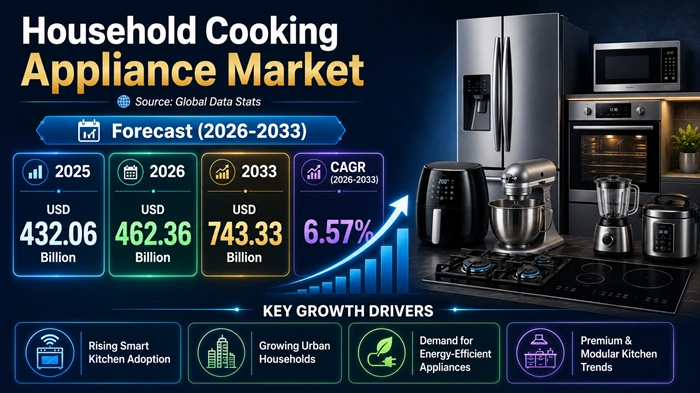
The global household cooking appliance market size is valued at USD 432.06 billion in 2025 and is predicted to increase from USD 462.36 billion in 2026 to approximately USD 743.33 billion by 2033, growing at a CAGR of 6.57% from 2026 to 2033. Modern households are witnessing a significant shift toward automated and energy-efficient cooking solutions that reduce preparation time while enhancing the overall culinary experience.
AI Impact on the Household Cooking Appliance Industry
Transforming Traditional Kitchens into Intelligent Culinary Spaces
Artificial intelligence is revolutionizing the household cooking appliance market by introducing capabilities that were previously unimaginable in home kitchens. Smart ovens equipped with AI-powered cameras can now recognize food items and automatically adjust cooking parameters such as temperature, time, and cooking mode to achieve perfect results every time. These intelligent systems learn from user behavior patterns and create personalized cooking profiles that adapt to individual taste preferences and dietary requirements. AI algorithms analyze thousands of cooking variables simultaneously to optimize energy consumption while maintaining precise temperature control throughout the cooking process.
The integration of machine learning in cooking appliances enables predictive maintenance features that alert users about potential equipment issues before they become serious problems. Voice-activated controls powered by natural language processing allow hands-free operation, making it easier for users to multitask while preparing meals. Advanced AI systems can suggest recipe modifications based on available ingredients and nutritional goals, transforming ordinary cooking appliances into intelligent kitchen assistants that guide users through complex culinary techniques with real-time feedback and adjustments.
Growth Factors
Rising Consumer Demand for Convenience and Modern Kitchen Solutions
The household cooking appliance market is experiencing robust expansion driven by fundamental shifts in consumer lifestyles and expectations. Urbanization continues to accelerate across developing regions, creating millions of new households that require complete kitchen setups with modern appliances. Rising disposable incomes in emerging economies enable middle-class families to invest in premium cooking equipment that offers advanced features and better durability. The growing trend of nuclear families and smaller household sizes increases the overall demand for compact yet multifunctional cooking appliances that can perform multiple tasks without occupying excessive counter space.
Health consciousness among consumers is driving preference for cooking methods that preserve nutritional value while reducing oil consumption, leading to increased adoption of air fryers and steam cookers. The popularity of cooking shows and social media culinary content inspires consumers to experiment with diverse cuisines, prompting investments in specialized cooking equipment. E-commerce platforms have made it significantly easier for consumers to research, compare, and purchase cooking appliances from the comfort of their homes, while offering attractive discounts and convenient home delivery services. Energy efficiency regulations and rising electricity costs motivate consumers to replace outdated appliances with modern energy-saving alternatives that reduce monthly utility bills while supporting environmental sustainability goals.
Market Outlook
Navigating the Future of Home Cooking Technology
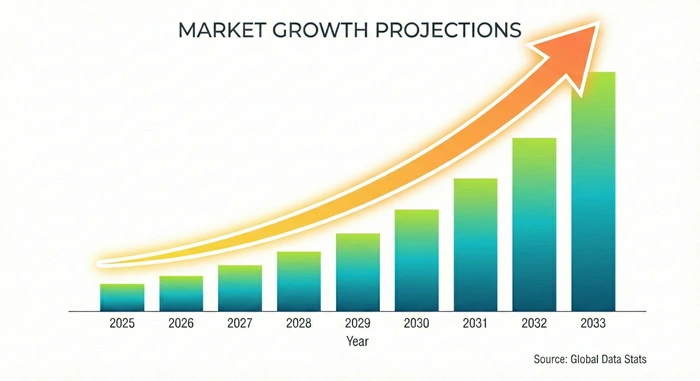
The household cooking appliance market is positioned for sustained growth through 2033 as technological innovations continue to reshape consumer expectations and product capabilities. Smart home integration will become increasingly seamless, with cooking appliances functioning as integral components of comprehensive home automation ecosystems. Manufacturers are investing heavily in research and development to create appliances that combine multiple cooking methods in single units, offering consumers greater versatility without requiring additional kitchen space. The shift toward sustainable living is pushing companies to develop appliances using recyclable materials and energy-efficient technologies that minimize environmental impact.
Emerging markets in Asia, Africa, and Latin America present enormous growth opportunities as expanding middle-class populations seek to upgrade from traditional cooking methods to modern appliances. The premiumization trend in developed markets drives demand for high-end cooking equipment with professional-grade features and sophisticated design aesthetics. Subscription-based models and connected appliances are creating new revenue streams through value-added services such as automated recipe delivery, remote diagnostics, and software updates that enhance functionality over time. The convergence of cooking appliances with health monitoring systems will enable users to track nutritional intake and receive personalized dietary recommendations based on their cooking habits.
Expert Speaks
-
Hans Vestberg, CEO of Verizon Communications, stated that IoT connectivity is fundamentally changing how consumers interact with home appliances, with 5G networks enabling real-time data exchange that makes smart kitchens more responsive and intuitive than ever before.
-
Jong-Hee Han, Vice Chairman and CEO of Samsung Electronics, emphasized that the future of cooking appliances lies in AI-powered personalization, where devices learn individual preferences and automatically adjust settings to deliver consistent results while integrating seamlessly with broader smart home ecosystems.
-
Jen-Hsun Huang, CEO of NVIDIA, highlighted that AI chip technology is enabling unprecedented levels of computational power in household appliances, allowing real-time image recognition and decision-making capabilities that transform ordinary cooking equipment into intelligent culinary assistants.
Key Report Takeaways
-
Asia Pacific leads the household cooking appliance market with approximately 38% market share in 2025, supported by massive population bases, rapid urbanization, and strong manufacturing capabilities in China, India, and South Korea.
-
The Middle East and Africa region is growing the fastest with a projected CAGR of 9.13%, driven by rising disposable incomes, improving living standards, and increasing adoption of modern kitchen appliances among urban households.
-
Residential end users dominate the market, accounting for over 82% of total consumption as households increasingly invest in modern cooking equipment that offers convenience, energy efficiency, and advanced features for everyday meal preparation.
-
The cooktops and cooking ranges segment contributes the most to market revenue with approximately 47% share, reflecting their essential role in daily cooking activities and the ongoing transition from traditional gas stoves to modern induction and electric variants.
-
Induction technology is the most popular among energy-conscious consumers due to its rapid heating capabilities, precise temperature control, and superior energy efficiency compared to conventional gas and electric cooking methods.
-
The built-in segment will grow quickly with an estimated CAGR of 7.04% and market share increasing from 37% to 42% by 2033, driven by rising demand for modular kitchens and space-saving solutions in urban apartments.
Market Scope
| Report Coverage | Details |
|---|---|
| Market Size by 2033 | USD 743.33 Billion |
| Market Size by 2025 | USD 432.06 Billion |
| Market Size by 2026 | USD 462.36 Billion |
| Market Growth Rate from 2026 to 2033 | CAGR of 6.57% |
| Dominating Region | Asia Pacific |
| Fastest Growing Region | Middle East and Africa |
| Base Year | 2025 |
| Forecast Period | 2026 to 2033 |
| Segments Covered | Product Type, Structure, Technology, End User, Distribution Channel, Region |
| Regions Covered | North America, Europe, Asia Pacific, Middle East & Africa, Latin America |
Market Dynamics
Driver Impact Analysis
Evolving Lifestyle Patterns and Consumer Preferences Drive Market Expansion
Consumer preferences in the household cooking appliance market are transforming dramatically as modern lifestyles demand greater convenience, efficiency, and automation in daily cooking activities. Busy professionals and dual-income households seek appliances that minimize cooking time without compromising food quality, leading to increased adoption of pressure cookers, air fryers, and multi-cookers that significantly reduce meal preparation duration. Health-conscious consumers actively search for appliances that enable healthier cooking methods such as steaming, grilling, and air frying that require minimal oil while retaining essential nutrients and natural flavors. The growing awareness about energy conservation drives preference for appliances with high energy efficiency ratings that reduce electricity consumption and lower monthly utility bills.
Smart connectivity features have become increasingly important as consumers expect their cooking appliances to integrate seamlessly with smartphones and home automation systems for remote monitoring and control capabilities. Young homeowners and millennials show strong preference for appliances with sleek designs and modern aesthetics that complement contemporary kitchen interiors. The increasing popularity of international cuisines motivates consumers to invest in specialized cooking equipment that can replicate authentic cooking techniques from different culinary traditions. Environmental consciousness influences purchasing decisions as consumers actively seek appliances manufactured using sustainable materials and eco-friendly production processes.
| Driver | ≈ % Impact on CAGR Forecast | Geographic Relevance | Impact Timeline |
|---|---|---|---|
| Changing Consumer Preferences | +1.2% | Global, particularly North America and Europe | 2026-2033 |
| Rising Disposable Income | +1.5% | Asia Pacific, Middle East | 2026-2030 |
| Urbanization and Nuclear Families | +1.0% | Asia Pacific, Latin America | 2026-2033 |
| Health and Wellness Trends | +0.9% | North America, Europe | 2026-2033 |
Restraints Impact Analysis
High Costs and Maintenance Requirements Limit Market Penetration
The household cooking appliance market faces significant challenges related to the high initial costs associated with advanced smart appliances and premium cooking equipment. Smart ovens, induction cooktops, and multifunctional cooking systems equipped with AI capabilities command substantially higher prices compared to traditional appliances, creating affordability barriers for middle and lower-income consumers especially in price-sensitive emerging markets. The complexity of smart appliances requires regular software updates and potential subscription fees for premium features, adding to the total cost of ownership beyond the initial purchase price. Technical malfunctions in sophisticated appliances often necessitate specialized repair services that may not be readily available in smaller cities and rural areas.
High electricity consumption by certain appliance types such as electric ovens and induction cooktops increases operational costs in regions with expensive electricity tariffs, discouraging adoption among cost-conscious consumers. The lack of standardization in smart appliance connectivity protocols creates compatibility issues when integrating devices from different manufacturers into unified home automation systems. Consumer reluctance to replace functional existing appliances with newer models extends product replacement cycles and slows market growth in mature markets. Limited awareness about the long-term benefits and proper usage of advanced cooking appliances reduces adoption rates in regions where traditional cooking methods remain deeply ingrained in culinary culture.
| Restraint | ≈ % Impact on CAGR Forecast | Geographic Relevance | Impact Timeline |
|---|---|---|---|
| High Initial Costs | -0.8% | Developing markets globally | 2026-2030 |
| Limited Technical Support | -0.4% | Rural areas, Africa, Latin America | 2026-2033 |
| High Energy Consumption | -0.5% | Regions with high electricity costs | 2026-2033 |
Opportunities Impact Analysis
Smart Technology Integration Creates New Growth Avenues
The rapid advancement of smart home technology presents enormous opportunities for the household cooking appliance market to innovate and capture new customer segments. Internet of Things connectivity enables appliances to communicate with each other and with users through smartphones, creating integrated cooking experiences that optimize meal preparation across multiple devices simultaneously. Artificial intelligence and machine learning capabilities allow appliances to learn from user behavior and automatically adjust cooking parameters for personalized results that improve over time. Voice control integration with popular virtual assistants makes cooking appliances more accessible and convenient for users of all age groups.
Sustainability trends create opportunities for manufacturers to develop eco-friendly appliances using recycled materials and renewable energy sources that appeal to environmentally conscious consumers. The growing demand for energy-efficient appliances opens markets for products certified under international standards such as Energy Star and EU EcoDesign that guarantee reduced environmental impact. Subscription-based services for recipe delivery, cooking tutorials, and personalized meal planning create recurring revenue streams beyond one-time equipment sales. The expansion of e-commerce platforms and digital marketing channels enables manufacturers to reach previously inaccessible rural and remote markets with lower distribution costs.
| Opportunity | ≈ % Impact on CAGR Forecast | Geographic Relevance | Impact Timeline |
|---|---|---|---|
| Smart Appliance Innovation | +1.8% | Global, led by North America and Asia Pacific | 2026-2033 |
| Energy Efficiency Demand | +1.1% | Europe, North America | 2026-2033 |
| E-commerce Expansion | +0.9% | Asia Pacific, Latin America | 2026-2030 |
| Sustainability Focus | +0.7% | Europe, North America | 2027-2033 |
Segment Analysis
Cooktops & Cooking Ranges
Maintaining Market Leadership Through Innovation and Versatility
The cooktops and cooking ranges segment dominates the household cooking appliance market with approximately 47% share in 2025, reflecting its fundamental importance in daily meal preparation across all types of households. This segment's leadership position stems from the universal necessity of stovetop cooking methods across diverse cuisines and culinary traditions worldwide. Modern cooktops have evolved significantly from traditional gas burners to include electric, induction, and hybrid models that offer varying levels of efficiency, control, and safety features. Induction cooktops are gaining particular traction in developed markets due to their rapid heating capabilities, precise temperature control, and superior energy efficiency that can reduce cooking time by up to 50% compared to conventional gas stoves. The segment benefits from continuous product innovations including touch controls, smart connectivity features, and automatic safety shutoffs that enhance user convenience and safety.
Asia Pacific leads the cooktops and cooking ranges segment with approximately 42% regional share, driven by massive household populations in China and India where stovetop cooking remains the primary meal preparation method. Leading manufacturers such as Haier Group, Midea Group, and Electrolux AB dominate this region through extensive distribution networks and product portfolios tailored to local cooking preferences and price sensitivities. North America shows strong growth with a CAGR of 6.2%, propelled by kitchen renovation activities and replacement demand for outdated cooking ranges with modern smart-enabled alternatives. The segment's growth trajectory is supported by increasing consumer preference for modular kitchens that require built-in cooktops, and the rising popularity of induction cooking technology that offers faster heating and better energy efficiency. Manufacturers are focusing on developing cooktops with multiple cooking zones, flexible sizing options, and bridge functions that can accommodate oversized cookware for specialized cooking needs.
Ovens Segment
Fastest Growing Category Driven by Diverse Cooking Applications
The ovens segment is emerging as the fastest-growing category in the household cooking appliance market with an anticipated CAGR of 7.04% from 2026 to 2033, driven by expanding consumer interest in baking, roasting, and specialized cooking techniques. This segment encompasses conventional ovens, microwave ovens, convection ovens, and combination models that integrate multiple cooking methods in single units for maximum versatility. The growing popularity of home baking and artisanal bread making, accelerated by social media trends and cooking shows, has significantly boosted oven adoption especially among younger consumers. Convection ovens that use fan-assisted air circulation for even heat distribution are particularly popular for their ability to reduce cooking times while achieving consistent results across all food items.
The North American and European markets lead in oven penetration with over 85% household ownership rates, but the Asia Pacific region is experiencing the most rapid growth with a CAGR exceeding 8.2% as rising affluence enables more households to purchase ovens for diverse cooking applications. Key manufacturers including Whirlpool Corporation, BSH Home Appliances, Samsung Electronics, and LG Electronics are introducing smart ovens with built-in cameras, automatic cooking programs, and Wi-Fi connectivity that allow remote monitoring and control through smartphone applications. The Middle East and Africa region shows particularly strong growth potential with a CAGR of 9.5% as improving living standards and Western culinary influences drive adoption of ovens in urban households. Combination steam ovens that preserve nutrients and moisture in cooked foods are gaining popularity among health-conscious consumers willing to invest in premium appliances that support healthier cooking methods.
Regional Insights
Asia Pacific
Dominant Regional Market Powered by Manufacturing Excellence and Growing Middle Class
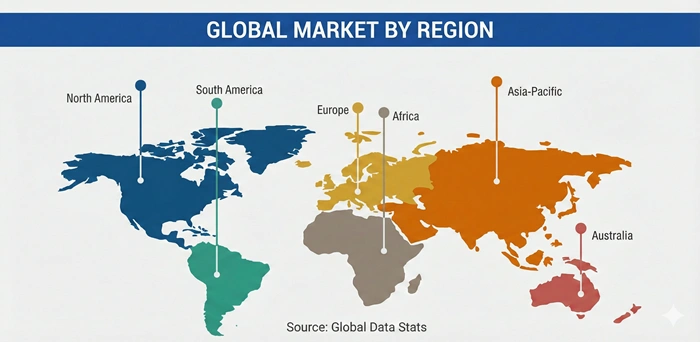
Asia Pacific commands the largest share of the household cooking appliance market with approximately 38% of global revenue in 2025, valued at over USD 164 billion, and is projected to reach USD 282 billion by 2033 growing at a CAGR of 6.8%. This regional dominance is underpinned by massive population bases exceeding 4.5 billion people across diverse markets with varying levels of economic development and urbanization. China stands as the undisputed leader within the region, accounting for nearly 55% of Asia Pacific's household cooking appliance market, driven by its status as both the world's largest manufacturer and consumer of kitchen appliances. The country's robust manufacturing ecosystem supports global supply chains while domestic demand continues to expand with rising urbanization rates that create millions of new households annually requiring complete kitchen setups.
India represents the fastest-growing market within Asia Pacific with a CAGR of 8.1%, fueled by rapid economic growth, expanding middle-class population exceeding 350 million, and government initiatives promoting domestic manufacturing through programs like Make in India. Major manufacturers dominating the Asia Pacific region include Haier Group Corporation and Midea Group from China, LG Electronics and Samsung Electronics from South Korea, and Panasonic Corporation from Japan, all leveraging advanced manufacturing capabilities and extensive distribution networks to capture market share. The region benefits from strong e-commerce infrastructure particularly in China and India where online retail platforms have revolutionized appliance distribution and enabled manufacturers to reach consumers in tier-2 and tier-3 cities previously underserved by traditional retail channels. Indonesia, Thailand, and Vietnam are emerging as significant growth markets with CAGRs exceeding 7.5% as rising disposable incomes and urbanization drive first-time purchases of modern cooking appliances.
Middle East and Africa
Fastest Growing Region Driven by Modernization and Rising Affluence
The Middle East and Africa region is experiencing the highest growth rate in the household cooking appliance market with a CAGR of 9.13% from 2026 to 2033, though starting from a smaller base of approximately USD 39 billion in 2025 and expected to reach USD 71 billion by 2033. This exceptional growth is driven by rapid urbanization across major cities, rising disposable incomes particularly in Gulf Cooperation Council countries, and changing lifestyle patterns that favor modern cooking methods over traditional approaches. The United Arab Emirates and Saudi Arabia lead regional demand with high per capita spending on premium kitchen appliances that feature advanced technologies and luxury design elements.
South Africa represents the most developed market within the region with approximately 28% market share and well-established retail infrastructure supporting both local and international appliance brands. Key manufacturers serving the Middle East and Africa region include Arçelik A.Å¢. from Turkey, along with international players such as Electrolux AB, BSH Home Appliances, and Whirlpool Corporation that have established local partnerships and distribution networks to navigate diverse regulatory environments and consumer preferences. Nigeria and Kenya are emerging as important growth markets in Sub-Saharan Africa with CAGRs exceeding 8.5% as expanding middle classes in major urban centers like Lagos and Nairobi invest in modern housing developments that include equipped kitchens. The region faces unique challenges including inconsistent electricity supply in some areas and affordability constraints, but these are being addressed through development of energy-efficient appliances with backup power options and flexible financing programs. Government initiatives promoting economic diversification and infrastructure development in countries across the Middle East and North Africa are creating favorable conditions for sustained market expansion throughout the forecast period.
Top Key Players
-
Whirlpool Corporation (United States)
-
LG Electronics Inc. (South Korea)
-
Samsung Electronics Co., Ltd. (South Korea)
-
Haier Group Corporation (China)
-
Electrolux AB (Sweden)
-
BSH Home Appliances Group (Germany)
-
Midea Group Co., Ltd. (China)
-
Panasonic Holdings Corporation (Japan)
-
Robert Bosch GmbH (Germany)
-
Koninklijke Philips N.V. (Netherlands)
-
Miele & Cie. KG (Germany)
-
GE Appliances (United States)
-
Breville Group Limited (Australia)
-
Arçelik A.Å¢. (Turkey)
-
SMEG S.p.A. (Italy)
Recent Developments
-
Samsung Electronics (2024): Launched the Bespoke AI Oven Series 8 with advanced neural network processing that recognizes over 80 food types and automatically adjusts cooking parameters, expanding its smart home appliance portfolio across European and North American markets with integration into the SmartThings ecosystem.
-
Whirlpool Corporation (2024): Completed strategic partnership with Google Cloud to integrate AI-powered predictive maintenance across its entire cooking appliance lineup, enabling remote diagnostics and reducing service call requirements by 35% while enhancing customer satisfaction scores.
-
LG Electronics (2023): Acquired a significant stake in artificial intelligence startup Tovala to accelerate development of cloud-connected cooking appliances, investing USD 120 million to enhance its ThinQ smart appliance platform with advanced meal planning and automated cooking capabilities.
-
Haier Group Corporation (2023): Opened three new manufacturing facilities in Southeast Asia with combined investment exceeding USD 800 million, expanding production capacity for smart cooking appliances by 40% to meet growing demand in emerging markets across India, Indonesia, and Vietnam.
-
Electrolux AB (2023): Announced the acquisition of premium cooking appliance brand AEG's commercial division for EUR 450 million, strengthening its position in the high-end residential market and expanding its portfolio of connected kitchen solutions with focus on sustainability and energy efficiency.
Market Trends
Convergence of Technology and Sustainability Reshapes Consumer Expectations
The household cooking appliance market is witnessing transformative trends that are fundamentally altering product development strategies and consumer purchasing behaviors. Smart connectivity has evolved from a premium feature to an expected standard, with over 45% of new cooking appliances launched in 2025 incorporating Wi-Fi or Bluetooth connectivity that enables remote control, usage monitoring, and automatic software updates. Integration with comprehensive smart home ecosystems allows appliances to coordinate with other connected devices, such as refrigerators that can suggest recipes based on available ingredients and automatically preheat ovens at appropriate times. Voice control through virtual assistants has become ubiquitous, making cooking appliances more accessible to elderly users and those with physical disabilities while enabling hands-free operation during meal preparation.
Sustainability has transitioned from a niche concern to a central purchasing criterion as consumers increasingly prioritize environmental impact in buying decisions. Manufacturers are responding by developing appliances with improved energy efficiency ratings, using recycled materials in construction, and designing products for easier disassembly and component recycling at end of life. The circular economy model is gaining traction with some companies offering appliance leasing programs and trade-in schemes that ensure proper recycling of old equipment. Modular design approaches allow consumers to upgrade specific components rather than replacing entire appliances, extending product lifecycles and reducing electronic waste. The premiumization trend continues as affluent consumers invest in professional-grade cooking equipment for home use, driving demand for high-performance appliances with restaurant-quality features and sophisticated aesthetics that serve as kitchen centerpieces.
Segments Covered in the Report
By Product Type
-
Cooktops & Cooking Ranges
-
Ovens
-
Specialized Appliances
-
Induction Cookers
-
Microwave Ovens
-
Convection Ovens
-
Electric Cooktops
-
Gas Stoves
-
Grills
-
Rice Cookers
-
Slow Cookers
-
Toaster Ovens
By Structure
-
Freestanding
-
Built-in
By Technology
-
Electric
-
Gas
-
Induction
-
Convection
By End User
-
Residential
-
Commercial
By Distribution Channel
-
Offline
-
Hypermarket/Supermarket
-
Specialty Stores
-
Department Stores
-
-
Online
-
Brand Websites
-
E-commerce Marketplaces
-
By Region
-
North America
-
United States
-
Canada
-
Mexico
-
-
Europe
-
Germany
-
United Kingdom
-
France
-
Italy
-
Spain
-
Rest of Europe
-
-
Asia Pacific
-
China
-
India
-
Japan
-
South Korea
-
Southeast Asia
-
Rest of Asia Pacific
-
-
Middle East & Africa
-
United Arab Emirates
-
Saudi Arabia
-
South Africa
-
Rest of Middle East & Africa
-
-
Latin America
-
Brazil
-
Argentina
-
Rest of Latin America
-
Frequently Asked Questions
Question 1: What is the projected household cooking appliance market size by 2033?
Answer: The household cooking appliance market is projected to reach USD 743.33 billion by 2033, growing from USD 462.36 billion in 2026. This growth represents a CAGR of 6.57% during the forecast period.
Question 2: Which region dominates the global household cooking appliance market share?
Answer: Asia Pacific dominates the global household cooking appliance market with approximately 38% market share in 2025. The region's leadership is driven by massive populations, strong manufacturing capabilities, and rising disposable incomes in China and India.
Question 3: What factors are driving the household cooking appliance market growth?
Answer: Key factors driving household cooking appliance market growth include rising urbanization, increasing disposable incomes, growing demand for smart and energy-efficient appliances, and changing consumer preferences toward convenient and healthy cooking methods. E-commerce expansion also facilitates market penetration.
Question 4: Which product segment holds the largest share in the household cooking appliance market?
Answer: The cooktops and cooking ranges segment holds the largest share in the household cooking appliance market with approximately 47% in 2025. This dominance reflects the universal importance of stovetop cooking across all cuisines and household types.
Question 5: What are the emerging trends in the household cooking appliance market?
Answer: Emerging trends in the household cooking appliance market include AI-powered smart connectivity, voice control integration, sustainability-focused design using recycled materials, energy efficiency improvements, and premiumization with professional-grade features for home use. IoT integration continues to advance rapidly.