
High Temperature Insulation Materials Market Overview
Advanced Thermal Solutions Enable Energy Efficiency and Safety Across Industrial Manufacturing and Processing Operations
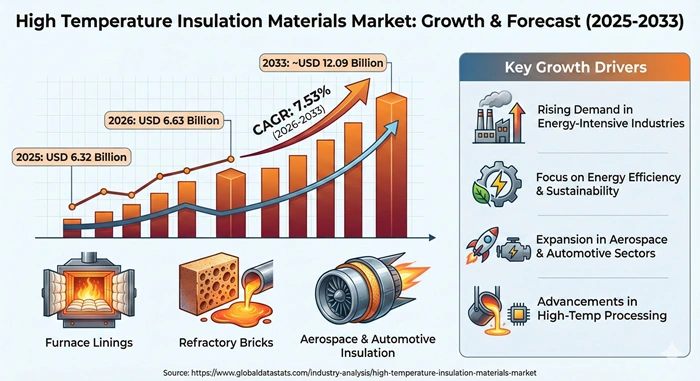
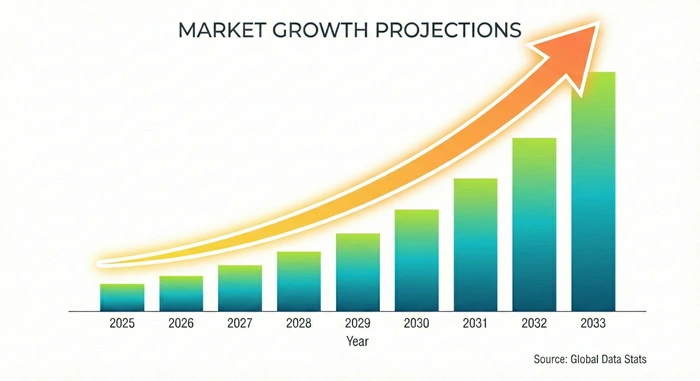
The global high temperature insulation materials market size is valued at USD 6.32 billion in 2025 and is predicted to increase from USD 6.63 billion in 2026 to approximately USD 12.09 billion by 2033, growing at a CAGR of 7.53% from 2026 to 2033. This industry encompasses specialized materials engineered to withstand extreme temperatures exceeding 1000 degrees Celsius while minimizing heat loss, enabling energy conservation and operational safety across petrochemical refineries, steel manufacturing, power generation, and ceramic production facilities. High temperature insulation materials include ceramic fibers, insulating firebricks, calcium silicate, microporous panels, and aerogel blankets delivering thermal resistance critical for furnaces, kilns, boilers, and reactors operating under severe thermal conditions.
The high temperature insulation materials market addresses escalating demand for energy-efficient industrial operations as manufacturers pursue cost reductions through minimized fuel consumption and heat recovery. These specialized materials demonstrate exceptional thermal stability, low thermal conductivity, and resistance to chemical corrosion enabling extended service life in harsh environments where conventional insulation fails. Major industrial sectors including petrochemicals, iron and steel, cement, glass, and power generation deploy high temperature insulation solutions achieving energy savings between 20-40% while improving worker safety through reduced surface temperatures and fire hazard mitigation.
AI Impact on the High Temperature Insulation Materials Industry
Machine Learning Optimization and Predictive Analytics Revolutionize Material Design and Installation Performance Monitoring
Artificial intelligence transforms the high temperature insulation materials market through computational modeling that predicts thermal performance based on material composition, fiber orientation, and density parameters, dramatically accelerating product development cycles. Machine learning algorithms analyze historical performance data from thousands of industrial installations to identify optimal insulation thickness, layering configurations, and anchor spacing that minimize heat loss while reducing material costs. These AI-powered systems enable real-time thermal imaging analysis detecting insulation degradation, hot spots, and anchor failures before catastrophic equipment damage occurs, shifting maintenance from reactive to predictive strategies. Deep learning models trained on furnace temperature profiles and refractory wear patterns recommend optimal insulation replacement schedules maximizing operational uptime while controlling maintenance expenditures.
Advanced AI applications extend beyond process optimization to accelerate next-generation material innovation within the high temperature insulation materials market landscape. Neural networks simulate nanoscale fiber structures and chemical compositions predicting mechanical strength, thermal conductivity, and chemical resistance before expensive pilot production runs. Generative algorithms design hybrid insulation systems combining ceramic fibers with microporous cores and aerogel facing layers, exploring multi-layer architectures far beyond traditional engineering approaches to achieve breakthrough thermal efficiency. Computer vision systems integrated into manufacturing operations perform automated quality inspection detecting fiber misalignment, density variations, and contamination at production speeds impossible through manual assessment. These AI-driven capabilities position insulation manufacturers to deliver customized solutions addressing specific customer operating conditions while reducing development timelines from years to months.
Growth Factors
Industrial Expansion and Energy Efficiency Mandates Propel High Temperature Insulation Materials Adoption Globally
The high temperature insulation materials market experiences robust growth propelled by rapid industrialization across emerging economies where steel production, cement manufacturing, and petrochemical processing capacity expansions require advanced thermal management solutions. China's steel output exceeding 1 billion tons annually creates sustained demand for furnace and ladle insulation as producers implement energy-saving technologies meeting government efficiency targets. India's infrastructure development driving cement capacity additions consumes substantial rotary kiln insulation volumes where heat retention directly impacts fuel consumption representing 40-60% of production costs. Petrochemical complexes across Middle East and Asia Pacific regions deploy ceramic fiber blankets and modules in reformers, crackers, and distillation columns where thermal efficiency improvements generate millions in annual savings through reduced fuel consumption and increased throughput.
Energy cost escalation and emissions regulations drive high temperature insulation materials market expansion as manufacturers pursue operational improvements delivering measurable returns on investment. Natural gas and electricity price volatility incentivizes industrial operators to retrofit existing equipment with advanced insulation systems achieving payback periods under 18 months through fuel savings. Carbon pricing mechanisms implemented across Europe and expanding to other regions create financial incentives for thermal efficiency improvements reducing greenhouse gas emissions. Glass manufacturing facilities implementing high-efficiency insulation in furnaces and lehrs reduce energy consumption by 15-25% while extending refractory life through reduced thermal cycling stress. Power generation plants incorporating advanced insulation in boilers, turbines, and piping systems improve thermal efficiency by 2-3 percentage points translating to substantial fuel cost reductions across multi-decade operational lifespans.
Market Outlook
Sustainability Initiatives and Advanced Material Technologies Position Industry for Sustained Long-Term Expansion
The high temperature insulation materials market outlook remains exceptionally positive as manufacturers invest substantially in developing sustainable alternatives addressing health concerns and environmental impacts associated with traditional ceramic fiber products. Bio-soluble ceramic fibers engineered to dissolve in biological fluids within 40 days reduce long-term health risks compared to alumina-silicate variants requiring enhanced worker protection during installation and maintenance. Aerogel-based insulation systems delivering thermal conductivities below 0.02 W/mK enable ultra-thin installations reducing structural load requirements while achieving superior thermal performance in space-constrained applications. Microporous panel technology combining silica particles with opacifiers creates rigid insulation boards withstanding temperatures exceeding 1200 degrees Celsius at thicknesses 50-80% below conventional materials, enabling retrofit applications previously considered technically infeasible.
Investment trends within the high temperature insulation materials market reflect growing confidence in long-term demand fundamentals as Asia Pacific capacity expansions target domestic industrial growth. Morgan Advanced Materials' strategic focus on operational excellence and supply chain optimization positions the company to capture expanding opportunities across thermal products applications. Saint-Gobain's aggressive acquisition strategy in construction chemicals and specialty materials demonstrates commitment to diversifying insulation portfolio beyond traditional product lines. Middle Eastern petrochemical producers leverage advantaged feedstock economics to expand refining capacity requiring substantial high temperature insulation investments. Renewable energy transitions driving hydrogen production and carbon capture infrastructure create emerging application opportunities where high temperature insulation enables process efficiency. These favorable dynamics position the market for sustained expansion exceeding general industrial growth rates through 2033.
Expert Speaks
-
Damien Caby, Chief Executive Officer of Morgan Advanced Materials, emphasized strategic priorities: "Morgan is an exciting innovative company with distinctive capabilities and competitive advantages that give us a decisive right to win across our diverse markets. We will focus on transformation of operational effectiveness, driving stronger growth and maximisation of portfolio value to improve financial performance on a sustainable basis delivering against our revised framework targeting 12-14% adjusted operating profit margins".
-
Benoit Bazin, Chairman and Chief Executive Officer of Saint-Gobain, articulated acquisition strategy: "The acquisition of OVNIVER Group perfectly aligns with our Grow & Impact strategic plan representing an excellent opportunity to further reinforce presence in construction chemicals and strengthen our position in high-growth markets. Following acquisitions of Chryso, GCP and FOSROC, we establish worldwide presence in construction chemicals with combined sales of 6.5 billion euros across 76 countries".
-
ROCKWOOL Core Solutions Leadership, highlighted sustainability commitment: "Our stone wool building insulation saves more than 100 times the energy consumed and CO2 emitted in its production over its lifetime exceeding 65 years. Saving energy and reducing emissions creates significant positive impact helping communities build greater climate change resilience, and ROCKWOOL has a critical role to play in the renovation wave".
Key Report Takeaways
-
Asia Pacific dominates the high temperature insulation materials market with commanding share exceeding 58%, driven by concentrated heavy industrial capacity across China, India, and Japan where steel, cement, petrochemical, and power generation sectors consume substantial insulation volumes supported by ongoing manufacturing expansion.
-
North America emerges as the fastest-growing regional market with projected CAGR approaching 8.1% through 2033, propelled by industrial modernization initiatives, stringent energy efficiency regulations, renewable energy infrastructure development, and advanced manufacturing facility construction requiring high-performance thermal management solutions.
-
Ceramic fibers represent the dominant material segment accounting for approximately 47% market share due to exceptional thermal stability, chemical resistance, and mechanical strength enabling applications in furnaces, kilns, boilers, and reactors where temperatures exceed 1400 degrees Celsius.
-
Petrochemical and chemical industries constitute the largest end-use segment capturing over 30% market share, driven by extensive refinery operations, chemical processing plants, and ethylene crackers requiring advanced insulation for reactors, distillation columns, and piping systems maintaining thermal efficiency and safety.
-
Other material types including aerogels and microporous panels exhibit highest growth trajectory with anticipated CAGR exceeding 8.5% through 2033, attributed to superior thermal performance enabling ultra-thin installations, space savings, and enhanced energy efficiency across retrofit and new construction applications.
-
Iron and steel applications demonstrate substantial growth potential with projected CAGR of 7.8%, driven by furnace modernization programs, ladle insulation upgrades, and continuous casting installations where thermal management directly impacts product quality, energy consumption, and operational safety across global steel production facilities.
Market Scope
| Report Coverage Details | |
|---|---|
| Market Size by 2033 | USD 12.09 Billion |
| Market Size by 2025 | USD 6.32 Billion |
| Market Size by 2026 | USD 6.63 Billion |
| Market Growth Rate from 2026 to 2033 | CAGR of 7.53% |
| Dominating Region | Asia Pacific |
| Fastest Growing Region | North America |
| Base Year | 2025 |
| Forecast Period | 2026 to 2033 |
| Segments Covered | Material Type, Product Form, Temperature Range, End-Use Industry, Region |
| Regions Covered | North America, Europe, Asia Pacific, Latin America, Middle East & Africa |
Market Dynamics
Drivers Impact Analysis
Energy Cost Pressures and Industrial Growth Create Sustained Demand for Advanced Thermal Management Solutions
| Impact Factor | (≈) % Impact on CAGR Forecast | Geographic Relevance | Impact Timeline |
|---|---|---|---|
| Industrial Expansion in Emerging Markets | +2.6% | Asia Pacific, Middle East | 2026-2033 |
| Energy Efficiency Regulations | +2.1% | North America, Europe | 2026-2033 |
| Petrochemical Capacity Additions | +1.7% | Middle East, Asia Pacific | 2026-2031 |
| Infrastructure Modernization | +1.2% | North America, Europe | 2027-2033 |
The high temperature insulation materials market benefits substantially from rapid industrialization across emerging economies where manufacturing capacity expansions create sustained demand for thermal management solutions delivering energy savings and operational safety. China's commitment to industrial upgrading and efficiency improvements drives retrofitting of existing steel furnaces, cement kilns, and power plants with advanced insulation systems achieving 20-30% energy consumption reductions. India's manufacturing sector growth under government initiatives including Make in India programs stimulates construction of new petrochemical complexes, steel mills, and glass manufacturing facilities specifying high-performance insulation from project inception. Southeast Asian nations including Vietnam, Indonesia, and Thailand develop industrial capacity serving regional supply chains, creating diversified demand across multiple heavy industry sectors requiring thermal insulation solutions.
Energy cost escalation and carbon emissions regulations accelerate high temperature insulation materials market expansion as industrial operators pursue efficiency improvements delivering measurable financial returns. European Union Emissions Trading System pricing carbon above 80 euros per ton creates compelling economics for thermal efficiency investments reducing fuel consumption and associated emissions. United States industrial facilities facing electricity costs ranging 6-12 cents per kilowatt-hour depending on region implement insulation upgrades achieving payback periods under two years through energy savings. Natural gas price volatility affecting petrochemical feedstock costs incentivizes process optimization including advanced insulation in steam crackers and reformers where temperature control directly impacts product yields. Power generation facilities upgrading boiler and turbine insulation improve thermal efficiency by 2-3 percentage points, reducing fuel consumption millions of dollars annually while extending equipment life through reduced thermal stress and mechanical fatigue throughout operational lifespans.
Restraints Impact Analysis
High Initial Costs and Installation Complexity Challenge Market Penetration Across Price-Sensitive Applications
| Restraint Factor | (≈) % Impact on CAGR Forecast | Geographic Relevance | Impact Timeline |
|---|---|---|---|
| Premium Material Costs | -1.2% | Emerging Markets | 2026-2030 |
| Installation Expertise Requirements | -0.9% | Global Installation Base | 2026-2033 |
| Health and Safety Concerns | -0.7% | Europe, North America | 2026-2029 |
| Competition from Alternative Technologies | -0.5% | Cost-Sensitive Segments | 2026-2033 |
The high temperature insulation materials market faces growth constraints from substantial material and installation costs that create economic barriers in applications where capital budgets cannot justify premium pricing despite long-term energy savings. Advanced ceramic fiber products command prices ranging 15-30 dollars per square meter compared to 5-10 dollars for conventional refractory bricks, limiting adoption among smaller manufacturers operating under tight capital constraints. Aerogel blankets and microporous panels delivering superior thermal performance cost 50-100 dollars per square meter, restricting applications to specialized installations where space limitations or extreme performance requirements justify expenditures. Installation labor costs representing 40-60% of total system expenses further elevate project budgets, particularly for complex geometries requiring custom fabrication and skilled installer availability in remote locations supporting industrial facilities.
Health and safety concerns regarding ceramic fiber respiratory exposure constrain high temperature insulation materials market growth despite industry development of bio-soluble alternatives addressing toxicity issues. Regulatory classifications of refractory ceramic fibers as possible carcinogens in Europe and North America mandate enhanced worker protection measures including respiratory equipment, containment systems, and medical surveillance programs increasing installation costs and complexity. Environmental regulations restricting disposal of spent insulation materials containing ceramic fibers or residual chemicals require specialized handling and landfill acceptance, adding end-of-life management costs. These health, safety, and environmental factors drive substitution toward bio-soluble fibers and alternative insulation technologies, though performance limitations and cost premiums constrain adoption rates across established applications where alumina-silicate ceramic fibers maintain technical advantages in extreme temperature environments exceeding 1400 degrees Celsius.
Opportunities Impact Analysis
Emerging Technologies and Sustainability Initiatives Create Substantial Growth Avenues Beyond Traditional Markets
| Opportunity Factor | (≈) % Impact on CAGR Forecast | Geographic Relevance | Impact Timeline |
|---|---|---|---|
| Hydrogen Economy Infrastructure | +1.5% | Europe, Asia Pacific | 2027-2033 |
| Carbon Capture Systems | +1.2% | North America, Europe | 2028-2033 |
| Advanced Manufacturing Facilities | +1.0% | Global Manufacturing Hubs | 2026-2033 |
| Renewable Energy Integration | +0.8% | Global Energy Markets | 2027-2033 |
The high temperature insulation materials market stands to capture substantial value from hydrogen economy infrastructure development requiring thermal management solutions for production, storage, and distribution systems operating at extreme temperatures and pressures. Steam methane reformers producing blue hydrogen through natural gas processing with carbon capture require advanced insulation in reactors operating above 900 degrees Celsius where thermal efficiency directly impacts economics. Electrolyzers generating green hydrogen through renewable energy-powered water splitting deploy high temperature insulation in solid oxide systems operating at 700-800 degrees Celsius. Hydrogen storage facilities utilizing high-pressure compression and liquefaction processes require specialized insulation managing cryogenic to ambient temperature transitions while maintaining safety margins. These emerging hydrogen applications command premium pricing supporting continued innovation investment throughout the forecast period.
Carbon capture and storage infrastructure presents exceptional growth opportunities for the high temperature insulation materials market as industrial facilities and power plants implement emissions reduction technologies. Post-combustion capture systems processing flue gases at temperatures ranging 350-700 degrees Celsius require corrosion-resistant insulation withstanding acidic environments while maintaining thermal efficiency. Oxy-fuel combustion systems operating at elevated temperatures exceeding conventional power generation demand advanced insulation materials providing superior thermal stability and mechanical strength. Direct air capture facilities extracting CO2 from ambient atmosphere deploy thermal processes requiring insulation solutions enabling energy-efficient operations. Advanced manufacturing facilities producing electric vehicle batteries, semiconductors, and specialized materials create demand for precision temperature-controlled processing equipment where high temperature insulation enables tight thermal tolerances critical for product quality while minimizing energy consumption across cleanroom manufacturing environments throughout forecast period.
Segment Analysis
By Material Type: Ceramic Fibers
Superior Thermal Performance and Chemical Resistance Sustain Ceramic Fiber Segment Market Leadership Across Diverse Applications
Ceramic fibers command the largest share within the high temperature insulation materials market, accounting for approximately 47% of global revenue with continued expansion projected at steady CAGR of 7.3% through 2033. This material category consists of alumina-silicate or bio-soluble fibers manufactured through melting, spinning, or blowing processes delivering exceptional thermal stability at temperatures exceeding 1400 degrees Celsius combined with low thermal conductivity and excellent chemical resistance. The high temperature insulation materials market benefits from ceramic fiber versatility enabling diverse product forms including blankets, boards, papers, textiles, and vacuum-formed shapes addressing specific installation requirements across furnaces, kilns, reactors, and expansion joints. Petrochemical refineries consume substantial ceramic fiber volumes insulating reformer tubes, cracker furnaces, and catalyst regenerators where thermal efficiency improvements generate millions in annual fuel savings.
Asia Pacific leads ceramic fiber consumption within the market, driven by concentrated steel manufacturing, petrochemical processing, and power generation capacity across China, India, and Japan. Leading regional producers including Luyang Energy-Saving Materials, Isolite Insulating Products, and Mitsubishi Chemical operate integrated facilities supplying domestic industrial sectors while supporting exports to Southeast Asian markets. Chinese steel mills retrofit blast furnaces and ladle systems with ceramic fiber modules achieving 15-25% energy consumption reductions meeting government efficiency mandates. Indian petrochemical complexes specify ceramic fiber blankets and boards for new construction projects where lightweight installation reduces structural load requirements compared to conventional refractory brick linings. North American ceramic fiber applications emphasize bio-soluble variants addressing health and safety concerns while maintaining performance specifications for aluminum smelters, glass furnaces, and industrial boilers. European manufacturers focus on high-purity ceramic fibers for semiconductor processing equipment and advanced materials production requiring ultra-clean thermal environments. The segment's market leadership continues strengthening as technological advancements improve fiber durability while addressing environmental concerns throughout the forecast period.
By End-Use Industry: Petrochemical and Chemical
Process Efficiency Requirements and Safety Mandates Position Petrochemicals as Dominant Application Segment
Petrochemical and chemical industries represent the largest end-use segment within the high temperature insulation materials market, accounting for approximately 30% of global consumption with robust expansion anticipated at CAGR of 7.6% through 2033. This sector encompasses refineries, ethylene crackers, ammonia plants, and specialty chemical facilities where high temperature insulation enables thermal efficiency, process safety, and regulatory compliance across reactors, distillation columns, piping systems, and storage tanks. The high temperature insulation materials market benefits from petrochemical industry transformation toward energy efficiency as operators pursue cost reductions through advanced thermal management achieving fuel savings exceeding 20% compared to conventional insulation systems. Thermal oxidizers and catalytic converters processing emissions require specialized insulation withstanding thermal cycling and chemical exposure while maintaining structural integrity.
Middle East and Asia Pacific lead petrochemical high temperature insulation adoption within the market, driven by substantial refining capacity and ethylene production serving global chemical supply chains. Saudi Arabia, UAE, and Qatar leverage advantaged feedstock economics to operate world-scale petrochemical complexes specifying advanced insulation systems in steam crackers, aromatics units, and polyolefin reactors where thermal efficiency directly impacts production economics. China's integrated refining and chemical facilities consume substantial ceramic fiber and calcium silicate insulation volumes across reformers, delayed cokers, and alkylation units. United States Gulf Coast petrochemical expansion driven by shale gas availability creates demand for insulation systems in new ethane crackers and derivative plants. Leading insulation suppliers including Morgan Advanced Materials, Unifrax, Promat International, and Insulcon Group develop specialized products optimized for petrochemical service conditions including chemical resistance, thermal shock tolerance, and extended operational life. European petrochemical facilities focus on retrofit applications upgrading existing insulation to meet stringent emissions regulations while improving energy efficiency across aging infrastructure throughout the forecast period.
Regional Insights
Asia Pacific
Manufacturing Concentration and Industrial Growth Establish Regional Dominance in High Temperature Insulation Materials Consumption
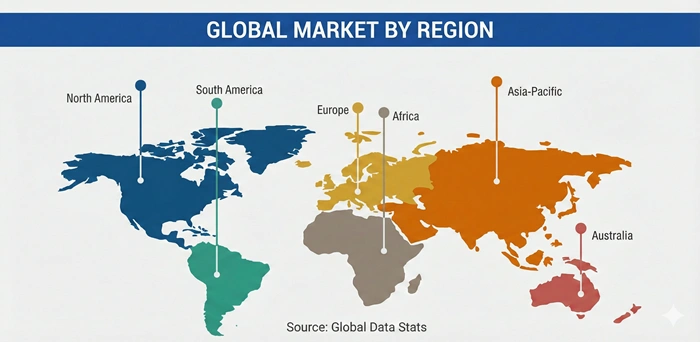
Asia Pacific commands the high temperature insulation materials market with dominant share exceeding 58%, driven by concentrated heavy industrial capacity across China, India, Japan, and South Korea where steel production, cement manufacturing, petrochemical processing, and power generation consume substantial insulation volumes. China alone accounts for over 50% of global steel output and 55% of cement production creating sustained demand for furnace, kiln, and boiler insulation as facilities implement energy-saving technologies meeting government efficiency targets and emissions reduction commitments. The region benefits from integrated industrial supply chains spanning raw material production through end-product manufacturing, with major insulation producers maintaining proximity to key industrial clusters reducing logistics costs while enabling rapid technical support. India represents fastest-growing market within Asia Pacific as infrastructure development and manufacturing sector expansion drive new industrial construction incorporating advanced insulation from project design phases.
Japan and South Korea maintain technological leadership in specialized high temperature insulation applications including semiconductor manufacturing equipment, advanced materials processing, and precision manufacturing requiring ultra-clean thermal environments. Leading regional producers including Luyang Energy-Saving Materials, Isolite Insulating Products, Mitsubishi Chemical, and Unifrax Korea operate modern manufacturing facilities supplying diverse industrial sectors while investing substantially in research and development advancing bio-soluble fibers, aerogel composites, and microporous insulation technologies. Southeast Asian nations including Vietnam, Thailand, and Indonesia develop industrial capacity supporting regional automotive, electronics, and construction materials manufacturing creating diversified demand across multiple application segments. The region's market dominance continues strengthening through 2033 as domestic consumption growth, export-oriented manufacturing expansion, and technology advancement create favorable dynamics supporting continued leadership position in global high temperature insulation materials market.
North America
Industrial Modernization and Regulatory Drivers Position Region as Fastest-Growing Geographic Market
North America emerges as the fastest-growing regional high temperature insulation materials market with projected CAGR of 8.1% through 2033, propelled by industrial facility modernization programs, stringent energy efficiency regulations, renewable energy infrastructure development, and advanced manufacturing expansion. The United States dominates regional market activity through established petrochemical, steel, cement, and glass manufacturing industries implementing retrofit projects upgrading aging insulation systems achieving substantial energy savings and emissions reductions. Industrial energy efficiency programs offering tax incentives and rebates for thermal improvement projects stimulate investment in advanced insulation technologies including aerogel blankets, microporous panels, and bio-soluble ceramic fibers delivering superior performance compared to conventional materials. Petrochemical facilities along Gulf Coast regions undertake major turnaround maintenance incorporating latest insulation solutions in crackers, reformers, and distillation units.
United States high temperature insulation materials market specifically benefits from reshoring manufacturing initiatives and infrastructure modernization programs supporting domestic industrial capacity development. Steel mills implement electric arc furnace upgrades incorporating advanced refractory and insulation systems improving thermal efficiency while reducing carbon footprint compared to traditional blast furnace operations. Power generation facilities transitioning toward natural gas combined cycle plants and renewable energy integration deploy advanced insulation in turbines, heat recovery steam generators, and thermal storage systems. Canada contributes to North American market growth through oil sands processing, pulp and paper manufacturing, and mining operations requiring specialized insulation solutions withstanding harsh operating environments. Mexico represents substantial manufacturing hub as automotive suppliers and electronics manufacturers establish production facilities incorporating energy-efficient thermal management systems. Leading international insulation suppliers including Morgan Advanced Materials, Unifrax, 3M Company, and Pyrotek maintain regional manufacturing operations, technical centers, and distribution networks supporting continued market expansion throughout the forecast period.
Top Key Players
-
Morgan Advanced Materials PLC (United Kingdom)
-
Saint-Gobain S.A. (France)
-
Unifrax LLC (United States)
-
3M Company (United States)
-
ROCKWOOL International A/S (Denmark)
-
Luyang Energy-Saving Materials Co., Ltd. (China)
-
Promat International NV (Belgium)
-
Pyrotek Inc. (United States)
-
Insulcon Group (Netherlands)
-
Isolite Insulating Products Company Limited (Japan)
-
Hi-Temp Insulation Inc. (United States)
-
Rath Group (Austria)
-
RHI Magnesita N.V. (Austria)
-
Mitsubishi Chemical Corporation (Japan)
-
Nutec Bickley (Mexico)
Recent Developments
-
Saint-Gobain (2025): Completed strategic acquisition of FOSROC, a leading global construction chemicals player with strong geographic footprint in India, Middle East and Asia-Pacific, representing important step in establishing worldwide presence in construction chemicals with combined sales of 6.5 billion euros across 76 countries following previous acquisitions of Chryso, GCP and OVNIVER.
-
Saint-Gobain (2024): Entered definitive agreement to acquire OVNIVER Group, leading privately-owned construction chemicals player in Mexico and Central America for 815 million dollars in cash, expecting approximately 40 million dollars of run-rate synergies by year three through operational improvements, logistics optimization, and procurement economies of scale.
-
Morgan Advanced Materials (2025): Announced comprehensive strategy update focusing on unlocking organizational potential through operational effectiveness transformation, stronger growth initiatives, and portfolio value maximization, targeting revised financial framework achieving 12-14% adjusted operating profit margins and sustained earnings per share growth with clear roadmap extending through 2028 and beyond.
-
Morgan Advanced Materials (2025): Completed CEO transition appointing Damien Caby as Chief Executive Officer following Pete Raby's decade-long tenure, bringing extensive thermal products division leadership experience to drive strategic mandates focused on customer focus, portfolio management, and sustainable financial performance improvement.
-
ROCKWOOL Core Solutions (2024): Expanded sustainability initiatives demonstrating stone wool insulation products save more than 100 times the energy consumed and CO2 emitted during production over 65-year operational lifetime, positioning company for critical role in renovation wave addressing climate change resilience through energy efficiency improvements.
Market Trends
Sustainability Transformation and Advanced Material Innovation Reshape Industry Competitive Dynamics and Application Portfolios
The high temperature insulation materials market experiences transformative trends centered on sustainability initiatives as manufacturers develop bio-soluble ceramic fibers, recycled content materials, and environmentally responsible production processes addressing health concerns and environmental impacts. Bio-soluble alkaline earth silicate fibers engineered to dissolve in biological fluids within 40 days reduce long-term health risks compared to traditional alumina-silicate ceramic fibers classified as possible carcinogens, enabling adoption across applications where worker safety considerations outweigh marginal performance differences. Manufacturers invest substantially in production technologies reducing energy consumption and emissions during fiber manufacturing, with some facilities achieving carbon neutrality through renewable energy integration and process optimization. Recycling programs accepting spent insulation materials for reprocessing into lower-grade applications create circular economy pathways reducing landfill waste while addressing disposal cost concerns. These sustainability initiatives position manufacturers favorably as industrial customers increasingly incorporate environmental criteria into supplier selection and procurement specifications.
Advanced material innovation trends reshape the high temperature insulation materials market as producers commercialize aerogel composites, microporous insulation, and hybrid multi-layer systems delivering breakthrough thermal performance. Aerogel blankets combining silica aerogel particles with reinforcing fibers achieve thermal conductivities below 0.015 W/mK enabling insulation thickness reductions exceeding 50% compared to conventional materials while maintaining equivalent thermal resistance. Microporous insulation panels incorporating fumed silica with opacifying agents and reinforcing fibers withstand temperatures exceeding 1200 degrees Celsius at densities below 300 kg/m3, creating rigid boards enabling applications previously requiring thick refractory brick linings. Hybrid insulation systems combining ceramic fiber hot face layers with microporous cores and aerogel cold face coatings optimize thermal performance across temperature gradients while minimizing total system thickness and weight. Vacuum insulation panels achieving ultra-low thermal conductivities through evacuated cores show promise for specialized applications though commercial viability awaits cost reduction and durability improvements addressing panel integrity concerns throughout operational lifespans in industrial environments.
Segments Covered in the Report
By Material Type
-
Ceramic Fibers
-
Insulating Firebricks
-
Calcium Silicate
-
Microporous Insulation
-
Aerogel Blankets
-
Others
By Product Form
-
Blankets and Felts
-
Boards and Blocks
-
Modules and Shapes
-
Papers and Textiles
-
Ropes and Tapes
-
Others
By Temperature Range
-
Up to 600°C
-
600°C to 1100°C
-
1100°C to 1500°C
-
Above 1500°C
By End-Use Industry
-
Petrochemical and Chemical
-
Iron and Steel
-
Ceramics
-
Glass
-
Cement
-
Power Generation
-
Aluminum
-
Others
By Region
-
North America (United States, Canada, Mexico)
-
Europe (Germany, United Kingdom, France, Italy, Spain, Rest of Europe)
-
Asia Pacific (China, India, Japan, South Korea, Southeast Asia, Rest of Asia Pacific)
-
Latin America (Brazil, Argentina, Rest of Latin America)
-
Middle East & Africa (Saudi Arabia, UAE, Qatar, Rest of MEA)
Frequently Asked Questions
Question 1: What is the projected size of the high temperature insulation materials market by 2033?
Answer: The global high temperature insulation materials market is expected to reach approximately USD 12.09 billion by 2033, growing from USD 6.63 billion in 2026. This substantial expansion reflects increasing adoption across petrochemical, steel, cement, and power generation industries demanding energy-efficient thermal management solutions.
Question 2: Which region dominates the high temperature insulation materials market currently?
Answer: Asia Pacific leads the high temperature insulation materials market with over 58% share, driven by concentrated industrial capacity in China, India, and Japan across steel, cement, petrochemical, and power sectors. Leading producers including Luyang Energy-Saving Materials and Isolite Insulating Products maintain dominant regional positions.
Question 3: What are the primary drivers of high temperature insulation materials market growth?
Answer: Key growth drivers include industrial expansion in emerging markets, energy efficiency regulations mandating thermal improvements, petrochemical capacity additions requiring advanced insulation, and infrastructure modernization programs upgrading aging facilities. Rising energy costs and carbon pricing mechanisms further incentivize insulation investments delivering measurable returns.
Question 4: Which material type holds the largest high temperature insulation materials market share?
Answer: Ceramic fibers dominate with approximately 47% market share due to exceptional thermal stability exceeding 1400 degrees Celsius, chemical resistance, and mechanical strength across furnaces, kilns, and reactors. Bio-soluble variants address health concerns while maintaining performance specifications for demanding industrial applications.
Question 5: How do high temperature insulation materials improve industrial energy efficiency?
Answer: High temperature insulation materials reduce heat loss by 20-40% in furnaces, boilers, and reactors, directly lowering fuel consumption and associated costs while improving process efficiency. Advanced materials including aerogels and microporous panels enable ultra-thin installations achieving superior thermal performance in space-constrained applications.