
High-End Greenhouse Market Overview
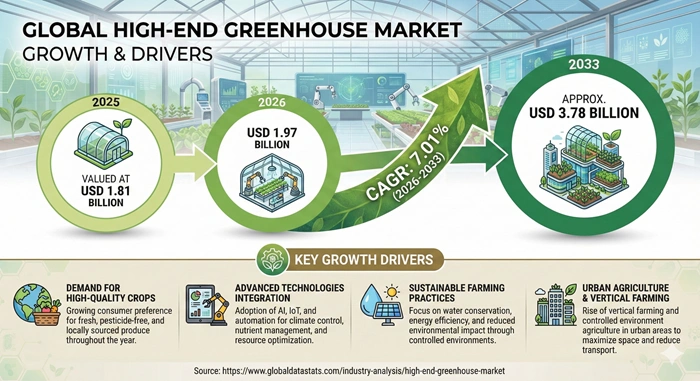
The global high-end greenhouse market size is valued at USD 1.81 billion in 2025 and is predicted to increase from USD 1.97 billion in 2026 to approximately USD 3.78 billion by 2033, growing at a CAGR of 7.01% from 2026 to 2033. This remarkable expansion reflects the accelerating global shift toward controlled environment agriculture, where sophisticated greenhouse structures equipped with advanced climate control systems, automated monitoring technologies, and precision irrigation solutions enable year-round cultivation of high-value crops regardless of external weather conditions. High-end greenhouses represent premium agricultural infrastructure designed to regulate temperature, humidity, light exposure, and environmental parameters with unprecedented precision, maximizing crop yields while minimizing resource consumption and environmental impact.
The high-end greenhouse market encompasses specialized structures utilizing cutting-edge materials, smart technologies, and integrated automation systems that distinguish them from conventional greenhouse installations. These facilities incorporate sophisticated climate management systems featuring computerized controls, automated ventilation, advanced heating and cooling technologies, and intelligent shading mechanisms that maintain optimal growing conditions throughout varying seasons. Modern high-end greenhouses integrate Internet of Things sensors, artificial intelligence-powered analytics, and remote monitoring capabilities that enable growers to track environmental parameters in real-time and make data-driven adjustments optimizing plant health and productivity. The growing consumer demand for locally produced, pesticide-free, high-quality produce combined with increasing awareness about food security and sustainable agriculture practices is driving substantial investment in premium greenhouse infrastructure across commercial and residential applications worldwide.
AI Impact on the High-End Greenhouse Industry
Transforming Crop Management Through Intelligent Automation and Predictive Environmental Control
Artificial intelligence is revolutionizing the high-end greenhouse market by enabling unprecedented levels of environmental precision, resource optimization, and crop performance management that were impossible with traditional greenhouse technologies. AI-powered systems continuously analyze vast datasets collected from networks of sensors monitoring temperature, humidity, CO2 concentrations, soil moisture, nutrient levels, and light intensity to generate real-time recommendations for environmental adjustments that optimize growing conditions for specific crop varieties and development stages. Machine learning algorithms process historical performance data alongside current environmental parameters to predict optimal timing for irrigation cycles, nutrient delivery, climate modifications, and harvest windows that maximize yield quality while minimizing input costs. Computer vision technologies integrated with camera systems throughout greenhouse facilities detect early signs of plant stress, disease symptoms, pest infestations, and nutrient deficiencies before they become visible to human observation, enabling proactive interventions that prevent crop losses and maintain consistent production quality.
The integration of AI extends throughout the entire high-end greenhouse operation from pre-planting planning through post-harvest quality control, creating comprehensive decision support ecosystems that enhance operational efficiency and profitability. Predictive analytics models forecast energy consumption patterns and recommend optimal scheduling for heating, cooling, and supplemental lighting systems that reduce utility costs while maintaining ideal growing environments. Neural networks analyze weather forecast data to anticipate upcoming temperature fluctuations, precipitation events, and light availability changes, automatically adjusting greenhouse climate systems to compensate for external conditions and maintain stable interior environments. AI-driven automation controls coordinate complex interactions between ventilation, irrigation, heating, cooling, and shading systems, optimizing resource allocation and eliminating conflicts between different environmental management systems. This technological transformation is democratizing access to sophisticated greenhouse management capabilities, making advanced controlled environment agriculture viable for a broader range of commercial growers and even dedicated hobbyists pursuing premium crop production.
Growth Factors
Rising Food Security Concerns and Consumer Demand for Premium Local Produce Drive Market Momentum
The escalating global challenge of ensuring reliable food supplies for growing populations amid climate change disruptions represents the most fundamental driver propelling the high-end greenhouse market forward across all major regions. Extreme weather events, unpredictable growing seasons, water scarcity, and agricultural land degradation threaten traditional outdoor farming systems, creating urgent demand for climate-resilient food production solutions that can deliver consistent yields regardless of external environmental conditions. High-end greenhouses provide controlled environments protecting crops from temperature extremes, storms, droughts, and pest pressures that increasingly compromise conventional agriculture, enabling reliable year-round production of fresh vegetables, fruits, and flowers that meet consistent quality standards demanded by modern supply chains. The ability to produce crops in close proximity to urban population centers reduces transportation requirements, minimizes post-harvest deterioration, and delivers superior freshness that consumers increasingly value and willingly pay premium prices to obtain.
Growing consumer awareness about food safety, environmental sustainability, and health benefits associated with locally produced, pesticide-free produce is creating powerful market momentum favoring high-end greenhouse cultivation over imported alternatives and conventional outdoor farming. Modern consumers, particularly in developed markets, demonstrate strong preferences for knowing where their food originates, how it was grown, and what inputs were used during production, with controlled environment greenhouse systems offering transparency and traceability that builds trust and brand loyalty. Retailers and foodservice operators are establishing partnerships with greenhouse growers to secure reliable supplies of premium produce featuring consistent quality, extended shelf life, and guaranteed availability throughout seasons when outdoor cultivation is impossible or produces inferior results. Government initiatives promoting sustainable agriculture, local food systems, and reduced agricultural carbon footprints are providing subsidies, tax incentives, and regulatory support that improve the economic viability of high-end greenhouse investments. The high-end greenhouse market benefits from converging trends including urbanization concentrating populations in cities distant from traditional agricultural regions, rising income levels enabling premium food purchases, and heightened environmental consciousness favoring sustainable production methods that minimize resource consumption and chemical inputs.
Market Outlook
Technological Innovation and Sustainability Imperatives Shape Robust Growth Trajectory
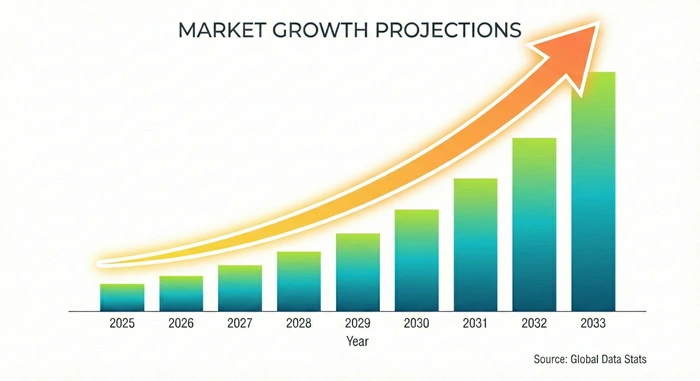
The high-end greenhouse market outlook through 2033 remains exceptionally positive as converging technological advancements, sustainability commitments, and economic incentives drive sustained adoption growth across both established and emerging markets. Integration of renewable energy systems including solar panels, geothermal heating, and wind generation is transforming greenhouse operations from energy-intensive facilities into increasingly self-sufficient installations that dramatically reduce operating costs while aligning with corporate sustainability goals and environmental regulations. Advanced energy management systems optimize power consumption by coordinating heating, cooling, and lighting operations with electricity pricing fluctuations and renewable energy availability, minimizing utility expenses that historically represented major operational cost barriers. Development of novel greenhouse construction materials featuring superior insulation properties, enhanced light transmission, and extended durability is reducing both initial capital requirements and ongoing maintenance expenses, making premium greenhouse technology accessible to a broader market segment beyond only the largest commercial operations.
Looking toward the forecast period conclusion in 2033, market dynamics will be increasingly influenced by climate adaptation requirements as agricultural production faces intensifying weather volatility and the growing recognition that food security depends on diversified production systems including substantial controlled environment capacity. Investment in vertical farming technologies integrated within greenhouse structures is creating hybrid facilities that maximize production per unit of land area, particularly valuable for urban agricultural applications where real estate costs are prohibitive. Modular greenhouse designs offering scalability and flexibility enable growers to start with manageable initial investments and expand capacity incrementally as markets develop and operational expertise grows, reducing financial risks that historically deterred potential adopters. The high-end greenhouse market is evolving beyond purely commercial applications into educational institutions, research facilities, community food security initiatives, and even premium residential installations where affluent homeowners establish sophisticated personal growing operations. This market diversification creates multiple growth pathways that will sustain expansion momentum throughout the forecast period.
Expert Speaks
-
Shlomy Raziel, President and Founder of Grow-Tec, emphasized that 2025 marks a critical juncture for vertical farming and controlled environment agriculture as the convergence of emerging technologies and growing demand for sustainable food production creates unprecedented opportunities, with the drop in energy prices in developed regions coupled with climate change impacts on traditional agriculture positioning advanced greenhouse systems as resilient and essential solutions for future food security.
-
Rob Dunlop, Vice President of Innovation and Technology Adoption at Nutrien Ag Solutions, noted that while investing heavily in greenhouse technology and digital tools, the company continues recognizing that relationships between consultants and growers remain paramount, with technology serving to provide data and insights that enable better recommendations helping growers achieve profitability and operational efficiency through comprehensive planning and season-long adaptability.
-
Dr. Mandar Godge, Agriculture Technology Expert, highlighted during the Indian Greenhouse Growers Conference that controlled environment agriculture and vertical farming efforts are focused on creating ideal climates that crops require for optimal development, with technology integration enabling precise environmental management that maximizes productivity while minimizing resource inputs and environmental impacts compared to traditional outdoor cultivation methods.
Key Report Takeaways
-
Asia-Pacific dominates the global high-end greenhouse market with approximately 38% market share driven by massive agricultural modernization initiatives in China, India, and Japan, government subsidies supporting protected cultivation adoption, favorable climatic conditions enabling year-round operations, and rapidly growing consumer demand for premium quality produce in densely populated urban centers creating substantial commercial opportunities.
-
North America emerges as the fastest-growing regional market with projected CAGR around 7.8% through 2033, fueled by advanced agricultural technology infrastructure, strong consumer preferences for locally sourced fresh produce, substantial venture capital investment in controlled environment agriculture ventures, and growing recognition among commercial growers that high-end greenhouses deliver superior return on investment compared to conventional production methods.
-
The vegetables segment leads crop type categorization accounting for approximately 44.2% of global high-end greenhouse market revenue as tomatoes, cucumbers, peppers, and leafy greens demonstrate strong economic returns when cultivated in controlled environments, with greenhouse production enabling year-round availability, superior quality characteristics, extended shelf life, and reduced pest pressures compared to outdoor cultivation systems.
-
Commercial applications dominate the high-end greenhouse market representing around 78.6% of total installations as large-scale growers, agricultural enterprises, and specialized horticultural operations invest in sophisticated greenhouse infrastructure to maximize productivity, ensure consistent supply for retail and foodservice customers, and capitalize on premium pricing opportunities available for locally grown, high-quality produce in competitive markets.
-
Automated climate control systems capture substantial market share accounting for approximately 42.8% of technology segment revenue as growers increasingly recognize that computerized environmental management delivers superior consistency, reduces labor requirements, enables remote monitoring capabilities, and optimizes resource utilization compared to manual greenhouse operation methods requiring constant human intervention.
-
The residential segment exhibits highest future growth potential expected to expand at CAGR exceeding 9.2% through 2033 as affluent homeowners increasingly invest in personal greenhouse installations for hobby gardening, specialty crop cultivation, and food self-sufficiency goals, with premium residential greenhouse systems incorporating sophisticated automation features previously available only in commercial facilities enabling successful cultivation of diverse plant species.
Market Scope
| Report Coverage Details | |
|---|---|
| Market Size by 2033 | USD 3.78 Billion |
| Market Size by 2025 | USD 1.81 Billion |
| Market Size by 2026 | USD 1.97 Billion |
| Market Growth Rate from 2026 to 2033 | CAGR of 7.01% |
| Dominating Region | Asia-Pacific |
| Fastest Growing Region | North America |
| Base Year | 2025 |
| Forecast Period | 2026 to 2033 |
| Segments Covered | Crop Type, Application, Technology, Region |
| Regions Covered | North America, Europe, Asia-Pacific, Latin America, Middle East and Africa |
Market Dynamics
Drivers Impact Analysis
Growing Demand for Year-Round Fresh Produce and Climate-Resilient Agriculture Systems
| Factor | Details |
|---|---|
| ≈ % Impact on CAGR Forecast | +2.4% to +3.1% |
| Geographic Relevance | Global, particularly strong in North America, Europe, and Asia-Pacific |
| Impact Timeline | Immediate to Long-term (2026-2033) |
The accelerating consumer demand for fresh, locally produced vegetables, fruits, and herbs available throughout all seasons represents the most significant driver propelling high-end greenhouse market expansion as modern supply chains and retail operations require consistent year-round product availability. Traditional outdoor agriculture faces inherent seasonal limitations constraining production to specific months when weather conditions permit cultivation, creating supply gaps that historically were filled through long-distance imports from regions with favorable climates or stored products with declining quality characteristics. High-end greenhouses eliminate these seasonal constraints by creating artificial growing environments maintaining optimal conditions regardless of external temperatures, daylight duration, or precipitation patterns, enabling continuous crop production cycles that deliver fresh harvests fifty-two weeks annually. Commercial growers operating sophisticated greenhouse facilities can schedule planting and harvesting to precisely match market demand patterns, avoiding oversupply periods depressing prices while ensuring consistent product flow during peak consumption seasons when pricing premiums reward reliable suppliers.
Climate change impacts including increasing frequency of extreme weather events, shifting precipitation patterns, and unprecedented temperature fluctuations are creating substantial uncertainty and risk for traditional outdoor agriculture, driving investment toward controlled environment solutions that insulate food production from environmental volatility. Devastating storms, unexpected freezes, prolonged droughts, and excessive heat waves can destroy entire outdoor crops within hours, causing massive financial losses for growers and supply disruptions affecting entire regional markets. The high-end greenhouse market benefits from growing recognition among agricultural investors, commercial growers, and food supply chain participants that protected cultivation infrastructure represents essential risk mitigation against climate unpredictability threatening food security and business continuity. Insurance companies are beginning to offer more favorable premium rates for greenhouse operations compared to outdoor farming, recognizing that controlled environments reduce crop loss risks and improve business stability. Government agricultural policies increasingly emphasize building resilient food systems capable of maintaining production during climate disruptions, with many jurisdictions offering grants, subsidized financing, and tax incentives specifically targeting greenhouse infrastructure investments as strategic food security initiatives.
Restraints Impact Analysis
High Initial Capital Requirements and Specialized Technical Expertise Barriers
| Factor | Details |
|---|---|
| ≈ % Impact on CAGR Forecast | -1.3% to -1.8% |
| Geographic Relevance | Developing regions in Latin America, Middle East, Africa, Southeast Asia |
| Impact Timeline | Short to Medium-term (2026-2029) |
The substantial upfront capital investment required for high-end greenhouse construction, equipment installation, and technology integration represents the most significant barrier limiting market penetration, particularly among small to medium-scale growers operating with constrained financial resources. Complete high-end greenhouse facilities including structural components, climate control systems, irrigation infrastructure, lighting installations, and automation technologies can require investments ranging from hundreds of thousands to several million dollars depending on facility size, technology sophistication, and local construction costs. These capital requirements far exceed investments needed for conventional outdoor farming operations, creating financial hurdles that prevent many potential adopters from entering the controlled environment agriculture sector despite recognizing potential profitability advantages. Access to financing represents another challenge as traditional agricultural lenders may lack familiarity with greenhouse operations, making them hesitant to extend credit for projects they perceive as higher risk compared to conventional farming ventures with established track records.
The technical complexity associated with designing, constructing, operating, and maintaining sophisticated high-end greenhouse systems creates additional barriers requiring specialized expertise often unavailable in agricultural communities where most growers lack experience with advanced environmental control technologies. Proper greenhouse design must account for local climate conditions, crop requirements, energy availability, and operational workflows, requiring engineering knowledge that exceeds capabilities of typical agricultural consultants. Operating automated climate control systems, troubleshooting irrigation equipment, maintaining HVAC components, and optimizing growing protocols demands technical skills combining horticultural knowledge with mechanical aptitude and technology literacy. The high-end greenhouse market faces challenges related to workforce availability as many agricultural regions lack trained technicians capable of supporting sophisticated greenhouse operations, forcing growers to either invest heavily in staff training or rely on expensive external consultants for ongoing technical support. Quality control issues with greenhouse construction and equipment in some markets undermine buyer confidence when inferior materials, substandard installation, or unreliable components result in operational failures, crop losses, and extended downtime that damage profitability and discourage continued investment.
Opportunities Impact Analysis
Urban Agriculture Expansion and Renewable Energy Integration Create New Market Pathways
| Factor | Details |
|---|---|
| ≈ % Impact on CAGR Forecast | +1.7% to +2.3% |
| Geographic Relevance | Urban centers in North America, Europe, Asia-Pacific |
| Impact Timeline | Medium to Long-term (2027-2033) |
The explosive growth of urban agriculture initiatives driven by consumer demand for ultra-local food sources, municipal food security priorities, and sustainable development goals creates transformative opportunities for the high-end greenhouse market as cities worldwide seek to establish productive growing capacity within metropolitan boundaries. Rooftop greenhouses utilizing underutilized building space, vertical farming facilities occupying industrial buildings, and community agricultural projects on vacant urban land are establishing controlled environment food production in close proximity to dense consumer populations. These urban installations eliminate transportation costs and emissions associated with rural-to-urban food distribution while delivering unmatched freshness and enabling harvest-to-consumer delivery within hours rather than days. High-end greenhouse technology proves particularly valuable in urban contexts where space constraints, environmental regulations, and aesthetic considerations demand sophisticated solutions that maximize productivity per square meter while maintaining acceptable visual appearance and minimizing neighborhood impacts.
Integration of renewable energy systems including solar photovoltaic installations, geothermal heating loops, and wind generation with high-end greenhouse operations creates opportunities to substantially reduce ongoing operational expenses while improving environmental sustainability profiles that attract environmentally conscious consumers and corporate buyers. Energy costs historically represented one of the largest greenhouse operating expenses, with heating, cooling, and supplemental lighting requirements consuming substantial electricity and natural gas. Solar panel installations on greenhouse roofs and adjacent ground space can generate significant portions of total energy requirements, with excess production sold back to electrical grids providing additional revenue streams. Geothermal systems tapping stable underground temperatures deliver efficient heating and cooling at fraction of conventional HVAC costs. The high-end greenhouse market benefits from improving economics of renewable energy technologies as declining equipment costs, government incentives, and rising conventional energy prices make renewable integration increasingly attractive from pure return-on-investment perspectives beyond environmental considerations. Some jurisdictions offer specific grant programs, accelerated permitting, and tax advantages for greenhouse facilities incorporating renewable energy, creating additional financial incentives supporting market growth.
Segment Analysis
By Crop Type: Vegetables Segment
Superior Economic Returns and Consumer Demand Establish Vegetables as Market Leader
The vegetables segment maintains commanding market dominance within the high-end greenhouse market landscape, capturing approximately 44.2% of global revenue driven by exceptional economic returns, strong consumer demand, and proven cultivation success across diverse greenhouse configurations and climate zones. Tomatoes, cucumbers, bell peppers, and leafy greens including lettuce and spinach represent particularly profitable greenhouse crops commanding premium pricing when marketed as locally grown, pesticide-free alternatives to imported or conventionally farmed products. These vegetables exhibit rapid growth cycles enabling multiple harvests annually, respond positively to controlled environment conditions producing superior quality characteristics, and enjoy robust consumer demand across retail and foodservice channels providing reliable market outlets. Asia-Pacific leads vegetable greenhouse adoption with extensive facilities throughout China, Japan, and South Korea where traditional cultural preferences favor fresh vegetables, limited arable land creates premium value for space-efficient production, and advanced agricultural technology adoption proceeds rapidly among commercial growers.
The vegetables segment growth trajectory remains robust throughout the forecast period supported by expanding consumer awareness about nutritional benefits of fresh produce, growing preferences for organic and low-pesticide options that greenhouses facilitate, and increasing recognition among retailers that locally grown greenhouse vegetables command pricing premiums justifying higher procurement costs. Leading companies serving the high-end greenhouse market including Mastronardi Produce, Mucci Farms, and Windset Farms demonstrate vegetables segment leadership through specialized greenhouse facilities optimizing production for specific crop varieties, advanced breeding programs developing greenhouse-adapted cultivars, and sophisticated marketing creating strong brand recognition among quality-conscious consumers. The segment benefits from ongoing research developing new vegetable varieties specifically bred for greenhouse cultivation characteristics including compact growth habits, disease resistance, enhanced flavor profiles, and extended shelf life that improve grower profitability while delivering superior consumer experiences. Market opportunities continue expanding as chefs and consumers discover specialty vegetable varieties unavailable through conventional supply chains, with greenhouse cultivation enabling production of exotic, heirloom, and niche products commanding substantial price premiums.
By Application: Commercial Segment
Large-Scale Production Economics and Supply Chain Integration Drive Commercial Dominance
The commercial application segment maintains overwhelming market dominance accounting for approximately 78.6% of high-end greenhouse installations as agricultural enterprises, horticultural companies, and food production businesses invest in sophisticated controlled environment facilities optimizing productivity and profitability. Commercial greenhouse operations range from several thousand square feet to massive multi-acre complexes featuring the most advanced climate control technologies, automated systems, and integrated production workflows that maximize output per unit of investment while maintaining consistent quality standards demanded by retail and foodservice customers. Large commercial facilities achieve economies of scale that substantially reduce per-unit production costs compared to smaller operations, enabling competitive pricing while maintaining healthy profit margins that justify substantial capital investments. North America exhibits particularly strong commercial segment growth as established agricultural companies transition from outdoor to protected cultivation, venture capital funds invest heavily in controlled environment agriculture startups, and major retailers establish direct relationships with greenhouse growers securing reliable produce supplies.
The commercial segment exhibits sustained growth momentum through 2033 driven by consolidation trends favoring larger operations with capital resources to implement advanced technologies, increasing retailer and foodservice demands for consistent year-round supply requiring substantial production capacity, and improving greenhouse economics making commercial-scale investments increasingly attractive compared to conventional farming alternatives. Companies including BrightFarms, Mastronardi Produce, and Nature Fresh Farms exemplify commercial high-end greenhouse market leadership through multi-location production networks, sophisticated distribution systems, and strong brand recognition among quality-conscious consumers. The segment benefits from technological advances including automated harvesting systems reducing labor costs, AI-powered crop monitoring improving quality control, and advanced packaging solutions extending shelf life enabling broader geographic distribution. Market dynamics favor commercial operations as consolidating retail sectors prefer dealing with fewer, larger suppliers capable of meeting substantial volume requirements, quality specifications, and food safety certifications that smaller growers struggle to provide. Emerging opportunities in specialized crop production including medicinal herbs, exotic produce, and certified organic products create profitable niche markets where commercial greenhouse operations leverage controlled environments to meet stringent production requirements.
Regional Insights
Asia-Pacific
Agricultural Modernization and Government Support Establish Regional Leadership
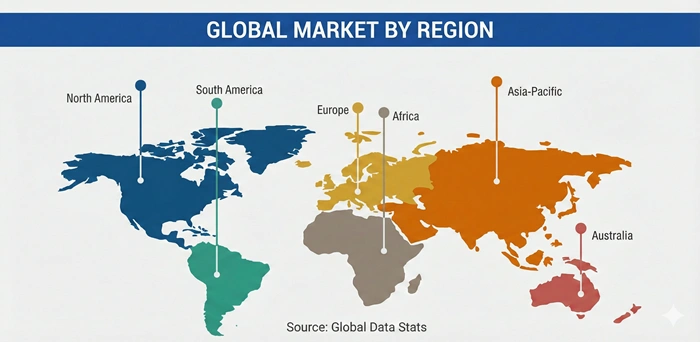
Asia-Pacific maintains commanding leadership in the global high-end greenhouse market with approximately 38% share, propelled by the region's massive agricultural sector modernization initiatives, substantial government investments in protected cultivation infrastructure, and enormous consumer markets creating robust demand for high-quality fresh produce. China dominates regional consumption through extensive greenhouse development programs supported by national agricultural policies promoting controlled environment food production as strategic priority for food security and rural economic development. The Chinese government provides substantial subsidies covering significant portions of greenhouse construction costs, offers preferential financing for agricultural technology investments, and implements technical training programs building farmer capacity to operate sophisticated greenhouse systems. India represents enormous growth potential as expanding middle class populations demand higher quality produce, limited arable land creates pressure for productivity improvements, and government agricultural modernization programs increasingly emphasize protected cultivation. Japan leads in greenhouse technology sophistication with advanced facilities incorporating cutting-edge automation, environmental controls, and quality assurance systems producing premium vegetables and fruits commanding top market prices.
The regional high-end greenhouse market exhibits projected CAGR around 6.8% through 2033 as adoption penetrates beyond early-adopter commercial operations into mainstream agricultural communities, government support programs continue directing resources toward controlled environment agriculture, and improving technology accessibility makes greenhouse cultivation viable for broader grower segments. Major companies serving Asia-Pacific markets including Dalsem, Van Der Hoeven, and domestic manufacturers like Chinese and Japanese greenhouse specialists maintain strong regional presence through local manufacturing facilities, extensive distribution networks, and technical support organizations providing installation and operational assistance. The market demonstrates unique characteristics including strong preference for plastic film greenhouses balancing cost considerations with functionality, growing adoption of hydroponic production systems maximizing space utilization, and increasing integration of renewable energy particularly solar power abundant in southern regions. Climate advantages including extended growing seasons, high solar radiation levels, and moderate winter temperatures in many areas reduce heating requirements improving greenhouse economics compared to northern regions with harsh winters and limited daylight.
North America
Technological Innovation and Premium Market Access Drive Rapid Regional Expansion
North America emerges as the fastest-growing regional market for high-end greenhouse facilities with projected CAGR around 7.8% through 2033, driven by advanced agricultural technology infrastructure, sophisticated supply chain networks, and strong consumer willingness to pay premium prices for locally produced, high-quality fresh produce. The United States dominates regional activity with extensive greenhouse development concentrated in southwestern states benefiting from abundant sunshine, northeastern regions serving dense urban populations, and innovative facilities emerging in diverse locations as improving technology economics enable profitable operations across varied climates. The region benefits from mature venture capital and private equity sectors actively investing in controlled environment agriculture ventures, providing capital access that accelerates technology adoption and business scaling compared to regions where agricultural financing remains conservative. Canada exhibits particularly strong growth in greenhouse horticulture as favorable electricity rates in some provinces support economical operations, government programs promote sustainable agriculture, and domestic consumers demonstrate strong preferences for Canadian-grown produce.
Leading companies operating in North America including Village Farms, AppHarvest, Revol Greens, and established players like Mastronardi Produce drive market innovation through substantial investments in advanced technologies, sophisticated branding and marketing programs, and strategic partnerships with major retailers securing reliable market access. The regional high-end greenhouse market demonstrates approximately 22.5% global market share characterized by emphasis on technology differentiation, automation adoption reducing high labor costs, and premium product positioning targeting quality-focused consumer segments willing to pay substantial price premiums for superior freshness and locally grown attributes. Market dynamics favor operations achieving scale sufficient to support dedicated sales teams, professional marketing capabilities, and distribution infrastructure required to serve major retail chains dominating North American food retail. Emerging opportunities include cannabis cultivation in jurisdictions permitting regulated production, medicinal and culinary herb production for premium markets, and specialty vegetable varieties targeting restaurant and gourmet food channels where pricing power justifies sophisticated greenhouse investments.
Top Key Players
-
Texas Greenhouse Company (United States)
-
Stuppy Inc (United States)
-
Rough Brothers Inc (United States)
-
Certhon (Netherlands)
-
Van Der Hoeven (Netherlands)
-
Dalsem (Netherlands)
-
Kubo Group (Netherlands)
-
Nexus Corporation (United States)
-
GGS Structures Inc (United States)
-
Ludy Greenhouse Manufacturing Corporation (United States)
-
Rimol Greenhouse Systems (United States)
-
Atlas Manufacturing Inc (United States)
-
Conley's Manufacturing and Sales (United States)
-
Palram Industries (Israel)
-
Haygrove Limited (United Kingdom)
Recent Developments
-
September 2024: Nature Fresh Farms launched a new trial collaboration with Koidra, an AI-powered automation specialist for controlled environment agriculture, aiming to improve greenhouse operations and increase productivity through integration of advanced technologies that optimize environmental management, resource utilization, and crop performance monitoring across the company's extensive North American greenhouse facilities.
-
September 2024: Windset Farms introduced a new greenhouse vegetable product line at the 2024 CPMA Convention and Trade Show following significant expansion at its Delta, British Columbia location, showcasing an array of premium products including Yum Yum's Cherry Tomatoes, Sweeties Seedless Mini Peppers, and Amore's Sweet Tomatoes on the Vine targeting quality-focused retail and foodservice markets.
-
March 2024: Cox Enterprises launched Cox Farms, one of the largest greenhouse growing operations in North America, incorporating BrightFarms and Mucci Farms with plans to continue pursuing additional ventures and investments in the indoor agriculture space supporting sustainable businesses and technologies that advance controlled environment food production capabilities across the continent.
-
March 2024: Mastronardi Produce launched a large-format greenhouse-grown Romaine Lettuce under its Backyard Farms lettuce line, expanding the company's leafy greens portfolio to complement its established tomato, pepper, and cucumber production while meeting growing retailer and consumer demand for premium locally grown salad vegetables available year-round.
-
February 2024: Hazera announced the acquisition of a new high-tech greenhouse facility next to their headquarters in the Netherlands, establishing the group's commitment to further market presence while elevating research capabilities and enhancing tomato varieties through improved resistance characteristics, quality attributes, yield potential, and commercial appeal for global greenhouse markets.
Market Trends
Integration of Renewable Energy and Circular Economy Principles Transform Greenhouse Operations
The high-end greenhouse market is experiencing fundamental transformation as renewable energy integration and circular economy approaches reshape operational models, reducing environmental footprints while improving long-term economic viability. Solar photovoltaic installations on greenhouse roofs and adjacent property are becoming standard features in new facility designs, with many operations generating substantial portions of their electricity requirements from onsite solar arrays that dramatically reduce utility costs while contributing to corporate sustainability goals and community environmental objectives. Geothermal heating and cooling systems tapping stable underground temperatures are increasingly incorporated in greenhouse designs as viable alternatives to natural gas furnaces and electric air conditioning, delivering efficient climate control at fraction of conventional energy costs. Rainwater harvesting systems collecting precipitation from greenhouse roofs and surrounding surfaces provide significant portions of irrigation water requirements, reducing municipal water consumption and improving drought resilience particularly valuable in water-scarce regions. These renewable energy and water conservation technologies are maturing from experimental installations to proven, economically justified investments that improve greenhouse profitability while demonstrating environmental stewardship.
Vertical integration and diversification strategies are emerging as high-end greenhouse operators expand beyond pure crop production into value-added processing, direct-to-consumer sales channels, and complementary business activities that capture additional value and improve overall enterprise profitability. Some greenhouse operations are establishing onsite processing facilities for washing, cutting, and packaging produce into ready-to-eat salads, vegetable trays, and meal kits that command substantial price premiums over bulk commodity products. Direct-to-consumer sales through farmers markets, community-supported agriculture subscriptions, and online ordering with home delivery enable greenhouse growers to bypass traditional wholesale channels, capturing retail margins while building direct customer relationships and brand loyalty. Agritourism activities including facility tours, educational programs, and farm-to-table dining experiences are generating ancillary revenue while building community connections and marketing value for greenhouse operations in suburban and rural locations. The high-end greenhouse market is evolving toward comprehensive agricultural enterprises that optimize revenue across multiple channels rather than relying solely on wholesale produce sales through traditional distribution systems.
Segments Covered in the Report
By Crop Type:
-
Vegetables
-
Tomatoes
-
Cucumbers
-
Peppers
-
Leafy Greens
-
Others
-
-
Fruits
-
Strawberries
-
Berries
-
Citrus
-
Others
-
-
Floriculture
-
Cut Flowers
-
Potted Plants
-
Bedding Plants
-
-
Others
-
Herbs
-
Medicinal Plants
-
By Application:
-
Commercial
-
Large-Scale Production
-
Specialty Crops
-
Research Facilities
-
-
Residential
-
Hobby Greenhouses
-
Premium Personal Growing
-
By Technology:
-
Automated Systems
-
Robotic Harvesting
-
Automated Seeding
-
Conveyor Systems
-
-
Climate Control Systems
-
HVAC Systems
-
Automated Ventilation
-
Shading Systems
-
-
Irrigation Systems
-
Drip Irrigation
-
Hydroponic Systems
-
Nutrient Delivery
-
-
LED Lighting
-
Supplemental Lighting
-
Spectrum Optimization
-
Energy-Efficient Systems
-
By Region:
-
North America
-
United States
-
Canada
-
Mexico
-
-
Europe
-
Netherlands
-
Spain
-
Germany
-
United Kingdom
-
France
-
Italy
-
Rest of Europe
-
-
Asia-Pacific
-
China
-
Japan
-
India
-
South Korea
-
Australia
-
Thailand
-
Rest of Asia-Pacific
-
-
Latin America
-
Brazil
-
Mexico
-
Rest of Latin America
-
-
Middle East and Africa
-
UAE
-
Saudi Arabia
-
Israel
-
South Africa
-
Rest of Middle East and Africa
-
Frequently Asked Questions
Question 1: What is the projected size of the high-end greenhouse market by 2033?
Answer: The global high-end greenhouse market is expected to reach approximately USD 3.78 billion by 2033, growing from USD 1.97 billion in 2026. This substantial expansion reflects increasing adoption of controlled environment agriculture, growing consumer demand for locally produced fresh produce, technological advancements making greenhouse operations more economically viable, and climate change pressures driving investment in weather-resilient food production systems.
Question 2: Which region currently dominates the high-end greenhouse market?
Answer: Asia-Pacific leads the global high-end greenhouse market with approximately 38% market share, driven by massive agricultural modernization initiatives in China, India, and Japan, substantial government subsidies supporting protected cultivation adoption, and enormous consumer populations creating robust demand for high-quality fresh vegetables and fruits. The region benefits from favorable climates, advanced technology manufacturing capabilities, and strong government commitment to food security through controlled environment agriculture development.
Question 3: What are the primary drivers of high-end greenhouse market growth?
Answer: The high-end greenhouse market growth is primarily driven by increasing consumer demand for year-round fresh produce availability, climate change impacts creating uncertainty for traditional outdoor agriculture, growing preferences for locally sourced pesticide-free foods, and improving greenhouse technology economics making controlled environment cultivation increasingly profitable. Government support programs, renewable energy integration reducing operating costs, and urban agriculture initiatives further accelerate market expansion across diverse applications and geographic regions.
Question 4: Which crop type holds the largest share in the high-end greenhouse market?
Answer: Vegetables represent the dominant crop type segment accounting for approximately 44.2% of the global high-end greenhouse market. This leadership reflects strong economic returns from greenhouse vegetable production, robust consumer demand for fresh tomatoes, cucumbers, peppers, and leafy greens throughout all seasons, and proven cultivation success across diverse climate zones. Greenhouse vegetables command premium pricing as locally grown, high-quality alternatives to imported or conventionally farmed products.
Question 5: What is the expected CAGR for the high-end greenhouse market from 2026 to 2033?
Answer: The high-end greenhouse market is projected to grow at a CAGR of 7.01% from 2026 to 2033. This robust growth rate reflects sustained expansion driven by agricultural technology advancement, increasing commercial adoption by large-scale growers, growing residential segment interest in personal greenhouse installations, and expanding recognition that controlled environment agriculture represents essential infrastructure for climate-resilient food production systems. Improving economics and technology accessibility support continued market penetration across developed and emerging markets.