
Hernia Repair Devices Market Overview
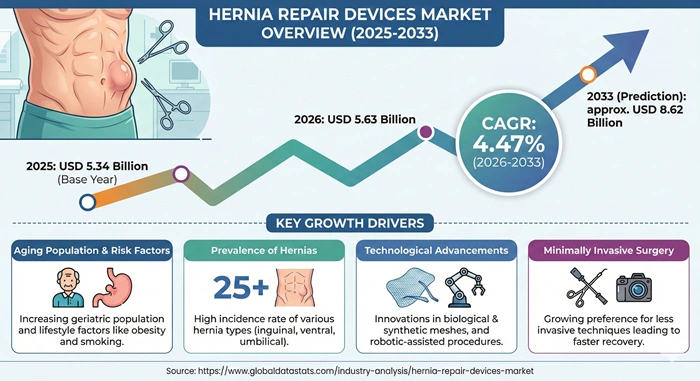
The global hernia repair devices market size is valued at USD 5.34 billion in 2025 and is predicted to increase from USD 5.63 billion in 2026 to approximately USD 8.62 billion by 2033, growing at a CAGR of 4.47% from 2026 to 2033.
Hernia repair devices encompass specialized medical equipment used during surgical procedures to repair weakened or torn tissue where internal organs protrude through the abdominal wall. These devices include synthetic and biologic meshes, fixation instruments such as tack applicators and suture devices, and laparoscopic instruments designed for minimally invasive procedures. Modern hernia repair solutions focus on providing long-term tensile strength, reducing infection risks, and minimizing recurrence rates through innovative materials and surgical techniques. The technology supports both open and laparoscopic surgical approaches, offering patients options for faster recovery times and improved clinical outcomes across various hernia types including inguinal, umbilical, incisional, and femoral hernias.
AI Impact on the Hernia Repair Devices Industry
Machine Learning Algorithms Enhancing Surgical Planning and Diagnostic Precision for Better Patient Outcomes
Artificial intelligence revolutionizes the hernia repair devices industry through enhanced surgical planning, improved diagnostic capabilities, and real-time intraoperative guidance. Machine learning algorithms analyze patient data including medical history, imaging results, and anatomical variations to recommend optimal mesh types and surgical approaches tailored to individual cases. AI-powered diagnostic tools process CT scans and ultrasound images with remarkable accuracy, identifying hernia locations and severity levels that might escape human observation during initial examinations. Predictive analytics assess infection risks and potential complications based on patient profiles, enabling surgeons to implement preventive measures before procedures begin. Computer vision systems integrated into laparoscopic equipment provide enhanced visualization during minimally invasive surgeries, automatically highlighting critical anatomical structures and mesh placement zones. These intelligent platforms deliver automated monitoring capabilities that track patient recovery patterns, alerting healthcare providers to potential complications requiring intervention.
The deployment of AI in hernia repair procedures generates real-time information about patients that dramatically improves surgical precision and reduces complication rates. Natural language processing systems analyze thousands of surgical reports and clinical studies, extracting best practices and evidence-based recommendations that surgeons access during pre-operative planning. Machine learning models trained on extensive surgical outcome data predict which mesh materials and fixation techniques will deliver optimal results for specific patient demographics and hernia classifications. Robotic-assisted surgery systems enhanced with AI capabilities provide surgeons with tremor filtration, motion scaling, and intelligent instrument guidance that surpass human dexterity limitations. The integration of AI throughout the hernia repair devices market creates comprehensive ecosystems where data flows seamlessly between diagnostic equipment, surgical platforms, and post-operative monitoring systems, establishing new standards for surgical excellence and patient safety in abdominal wall reconstruction procedures.
Growth Factors
Rising Geriatric Population and Obesity Epidemic Driving Unprecedented Demand for Surgical Interventions
The hernia repair devices market experiences substantial growth driven by demographic shifts including rapidly aging populations worldwide. Individuals over 55 years face significantly elevated hernia risks due to natural muscle deterioration and accumulated health conditions that weaken abdominal walls. Global life expectancy increases translate directly into larger patient populations requiring hernia repair interventions, with elderly patients particularly susceptible to inguinal and incisional hernias. The World Health Organization identifies inguinal hernia repair as a priority surgical treatment affecting 220 million people globally, resulting in over 40,000 annual fatalities and 3,500,000 disability-adjusted life years lost. More than 800,000 inguinal repair procedures occur annually in the United States alone according to FDA estimates, demonstrating massive surgical volumes. Comprehensive healthcare infrastructure improvements in developing markets expand access to hernia repair services previously unavailable to underserved populations, creating entirely new patient segments driving market expansion beyond traditional developed markets.
The obesity epidemic represents another critical growth driver as excess body weight creates extraordinary pressure on abdominal muscles. Obesity weakens tissue structures and dramatically increases hernia occurrence rates across all demographic categories, with particularly high incidence of umbilical hernias among overweight populations. Patients who fail to follow post-surgical lifestyle recommendations and continue heavy lifting activities face elevated recurrence risks, creating repeat procedure demand. Physical issues including excessive coughing, straining during urination, genetics, and physically demanding occupations contribute to hernia development, expanding addressable patient populations. The hernia repair devices market benefits from 20 million annual hernia repairs performed globally representing 15-18% of all surgical procedures, with volumes increasing steadily as awareness grows regarding timely intervention benefits. Healthcare system investments in surgical capabilities, training programs for minimally invasive techniques, and favorable reimbursement policies collectively reduce barriers to treatment access, accelerating adoption rates of advanced hernia repair devices across hospital systems and ambulatory surgical centers worldwide.

Market Outlook
Minimally Invasive Surgery Adoption and Advanced Mesh Innovations Creating Transformative Growth Opportunities
The hernia repair devices market demonstrates exceptional expansion potential supported by accelerating adoption of minimally invasive surgical techniques. Laparoscopic hernia repair procedures deliver compelling patient benefits including reduced post-operative pain, smaller incisions, faster recovery times, and significantly lower infection rates compared to traditional open surgery approaches. These advantages drive patient demand for minimally invasive options as awareness spreads regarding procedure availability and clinical outcomes. Hospitals and ambulatory surgical centers invest heavily in laparoscopic infrastructure and surgeon training programs recognizing that minimally invasive capabilities attract patients and generate competitive advantages. Robotic-assisted surgery systems extend minimally invasive benefits further through enhanced visualization, greater surgical precision, and reduced surgeon fatigue during complex procedures. The Hugo robotic-assisted surgery system successfully completed clinical studies demonstrating safety and effectiveness for hernia repair, expanding treatment options available to patients and surgeons. Healthcare systems increasingly support minimally invasive approaches through improved reimbursement frameworks recognizing shorter hospital stays and reduced complication rates that lower overall treatment costs.
Continuous innovation in mesh materials and design specifications positions the hernia repair devices market for sustained growth through 2033. Lightweight synthetic meshes offer improved patient comfort and reduced foreign body sensation compared to heavyweight alternatives while maintaining structural integrity preventing recurrence. Biologic and composite mesh technologies address complex cases including contaminated surgical fields where infection risks limit synthetic mesh viability. Absorbable mesh products featuring biodegradable polymers provide temporary support during tissue healing then dissolve naturally, eliminating long-term foreign material presence that concerns some patients and clinicians. Three-dimensional anatomically designed meshes conform precisely to individual patient anatomy, improving integration and reducing mechanical complications. Self-fixating mesh designs eliminate or reduce need for separate fixation devices including tacks and sutures, simplifying surgical procedures and potentially reducing operative times. The market benefits from major manufacturers including Medtronic, BD, Johnson & Johnson, and B. Braun investing substantially in research and development activities targeting next-generation products that balance strength, biocompatibility, and cost-effectiveness, ensuring continuous product evolution meeting evolving clinical requirements and patient expectations through forecast period.
Expert Speaks
-
Rajit Kamal, Vice President and General Manager of Robotic Surgical Technologies at Medtronic stated that adding a digitally-powered robotic-assisted surgery system to laparoscopic and open surgery solutions for hernia repair gives surgeons more choice and patients greater access to the care they need. He expressed gratitude for opportunities to partner with clinical teams treating this common and often painful condition affecting millions of patients worldwide.
-
Dr. Jacob Greenberg, National Principal Investigator of the Enable Hernia Repair Study and Gastrointestinal Surgeon at Duke University Hospital emphasized that the Enable Hernia Repair clinical study didn't just meet primary endpoints, it far surpassed them. He expressed pride in having the opportunity to advance clinical research in robotic-assisted surgery for the benefit of patients in the United States and around the world.
-
Dr. David Chen, General Surgeon at UCLA and Lead Presenter of the Enable Hernia Repair Data noted that the addition of the Hugo platform introduces exciting new opportunities to innovate and advance robotics in the best interests of patients, surgeons, and hospital systems while clearly offering the clinical results expected from robotic-assisted surgery.
Key Report Takeaways
-
North America dominates the hernia repair devices market with 51% revenue share in 2025, attributed to extensive treatment research and development activities, higher adoption rates of new technologies, advanced healthcare infrastructure, presence of major industry players, and favorable reimbursement policies supporting innovative surgical solutions
-
Asia Pacific represents the fastest-growing regional market during forecast period with CAGR exceeding 11%, propelled by increasing hernia cases across China, India, Japan, and South Korea, government healthcare reforms, expanding medical tourism, rising surgical infrastructure investments, and growing awareness about minimally invasive treatment options
-
Hernia mesh segment leads product category with 77% revenue share in 2025, driven by capacity to provide long-term tensile strength preventing recurrence, increased infection resistance, high availability, ease of raw material access, and affordability making synthetic mesh dominant choice across surgical settings globally
-
Open surgery procedure type captures 77% revenue share in 2025 and expected to maintain dominance through forecast period, attributed to advantages including low cost, reduced post-operative complications, prevention of hernia recurrence, affordable operations, and widespread surgeon familiarity with technique despite available alternatives
-
Inguinal hernia segment accounts for 67% revenue share in 2025 due to patient acceptability of tension-free repair techniques, widespread use of these surgical procedures, and high incidence rates with over 800,000 inguinal repair procedures performed annually in the United States alone
-
Laparoscopic surgery segment demonstrates fastest revenue growth during forecast period reaching 49.6% market share, driven by minimally invasive benefits including short hospital stays, speedier healing, smaller incisions, lower infection rates, and improved reimbursement frameworks supporting adoption
Market Scope
| Report Coverage | Details |
|---|---|
| Market Size by 2033 | USD 8.62 Billion |
| Market Size by 2025 | USD 5.34 Billion |
| Market Size by 2026 | USD 5.63 Billion |
| Market Growth Rate from 2026 to 2033 | CAGR of 4.47% |
| Dominating Region | North America |
| Fastest Growing Region | Asia Pacific |
| Base Year | 2025 |
| Forecast Period | 2026 to 2033 |
| Segments Covered | Product Type, Procedure Type, Surgery Type, Hernia Type, End User, Region |
| Regions Covered | North America, Europe, Asia Pacific, Latin America, Middle East & Africa |
Market Dynamics
Drivers Impact Analysis
Technological Advancements in Minimally Invasive Procedures and Favorable Reimbursement Policies Accelerating Market Expansion
| Impact Factor | ≈ % Impact on CAGR Forecast | Geographic Relevance | Impact Timeline |
|---|---|---|---|
| Aging population and muscle deterioration | 1.2-1.5% | Global, particularly developed markets | 2026-2033 |
| Rising obesity rates and lifestyle factors | 0.9-1.2% | North America, Europe, emerging markets | 2026-2033 |
| Minimally invasive surgery adoption | 0.8-1.0% | Developed markets with advanced infrastructure | 2026-2033 |
| Favorable reimbursement frameworks | 0.6-0.8% | North America, Europe, select Asia Pacific | 2026-2033 |
The hernia repair devices market benefits enormously from increasing prevalence of hernia conditions worldwide driven by demographic and lifestyle factors. Over 20 million hernia operations occur annually representing 15-18% of all surgical procedures globally, demonstrating massive market scale and consistent demand. The aging population experiences naturally occurring muscle deterioration making individuals over 55 years significantly more susceptible to hernias requiring surgical intervention. Clinical studies confirm that physical issues including obesity, excessive coughing, straining during urination, genetics, and physically demanding tasks like heavy lifting cause hernias, expanding patient populations across diverse demographic segments. The rising frequency of hernias fuels demand for effective repair tools as healthcare providers recognize that untreated hernias lead to serious complications including organ strangulation and tissue death. Med-tech companies expand R&D spending on new tools and solutions addressing high patient morbidity linked to hernias, with manufacturers creating effective hernia mesh, biologic materials, and endoscopy equipment enhancing medical outcomes.
Technological innovations in minimally invasive surgical techniques fundamentally transform the hernia repair devices market by offering patients less invasive procedures with faster recovery times. Laparoscopic surgery eliminates need for large abdominal incisions, utilizing small ports through which specialized instruments and cameras access surgical sites. These minimally invasive approaches deliver substantial benefits including reduced post-operative pain, lower infection rates, shorter hospital stays, and quicker return to normal activities compared to open surgery. Patient demand for minimally invasive procedures drives surgical technique evolution as consumers increasingly prioritize reduced invasiveness, faster recovery, and improved cosmetic outcomes. The hernia repair devices market growth accelerates as healthcare systems invest in laparoscopic infrastructure and training programs recognizing that minimally invasive capabilities attract patient volumes and improve institutional reputations. Favorable reimbursement policies in developed markets support advanced surgical approaches, with insurance providers recognizing that shorter hospital stays and fewer complications reduce overall treatment costs despite potentially higher initial procedure expenses, creating economic incentives that accelerate minimally invasive technique adoption across hospital systems and ambulatory surgical centers.
Restraints Impact Analysis
Stringent Regulatory Requirements and High Development Costs Limiting Market Accessibility
| Impact Factor | ≈ % Impact on CAGR Forecast | Geographic Relevance | Impact Timeline |
|---|---|---|---|
| Strict regulatory approval processes | -0.8 to -1.0% | Global, particularly stringent in developed markets | 2026-2033 |
| High R&D and development costs | -0.6 to -0.8% | Global impact on pricing and accessibility | 2026-2033 |
| Mesh-related complications and legal concerns | -0.5 to -0.7% | Primarily North America and Europe | 2026-2033 |
The hernia repair devices market faces significant constraints related to stringent regulatory approval procedures that delay product commercialization. Before releasing hernia repair devices, manufacturers must meet extensive clinical and regulatory conditions imposed by agencies including FDA, EMA, and other regional health authorities. These regulatory bodies demand comprehensive clinical data demonstrating safety and effectiveness through rigorous testing protocols spanning years before granting market approval. Post-market surveillance requirements have intensified following concerns about mesh-related complications, with agencies mandating ongoing monitoring and data transparency regarding long-term outcomes. Medical equipment manufacturers maintain high initial costs for hernia repair devices due to lengthy development and approval phases consuming substantial financial resources. High product costs prevent patients from accessing numerous technological breakthroughs particularly in price-sensitive markets and developing regions, hindering adoption of advanced solutions. The regulatory landscape complexity increases as manufacturers pursue global distribution, with different approval pathways and requirements across geographic markets creating redundant testing and documentation burdens.
Concerns about mesh-related complications including chronic pain, infection, mesh erosion, and adhesion formation pose challenges restraining market growth. These complications have resulted in significant legal liabilities and patient apprehensions, with lawsuits against mesh manufacturers creating negative publicity affecting patient and physician confidence. Safety issues have prompted broad regulatory responses demanding enhanced biocompatibility evaluation and more transparent reporting of adverse events. Some patients and healthcare providers exhibit hesitancy adopting mesh-based repairs despite clinical evidence supporting their effectiveness, preferring primary tissue repair techniques avoiding foreign materials. The hernia repair devices market must address these perception challenges through continued innovation in mesh materials, enhanced surgeon training emphasizing proper implantation techniques, and comprehensive patient education explaining risk-benefit profiles. Inconsistent reimbursement across countries and payers creates additional barriers particularly for advanced laparoscopic or robotic-assisted hernia repair in cost-sensitive healthcare settings. Minimal invasive techniques require highly skilled surgeons limiting adoption in rural or underdeveloped regions lacking access to specialized training programs and advanced surgical infrastructure, creating geographic disparities in treatment availability.
Opportunities Impact Analysis
Biologic Mesh Development and Emerging Market Expansion Creating Substantial Growth Avenues
| Impact Factor | ≈ % Impact on CAGR Forecast | Geographic Relevance | Impact Timeline |
|---|---|---|---|
| Advanced biologic and composite mesh adoption | +0.7 to +0.9% | Global, premium segment in developed markets | 2026-2033 |
| Emerging market healthcare infrastructure | +0.6 to +0.8% | Asia Pacific, Latin America, Middle East & Africa | 2026-2033 |
| Robotic-assisted surgery expansion | +0.5 to +0.7% | Developed markets with advanced capabilities | 2026-2033 |
The hernia repair devices market presents substantial opportunities through development and adoption of advanced biologic mesh materials. Biologic materials derived from human or animal tissues offer advantages including improved tissue integration, reduced rejection risk, and lower infection potential compared to synthetic alternatives in contaminated surgical fields. These materials demonstrate particular value in complex cases involving infected wounds, multiple previous surgeries, or immunocompromised patients where synthetic mesh presents elevated complication risks. Biosynthetic and reinforced biologic meshes represent premium market segments commanding higher price points while delivering clinical benefits that justify costs for appropriate patient populations. Early and mid-term clinical evidence suggests these options lower recurrence rates and surgical-site complications, building physician confidence driving adoption. Manufacturers invest substantially in material science research developing reinforced biologics and bioresorbable products with improved mechanical properties, creating continuous product evolution. The market benefits from growing recognition that mesh selection should reflect individual patient characteristics and surgical conditions rather than universal approaches, expanding opportunities for specialized products addressing specific clinical scenarios and patient needs.
Emerging markets in Asia Pacific, Latin America, and Middle East & Africa regions offer explosive growth potential as healthcare infrastructure develops. These regions experience increasing hernia cases combined with rising healthcare expenditure and improved access to modern medical technologies. Countries including China, India, Japan, South Korea, Brazil, Mexico, UAE, and Saudi Arabia witness surging demand for advanced surgical meshes and laparoscopic instruments as patient populations seek minimally invasive options. Government healthcare reforms and initiatives aimed at developing surgical capabilities expand treatment availability previously limited to major urban centers. Medical tourism flourishes in select markets offering high-quality surgical care at competitive prices, attracting international patients and driving device demand. The hernia repair devices market benefits from expanding middle-class populations with growing disposable incomes and health insurance coverage, reducing financial barriers to elective procedures. Local and international companies actively invest in market expansion strategies including partnerships with regional hospitals, establishment of distribution networks, and adaptation of product portfolios addressing local clinical practices and economic conditions, collectively creating comprehensive ecosystems supporting sustained regional market growth through forecast period.
Segment Analysis
Product Type - Hernia Mesh Segment
Synthetic and Biologic Mesh Dominance Driven by Long-Term Strength and Infection Resistance
The hernia mesh segment commands the hernia repair devices market with dominant 77% revenue share in 2025, reflecting widespread adoption across surgical settings globally. This category encompasses synthetic meshes manufactured from polypropylene or polyester materials and biologic meshes derived from human or animal tissues, both designed to reinforce weakened abdominal walls and prevent hernia recurrence. Synthetic meshes dominate within this segment due to high availability, ease of raw material access, excellent cost-effectiveness, and proven durability delivering long-term tensile strength. These products resist infection more effectively than primary tissue repairs while providing mechanical support that dramatically reduces recurrence rates compared to non-mesh techniques. Lightweight synthetic mesh innovations offer improved patient comfort and reduced foreign body sensation while maintaining structural integrity, addressing historical concerns about heavyweight mesh complications. The segment benefits from decades of clinical experience and extensive evidence bases supporting mesh-based repair as gold standard for most hernia types.
Biologic mesh represents fastest-growing subsegment driven by increasing demand for biocompatible and natural hernia repair options. These materials demonstrate particular value in contaminated surgical fields or patients with infection risks where synthetic alternatives present elevated complication potential. Compared to synthetic meshes, biologic materials offer improved tissue integration and lower rejection risk, though higher costs limit adoption to appropriate clinical scenarios justifying premium pricing. The hernia repair devices market in this segment demonstrates particularly strong performance in North America and Europe where advanced healthcare systems support premium product adoption. Leading manufacturers including Medtronic, Johnson & Johnson, BD, B. Braun, and W.L. Gore & Associates dominate through extensive product portfolios, continuous R&D investments, and strong relationships with surgical communities. Regional growth concentrates in Asia Pacific markets where China, India, and Japan experience rapid healthcare infrastructure expansion and increasing adoption of mesh-based repair techniques, with projected CAGR exceeding 11% reflecting massive untapped market potential as surgical volumes increase and minimally invasive capabilities expand across hospital networks.
Procedure Type - Laparoscopic Surgery Segment
Minimally Invasive Benefits and Superior Clinical Outcomes Driving Rapid Segment Expansion
The laparoscopic surgery segment achieves 49.6% market share in 2025 and demonstrates fastest growth trajectory among procedure types. This minimally invasive approach utilizes small incisions through which surgeons insert specialized cameras and instruments, providing enhanced surgical field visualization compared to open techniques. Laparoscopic hernia repair delivers compelling patient benefits including significantly reduced post-operative pain, smaller incisions producing better cosmetic results, faster recovery enabling quicker return to normal activities, shorter hospital stays reducing costs, and lower infection rates improving safety profiles. These advantages drive strong patient demand as awareness spreads regarding procedure availability and clinical outcomes. Surgeons increasingly prefer laparoscopic approaches for inguinal, ventral, and incisional hernias particularly as surgical skill and instrument sophistication advance. The technique allows concurrent bilateral hernia repairs in single settings, improving efficiency for patients requiring multiple repairs. Enhanced views of surgical fields reduce complication rates compared to open alternatives, building physician confidence in outcomes.
Healthcare systems invest substantially in laparoscopic infrastructure including specialized equipment, surgeon training programs, and facility certifications recognizing competitive advantages these capabilities provide. Improved reimbursement frameworks in developed markets support adoption as insurance providers recognize that shorter hospital stays and fewer complications reduce overall treatment costs despite potentially higher initial procedure expenses. The hernia repair devices market benefits from this segment growth through increased demand for specialized laparoscopic instruments, mesh products designed for minimally invasive placement, and fixation devices optimized for laparoscopic applications. Regional performance demonstrates particular strength in North America and Europe where advanced surgical capabilities and supportive reimbursement policies accelerate adoption. Asia Pacific markets including South Korea, Japan, and urban centers in China experience rapid laparoscopic technique implementation supported by government healthcare investments and growing patient preference for minimally invasive options. Leading device manufacturers including Medtronic, Ethicon, and B. Braun develop comprehensive laparoscopic product portfolios addressing diverse hernia types and surgical approaches, with continued innovation in mesh handling characteristics, fixation mechanisms, and instrument ergonomics supporting sustained segment expansion through forecast period.
Regional Insights
North America
Advanced Healthcare Infrastructure and Favorable Reimbursement Establishing Regional Market Leadership
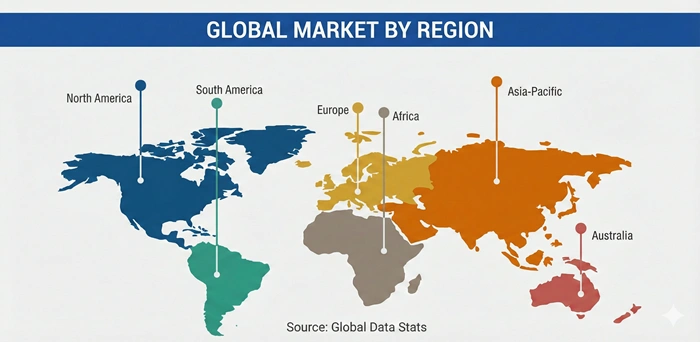
North America dominates the hernia repair devices market with commanding 51% revenue share in 2025, demonstrating established market leadership. The region's dominance stems from extensive treatment research and development activities conducted by leading medical institutions and device manufacturers headquartered in the United States and Canada. Advanced healthcare infrastructure provides widespread access to sophisticated surgical capabilities including laparoscopic and robotic-assisted platforms across hospital systems and ambulatory surgical centers. Higher adoption rates of new technologies reflect cultural acceptance of medical innovation and physician willingness to implement novel surgical approaches when clinical evidence supports benefits. The United States performs over 800,000 inguinal hernia repairs annually demonstrating massive surgical volumes generating consistent device demand. Favorable reimbursement policies from Medicare and private insurance payers support advanced hernia repair procedures, reducing financial barriers to optimal treatment selection. The region benefits from presence of major industry players including Medtronic, BD, Johnson & Johnson, and numerous specialized manufacturers maintaining headquarters, R&D facilities, and manufacturing operations supporting rapid innovation cycles.
The U.S. hernia repair devices market specifically achieves USD 2.01 billion valuation in 2025 with expectations to reach USD 3.36 billion by 2035, growing at 5.26% CAGR. This growth reflects continued investment in surgical innovation including robotic-assisted systems like Medtronic's Hugo platform successfully completing clinical studies demonstrating safety and effectiveness for hernia repair procedures. Regulatory environment supports innovation through established FDA pathways balancing patient safety with timely access to beneficial technologies. Healthcare providers prioritize minimally invasive approaches recognizing patient preference for reduced invasiveness and faster recovery, driving laparoscopic and robotic surgery adoption. The hernia repair devices market in North America benefits from comprehensive medical education infrastructure training surgeons in advanced techniques and facilitating rapid dissemination of best practices. Regional manufacturers maintain strong relationships with surgical communities through educational programs, clinical support, and collaborative research initiatives. Market maturity in North America positions the region for steady sustained growth rather than explosive expansion, with innovation focused on incremental improvements in mesh materials, fixation devices, and surgical instruments optimizing outcomes and efficiency rather than fundamental technique transformation.
Asia Pacific
Rapidly Expanding Healthcare Access and Rising Hernia Incidence Driving Exceptional Regional Growth
Asia Pacific represents the fastest-growing regional market during forecast period with CAGR exceeding 11%, demonstrating exceptional expansion potential. This remarkable growth stems from increasing hernia cases across major markets including China, India, Japan, South Korea, and Singapore driven by aging populations and lifestyle factors. The region's vast population base particularly in China and India creates enormous patient volumes as healthcare access expands beyond traditional urban centers. Government healthcare reforms prioritize surgical capability development through infrastructure investments, training programs, and equipment procurement supporting modern hernia repair techniques. Rising healthcare expenditure reflects economic development and expanding middle-class populations with growing disposable incomes and health insurance coverage. Medical tourism flourishes in select markets offering high-quality surgical care at competitive international pricing, attracting patients from developed markets and generating additional device demand. The adoption of minimally invasive surgical procedures accelerates as laparoscopic equipment becomes more widely available and surgeon training programs expand.
Regional market dynamics reflect strong presence of both international manufacturers and domestic companies. Leading global players including Medtronic, Johnson & Johnson, BD, and B. Braun establish local operations through subsidiaries, partnerships, and distribution agreements recognizing massive growth potential. Domestic manufacturers including Meril Life Sciences in India, Sinolinks Medical Innovation in China, and Samyang Holdings Corporation in South Korea develop competitive product offerings tailored to local clinical practices and economic conditions. China operates as major manufacturing hub producing hernia repair devices for both domestic consumption and export to international markets, with growing capabilities in mesh production and surgical instrument fabrication. The hernia repair devices market benefits from government initiatives aimed at developing healthcare sector including surgical center construction, equipment subsidies, and medical education investments. Japan and South Korea demonstrate particular strength in advanced surgical technique adoption including robotic-assisted systems and premium mesh products reflecting developed healthcare systems and higher per-capita incomes. Growing awareness about minimally invasive surgery benefits and increasing affordability through competitive pricing drive sustained demand expansion positioning Asia Pacific as critical growth engine for global market through forecast period.
Top Key Players
-
Medtronic plc (Ireland)
-
BD (Becton, Dickinson and Company) (United States)
-
Ethicon Inc. (Johnson & Johnson) (United States)
-
B. Braun Melsungen AG (Germany)
-
W.L. Gore & Associates (United States)
-
C.R. Bard Inc. (United States)
-
Cook Medical (United States)
-
Atrium Medical Corporation (United States)
-
LifeCell Corporation (United States)
-
Baxter International Inc. (United States)
-
Herniamesh S.r.l. (Italy)
-
Integra LifeSciences Corporation (United States)
-
Meril Life Sciences (India)
-
Sinolinks Medical Innovation Inc. (China)
-
Samyang Holdings Corporation (South Korea)
Recent Developments
-
2025 - Medtronic plc announced successful completion of Enable Hernia Repair clinical study in September, demonstrating that Hugo robotic-assisted surgery system met primary safety and effectiveness endpoints for inguinal and ventral hernia repair procedures, marking first-ever IDE clinical study completed for robotic-assisted hernia surgery in United States
-
2025 - TELA Bio launched OviTex in Europe during June, introducing innovative hernia repair device specifically designed for enhancing laparoscopic inguinal hernia repair procedures, expanding company's international market presence and product portfolio for minimally invasive surgical applications
-
2025 - BD launched Phasix ST Umbilical Hernia Patch in April, introducing specialized hernia patch designed specifically for treating patients suffering from umbilical hernias, expanding company's product line addressing diverse hernia types with targeted solutions
-
2025 - Medtronic plc rolled out AI-guided visualization integration with hernia repair robotic platform in January, incorporating artificial intelligence capabilities enhancing surgical precision through advanced imaging and real-time guidance during robotic-assisted procedures
-
2024 - RTI Surgical completed acquisition of Cook Biotech in January, strengthening position in surgical and regenerative medicine markets through expanded portfolio of biologic and synthetic products, enhancing ability to provide innovative solutions for hernia repair and wound management procedures
Market Trends
Patient-Centric Solutions and Material Science Innovations Reshaping Treatment Paradigms
The hernia repair devices market demonstrates accelerating shift toward patient-centric solutions addressing critical needs for safer post-operative outcomes. Growing emphasis on biosynthetic and reinforced biologic meshes reflects clinical evidence suggesting these options lower recurrence rates and surgical-site complications compared to traditional synthetic alternatives in appropriate cases. Early and mid-term clinical data build physician confidence in biologic materials, establishing premium market segments where superior outcomes justify higher costs. Bioabsorbable mesh products featuring advanced polymers provide temporary support during tissue healing then naturally dissolve, eliminating long-term foreign material presence addressing patient concerns about permanent implants. Three-dimensional anatomically designed meshes represent significant innovation conforming precisely to individual patient anatomy, improving integration and reducing mechanical complications. Self-fixating mesh technologies eliminate or reduce separate fixation device requirements including tacks and sutures, simplifying surgical procedures and potentially reducing operative times. Material science remains critical field shaping long-term market trajectory as manufacturers invest in polymer research, coating technologies, and composite structures that balance strength, biocompatibility, flexibility, and cost-effectiveness.
Digital transformation accelerates across the hernia repair devices market through integration of smart technologies and data-driven surgical planning. AI-powered surgical navigation systems provide real-time risk prediction models analyzing patient data and intraoperative parameters to alert surgeons about potential complications. Robotic-assisted surgery platforms expand beyond initial adopters as costs decline and clinical evidence accumulates demonstrating benefits including reduced surgeon fatigue, enhanced precision, and improved visualization. Digital surgical tracking systems integrated with mesh portfolios enable comprehensive monitoring from device implantation through long-term follow-up, creating data ecosystems supporting continuous quality improvement. Telemedicine consultations for pre and post-operative care increase accessibility particularly for patients in rural areas lacking proximity to specialized surgical centers. Surgical training programs evolve incorporating virtual reality simulators and AI-enhanced educational platforms accelerating skill development and technique standardization. These technological trends position the hernia repair devices market for continued transformation beyond traditional product innovation, encompassing comprehensive surgical ecosystems integrating devices, platforms, and data analytics delivering optimized patient outcomes while improving surgical efficiency and safety throughout forecast period.
Segments Covered in the Report
By Product Type
-
Hernia Mesh (Synthetic Mesh, Biologic Mesh, Composite Mesh)
-
Hernia Fixation Devices (Sutures, Tack Applicators, Glue Applicators)
-
Endoscopy Instruments
-
Surgical Instruments
-
Other Products
By Procedure Type
-
Open Surgery (Open Tension Repair, Tension-Free Repair)
-
Laparoscopic Surgery
-
Robotic-Assisted Surgery
-
Other Procedures
By Surgery Type
-
Inguinal Hernia
-
Umbilical Hernia
-
Incisional Hernia
-
Femoral Hernia
-
Hiatal Hernia
-
Epigastric Hernia
-
Spigelian Hernia
-
Others
By Hernia Type
-
Primary Hernia
-
Recurrent Hernia
By End User
-
Hospitals
-
Ambulatory Surgical Centers
-
Specialty Clinics
-
Others
By Region
-
North America (United States, Canada, Mexico)
-
Europe (Germany, United Kingdom, France, Italy, Spain, Netherlands)
-
Asia Pacific (China, Japan, India, South Korea, Singapore, Australia)
-
Latin America (Brazil, Argentina, Venezuela)
-
Middle East & Africa (UAE, Saudi Arabia, Qatar, South Africa, Bahrain)
Frequently Asked Questions
Question 1: What is the projected hernia repair devices market size by 2033?
Answer: The global hernia repair devices market is expected to reach approximately USD 8.62 billion by 2033. This growth reflects increasing hernia prevalence, rising adoption of minimally invasive procedures, and continuous innovations in mesh materials and fixation technologies.
Question 2: Which region dominates the hernia repair devices market currently?
Answer: North America leads the hernia repair devices market with 51% revenue share in 2025. The region benefits from advanced healthcare infrastructure, extensive R&D activities, favorable reimbursement policies, and presence of major industry players.
Question 3: What drives growth in the hernia repair devices market?
Answer: Key hernia repair devices market drivers include aging population with natural muscle deterioration, rising obesity rates, increasing adoption of minimally invasive laparoscopic procedures, technological innovations in mesh materials, and favorable reimbursement frameworks. Growing awareness about timely hernia treatment also accelerates demand.
Question 4: Which product type leads the hernia repair devices market?
Answer: Hernia mesh dominates with 77% revenue share in 2025, including both synthetic and biologic variants. This segment leads due to capacity providing long-term tensile strength, increased infection resistance, high availability, and proven effectiveness preventing hernia recurrence.
Question 5: What are major challenges facing the hernia repair devices market?
Answer: Key hernia repair devices market challenges include stringent regulatory approval processes, high R&D costs maintaining elevated product prices, concerns about mesh-related complications including chronic pain and infection, and inconsistent reimbursement particularly in cost-sensitive markets. Legal liabilities from mesh complications also impact market dynamics.