
Heparin Market Overview
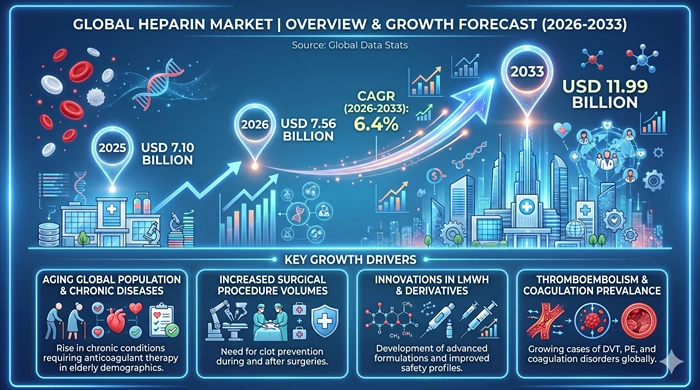
The global heparin market size is valued at USD 7.10 billion in 2025 and is predicted to increase from USD 7.56 billion in 2026 to approximately USD 11.99 billion by 2033, growing at a CAGR of 6.4% from 2026 to 2033.
The heparin market continues to hold a critical position within the global pharmaceutical and anticoagulant landscape. As one of the oldest and most extensively used anticoagulants worldwide, heparin remains indispensable across cardiovascular surgery, deep vein thrombosis management, hemodialysis, and oncology-associated thrombosis. Growing disease burden, expanding surgical volumes, and the continued rise of low molecular weight heparin (LMWH) formulations are collectively sustaining strong demand globally.
AI Impact on the Heparin Industry
Artificial Intelligence Is Reshaping Heparin Dosing Protocols, Supply Chain Traceability, and Quality Control Across Global Pharmaceutical Manufacturing Operations
Artificial intelligence is beginning to redefine several critical dimensions of the heparin industry, most notably in clinical dosing optimization and manufacturing quality control. AI-powered clinical decision support tools now assist physicians in calculating patient-specific heparin dosing regimens by analyzing body weight, renal function, coagulation parameters, and drug interaction profiles in real time. This reduces the incidence of heparin-induced thrombocytopenia (HIT) and bleeding complications — two of the most serious risks associated with heparin therapy — and is gradually being adopted across high-volume hospital settings in North America and Europe.
On the production side, machine learning models are being applied to monitor porcine intestinal mucosa processing lines for contamination detection and batch consistency, a capability that gained enormous clinical relevance following the global heparin contamination crisis of the late 2000s. AI-driven traceability systems are also helping pharmaceutical manufacturers map their raw material supply chains with greater precision, providing real-time visibility into sourcing from Chinese API producers. These advancements are improving both regulatory compliance and supply chain resilience, which are increasingly important differentiators for companies competing in this market.
Growth Factors
Rising Cardiovascular and Thromboembolic Disease Burden, Expanding Surgical Volumes, and Growing Hemodialysis Patient Populations Are the Dominant Forces Driving the Heparin Market Forward
The central growth driver for the heparin market is the accelerating global prevalence of cardiovascular conditions — including deep vein thrombosis, pulmonary embolism, atrial fibrillation, and coronary artery disease — that collectively create an enormous and expanding patient base requiring anticoagulation therapy. As populations age in North America, Europe, and East Asia, and as lifestyle-driven risk factors such as obesity, diabetes, and sedentary behavior become more prevalent in developing regions, the clinical demand for heparin-based therapies continues to broaden well beyond traditional hospital settings.
The growth of the dialysis population is another powerful catalyst. End-stage renal disease (ESRD) rates are rising sharply worldwide, with millions of patients now requiring regular hemodialysis — a procedure that relies on unfractionated heparin as the primary circuit anticoagulant. Simultaneously, the increasing frequency of complex surgical procedures including cardiovascular bypass surgeries, orthopedic joint replacements, and oncological resections has driven up perioperative heparin use. The expanding adoption of LMWH formulations — which offer more predictable pharmacokinetics than unfractionated heparin and can be used in outpatient settings — has also significantly extended the addressable patient population for heparin-based anticoagulation.
Market Outlook
Sustained Demand From Cardiovascular, Renal, and Oncological Indications, Combined With Biosynthetic Innovation, Positions the Heparin Market for Robust Long-Term Expansion Through 2033
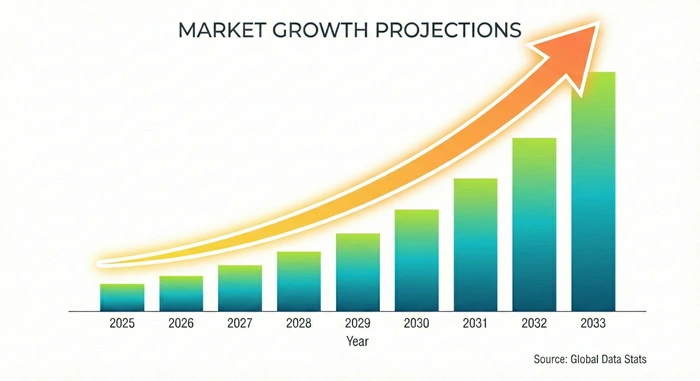
The long-term outlook for the heparin market through 2033 is shaped by a combination of steady baseline demand growth and incremental innovation in formulation technology. Demand from established indications — DVT prophylaxis, hemodialysis anticoagulation, and cardiovascular surgery — will continue to generate reliable volume, while emerging applications in cancer-associated thrombosis and novel drug delivery systems will progressively open new market segments. Regulatory agencies in the United States, European Union, and China are also tightening quality standards for heparin API manufacturing, which is expected to elevate market concentration among manufacturers capable of meeting these elevated compliance requirements.
Geographic expansion into Asia-Pacific, Latin America, and the Middle East will be an increasingly important contributor to market growth over the forecast period. India's domestic pharmaceutical sector is actively building heparin API production capacity, while China continues to expand its global export footprint despite heightened scrutiny over quality control. The biosynthetic heparin segment — including recombinant and microbially derived alternatives — is gaining clinical interest as a potential long-term solution to the supply chain vulnerabilities associated with animal-sourced raw materials. With a healthy pipeline of novel LMWH products, expanding global disease awareness, and improving healthcare access in emerging markets, the heparin market is well-positioned for consistent value creation through 2033.
Expert Speaks
-
Albert Bourla, CEO, Pfizer Inc. — "Heparin and low molecular weight heparin products remain foundational elements of our hospital portfolio. We continue to invest in ensuring reliable supply and clinical innovation across this critical therapeutic class, particularly as cardiovascular disease rates continue to climb globally."
-
Chris Boerner, CEO, Bristol-Myers Squibb — "Anticoagulation therapy is evolving, but established drugs like heparin continue to serve an irreplaceable role in acute and procedural care settings worldwide. Our focus remains on helping healthcare systems maintain consistent access to these essential medicines while advancing next-generation anticoagulant solutions."
-
Paul Hudson, CEO, Sanofi — "Lovenox has been a flagship product for Sanofi for decades, and the demand for LMWH therapies remains strong globally. We are committed to supporting broad patient access to high-quality heparin formulations, especially in emerging markets where cardiovascular healthcare infrastructure is rapidly developing."
Key Report Takeaways
-
North America leads the heparin market, holding approximately 38% of global revenue in 2025, driven by high cardiovascular disease prevalence, a well-established hospital anticoagulation ecosystem, and comprehensive insurance reimbursement for both unfractionated heparin and LMWH formulations
-
Asia-Pacific is the fastest-growing region, projected to grow at a CAGR of over 8.2% through 2033, driven by a rising ESRD and cardiovascular disease burden in China, India, Japan, and Southeast Asia, alongside rapidly expanding healthcare infrastructure and increasing government health insurance coverage
-
Hospitals are the dominant end-user segment, accounting for the largest share of heparin consumption globally due to its critical role in in-patient cardiovascular surgery, hemodialysis circuits, and post-surgical DVT prophylaxis in tertiary care settings
-
Low molecular weight heparin (LMWH) holds the leading product type share, capturing approximately 63% of total product revenue in 2025, supported by its predictable pharmacokinetic profile, subcutaneous administration convenience, and growing adoption in outpatient DVT and pulmonary embolism management
-
Deep vein thrombosis treatment and prophylaxis is the top application segment, contributing nearly 46% of application-based revenue in 2025, reflecting the widespread clinical use of heparin in managing the most common thromboembolic condition in hospitalized patients
-
Biosynthetic and recombinant heparin represents the fastest-growing future segment, with an estimated CAGR of 9.1% through 2033 and projected to reach approximately 12% market share by 2033, driven by growing pharmaceutical interest in animal-source-independent manufacturing solutions that offer improved purity and regulatory compliance
Market Scope
| Report Coverage | Details |
|---|---|
| Market Size by 2033 | USD 11.99 Billion |
| Market Size by 2025 | USD 7.10 Billion |
| Market Size by 2026 | USD 7.56 Billion |
| Market Growth Rate (2026–2033) | CAGR of 6.4% |
| Dominating Region | North America |
| Fastest Growing Region | Asia-Pacific |
| Base Year | 2025 |
| Forecast Period | 2026 – 2033 |
| Segments Covered | Product Type, Source, Dosage Form, Application, End User |
| Regions Covered | North America, Europe, Asia-Pacific, Latin America, Middle East & Africa |
Market Dynamics
Drivers Impact Analysis
Growing Surgical Volumes, Rising ESRD-Linked Dialysis Demand, and Expanding LMWH Adoption in Outpatient Settings Are the Core Forces Sustaining Heparin Market Growth
| Driver | ≈ % Impact on CAGR Forecast | Geographic Relevance | Impact Timeline |
|---|---|---|---|
| Rising prevalence of cardiovascular and thromboembolic diseases | ~30% | Global, especially North America & Europe | Short to Long-term |
| Growing hemodialysis patient population with ESRD | ~25% | Global, led by North America and Asia-Pacific | Medium to Long-term |
| Expanding adoption of LMWH in outpatient DVT management | ~20% | North America, Europe, Asia-Pacific | Short to Medium-term |
| Increasing complex surgical procedures requiring anticoagulation | ~15% | Global | Short to Medium-term |
| Rising oncology-associated thrombosis treatment demand | ~10% | North America, Europe | Medium to Long-term |
The growing global incidence of cardiovascular disease is the most powerful structural driver underpinning the heparin market. Conditions such as deep vein thrombosis, pulmonary embolism, and coronary artery disease collectively require heparin as a first-line or adjunct anticoagulation agent, creating steady and growing prescription volumes in hospital, clinic, and home-care settings alike. This is particularly evident in aging populations across Western countries, where multiple comorbidities elevate the need for ongoing anticoagulation management.
The ESRD-hemodialysis nexus is equally important. Globally, the dialysis patient population is expanding at a significant rate as diabetes and chronic hypertension become endemic in many regions. Since unfractionated heparin remains the primary anticoagulant used in hemodialysis circuits, this population growth directly translates into sustained, recurring demand. Furthermore, the trend toward expanded outpatient DVT management — where LMWH injections allow patients to avoid hospital admission — has significantly broadened the community pharmacy and home healthcare channels for heparin product distribution.
Restraints Impact Analysis
Supply Chain Vulnerabilities Tied to Porcine Raw Material Sourcing, Adverse Effect Risks, and Intense Generic Competition Are Moderating the Overall Pace of Heparin Market Growth
| Restraint | ≈ % Impact on CAGR Forecast | Geographic Relevance | Impact Timeline |
|---|---|---|---|
| Heavy dependence on porcine intestinal mucosa from China | ~30% | Global | Ongoing |
| Risk of heparin-induced thrombocytopenia (HIT) | ~25% | Global | Ongoing |
| Intense price competition from generic LMWH manufacturers | ~22% | Emerging markets, Europe | Short to Medium-term |
| Stringent regulatory requirements for API quality and purity | ~15% | Global, especially USA and EU | Medium-term |
| Religious and cultural restrictions on porcine-derived products | ~8% | Middle East, Southeast Asia | Medium to Long-term |
One of the most structurally significant challenges facing the heparin market is the extreme geographic concentration of raw material supply. The vast majority of heparin API globally is derived from porcine intestinal mucosa processed in China, creating persistent supply chain fragility. Any disruption to Chinese production — whether from disease outbreaks in pig populations, regulatory interventions, or geopolitical tensions — can rapidly propagate into global drug shortages, as witnessed historically. This concentration risk is a persistent concern among procurement managers at hospitals and pharmaceutical companies worldwide.
Clinical concerns about heparin-induced thrombocytopenia remain a meaningful medical restraint. HIT is a potentially life-threatening immune reaction that requires immediate discontinuation of heparin therapy and transition to alternative anticoagulants, creating clinical complexity and cost burden. While its incidence is relatively low, the severity of outcomes drives cautious prescribing behavior in some patient populations and has contributed to the growing adoption of alternative anticoagulants in certain indications — moderating heparin's long-term market share in those specific clinical scenarios.
Opportunities Impact Analysis
Biosynthetic Heparin Development, Geographic Expansion in High-Growth Asian and Latin American Markets, and Novel Delivery System Innovation Present Compelling New Growth Avenues
| Opportunity | ≈ % Impact on CAGR Forecast | Geographic Relevance | Impact Timeline |
|---|---|---|---|
| Development of biosynthetic and recombinant heparin alternatives | ~35% | Global, led by North America & Europe | Medium to Long-term |
| Market expansion in Asia-Pacific and Latin America | ~28% | Asia-Pacific, Latin America | Short to Long-term |
| Pre-filled syringe and auto-injector format adoption | ~20% | North America, Europe, Asia-Pacific | Short to Medium-term |
| Oncology-associated thrombosis as a new treatment indication | ~12% | North America, Europe | Medium to Long-term |
| Digital health integration for outpatient anticoagulation monitoring | ~5% | North America, Europe | Short to Medium-term |
The most transformative long-term opportunity in the heparin market lies in the development of viable biosynthetic alternatives. Academic researchers and biotech companies are advancing chemoenzymatic synthesis routes and microbial fermentation platforms that could produce heparin-equivalent molecules without relying on animal-sourced raw materials. If these technologies achieve commercial-scale viability, they would fundamentally address the supply chain vulnerabilities that have long been the most critical structural weakness of this market.
Geographically, the rapid expansion of healthcare access in Asia-Pacific and Latin America presents a compelling near-to-medium-term opportunity. Rising healthcare expenditure, expanding hospital networks, and growing cardiovascular disease awareness are driving strong demand growth in countries where heparin penetration has historically been limited by affordability and distribution barriers. Companies that establish local manufacturing partnerships or distribution agreements in these regions early in the forecast period will be well-positioned to capture a disproportionate share of this high-growth market opportunity.
Segment Analysis
By Product Type
Low Molecular Weight Heparin Dominates the Heparin Market on the Strength of Superior Safety Profiles, Outpatient Usability, and Expanding Clinical Indications Across Multiple Therapeutic Areas
Low molecular weight heparin (LMWH) is the leading product segment in the heparin market, commanding approximately 63% of total product revenue in 2025. The segment is projected to sustain a CAGR of 6.8% through 2033, fueled by its superior pharmacokinetic predictability compared to unfractionated heparin (UFH), the convenience of subcutaneous home administration, and the absence of routine coagulation monitoring requirements. North America represents the largest regional market for LMWH, driven by high prescription volumes for enoxaparin and dalteparin in DVT prophylaxis and treatment, acute coronary syndrome management, and cancer-associated thrombosis. Sanofi — with its flagship product Lovenox (enoxaparin) — remains the dominant commercial player in this segment globally, followed by Pfizer's Fragmin (dalteparin) and generic manufacturers including Teva Pharmaceutical Industries and Fresenius Kabi.
Europe is the second-largest geography for LMWH, with Germany, France, and the United Kingdom driving the highest procedural volumes. Asia-Pacific is the fastest-growing region within this segment, where rising cardiovascular disease prevalence and the gradual shift from UFH to LMWH in hospital practice are creating significant demand growth, particularly in China, Japan, and India. Shenzhen Hepalink Pharmaceuticals, the world's largest producer of heparin API, plays a critical role in supplying raw material to global LMWH manufacturers and is increasingly expanding its downstream finished dose capabilities. The long-term clinical evidence base for LMWH across diverse patient populations continues to strengthen, reinforcing its position as the preferred heparin formulation in both preventive and therapeutic anticoagulation protocols.
By Application
Deep Vein Thrombosis Remains the Largest Application Driving Heparin Market Demand While Hemodialysis and Oncology-Associated Thrombosis Are Emerging as High-Growth Clinical Segments
Deep vein thrombosis (DVT) — including both treatment and prophylaxis — accounts for the largest share within the application segment of the heparin market, contributing approximately 46% of application-based revenue in 2025. This dominance reflects the enormous global patient population at risk for venous thromboembolism, including hospitalized patients, post-surgical patients, and individuals with prolonged immobility or clotting disorders. North America and Europe together account for the majority of DVT-related heparin consumption, driven by comprehensive clinical guidelines mandating pharmacological thromboprophylaxis in high-risk hospitalized patients. Key companies active in this application include Sanofi, Pfizer, Aspen Pharmacare, and Amphastar Pharmaceuticals, which maintain strong distribution networks and formulary presence across major hospital systems.
Hemodialysis is the second-largest application and is growing at a CAGR of 7.8% through 2033 — the fastest pace of any major application segment. Asia-Pacific is the most dynamic region for hemodialysis-related heparin demand, driven by surging ESRD rates in China, India, and Japan where diabetes-linked kidney disease incidence is climbing sharply. Oncology-associated thrombosis is also emerging as an increasingly important application, with clinical evidence supporting LMWH over oral anticoagulants in cancer patients requiring anticoagulation — a growing patient population as cancer survival rates improve globally. B. Braun Melsungen and Baxter International are particularly active in developing heparin products tailored for renal care applications, reinforcing their positions in this expanding segment of the heparin market.
Regional Insights
North America
North America Holds the Largest Revenue Share in the Heparin Market, Driven by High Cardiovascular Disease Prevalence, Advanced Hospital Infrastructure, and Comprehensive Insurance Reimbursement
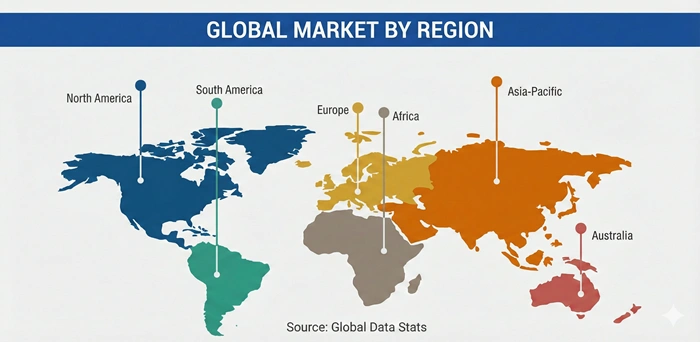
North America accounts for approximately 38% of global heparin market revenue in 2025 and is projected to maintain a CAGR of 5.9% through 2033. The United States is the dominant national market, supported by an exceptionally high volume of cardiovascular surgeries, dialysis procedures, and orthopedic interventions that collectively consume large quantities of both unfractionated heparin and LMWH. Canada's public healthcare system also provides comprehensive coverage for heparin therapy in appropriate clinical indications, further supporting regional demand. Leading companies with strong commercial presence in North America include Pfizer, Baxter International, Amphastar Pharmaceuticals, Fresenius Kabi, and B. Braun Melsungen, all of which maintain robust hospital distribution networks and extensive clinical support programs.
The region benefits from well-developed clinical practice guidelines from the American College of Chest Physicians (ACCP) and the American Heart Association, which provide clear evidence-based protocols that directly drive heparin prescribing behavior at major medical centers. The growing adoption of pre-filled syringe formats for LMWH — particularly enoxaparin — in outpatient and home care settings is also expanding North America's heparin market reach beyond the hospital setting. Regulatory oversight from the FDA remains rigorous, which has elevated manufacturing quality standards and created competitive advantages for companies with FDA-approved production facilities.
Asia-Pacific
Asia-Pacific Is the Fastest-Growing Regional Market for Heparin, Fueled by Rapidly Rising Cardiovascular and Renal Disease Rates, Expanding Dialysis Infrastructure, and Heparin API Manufacturing Strength
Asia-Pacific represents the most dynamic regional growth story in the heparin market, projected to expand at a CAGR of 8.2% from 2026 to 2033 — the highest of any global region. The region currently accounts for approximately 32% of global market share, with China, Japan, India, and South Korea emerging as the most significant national markets. China holds a uniquely dual role as both one of the largest consumer markets and the world's most important producer of heparin API, with companies like Shenzhen Hepalink Pharmaceuticals and Bioiberica supplying raw material to pharmaceutical manufacturers globally. India is rapidly expanding its domestic heparin API production capacity to reduce import dependency, while Japan maintains a mature and advanced heparin consumption base driven by high dialysis patient volumes and a rapidly aging population.
Government healthcare expansion programs across the region are creating new demand pools that were previously underserved. China's national medical insurance reforms and India's Pradhan Mantri Jan Arogya Yojana are improving access to anticoagulation therapies for millions of lower-income patients with cardiovascular and renal conditions. Rising awareness of DVT risks among physicians and patients in Southeast Asian countries — combined with growing hospital accreditation programs that mandate thromboprophylaxis protocols — is also driving significant new demand for heparin products in Vietnam, Thailand, Indonesia, and Malaysia. This combination of demographic pressure, manufacturing strength, and healthcare policy momentum makes Asia-Pacific the region of greatest strategic importance in the global heparin market through 2033.
Top Key Players
-
Sanofi S.A. (France)
-
Pfizer Inc. (United States)
-
Aspen Pharmacare Holdings (South Africa)
-
Shenzhen Hepalink Pharmaceutical Co. Ltd. (China)
-
Baxter International Inc. (United States)
-
B. Braun Melsungen AG (Germany)
-
Fresenius Kabi AG (Germany)
-
Teva Pharmaceutical Industries Ltd. (Israel)
-
Amphastar Pharmaceuticals Inc. (United States)
-
Leo Pharma A/S (Denmark)
-
Opocrin S.p.A. (Italy)
-
Dr. Reddy's Laboratories Ltd. (India)
-
Bioiberica S.A.U. (Spain)
-
Nanjing King-Friend Biochemical Pharmaceutical Co. Ltd. (China)
Recent Developments
-
Shenzhen Hepalink Pharmaceutical (2025) — Announced a major capacity expansion of its porcine intestinal mucosa processing facilities in China, aimed at increasing global heparin API output by over 20% to address growing international demand and strengthen long-term supply agreements with European and North American pharmaceutical manufacturers
-
Sanofi (2025) — Received regulatory approval from the European Medicines Agency for a reformulated version of enoxaparin sodium in an auto-injector delivery format, designed to improve patient compliance and ease of self-administration in outpatient DVT prophylaxis settings
-
Pfizer Inc. (2024) — Expanded its injectable heparin product portfolio in the United States following the FDA approval of a new concentration variant of heparin sodium injection, addressing clinical demand for flexible dosing options in complex inpatient cardiovascular care settings
-
Fresenius Kabi (2024) — Completed the strategic acquisition of a regional pharmaceutical manufacturer in Southeast Asia specializing in injectable anticoagulant formulations, with the transaction aimed at expanding the company's heparin product distribution reach across rapidly growing Asian markets
-
Aspen Pharmacare (2025) — Strengthened its thrombosis product portfolio through a licensing and co-promotion agreement covering multiple LMWH products in Sub-Saharan Africa and the Middle East, targeting significantly underserved patient populations with high rates of undiagnosed and untreated thromboembolic conditions
Market Trends
Pre-Filled Syringe Adoption, Biosynthetic Heparin Development, and Growing Application in Oncology-Associated Thrombosis Are the Most Defining Trends Shaping the Heparin Market
One of the most visible current trends in the heparin market is the accelerating shift toward pre-filled syringe and auto-injector formats for LMWH delivery. Healthcare systems across North America and Europe are increasingly transitioning from multi-dose vials to pre-filled unit-dose presentations, driven by patient safety goals, reduced medication error risk, and the growing importance of outpatient self-administration. This packaging and delivery format trend is also expanding the home care channel for heparin products, as patients with DVT, pulmonary embolism, or cancer-associated thrombosis manage their anticoagulation independently with minimal clinical supervision.
The second major trend with transformative long-term implications is the advancing science of biosynthetic heparin production. The 2008 global heparin contamination crisis exposed the fundamental fragility of relying exclusively on animal-derived raw materials, triggering sustained research investment into chemoenzymatic synthesis and microbial fermentation pathways. Several biotech companies are now advancing these platforms toward clinical and commercial scale, with recombinant heparin candidates showing promising early safety and efficacy data. Successful commercialization of a biosynthetic heparin product would represent a landmark development for the entire industry, potentially rebalancing global supply chains and reducing dependence on porcine API from China.
Segments Covered in the Report
By Product Type:
-
Unfractionated Heparin (UFH)
-
Low Molecular Weight Heparin (LMWH)
-
Ultra-Low Molecular Weight Heparin (ULMWH)
-
Biosynthetic/Recombinant Heparin
By Source:
-
Porcine Intestinal Mucosa
-
Bovine
-
Recombinant/Microbial Sources
By Dosage Form:
-
Injectable Solutions (Vials)
-
Pre-Filled Syringes
-
Auto-Injectors
-
Others
By Application:
-
Deep Vein Thrombosis (DVT) Treatment and Prophylaxis
-
Pulmonary Embolism
-
Hemodialysis
-
Cardiovascular Surgery
-
Oncology-Associated Thrombosis
-
Others
By End User:
-
Hospitals
-
Dialysis Centers
-
Ambulatory Surgical Centers
-
Homecare Settings
-
Others
By Region:
-
North America (United States, Canada, Mexico)
-
Europe (Germany, France, United Kingdom, Italy, Spain, Rest of Europe)
-
Asia-Pacific (China, Japan, India, South Korea, Australia, Rest of Asia-Pacific)
-
Latin America (Brazil, Argentina, Rest of Latin America)
-
Middle East & Africa (GCC Countries, South Africa, Rest of MEA)
Frequently Asked Questions
Question 1: What is the current size of the global heparin market?
Answer: The global heparin market is valued at USD 7.10 billion in 2025 and is expected to grow to USD 11.99 billion by 2033. This growth is supported by a CAGR of 6.4% from 2026 to 2033, driven by rising cardiovascular and thromboembolic disease prevalence.
Question 2: Which product type dominates the heparin market?
Answer: Low molecular weight heparin (LMWH) holds the leading position in the heparin market, accounting for approximately 63% of total product revenue in 2025. Its dominance is driven by superior safety, outpatient usability, and expanding clinical indications across DVT, pulmonary embolism, and cancer-associated thrombosis.
Question 3: Which region is growing the fastest in the heparin market?
Answer: Asia-Pacific is the fastest-growing region in the heparin market, projected to expand at a CAGR of 8.2% through 2033. Rising ESRD rates, expanding dialysis infrastructure, and growing cardiovascular disease awareness are the primary growth drivers across this region.
Question 4: What are the key challenges restraining growth in the heparin market?
Answer: The heparin market faces significant challenges from heavy dependence on porcine intestinal mucosa sourced from China, creating supply chain vulnerability. Clinical concerns about heparin-induced thrombocytopenia and intense generic price competition in key markets also moderate overall growth momentum.
Question 5: What future innovations are expected to transform the heparin market?
Answer: Biosynthetic and recombinant heparin development represents the most anticipated future innovation in this market, offering a potential solution to animal-source supply chain risks. Growing application in oncology-associated thrombosis and the adoption of digital anticoagulation monitoring platforms are also expected to open significant new growth avenues.