
Healthcare Fabrics Market Overview
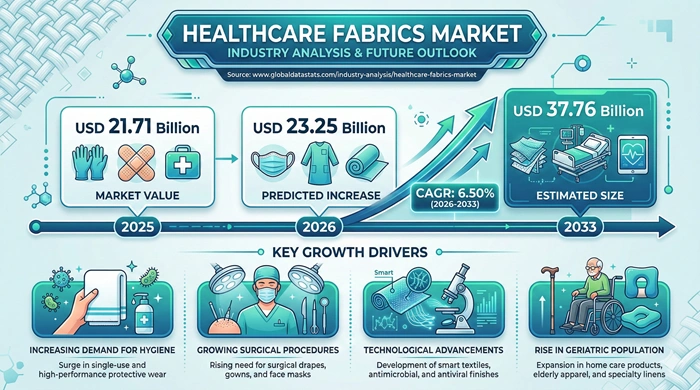
The global healthcare fabrics market size is valued at USD 21.71 billion in 2025 and is predicted to increase from USD 23.25 billion in 2026 to approximately USD 37.76 billion by 2033, growing at a CAGR of 6.50% from 2026 to 2033. The market is driven by increasing demand for high-performance medical textiles, rising awareness around infection control, and the rapid adoption of advanced materials like antimicrobial and smart fabrics across global healthcare systems.
AI Impact on the Healthcare Fabrics Industry
Artificial Intelligence Is Redefining How Medical Textiles Are Designed, Produced, and Deployed Across the Global Healthcare Landscape
Artificial intelligence is making a significant difference in how healthcare fabrics are developed and manufactured. AI-powered systems are now being used to design fabrics with precise functional properties — including barrier protection, moisture control, and antimicrobial performance — by analyzing vast datasets from clinical environments. This reduces product development cycles and improves the accuracy of material engineering, allowing manufacturers to meet stringent healthcare standards more efficiently.
Beyond manufacturing, AI is being integrated into smart textile platforms that monitor patient health in real time. Fabrics embedded with AI-enabled sensors can track vital signs such as heart rate, body temperature, and respiratory patterns. These developments are expanding the scope of the healthcare fabrics market beyond traditional uses, making textiles an active component in patient care rather than just a passive material.
Growth Factors
Multiple Structural and Innovation-Led Drivers Are Collectively Accelerating Demand for Medical-Grade Fabrics Globally
The healthcare fabrics market is benefiting from a combination of regulatory, demographic, and technological forces. Rising healthcare expenditure worldwide, especially in developing economies, is supporting the expansion of hospitals and outpatient facilities — directly increasing the consumption of medical textiles. Additionally, growing government initiatives for R&D in healthcare materials and the push for antimicrobial fabric solutions are bringing new investment into the sector.
The rise in chronic diseases, aging populations, and post-pandemic hygiene awareness have collectively created sustained demand for high-quality medical textiles. Manufacturers are responding by innovating with biodegradable and reusable fabrics, smart textile integration, and eco-friendly production methods. These advancements not only meet evolving regulatory requirements but also align with the sustainability goals increasingly prioritized by healthcare procurement departments globally.
Market Outlook
Steady Long-Term Growth and Technological Evolution Position Healthcare Fabrics as a Critical Component of Modern Medical Infrastructure
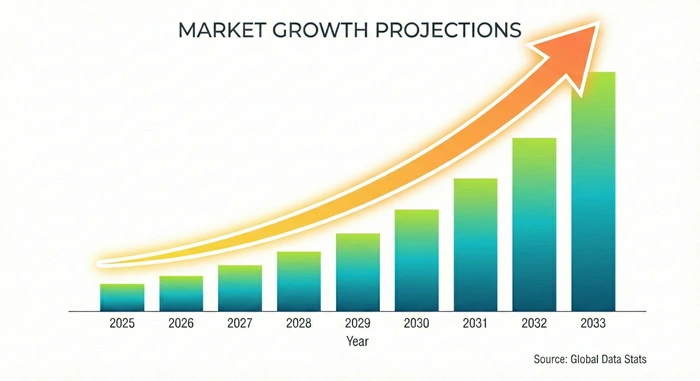
The outlook for the healthcare fabrics market over the 2026–2033 forecast period is strong. As healthcare infrastructure continues to expand in Asia-Pacific, Latin America, and the Middle East, demand for both disposable and reusable medical textiles is expected to grow steadily. The shift toward value-based healthcare — where patient outcomes and comfort are primary metrics — is also driving demand for more sophisticated fabric solutions in clinical settings.
The market is also seeing momentum from the personal protective equipment (PPE) segment, which experienced a structural boost following global health crises and has since maintained elevated demand. The integration of fluid-repellent coatings, flame-resistant materials, and sensor-embedded textiles into standard healthcare apparel is expected to create premium product tiers that fetch higher margins. Companies investing in sustainability and smart technology will be the primary beneficiaries of this evolving landscape.
Expert Speaks
-
David Wichmann, Former CEO of UnitedHealth Group (USA): "Healthcare materials are becoming integral to clinical outcomes. We are seeing a clear shift toward high-performance medical textiles that support both patient safety and operational efficiency across care settings."
-
Karen Lynch, CEO of CVS Health (USA): "As healthcare delivery models evolve, the materials that support that delivery — from PPE to patient gowns — must also evolve. Investment in advanced fabric technologies is a strategic priority for long-term quality care."
-
Gail Boudreaux, President & CEO of Elevance Health (USA): "The intersection of textiles and technology is creating new opportunities to improve patient monitoring and infection control. We believe smart fabrics will be a defining element of next-generation healthcare infrastructure."
Key Report Takeaways
-
North America dominates the global healthcare fabrics market, accounting for approximately 37.68% revenue share in 2025, driven by well-established healthcare infrastructure, high standards of hygiene, and strong regulatory frameworks that mandate the use of certified medical textiles.
-
Asia-Pacific is the fastest-growing region, projected to expand at a CAGR of 9.13% through 2033, fueled by rapid hospital construction, growing middle-class populations, rising health awareness, and increasing government spending on healthcare systems in countries like China, India, and Southeast Asian nations.
-
Hospitals represent the largest end-user segment, consuming the highest volumes of healthcare fabrics for patient gowns, surgical drapes, bedding, and hygiene products, with continued infrastructure investments expected to sustain this dominance through the forecast period.
-
Hygiene products account for the largest application share, comprising approximately 44.47% of the healthcare fabrics market size in 2025, reflecting strong and consistent demand across both developed and emerging economies for disposable hygiene solutions.
-
Non-woven fabrics hold the leading fabric type position, capturing 62.15% revenue share in 2025, owing to their cost-effectiveness, disposability, and superior barrier properties that make them ideal for single-use medical applications.
-
Polypropylene leads the raw material segment, holding approximately 39.62% market share in 2025, attributed to its lightweight nature, durability, moisture resistance, and low production cost, making it the preferred material for large-scale manufacturing.
-
Smart and antimicrobial fabrics are the fastest-growing future segment, expected to expand at a CAGR above 9% through 2033, with growing application in wearable health monitoring, patient safety garments, and hospital infection prevention programs.
Market Scope
| Report Coverage | Details |
|---|---|
| Market Size by 2033 | USD 37.76 Billion |
| Market Size by 2025 | USD 21.71 Billion |
| Market Size by 2026 | USD 23.25 Billion |
| Market Growth Rate from 2026 to 2033 | CAGR of 6.50% |
| Dominating Region | North America |
| Fastest Growing Region | Asia-Pacific |
| Base Year | 2025 |
| Forecast Period | 2026 – 2033 |
| Segments Covered | By Raw Material, By Fabric Type, By Application, By End User, By Region |
| Regions Covered | North America, Europe, Asia-Pacific, Latin America, Middle East & Africa |
Market Dynamics
Drivers Impact Analysis
Rising Hygiene Standards, Aging Demographics, and Surge in Healthcare Investments Are Propelling Consistent Growth Across the Healthcare Fabrics Market
| Driver | ≈ % Impact on CAGR Forecast | Geographic Relevance | Impact Timeline |
|---|---|---|---|
| Growing demand for infection control and hygiene products | ~28% | Global (especially North America, Europe) | Short to Long Term |
| Rising aging population and chronic disease prevalence | ~22% | North America, Europe, Asia-Pacific | Medium to Long Term |
| Expansion of healthcare infrastructure in emerging markets | ~20% | Asia-Pacific, Latin America, MEA | Medium to Long Term |
| Adoption of antimicrobial and smart textile technologies | ~18% | North America, Europe | Short to Medium Term |
| Government funding and regulatory support for medical textiles | ~12% | Global | Medium Term |
The healthcare fabrics market is significantly influenced by increasing global awareness of hospital-acquired infections (HAIs) and the critical role that certified medical textiles play in minimizing their spread. Regulatory bodies across North America and Europe have tightened standards for medical fabric certifications, compelling healthcare providers to procure high-performance fabrics for surgical drapes, gowns, and barrier products. This regulatory environment is creating a steady and mandated demand floor that supports the overall market trajectory.
Demographic shifts are another powerful driver. With over 1 billion people aged 60 or above globally, and this number projected to double by 2050, the healthcare sector is scaling up capacity — and with it, the procurement of medical textiles at every care level. Coupled with growing healthcare expenditure in countries like India, Brazil, and Indonesia, the healthcare fabrics market is poised for sustained volume growth well into the next decade.
Restraints Impact Analysis
High Production Costs, Raw Material Price Volatility, and Stringent Regulatory Hurdles Are Limiting Market Expansion in Certain Geographies
| Restraint | ≈ % Impact on CAGR Forecast | Geographic Relevance | Impact Timeline |
|---|---|---|---|
| High cost of advanced and smart fabrics | ~30% | Emerging Markets (Asia, MEA, LATAM) | Short to Medium Term |
| Volatility in raw material prices (polypropylene, polyester) | ~25% | Global | Ongoing |
| Stringent certification and compliance requirements | ~22% | North America, Europe | Medium Term |
| Environmental concerns from disposable medical textiles | ~15% | Europe, North America | Medium to Long Term |
| Limited awareness in low-income healthcare markets | ~8% | Sub-Saharan Africa, Southeast Asia | Short Term |
One of the primary restraints limiting market penetration in emerging economies is the elevated cost of technically advanced healthcare fabrics. Products incorporating antimicrobial treatments, sensor integration, or biodegradable materials require specialized manufacturing processes and premium input materials, resulting in price points that are often inaccessible to budget-constrained healthcare facilities in low- and middle-income countries. This creates a two-tier market dynamic that can slow overall adoption rates.
Additionally, the disposal challenge associated with single-use medical textiles is gaining regulatory attention, particularly in Europe and North America. Governments are increasingly introducing legislation to curb medical waste, which could force manufacturers to invest in costly reusable or biodegradable alternatives. While this shift may unlock long-term opportunity, it poses a short-to-medium-term financial pressure on companies needing to retool their production lines and supply chains.
Opportunities Impact Analysis
Smart Textile Innovation, Sustainability Mandates, and Emerging Market Infrastructure Growth Represent High-Value Opportunities for Market Players
| Opportunity | ≈ % Impact on CAGR Forecast | Geographic Relevance | Impact Timeline |
|---|---|---|---|
| Development of biodegradable and eco-friendly medical textiles | ~30% | Europe, North America | Medium to Long Term |
| Smart fabrics for wearable health monitoring | ~28% | North America, Asia-Pacific | Short to Medium Term |
| Growing PPE demand driven by pandemic preparedness policies | ~20% | Global | Short to Medium Term |
| Expansion of home healthcare and elder care markets | ~15% | North America, Europe, Asia-Pacific | Medium to Long Term |
| Untapped healthcare infrastructure investment in MEA and LATAM | ~7% | MEA, Latin America | Long Term |
The shift toward smart and wearable medical textiles represents one of the most compelling growth opportunities in the healthcare fabrics market. Fabrics capable of continuously monitoring patient vitals, detecting early signs of infection, or delivering localized therapeutics are moving from research labs into clinical prototypes. As miniaturization of electronics advances and the cost of embedded sensors declines, commercialization at scale becomes more viable — opening a new premium product category within the medical textiles space.
Sustainability represents an equally transformative opportunity. Healthcare procurement departments across developed markets are increasingly subject to sustainability mandates, creating demand for fabrics made from recycled fibers, organic cotton, or plant-based materials. Companies that can demonstrate eco-credentials while meeting clinical performance standards are positioned to win long-term supplier agreements with major hospital networks and government procurement bodies.
Segment Analysis
By Fabric Type
Non-Woven Fabrics Continue to Dominate Due to Their Cost Efficiency, Versatility, and Superior Barrier Properties Across Diverse Medical Applications
Non-woven fabrics hold the dominant position in the healthcare fabrics market, commanding approximately 62.15% revenue share in 2025. Their popularity stems from the combination of cost-effectiveness, ease of manufacture, and functional performance — particularly their ability to serve as effective barriers against fluids, bacteria, and particulate matter. In high-volume use cases such as surgical drapes, wound dressings, and disposable gowns, non-wovens offer a compelling balance between protection, comfort, and affordability that no other fabric category currently matches.
The growth of non-woven fabrics is especially pronounced in the Asia-Pacific region, where expanding hospital networks and growing hygiene product consumption are driving substantial volume demand. Countries like China and India, which host major textile manufacturing hubs, are scaling up non-woven production to meet both domestic and export needs. Leading players in this segment include Berry Global Group Inc., Avgol Industries Ltd., and Freudenberg & Co., all of which have been expanding their non-woven healthcare fabric capacities. The segment is projected to grow at a steady CAGR, reinforcing its dominance as the primary fabric type across the global healthcare fabrics market through 2033.
By Application
Hygiene Products Lead Application-Based Demand and Are Expected to Sustain Their Commanding Share Through the Forecast Period
The hygiene products application segment accounts for the largest share of the healthcare fabrics market, representing approximately 44.47% of total market size in 2025. This dominance is driven by the consistent, high-volume consumption of products such as adult incontinence items, baby diapers, feminine hygiene products, and disposable hospital bed pads. The growing elderly population and rising awareness around personal hygiene — both in developed and developing countries — ensure that this segment maintains its leadership position throughout the forecast period.
The surgical and clinical apparel sub-segment, including surgical gowns and sterile drapes, is forecast to grow at a CAGR of approximately 8.92% through 2033, making it the fastest-growing application area. North America leads in this application due to its large volume of surgical procedures and strict infection control protocols, while Asia-Pacific is the most rapidly expanding regional market for clinical apparel driven by healthcare infrastructure development. Companies like Kimberly-Clark Corporation, Cardinal Health Inc., and Standard Textile Co Inc. are key players supplying clinically certified fabrics across hospital systems in these regions.
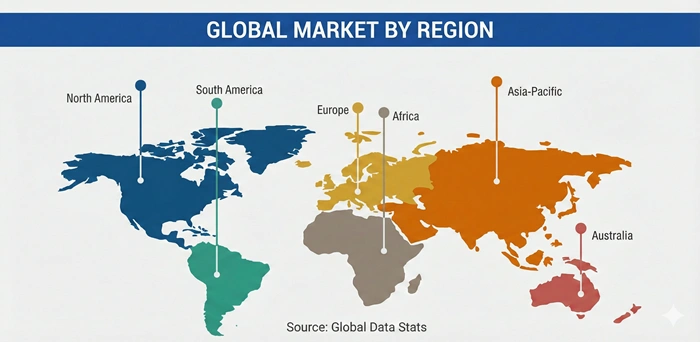
Regional Insights
North America
North America Maintains Global Leadership in the Healthcare Fabrics Market Supported by Advanced Medical Infrastructure and Stringent Regulatory Standards
North America leads the global healthcare fabrics market with a revenue share of approximately 37.68% in 2025. The region's dominance is underpinned by a mature healthcare ecosystem, a high volume of surgical procedures, and some of the world's most stringent regulatory standards for medical textile performance and safety. The United States alone accounts for the vast majority of this share, supported by well-funded hospital networks and a strong culture of infection prevention. Key players operating in the North American market include Kimberly-Clark Corporation, Berry Global Group Inc., Cardinal Health Inc., and Standard Textile Co Inc.
The region continues to invest in next-generation fabric technologies, including antimicrobial coatings and smart textile systems. Favorable government funding for healthcare innovation and close collaboration between textile manufacturers and medical device companies are accelerating the commercialization of advanced fabric solutions. North America's CAGR for healthcare fabrics is estimated at approximately 6.8% through 2033, reflecting both steady baseline demand and incremental growth from premium product categories.
Asia-Pacific
Asia-Pacific Is the Fastest-Growing Regional Market, Driven by Rapid Urbanization, Healthcare Infrastructure Expansion, and Rising Middle-Class Health Awareness
Asia-Pacific is projected to be the fastest-growing regional market in the global healthcare fabrics market, advancing at a CAGR of 9.13% through 2033. The region's growth is fueled by massive investments in healthcare infrastructure, rapid urbanization, and rising disposable incomes that are enabling broader access to quality medical services. Countries such as China, India, Japan, and South Korea are at the forefront of this expansion, with large public health programs directly increasing demand for medical textiles at both the institutional and consumer level.
The region also benefits from a robust domestic textile manufacturing base that is being increasingly upgraded to serve medical-grade applications. Local companies are forming strategic partnerships with global leaders to adopt advanced production technologies. Key regional players include Paramount Tech Fab Industries (India), alongside global companies operating regional facilities such as Berry Global and Freudenberg & Co. As the region's healthcare systems continue to mature and regulatory standards tighten, Asia-Pacific is expected to close the quality gap with Western markets while maintaining its strong volumetric growth momentum.
Top Key Players
-
Kimberly-Clark Corporation (United States)
-
Berry Global Group Inc. (United States)
-
Cardinal Health Inc. (United States)
-
Standard Textile Co Inc. (United States)
-
Freudenberg & Co. (Germany)
-
Avgol Industries Ltd. (Israel)
-
Paramount Tech Fab Industries (India)
-
Precision Fabric Group Inc. (United States)
-
Herculite Inc. (United States)
-
Carnegie Fabrics LLC (United States)
-
Brentano Inc. (United States)
-
Eastex Inc. (United States)
-
Bally Ribbon Mills (United States)
-
Advanced Fabrics (Saudi Arabia)
Recent Developments
-
Berry Global Group Inc. (2024): Berry Global completed a strategic acquisition of a specialty nonwoven fabric manufacturer to strengthen its position in the medical textile sector, expanding its production capacity for barrier fabrics used in surgical and hygiene applications across North American and European markets.
-
Kimberly-Clark Corporation (2025): Kimberly-Clark launched a new line of sustainable, partially recycled medical gowns and drapes under its healthcare division, targeting hospital networks in North America and Western Europe that are transitioning to eco-friendly procurement standards.
-
Freudenberg & Co. (2024): Freudenberg Performance Materials announced the expansion of its healthcare nonwovens production facility in Germany, adding dedicated lines for antimicrobial fabrics aimed at surgical and wound-care applications, supporting the growing demand within European hospital procurement.
-
Cardinal Health Inc. (2025): Cardinal Health entered into a multi-year supply agreement with a major U.S. hospital system to provide certified medical-grade fabric products, covering surgical apparel, patient gowns, and disposable drapes — reinforcing its footprint in the institutional healthcare supply chain.
-
Avgol Industries Ltd. (2024): Avgol announced the development and pilot production of its next-generation biodegradable nonwoven fabric line, designed specifically for hygiene and medical applications, targeting regulatory compliance with emerging European sustainability directives.
Market Trends
Sustainability and Smart Integration Are the Two Most Transformative Trends Reshaping the Healthcare Fabrics Market for the Coming Decade
The healthcare fabrics market is experiencing a fundamental shift driven by sustainability and technology convergence. Manufacturers across North America and Europe are under increasing regulatory and institutional pressure to reduce the environmental footprint of single-use medical textiles. As a result, significant R&D investment is being directed toward biodegradable polymers, recycled fiber-based nonwovens, and reusable medical-grade fabrics that can withstand repeated sterilization cycles without compromising performance. This trend is gradually reshaping procurement norms across large healthcare networks.
In parallel, the integration of smart technologies into medical fabrics is gaining commercial traction. Wearable textiles embedded with biosensors, conductive threads, and drug-delivery mechanisms are transitioning from experimental prototypes to market-ready products in select clinical segments. This technological evolution is enabling fabrics to play an active, diagnostic role in patient care — monitoring infection indicators, tracking mobility, and even responding to physiological changes. As production costs for electronic textiles continue to decline, adoption is expected to scale significantly across hospital, home-care, and rehabilitation settings by 2033.
Segments Covered in the Report
By Raw Material:
-
Polypropylene
-
Cotton
-
Polyester
-
Viscose
-
Polyamide
-
Other Raw Materials
By Fabric Type:
-
Non-Woven Fabrics
-
Woven Fabrics
-
Knitted Fabrics
By Application:
-
Hygiene Products
-
Wound Dressing
-
Clothing & Apparel
-
Curtains & Cubicle Dividers
-
Blankets & Bedding
-
Upholstery
-
Other Applications
By End User:
-
Hospitals & Clinics
-
Home Healthcare
-
Ambulatory Surgical Centers
-
Specialty Clinics
-
Other End Users
By Region:
-
North America (United States, Canada, Mexico)
-
Europe (Germany, United Kingdom, France, Italy, Spain, Rest of Europe)
-
Asia-Pacific (China, India, Japan, South Korea, Australia, Rest of Asia-Pacific)
-
Latin America (Brazil, Argentina, Rest of Latin America)
-
Middle East & Africa (GCC Countries, South Africa, Rest of MEA)
Frequently Asked Questions
Question 1: What is the current size of the global healthcare fabrics market?
Answer: The global healthcare fabrics market is valued at USD 21.71 billion in 2025. It is expected to reach USD 37.76 billion by 2033, growing at a CAGR of 6.50% from 2026 to 2033.
Question 2: What are the key factors driving growth in the healthcare fabrics market?
Answer: The healthcare fabrics market is primarily driven by rising hygiene awareness, aging populations, and increasing healthcare infrastructure investment globally. Adoption of antimicrobial fabrics and smart textile technologies is further accelerating market expansion.
Question 3: Which region dominates the global healthcare fabrics market?
Answer: North America holds the leading position in the healthcare fabrics market with approximately 37.68% revenue share in 2025. The region benefits from advanced healthcare systems, high surgical volumes, and strict regulatory standards for medical textiles.
Question 4: Which segment is growing the fastest within the healthcare fabrics market?
Answer: The smart and antimicrobial fabrics segment within the broader healthcare fabrics market is growing the fastest, supported by demand for wearable health monitoring and infection prevention solutions. Asia-Pacific is the fastest-growing region, expanding at over 9% CAGR through 2033.
Question 5: Who are the top companies operating in the healthcare fabrics market?
Answer: Leading companies in the healthcare fabrics market include Kimberly-Clark Corporation, Berry Global Group Inc., Cardinal Health Inc., Freudenberg & Co., and Avgol Industries Ltd. These players are investing in sustainability, smart textiles, and production expansion to strengthen their global market positions.