
Healthcare Consumables Market Overview
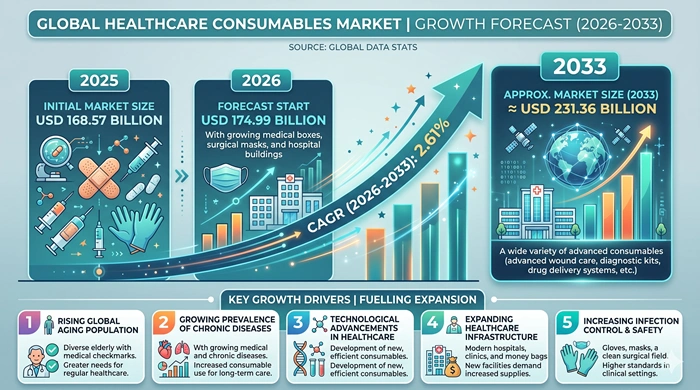
The global healthcare consumables market size is valued at USD 168.57 billion in 2025 and is predicted to increase from USD 174.99 billion in 2026 to approximately USD 231.36 billion by 2033, growing at a CAGR of 2.61% from 2026 to 2033.
Healthcare consumables are indispensable to the daily functioning of hospitals, clinics, diagnostic centers, and home care environments worldwide. Products in this space include wound dressings, surgical gloves, syringes, IV sets, diagnostic kits, sterilization supplies, and a wide range of single-use medical items consumed at the point of patient care. Growing chronic disease prevalence, expanding healthcare infrastructure, heightened infection control standards, and a global shift toward home-based care are all converging to shape a steadily growing market through 2033.
AI Impact on the Healthcare Consumables Industry
Artificial Intelligence Is Transforming Supply Chain Efficiency, Product Development, and Clinical Application of Healthcare Consumables Across Every Major Global Market*
Artificial intelligence is rapidly changing how the healthcare consumables industry operates at multiple levels — from demand forecasting and inventory management to quality control on production lines. Hospitals and large integrated health networks are deploying AI-driven procurement tools that analyze patient admission volumes, seasonal disease trends, and historical consumption rates to predict supply needs in real time. This capability is dramatically reducing instances of stockouts and overordering, which have historically been major cost drivers within consumables supply chains for healthcare facilities worldwide.
On the product development side, AI is helping manufacturers accelerate design cycles for next-generation consumables. Machine learning models are being used to test material properties, simulate product performance under clinical conditions, and identify failure patterns before physical prototypes are built. Companies developing smart wound dressings, sensor-embedded IV catheters, and RFID-tracked surgical supplies are using AI-enabled design platforms to bring these products to market faster and with greater precision. This convergence of physical product innovation and digital intelligence is positioning the healthcare consumables market for a meaningful technological upgrade through the forecast period.
Growth Factors
Rising Surgical Volumes, an Aging Global Population, and Post-Pandemic Infection Control Awareness Are Creating Durable and Sustained Demand for Healthcare Consumables Worldwide*
The global burden of chronic disease continues to be one of the most powerful demand drivers for healthcare consumables. Conditions such as diabetes, cardiovascular disease, cancer, and chronic respiratory illness require continuous medical management — including frequent procedures, diagnostics, and wound care interventions — all of which rely heavily on disposable consumable products. The International Diabetes Federation estimates that by 2045, approximately 783 million adults will be living with diabetes globally, creating an ever-expanding patient base for insulin delivery devices, blood glucose testing consumables, and advanced wound care dressings.
The post-COVID-19 environment has permanently reset baseline standards for infection prevention and control in healthcare settings. Regulatory guidance reinforcing single-use disposable protocols, combined with institutional memory of pandemic-era supply disruptions, has prompted healthcare facilities to maintain higher levels of PPE, sterile consumables, and sterilization products than pre-pandemic norms. Simultaneously, the global expansion of home healthcare is introducing an entirely new distribution channel for consumable products — one driven by patient preference for convenient, cost-effective care outside institutional settings — further broadening the overall market base.
Market Outlook
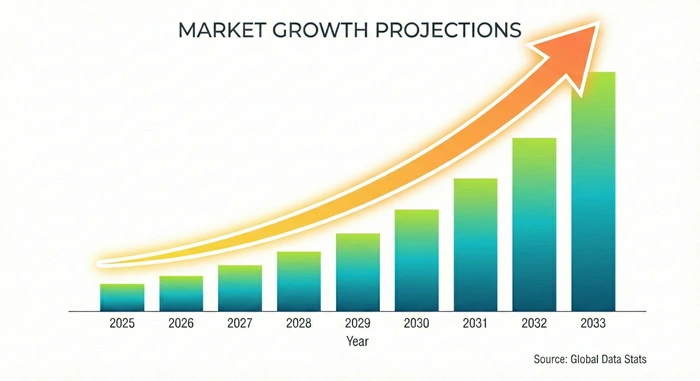
Steady Demand Fundamentals, Emerging Market Infrastructure Growth, and Product Innovation Are Supporting Consistent Long-Term Expansion of the Healthcare Consumables Market Through 2033*
The market outlook for healthcare consumables through 2033 is anchored by structural demand fundamentals that are unlikely to reverse. Population aging, rising prevalence of lifestyle-related chronic diseases, and the ongoing expansion of universal healthcare coverage in emerging economies all ensure a consistently growing base of healthcare activity — and by extension, a growing need for consumable medical products. Countries across Southeast Asia, Sub-Saharan Africa, the Middle East, and Latin America are actively investing in hospital construction and primary care infrastructure, each new facility representing new recurring consumption of medical supplies.
Product innovation continues to provide additional revenue uplift beyond baseline demographic demand. Manufacturers are introducing biodegradable surgical drapes, antimicrobial wound care products, and patient-friendly self-care consumable kits that command premium pricing and open new market segments. Regulatory bodies in North America and Europe are also driving product upgrades by tightening standards around material safety, sterility, and traceability. Together, these innovation cycles and regulatory tailwinds are expected to support the steady growth trajectory of the global healthcare consumables market through 2033, even in a comparatively measured CAGR environment.
Expert Speaks
-
"Healthcare consumables remain one of the most mission-critical segments of the medical supplies industry. Our strategic focus is on innovation — developing smarter, safer, and more sustainable consumable products that meet the evolving needs of both clinicians and patients. The demand outlook is strong and we are investing accordingly in capacity and product development." — Tom Polen, CEO, Becton Dickinson and Company
-
"The healthcare consumables sector is benefiting from structural tailwinds — aging demographics, growing chronic disease management needs, and the global push for stronger infection control. We see particular opportunities in home care consumables and advanced wound management, and our pipeline reflects significant investment in both of these areas." — Mike Kaufmann, CEO, Cardinal Health
-
"Sustainability and innovation are at the heart of our consumables strategy. Hospitals and healthcare systems are demanding products that are not only clinically effective but also environmentally responsible. We believe the companies that can deliver on both dimensions simultaneously will define the next phase of leadership in this market." — Rolf Kjær, CEO, Coloplast A/S
Key Report Takeaways
-
North America leads the healthcare consumables market globally, holding an estimated revenue share of approximately 42.1% in 2026, driven by high per-capita healthcare spending, a well-established hospital network, and strict infection control mandates requiring single-use disposable medical products
-
Asia Pacific is the fastest-growing region in the healthcare consumables space, fueled by rapid expansion of healthcare infrastructure, increasing surgical volumes, rising disposable incomes, and government-led universal health coverage programs in China, India, South Korea, and Indonesia
-
Hospitals and healthcare facilities represent the largest end-user segment, accounting for approximately 33.9% of global revenue in 2026, given their high inpatient and surgical volumes and ongoing need for sterile, disposable consumables across all clinical departments
-
Wound care consumables hold the largest product segment share at approximately 30.8% in 2026, driven by the rising global prevalence of chronic wounds, diabetic foot ulcers, and post-surgical wound management requirements across aging populations worldwide
-
Single-use disposable products remain the most widely adopted consumable category, consistently preferred by healthcare providers due to infection prevention mandates, convenience, and regulatory guidance discouraging reusable items in many clinical procedure settings
-
Diagnostic consumables represent the fastest-growing future segment, expected to post a CAGR well above the market average through 2033, holding a growing share of the overall mix as point-of-care testing, rapid molecular diagnostics, and at-home test kits gain widespread adoption across multiple disease categories
Market Scope
| Report Coverage | Details |
|---|---|
| Market Size by 2025 | USD 168.57 Billion |
| Market Size by 2026 | USD 174.99 Billion |
| Market Size by 2033 | USD 231.36 Billion |
| Market Growth Rate from 2026 to 2033 | CAGR of 2.61% |
| Dominating Region | North America |
| Fastest Growing Region | Asia Pacific |
| Base Year | 2025 |
| Forecast Period | 2026 to 2033 |
| Segments Covered | By Product Type, By Raw Material, By End User, By Region |
| Regions Covered | North America, Europe, Asia Pacific, Latin America, Middle East & Africa |
Market Dynamics
Drivers Impact Analysis
Chronic Disease Prevalence, Aging Demographics, and Expanding Healthcare Access Are the Foundational Forces Generating Consistent Long-Term Demand for Healthcare Consumables*
| Driver | ≈ % Impact on CAGR Forecast | Geographic Relevance | Impact Timeline |
|---|---|---|---|
| Rising prevalence of chronic diseases and aging population | ~34% | Global, highest in North America & Europe | Long-term |
| Growing surgical volumes and hospital admissions | ~27% | North America, Europe, Asia Pacific | Short to long-term |
| Post-pandemic infection control and hygiene protocols | ~23% | Global | Short to medium-term |
| Expansion of home healthcare and outpatient services | ~16% | North America, Europe, Asia Pacific | Medium to long-term |
The rising global prevalence of chronic diseases — including diabetes, cardiovascular conditions, cancer, and chronic respiratory illness — is creating a durable, high-volume base of demand for the healthcare consumables market. Patients managing these long-term conditions require ongoing access to wound care supplies, infusion therapy consumables, diagnostic testing products, and personal care items on a recurring basis. The World Health Organization estimates that non-communicable diseases account for approximately 74% of all deaths globally, underscoring the scale of the patient population continuously consuming medical supplies.
Surgical volume growth is equally significant as a demand driver. An estimated 313 million surgical procedures are performed globally each year, and this figure is rising as emerging markets expand their surgical capabilities and universal coverage schemes improve patient access to elective and acute procedures. Every surgical procedure consumes a wide range of disposable items — sterile drapes, surgical gloves, sutures, cautery consumables, and drainage products — creating a high per-procedure multiplier effect on overall market consumption. As surgical infrastructure expands into lower-income countries, this multiplier effect will continue amplifying global demand for healthcare consumables through the forecast period.
Restraints Impact Analysis
High Product Costs in Price-Sensitive Markets and Mounting Regulatory Compliance Burdens Are Limiting the Full Growth Potential of the Healthcare Consumables Market*
| Restraint | ≈ % Impact on CAGR Forecast | Geographic Relevance | Impact Timeline |
|---|---|---|---|
| High cost of advanced and specialty consumables | ~40% | Emerging markets, globally | Long-term |
| Environmental and sustainability compliance pressure | ~35% | Europe, North America | Medium to long-term |
| Stringent regulatory and product approval requirements | ~25% | Global | Short to medium-term |
The affordability gap between premium-grade consumable medical products and the purchasing capacity of healthcare systems in developing economies remains a persistent constraint on the healthcare consumables market. In many parts of Sub-Saharan Africa, South Asia, and rural Latin America, public hospital procurement budgets are insufficient to sustain consistent purchasing of high-quality sterile consumables. This creates a tiered global market where advanced product innovation benefits primarily wealthier healthcare systems, while lower-income markets continue using lower-specification alternatives that may carry greater infection risks.
Regulatory compliance is also a growing challenge, particularly for manufacturers operating across multiple jurisdictions. The European Union's Medical Device Regulation (MDR), the U.S. FDA's evolving Quality System Regulation updates, and the varied national regulatory frameworks in markets like China and India all require significant compliance investment. Smaller manufacturers face a particularly acute burden as they must invest in documentation, auditing, and product re-certification processes that can delay product launches and increase operational costs, ultimately tempering the pace of market innovation and new entrant competition.
Opportunities Impact Analysis
Home Healthcare Expansion, Sustainable Product Innovation, and Emerging Economy Infrastructure Development Are Opening Transformative Growth Pathways for Healthcare Consumables*
| Opportunity | ≈ % Impact on CAGR Forecast | Geographic Relevance | Impact Timeline |
|---|---|---|---|
| Growth of home healthcare and patient self-care markets | ~38% | North America, Europe, Asia Pacific | Medium to long-term |
| Sustainable and eco-friendly consumables development | ~32% | Europe, North America | Long-term |
| Emerging market healthcare infrastructure expansion | ~30% | Asia Pacific, Latin America, MEA | Long-term |
The rapid expansion of the home healthcare sector is one of the most significant opportunity areas for the healthcare consumables market. Patients are increasingly managing wound care, infusion therapy, ostomy care, and chronic disease monitoring from home settings, driven by both economic incentives and personal preference. This shift is creating robust demand for pre-packaged, user-friendly consumable kits designed for non-clinical settings — including single-use wound care bundles, home catheter care supplies, and portable diagnostic test kits. The home care consumables segment is expected to grow at above-average rates through 2033, particularly in North America and Asia Pacific.
Sustainable product development represents another meaningful growth opportunity. As hospital procurement policies increasingly incorporate environmental criteria, manufacturers offering biodegradable, recycled-content, or reduced-plastic consumables stand to gain competitive advantage. The European Union's Green Deal and hospital sustainability pledges from major health systems in the United Kingdom and Scandinavia are setting procurement benchmarks that favor eco-certified products. Companies investing early in sustainable consumable formulations and packaging are positioning themselves to capture premium price points and long-term supply agreements, creating a durable commercial advantage within the global healthcare consumables market.
Segment Analysis
By Product Type
Wound Care Consumables Lead Revenue Contribution While Diagnostic Consumables Are Emerging as the Highest-Growth Product Category Across North America and Asia Pacific*
Wound care consumables hold the leading product segment position within the healthcare consumables market, accounting for approximately 30.8% of global revenue in 2026. This segment encompasses advanced wound dressings, foam and hydrocolloid bandages, negative pressure wound therapy consumables, antimicrobial products, and compression therapy materials used in the management of chronic wounds, surgical incisions, pressure ulcers, and burn injuries. North America is the most dominant regional contributor to wound care consumable demand, underpinned by the high and growing prevalence of diabetic foot ulcers, venous leg ulcers, and post-surgical wound complications in an aging U.S. population. Key companies commanding leadership positions in this segment include Smith+Nephew, 3M Company, Coloplast A/S, ConvaTec Group, and Mölnlycke Health Care — each of which is actively investing in next-generation wound care materials incorporating bioactive compounds, antimicrobial silver technology, and smart moisture-sensing capabilities. The wound care product segment is expected to maintain steady growth through 2033, supported by demographic tailwinds and continued clinical adoption of advanced wound management protocols.
Diagnostic consumables are emerging as the fastest-growing product category within the healthcare consumables market, driven by the sustained expansion of point-of-care testing, at-home diagnostics, and molecular testing platforms globally. This segment covers lateral flow assay strips, reagent cartridges, PCR consumables, sample collection tubes, and microfluidic chips used across hospital laboratories, independent diagnostic centers, and consumer settings. Asia Pacific is registering the fastest regional growth in diagnostic consumables, with China, India, and South Korea all accelerating domestic diagnostic manufacturing to reduce import dependency and serve growing local testing volumes. The COVID-19 pandemic created lasting behavioral demand for rapid diagnostic testing, and this normalization of at-home and point-of-care testing has created a durable demand base for diagnostic consumable products well beyond the acute pandemic period. Leading companies including Becton Dickinson, Roche Diagnostics, and Abbott Laboratories are driving significant product innovation across this segment.
By End User
Hospitals Remain the Dominant End-User Category While Home Care Settings Are Capturing an Increasingly Significant and Fast-Growing Share of Healthcare Consumables Demand*
The hospital and healthcare facilities segment is the largest end-user category in the healthcare consumables market, contributing approximately 33.9% of total global revenue in 2026. Hospitals are the highest-intensity consumption environments for disposable medical supplies, given their high inpatient census, surgical volumes, intensive care activity, and the regulatory and accreditation requirements mandating single-use sterile items throughout clinical departments. North America and Europe are the primary drivers of hospital-segment consumable demand, where established hospital networks, robust insurance reimbursement frameworks, and deeply embedded procurement relationships with major distributors support consistent high-volume purchasing. Cardinal Health, Medline Industries, and Becton Dickinson maintain significant market shares within the hospital supply channel, supported by long-term group purchasing organization contracts and national distribution agreements. The hospital end-user segment is expected to grow at a steady pace through 2033, driven by increasing surgical volumes, aging patient populations, and continued clinical infrastructure upgrades in both developed and emerging markets.
The home care end-user segment is the fastest-growing category within the healthcare consumables market, registering above-average growth as demographic trends, healthcare economics, and digital health capabilities converge to accelerate care delivery outside traditional institutional settings. An aging global population — particularly in Japan, Germany, and the United States — is driving demand for consumable products designed for patient self-use, including wound care bundles, continence management supplies, enteral feeding systems, and home-based infusion therapy kits. Asia Pacific is experiencing some of the most dynamic growth in home care consumable adoption, particularly in Japan where Nipro Corporation and Fresenius SE are actively expanding their home healthcare product portfolios to serve an increasingly elderly domestic population. Insurance and reimbursement policy evolution in South Korea and Australia is also enabling greater home care consumable coverage, further supporting regional market expansion through 2033.
Regional Insights
North America
The United States Remains the Cornerstone of North America's Dominant Position in the Global Healthcare Consumables Market, Driven by Advanced Clinical Infrastructure and High Spending*
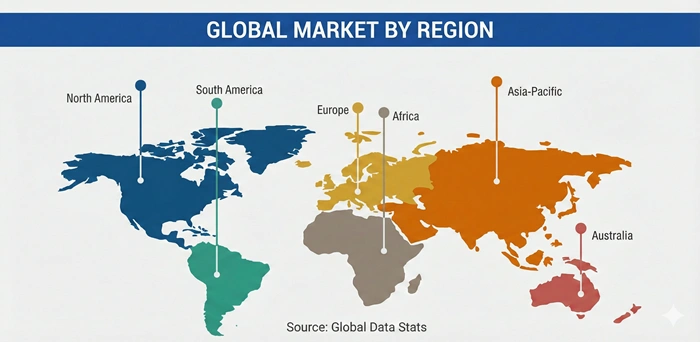
North America holds the largest share of the global healthcare consumables market, accounting for approximately 42.1% of total revenue in 2026 and expected to sustain its leadership throughout the forecast period. The United States is the primary contributor to this regional dominance, benefiting from the world's highest per-capita healthcare expenditure, a vast and well-equipped hospital network, and federal infection control standards that mandate consistent use of sterile single-use products in clinical procedures.
Companies including Cardinal Health, Becton Dickinson, Medline Industries, 3M Company, and Halyard Health hold strong positions in the U.S. consumables supply chain, serving hospitals, ambulatory surgical centers, and long-term care facilities through established national distribution networks. North America's healthcare consumables market is expected to sustain a CAGR of approximately 2.5–3% through 2033, supported by sustained hospital activity, aging demographics, and the ongoing expansion of outpatient and home care services across the region.
Asia Pacific
China, India, and South Korea Are Leading Asia Pacific's Rapid Transformation Into a Major Global Hub for Both Consumption and Manufacturing of Healthcare Consumables*
Asia Pacific is the fastest-growing regional market for healthcare consumables, with growth expectations well above the global market average through 2033. China leads both in production capacity and domestic consumption, with the government's Healthy China 2030 initiative directing billions in public investment into hospital infrastructure, universal health insurance expansion, and domestic medical device and consumable manufacturing capabilities.
India represents the second-fastest growing major market in the region, with companies such as Hindustan Syringes & Medical Devices and Sutures India rapidly scaling their manufacturing and export capacities to serve both domestic hospitals and global procurement customers. South Korea's advanced medtech manufacturing base and Japan's Nipro Corporation are also key regional contributors to the healthcare consumables market in Asia Pacific. The region is projected to grow at a CAGR exceeding 14% through 2033, making it the most dynamic growth engine for incremental global market volume in the healthcare consumables space.
Top Key Players
-
Becton Dickinson and Company (United States)
-
Cardinal Health Inc. (United States)
-
Medline Industries LP (United States)
-
3M Company / Solventum (United States)
-
Smith+Nephew PLC (United Kingdom)
-
ConvaTec Group PLC (United Kingdom)
-
Coloplast A/S (Denmark)
-
B. Braun Melsungen AG (Germany)
-
Fresenius SE & Co. KGaA (Germany)
-
Nipro Corporation (Japan)
-
Getinge AB (Sweden)
-
Hartmann Group (Germany)
-
Mölnlycke Health Care AB (Sweden)
-
Halyard Health Inc. (United States)
Recent Developments
-
In 2024, Becton Dickinson completed the strategic separation of its biosciences and diagnostic solutions business into Embecta Corp, allowing the company to sharpen its commercial focus on high-growth medical consumables, surgical supplies, and medication management platforms globally.
-
In 2025, Cardinal Health announced an investment of over USD 250 million in domestic distribution center expansion and supply chain automation technology, strengthening its national footprint in hospital consumables procurement and distribution across the United States.
-
In 2024, 3M Company completed the spin-off of its healthcare segment as an independent publicly traded entity, Solventum, consolidating wound care, infection prevention, and healthcare consumable portfolios under a focused corporate entity dedicated entirely to medical-grade product innovation.
-
In 2025, Smith+Nephew launched a new generation of advanced wound dressings incorporating antimicrobial silver technology and real-time moisture-sensing indicators, targeting hospital and home care markets across North America and Europe with a strong clinical evidence package.
-
In 2024, Coloplast A/S finalized the acquisition of Atos Medical, a specialist in voice and pulmonary rehabilitation products for laryngectomy patients, materially expanding its advanced consumables portfolio and strengthening its geographic coverage across European and North American markets.
Market Trends
Green Procurement Mandates and the Rise of Smart Connected Consumables Are Fundamentally Reshaping How Healthcare Products Are Designed, Purchased, and Used Globally*
Sustainability has emerged as a defining trend reshaping the competitive dynamics of the healthcare consumables market. Major hospital networks across Europe and North America are implementing green procurement frameworks that give preference to biodegradable surgical drapes, plant-based gloves, recyclable sterile packaging, and products manufactured using low-carbon processes. The European Union's Green Deal and corresponding national sustainability targets in Germany, the United Kingdom, and the Nordic countries are driving regulatory mandates that are accelerating this shift. Manufacturers that are investing in sustainable materials and supply chain transparency are gaining procurement advantages with sustainability-conscious health systems, while companies slow to adapt risk losing long-term contract opportunities as green procurement becomes the norm rather than the exception.
Smart and connected consumables represent the second major trend transforming the industry. Sensor-integrated wound dressings that monitor exudate levels and wound temperature, RFID-tagged surgical consumables that reduce operating room count errors, and digitally linked diagnostic test kits that transmit results directly to electronic health records are all transitioning from clinical trial or pilot phases into commercial availability. These products blur the boundary between a physical disposable item and a digital health service, creating entirely new value propositions and pricing models for manufacturers. The integration of connected consumable technology with hospital information systems and telehealth platforms is positioning the healthcare consumables market for a new era of value-based commercial growth through 2033.
Segments Covered in the Report
By Product Type
-
Wound Care Products
-
Surgical Consumables
-
Diagnostic Consumables
-
Personal Protective Equipment (PPE)
-
Infection Control Consumables
-
IV and Drug Delivery Consumables
-
Others
By Raw Material
-
Plastics and Polymers
-
Non-Woven Fabrics
-
Metals
-
Latex
-
Others
By End User
-
Hospitals and Healthcare Facilities
-
Diagnostic Laboratories
-
Home Care Settings
-
Research and Academic Institutes
-
Others
By Region
-
North America
-
United States
-
Canada
-
-
Europe
-
Germany
-
United Kingdom
-
France
-
Italy
-
Spain
-
Rest of Europe
-
-
Asia Pacific
-
China
-
India
-
Japan
-
South Korea
-
Australia
-
Rest of Asia Pacific
-
-
Latin America
-
Brazil
-
Mexico
-
Rest of Latin America
-
-
Middle East & Africa
-
GCC Countries
-
South Africa
-
Rest of Middle East & Africa
-
Frequently Asked Questions
Question 1: What is the current size and growth forecast of the global healthcare consumables market?
Answer: The global healthcare consumables market is valued at USD 168.57 billion in 2025 and is projected to reach USD 231.36 billion by 2033. It is expected to grow at a CAGR of 2.61% from 2026 to 2033.
Question 2: What are the major drivers fueling growth in the healthcare consumables market?
Answer: Key growth drivers in the healthcare consumables market include rising chronic disease prevalence, growing global surgical volumes, and heightened post-pandemic infection control protocols. The rapid expansion of home healthcare services is also creating new demand for patient-friendly consumable product formats.
Question 3: Which region dominates the global healthcare consumables market?
Answer: North America dominates the healthcare consumables market with a regional revenue share of approximately 42.1% in 2026. Its leadership is anchored by high per-capita healthcare spending, advanced clinical infrastructure, and regulatory mandates favoring single-use sterile products.
Question 4: Which product type holds the largest share in the healthcare consumables market?
Answer: Wound care consumables hold the largest product type share within the healthcare consumables market, accounting for approximately 30.8% of global revenue in 2026. Demand is driven by rising prevalence of diabetic foot ulcers, surgical wound care needs, and pressure ulcer management across aging populations.
Question 5: How is the home care trend impacting the healthcare consumables market?
Answer: The growth of home-based care is creating significant new demand for consumable products designed for patient self-administration within the healthcare consumables market. This trend is particularly prominent in North America and Asia Pacific, where aging populations and evolving insurance coverage models are accelerating home care service adoption.