
Harvester Market Overview
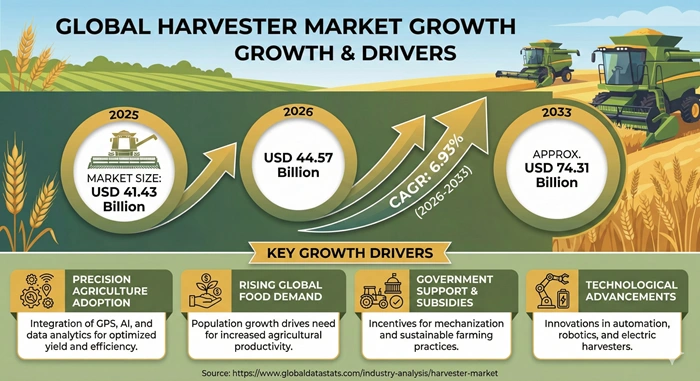
The global harvester market size is valued at USD 41.43 billion in 2025 and is predicted to increase from USD 44.57 billion in 2026 to approximately USD 74.31 billion by 2033, growing at a CAGR of 6.93% from 2026 to 2033. The harvester market is experiencing robust expansion driven by increasing agricultural mechanization, declining labor availability in rural areas, and rising global food demand. Modern harvesters equipped with precision farming technologies, automation systems, and smart sensors are transforming traditional harvesting operations across developed and emerging economies.
Technological innovation remains a cornerstone of market development as manufacturers integrate advanced capabilities such as GPS navigation, yield monitoring, and autonomous operation into harvester equipment. The shift toward sustainable agriculture practices and government subsidies supporting farm mechanization are accelerating adoption rates worldwide. Climate change challenges and the need for efficient post-harvest management further underscore the importance of modern harvesting solutions in enhancing agricultural productivity.
AI Impact on the Harvester Industry
Transforming Traditional Harvesting Through Intelligent Automation and Data-Driven Decision Making
Artificial intelligence is revolutionizing the harvester market by enabling autonomous operation, predictive maintenance, and precision harvesting capabilities that were previously impossible. AI-powered harvesters utilize machine learning algorithms to analyze crop conditions in real time, optimizing cutting heights, threshing speeds, and grain separation processes to minimize losses and maximize yield quality. These intelligent systems can detect variations in crop density, moisture levels, and maturity stages across different field zones, allowing operators to make data-driven adjustments that improve harvesting efficiency by up to 15 percent compared to conventional equipment.
The integration of computer vision and sensor fusion technologies allows modern harvesters to operate with minimal human intervention, addressing critical labor shortages in agricultural regions worldwide. AI-enabled predictive maintenance systems monitor equipment performance continuously, analyzing vibration patterns, temperature fluctuations, and component wear to predict potential failures before they occur. This proactive approach reduces unexpected downtime by 30 to 40 percent and extends machinery lifespan, delivering substantial cost savings for farm operators. Leading manufacturers are investing heavily in AI research and development, with several companies introducing autonomous harvester prototypes that can navigate fields, avoid obstacles, and optimize harvesting patterns without direct operator control.
Growth Factors
Rising Mechanization and Labor Shortages Drive Accelerated Adoption Across Global Agricultural Markets
The harvester market is propelled by the global shift toward farm mechanization as agricultural producers seek to overcome labor shortages and rising wage costs that threaten operational profitability. Rural-to-urban migration trends have created significant workforce gaps in agricultural regions, particularly in Asia-Pacific and Latin American countries where farming has traditionally relied on manual labor. Government initiatives supporting agricultural modernization through subsidies, low-interest financing, and tax incentives have made harvester acquisition more accessible to both large-scale commercial farms and smallholder cooperatives. These policy measures recognize mechanization as essential for improving food security and agricultural competitiveness in the global marketplace.
Increasing farm consolidation and the expansion of cultivated acreage in developing economies are generating sustained demand for high-capacity harvesting equipment capable of processing larger volumes efficiently. Population growth projections indicating 9.7 billion people by 2050 require substantial increases in agricultural productivity, which cannot be achieved through traditional harvesting methods alone. Technological advancements delivering improved fuel efficiency, reduced grain losses, and enhanced operator comfort are making modern harvesters more attractive investments despite higher upfront costs. Climate variability and unpredictable weather patterns are also driving adoption as farmers recognize the value of completing harvesting operations quickly during optimal weather windows to preserve crop quality and minimize field losses.
Market Outlook
Strong Growth Trajectory Supported by Technological Innovation and Expanding Agricultural Infrastructure
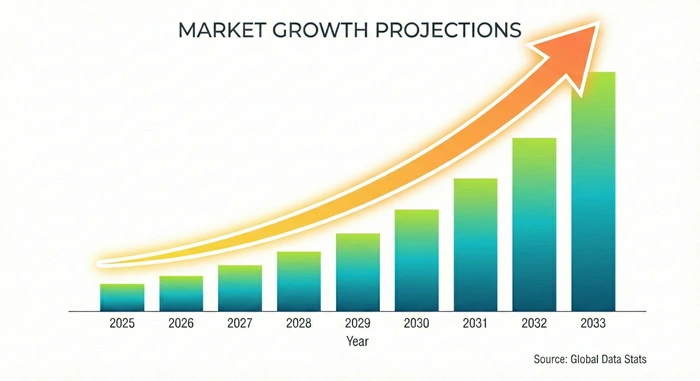
The harvester market outlook remains highly positive as manufacturers continue introducing innovative features that address evolving farmer needs and regulatory requirements. Precision agriculture adoption is accelerating globally, with harvesters serving as critical platforms for data collection and variable-rate application technologies that optimize resource utilization. The emergence of electric and hybrid-powered harvesters represents a significant development trajectory as the agricultural equipment industry responds to environmental sustainability concerns and carbon reduction mandates. These alternative powertrains promise reduced operating costs and lower emissions while maintaining the performance levels required for commercial farming operations.
Regional market dynamics reveal strong growth potential in Asia-Pacific territories where agricultural modernization programs are receiving substantial government investment and where mechanization rates remain significantly below developed market levels. North American and European markets continue demonstrating steady demand for replacement equipment and technology upgrades as farmers seek to maintain competitive advantages through operational efficiency improvements. The increasing availability of flexible financing options, equipment leasing programs, and custom harvesting services is expanding market accessibility for smaller farm operators who may not justify ownership of expensive harvesting machinery. Digital connectivity and remote monitoring capabilities are transforming harvester fleet management, enabling rental companies and large farming operations to optimize equipment utilization and maintenance scheduling through cloud-based platforms.
Expert Speaks
-
Eric Hansotia, CEO of AGCO Corporation, emphasized the critical role of precision agriculture technologies in modern farming operations, stating that intelligent harvesting solutions enable farmers to make data-driven decisions that optimize yields while reducing environmental impact and operational costs in an increasingly competitive global marketplace.
-
John May, CEO of Deere & Company, highlighted the company's commitment to autonomous farming technologies, noting that self-driving harvesters and AI-powered equipment represent the future of agriculture as labor shortages intensify and farmers demand solutions that deliver both productivity gains and sustainability improvements.
-
Scott Wine, CEO of CNH Industrial, discussed the importance of customer-centric innovation in agricultural equipment development, explaining that modern harvesters must integrate seamlessly with farm management systems to provide actionable insights that help producers maximize profitability across diverse growing conditions and crop types.
Key Report Takeaways
-
Asia-Pacific dominates the harvester market with the largest regional share exceeding 42 percent in 2025, driven by massive agricultural sectors in China and India, government subsidies for mechanization, and urgent need to enhance productivity supporting growing populations across the region.
-
North America represents the fastest-growing regional market with a projected CAGR of 7.2 percent from 2026 to 2033, fueled by widespread adoption of autonomous harvesting technologies, replacement demand for aging equipment, and increasing farm consolidation trends creating demand for higher-capacity machinery.
-
Large-scale commercial farms account for the majority of harvester utilization as operations exceeding 500 hectares require efficient mechanized solutions to complete harvesting operations within optimal timeframes while maintaining crop quality and minimizing field losses across extensive acreage.
-
Grain harvesting applications contribute the largest revenue share representing approximately 58 percent of total market value, with wheat, corn, and rice harvesting driving consistent demand for combine harvesters across major agricultural producing regions worldwide.
-
Combine harvesters dominate the product segment with market share exceeding 65 percent and CAGR of 7.1 percent, favored for versatility across multiple grain crops and integration of advanced technologies including yield monitoring, moisture sensing, and automated adjustments.
-
GPS-guided harvester technology will experience the fastest growth among technology segments with projected CAGR of 8.4 percent through 2033 as farmers increasingly adopt precision agriculture practices requiring accurate field mapping, automated steering, and variable-rate capabilities for optimal resource management.
Market Scope
| Report Coverage | Details |
|---|---|
| Market Size by 2033 | USD 74.31 Billion |
| Market Size by 2025 | USD 41.43 Billion |
| Market Size by 2026 | USD 44.57 Billion |
| Market Growth Rate from 2026 to 2033 | CAGR of 6.93% |
| Dominating Region | Asia-Pacific |
| Fastest Growing Region | North America |
| Base Year | 2025 |
| Forecast Period | 2026 to 2033 |
| Segments Covered | Type, Application, Technology, End-User, Region |
| Regions Covered | North America, Europe, Asia-Pacific, Latin America, Middle East & Africa |
Market Dynamics
Drivers Impact Analysis
Accelerating Farm Mechanization and Government Support Programs Fuel Market Expansion
| Impact Factor | ≈ Impact on CAGR Forecast | Geographic Relevance | Impact Timeline |
|---|---|---|---|
| Agricultural Labor Shortages | +1.8% | Global (highest in Asia-Pacific, North America) | 2026-2033 |
| Government Subsidies & Mechanization Programs | +1.5% | Asia-Pacific, Latin America, Africa | 2026-2030 |
| Rising Food Demand & Population Growth | +1.2% | Global (critical in developing regions) | 2026-2033 |
| Technological Advancements & Automation | +1.4% | North America, Europe, developed APAC | 2027-2033 |
Agricultural labor shortages represent the most significant driver propelling the harvester market as rural populations continue migrating toward urban employment opportunities offering higher wages and improved living conditions. This demographic shift has created critical workforce gaps during peak harvesting seasons when timely crop collection is essential for preserving quality and minimizing field losses. Mechanized harvesting solutions enable farmers to complete operations with minimal labor requirements while achieving superior efficiency and consistency compared to manual methods. The economic imperative to reduce dependency on seasonal workers whose availability and cost fluctuate unpredictably makes harvester investment increasingly attractive across farm sizes and crop types.
Government support programs providing financial incentives for agricultural mechanization have dramatically accelerated harvester adoption in developing markets where upfront equipment costs historically limited accessibility for smallholder farmers. Subsidies covering 30 to 50 percent of purchase prices, low-interest financing arrangements, and tax benefits for agricultural equipment investments have transformed market dynamics in India, China, Southeast Asian nations, and Sub-Saharan African countries. These initiatives recognize mechanization as essential for enhancing food security, improving agricultural productivity, and supporting rural economic development. Custom hiring centers and equipment sharing cooperatives facilitated through government programs are extending harvester benefits to smaller farm operations that cannot justify individual ownership, effectively expanding the addressable market and driving sustained volume growth.
Restraints Impact Analysis
High Capital Costs and Maintenance Requirements Challenge Market Penetration in Price-Sensitive Segments
| Restraint Factor | ≈ Impact on CAGR Forecast | Geographic Relevance | Impact Timeline |
|---|---|---|---|
| High Equipment Acquisition Costs | -1.1% | Developing markets, smallholder segments | 2026-2033 |
| Limited Technical Expertise & Support Infrastructure | -0.8% | Africa, rural Asia, Latin America | 2026-2029 |
| Fragmented Farm Holdings & Small Plot Sizes | -0.7% | South Asia, Sub-Saharan Africa | 2026-2033 |
| Seasonal Demand Fluctuations | -0.5% | Global (varied by region and crop) | 2026-2033 |
The substantial capital investment required for harvester acquisition remains a significant barrier limiting market penetration among smallholder farmers and agricultural operations in developing economies. Modern combine harvesters equipped with advanced technologies can cost between 200,000 USD and 500,000 USD, representing multiyear income for small and medium farm operators. Even with government subsidies and financing programs, the financial commitment required for ownership creates hesitation among farmers uncertain about future crop prices, weather conditions, and economic stability. This cost sensitivity is particularly pronounced in regions where farm incomes are volatile and access to agricultural credit is limited by underdeveloped financial infrastructure.
Limited availability of technical expertise and after-sales support infrastructure constrains harvester adoption in rural areas of developing markets where dealer networks are sparse and trained service technicians are scarce. Complex modern harvesting equipment requires regular maintenance, timely repairs, and periodic software updates to maintain optimal performance and reliability. Farmers operating in remote locations may face extended downtime when mechanical issues arise due to difficulties accessing replacement parts and qualified repair services. This operational risk discourages investment in sophisticated harvesting technologies, particularly when traditional manual methods can serve as reliable fallback options despite their inefficiency. The fragmentation of agricultural land into small plot sizes in regions such as South Asia and parts of Africa further limits harvester economic viability, as equipment designed for large-scale operations cannot achieve adequate utilization rates on farms measuring only a few hectares.
Opportunities Impact Analysis
Emerging Markets and Technological Innovation Create Substantial Growth Avenues
| Opportunity Area | ≈ Impact on CAGR Forecast | Geographic Relevance | Impact Timeline |
|---|---|---|---|
| Autonomous & AI-Enabled Harvesters | +1.3% | North America, Europe, Australia | 2028-2033 |
| Expansion in Emerging Agricultural Markets | +1.6% | Africa, Southeast Asia, Latin America | 2026-2033 |
| Electric & Hybrid Powertrain Development | +0.9% | Europe, North America, developed APAC | 2029-2033 |
| Custom Harvesting Services & Equipment Sharing | +1.1% | South Asia, Africa, smallholder segments | 2026-2030 |
The development and commercialization of autonomous harvesting technologies present transformative opportunities for market expansion as agricultural producers seek solutions addressing persistent labor challenges and operational efficiency demands. Fully autonomous harvesters capable of operating continuously without direct human supervision can dramatically increase productivity by working extended hours during optimal harvesting windows. These systems eliminate operator fatigue concerns while delivering consistent performance quality across entire fields. Early adopters in developed markets are demonstrating substantial productivity gains and cost reductions that validate the business case for autonomous equipment investment. As regulatory frameworks mature and technology costs decline through economies of scale, autonomous harvesters are expected to transition from niche applications to mainstream adoption among large commercial farming operations.
Emerging agricultural markets in Africa, Southeast Asia, and Latin America offer substantial untapped potential for harvester manufacturers as these regions undergo agricultural modernization and infrastructure development. Rising incomes, growing middle-class populations, and increasing food consumption are driving agricultural intensification in these territories, creating demand for productivity-enhancing equipment. International development organizations and national governments are prioritizing agricultural mechanization as a pathway to rural economic development and food security enhancement. Companies establishing early market presence through localized manufacturing, adapted product offerings, and comprehensive service networks can capture significant market share as these economies mature. The expansion of custom hiring services and equipment sharing cooperatives provides viable business models for introducing harvesting technologies in regions where individual ownership economics remain challenging.
Segment Analysis
By Type - Combine Harvesters
Versatile Multi-Crop Capability and Technological Integration Drive Segment Dominance
Combine harvesters represent the largest and most dynamic segment within the global harvester market, commanding approximately 67 percent market share in 2025 and projected to grow at a CAGR of 7.1 percent through 2033. This segment leadership stems from the equipment's versatility across multiple grain crops including wheat, corn, rice, soybeans, and various pulses, making it the preferred choice for diversified farming operations. North America leads combine harvester adoption with market share exceeding 32 percent, driven by extensive grain production across the United States and Canada where large-scale farms averaging over 1000 hectares require high-capacity machinery. Leading manufacturers such as Deere & Company, CNH Industrial, and AGCO Corporation dominate this regional market through continuous innovation in threshing systems, grain separation technologies, and operator comfort features that enhance productivity during extended harvesting campaigns.
The combine harvester segment benefits significantly from ongoing technological advancement as manufacturers integrate precision agriculture capabilities including yield mapping, moisture sensing, and automated header height control systems. These intelligent features enable farmers to optimize harvesting parameters in real time, reducing grain losses below 1 percent while maintaining consistent crop quality across varying field conditions. Asia-Pacific markets particularly China and India are experiencing rapid combine harvester growth with regional CAGR exceeding 8.2 percent as government mechanization programs provide substantial subsidies for equipment purchases. The segment is witnessing increased demand for compact combine harvesters designed for smaller Asian farm plots while maintaining advanced technological capabilities found in larger Western models. Companies investing in localized product development and establishing robust dealer networks across emerging markets are capturing disproportionate growth as agricultural modernization accelerates in these high-potential territories.
By Application - Grain Harvesting
Staple Crop Production Volumes and Global Food Security Priorities Support Application Leadership
Grain harvesting applications dominate the harvester market, accounting for approximately 58 percent of total revenue in 2025 with projected CAGR of 6.8 percent through 2033, driven by massive global production volumes of wheat, rice, corn, and other staple cereals that form the foundation of human nutrition worldwide. This application segment's prominence reflects the critical importance of efficient grain collection in meeting food security objectives for growing populations, particularly in developing regions where cereals provide the majority of daily caloric intake. Asia-Pacific represents the largest regional market for grain harvesting with share exceeding 48 percent, reflecting extensive rice and wheat cultivation across China, India, Pakistan, and Southeast Asian nations where mechanization rates are increasing rapidly from historically low baselines.
Major agricultural equipment manufacturers including Kubota Corporation, Mahindra & Mahindra, and Yanmar Holdings have developed specialized combine harvesters optimized for rice harvesting in wet paddy conditions common throughout Asian growing regions. These adapted machines feature enhanced traction systems, rust-resistant components, and modified threshing mechanisms that accommodate higher moisture content and different grain characteristics compared to wheat-focused designs prevalent in Western markets. North American grain harvesting demonstrates strong growth momentum with regional CAGR of 7.3 percent as farmers replace aging equipment with technologically advanced models offering superior fuel efficiency, reduced maintenance requirements, and integrated data management capabilities. The application segment benefits from continuous crop breeding advancements producing higher-yielding varieties that require efficient harvesting technologies to capture genetic potential and minimize field losses during collection operations.
Regional Insights
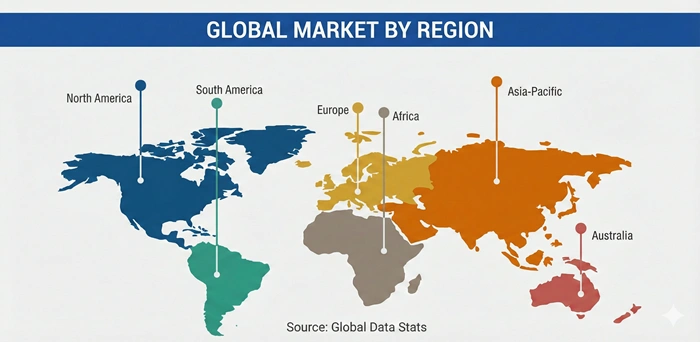
Asia-Pacific
Massive Agricultural Scale and Government Mechanization Initiatives Cement Regional Market Leadership
Asia-Pacific dominates the global harvester market with commanding 42.5 percent regional share in 2025, growing at a projected CAGR of 7.4 percent through 2033, driven by enormous agricultural sectors in China and India that collectively cultivate over 300 million hectares of cropland. The region's market leadership stems from urgent needs to enhance agricultural productivity supporting populations exceeding 4.5 billion people while addressing acute labor shortages resulting from rapid urbanization and industrial development. Government mechanization programs across major markets provide substantial financial incentives including subsidies covering 30 to 50 percent of equipment costs, low-interest loans, and tax exemptions that dramatically improve harvester affordability for farmers. China leads regional adoption with harvester ownership exceeding 2 million units, while India represents the fastest-growing market with annual sales growth above 12 percent as mechanization rates increase from relatively low current levels.
Leading manufacturers active in the Asia-Pacific harvester market include Kubota Corporation (Japan), Mahindra & Mahindra (India), Yanmar Holdings (Japan), Lovol Heavy Industry (China), and Preet Tractors (India), which collectively command approximately 45 percent regional market share through localized product development and extensive dealer networks. These companies have invested heavily in manufacturing facilities across China, India, and Thailand to serve local markets with cost-competitive equipment adapted to regional crop types, farm sizes, and operating conditions. The region demonstrates particularly strong growth in compact and mid-sized combine harvesters suited to smaller farm plots predominant in South and Southeast Asia, with models featuring 60 to 120 horsepower engines representing over 60 percent of unit sales. Rice harvesting applications dominate regional demand accounting for 52 percent of harvester utilization, followed by wheat at 28 percent, reflecting the dietary importance of these staple grains across Asian populations.
North America
Technology Leadership and Equipment Replacement Cycles Drive Fastest Regional Growth Rate
North America represents the fastest-growing regional harvester market with projected CAGR of 7.2 percent from 2026 to 2033 and market share of approximately 28 percent in 2025, fueled by widespread adoption of autonomous and precision agriculture technologies that command premium pricing and drive value growth. The region's advanced agricultural sector characterized by large-scale commercial farms averaging over 800 hectares in the United States creates sustained demand for high-capacity harvesting equipment capable of processing extensive acreage efficiently. Replacement demand constitutes a significant growth driver as the installed base of harvesters ages beyond optimal operational lifespan, with approximately 35 percent of existing equipment exceeding 12 years of service and due for technological upgrades to modern precision-enabled models.
Deere & Company (United States) leads the North American harvester market with commanding share exceeding 40 percent, followed by CNH Industrial (United States) at 24 percent and AGCO Corporation (United States) at 18 percent, collectively representing over 82 percent regional market concentration. These manufacturers maintain competitive advantages through extensive dealer networks providing comprehensive after-sales support, proprietary precision farming technologies, and strong brand loyalty among multi-generational farming families. The region demonstrates the highest adoption rates globally for autonomous harvesting technologies, with major manufacturers introducing commercial models featuring GPS-guided navigation, obstacle detection systems, and remote monitoring capabilities. United States grain production across Midwest states including Iowa, Illinois, Nebraska, and Kansas drives substantial harvester demand, while Canadian prairie provinces of Saskatchewan, Alberta, and Manitoba represent important secondary markets for high-capacity equipment suited to extensive wheat and canola operations.
Top Key Players
-
Deere & Company (United States)
-
CNH Industrial N.V. (United Kingdom)
-
AGCO Corporation (United States)
-
CLAAS KGaA mbH (Germany)
-
Kubota Corporation (Japan)
-
Mahindra & Mahindra Ltd. (India)
-
Yanmar Holdings Co. Ltd. (Japan)
-
Caterpillar Inc. (United States)
-
SDF Group (Italy)
-
Lovol Heavy Industry Co. Ltd. (China)
-
Preet Tractors (India)
-
Dasmesh Group (India)
Recent Developments
-
January 2023 - Deere & Company announced the commercial launch of its fully autonomous combine harvester model featuring advanced AI-powered navigation systems, real-time yield monitoring, and remote fleet management capabilities designed to address critical labor shortages in North American grain production regions.
-
August 2024 - Yanmar Holdings Co. Ltd. completed the strategic acquisition of CLAAS India to accelerate growth in the Indian agricultural equipment market by integrating world-class manufacturing facilities and expanding product portfolios to serve the rapidly mechanizing South Asian agricultural sector.
-
March 2024 - CNH Industrial announced substantial investment in a new state-of-the-art manufacturing facility dedicated to combine harvester production, incorporating advanced automation technologies and flexible production systems to increase output capacity and meet growing global demand.
-
July 2024 - CLAAS KGaA mbH established a strategic technology partnership with a leading data analytics firm to integrate advanced artificial intelligence and machine learning capabilities into combine harvester systems, enabling predictive maintenance and autonomous operation features.
-
October 2024 - AGCO Corporation released an innovative line of fuel-efficient combine harvesters incorporating hybrid powertrain technologies and meeting stringent European Union emission standards while delivering enhanced operational performance and reduced environmental impact.
Market Trends
Autonomous Technologies and Sustainability Focus Shape Industry Evolution
The harvester market is experiencing transformative shifts driven by autonomous operation technologies that promise to revolutionize agricultural productivity and address persistent labor challenges across global farming regions. Leading manufacturers are investing billions in developing self-driving harvesters equipped with computer vision systems, machine learning algorithms, and sensor fusion technologies enabling machines to navigate fields independently while optimizing harvesting parameters in real time. These autonomous systems demonstrate the capability to operate continuously during optimal harvesting windows without operator fatigue limitations, potentially increasing productivity by 25 to 35 percent compared to conventional equipment. Early commercial deployments in North American and European markets are validating technical feasibility and economic benefits, with broader adoption anticipated as regulatory frameworks mature and technology costs decline through manufacturing scale economies.
Environmental sustainability considerations are increasingly influencing harvester design and technology development as agricultural equipment manufacturers respond to carbon reduction mandates and farmer preferences for eco-friendly solutions. Electric and hybrid powertrain technologies are emerging as viable alternatives to traditional diesel engines, offering reduced emissions, lower operating costs, and quieter operation that addresses noise concerns in farming communities. Precision agriculture integration enables harvesters to minimize resource waste through optimized fuel consumption, reduced grain losses, and data-driven insights supporting sustainable farming practices. The harvester market is also witnessing growing adoption of equipment sharing models and custom harvesting services that improve machinery utilization rates and extend access to advanced technologies among smaller farm operators unable to justify individual ownership economics.
Segments Covered in the Report
By Type
-
Combine Harvesters
-
Forage Harvesters
-
Sugarcane Harvesters
-
Cotton Harvesters
-
Potato Harvesters
-
Others
By Application
-
Grain Harvesting
-
Forage Collection
-
Sugarcane Harvesting
-
Cotton Harvesting
-
Vegetable Harvesting
-
Others
By Technology
-
Conventional Systems
-
GPS-Guided Harvesters
-
Automated Harvesters
-
Smart Sensor Integration
-
Autonomous Systems
By End-User
-
Large-Scale Commercial Farms
-
Smallholder Farmers
-
Agricultural Cooperatives
-
Custom Harvesting Services
-
Others
By Region
-
North America (United States, Canada, Mexico)
-
Europe (Germany, United Kingdom, France, Italy, Spain, Rest of Europe)
-
Asia-Pacific (China, India, Japan, Australia, South Korea, Southeast Asia, Rest of Asia-Pacific)
-
Latin America (Brazil, Argentina, Rest of Latin America)
-
Middle East & Africa (GCC Countries, South Africa, Rest of MEA)
Frequently Asked Questions
Question 1: What is the expected harvester market size by 2033?
Answer: The global harvester market is projected to reach approximately USD 74.31 billion by 2033, growing from USD 44.57 billion in 2026. This substantial expansion reflects increasing agricultural mechanization, technological advancements, and rising food production requirements worldwide.
Question 2: Which region dominates the global harvester market?
Answer: Asia-Pacific dominates the harvester market with over 42 percent regional share, driven by massive agricultural sectors in China and India, government mechanization subsidies, and urgent productivity enhancement needs. The region's leadership stems from extensive cropland cultivation and rapidly increasing mechanization rates across developing markets.
Question 3: What are the primary growth drivers for the harvester market?
Answer: Agricultural labor shortages, government subsidies supporting farm mechanization, rising global food demand, and technological advancements in automation represent the primary growth drivers. These factors collectively create compelling economic incentives for farmers to adopt modern harvesting equipment across diverse geographic markets.
Question 4: Which harvester market segment is growing fastest?
Answer: GPS-guided harvester technology represents the fastest-growing segment with projected CAGR of 8.4 percent through 2033, driven by widespread precision agriculture adoption. Farmers increasingly demand automated steering, field mapping, and variable-rate capabilities that optimize resource utilization and enhance operational efficiency.
Question 5: Who are the leading companies in the harvester market?
Answer: Deere & Company, CNH Industrial, AGCO Corporation, CLAAS KGaA mbH, and Kubota Corporation lead the global harvester market through technological innovation and extensive distribution networks. These manufacturers collectively command significant market share through continuous product development, precision farming integration, and comprehensive customer support services.