
Gene Expression Analysis Market Overview
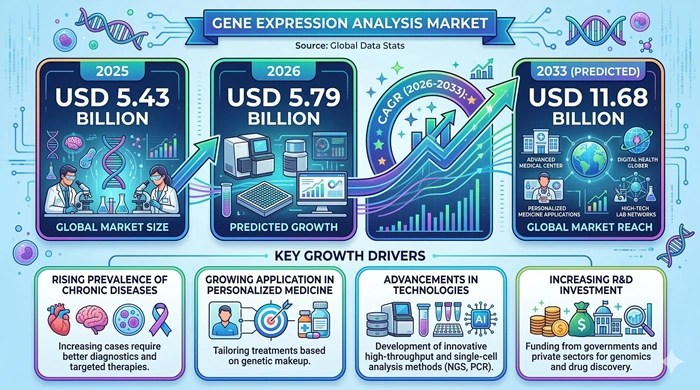
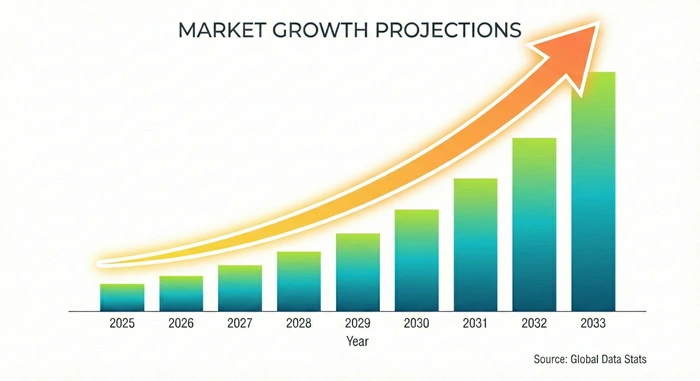
The global gene expression analysis market size is valued at USD 5.43 billion in 2025 and is predicted to increase from USD 5.79 billion in 2026 to approximately USD 11.68 billion by 2033, growing at a CAGR of 10.5% from 2026 to 2033.
The gene expression analysis market is expanding steadily, driven by rising investments in genomics research, growing adoption of next-generation sequencing (NGS), and increasing demand for personalized medicine. Pharmaceutical and biotechnology companies are deploying gene expression profiling tools to accelerate drug discovery, biomarker identification, and disease diagnostics, making this market a critical pillar of modern life sciences.
AI Impact on the Gene Expression Analysis Industry
Artificial Intelligence and Machine Learning Are Revolutionizing How Scientists Interpret Gene Expression Data at Scale
Artificial intelligence is fundamentally changing the way researchers process and interpret large gene expression datasets. AI-powered tools can scan thousands of gene activity patterns simultaneously, identify subtle correlations, and predict disease outcomes with a level of accuracy that manual analysis cannot match. In oncology, AI models trained on RNA sequencing data can distinguish between tumor subtypes and predict patient responses to targeted therapies, significantly improving treatment planning. This ability to extract clinically meaningful signals from complex data has made AI integration a top priority for genomics platform providers.
Machine learning algorithms are also reducing the time and cost of gene expression studies by automating quality control, normalization, and pathway analysis steps. Cloud-based bioinformatics platforms now allow research teams spread across continents to collaborate on the same datasets in real time, accelerating discoveries. As foundation models trained on multi-omics data become more widely available, gene expression analysis workflows will become faster, more reproducible, and more accessible to smaller research institutions and clinical laboratories.
Growth Factors
Rising Demand for Precision Medicine and Increased Genomics Funding Are the Core Engines Behind Market Expansion
The single most powerful growth driver for the gene expression analysis market is the global shift toward precision medicine. Clinicians and researchers increasingly need granular data on how genes behave in individual patients to design targeted therapies that minimize side effects and improve outcomes. This demand is pushing pharmaceutical companies, academic centers, and hospital systems to invest in RNA sequencing, microarray platforms, and digital PCR tools that can deliver that level of resolution. Regulatory agencies in the United States and Europe have also been approving more companion diagnostics based on gene expression profiling, further embedding these tools into clinical workflows.
Government funding for genomics research has risen sharply over the past few years, with large national programs in the U.S., China, the UK, and India committing billions of dollars to population genomics, rare disease research, and cancer genomics initiatives. These programs generate enormous demand for high-throughput sequencing and expression-profiling instruments, reagents, and data-analysis software. At the same time, falling costs of sequencing—driven by competition among platform providers—are making gene expression tools accessible to mid-sized biotech firms and academic hospitals that previously could not afford large-scale studies.
Market Outlook
From Research Labs to Clinical Diagnostics: Gene Expression Analysis Is Entering a New Era of Real-World Application
The gene expression analysis market is transitioning from a primarily research-focused domain into a broader clinical and diagnostics landscape. Liquid biopsy platforms that analyze circulating tumor RNA, companion diagnostics tied to FDA-approved oncology drugs, and pharmacogenomics panels used in hospital pharmacies are all becoming standard tools. This clinical adoption creates a more stable and recurring revenue stream for vendors compared to the cyclical nature of academic grant funding.
Looking forward, the convergence of spatial transcriptomics, single-cell RNA sequencing, and AI-powered interpretation platforms will open entirely new research frontiers. Spatial transcriptomics, in particular, allows scientists to map gene activity within intact tissue sections, providing spatial context that bulk RNA-seq cannot offer. As these technologies move from early-adopter research labs into routine use, they will create substantial new revenue opportunities for instrument makers, software developers, and reagent suppliers. The overall market is expected to benefit from this innovation cycle throughout the 2026 to 2033 forecast period.
Expert Speaks
-
CEO, Thermo Fisher Scientific (U.S.): "Gene expression analysis is at the heart of every major breakthrough in oncology and rare disease today. We are seeing unprecedented demand for both high-throughput sequencing platforms and downstream bioinformatics tools, and our investments in cloud-based analysis workflows are helping customers move from data generation to clinical insight faster than ever before."
-
CEO, Illumina, Inc. (U.S.): "Next-generation sequencing has become the backbone of modern gene expression analysis, and the pace of adoption in clinical diagnostics is accelerating. We believe that as sequencing costs continue to fall, expression profiling will become a routine part of cancer screening and treatment monitoring within this decade."
-
CEO, Agilent Technologies (U.S.): "Multi-omics integration is the next frontier. Combining gene expression data with proteomics and metabolomics information gives researchers a systems-level view of disease biology that was simply not possible a few years ago. Our latest microarray and RNA analysis platforms are purpose-built for this kind of integrative, high-resolution research."
Key Report Takeaways
-
North America dominates the gene expression analysis market, accounting for the largest regional revenue share in 2025, driven by a high concentration of pharmaceutical companies, biotech startups, leading academic research institutions, and well-funded national genomics programs.
-
Asia-Pacific is the fastest-growing region, propelled by rapidly expanding biotech and pharmaceutical sectors in China, India, South Korea, and Japan, along with government-backed precision medicine and genomics initiatives that are driving strong demand for sequencing instruments and reagents.
-
Pharmaceutical and biotechnology companies are the heaviest users of gene expression profiling tools, relying on these platforms for drug target identification, mechanism-of-action studies, biomarker discovery, and companion diagnostic development.
-
The RNA sequencing (RNA-seq) application contributes the most to market revenue, as it delivers a comprehensive, unbiased view of the entire transcriptome and is increasingly preferred over microarrays for both discovery research and clinical diagnostics.
-
NGS-based platforms are the most widely adopted technology in the gene expression analysis market, displacing older microarray systems in high-throughput research settings because of superior sensitivity, broader dynamic range, and decreasing per-sample costs.
-
Single-cell RNA sequencing is the fastest-rising future segment, projected to hold approximately 22% of the market by 2033 with a CAGR of around 14%, as researchers demand cell-by-cell resolution to understand tumor heterogeneity, immune responses, and developmental biology.
Market Scope
| Report Coverage Details | Value / Detail |
|---|---|
| Market Size by 2033 | USD 11.68 Billion |
| Market Size by 2025 | USD 5.43 Billion |
| Market Size by 2026 | USD 5.79 Billion |
| Market Growth Rate from 2026 to 2033 | CAGR of 10.5% |
| Dominating Region | North America |
| Fastest Growing Region | Asia-Pacific |
| Base Year | 2025 |
| Forecast Period | 2026 – 2033 |
| Segments Covered | By Technology, By Product, By Application, By End User, By Region |
| Regions Covered | North America, Europe, Asia-Pacific, Latin America, Middle East & Africa |
Market Dynamics
Drivers Impact Analysis
Surging Adoption of Precision Medicine and Genomics Funding Are Creating Structural Tailwinds for the Gene Expression Analysis Market
The gene expression analysis market is benefiting from a structural shift in how diseases are diagnosed and treated. The move toward precision medicine means that clinicians need actionable molecular data for every patient, and gene expression profiling provides exactly that information. Regulatory approvals of expression-based companion diagnostics in oncology have embedded these tools into standard-of-care pathways, creating consistent, recurring demand that is less sensitive to economic cycles than purely academic research spending.
Publicly funded genomics programs in the U.S., UK, China, and India are also injecting significant capital into the market. These programs require large volumes of sequencing instruments, reagents, and analysis software, supporting both established vendors and emerging platform developers. As sequencing costs continue to fall—driven by competition among Illumina, MGI, and Oxford Nanopore—adoption is spreading to mid-tier hospitals and diagnostic labs that were previously priced out.
| Factor | ≈ % Impact on CAGR Forecast | Geographic Relevance | Impact Timeline |
|---|---|---|---|
| Precision medicine and companion diagnostics adoption | 32% | North America, Europe | Short- to medium-term |
| Government genomics funding and national programs | 28% | North America, Asia-Pacific, Europe | Medium-term |
| Falling NGS and sequencing costs | 22% | Global, especially emerging markets | Medium- to long-term |
| Growth of single-cell and spatial transcriptomics | 18% | North America, Europe | Medium- to long-term |
Restraints Impact Analysis
High Instrument Costs, Complex Data Workflows, and Regulatory Hurdles Are Slowing Broader Adoption
Despite strong momentum, the gene expression analysis market faces meaningful barriers. High upfront costs for next-generation sequencing instruments and the substantial computational infrastructure needed to process, store, and interpret large RNA datasets remain a challenge for smaller labs and hospitals in low-resource settings. Skilled bioinformaticians are also in short supply globally, creating bottlenecks in data analysis that can delay the translation of raw expression data into clinical decisions.
Regulatory complexity adds another layer of difficulty, particularly for companies trying to commercialize gene expression-based companion diagnostics. The approval pathway for in vitro diagnostics based on multi-gene expression panels is rigorous and lengthy, requiring extensive clinical validation studies. These requirements increase development costs and timelines, which can discourage smaller companies from pursuing clinical applications of expression-profiling tools.
| Factor | ≈ % Impact on CAGR Forecast | Geographic Relevance | Impact Timeline |
|---|---|---|---|
| High cost of NGS instruments and infrastructure | 28% | Emerging markets, smaller labs | Short- to medium-term |
| Shortage of skilled bioinformaticians | 22% | Global | Medium-term |
| Complex regulatory approval pathways | 18% | North America, Europe | Medium-term |
| Data privacy and security concerns | 12% | Global | Medium- to long-term |
Opportunities Impact Analysis
Single-Cell Sequencing, Spatial Transcriptomics, and Liquid Biopsy Are Opening High-Value Growth Frontiers
Emerging technologies such as single-cell RNA sequencing and spatial transcriptomics are creating substantial new revenue opportunities in the gene expression analysis market. These platforms allow researchers to study gene activity at a level of resolution that was unimaginable a decade ago, enabling breakthroughs in cancer biology, immunology, and neuroscience. As costs fall and workflows become more standardized, adoption will spread beyond elite research centers into mainstream biotech and clinical settings.
Liquid biopsy represents another high-potential opportunity, particularly in oncology. Detecting circulating tumor RNA in blood samples allows clinicians to monitor cancer progression and treatment response non-invasively, generating recurring diagnostic demand. Companies that can offer validated liquid biopsy assays built on gene expression data will have a significant competitive advantage in the fast-growing cancer diagnostics market.
| Factor | ≈ % Impact on CAGR Forecast | Geographic Relevance | Impact Timeline |
|---|---|---|---|
| Single-cell and spatial transcriptomics commercialization | 30% | North America, Europe, Asia-Pacific | Medium- to long-term |
| Liquid biopsy for cancer monitoring | 25% | North America, Europe | Medium-term |
| Expansion into clinical diagnostics | 20% | Global | Medium-term |
| AI-powered bioinformatics platforms | 15% | Global | Medium- to long-term |
Segment Analysis
By Technology
NGS-Based Platforms Lead the Gene Expression Analysis Market While Microarray Solutions Maintain a Steady Share in Routine Applications
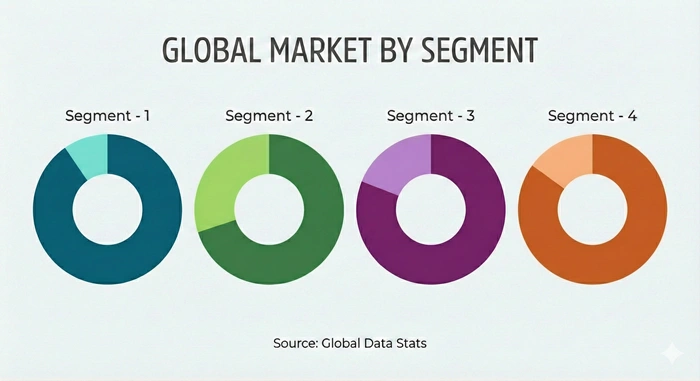
Next-generation sequencing holds the dominant position in the gene expression analysis market, representing roughly 44% of total revenue in 2025 and growing at a CAGR of approximately 12% through 2033. NGS platforms are preferred because they offer a comprehensive, unbiased view of the transcriptome without prior knowledge of specific gene sequences, making them ideal for discovery research and complex disease studies. North America is the largest adopter, where pharmaceutical and biotech companies use NGS extensively for drug target identification, mechanism-of-action studies, and biomarker discovery. Key players in this segment include Illumina, Inc., Thermo Fisher Scientific, and MGI Tech, all of which are investing heavily in instrument upgrades, expanded reagent portfolios, and cloud-based analysis software.
Microarray technology, while no longer the growth leader, retains a significant share of the gene expression analysis market—particularly in high-volume, hypothesis-driven studies where cost-per-sample efficiency matters. Microarrays account for roughly 22% of market revenue in 2025, with a CAGR of around 6% through 2033. Europe and Asia-Pacific remain important markets for microarray solutions, as regional diagnostic labs and academic centers continue to use established platforms for standardized gene expression profiling. Agilent Technologies and Thermo Fisher Scientific are the primary vendors in this sub-segment, offering validated arrays for oncology, pharmacogenomics, and agricultural genomics applications.
By End User
Pharmaceutical and Biotechnology Companies Represent the Largest and Most Strategically Important End-User Segment
Pharmaceutical and biotechnology companies collectively account for the largest end-user share in the gene expression analysis market, representing approximately 38% of global revenue in 2025 and growing at a CAGR of about 11% through 2033. These organizations rely on gene expression profiling at virtually every stage of the drug development pipeline—from target identification and lead optimization through clinical trials and companion diagnostic development. In North America, where the highest concentration of global pharmaceutical R&D spending is located, companies such as Pfizer, Roche, and AstraZeneca operate dedicated genomics and transcriptomics teams that routinely deploy NGS, single-cell sequencing, and digital PCR platforms.
Academic and research institutes represent the second-largest end-user segment, accounting for roughly 28% of revenue in 2025, with strong growth expected in Asia-Pacific as governments fund new genomics research centers. These institutions drive early-stage innovation and serve as the primary channel through which new expression-analysis technologies are validated and eventually adopted by commercial users. Organizations such as the Broad Institute, the Wellcome Sanger Institute, and leading universities in China and South Korea are among the most active users of cutting-edge expression profiling platforms, often collaborating directly with technology vendors to develop and refine new workflows.
Regional Insights
North America
North America Maintains Its Leadership in the Gene Expression Analysis Market Through Strong R&D Investment and Clinical Adoption
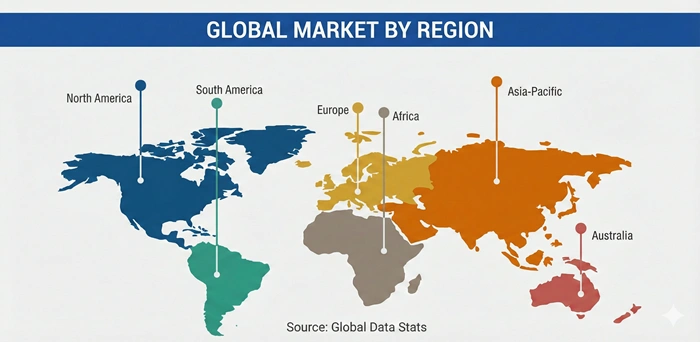
North America holds the largest share of the gene expression analysis market, contributing approximately 38% of global revenue in 2025 and sustaining a CAGR of around 10% through 2033. The United States is the primary driver, home to the world's largest concentration of pharmaceutical companies, academic genomics centers, and well-funded national programs such as the National Institutes of Health (NIH) Cancer Genome Atlas. Strong reimbursement pathways for gene expression-based diagnostics and a supportive regulatory environment for companion diagnostics have accelerated clinical adoption of these tools beyond the research setting. Leading companies such as Illumina, Inc., Thermo Fisher Scientific, Bio-Rad Laboratories, and Agilent Technologies are headquartered in this region and invest heavily in product development and commercial expansion.
The region also benefits from a dense network of contract research organizations (CROs) and genomics service providers that offer gene expression profiling as a fee-for-service, making these tools accessible to smaller biotechs without large internal lab infrastructure. Canada is emerging as a secondary growth hub, with government investments in precision medicine and a growing biotech cluster in cities like Toronto and Vancouver supporting increased demand for sequencing and expression analysis platforms. North America's established intellectual property framework and abundance of venture capital also make it the preferred launch market for innovative gene expression tools, reinforcing its dominant position.
Asia-Pacific
Asia-Pacific Is the Fastest-Growing Region for Gene Expression Analysis, Fueled by Government Investment and a Booming Biotech Sector
Asia-Pacific is expanding at the fastest rate in the gene expression analysis market, with a projected CAGR of approximately 13% from 2026 to 2033 and an expected regional share of around 28% by 2033. China leads this growth, backed by major government programs such as the Precision Medicine Initiative and the 14th Five-Year Plan's focus on life sciences, which have channeled significant funding into genomics research infrastructure. India is also accelerating, with national programs promoting genomics in public health and a rapidly growing pharmaceutical industry that increasingly relies on expression profiling for drug development. Key players active in this region include BGI Genomics and MGI Tech from China, as well as global vendors like Illumina, Thermo Fisher Scientific, and Qiagen, all of which have established local distribution networks and partnerships.
South Korea and Japan are contributing to Asia-Pacific growth through their well-developed healthcare systems and active investment in precision oncology. In Japan, national cancer genomics programs have driven adoption of RNA sequencing in clinical settings, while South Korea's biotech sector is investing in expression-based companion diagnostics for export to global markets. The combination of lower manufacturing costs, growing local talent pools, and strong government support makes Asia-Pacific an increasingly attractive market for both global vendors and regional start-ups developing novel gene expression analysis platforms.
Top Key Players
-
Thermo Fisher Scientific Inc. (U.S.)
-
Illumina, Inc. (U.S.)
-
Agilent Technologies, Inc. (U.S.)
-
Bio-Rad Laboratories, Inc. (U.S.)
-
Qiagen N.V. (Germany)
-
F. Hoffmann-La Roche Ltd. (Switzerland)
-
10x Genomics, Inc. (U.S.)
-
Pacific Biosciences of California, Inc. (U.S.)
-
Oxford Nanopore Technologies plc (U.K.)
-
BGI Genomics Co., Ltd. (China)
-
Becton, Dickinson and Company (U.S.)
-
Fluidigm Corporation (U.S.)
-
Merck KGaA (Germany)
-
PerkinElmer, Inc. (U.S.)
-
NanoString Technologies, Inc. (U.S.)
Recent Developments
-
In 2025, Illumina, Inc. launched its upgraded MiSeq i100 Plus benchtop sequencer, designed to deliver faster run times and higher accuracy for RNA-sequencing applications in clinical and translational research labs, significantly expanding access to transcriptome-wide gene expression analysis for mid-sized laboratories.
-
In 2025, 10x Genomics released its Chromium iX system with enhanced single-cell RNA sequencing throughput and a new spatial gene expression kit compatible with a broader range of tissue types, reinforcing its leadership in the high-growth single-cell transcriptomics segment.
-
In 2024, Thermo Fisher Scientific completed the acquisition of Olink Proteomics for approximately USD 3.1 billion, strengthening its multi-omics portfolio by combining high-throughput protein profiling with its existing RNA expression analysis platforms to offer customers integrated transcriptomics and proteomics workflows.
-
In 2024, Qiagen N.V. expanded its QIAseq product line with new library preparation kits optimized for low-input RNA samples, addressing a key challenge in liquid biopsy and circulating tumor RNA applications where sample material is often scarce.
-
In 2024, Oxford Nanopore Technologies signed a strategic collaboration with the Wellcome Sanger Institute to apply its direct RNA sequencing technology to large-scale transcriptomics projects, advancing the use of long-read sequencing for full-length transcript analysis and novel isoform discovery in gene expression research.
Market Trends
Spatial Transcriptomics, Single-Cell Sequencing, and Multi-Omics Integration Are Defining the Next Wave of Innovation in Gene Expression Analysis
The most transformative trend reshaping the gene expression analysis market is the rapid commercialization of spatial transcriptomics and single-cell RNA sequencing. These platforms give researchers the ability to map gene activity at individual-cell resolution within intact tissue structures, unlocking insights into tumor microenvironments, organ development, and immune cell heterogeneity that bulk sequencing cannot provide. Companies such as 10x Genomics, Vizgen, and Nanostring Technologies are competing aggressively to lower the cost and complexity of these workflows, which is expected to drive broad adoption in oncology, neuroscience, and immunology research over the forecast period.
Multi-omics integration is the second major trend shaping this market. Researchers increasingly recognize that gene expression data alone tells only part of the story; combining transcriptomics with proteomics, epigenomics, and metabolomics data delivers a far richer and more accurate picture of cell biology. Platform vendors are responding by building integrated software tools and unified data standards that allow different omics layers to be analyzed together. As these integrative approaches mature and become more user-friendly, they are expected to move from specialized research settings into clinical diagnostics and drug development pipelines, further expanding the addressable market for gene expression analysis tools.
Segments Covered in the Report
-
By Technology: Next-Generation Sequencing (NGS), Microarray, Polymerase Chain Reaction (PCR/qPCR/digital PCR), In Situ Hybridization (ISH/FISH), Single-Cell Sequencing, Northern Blotting, Others
-
By Product: Instruments, Reagents & Consumables, Software & Services
-
By Application: Drug Discovery & Development, Diagnostics, Agricultural Biotechnology, Research (Academic & Government), Others
-
By End User: Pharmaceutical & Biotechnology Companies, Academic & Research Institutes, Hospitals & Diagnostic Laboratories, Contract Research Organizations (CROs), Others
-
By Region: North America (U.S., Canada, Mexico), Europe (Germany, UK, France, Italy, Spain, Rest of Europe), Asia-Pacific (China, India, Japan, South Korea, Australia, Rest of Asia-Pacific), Latin America (Brazil, Argentina, Rest of Latin America), Middle East & Africa (GCC Countries, South Africa, Rest of MEA)
Frequently Asked Questions
Question 1: What is the current size of the gene expression analysis market and what growth is expected by 2033?
Answer: The gene expression analysis market was valued at USD 5.43 billion in 2025 and is projected to reach approximately USD 11.68 billion by 2033, growing at a CAGR of 10.5% from 2026 to 2033. This growth is driven by rising demand for precision medicine tools, expanding genomics funding, and broader clinical adoption of expression profiling platforms.
Question 2: Which region dominates the gene expression analysis market today?
Answer: North America holds the largest share of the gene expression analysis market, accounting for approximately 38% of global revenue in 2025, supported by a high concentration of pharmaceutical R&D, major genomics programs, and strong clinical adoption. The United States is the primary contributor, home to leading vendors such as Illumina, Thermo Fisher Scientific, and Agilent Technologies.
Question 3: What are the key technologies driving growth in the gene expression analysis market?
Answer: Next-generation sequencing is the dominant technology in the gene expression analysis market, followed by microarray platforms, PCR-based methods, and the fast-rising single-cell and spatial transcriptomics technologies. NGS is preferred for its comprehensive, unbiased transcriptome coverage and falling per-sample costs.
Question 4: How is AI being used in the gene expression analysis market?
Answer: AI and machine learning are being used to automate data processing, normalization, and pathway analysis steps in gene expression analysis, dramatically reducing the time needed to extract actionable insights from large RNA datasets. AI models are also being deployed to predict disease outcomes and patient treatment responses based on transcriptomic profiles, adding significant clinical value.
Question 5: Which end users are most active in the gene expression analysis market?
Answer: Pharmaceutical and biotechnology companies represent the largest end-user segment of the gene expression analysis market, using expression profiling throughout the drug development pipeline from target discovery to companion diagnostic development. Academic and research institutions are the second-largest group, driving early-stage innovation and validating new technologies before commercial adoption.