
Gel Documentation Systems Market Overview
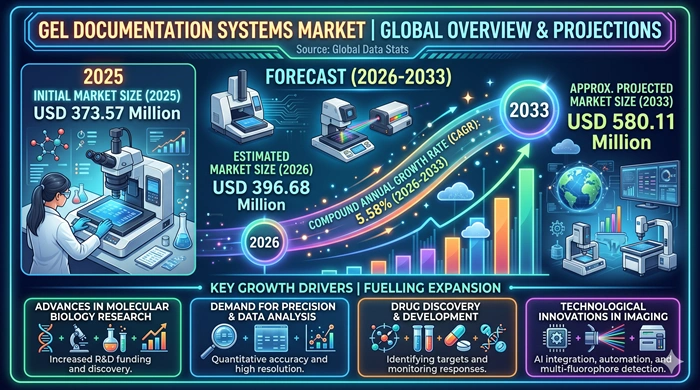
The global gel documentation systems market size is valued at USD 373.57 million in 2025 and is predicted to increase from USD 396.68 million in 2026 to approximately USD 580.11 million by 2033, growing at a CAGR of 5.58% from 2026 to 2033. Growing adoption of advanced imaging technologies in molecular biology research, increasing investment in genomics and proteomics, and rising demand for high-throughput laboratory workflows across pharmaceutical, academic, and diagnostic sectors are the core factors driving consistent market expansion globally.
AI Impact on the Gel Documentation Systems Industry
Artificial Intelligence and Automated Image Analysis Are Transforming the Precision, Speed, and Scientific Value of Gel Documentation in Modern Research Laboratories*
AI is fundamentally improving how gel imaging and documentation systems function, particularly in terms of image analysis accuracy, band detection, and data interpretation. Traditional gel documentation workflows required trained laboratory personnel to manually evaluate gel images, identify DNA or protein bands, and measure band intensities — a process prone to human error and variability. AI-powered image analysis software now automates these tasks with exceptional accuracy, detecting faint bands, correcting for background noise, and providing quantitative analysis results in seconds. This automation is particularly valuable in high-throughput research environments where dozens of gels may be processed daily, enabling researchers to focus on scientific interpretation rather than manual image review tasks.
Machine learning tools are also being integrated into gel documentation platforms to enable smarter data management, predictive instrument maintenance, and seamless laboratory information management system (LIMS) connectivity. Companies such as Bio-Rad Laboratories and Thermo Fisher Scientific are building AI-enhanced analysis modules into their gel imaging software platforms, offering features such as automated lane detection, molecular weight estimation, and one-click compliance-ready reporting. As laboratories across pharmaceutical companies, academic institutions, and clinical diagnostics facilities modernize their operations, the demand for AI-integrated gel documentation systems is expected to accelerate meaningfully through the forecast period.
Growth Factors
Expanding Life Sciences Research, Growing Genomics and Proteomics Activity, and Rising Pharmaceutical R&D Investment Are the Primary Engines of Market Growth*
The gel documentation systems market is experiencing consistent growth driven by the rapid expansion of life sciences research globally. Genomics, proteomics, and molecular diagnostics are among the fastest-growing disciplines in modern science, and all of them rely heavily on gel electrophoresis and documentation systems for DNA, RNA, and protein analysis. Academic research institutions, biotechnology companies, and pharmaceutical manufacturers are investing heavily in laboratory infrastructure upgrades, which includes replacing older analog gel imaging equipment with modern digital documentation systems that offer superior image resolution, quantitative analysis, and software-driven data management.
The pharmaceutical and biotechnology sector plays a particularly important role in driving market demand. Drug discovery and development pipelines involve extensive molecular biology work — including PCR analysis, restriction enzyme digestion verification, Western blotting, and protein expression profiling — all of which require reliable gel electrophoresis imaging and documentation tools. The growing global pipeline of biologic drugs, biosimilars, and genetic therapies is generating increasing volumes of molecular biology work, directly expanding demand for gel imaging and documentation platforms across both in-house pharmaceutical laboratories and contract research organizations (CROs).
Market Outlook
Long-Term Market Growth Is Anchored by Increasing Laboratory Automation, Rising Demand for Digital Gel Imaging Solutions, and Growth in Emerging Market Research Infrastructure*
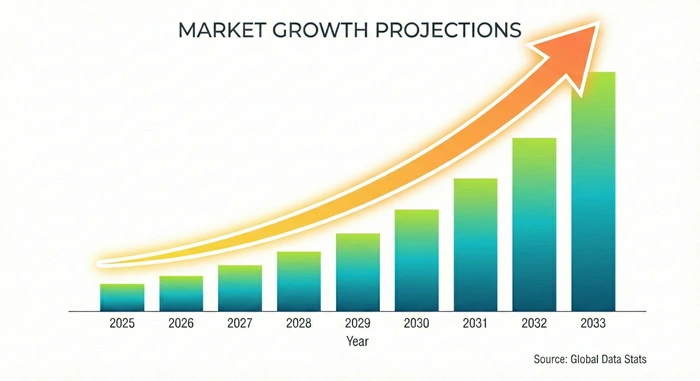
The long-term outlook for the gel documentation systems market is positive and stable, underpinned by sustained growth in life sciences research funding, expanding pharmaceutical and biotechnology sectors, and the ongoing shift from analog to fully digital laboratory environments. As laboratory automation becomes more prevalent, researchers increasingly seek gel documentation systems that integrate seamlessly with automated electrophoresis platforms, robotic sample handlers, and cloud-based data management solutions. This trend is driving demand for advanced, connected gel imaging systems that offer features beyond basic image capture — including multi-channel fluorescence imaging, chemiluminescent detection, and automated analysis capabilities.
Emerging economies in Asia Pacific, Latin America, and the Middle East & Africa are also becoming increasingly important growth markets as healthcare research investments expand, new universities and research institutes are established, and domestic pharmaceutical industries grow. Governments in China, India, Brazil, and South Korea are actively funding scientific research programs in genomics, molecular biology, and biomedical sciences, creating a growing installed base of laboratories equipped with electrophoresis and gel imaging platforms. As laboratory infrastructure in these regions continues to modernize, the replacement cycle for aging gel documentation equipment represents a significant and sustained revenue opportunity for global market participants.
Expert Speaks
-
"Gel documentation technology has evolved from simple UV transilluminator setups to sophisticated multi-channel imaging platforms with AI-driven analysis. At Bio-Rad Laboratories, we are committed to continuing this innovation trajectory to serve the increasing complexity of molecular biology research applications." — Norman Schwartz, CEO, Bio-Rad Laboratories
-
"The integration of digital imaging, advanced software, and laboratory connectivity in our life science instruments portfolio reflects a broader transformation happening across research workflows globally. Thermo Fisher Scientific is focused on delivering integrated platforms that help researchers generate better data with greater efficiency." — Marc Casper, CEO, Thermo Fisher Scientific
-
"As molecular biology research expands into new therapeutic areas and becomes more quantitative and data-intensive, the demand for reliable, high-resolution imaging and documentation tools will only grow. Analytik Jena is positioned to serve this need with advanced gel imaging solutions tailored to modern research requirements." — Jan Sobotka, CEO, Analytik Jena
Key Report Takeaways
-
North America leads the global gel documentation systems market, holding approximately 48–49% of total market share in 2025, driven by its large and well-funded biotechnology and pharmaceutical research base, high laboratory technology adoption rates, and the presence of major market players including Bio-Rad Laboratories and Thermo Fisher Scientific.
-
Asia Pacific is the fastest-growing regional market, expanding at a CAGR of approximately 7.8% through 2033, fueled by increasing government investment in life sciences R&D, expanding university research infrastructure, and rapid growth of domestic pharmaceutical and biotechnology industries in China, India, Japan, and South Korea.
-
Pharmaceutical and biotechnology companies are the dominant end-user segment, accounting for the largest share of demand as their extensive molecular biology workflows in drug discovery, quality control, and bioanalytical testing require continuous and high-volume gel imaging and documentation capabilities.
-
The instruments segment holds the highest market share by component, contributing approximately 60–62% of total revenues in 2025, as gel documentation system hardware — including UV transilluminators, CCD-based imaging units, and multi-channel fluorescence imagers — represents the core capital investment in laboratory gel imaging setups.
-
The all-in-one gel documentation system sub-type contributes the most to total market revenues, combining imaging hardware, UV/white light transillumination, and integrated analysis software in a single compact platform that is popular across academic, pharmaceutical, and clinical laboratory settings.
-
The fluorescence-based imaging segment is set to grow the fastest, expected to expand at a CAGR of approximately 8.3% through 2033, driven by increasing adoption of safer and more sensitive fluorescent dyes like SYBR Safe and SYPRO Ruby as alternatives to ethidium bromide, enabling more accurate band quantification and multi-color gel analysis.
Market Scope
| Report Coverage | Details |
|---|---|
| Market Size by 2025 | USD 373.57 Million |
| Market Size by 2026 | USD 396.68 Million |
| Market Size by 2033 | USD 580.11 Million |
| Market Growth Rate (2026–2033) | CAGR of 5.58% |
| Dominating Region | North America |
| Fastest Growing Region | Asia Pacific |
| Base Year | 2025 |
| Forecast Period | 2026 to 2033 |
| Segments Covered | Product Type, Component, Application, End User, Region |
| Regions Covered | North America, Europe, Asia Pacific, Latin America, Middle East & Africa |
Market Dynamics
Drivers Impact Analysis
Rising Life Sciences Research Activity, Growing Pharmaceutical R&D Pipelines, and Increasing Laboratory Digitization Are the Core Drivers Powering the Gel Documentation Systems Market*
| Driver | ≈% Impact on CAGR Forecast | Geographic Relevance | Impact Timeline |
|---|---|---|---|
| Growing genomics, proteomics, and molecular biology research | ~34% | Global, highest in North America & Europe | Near to long-term |
| Rising pharmaceutical and biotech R&D investment | ~27% | North America, Europe, Asia Pacific | Near to medium-term |
| Shift to digital and automated laboratory workflows | ~20% | North America, Europe | Near to medium-term |
| Expanding academic research infrastructure | ~12% | Asia Pacific, Latin America | Medium to long-term |
| Growing clinical diagnostic applications of gel electrophoresis | ~7% | Global | Medium-term |
The gel documentation systems market is fundamentally driven by the rapid expansion of molecular biology research worldwide. Electrophoresis and gel imaging are core techniques in virtually every life science laboratory — from academic research labs performing basic DNA analysis to pharmaceutical QC teams verifying product identity and purity. As research activity in genomics, proteomics, and cell biology intensifies and the number of active research programs grows, so does the volume of gel documentation work, creating a persistent and growing demand for reliable, high-quality imaging systems.
The pharmaceutical industry's expanding R&D pipeline is a particularly consistent and important market driver. Drug development programs rely on gel electrophoresis at multiple stages — from target identification and gene expression analysis to quality control of DNA constructs and biosimilar characterization. The growing global pipeline of biologic drugs, gene therapies, and personalized medicines requires extensive molecular analysis work, creating steady volume-driven demand for gel imaging and documentation tools. In addition, the trend toward laboratory digitization and connectivity is encouraging laboratories to replace older standalone gel imagers with modern networked platforms that offer better image quality, quantitative analysis, and integrated data management.
Restraints Impact Analysis
High Equipment Costs, Declining Use of Traditional Agarose Gel in Some Applications, and Emergence of Alternative Technologies Pose Market Growth Challenges*
| Restraint | ≈% Impact on CAGR Forecast | Geographic Relevance | Impact Timeline |
|---|---|---|---|
| High initial cost of advanced gel documentation systems | ~35% | Emerging markets | Near to medium-term |
| Competition from alternative analytical technologies (capillary electrophoresis, microfluidics) | ~30% | North America, Europe | Near to medium-term |
| Declining use of ethidium bromide driving reagent transition costs | ~20% | Global | Near-term |
| Budget constraints in academic and government research institutions | ~15% | Global | Near-term |
High capital costs remain a significant constraint, particularly in emerging and developing markets where research laboratory budgets are limited. Advanced multi-channel fluorescence gel documentation systems and all-in-one imaging platforms from leading vendors such as Bio-Rad and Thermo Fisher carry price points that can range from tens of thousands to over USD 50,000, which represents a meaningful investment for academic institutions and smaller research organizations. This cost sensitivity slows the replacement cycle for aging equipment and limits the adoption of the most advanced system configurations in budget-constrained settings.
Competition from alternative analytical technologies is also moderating market growth in some segments. Capillary electrophoresis, microfluidic chip-based systems, and next-generation sequencing (NGS) platforms are increasingly used for applications that traditionally relied on gel electrophoresis, such as DNA fragment analysis, protein sizing, and purity assessment. As these technologies become more accessible and cost-effective, a portion of the laboratory workflow previously addressed by gel electrophoresis and documentation is migrating to alternative platforms, particularly in large pharmaceutical and genomics research facilities.
Opportunities Impact Analysis
Fluorescence Imaging Innovation, Emerging Market Laboratory Expansion, and Growing Demand for Multiplex Gel Analysis Create Compelling Growth Opportunities*
| Opportunity | ≈% Impact on CAGR Forecast | Geographic Relevance | Impact Timeline |
|---|---|---|---|
| Adoption of fluorescence-based and multi-channel imaging systems | ~34% | North America, Europe, Asia Pacific | Near to medium-term |
| Expanding research laboratory infrastructure in Asia Pacific | ~28% | Asia Pacific, Latin America | Medium to long-term |
| Growing demand for compliance-ready and 21 CFR Part 11-compatible systems | ~22% | North America, Europe | Near to medium-term |
| Increasing use in clinical and diagnostic laboratory applications | ~16% | Global | Medium-term |
The growing shift from UV/ethidium bromide-based gel documentation to fluorescence-based imaging systems represents one of the most compelling near-term opportunities in the market. Fluorescent nucleic acid stains and protein dyes offer superior sensitivity, improved safety profiles, and better compatibility with quantitative analysis compared to traditional EtBr/UV methods. This transition is driving a meaningful hardware upgrade cycle across research and pharmaceutical laboratories globally, as older UV-based gel documentation systems are replaced with modern fluorescence-capable imagers that support multiple excitation wavelengths and multi-channel detection.
Regulatory compliance requirements — particularly the U.S. FDA's 21 CFR Part 11 regulation governing electronic records and signatures in pharmaceutical laboratories — are creating demand for gel documentation systems with compliant software platforms that provide secure data storage, audit trails, and electronic signature capabilities. This regulatory driver is particularly significant for pharmaceutical QC and analytical development laboratories, where data integrity compliance is mandatory. Vendors offering systems with fully validated, 21 CFR Part 11-compliant software have a meaningful competitive advantage in the pharmaceutical and biotechnology end-user segment of the gel documentation systems market.
Segment Analysis
By Product Type
All-in-One Gel Documentation Systems Lead Revenue While Multi-Channel Fluorescence Imagers Drive the Next Wave of Market Growth*
All-in-one gel documentation systems represent the largest and most popular product type in the gel documentation systems market, accounting for approximately 55–58% of total product revenues in 2025, growing at a CAGR of approximately 5.2% through 2033. These systems combine UV transillumination, white light illumination, a high-resolution CCD or CMOS camera, and integrated analysis software in a single compact enclosure, offering a convenient and cost-effective solution for routine DNA and protein gel imaging in research and pharmaceutical laboratories. North America is the leading geography for all-in-one system sales, driven by the large installed base of molecular biology laboratories in academic institutions, CROs, and pharmaceutical companies that regularly replace aging equipment with newer, more capable platform iterations. Leading companies supplying all-in-one gel documentation systems in North America include Bio-Rad Laboratories, Thermo Fisher Scientific, and Syngene International, all of which maintain strong competitive positions through continuous product innovation and broad service networks.
The multi-channel fluorescence gel imager sub-type is the fastest-growing product segment within the gel documentation systems market, projected to expand at a CAGR of approximately 8.3% through 2033. These advanced systems support simultaneous imaging across multiple fluorescence channels, enabling multiplexed gel analysis, Western blot multiplex detection, and simultaneous visualization of multiple fluorescent labels in a single capture. Europe is a leading adopter of fluorescence imaging systems for gel documentation, with strong demand from German, UK, and French life sciences research institutions and biopharmaceutical companies that prioritize quantitative, publication-quality gel imaging. Analytik Jena, Bio-Rad, and INTAS Science Imaging Instruments GmbH are among the key companies serving the European fluorescence gel imaging segment.
By End User
Pharmaceutical and Biotechnology Companies Lead End-User Revenues While Academic and Research Institutes Remain the Largest Volume Segment*
The pharmaceutical and biotechnology end-user segment holds the largest share of revenue in the gel documentation systems market in terms of value, contributing approximately 38–40% of total revenues in 2025 at a CAGR of approximately 6.1% through 2033. Pharmaceutical companies require gel imaging systems for a wide range of applications — including plasmid DNA quality control, restriction mapping verification, PCR product analysis, and Western blot protein characterization — and prioritize systems with validated software, regulatory compliance capabilities, and high reproducibility. North America and Europe are the dominant geographies for pharmaceutical end-user demand, with companies including Pfizer, Merck & Co., Roche, and AstraZeneca maintaining large fleets of gel documentation systems across their global R&D and manufacturing networks. Leading gel imaging system suppliers such as Bio-Rad Laboratories and Thermo Fisher Scientific have developed specialized pharmaceutical-grade product configurations that meet GxP compliance requirements for this demanding end-user segment.
Academic and research institutes are the largest end-user segment in terms of unit volume within the gel documentation systems market, representing approximately 42–45% of total market revenues in 2025, with a CAGR of approximately 5.0% through 2033. University laboratories, government research institutes, and independent research organizations represent the broadest and most geographically distributed customer base in the market, purchasing gel documentation systems for foundational molecular biology teaching and research applications. Asia Pacific — particularly China, India, and South Korea — is the fastest-growing geography for academic end-user demand, driven by rapid expansion of university research programs, growing government science funding, and the establishment of new biomedical research centers. Companies like Syngene, Cleaver Scientific, and Consort NV are actively targeting academic customers in the Asia Pacific region with cost-competitive, feature-appropriate gel imaging platforms.
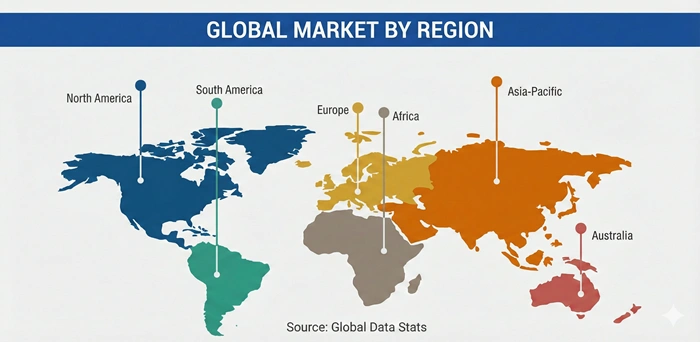
Regional Insights
North America
North America Dominates the Gel Documentation Systems Market, Anchored by a World-Class Life Sciences Research Ecosystem and High Laboratory Technology Adoption*
North America leads the global gel documentation systems market with approximately 48–49% of total revenues in 2026 and a CAGR of approximately 5.3% through 2033. The United States is the single largest country market, home to the world's highest concentration of pharmaceutical and biotechnology companies, leading academic research universities, and major government research agencies — including the NIH, CDC, and USDA — all of which operate large molecular biology research programs that generate consistent demand for gel imaging and documentation tools. Companies including Bio-Rad Laboratories, Thermo Fisher Scientific, and ProteinSimple (Bio-Techne) are headquartered or have major commercial operations in the United States, giving them direct access to the largest single-country market and enabling rapid response to customer needs through established sales and service networks.
Canada also contributes meaningfully to the region's gel documentation systems market, with a strong academic research sector and growing pharmaceutical manufacturing and biotech industry concentrated in Toronto, Montreal, and Vancouver. The region benefits from sustained NIH research grant funding, private equity investment in biotech startups, and a mature laboratory equipment procurement ecosystem that supports regular technology upgrade cycles. North America's dominance in the gel documentation systems market is expected to remain intact through 2033, supported by a high installed base, regular equipment replacement cycles, and continued investment in molecular biology research capacity.
Asia Pacific
Asia Pacific Is the Fastest-Growing Region in the Gel Documentation Systems Market, Driven by Expanding Research Infrastructure and Surging Life Sciences Investment*
Asia Pacific is the fastest-growing regional market for gel documentation systems, projected to expand at a CAGR of approximately 7.8% through 2033, with a current market share of approximately 19–22% in 2026. China is the dominant country within the region, with a rapidly growing pharmaceutical and biotechnology industry, massive government investment in genomics and life sciences research, and an expanding network of university and government research institutions equipped with modern laboratory infrastructure. China's domestic laboratory instrument companies are also becoming increasingly competitive, offering cost-effective gel documentation systems tailored to the needs of local research and quality control laboratories, while international players such as Bio-Rad and Thermo Fisher maintain premium market positions through brand strength and technical service capabilities.
India and South Korea are also registering strong growth in the gel documentation systems market, with India's expanding pharmaceutical manufacturing sector driving QC laboratory demand and South Korea's advanced biotechnology industry fueling research-grade gel imaging adoption. Japan remains a technologically sophisticated market with stable but mature demand, particularly in high-end fluorescence imaging segments. The combination of expanding research funding, growing pharmaceutical exports, and infrastructure modernization across Asia Pacific is expected to make this region the most dynamic growth opportunity for gel documentation system vendors through the entire forecast period.
Top Key Players
-
Bio-Rad Laboratories Inc. (United States)
-
Thermo Fisher Scientific Inc. (United States)
-
Syngene International Ltd. (India / United Kingdom)
-
Analytik Jena GmbH (Germany)
-
Cleaver Scientific Ltd. (United Kingdom)
-
ProteinSimple (Bio-Techne Corporation) (United States)
-
INTAS Science Imaging Instruments GmbH (Germany)
-
Merck KGaA (Merck Life Science) (Germany)
-
VWR International LLC (Avantor) (United States)
-
Consort NV (Belgium)
-
ATTO Corporation (Japan)
-
Azure Biosystems Inc. (United States)
-
LI-COR Biosciences (United States)
-
UVP LLC (Analytik Jena) (United States)
Recent Developments
-
2024 – Bio-Rad Laboratories launched an updated version of its ChemiDoc MP Imaging System with enhanced multi-channel fluorescence detection capabilities and an upgraded AI-assisted image analysis module, further strengthening its position as the leading platform for Western blot and gel documentation in pharmaceutical and academic laboratories.
-
2024 – Thermo Fisher Scientific introduced a new iBright FL1500 Imaging System upgrade featuring improved near-infrared fluorescence detection channels, enabling higher sensitivity multiplex gel and blot imaging for advanced protein analysis applications in its life science laboratory customer base.
-
2024 – Analytik Jena completed the integration of the UVP gel documentation product line into its BIOMETRA brand portfolio, consolidating its gel imaging offerings and expanding the combined product range available to academic and pharmaceutical customers in North America and Europe.
-
2025 – Azure Biosystems released the Azure 600 near-infrared fluorescence imaging system, targeting pharmaceutical and biotech laboratory customers seeking a cost-competitive alternative to premium NIR imaging platforms for Western blot protein detection and gel documentation workflows.
-
2025 – Syngene International announced the launch of its next-generation PXi Touch gel documentation systems series with upgraded touchscreen interface, enhanced Wi-Fi laboratory connectivity, and expanded compliance software supporting 21 CFR Part 11 requirements for pharmaceutical quality control laboratory customers globally.
Market Trends
Fluorescence-Based Gel Imaging, Regulatory Compliance Software Integration, and Connected Laboratory Platforms Are Redefining Standards in the Gel Documentation Systems Market*
One of the most transformative trends in the gel documentation systems market is the ongoing transition from UV/ethidium bromide-based imaging to fluorescent nucleic acid and protein staining technologies. Safer, more sensitive fluorescent alternatives — including SYBR Safe, SYBR Gold, and various proprietary fluorescent protein stains — are replacing EtBr in an increasing proportion of laboratory workflows, driven by safety regulations, improved quantitative performance, and growing researcher preference for non-hazardous reagents. This reagent shift is driving a corresponding hardware upgrade cycle, as fluorescence-capable gel documentation systems that support multiple excitation wavelengths are required to work optimally with these newer fluorescent stains, creating sustained equipment replacement demand across academic, pharmaceutical, and industrial laboratory markets.
The integration of gel documentation systems with broader digital laboratory ecosystems is another defining trend. Modern gel imagers increasingly offer built-in networking capabilities, direct connectivity to LIMS platforms, cloud-based image storage, and remote access functionality that allow laboratory managers to monitor imaging activity, access data, and generate compliance reports from anywhere. This connectivity aligns with the broader laboratory 4.0 movement and is particularly valued by pharmaceutical QC laboratories and large-scale research institutions where data governance, traceability, and audit readiness are critical. As digital infrastructure within life science laboratories continues to mature, demand for smart, connected gel documentation systems with robust data management capabilities is expected to grow steadily through 2033.
Segments Covered in the Report
By Product Type:
-
All-in-One Gel Documentation Systems
-
UV Transilluminators
-
Multi-Channel Fluorescence Imagers
-
CCD and CMOS Imaging Units
-
Other Product Types
By Component:
-
Instruments / Hardware
-
Software
-
Accessories and Consumables
By Application:
-
DNA and RNA Gel Electrophoresis
-
Western Blotting and Protein Gel Analysis
-
PCR Product Analysis
-
Restriction Fragment Analysis
-
Southern and Northern Blotting
-
Other Applications
By End User:
-
Pharmaceutical and Biotechnology Companies
-
Academic and Research Institutes
-
Hospitals and Diagnostic Centers
-
Contract Research Organizations (CROs)
-
Government and Forensic Laboratories
-
Other End Users
By Region:
-
North America
-
United States
-
Canada
-
-
Europe
-
Germany
-
United Kingdom
-
France
-
Italy
-
Spain
-
Rest of Europe
-
-
Asia Pacific
-
China
-
India
-
Japan
-
South Korea
-
Australia
-
Rest of Asia Pacific
-
-
Latin America
-
Brazil
-
Mexico
-
Rest of Latin America
-
-
Middle East & Africa
-
GCC Countries
-
South Africa
-
Rest of Middle East & Africa
-
Frequently Asked Questions
Question 1: What is the current size of the gel documentation systems market and what is the growth projection through 2033?
Answer: The gel documentation systems market is valued at USD 373.57 million in 2025 and is projected to reach USD 580.11 million by 2033. It is expected to grow at a CAGR of 5.58% from 2026 to 2033.
Question 2: What are the key factors driving growth in the gel documentation systems market?
Answer: The primary growth drivers in the gel documentation systems market include the rapid expansion of genomics, proteomics, and molecular biology research and growing pharmaceutical and biotechnology R&D investment. The shift from UV-based to fluorescence-based gel imaging and increasing laboratory digitization are further accelerating market demand.
Question 3: Which product type dominates the gel documentation systems market?
Answer: All-in-one gel documentation systems hold the largest product share, accounting for approximately 55–58% of total revenues in 2025, due to their convenience, integrated functionality, and broad applicability in academic and pharmaceutical labs. Fluorescence-based multi-channel imagers are the fastest-growing product type, gaining share as laboratories transition to safer and more sensitive fluorescent staining methods.
Question 4: Which region leads the gel documentation systems market and which is growing fastest?
Answer: North America leads the gel documentation systems market with approximately 48–49% of global revenues in 2026, driven by its advanced pharmaceutical research base and high laboratory technology adoption. Asia Pacific is the fastest-growing region, expanding at approximately 7.8% CAGR through 2033.
Question 5: Who are the major companies competing in the gel documentation systems market?
Answer: Leading companies in the gel documentation systems market include Bio-Rad Laboratories, Thermo Fisher Scientific, Syngene International, Analytik Jena, Cleaver Scientific, Azure Biosystems, ProteinSimple, and LI-COR Biosciences. These companies compete through product innovation, software capabilities, regulatory compliance features, and global service coverage.