
Gaming Console Market Overview
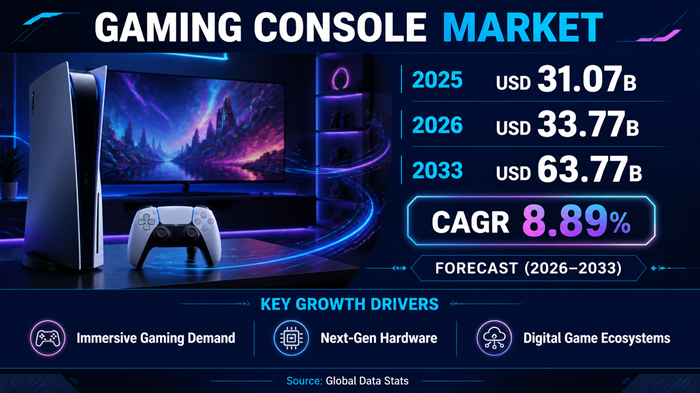
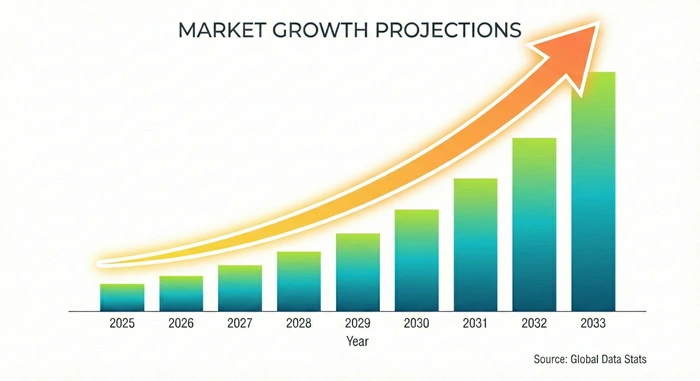
The global Gaming Console market size is valued at USD 31.07 billion in 2025 and is predicted to increase from USD 33.77 billion in 2026 to approximately USD 63.77 billion by 2033, growing at a CAGR of 8.89% from 2026 to 2033.
Gaming consoles represent specialized electronic devices designed exclusively for playing video games, offering superior interactive gaming experiences compared to traditional PC or mobile gaming platforms. These sophisticated entertainment systems generate high-definition visual content for display screens while supporting single or multiplayer gaming through advanced controllers, motion sensors, and networking capabilities. Modern gaming consoles have evolved from simple arcade beginnings into multifunctional entertainment hubs that integrate streaming services, virtual reality capabilities, augmented reality features, and comprehensive multimedia functions.
The Gaming Console market continues expanding through continuous technological advancements that deliver cutting-edge graphics processing, immersive audio systems, and seamless online connectivity. Next-generation consoles incorporate powerful processors enabling 4K resolution, high dynamic range imaging, ray tracing technology, and ultra-fast loading times through solid-state drives. The global demand for premium gaming experiences combined with the rising popularity of esports, multiplayer online gaming, and digital content distribution drives sustained market growth across developed and emerging economies. Cloud-based gaming libraries enable users to access extensive game collections across multiple devices without physical media requirements, while subscription services provide recurring revenue streams for manufacturers and content developers. The integration of social features, streaming capabilities, and cross-platform compatibility has transformed gaming consoles from isolated entertainment devices into connected entertainment ecosystems that support diverse user needs beyond traditional gaming applications.
AI Impact on the Gaming Console Industry
Revolutionizing Player Experiences Through Intelligent Systems and Adaptive Technologies
Artificial intelligence integration within the Gaming Console market is driving transformative changes across gameplay realism, adaptive features, and enhanced user interactions. AI-powered voice recognition systems enable natural language commands for console navigation, game selection, and system settings configuration, eliminating reliance on traditional controller-based menu navigation. Predictive analysis algorithms leverage player behavior data to recommend personalized content, suggest games aligned with individual preferences, and optimize system performance based on usage patterns. Real-time performance enhancement technologies automatically adjust graphics settings, network configurations, and resource allocation to deliver optimal gaming experiences regardless of network conditions or system load. Automated game updates and content downloads occur during idle periods, ensuring players always access the latest versions without manual intervention or gameplay interruptions.
AI-driven technologies are reshaping game development methodologies and player engagement strategies within the Gaming Console market. Non-player character behaviors demonstrate unprecedented sophistication through machine learning algorithms that enable dynamic responses to player actions, creating unpredictable and engaging gameplay scenarios. Procedural content generation powered by AI creates virtually unlimited game environments, missions, and challenges without requiring extensive manual development resources. Intelligent difficulty scaling systems analyze player skill levels and automatically adjust game complexity to maintain optimal challenge without causing frustration or boredom. Voice synthesis and natural language processing enable realistic character interactions and dialogue systems that respond contextually to player choices. AI-based moderation systems monitor online gaming communities, identifying toxic behavior, enforcing community standards, and protecting players from harassment. Future innovations will leverage AI for emotion forecasting, adaptive storytelling, personalized tutorials, and assistive technologies that make gaming accessible to players with disabilities. These advancements position AI as a fundamental component driving innovation and competitive differentiation within the Gaming Console market.
Growth Factors
Virtual Reality Integration and Wireless Connectivity Adoption Drive Market Expansion
The Gaming Console market is experiencing accelerated growth through widespread integration of virtual reality and augmented reality technologies that deliver highly immersive gaming experiences. Console manufacturers including Sony, Meta, and Valve are developing advanced VR headsets and motion tracking systems that transport players into realistic three-dimensional game worlds. These immersive technologies enhance player engagement by providing unprecedented levels of presence and interactivity that traditional screen-based gaming cannot replicate. The VR gaming ecosystem continues expanding with growing content libraries, improved hardware affordability, and increasing consumer awareness of the technology's entertainment potential. Augmented reality features overlay digital elements onto physical environments, creating innovative hybrid gaming experiences that blend real and virtual worlds. These advanced technologies function as primary market expansion factors as enthusiasts seek elevated entertainment experiences through cutting-edge innovations.
The adoption of Internet of Things features and wireless connectivity options represents another critical growth driver reshaping the Gaming Console market landscape. Modern consoles incorporate Bluetooth, infrared, and Wi-Fi technologies that enable wireless controllers, eliminate cable clutter, and provide seamless connectivity to home networks and internet services. Cloud synchronization capabilities allow players to save game progress automatically and access saved data across multiple devices without manual file transfers. Multi-device support enables streaming gameplay to smartphones, tablets, and laptops, extending console gaming beyond living room television screens. Wireless audio solutions including premium gaming headsets deliver immersive soundscapes without physical cable constraints. These connectivity features significantly increase user satisfaction by providing flexibility, convenience, and freedom of movement during gameplay sessions. The expansion of cloud-based gaming libraries allows players to maintain centralized digital collections accessible from various devices, reducing physical storage requirements while enabling instant access to extensive game catalogs. Digital distribution platforms eliminate the need for physical game cartridges or optical media, providing immediate game access upon purchase and reducing environmental impact through reduced manufacturing and shipping. These converging technological trends continue fueling robust growth within the Gaming Console market.
Market Outlook
Sustainability Initiatives and Global Expansion Strategies Shape Future Trajectory
The Gaming Console market outlook remains exceptionally positive as manufacturers implement sustainability initiatives addressing environmental concerns and corporate social responsibility requirements. Leading console producers are developing energy-efficient processors that reduce power consumption during gameplay and standby modes without compromising performance capabilities. Recyclable packaging materials minimize environmental footprint while extended product lifecycles reduce electronic waste through durable hardware designs and long-term software support. Manufacturers are implementing comprehensive recycling programs encouraging consumers to return obsolete hardware for responsible disposal and material recovery. These sustainability trends reflect growing consumer awareness of environmental issues and increasing regulatory requirements for electronic device manufacturers. The emphasis on environmental responsibility enhances brand reputation while attracting environmentally conscious consumers who prioritize sustainable purchasing decisions.
Global expansion strategies targeting emerging markets represent significant growth opportunities within the Gaming Console market. Manufacturers are developing localized pricing strategies that accommodate varying income levels and economic conditions across different geographic regions. Partnerships with telecommunications and broadband providers improve internet infrastructure access essential for online gaming experiences in developing markets. Localized content libraries featuring region-specific games, languages, and cultural preferences enhance market appeal and user engagement. The growing startup ecosystem surrounding gaming consoles is driving innovation through cloud gaming platforms, controller accessories, VR/AR peripheral devices, and AI-based gaming analytics solutions. These entrepreneurial ventures complement established manufacturers by addressing niche market segments and accelerating technology adoption. The launch of next-generation consoles with enhanced graphics capabilities, faster processing speeds, and innovative features continues attracting consumer interest and driving replacement cycles. The increasing demand for better graphics quality, immersive audio, and seamless online multiplayer experiences positions the Gaming Console market for sustained expansion throughout the forecast period across both developed and developing countries.
Expert Speaks
-
Satya Nadella, CEO of Microsoft emphasized in 2025 that "The future of gaming transcends traditional console boundaries as cloud technology, cross-platform play, and subscription services create unified gaming ecosystems accessible across devices, fundamentally transforming how players discover, purchase, and experience interactive entertainment worldwide."
-
Jim Ryan, Former CEO of Sony Interactive Entertainment stated during industry discussions that "Next-generation gaming consoles represent technological marvels delivering cinematic experiences through advanced graphics processing, ultra-fast storage, and immersive audio that blur boundaries between gameplay and reality, setting new standards for interactive entertainment and creative expression."
-
Shuntaro Furukawa, President of Nintendo noted in recent corporate communications that "Innovation in gaming hardware focuses not solely on raw processing power but on creating unique play experiences through versatile form factors, intuitive controls, and compelling exclusive content that brings joy to diverse audiences across age groups and gaming preferences."
Key Report Takeaways
-
Asia-Pacific dominates the Gaming Console market with commanding 47% revenue share in 2025, driven by massive gaming populations in China, India, Japan, and South Korea, rising household incomes, expanding internet infrastructure, and strong cultural affinity for gaming entertainment across diverse demographic segments
-
North America emerges as the fastest-growing region projected to expand at impressive CAGR of 9.1% from 2026 to 2033, fueled by thriving esports communities, widespread adoption of digital distribution platforms, high disposable incomes, mature broadband infrastructure, and strong brand loyalty among gaming enthusiasts
-
PlayStation segment captures significant market leadership accounting for 26% revenue share in 2025, driven by exclusive AAA game titles, robust online services through PlayStation Network, backward compatibility features, advanced hardware specifications including 4K gaming and ray tracing capabilities
-
Handheld game console segment dominates by type contributing 32% market share in 2025, reflecting consumer demand for portable gaming experiences, success of Nintendo Switch platform, mobile gaming trends, and preference for gaming flexibility enabling play during commutes and travel
-
Hybrid video game console segment demonstrates exceptional growth expanding at substantial CAGR of 9.2% through forecast period, as consumers increasingly value versatile devices offering seamless transitions between portable handheld and traditional home console gaming experiences
-
Controller segment shows robust expansion potential projected to grow at notable CAGR of 10.2% from 2026 to 2033, driven by innovations in motion sensing, haptic feedback technology, adaptive triggers, touchpad controls, and specialized controllers for virtual reality and augmented reality applications
Market Scope
| Report Coverage | Details |
|---|---|
| Market Size by 2033 | USD 63.77 Billion |
| Market Size by 2025 | USD 31.07 Billion |
| Market Size by 2026 | USD 33.77 Billion |
| Market Growth Rate from 2026 to 2033 | CAGR of 8.89% |
| Dominating Region | Asia-Pacific |
| Fastest Growing Region | North America |
| Base Year | 2025 |
| Forecast Period | 2026 to 2033 |
| Segments Covered | Product, Type, Component, Application, Distribution Channel, Region |
| Regions Covered | North America, Europe, Asia-Pacific, Latin America, Middle East & Africa |
Market Dynamics
Driver Impact Analysis
Rising Demand for Wireless Gaming and 3D Visual Technologies
| Impact Factor | Details |
|---|---|
| ≈ Impact on CAGR Forecast | +2.8% to +3.9% |
| Geographic Relevance | Global, with strongest impact in North America, Asia-Pacific, and Europe |
| Impact Timeline | 2026-2033 |
The Gaming Console market is expanding rapidly as consumers increasingly demand 3D gaming systems delivering stereoscopic visual enhancements that provide superior depth perception and immersive gameplay experiences. Advanced three-dimensional graphics technologies enable realistic environmental rendering, lifelike character animations, and compelling special effects that transport players into virtual worlds. High-definition and ultra-high-definition display support combined with HDR imaging capabilities ensure vibrant colors, deep contrast ratios, and exceptional visual clarity that showcase game artistry. The implementation of cutting-edge visual technologies targets premium customers seeking the most realistic and high-quality gaming experiences available in the consumer market. Virtual reality headsets leverage stereoscopic 3D rendering to create convincing sense of presence and spatial awareness impossible with traditional flat screens.
Wireless technology integration delivers transformative improvements in player comfort, convenience, and gameplay freedom within the Gaming Console market. Wireless controllers eliminate cable management frustrations and physical range limitations, allowing players to sit comfortably at any distance from display screens. Bluetooth audio connectivity enables high-quality wireless headsets providing immersive soundscapes and voice communication without cumbersome wired connections. Wi-Fi networking capabilities facilitate online multiplayer gaming, digital content downloads, software updates, and streaming services without ethernet cable requirements. Wireless charging docks maintain controller battery levels without physical connection hassles, ensuring devices remain ready for extended gaming sessions. The combination of wireless convenience and unrestricted movement enhances overall gaming experiences, particularly for active games requiring physical motion or group play scenarios. These technological advances in visual quality and wireless capabilities continue attracting new consumers while encouraging existing gamers to upgrade aging hardware, driving sustained market expansion.
Restraints Impact Analysis
Competition from Mobile Gaming Devices and Platforms
| Impact Factor | Details |
|---|---|
| ≈ Impact on CAGR Forecast | -1.7% to -2.5% |
| Geographic Relevance | Global, particularly impactful in developing markets |
| Impact Timeline | 2026-2031 |
The Gaming Console market faces significant competitive challenges from rapidly advancing smartphone and tablet technologies offering increasingly sophisticated gaming capabilities. Modern mobile devices incorporate high-performance processors rivaling console specifications, advanced GPU architectures enabling console-quality graphics, high-refresh-rate displays with exceptional color accuracy, and sophisticated cooling systems managing thermal output during intensive gaming. Premium flagship smartphones deliver gaming experiences approaching dedicated console quality at price points comparable to or lower than traditional gaming hardware. Mobile gaming app ecosystems provide access to millions of titles spanning casual puzzle games to complex multiplayer experiences without requiring separate hardware purchases. The convenience factor of mobile gaming cannot be understated, as smartphones remain constantly accessible in pockets and bags enabling gaming sessions during commutes, breaks, and downtime without dedicated gaming setup requirements.
Cloud gaming technologies further intensify competitive pressures facing the Gaming Console market by enabling high-quality gaming experiences on various devices without specialized hardware. Services including Xbox Cloud Gaming, PlayStation Plus Cloud Streaming, NVIDIA GeForce Now, and Amazon Luna deliver console and PC games directly to smartphones, tablets, smart TVs, and basic computers through internet streaming. These platforms eliminate traditional barriers to entry including expensive hardware investments and physical game purchases, making premium gaming accessible to broader audiences. Subscription-based cloud gaming models provide access to extensive game libraries for predictable monthly fees, appealing to cost-conscious consumers and casual gamers hesitant to invest in dedicated console hardware. Technological progress continues narrowing performance gaps between mobile devices and traditional consoles, with improvements in mobile processors, graphics capabilities, display technologies, and network infrastructure enabling increasingly compelling mobile gaming experiences. Addressing these competitive pressures requires console manufacturers to emphasize unique value propositions including exclusive game titles, superior graphics fidelity, comprehensive multimedia features, and social gaming experiences unavailable on mobile platforms.
Opportunities Impact Analysis
Cloud Gaming Expansion and Non-Gaming Application Integration
| Impact Factor | Details |
|---|---|
| ≈ Impact on CAGR Forecast | +3.1% to +4.5% |
| Geographic Relevance | Strong opportunities in Asia-Pacific, North America, and developing markets |
| Impact Timeline | 2026-2033 |
The expansion of cloud gaming platforms represents a transformative opportunity within the Gaming Console market, enabling access to premium gaming content without expensive hardware upgrades. Cloud-based game streaming eliminates traditional requirements for powerful local processing hardware by executing games on remote servers and transmitting video streams to player devices. This technology democratizes access to AAA gaming titles, enabling players with modest hardware to experience cutting-edge games previously requiring expensive console or PC investments. Subscription-based cloud gaming services provide predictable recurring revenue streams for manufacturers and publishers while lowering barriers to entry for consumers. Console manufacturers can leverage cloud infrastructure to extend game libraries beyond what local storage capacities permit, offering virtually unlimited content access. Hybrid approaches combining local processing for latency-sensitive gameplay with cloud-based rendering for graphically intensive sequences optimize performance while managing bandwidth requirements.
Integration of non-gaming applications and features presents substantial growth opportunities for the Gaming Console market by expanding device utility beyond traditional entertainment. Modern consoles function as comprehensive entertainment hubs providing access to streaming services including Netflix, Disney+, Amazon Prime Video, and Spotify. Fitness applications leverage motion sensors and cameras to deliver interactive workout experiences, positioning consoles as health and wellness platforms. Educational content including interactive learning programs, virtual museum tours, and skill development applications expand addressable markets to include families and educational institutions. Video conferencing capabilities enable social connectivity beyond gaming, particularly valuable during periods of social distancing or for maintaining relationships across geographic distances. Home automation integration allows consoles to serve as smart home control hubs managing connected devices throughout residences. These expanded capabilities increase console value propositions, encouraging purchases from consumers who might not identify primarily as gamers but value multifunctional entertainment devices. The convergence of gaming, streaming, fitness, education, and connectivity creates comprehensive entertainment ecosystems that justify premium pricing and strengthen customer loyalty through diverse use cases.
Segment Analysis
By Product: PlayStation Segment
Exclusive Content Libraries and Advanced Hardware Drive Market Leadership
The PlayStation segment dominates the Gaming Console market with significant 26% revenue share in 2025, maintaining strong competitive positioning through combination of cutting-edge hardware specifications and exclusive game franchises. Sony's PlayStation 5 incorporates revolutionary features including ultra-fast solid-state drive technology enabling near-instantaneous loading times, 4K resolution support at high frame rates, advanced ray tracing capabilities for realistic lighting and reflections, and immersive 3D audio technology that enhances spatial awareness during gameplay. The console's backward compatibility support allows players to access extensive libraries of PlayStation 4 titles, protecting existing game investments and easing transition to next-generation hardware. PlayStation Network provides comprehensive online services including multiplayer gaming, digital game purchases, exclusive discounts for subscribers, cloud save storage, and monthly free game offerings that enhance value proposition. The platform's social features enable players to share gameplay clips, stream broadcasts, join gaming communities, and maintain friend networks across the ecosystem.
Sony's strategic emphasis on exclusive AAA game titles creates compelling differentiation within the Gaming Console market. Blockbuster franchises including God of War, Spider-Man, The Last of Us, Horizon, and Gran Turismo remain available exclusively on PlayStation platforms, attracting dedicated fans and driving hardware sales. These exclusive titles leverage PlayStation 5's advanced capabilities to deliver cinematic storytelling, breathtaking visuals, and innovative gameplay mechanics unavailable on competing platforms. First-party development studios including Naughty Dog, Santa Monica Studio, and Guerrilla Games maintain reputation for delivering critically acclaimed, award-winning experiences that define generation-leading gaming standards. North America and Europe represent PlayStation's strongest markets with established user bases, mature digital ecosystems, and high consumer spending on premium gaming content. Asia-Pacific markets particularly Japan demonstrate strong brand loyalty and cultural affinity for PlayStation products and exclusive Japanese game titles. The segment's continued investment in virtual reality through PlayStation VR2 positions Sony at the forefront of immersive gaming innovation. These combined strengths ensure PlayStation maintains market leadership throughout the forecast period as Sony continues innovating hardware, expanding exclusive content libraries, and enhancing online services.
By Type: Handheld Game Console Segment
Portable Gaming Convenience and Dedicated Controls Appeal to Mobile Gamers
The handheld game console segment contributed the largest revenue share of 32% in 2025 within the Gaming Console market and is expected to maintain dominance throughout the projected period. The success of portable gaming devices stems from their ability to deliver dedicated gaming experiences superior to smartphones while maintaining convenient mobility. Handheld consoles feature physical control buttons, analog sticks, and ergonomic designs optimized specifically for extended gaming sessions, providing tactile feedback and precision input that touchscreen interfaces cannot replicate. Many gamers strongly prefer physical controls over virtual on-screen buttons, as traditional input methods offer better responsiveness, accuracy, and comfort during complex gameplay sequences. Handheld devices provide focused gaming experiences free from smartphone distractions including notifications, calls, and competing app demands that interrupt mobile gaming sessions.
The segment expands continuously as consumers increasingly value portable gaming solutions enabling entertainment during commutes, travel, waiting periods, and other situations where traditional home consoles prove impractical. Dedicated handheld gaming devices deliver longer battery life compared to smartphones engaged in intensive gaming, as purpose-built hardware optimizes power consumption for sustained gameplay. Premium handheld consoles including Nintendo Switch Lite, Valve Steam Deck, and ASUS ROG Ally provide access to extensive game libraries featuring both indie titles and major AAA releases. Asia-Pacific leads handheld console adoption driven by lengthy public transportation commutes in Japan, South Korea, and major Chinese cities where portable gaming fits naturally into daily routines. North America demonstrates strong growth as cloud gaming capabilities enable handheld devices to stream console-quality games from home systems or cloud servers. Leading manufacturers continue innovating with improved display technologies, enhanced processing capabilities, expanded storage options, and advanced connectivity features that narrow performance gaps with home consoles. The hybrid video game console segment is projected to show substantial CAGR of 9.2% through the forecast period as devices like Nintendo Switch demonstrate consumer appetite for versatile platforms seamlessly transitioning between portable and docked home console modes. This flexibility appeals to diverse user preferences and usage scenarios, positioning hybrid designs as future growth drivers within the Gaming Console market.
Regional Insights
Asia-Pacific
Massive Gaming Populations and Rising Incomes Fuel Regional Dominance
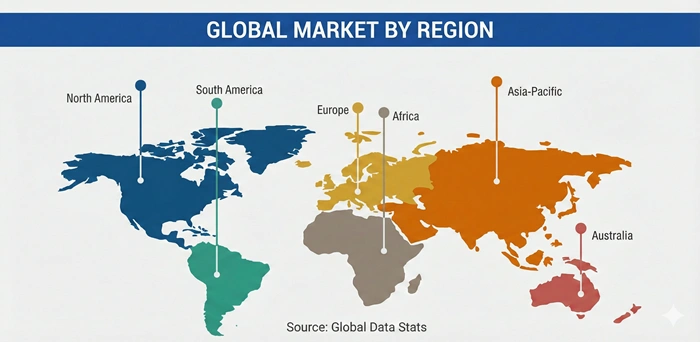
Asia-Pacific maintains its position as the dominant region in the Gaming Console market, capturing commanding 47% revenue share in 2025 with the regional market valued at USD 14.74 billion and projected to reach USD 33.74 billion by 2035 at CAGR of 8.63%. The region's market leadership stems from massive gaming populations concentrated in China, India, Japan, and South Korea where gaming culture permeates mainstream entertainment preferences across diverse age demographics. China possesses the world's largest gaming population with hundreds of millions of active players driving unprecedented hardware demand and software consumption. Rising household incomes across the region enable greater discretionary spending on entertainment products including premium gaming consoles and accessories. E-commerce platforms including Alibaba, JD.com, and regional marketplaces provide convenient access to new, pre-owned, and refurbished consoles at various price points, expanding market accessibility across income segments.
Japan and South Korea remain global leaders in gaming innovation through continuous hardware and software development pushing industry boundaries. Japanese manufacturers including Sony and Nintendo maintain headquarters in the region, ensuring strong local market presence and cultural alignment with consumer preferences. South Korea's advanced broadband infrastructure and passionate gaming community support thriving esports ecosystems and competitive gaming cultures. India represents the fastest-growing market within Asia-Pacific as rapid digital infrastructure expansion and smartphone adoption drive millions of new consumers into gaming ecosystems annually. Young, tech-savvy populations across India, Southeast Asia, and other developing markets demonstrate strong appetite for the latest gaming innovations and next-generation console experiences. The region benefits from local manufacturing capabilities, supply chain proximity, and favorable import policies that support competitive pricing and rapid product availability. Cultural factors including multi-generational gaming participation, gaming cafes and arcades, and social gaming traditions strengthen market foundations. These combined advantages position Asia-Pacific as the primary growth engine and largest market for gaming consoles throughout the forecast period.
North America
Esports Growth and Digital Distribution Drive Fastest Regional Expansion
North America emerges as the fastest-growing region within the Gaming Console market, projected to expand at impressive CAGR of 9.1% during the forecast period driven by thriving esports communities and accelerating digital distribution adoption. The region's explosive esports growth has transformed competitive gaming into mainstream entertainment with professional leagues, substantial prize pools, corporate sponsorships, and dedicated broadcast coverage attracting millions of viewers. Major esports events fill sports stadiums and arenas while streaming platforms including Twitch and YouTube Gaming deliver competitive gaming content to global audiences. This cultural shift legitimizes gaming as serious entertainment and career pathway, driving hardware investments from aspiring competitors and enthusiastic fans. Digital distribution platforms including PlayStation Store, Xbox Store, and Nintendo eShop have revolutionized game purchasing behaviors by providing instant access to extensive content libraries without physical retail visits.
Online multiplayer gaming and subscription services represent critical growth drivers within the North American Gaming Console market. Services including Xbox Game Pass, PlayStation Plus, and Nintendo Switch Online provide access to hundreds of games for fixed monthly fees, delivering exceptional value and encouraging exploration of diverse titles. These subscription models create predictable recurring revenue streams for manufacturers while lowering barriers to trying new games. The United States dominates regional market activity with mature gaming culture, high disposable incomes, widespread broadband availability, and strong brand loyalty among console manufacturers. Canada contributes meaningfully to regional growth with tech-savvy population, urban concentrations supporting gaming retail infrastructure, and proximity to United States market enabling shared marketing and distribution efficiencies. Leading manufacturers including Microsoft Xbox, Sony PlayStation, and Nintendo maintain significant North American operations, development studios, and marketing investments reflecting regional strategic importance. The concentration of game development studios, technology companies, and venture capital funding in North America positions the region as innovation hub driving industry evolution. Strong retail infrastructure combining traditional gaming specialty stores, electronics retailers, and robust e-commerce channels ensures convenient purchasing options across consumer preferences. These dynamic market characteristics position North America for sustained expansion as gaming continues transitioning into mainstream entertainment category.
Top Key Players
-
Sony Corporation (Japan)
-
Microsoft Corporation (United States)
-
Nintendo Co. Ltd. (Japan)
-
Valve Corporation (United States)
-
NVIDIA Corporation (United States)
-
Atari Inc. (United States)
-
Sega Holdings Co. Ltd. (Japan)
-
Logitech International S.A. (Switzerland)
-
Mad Catz Global Limited (Hong Kong)
-
Tencent Games (China)
-
ASUSTeK Computer Inc. (Taiwan)
-
Razer Inc. (Singapore)
-
SteelSeries (Denmark)
-
Corsair Components Inc. (United States)
-
HyperX (United States)
-
Rockstar Games Inc. (United States)
-
Ubisoft Entertainment SA (France)
-
Activision Blizzard (United States)
-
Capcom Co. Ltd. (Japan)
-
Hyperkin Inc. (United States)
Recent Developments
-
Epic Games and The Walt Disney Company announced strategic collaboration in February 2024 to co-create an all-new games and entertainment universe, with Disney investing substantial USD 1.5 billion into Epic Games to secure equity stake, aiming to build cohesive universe interconnecting Disney's diverse franchises including Marvel, Star Wars, Pixar, and Avatar through immersive gaming experiences
-
Sony celebrated PlayStation's 30th anniversary in December 2024 reaching remarkable milestone of 450 million console sales since the original PlayStation launched in 1994, while CEO Hermen Hulst discussed how artificial intelligence revolutionizes gaming experiences while emphasizing that human storytelling creativity and emotional depth cannot be replaced by automated systems
-
Gcore declared strategic association with Xsolla in May 2024 providing global solutions for edge AI, cloud computing, networking, and security infrastructure to Xsolla as leading video game commerce company, enabling gamers worldwide to receive accelerated game access, optimized download processes, and enhanced multiplayer connectivity through distributed server networks
-
Nintendo announced plans to release Switch 2 successor console targeting 25 million unit sales by March 2026, continuing the company's hybrid console strategy that combines portable handheld gaming with traditional home console experiences, while expanding hardware capabilities to support more demanding game titles and enhanced graphics performance
-
Microsoft expanded Xbox Cloud Gaming capabilities throughout 2024-2025, enabling subscribers to stream console-quality games to smartphones, tablets, and smart TVs without dedicated Xbox hardware, democratizing access to premium gaming experiences while reinforcing the company's platform-agnostic gaming ecosystem strategy
Market Trends
Hybrid Console Architectures and Subscription Service Models Reshape Industry
The Gaming Console market is experiencing fundamental transformation through increasing adoption of hybrid console architectures that blur distinctions between portable handheld devices and traditional home entertainment systems. The Nintendo Switch pioneered this category by enabling seamless transitions between docked television play and portable handheld mode, demonstrating strong consumer demand for flexible gaming experiences adapting to varying contexts and preferences. Competitors including Valve's Steam Deck and ASUS ROG Ally have entered the hybrid category by bringing extensive PC game libraries into portable console form factors, further fragmenting traditional market segmentation. These hybrid systems appeal to diverse user groups by accommodating gaming preferences ranging from immersive big-screen experiences to convenient on-the-go entertainment. Mid-cycle hardware refreshes including PlayStation 5 Pro and potential Xbox upgrades extend console generation lifecycles while providing premium options for enthusiast gamers seeking cutting-edge performance.
Subscription-based gaming services and digital distribution channels are fundamentally reshaping revenue models and consumer purchasing behaviors within the Gaming Console market. Services including Xbox Game Pass, PlayStation Plus Premium, and Nintendo Switch Online provide access to extensive game catalogs for predictable monthly fees, shifting consumer mindset from individual game purchases toward all-you-can-play library access. These subscription models deliver exceptional value for consumers while creating recurring revenue streams that stabilize manufacturer income amid volatile game sales cycles. Digital distribution platforms have become primary purchase channels as consumers appreciate instant game access, automatic updates, cloud save synchronization, and elimination of physical media management. Cross-platform compatibility initiatives enable games purchased on one platform to function across multiple devices including consoles, PCs, and mobile devices, reducing platform lock-in and expanding addressable markets. Cloud gaming integration within console ecosystems enables streaming of games from remote servers, reducing local hardware requirements while enabling access to premium titles on lower-specification devices. These converging trends toward flexibility, digital delivery, and service-based models continue transforming the Gaming Console market landscape throughout the forecast period.
Segments Covered in the Report
By Product
-
Nintendo
-
Nintendo Switch
-
Nintendo Switch Lite
-
Nintendo Switch OLED
-
-
PlayStation
-
PlayStation 5
-
PlayStation 5 Digital Edition
-
PlayStation 4
-
-
Xbox
-
Xbox Series X
-
Xbox Series S
-
Xbox One
-
-
Others
By Type
-
Home Video Game Console
-
Next Generation
-
Previous Generation
-
-
Handheld Game Console
-
Portable
-
Non-Portable
-
-
Hybrid Video Game Console
-
Plug and Play Console
-
Retro Console
By Component
-
Console Unit
-
Controller
-
Gamepad
-
Joystick
-
Paddle
-
-
Game Media
-
Game Cartridge
-
Optical Media
-
Digital Distribution
-
Cloud Gaming
-
-
External Storage
By Application
-
Gaming
-
Single Player
-
Multiplayer
-
Online Gaming
-
Esports
-
-
Non-Gaming
-
Streaming Services
-
Fitness Applications
-
Educational Content
-
Social Networking
-
By Distribution Channel
-
Online Distribution Channel
-
E-Commerce Platforms
-
Official Brand Websites
-
Digital Marketplaces
-
-
Offline Distribution Channel
-
Electronics Retailers
-
Gaming Specialty Stores
-
Hypermarkets
-
Direct Brand Stores
-
By Region
-
North America
-
United States
-
Canada
-
Mexico
-
-
Europe
-
United Kingdom
-
Germany
-
France
-
Italy
-
Spain
-
Rest of Europe
-
-
Asia-Pacific
-
China
-
Japan
-
India
-
South Korea
-
Australia
-
Southeast Asia
-
Rest of Asia-Pacific
-
-
Latin America
-
Brazil
-
Argentina
-
Rest of Latin America
-
-
Middle East & Africa
-
Saudi Arabia
-
UAE
-
South Africa
-
Rest of MEA
-
Frequently Asked Questions
Question 1: What is the projected Gaming Console market size by 2033?
Answer: The global Gaming Console market is projected to reach USD 63.77 billion by 2033, growing from USD 33.77 billion in 2026. The market is expanding at a CAGR of 8.89% during the 2026-2033 forecast period driven by next-gen console adoption and cloud gaming expansion.
Question 2: Which region dominates the Gaming Console market currently?
Answer: Asia-Pacific dominates the Gaming Console market with 47% revenue share in 2025, driven by massive gaming populations in China, Japan, and India. However, North America is the fastest-growing region with CAGR of 9.1% from 2026 to 2033.
Question 3: What are the key product segments driving Gaming Console market growth?
Answer: PlayStation leads the Gaming Console market with 26% revenue share in 2025, followed closely by Nintendo and Xbox. Nintendo demonstrates the fastest growth at 10.1% CAGR driven by hybrid Switch console success and exclusive game franchises.
Question 4: How is cloud gaming impacting the Gaming Console market?
Answer: Cloud gaming expansion enables players to stream premium games without expensive hardware upgrades, democratizing access to AAA titles. This technology creates new subscription-based revenue models while extending console ecosystems beyond traditional hardware boundaries.
Question 5: Which console type is growing fastest in the Gaming Console market?
Answer: Hybrid video game consoles demonstrate the fastest growth in the Gaming Console market at 9.2% CAGR through 2033, driven by consumer demand for versatile devices. Handheld consoles currently lead with 32% market share in 2025.