
Fusion Energy Market Overview
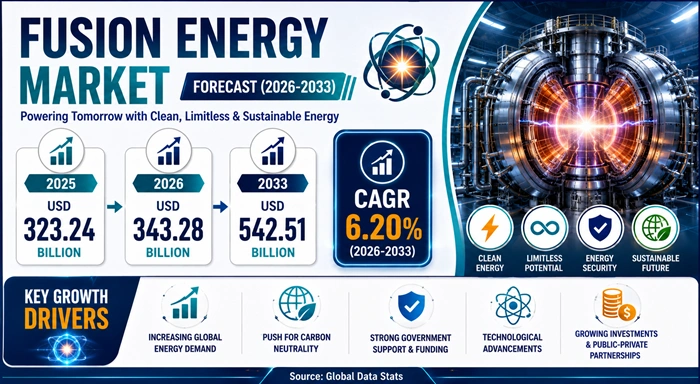
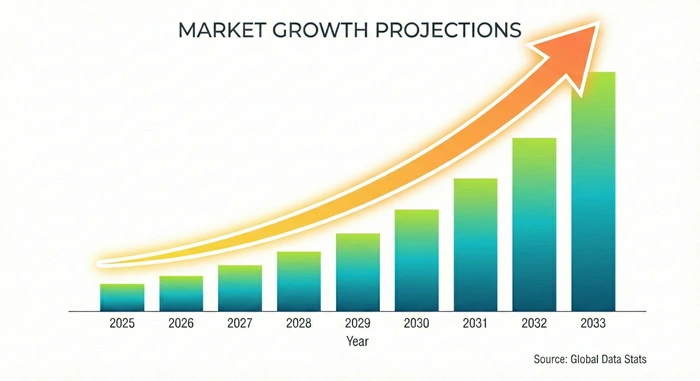
The global fusion energy market size is valued at USD 323.24 billion in 2025 and is predicted to increase from USD 343.28 billion in 2026 to approximately USD 542.51 billion by 2033, growing at a CAGR of 6.20% from 2026 to 2033.
Fusion energy represents revolutionary power generation technology replicating nuclear fusion processes occurring naturally within stars. This advanced approach combines light atomic nuclei, typically hydrogen isotopes deuterium and tritium, under extreme temperature and pressure conditions exceeding 100 million degrees Celsius, releasing enormous energy quantities. The fusion energy market encompasses diverse technologies including magnetic confinement systems using tokamak and stellarator designs, inertial confinement approaches leveraging high-powered lasers, and experimental configurations pursuing compact, commercially viable reactor solutions addressing global clean energy demands.
AI Impact On The Fusion Energy Industry
Transforming Plasma Control And Reactor Design Through Advanced Machine Learning Systems
Artificial intelligence revolutionizes fusion energy development by enabling real-time plasma behavior prediction and control optimization previously impossible with traditional computational methods. Machine learning algorithms process massive datasets from experimental fusion reactors, identifying subtle patterns governing plasma stability, confinement quality, and energy output efficiency. These intelligent systems predict disruption events milliseconds before occurrence, automatically implementing corrective magnetic field adjustments preventing catastrophic plasma loss and equipment damage. The fusion energy market benefits from AI-driven digital twins creating virtual reactor replicas enabling researchers to simulate thousands of operational scenarios, optimize reactor geometries, and validate design modifications without expensive physical prototyping or experimental campaigns consuming years of development time and substantial financial resources.
Deep learning networks accelerate materials discovery identifying advanced alloys and composite structures withstanding extreme neutron bombardment, thermal cycling, and electromagnetic stresses inherent in fusion environments. AI analyzes crystallographic data, mechanical properties, and degradation patterns predicting material performance across decades-long operational lifespans. The fusion energy market witnesses dramatic research acceleration as AI systems screen millions of potential material combinations monthly, identifying promising candidates requiring targeted experimental validation. Generative design algorithms optimize component geometries including breeding blankets, divertor structures, and magnet configurations maximizing performance while minimizing weight and manufacturing complexity. These computational capabilities compress development timelines from decades toward years, bringing commercially viable fusion power plants closer to reality while reducing overall research and development expenditure through focused experimentation guided by AI insights.
Growth Factors
Climate Commitments And Energy Security Concerns Driving Unprecedented Investment Momentum
Global decarbonization imperatives create compelling demand drivers as nations pursue net-zero emission targets requiring massive clean electricity generation capacity additions. Fusion technology offers unparalleled advantages including virtually limitless fuel supplies from seawater-derived deuterium, zero greenhouse gas emissions during operation, and negligible long-lived radioactive waste compared to fission reactors. International climate agreements establish binding carbon reduction commitments forcing governments and industries to explore breakthrough technologies capable of delivering baseload power without fossil fuel dependence. The fusion energy market expands rapidly as public funding accelerates through dedicated fusion programs including United States Department of Energy initiatives, European Union Horizon funding, and Asian government research investments totaling billions annually supporting reactor development, materials research, and commercialization pathways.
Private sector engagement transforms fusion development from purely government-funded research toward venture-backed commercial enterprises attracting unprecedented investment capital. Fusion startups including Commonwealth Fusion Systems, Helion Energy, and TAE Technologies secure multi-hundred-million-dollar financing rounds from technology investors, energy companies, and sovereign wealth funds recognizing fusion's transformative potential. The fusion energy market benefits from over USD 10 billion cumulative private investment since 2021, enabling rapid prototyping of diverse reactor concepts, accelerated engineering development, and aggressive commercialization timelines targeting grid-connected operation by early 2030s. Corporate power purchase agreements emerge as major corporations including Microsoft and Google commit to purchasing fusion-generated electricity supporting project financing while securing future zero-carbon power supplies. Energy security priorities intensify as geopolitical tensions disrupt fossil fuel markets, motivating nations to develop domestic fusion capabilities eliminating dependence on imported energy resources while establishing technological leadership positioning countries advantageously in future energy landscapes.
Market Outlook
Accelerating Technological Breakthroughs And Regulatory Clarity Positioning Commercialization Timeline
Scientific milestones achieved in recent years fundamentally alter fusion's perceived viability as Lawrence Livermore National Laboratory's National Ignition Facility achieves repeated scientific energy breakeven demonstrations producing more fusion energy than laser input energy. This landmark achievement validates inertial confinement approaches while demonstrating fusion physics principles at scales relevant to commercial applications. Magnetic confinement systems advance simultaneously as high-temperature superconducting magnets enable compact tokamak designs reducing reactor size, construction costs, and timeline to first plasma. The fusion energy market witnesses technology maturation across multiple approaches diversifying commercialization pathways and reducing dependence on single technological solutions, improving overall sector resilience and investor confidence.
Regulatory frameworks evolve specifically addressing fusion energy's unique characteristics distinct from fission nuclear power. United States Nuclear Regulatory Commission establishes fusion-specific licensing pathways under ADVANCE Act provisions treating fusion as emerging technology rather than applying restrictive fission regulations. European regulators develop harmonized standards supporting cross-border collaboration and commercial deployment while maintaining safety oversight appropriate to fusion's inherently safer characteristics including impossibility of runaway reactions and minimal radioactive inventory. The fusion energy market benefits from regulatory clarity accelerating permitting processes, reducing compliance uncertainty, and enabling private investment decisions previously hampered by regulatory ambiguity. International collaboration intensifies through ITER project construction progress achieving major assembly milestones, while bilateral agreements facilitate technology transfer, workforce development, and supply chain coordination positioning fusion for rapid global deployment once commercial viability demonstrates through initial pilot plant operations anticipated throughout late 2020s and early 2030s timeframe.
Expert Speaks
-
Bob Mumgaard, CEO at Commonwealth Fusion Systems, emphasized through recent announcements that achieving first plasma in SPARC demonstration reactor by 2026 followed by commercial ARC power plant construction represents tangible pathway toward grid-scale fusion deployment, noting that high-temperature superconducting magnet breakthroughs fundamentally change fusion economics enabling compact designs previously impossible with conventional magnet technology.
-
David Kirtley, CEO at Helion Energy, highlighted during regulatory milestone celebrations that securing state licensing for Polaris fusion facility operations validates private sector capabilities advancing fusion commercialization, emphasizing that rapid iteration cycles and focused development approach position Helion to demonstrate electricity generation capabilities reinforcing commercial viability ahead of anticipated power delivery agreements.
-
Francesco Sciortino, CEO at Proxima Fusion, stated during Series A funding announcement that record-breaking European fusion investment reflects growing recognition that fusion represents strategic opportunity transforming global energy dependence from natural resources toward technological leadership, positioning Europe to bring first regional fusion power plant online within next decade through exceptional engineering and manufacturing excellence.
Key Report Takeaways
-
North America dominates the fusion energy market capturing approximately 36% regional share valued around USD 116.37 billion in 2025, driven by substantial government funding through Department of Energy programs, world-leading national laboratories achieving breakthrough demonstrations, robust private sector ecosystem, and strong venture capital investment supporting commercial fusion development.
-
Asia Pacific emerges as fastest-growing region with projected CAGR exceeding 6.8% through 2033, fueled by massive government infrastructure investments, China's aggressive fusion research programs achieving record plasma confinement durations, Japan's FAST tokamak initiatives, and South Korea's KSTAR experimental successes advancing regional technological capabilities.
-
Magnetic confinement fusion represents the largest technology segment accounting for approximately 57% market share due to extensive research foundation, proven tokamak and stellarator designs, ITER international collaboration, and dominant position across government-funded programs and private sector development initiatives worldwide.
-
Power generation applications contribute the most significant demand representing roughly 62% of total market as grid-scale electricity production remains primary commercialization target, supported by government decarbonization mandates, utility sector interest, and corporate clean energy procurement commitments driving fusion development priorities.
-
Deuterium-tritium fuel maintains dominant position commanding nearly 58% market share owing to lowest ignition temperatures among fusion fuel combinations, highest energy yields enabling more compact reactor designs, and extensive research establishing D-T reactions as most technologically mature fusion approach.
-
Commercial reactors segment exhibits fastest future growth projected to expand at 7.8% CAGR through 2033 with market share reaching approximately 35%, driven by private sector commercialization timelines, regulatory framework maturation, corporate power purchase agreements, and transition from experimental research toward grid-connected demonstration plants.
Market Scope
| Report Coverage | Details |
|---|---|
| Market Size by 2033 | USD 542.51 Billion |
| Market Size by 2025 | USD 323.24 Billion |
| Market Size by 2026 | USD 343.28 Billion |
| Market Growth Rate from 2026 to 2033 | CAGR of 6.20% |
| Dominating Region | North America |
| Fastest Growing Region | Asia Pacific |
| Base Year | 2025 |
| Forecast Period | 2026 to 2033 |
| Segments Covered | Technology, Fuel Type, Application, System Type, Investment Type, Region |
| Regions Covered | North America, Europe, Asia-Pacific, Latin America, Middle East and Africa |
Market Dynamics
Drivers Impact Analysis
International Collaboration And Private Investment Surge Accelerating Development Timelines
| Factor | (≈) % Impact on CAGR Forecast | Geographic Relevance | Impact Timeline |
|---|---|---|---|
| Government funding programs | 20-26% | North America, Europe, Asia Pacific | 2026-2033 |
| Private sector investment growth | 18-24% | United States, Europe, select Asian markets | 2026-2033 |
| Scientific breakthrough demonstrations | 16-22% | Global research facilities | 2026-2033 |
Government commitment to fusion research intensifies globally as climate imperatives and energy security concerns drive substantial public funding increases. United States Department of Energy expands Fusion Energy Sciences program allocating billions toward plasma physics research, materials development, and pilot plant construction support. European Union Horizon programs dedicate significant resources advancing ITER construction, DEMO reactor design, and regional fusion initiatives across member states. The fusion energy market benefits from coordinated international efforts pooling expertise, sharing experimental results, and accelerating technology maturation through collaborative research agreements reducing duplication while maximizing collective progress toward commercial viability.
Private capital influx transforms fusion development landscape as venture capitalists, technology companies, and energy sector investors recognize commercial potential. Commonwealth Fusion Systems raises hundreds of millions supporting SPARC demonstration reactor and ARC commercial power plant development. Helion Energy secures substantial funding advancing Polaris facility construction targeting electricity demonstration milestones. The fusion energy market witnesses over 40 private fusion companies globally attracting cumulative investment exceeding USD 10 billion since 2021, enabling aggressive development timelines, diverse technological approaches, and commercial focus complementing government research programs. Corporate partnerships emerge as established energy companies including oil majors, utilities, and industrial manufacturers establish fusion divisions, joint ventures, and strategic investments positioning organizations for energy transition while leveraging existing infrastructure, customer relationships, and operational expertise supporting fusion commercialization pathways.
Restraints Impact Analysis
Technical Complexity And Material Challenges Constraining Near-Term Deployment
| Factor | (≈) % Impact on CAGR Forecast | Geographic Relevance | Impact Timeline |
|---|---|---|---|
| Tritium supply constraints | -11 to -16% | Global markets | 2026-2030 |
| Materials degradation concerns | -9 to -14% | High neutron flux environments | 2026-2033 |
| Regulatory uncertainty | -7 to -11% | Regions lacking fusion frameworks | 2026-2029 |
Tritium availability presents significant bottleneck as deuterium-tritium fusion reactions require tritium isotope with limited natural occurrence and current production capacity. Existing tritium supplies derive primarily from CANDU reactor operations in Canada with global inventory insufficient supporting widespread fusion deployment. The fusion energy market faces constraints as commercial reactors must incorporate tritium breeding blankets capturing neutrons from fusion reactions to generate replacement fuel, adding system complexity, material challenges, and unproven large-scale operation. Research continues advancing lithium-based breeding materials and blanket designs, yet operational demonstration remains years away creating uncertainty regarding tritium self-sufficiency timelines and potential bottlenecks limiting initial commercial plant deployment pace.
Plasma-facing materials experience extreme operating conditions including intense neutron irradiation, high heat fluxes, and electromagnetic stress causing material degradation, erosion, and activation. First-wall components, divertor structures, and breeding blankets require materials maintaining structural integrity, thermal conductivity, and nuclear performance throughout multi-decade operational lifespans. The fusion energy market confronts materials science challenges as limited irradiation testing facilities restrict comprehensive qualification of candidate materials under fusion-relevant neutron spectra. Development of reduced-activation steels, tungsten composites, and ceramic materials continues, yet long-term performance validation requires expensive, time-consuming testing programs potentially delaying commercial reactor deployment timelines. Regulatory frameworks remain incomplete across many jurisdictions as fusion-specific safety standards, licensing procedures, and operational requirements evolve slowly despite technology progress, creating uncertainty for private developers seeking construction permits and operational approvals.
Opportunities Impact Analysis
Emerging Applications And Technology Diversification Creating Multiple Revenue Streams
| Factor | (≈) % Impact on CAGR Forecast | Geographic Relevance | Impact Timeline |
|---|---|---|---|
| Space propulsion applications | +14 to +19% | Space agencies and aerospace firms | 2028-2033 |
| Industrial process heat | +12 to +17% | Heavy manufacturing regions | 2027-2033 |
| Hydrogen production integration | +11 to +15% | Clean hydrogen hubs globally | 2027-2033 |
Space exploration applications present high-value opportunity as fusion propulsion systems promise revolutionary capabilities for interplanetary travel. NASA Innovative Advanced Concepts program funds preliminary research exploring compact fusion engines capable of dramatically reducing Mars transit times from current 6-9 months toward weeks. The fusion energy market captures interest from aerospace companies and defense contractors recognizing fusion's potential enabling deep space missions, satellite operations, and strategic capabilities. High energy density inherent in fusion reactions provides superior specific impulse compared to chemical rockets while offering continuous thrust capabilities unavailable with current propulsion technologies, positioning fusion as enabling technology for ambitious space exploration programs planned throughout coming decades.
Industrial process heat applications emerge as fusion systems operating at elevated temperatures supply high-grade thermal energy supporting steel production, chemical manufacturing, and hydrogen generation. Current industrial processes rely predominantly on fossil fuel combustion producing substantial carbon emissions. The fusion energy market diversifies revenue opportunities beyond electricity generation as industrial sectors seek decarbonization pathways maintaining production capabilities while meeting net-zero commitments. Fusion reactors integrated with industrial facilities provide both process heat and electricity reducing energy costs while eliminating emissions. Hydrogen production through high-temperature electrolysis powered by fusion electricity and thermal energy positions fusion supporting clean hydrogen economy development, creating synergies between multiple decarbonization technologies and expanding addressable market substantially beyond power generation alone.
Segment Analysis
By Technology: Magnetic Confinement Fusion
Established Research Foundation And Tokamak Dominance Securing Segment Leadership
Magnetic confinement fusion commands the largest technology share within the fusion energy market at approximately 57%, valued around USD 184.25 billion in 2025 owing to decades of research investment, proven reactor designs, and international collaboration through ITER project. Tokamak configurations utilizing powerful magnetic fields confining high-temperature plasma dominate development efforts across government laboratories and private companies worldwide. Superconducting magnet advances enable compact reactor designs improving economics while high-temperature superconducting materials dramatically reduce magnet size and cost compared to conventional superconductors. The fusion energy market benefits from magnetic confinement's demonstrated plasma performance achieving temperatures, densities, and confinement times approaching commercial requirements, with recent experiments sustaining plasma for hundreds of seconds validating operational concepts.
North America and Europe lead magnetic confinement development with Princeton Plasma Physics Laboratory, Lawrence Livermore National Laboratory, and ITER Organization driving experimental progress and engineering solutions. Commonwealth Fusion Systems pursues compact tokamak approach leveraging high-temperature superconducting magnets targeting first plasma by 2026 followed by commercial demonstration. The fusion energy market witnesses this segment maintaining robust growth near 5.9% CAGR through 2033 as stellarator alternatives gain attention offering inherent plasma stability advantages, while mirror confinement concepts attract renewed interest through innovative magnetic geometries potentially simplifying reactor designs. Technology maturation progresses as experimental facilities worldwide share data, validate simulations, and collectively advance understanding of plasma physics phenomena critical to achieving sustained fusion reactions generating net energy output suitable for commercial electricity production.
By System Type: Commercial Reactors
Commercialization Momentum And Power Purchase Agreements Driving Segment Growth
Commercial reactors emerge as fastest-growing system segment within the fusion energy market projected to expand at robust 7.8% CAGR through 2033, driven by private sector development timelines, regulatory framework maturation, and corporate clean energy procurement strategies. Companies pursue grid-connected demonstration plants targeting operational dates throughout early 2030s with power purchase agreements securing revenue certainty supporting project financing. Commonwealth Fusion Systems announces plans for 400-megawatt ARC commercial facility in Virginia partnering with Dominion Energy. Helion Energy advances Polaris system toward electricity demonstration with commitments supplying power to major technology companies. The fusion energy market transitions from experimental research toward commercial deployment as private developers optimize designs for economic viability rather than purely scientific objectives.
United States leads commercial reactor development through Department of Energy Milestone-Based Fusion Development Program selecting private companies for cost-shared funding supporting demonstration plant construction. Regulatory clarity improves as Nuclear Regulatory Commission establishes fusion-specific licensing pathways distinct from fission regulations, reducing compliance burden and permitting uncertainty. The fusion energy market witnesses this segment capturing growing investment share as pilot plant demonstrations validate technologies, operational experience accumulates, and economic models demonstrate competitive levelized cost of electricity projections. Supply chain development accelerates as component manufacturers, construction firms, and engineering contractors establish fusion-specific capabilities supporting commercial plant deployment at scale. International markets emerge as European, Asian, and Middle Eastern nations express interest hosting fusion facilities diversifying energy portfolios while establishing positions in transformative energy technology reshaping global electricity generation throughout coming decades.
Regional Insights
North America
Government Programs And Private Innovation Cementing Regional Leadership
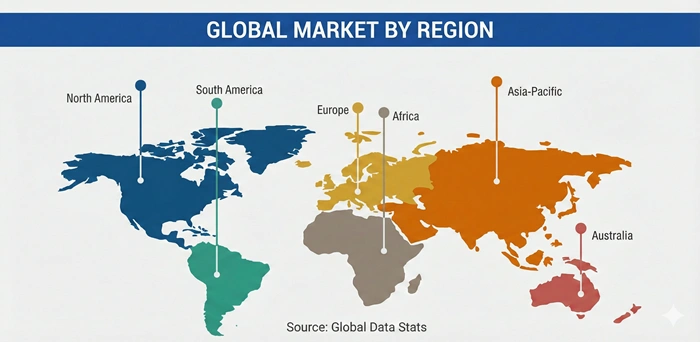
North America dominates the fusion energy market commanding approximately 36% global share valued at USD 116.37 billion in 2025, projected to reach USD 195.30 billion by 2033 growing at 6.05% CAGR. United States establishes overwhelming regional leadership through Department of Energy Fusion Energy Sciences program funding national laboratories including Lawrence Livermore National Laboratory achieving historic scientific breakeven at National Ignition Facility and Princeton Plasma Physics Laboratory advancing tokamak research. Private sector ecosystem thrives as Commonwealth Fusion Systems, Helion Energy, TAE Technologies, and dozens of startups pursue diverse technological approaches supported by venture capital exceeding USD 7 billion cumulatively. The fusion energy market benefits from North America's innovation infrastructure including world-class universities, experienced workforce, and entrepreneurial culture accelerating technology translation from laboratory discoveries toward commercial applications.
Policy support strengthens as ADVANCE Act establishes fusion-specific regulatory framework encouraging private investment through reduced regulatory burden compared to fission nuclear power. State governments compete attracting fusion facilities with incentive packages, workforce development programs, and streamlined permitting processes. The fusion energy market witnesses California emerging as fusion hub hosting multiple companies while Virginia, Washington, and Massachusetts pursue fusion development supporting economic diversification and climate objectives. Leading regional players include Commonwealth Fusion Systems advancing SPARC demonstration reactor, Helion Energy targeting 2025 electricity demonstration, TAE Technologies developing alternative confinement approaches, and General Atomics supporting government programs while pursuing commercial pathways. Technology leadership, financial resources, and supportive policy environment position North America sustaining market dominance throughout forecast period.
Asia Pacific
Government Infrastructure Investment And Research Excellence Driving Fastest Regional Growth
Asia Pacific emerges as fastest-growing region in the fusion energy market with CAGR exceeding 6.8% from 2026 to 2033, with market value expanding from approximately USD 107.54 billion in 2025 toward USD 183.77 billion by 2033. China leads regional expansion through massive government investments supporting EAST tokamak achieving record 403-second plasma duration at 100 million degrees Celsius, demonstrating sustained operation capabilities approaching commercial requirements. National fusion strategy targets commercial reactor deployment by 2045 with substantial resources allocated advancing superconducting magnet technology, tritium breeding research, and materials development. The fusion energy market benefits from China's manufacturing capabilities, engineering workforce, and centralized planning enabling rapid infrastructure development and coordinated research programs.
Japan pursues advanced stellarator concepts through National Institute for Fusion Science while launching FAST initiative collaborating internationally on tokamak development targeting 2030s commercial demonstrations. South Korea's KSTAR reactor sets confinement records validating plasma control techniques while National Fusion Research Institute plans K-DEMO commercial demonstration reactor. The fusion energy market witnesses regional collaboration as Asian nations participate in ITER construction while developing domestic capabilities and bilateral partnerships. India contributes to ITER while advancing domestic fusion programs. Leading regional players include Chinese Academy of Sciences institutes, ENN Science & Technology, Kyoto Fusioneering supporting global projects, and emerging startups across China, Japan, and South Korea pursuing innovative approaches. Government commitment, technical capabilities, and energy security priorities position Asia Pacific as primary growth engine for global fusion energy expansion throughout forecast period.
Top Key Players
-
Commonwealth Fusion Systems (United States)
-
Tokamak Energy (United Kingdom)
-
Helion Energy (United States)
-
TAE Technologies (United States)
-
General Fusion (Canada)
-
First Light Fusion (United Kingdom)
-
Marvel Fusion (Germany)
-
Proxima Fusion (Germany)
-
Xcimer Energy (United States)
-
Focused Energy (United States)
-
Type One Energy (United States)
-
Zap Energy (United States)
-
Kyoto Fusioneering (Japan)
-
ENN Science & Technology (China)
-
Realta Fusion (United States)
Recent Developments
-
Commonwealth Fusion Systems (December 2024): Announced construction of world's first grid-scale commercial fusion power plant at James River Industrial Center in Virginia, partnering with Dominion Energy to build 400-megawatt ARC facility expected to power 150000 homes beginning early 2030s, following SPARC demonstration reactor achieving first plasma targeted for 2026.
-
Helion Energy (August 2024): Secured Large Broad Scope license from Washington State Department of Health authorizing operation of Polaris 7th-generation fusion machine, representing major regulatory milestone enabling electricity generation demonstrations planned for 2024, with enhanced magnets pulsing 100 times faster than predecessor systems.
-
Proxima Fusion (June 2025): Closed record-breaking EUR 130 million Series A financing round marking largest private fusion investment in European history, supporting stellarator reactor development leveraging Max Planck Institute plasma physics research and targeting first European fusion power plant within decade.
-
FAST Project Japan (November 2024): Launched national Fusion by Advanced Superconducting Tokamak initiative targeting fusion-based electricity generation by 2030s, securing international partnerships with United Kingdom, United States, and Canada supporting deuterium-tritium plasma research and advanced tokamak development.
-
UK Fusion Fund (April 2025): Government committed GBP 20 million launching Starmaker One private fusion fund targeting GBP 100-150 million total capitalization supporting fusion startups scaling technologies, managed by East X Ventures advancing British fusion ecosystem and commercial deployment timelines.
Market Trends
Compact Reactor Designs And AI Integration Reshaping Development Paradigms
High-temperature superconducting magnet breakthroughs enable dramatically smaller tokamak designs reducing construction costs, shortening build timelines, and improving economics compared to conventional superconducting systems. Commonwealth Fusion Systems leverages HTS technology building SPARC demonstration reactor one-tenth ITER volume while targeting comparable fusion performance. The fusion energy market witnesses technology democratization as compact designs reduce capital requirements enabling more organizations pursuing fusion development while accelerating iteration cycles through faster construction and commissioning. Modular approaches emerge allowing factory fabrication of major components rather than extensive field construction, improving quality control while reducing schedule risk and enabling standardized designs supporting fleet deployment once commercial viability demonstrates through initial reference plants.
Artificial intelligence integration accelerates across fusion development spectrum from plasma control to reactor design optimization. Machine learning algorithms analyze experimental data identifying operational regimes maximizing confinement while minimizing instabilities and disruptions. The fusion energy market benefits from AI-driven design tools optimizing magnet geometries, breeding blanket configurations, and structural arrangements balancing competing requirements across complex multi-physics environments. Real-time plasma control systems react milliseconds faster than human operators implementing corrective actions maintaining optimal conditions throughout discharge. Predictive maintenance algorithms analyze sensor data forecasting component failures enabling proactive interventions minimizing downtime. Generative design explores vast solution spaces identifying novel reactor configurations potentially superior to conventional approaches developed through decades of incremental evolution, promising to accelerate innovation pace and discover breakthrough concepts shortening pathways toward commercial fusion energy.
Segments Covered In The Report
By Technology
-
Magnetic Confinement Fusion
-
Inertial Confinement Fusion
-
Spheromaks
-
Stellarators
-
Others
By Fuel Type
-
Deuterium-Tritium
-
Deuterium-Deuterium
-
Proton-Boron
-
Others
By Application
-
Power Generation
-
Space Propulsion
-
Industrial Applications
-
Research and Development
-
Others
By System Type
-
Pilot Plants
-
Experimental Reactors
-
Commercial Reactors
-
Others
By Investment Type
-
Public Sector Investments
-
Private Sector Investments
-
International Collaborations
-
Others
By Region
-
North America (United States, Canada, Mexico)
-
Europe (United Kingdom, France, Germany, Spain, Italy, Switzerland, Rest of Europe)
-
Asia-Pacific (China, Japan, South Korea, India, Australia, Rest of Asia-Pacific)
-
Latin America (Brazil, Argentina, Rest of Latin America)
-
Middle East and Africa (Saudi Arabia, UAE, South Africa, Rest of MEA)
Frequently Asked Questions
Question 1: What is the expected size of the fusion energy market by 2033?
Answer: The global fusion energy market is projected to reach approximately USD 542.51 billion by 2033, expanding from USD 343.28 billion in 2026. This substantial growth reflects accelerating commercialization efforts, breakthrough scientific demonstrations, increasing private investment, and supportive government policies worldwide driving fusion technology toward commercial viability.
Question 2: Which region dominates the fusion energy market currently?
Answer: North America dominates the fusion energy market with approximately 36% market share due to substantial Department of Energy funding, world-leading national laboratories achieving breakthrough results, robust private sector ecosystem, and strong venture capital investment. The region benefits from innovation infrastructure, experienced workforce, and supportive regulatory frameworks advancing fusion commercialization.
Question 3: What CAGR will the fusion energy market experience from 2026 to 2033?
Answer: The fusion energy market will grow at a compound annual growth rate of 6.20% from 2026 to 2033. This expansion reflects intensifying government funding, surging private investment, scientific breakthroughs demonstrating technical feasibility, and accelerating commercialization timelines as multiple companies target grid-connected demonstration plants operational by early 2030s.
Question 4: Which technology segment holds the largest share in the fusion energy market?
Answer: Magnetic confinement fusion commands the largest technology share at approximately 57% due to extensive research foundation, proven tokamak and stellarator designs, ITER international collaboration, and dominant position across government programs. The segment benefits from decades of plasma physics research, superconducting magnet advances, and demonstrated performance approaching commercial requirements.
Question 5: What are the primary growth drivers for the fusion energy market?
Answer: Primary drivers include government funding programs allocating billions toward fusion research, surging private sector investment exceeding USD 10 billion cumulatively, and scientific breakthrough demonstrations achieving energy breakeven. The fusion energy market also benefits from climate commitments requiring clean baseload power, energy security concerns, corporate clean energy procurement, and high-temperature superconducting magnet breakthroughs enabling compact economical reactor designs.