
Fuel Management Market Overview
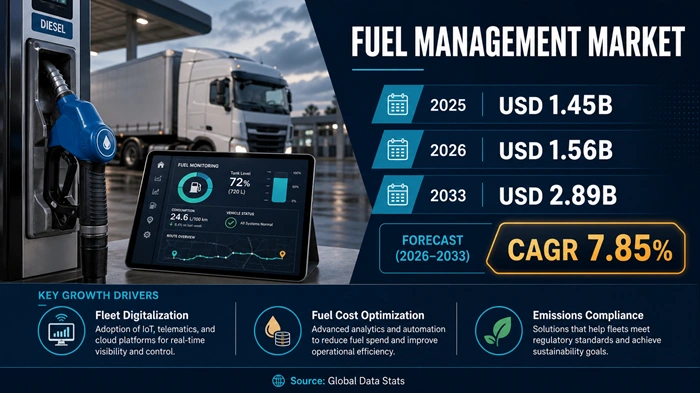
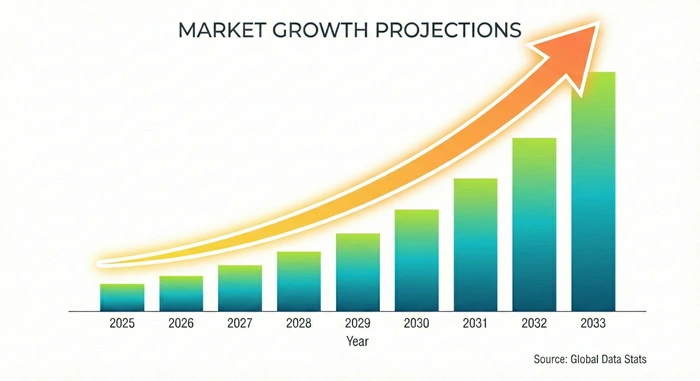
The global fuel management market size is valued at USD 1.45 billion in 2025 and is predicted to increase from USD 1.56 billion in 2026 to approximately USD 2.89 billion by 2033, growing at a CAGR of 7.85% from 2026 to 2033.
The fuel management market encompasses advanced hardware, software, and services designed to monitor, control, and optimize fuel consumption, storage, distribution, and inventory management across various industries including transportation, logistics, construction, mining, and utilities.
Rising fuel costs, increasing demand for operational efficiency, and growing concerns about fuel theft drive substantial market expansion worldwide. Organizations increasingly recognize that integrated fuel management systems deliver superior cost savings, enhanced transparency, and improved compliance compared to manual tracking methods relying on spreadsheets and paper receipts. The market benefits from technological advancements including Internet of Things integration, real-time telematics, cloud-based platforms, RFID technology, and artificial intelligence-powered analytics that transform fuel monitoring from reactive oversight to proactive optimization.
AI Impact on the Fuel Management Industry
Intelligent Analytics and Predictive Capabilities Transform Fuel Optimization
Artificial intelligence is fundamentally revolutionizing the fuel management market by introducing intelligent predictive analytics, anomaly detection, and automated optimization capabilities that significantly enhance operational efficiency while reducing fuel waste and theft. AI algorithms continuously analyze fuel consumption patterns across vehicle fleets, identify inefficiencies including excessive idling, aggressive driving behaviors, and suboptimal routing that increase fuel usage beyond necessary levels. Machine learning models process historical fuel data, weather conditions, traffic patterns, and vehicle performance metrics to generate accurate consumption forecasts supporting budget planning, procurement timing, and refueling schedule optimization. Advanced analytics powered by artificial intelligence enable real-time fraud detection by identifying unusual fuel transactions, unauthorized refueling activities, and inventory discrepancies indicating potential theft or system leakage.
The integration of AI with fuel management systems transforms preventive maintenance through predictive engine diagnostics that identify performance degradation affecting fuel efficiency before catastrophic failures occur. AI-driven systems automatically recommend optimal maintenance schedules based on actual vehicle usage patterns, operating conditions, and component wear rather than arbitrary time-based intervals, preventing fuel efficiency losses from poorly maintained equipment. Fleet management platforms leveraging artificial intelligence optimize route planning by analyzing real-time traffic conditions, delivery schedules, vehicle capacities, and fuel consumption characteristics to minimize total fuel expenditure across distributed operations. Furthermore, AI-enhanced monitoring systems provide prescriptive recommendations including driver coaching opportunities, vehicle replacement timing, and operational policy adjustments that continuously improve fuel efficiency metrics.
Growth Factors
Rising Fuel Costs and Theft Prevention Drive Market Expansion
Escalating global fuel prices represent the primary driver propelling fuel management market growth as organizations across industries seek technological solutions minimizing fuel expenditure, which often constitutes the second-largest operational cost after labor. Commercial fleets, construction companies, mining operations, and agricultural businesses allocate substantial budgets for fuel procurement, creating strong financial incentives for implementing monitoring systems that reduce consumption through driver behavior modification, route optimization, and maintenance scheduling. Fuel price volatility creates budget uncertainty and margin pressure, motivating investment in management systems providing visibility into consumption patterns, enabling accurate forecasting, and identifying cost-reduction opportunities. Organizations recognize that even modest percentage improvements in fuel efficiency deliver substantial absolute savings when applied across large fleets or operations consuming millions of gallons annually.
Fuel theft prevention emerges as a critical growth driver with industry estimates suggesting that fuel pilferage costs businesses billions annually through employee theft, unauthorized usage, and inventory shrinkage. Manual fuel tracking methods prove inadequate for detecting sophisticated theft schemes including skimming, unauthorized vehicle refueling, and fraudulent transaction reporting that deplete fuel inventories without proper documentation. The fuel management market benefits from regulatory compliance requirements as governments implement stricter emissions standards, fuel tax reporting obligations, and environmental regulations necessitating accurate fuel consumption tracking and reporting. Transportation companies face Federal Motor Carrier Safety Administration mandates requiring electronic logging devices that include fuel monitoring capabilities, creating inherent demand for integrated fuel management solutions. Additionally, the explosive growth of e-commerce and last-mile delivery services dramatically expands commercial fleet sizes, creating proportional increases in fuel management system deployments supporting operational visibility and cost control.
Market Outlook
Technology Innovation and Cloud Adoption Sustain Growth Momentum
The fuel management market outlook remains exceptionally positive as converging trends including Internet of Things proliferation, cloud computing maturity, telematics advancement, and mobile technology ubiquity create opportunities for next-generation fuel monitoring solutions. Market participants continue investing heavily in research and development to enhance system capabilities through real-time data analytics, mobile application interfaces, predictive maintenance integration, and seamless third-party platform connectivity. The shift toward cloud-based fuel management platforms accelerates as organizations recognize subscription-based software-as-a-service models offer advantages including lower upfront costs, automatic updates, remote accessibility, and elastic scalability compared to traditional on-premise installations. Innovation in fuel card technologies incorporating RFID, magnetic stripe, and contactless payment capabilities combined with intelligent transaction controls provides comprehensive fuel expenditure management.
The transportation and logistics sectors demonstrate particularly robust fuel management adoption as delivery timeline pressures, driver shortage challenges, and margin compression motivate investments in systems optimizing every operational aspect including fuel consumption. Mining operations consuming enormous fuel quantities for heavy equipment, on-site power generation, and material transport increasingly implement sophisticated fuel management infrastructure ensuring continuous availability while controlling costs and preventing theft in remote locations. Construction companies deploying fuel management systems benefit from accurate job costing, equipment utilization tracking, and theft prevention at distributed project sites where manual oversight proves impractical. Industry analysts project sustained market expansion throughout the forecast period with particularly strong growth anticipated in Asia Pacific where rapid industrialization, fleet expansion, and infrastructure development create expanding opportunities.
Expert Speaks
-
Industry experts at Expert Market reported that the telematics revolution is well underway with 83% of fleet operators already utilizing telematics solutions, and that adoption rate climbs to 93% for fleets exceeding 50 vehicles, reflecting the technology's proven value in optimizing fuel consumption and overall fleet performance.
-
Captain Raja from Fleet Management emphasized that the maritime industry must look beyond traditional approaches, challenging the sector to be more progressive by adopting operational improvements available today rather than waiting for perfect future solutions, while calling for collaborative shared investment risk across organizations and financial institutions committed to environmental, social, and governance agendas.
-
ONE Shipping executives highlighted their commitment to accelerating decarbonization through smart ships, smart operations, and smart people, designing the most efficient vessels, using live data to support real-time voyage optimization, and empowering teams with tools and skills to lead the sustainability transition anchored in strong governance.
Key Report Takeaways
-
North America leads the global fuel management market with approximately 7.2% to 7.73% CAGR expected through the forecast period, driven by substantial presence of logistics, transportation, and mining industries, stringent emissions regulations, and Federal Motor Carrier Safety Administration mandates requiring electronic logging devices with fuel monitoring capabilities.
-
Asia Pacific represents the fastest-growing regional market, expected to register exceptional growth through 2033, fueled by rapid industrialization, expanding commercial fleets, infrastructure development programs, and growing awareness of fuel management benefits across emerging economies.
-
Software offerings demonstrate significant market presence as cloud-based platforms, analytics applications, and mobile interfaces increasingly complement traditional hardware installations, providing real-time visibility, predictive insights, and automated reporting capabilities that enhance operational decision-making.
-
Card-based deployment systems maintain substantial adoption particularly among commercial fleets utilizing fuel cards integrating RFID technology, magnetic stripe readers, and contactless payment capabilities that automate transaction logging, prevent unauthorized usage, and streamline expense reconciliation processes.
-
The transportation and logistics sector represents the largest end-user segment, driving demand through fleet management applications requiring fuel consumption monitoring, route optimization, driver behavior analysis, and operational cost control across distributed vehicle networks.
-
Hardware offerings including automatic tank gauges, flow meters, and RFID readers form the foundation of fuel management infrastructure, capturing real-time consumption data, inventory levels, and transaction details that feed analytical platforms generating actionable insights.
Market Scope
| Report Coverage Details | |
|---|---|
| Market Size by 2033 | USD 2.89 Billion |
| Market Size by 2025 | USD 1.45 Billion |
| Market Size by 2026 | USD 1.56 Billion |
| Market Growth Rate from 2026 to 2033 | CAGR of 7.85% |
| Dominating Region | North America |
| Fastest Growing Region | Asia Pacific |
| Base Year | 2025 |
| Forecast Period | 2026 to 2033 |
| Segments Covered | Offering, Deployment Type, Application, End User, Region |
| Regions Covered | North America, Europe, Asia Pacific, Latin America, Middle East & Africa |
Market Dynamics
Drivers Impact Analysis
Cost Control Imperatives and Operational Efficiency Drive Market Adoption
| Factor | (≈) % Impact on CAGR Forecast | Geographic Relevance | Impact Timeline |
|---|---|---|---|
| Rising fuel costs | 2.8% | Global, particularly developed markets | Immediate and ongoing |
| Fuel theft prevention | 2.1% | Global focus | Immediate to medium-term |
| Fleet expansion growth | 1.9% | Asia Pacific, North America, Europe | Medium-term |
| Regulatory compliance | 1.5% | North America, Europe | Ongoing |
Rising global fuel costs and persistent price volatility represent the most significant driver propelling fuel management market expansion as fuel typically constitutes the second-largest operational expense for transportation, construction, mining, and agricultural organizations. Commercial fleets operating hundreds or thousands of vehicles spend millions annually on fuel procurement, creating substantial financial incentives for implementing monitoring systems that reduce consumption even by small percentages translating to significant absolute savings. Fuel price unpredictability complicates budget planning and margin protection, motivating organizations to invest in management platforms providing consumption visibility, accurate forecasting, and optimization recommendations that insulate operations from market volatility. Business leaders recognize that comprehensive fuel management delivers measurable return on investment through reduced waste, improved vehicle efficiency, optimized routing, and enhanced maintenance scheduling.
Fuel theft prevention emerges as a critical adoption driver with estimates suggesting billions in annual losses from employee pilferage, unauthorized vehicle refueling, inventory shrinkage, and fraudulent transaction reporting. Manual tracking methods relying on paper logs, receipts, and periodic inventory checks prove inadequate for detecting sophisticated theft schemes that systematically drain fuel resources without proper documentation. The fuel management market benefits from rapid commercial fleet expansion driven by e-commerce growth, last-mile delivery proliferation, and urbanization increasing goods movement, creating proportional demand for monitoring systems managing larger, more distributed vehicle networks. Regulatory compliance requirements including Federal Motor Carrier Safety Administration mandates for electronic logging devices, environmental reporting obligations, and emissions standards necessitate accurate fuel consumption tracking that automated management systems uniquely provide. Additionally, insurance companies increasingly offer premium discounts and favorable terms for fleets implementing comprehensive fuel management and telematics systems demonstrating proactive risk mitigation and operational oversight.
Restraints Impact Analysis
Implementation Costs and Integration Complexity Create Adoption Barriers
| Factor | (≈) % Impact on CAGR Forecast | Geographic Relevance | Impact Timeline |
|---|---|---|---|
| High upfront costs | -1.7% | Small fleets and price-sensitive markets | Short to medium-term |
| System integration complexity | -1.2% | Organizations with legacy systems | Ongoing |
| Data security concerns | -0.9% | Global, particularly regulated industries | Ongoing |
| Technology learning curve | -0.7% | Traditional operations | Medium-term |
Substantial upfront costs associated with fuel management system implementation including hardware procurement, software licensing, installation services, network infrastructure, and employee training create significant barriers to fuel management market adoption, particularly for small and medium-sized fleet operators. Comprehensive deployments requiring automatic tank gauges, flow meters, RFID readers, vehicle telematics devices, and communication infrastructure often demand investments exceeding hundreds of thousands of dollars before delivering operational benefits. Small fleet operators with limited capital budgets struggle to justify fuel management investments despite long-term savings potential when upfront costs strain financial resources needed for core business operations. Organizations express concerns about return-on-investment timelines, technology obsolescence risks, and opportunity costs associated with diverting capital from revenue-generating activities to monitoring infrastructure.
Technical integration complexity surrounding fuel management system connectivity with existing fleet management platforms, accounting software, enterprise resource planning systems, and maintenance management applications creates implementation challenges requiring specialized expertise. The fuel management market faces adoption obstacles when organizations attempt integrating modern cloud-based platforms with legacy on-premise systems, requiring middleware, custom APIs, and data transformation logic maintaining real-time synchronization. Data security and privacy concerns create hesitation around cloud-based fuel management solutions as organizations worry about sensitive operational data exposure, cybersecurity vulnerabilities, and potential breaches revealing competitive intelligence. Small operators lacking dedicated IT staff express apprehension about managing complex technology systems, troubleshooting technical issues, and maintaining cybersecurity defenses without internal expertise. Additionally, organizational change management challenges emerge as fuel management implementations disrupt established workflows, require driver adaptation to new refueling procedures, and encounter resistance from employees comfortable with familiar manual processes.
Opportunities Impact Analysis
IoT Integration and Emerging Market Expansion Create Growth Prospects
| Factor | (≈) % Impact on CAGR Forecast | Geographic Relevance | Impact Timeline |
|---|---|---|---|
| IoT and telematics integration | 2.3% | Global, particularly developed markets | Medium-term |
| Cloud-based platforms | 1.9% | Global focus | Medium-term |
| Emerging market adoption | 1.7% | Asia Pacific, Latin America, Middle East | Medium to long-term |
| Electric vehicle transition | 1.4% | North America, Europe, China | Long-term |
The explosive growth of Internet of Things technology and connected vehicle telematics creates exceptional opportunities within the fuel management market as sensor proliferation, cellular connectivity improvements, and cloud computing maturity enable comprehensive real-time fuel monitoring at unprecedented scale. IoT-enabled fuel management systems leverage vehicle-mounted sensors, GPS tracking, cloud analytics platforms, and mobile applications to capture granular consumption data, automate reporting, and generate predictive insights impossible with traditional approaches. Telematics market projections showing growth to USD 61.5 billion in 2024 with 13.8% annual expansion through 2030 demonstrate strong momentum supporting fuel management system integration. Organizations increasingly deploy connected vehicle platforms combining fuel monitoring with comprehensive fleet management capabilities including maintenance scheduling, driver safety, route optimization, and compliance reporting.
Cloud-based fuel management platform adoption accelerates as subscription software-as-a-service models eliminate large upfront capital investments, provide automatic updates, enable remote accessibility, and deliver elastic scalability supporting business growth. Small and medium fleet operators particularly benefit from cloud solutions making sophisticated fuel monitoring capabilities accessible without traditional infrastructure investments. The fuel management market benefits from emerging market expansion across Asia Pacific, Latin America, and Middle East regions where rapid industrialization, infrastructure development, commercial fleet growth, and rising fuel costs create expanding customer bases. Strategic partnerships between fuel management vendors, telematics providers, fuel card networks, and fleet management platform operators accelerate market penetration through integrated solution offerings, complementary capabilities, and expanded distribution channels. Additionally, the transition toward electric vehicles creates opportunities for energy management systems monitoring charging consumption, optimizing electricity procurement, and managing mixed fleets operating both traditional and electric vehicles requiring different refueling infrastructure.
Segment Analysis
Software Solutions Dominance
Analytics Platforms and Cloud Applications Drive Digital Transformation
Software offerings command substantial position within the fuel management market as cloud-based platforms, analytics applications, mobile interfaces, and reporting tools increasingly complement traditional hardware installations providing real-time visibility, predictive insights, and automated capabilities. Modern fuel management software integrates data from multiple sources including vehicle telematics, fuel card transactions, tank level sensors, and flow meters to create comprehensive operational dashboards displaying consumption patterns, cost trends, efficiency metrics, and anomaly alerts. Advanced analytics capabilities process historical consumption data to identify optimization opportunities including driver coaching needs, vehicle replacement timing, maintenance scheduling improvements, and route planning enhancements that reduce total fuel expenditure. Cloud-native platforms deliver advantages including subscription-based pricing eliminating upfront software licensing costs, automatic updates providing latest features without manual upgrades, and remote accessibility supporting distributed operations management.
North America demonstrates particularly strong software adoption with logistics companies, transportation providers, and construction firms implementing comprehensive analytics platforms from vendors including Verizon Connect, Geotab, Trimble, and Samsara that combine fuel monitoring with broader fleet management capabilities. Software solutions provide mobile applications enabling drivers, field supervisors, and managers to access real-time fuel information, submit electronic receipts, approve transactions, and respond to efficiency alerts from anywhere. The fuel management market software segment benefits from artificial intelligence integration as machine learning algorithms analyze consumption patterns, predict future usage, identify fraud indicators, and generate prescriptive recommendations supporting data-driven decision-making. Integration marketplaces connecting fuel management platforms with accounting systems, maintenance management applications, enterprise resource planning software, and payroll systems streamline workflows by eliminating manual data entry and enabling automated reporting. Fleet operators value software platforms providing customizable dashboards, scheduled reports, and executive summaries translating complex operational data into actionable business intelligence supporting strategic planning.
Transportation End-User Leadership
Commercial Fleet Expansion and Delivery Demands Drive Segment Growth
Transportation and logistics operations represent the largest end-user segment within the fuel management market, driving substantial demand through commercial fleet applications requiring fuel consumption monitoring, cost control, route optimization, and driver behavior management across distributed vehicle networks. The explosive growth of e-commerce and last-mile delivery services dramatically expands fleet sizes as retailers, third-party logistics providers, and parcel delivery companies deploy thousands of vehicles meeting consumer expectations for rapid delivery. Commercial transportation operators face intense margin pressure from competitive markets, labor shortages, regulatory compliance costs, and fuel price volatility, creating strong financial incentives for implementing systems optimizing every operational aspect including fuel consumption. Fleet management solutions incorporating fuel monitoring capabilities help operators track vehicle locations, measure driver performance, schedule maintenance, ensure compliance, and reduce operational costs through comprehensive visibility.
North America demonstrates exceptional transportation segment adoption with United States and Canadian fleet operators implementing telematics and fuel management solutions from market leaders including Geotab, Verizon Connect, Trimble, Samsara, Teletrac Navman, and Omnitracs serving logistics, utilities, public sector, and construction fleets. Regulatory mandates including Federal Motor Carrier Safety Administration requirements for electronic logging devices inherently include fuel monitoring capabilities, creating natural adoption drivers for comprehensive fleet management platforms. The fuel management market transportation segment particularly benefits from driver behavior monitoring as telematics data reveals inefficient practices including excessive idling, aggressive acceleration, harsh braking, and speeding that substantially increase fuel consumption and vehicle wear. Fleet managers leverage fuel consumption reports to implement driver coaching programs, establish efficiency incentives, and identify training needs that improve overall fleet performance. Predictive maintenance capabilities integrated with fuel monitoring identify engine performance degradation, detect mechanical inefficiencies affecting fuel economy, and recommend service timing preventing costly breakdowns while maintaining optimal efficiency.
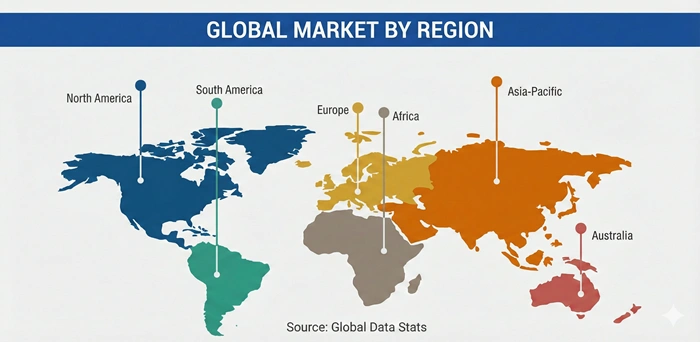
Regional Insights
North America Market Leadership
Regulatory Framework and Technology Adoption Drive Regional Dominance
North America commands substantial leadership within the fuel management market, maintaining dominant regional position with approximately 7.2% to 7.73% CAGR through the forecast period, driven by substantial presence of logistics, transportation, and mining industries, stringent regulatory requirements, and mature technology adoption across enterprises. The United States represents the primary growth engine with extensive commercial fleets, construction operations, mining activities, and agricultural businesses implementing fuel management infrastructure controlling operational costs and ensuring regulatory compliance. Federal Motor Carrier Safety Administration mandates requiring electronic logging devices inherently include fuel monitoring capabilities, creating regulatory drivers accelerating system adoption across interstate transportation operations. Canada demonstrates growing fuel management adoption across logistics, natural resources, construction, and government fleet applications with organizations recognizing efficiency benefits and cost savings justifying technology investments.
Major technology vendors including Verizon Connect, Geotab, Trimble, Samsara, Teletrac Navman, and Omnitracs headquarter operations in North America, maintaining strong regional market positions through comprehensive product portfolios, extensive customer relationships, and localized support infrastructure. The fuel management market in North America particularly benefits from mature telematics adoption with 83% of fleet operators already utilizing connected vehicle solutions, climbing to 93% for fleets exceeding 50 vehicles, demonstrating widespread recognition of technology value. Construction and mining sectors show robust fuel management implementation as remote job sites, expensive equipment, and high fuel consumption create strong incentives for monitoring systems preventing theft, optimizing usage, and ensuring continuous availability. Government fleets at federal, state, and municipal levels implement fuel management systems supporting accountability, budget control, and sustainability reporting aligned with public sector efficiency mandates.
Asia Pacific Fastest Growth
Industrialization and Fleet Expansion Drive Exceptional Regional Growth
Asia Pacific emerges as the fastest-growing regional fuel management market, expected to register exceptional CAGR through 2033, propelled by rapid industrialization, expanding commercial transportation networks, infrastructure development programs, and growing awareness of fuel management benefits across emerging economies. The region encompasses massive and growing fleet populations as economic development, urbanization, and e-commerce expansion drive vehicle deployments across logistics, construction, mining, and agricultural sectors. Rising fuel costs in developing economies create strong financial incentives for implementing monitoring systems that reduce consumption, prevent theft, and optimize operations even by small percentages translating to substantial absolute savings. China represents a major market with government initiatives promoting logistics efficiency, environmental sustainability, and technology adoption supporting fuel management system deployment across commercial and industrial applications.
India demonstrates exceptional growth potential with expanding logistics infrastructure, growing e-commerce sector, infrastructure development programs, and increasing commercial fleet sizes creating substantial fuel management opportunities. The fuel management market in Asia Pacific particularly benefits from government digitalization initiatives, smart city programs, and environmental regulations motivating organizations to implement monitoring systems supporting compliance and operational transparency. Southeast Asian nations including Indonesia, Thailand, Vietnam, and Philippines show accelerating adoption as economic development, industrial expansion, and infrastructure investments drive fleet growth and fuel management awareness. Regional transportation and logistics providers increasingly recognize fuel management system benefits including cost reduction, theft prevention, operational visibility, and competitive advantages justifying technology investments despite upfront costs. Mining operations across Australia, Indonesia, and other resource-rich nations implement sophisticated fuel management infrastructure ensuring continuous availability, controlling costs, and preventing theft at remote sites consuming enormous fuel quantities.
Top Key Players
-
Verizon Connect (United States)
-
Geotab Inc. (Canada)
-
Trimble Inc. (United States)
-
Samsara Networks Inc. (United States)
-
Teletrac Navman LLC (United States)
-
Omnitracs LLC (United States)
-
TomTom Telematics (Netherlands)
-
MiX Telematics Limited (South Africa)
-
Fleet Complete Inc. (Canada)
-
OPW Fuel Management Systems (United States)
-
Franklin Fueling Systems (United States)
-
Wayne Fueling Systems LLC (United States)
-
Piusi S.p.A. (Italy)
-
Banlaw (Australia)
-
Timeplan Software (United Kingdom)
Recent Developments
-
Fleet Fuel Payment Sector (2024-2025): The fleet fuel payment sector experienced significant market consolidation in 2024 with 29% decline in M&A transaction volume compared to 2023, though 27 unique buyers completed 30 strategic deals focusing on high-quality assets, scale, and operational efficiency amid regulatory shifts favoring domestic oil and gas production that stabilized fuel prices creating more predictable investment environments.
-
Verizon Connect (2024-2025): Verizon Connect continued expanding its fleet management and fuel monitoring solutions through comprehensive platform enhancements incorporating GPS tracking, telematics, data analytics, driver behavior monitoring, fuel efficiency analysis, and compliance reporting serving businesses across North America, Europe, Asia Pacific, Middle East, and Africa with customizable dashboards, real-time alerts, and optimization recommendations.
-
Geotab (2024-2025): Geotab maintained market leadership through its open telematics platform integrating with third-party applications and vehicle OEM systems, providing advanced reporting, driver behavior analytics, engine diagnostics, GPS tracking, route optimization, and fuel efficiency analysis serving logistics, utilities, public sector, and construction fleets globally with particular strength across North America markets.
-
Trimble (2024-2025): Trimble Inc. strengthened its position as a leading fleet management provider through continuous platform innovation delivering fuel management solutions helping companies optimize fuel usage, reduce operational costs, and improve efficiency while supporting compliance with Federal Motor Carrier Safety Administration regulations including electronic logging device mandates.
-
Technology Integration Trends (2024-2025): The fuel management industry demonstrated accelerating adoption of IoT technologies, cloud-based platforms, AI-powered analytics, and mobile applications with 83% of fleet operators utilizing telematics solutions and market projections showing global telematics reaching USD 61.5 billion in 2024 with 13.8% annual growth through 2030, reflecting strong momentum supporting fuel management integration.
Market Trends
IoT Connectivity and Predictive Analytics Transform Fuel Monitoring
The rapid integration of Internet of Things technology and connected vehicle telematics represents a transformative trend within the fuel management market, enabling real-time fuel monitoring, predictive maintenance, driver behavior analysis, and operational optimization at unprecedented scale and granularity. Modern fuel management solutions leverage vehicle-mounted sensors, cellular connectivity, GPS tracking, cloud computing platforms, and mobile applications to capture comprehensive consumption data, automate reporting workflows, and generate actionable insights supporting data-driven decision-making. IoT-enabled systems continuously monitor fuel levels, transaction activities, consumption patterns, and vehicle performance metrics, transmitting data to cloud analytics platforms that identify anomalies, detect potential theft, predict future usage, and recommend optimization strategies. Fleet operators value real-time visibility enabling immediate response to efficiency issues, fraud alerts, and operational exceptions rather than discovering problems during periodic reviews.
Cloud-based fuel management platforms demonstrate accelerating adoption as software-as-a-service delivery models eliminate large upfront capital investments, provide automatic updates delivering latest features, enable remote accessibility supporting distributed operations, and offer elastic scalability accommodating business growth. Subscription-based pricing makes sophisticated fuel monitoring capabilities accessible to small and medium fleet operators previously unable to justify traditional on-premise system costs. The fuel management market shows growing emphasis on integrated solutions combining fuel monitoring with comprehensive fleet management capabilities including vehicle tracking, maintenance scheduling, driver safety, route optimization, and compliance reporting within unified platforms. Artificial intelligence and machine learning integration enhances analytical capabilities as algorithms process historical consumption data, identify optimization opportunities, predict future usage patterns, detect fraud indicators, and generate prescriptive recommendations that continuously improve operational efficiency. Additionally, mobile application proliferation enables drivers, field supervisors, and managers to access real-time fuel information, submit electronic documentation, approve transactions, and respond to alerts from smartphones and tablets supporting anywhere-anytime operational oversight.
Segments Covered in the Report
By Offering:
-
Hardware
-
Automatic Tank Gauges
-
Flow Meters
-
RFID Readers
-
Fuel Dispensers
-
Sensors
-
-
Software
-
Cloud-Based Platforms
-
Analytics Applications
-
Mobile Applications
-
-
Services
-
Installation Services
-
Maintenance Services
-
Consulting Services
-
By Deployment Type:
-
On-Site Systems
-
Storage Tank Monitoring
-
Dispensing Control
-
-
Card-Based Systems
-
RFID Cards
-
Magnetic Stripe Cards
-
Contactless Cards
-
By Application:
-
Fleet Management
-
Vehicle Tracking
-
Consumption Monitoring
-
Driver Behavior Analysis
-
-
Commercial Applications
-
Fuel Retail Stations
-
Bulk Storage Facilities
-
-
Industrial Applications
-
Manufacturing Plants
-
Power Generation
-
-
Utilities Management
By End User:
-
Transportation
-
Trucking Companies
-
Delivery Services
-
Taxi & Ride-Sharing
-
-
Logistics
-
Warehousing
-
Distribution Centers
-
-
Construction
-
Heavy Equipment
-
Job Site Fueling
-
-
Mining
-
Surface Mining
-
Underground Operations
-
-
Agriculture
-
Farm Equipment
-
Irrigation Systems
-
-
Government
-
Municipal Fleets
-
Military Operations
-
By Region:
-
North America
-
United States
-
Canada
-
Mexico
-
-
Europe
-
Germany
-
United Kingdom
-
France
-
Italy
-
Spain
-
Rest of Europe
-
-
Asia Pacific
-
China
-
India
-
Japan
-
South Korea
-
Southeast Asia
-
Australia
-
Rest of Asia Pacific
-
-
Latin America
-
Brazil
-
Argentina
-
Rest of Latin America
-
-
Middle East & Africa
-
United Arab Emirates
-
Saudi Arabia
-
South Africa
-
Rest of Middle East & Africa
-
Frequently Asked Questions
Question 1: What is the projected fuel management market size by 2033?
Answer: The global fuel management market is projected to reach USD 2.89 billion by 2033, growing from USD 1.56 billion in 2026 at a CAGR of 7.85%.
Question 2: Which region dominates the fuel management market currently?
Answer: North America dominates the fuel management market with substantial regional share, driven by stringent regulations, mature technology adoption, and extensive commercial fleet operations.
Question 3: What are the key drivers of fuel management market growth?
Answer: Key drivers include rising fuel costs, fuel theft prevention needs, fleet expansion growth, regulatory compliance requirements, and operational efficiency imperatives across industries.
Question 4: How does IoT impact the fuel management market?
Answer: IoT enables real-time fuel monitoring, predictive maintenance, driver behavior analysis, and operational optimization through connected sensors, telematics, cloud platforms, and mobile applications.
Question 5: Which end-user segment leads the fuel management market?
Answer: Transportation and logistics represent the largest end-user segment, driving demand through commercial fleet applications requiring fuel consumption monitoring and cost control.