
Food Packaging Market Overview
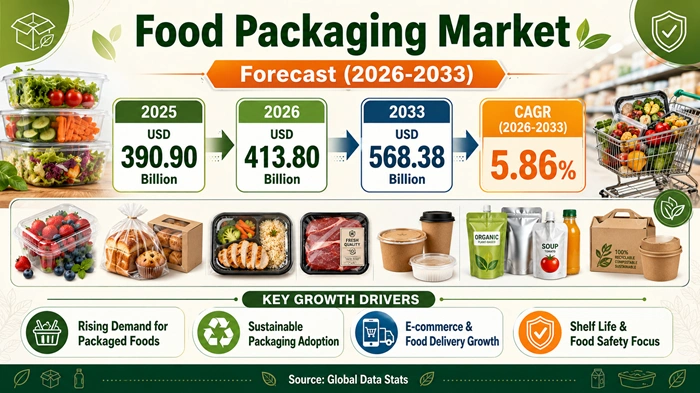
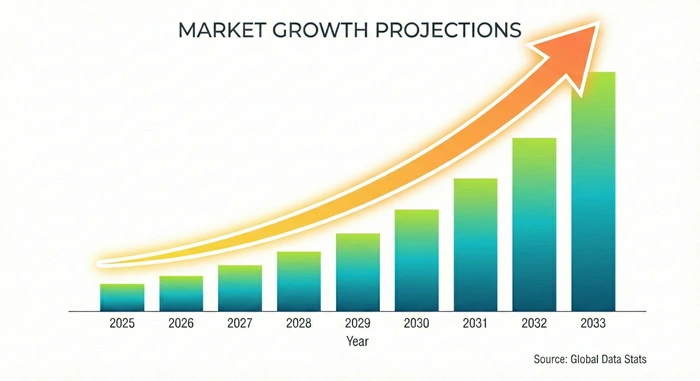
The global food packaging market size is valued at USD 390.90 billion in 2025 and is predicted to increase from USD 413.80 billion in 2026 to approximately USD 568.38 billion by 2033, growing at a CAGR of 5.86% from 2026 to 2033.
The food packaging market encompasses diverse protective solutions designed to preserve freshness, extend shelf life, and ensure safety of food products throughout distribution and consumption. These packaging systems serve multiple critical functions including physical protection against damage, contamination prevention through effective barriers, regulatory compliance via proper labeling, and brand communication that influences purchasing decisions. Modern packaging technologies integrate advanced materials, innovative designs, and sustainable practices addressing evolving consumer preferences and environmental concerns.
Market expansion is propelled by changing consumer lifestyles characterized by increasing demand for convenient ready-to-eat meals, rising online food delivery services, and growing urbanization driving packaged food consumption. The surge in e-commerce grocery shopping, meal kit subscriptions, and food service operations continues to fuel substantial requirements for durable, temperature-controlled packaging solutions that maintain product integrity during shipping and storage while delivering attractive presentation at retail touchpoints.
AI Impact on the Food Packaging Industry
Transforming Manufacturing Precision and Supply Chain Visibility Through Intelligent Systems
Artificial intelligence is revolutionizing the food packaging market by introducing advanced automation systems that optimize production workflows and enhance quality control standards across packaging facilities. Machine learning algorithms analyze real-time production data to identify optimal processing parameters including temperature settings, sealing pressures, and material feed rates that maximize output while minimizing defects and waste. AI-powered vision inspection systems detect packaging flaws, verify label accuracy, and ensure regulatory compliance by examining thousands of packages per minute with precision exceeding human capabilities, reducing rejection rates while maintaining consistent quality standards essential for food safety and brand protection.
Predictive analytics platforms powered by artificial intelligence are transforming demand forecasting and inventory management in the food packaging market. These intelligent systems process historical sales patterns, seasonal trends, and market dynamics to anticipate capacity requirements and optimize material procurement for packaging substrates. AI-driven scheduling algorithms coordinate complex multi-client operations, balancing production priorities to maximize equipment utilization while meeting delivery commitments across diverse food categories. Smart robotics integrated with AI capabilities handle repetitive packaging tasks including sorting, filling, sealing, and palletization with consistency and speed, reducing labor dependency while improving worker safety by removing humans from physically demanding or hazardous operational roles throughout packaging facilities.
Growth Factors
Rising Demand for Convenience Foods Driving Packaging Innovation
The accelerating pace of modern lifestyles characterized by increasing urbanization and dual-income households is fundamentally reshaping consumption patterns in the food packaging market. Consumers increasingly prioritize convenience and time-saving solutions, leading to heightened demand for ready-to-eat meals, pre-packaged snacks, and meal preparation services that rely on effective packaging maintaining freshness without compromising quality. The growing trend of on-the-go food consumption among busy professionals and urban populations requires portable, resealable packaging formats that provide easy access while preventing spillage and contamination during transit and consumption throughout daily routines.
E-commerce expansion and online food delivery platforms have created unprecedented growth opportunities for the food packaging market as grocery retailers, restaurants, and specialty food businesses require dependable packaging protecting products during transportation. The proliferation of meal kit services, direct-to-consumer food brands, and grocery delivery platforms demands packaging combining excellent protective properties with durability to withstand handling throughout complex logistics networks connecting production facilities with residential doorsteps. Rising consumer expectations for food safety, hygiene, and product integrity have elevated packaging standards, with sophisticated solutions providing cost-effective protection that meets regulatory requirements while delivering visual appeal and functional convenience that influence repurchase intentions and brand loyalty among increasingly discerning consumers.
Market Outlook
Sustainability Imperatives Reshaping Material Development and Circular Economy Adoption
The food packaging market is experiencing profound transformation as environmental consciousness reshapes material selection, design philosophies, and end-of-life management strategies across the industry. Consumer pressure, regulatory mandates, and corporate commitments are compelling manufacturers to adopt biodegradable materials, reduce plastic usage, and develop recyclable packaging designs that maintain food safety standards while minimizing environmental footprints. Industry leaders are establishing ambitious sustainability targets including packaging recyclability by 2025, driving innovation in bio-based materials like polylactic acid, recycled content integration, and circular economy principles addressing mounting concerns about packaging waste accumulation in landfills and oceans threatening ecosystems globally.
Smart packaging integration incorporating radio frequency identification, quick response codes, and Internet of Things sensors is opening new frontiers in the food packaging market. These advanced solutions enable real-time tracking throughout supply chains, ensuring compliance with food safety regulations while improving inventory management and reducing waste from spoilage. IoT-enabled packaging monitors environmental conditions including temperature and humidity during shipping and storage, particularly critical for sensitive products like fresh produce, dairy items, and prepared meals requiring controlled environments. Freshness indicators, time-temperature sensors, and tamper-evident features transform packaging from passive containers into active participants in quality assurance, consumer engagement, and brand differentiation strategies that create competitive advantages for innovative companies embracing technological convergence throughout the forecast period.
Expert Speaks
-
Ron Delia, CEO of Amcor, emphasized that ambitious goals and collaboration can benefit all stakeholders, stating that people accomplish great things when they set challenging objectives and inspire others sharing the same determination, reflecting Amcor's commitment to develop all packaging to be recyclable or reusable by 2025.
-
Ted Doheny, President and CEO of Sealed Air Corporation, stated that at Sealed Air they strive to leave the world, environment, and communities better than they found them by leading innovative efforts to create differentiated sustainable solutions, strengthening their history of sustainability through their 2025 pledge to design packaging solutions that are 100% recyclable or reusable.
-
Michael Doss, President and CEO of Graphic Packaging, expressed that their Vision 2030 strategy places more focus than ever on innovation across their business, combined with foundational commitment to sustainability positioning them to meet growing global demand for packaging innovations that are more circular, functional, and convenient than existing alternatives.
Key Report Takeaways
-
Asia Pacific dominates the food packaging market with the largest regional share accounting for over 40% of global market value in 2025, driven by massive population base, rapidly growing middle class, expanding urbanization, and increasing demand for convenient packaged food products across major economies including China, India, Indonesia, and Vietnam.
-
Asia Pacific also represents the fastest-growing regional market with projected CAGR of 5.9% during the forecast period from 2026 to 2033, fueled by changing consumer lifestyles, rising disposable incomes, expansion of e-commerce food delivery, and growing retail infrastructure supporting packaged food distribution across developing economies.
-
Flexible packaging segment commands the dominant type position holding approximately 44% market share in 2025 and anticipated to grow at CAGR of 5.1% through 2033, preferred for lightweight characteristics, space efficiency, eco-friendly potential, and consumer convenience enabling easy handling, storage, and transportation across diverse food categories.
-
Bakery and confectionery applications lead the application segment representing over 27% of total market consumption in 2025, driven by extensive demand for packaging across breads, pastries, cakes, chocolates, and candies where attractive presentation, freshness protection, and convenient formats influence purchasing decisions and consumption patterns.
-
Plastics dominate the material segment accounting for approximately 39% market share in 2025, favored for flexibility, lightweight properties, cost-effectiveness, excellent barrier characteristics against moisture and oxygen, and compatibility with various food products ranging from liquids to solids requiring protective packaging throughout distribution channels.
-
Bottles segment leads the packaging type category holding over 24% market share in 2025, driven by increasing demand for dairy-based beverages, health drinks promoting hydration, and specialty beverages where transparent packaging enables product visibility while innovations in lightweight and eco-friendly bottle designs support sustainability objectives.
Market Scope
| Report Coverage | Details |
|---|---|
| Market Size by 2033 | USD 568.38 Billion |
| Market Size by 2025 | USD 390.90 Billion |
| Market Size by 2026 | USD 413.80 Billion |
| Market Growth Rate from 2026 to 2033 | CAGR of 5.86% |
| Dominating Region | Asia Pacific |
| Fastest Growing Region | Asia Pacific |
| Base Year | 2025 |
| Forecast Period | 2026 to 2033 |
| Segments Covered | By Type, By Material, By Application, By Packaging Type, By Food Type, and By Region |
| Regions Covered | North America, Europe, Asia Pacific, Latin America, and Middle East & Africa |
Market Dynamics
Drivers Impact Analysis
E-Commerce Growth and Online Food Delivery Transformation
| Factor | (≈) % Impact on CAGR Forecast | Geographic Relevance | Impact Timeline |
|---|---|---|---|
| E-commerce Expansion | +1.2% | Global, strongest in Asia Pacific and North America | 2025-2033 |
| Convenience Food Demand | +1.1% | Global | 2026-2033 |
| Urbanization Growth | +0.9% | Asia Pacific, Latin America | 2025-2032 |
The explosive growth of e-commerce platforms and online food delivery services is fundamentally reshaping demand dynamics in the food packaging market by creating new requirements for protective, attractive, and functional packaging. Digital commerce eliminates traditional in-store product handling advantages, making packaging the primary protective barrier during shipping while simultaneously serving as the first physical brand interaction for customers receiving deliveries at residential locations. The surge in online grocery shopping, meal kit subscriptions, and restaurant delivery platforms has fueled demand for durable packaging solutions that withstand distribution complexities while maintaining temperature control for perishable items including dairy products, fresh produce, and prepared meals requiring cold chain management throughout last-mile delivery networks.
The food packaging market benefits from fundamental shifts in consumer behavior accelerated by recent global events that normalized online food purchasing and home delivery services. Companies serving digital commerce channels must deliver capabilities extending beyond traditional retail packaging including cushioning design protecting contents during shipping, dimensional optimization reducing freight costs, and unboxing experience design creating memorable customer moments encouraging social sharing and brand loyalty. Innovations in temperature-controlled packaging, tamper-evident features, and portion-controlled formats enable brands to offer unique customer experiences that differentiate offerings in crowded digital marketplaces. Research indicates that specialized e-commerce packaging can reduce product damage by up to 70% compared to conventional retail packaging, translating directly into decreased returns, improved customer satisfaction, and enhanced profitability for brands embracing packaging innovation supporting digital transformation throughout food distribution ecosystems.
Restraints Impact Analysis
Fluctuating Raw Material Costs and Regulatory Compliance Complexity
| Factor | (≈) % Impact on CAGR Forecast | Geographic Relevance | Impact Timeline |
|---|---|---|---|
| Raw Material Volatility | -0.8% | Global | 2025-2033 |
| Environmental Regulations | -0.6% | Europe, North America | 2026-2033 |
| Technology Transition Costs | -0.5% | Global | 2026-2030 |
The food packaging market faces significant challenges from volatile raw material pricing affecting packaging substrates including plastics, paper, metals, and glass that represent substantial input costs. Plastics manufactured from petroleum-based polymers experience price fluctuations reflecting global oil market dynamics, while paper and paperboard costs vary with pulp availability and demand from competing industries. These material cost uncertainties create pricing pressures particularly for smaller food producers operating on thin margins while attempting to maintain competitive positioning in price-sensitive markets where consumers scrutinize packaging costs alongside product values influencing purchasing decisions and brand loyalty.
Rapidly evolving regulatory frameworks governing food packaging safety, environmental impact, and waste management present ongoing compliance challenges in the food packaging market. Stringent standards addressing packaging material food contact safety, migration limits for chemical substances, and labeling requirements create significant compliance burdens requiring extensive testing protocols, documentation systems, and quality assurance processes that increase operational costs and extend product development timelines. Environmental regulations particularly in European markets targeting single-use plastics and promoting circular economy principles introduce uncertainty regarding long-term viability of conventional packaging formats in certain applications. The complexity of meeting diverse regulatory requirements across multiple jurisdictions while simultaneously transitioning toward sustainable materials that may lack established supply chains or performance validation creates operational challenges that can slow innovation adoption and market growth throughout the forecast period.
Opportunities Impact Analysis
Digital Printing Technologies Enabling Customization at Scale
| Factor | (≈) % Impact on CAGR Forecast | Geographic Relevance | Impact Timeline |
|---|---|---|---|
| Digital Printing Adoption | +0.9% | North America, Europe, Asia Pacific | 2027-2033 |
| Active Packaging Innovation | +0.8% | Global | 2026-2033 |
| Emerging Market Growth | +1.0% | Asia Pacific, Latin America, Middle East | 2025-2032 |
The integration of digital printing technologies presents substantial differentiation opportunities in the food packaging market by enabling cost-effective customization, variable designs, and rapid turnaround for promotional campaigns. Digital printing allows brands to produce eye-catching visuals, vibrant colors, and complete design options including photographs, promotional details, nutritional facts, and brand storytelling that enhance shelf appeal and consumer engagement without requiring expensive printing plates or minimum order quantities. The technology proves particularly valuable for small and medium-run productions, limited-edition releases, and regional product variations where traditional printing methods would be economically prohibitive, democratizing access to premium packaging presentation previously available only to large-scale manufacturers with substantial marketing budgets.
Active and intelligent packaging technologies incorporating freshness indicators, antimicrobial materials, and oxygen scavengers create value-added functionality in the food packaging market. These innovative solutions extend shelf life, reduce food waste, and provide consumers with visible quality assurance through color-changing indicators signaling product freshness or storage condition deviations. Modified atmosphere packaging techniques combining specialized films with controlled gas compositions preserve nutritional quality and organoleptic properties of fresh foods, addressing consumer demands for minimally processed products with extended usability windows. The growing emphasis on reducing food waste throughout supply chains positions innovative packaging technologies as strategic investments delivering measurable returns through decreased spoilage, improved inventory management, and enhanced consumer trust that supports premium pricing and brand differentiation in competitive food markets valuing sustainability and quality equally.
Segment Analysis
By Type
Flexible Packaging Maintaining Market Leadership Through Versatility and Efficiency
Flexible packaging secured the leading position in the food packaging market in 2025 with approximately 44% market share, growing at a projected CAGR of 5.1% through 2033. This segment's dominance reflects the exceptional advantages flexible formats deliver including lightweight characteristics reducing shipping costs, space efficiency optimizing warehouse utilization, and material conservation supporting sustainability objectives without compromising protective performance. Flexible packaging including pouches, bags, films, and wraps accommodates diverse food products from dry snacks to liquid beverages while providing excellent barrier properties against moisture, oxygen, and light that could compromise food quality, freshness, or nutritional value during distribution and storage periods.
Regional growth patterns show particularly robust adoption across Asia Pacific and North America where e-commerce expansion and convenience food consumption drive demand for portable, resealable packaging formats. Leading manufacturers including Amcor, Berry Global, Sealed Air, Mondi, and Huhtamaki continuously enhance flexible packaging through innovations including high-barrier laminates, easy-open features, transparent windows for product visibility, and compatibility with various filling and sealing equipment. The segment benefits from ongoing technological advancements in digital printing enabling customized designs, stand-up pouch formats providing shelf-stable alternatives to rigid containers, and portion-controlled single-serve formats aligning with health-conscious consumer preferences. Growing demand for sustainable packaging solutions positions flexible formats favorably as manufacturers develop recyclable mono-material structures and integrate recycled content without sacrificing barrier performance throughout the food packaging market expansion.
Bakery and Confectionery Applications Commanding Dominant Position
The bakery and confectionery segment leads application categories in the food packaging market with approximately 27% market share in 2025, growing at a steady CAGR of 4.5% through 2033. This dominance reflects the enormous diversity and consumption volume of baked goods and confectionery products including breads, croissants, savory pastries, cakes, cookies, candies, toffees, and chocolates requiring specialized packaging maintaining freshness while enabling attractive presentation influencing impulse purchases at retail locations. The segment encompasses diverse packaging requirements from simple wrapper films for individual chocolates to sophisticated boxes with viewing windows for premium pastries where packaging serves critical roles in brand positioning and value communication to discerning consumers.
Europe and North America represent particularly strong regional markets for bakery and confectionery packaging driven by established consumption patterns, extensive retail distribution, and premiumization trends. Major food brands and artisanal producers require packaging balancing aesthetic appeal with functional requirements including grease resistance for baked goods, moisture barriers for cookies, and temperature stability for chocolate products sensitive to melting during transportation and display. Companies including Graphic Packaging, Smurfit WestRock, DS Smith, and Packaging Corporation of America provide specialized packaging solutions addressing unique sector requirements including quick changeover capabilities accommodating seasonal products, sustainable materials meeting environmental expectations, and innovative designs differentiating premium offerings. The growing demand for gluten-free alternatives, organic products, and portion-controlled snacks creates expansion opportunities as manufacturers develop packaging communicating health benefits and product attributes while maintaining the protective performance and visual appeal essential for success throughout the competitive food packaging market landscape.
Regional Insights
Asia Pacific
Regional Dominance Through Population Scale and Economic Transformation
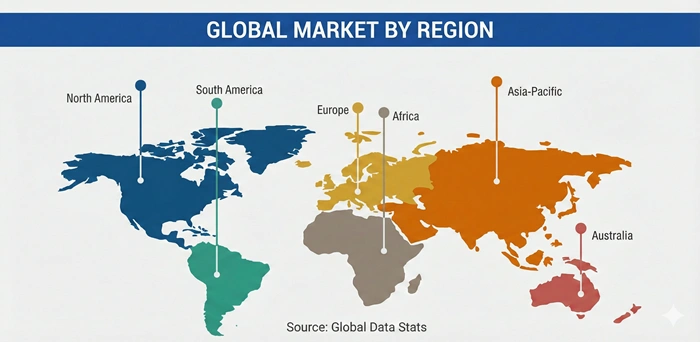
Asia Pacific dominates the global food packaging market with over 40% market share in 2025, growing at a projected CAGR of 5.9% through the forecast period as the fastest-growing regional market. This exceptional position reflects the region's massive population base exceeding 4 billion people, rapidly expanding middle-class populations with rising disposable incomes, and fundamental urbanization transforming consumption patterns toward convenient packaged foods replacing traditional fresh market purchases. Countries including China, India, Indonesia, Japan, and Vietnam are experiencing substantial retail infrastructure development including supermarkets, hypermarkets, and convenience stores that require standardized packaged products meeting food safety standards while delivering visual appeal and convenience that modern consumers increasingly demand and prioritize in purchasing decisions.
Regional market strength is supported by robust manufacturing capabilities and established supply chains serving both domestic consumption and export markets throughout Asia Pacific and globally. China represents the largest packaging consumer in Asia driven by various manufacturers and increasing demand for frozen food, accounting for substantial market value with continued expansion expected throughout the forecast period. India shows particularly strong growth trajectories driven by expanding retail sectors, increasing consumer awareness about food quality and safety, rising demand for packaged foods in urban areas where modern lifestyles necessitate convenient storage solutions, and growing e-commerce adoption connecting producers with consumers across geographically dispersed markets. Leading companies operating throughout Asia Pacific including Huhtamaki, Rengo Co., Ltd., Uflex Limited, and regional packaging manufacturers provide specialized capabilities addressing local market requirements while maintaining international quality standards. The region's continued economic development, demographic advantages, expanding retail and food service infrastructure, and increasing alignment with global packaging standards position Asia Pacific for sustained leadership in the food packaging market throughout 2033 as consumption patterns evolve toward packaged convenience products across diverse food categories.
North America
Mature Market Demonstrating Steady Growth Through Innovation Leadership
North America represents a significant regional market in the food packaging sector with steady growth driven by advanced packaging technologies and sophisticated consumer demands. The United States stands as a major consumer of packaged foods, with rising awareness of healthy lifestyles influencing consumers to shift toward higher quality packaged food products that deliver nutritional transparency, clean labels, and premium presentation reflecting product values. The region's mature retail infrastructure, well-established food service industry, and extensive e-commerce penetration create favorable market conditions for packaging innovation addressing evolving consumer preferences including sustainability, convenience, and food safety assurance throughout distribution networks.
Regional market dynamics reflect continuous advancement in packaging materials and formats serving diverse food categories across North America. Leading companies including Amcor, Berry Global, Sealed Air, Graphic Packaging, Sonoco Products, and International Paper operate state-of-the-art facilities developing cutting-edge solutions incorporating smart technologies, sustainable materials, and enhanced barrier properties. The region shows particular strength in modified atmosphere packaging for fresh produce and prepared meals, aseptic packaging for shelf-stable products, and innovative formats for meal kits and direct-to-consumer food brands. Growing emphasis on reducing food waste, improving supply chain efficiency, and meeting consumer expectations for environmental responsibility drives continuous innovation throughout North American markets. Companies investing in recyclable packaging designs, reduced material usage, and circular economy principles position themselves favorably as sustainability transitions from competitive differentiation to baseline expectation among environmentally conscious consumers and corporate procurement teams evaluating packaging suppliers based on demonstrated environmental performance alongside traditional criteria including cost, quality, and reliability throughout the food packaging market evolution.
Top Key Players
-
Amcor plc (Australia)
-
Berry Global Inc. (United States)
-
Sealed Air Corporation (United States)
-
Mondi Group (Austria)
-
Huhtamaki Oyj (Finland)
-
Sonoco Products Company (United States)
-
International Paper Company (United States)
-
Smurfit WestRock (Ireland)
-
Graphic Packaging International, LLC (United States)
-
DS Smith plc (United Kingdom)
-
Packaging Corporation of America (United States)
-
Tetra Pak International S.A. (Switzerland)
-
Constantia Flexibles Group GmbH (Austria)
-
Pactiv Evergreen Inc. (United States)
-
ProAmpac (United States)
Recent Developments
-
In November 2025, Mondi expanded its food packaging portfolio with new corrugated and solid board solutions following the acquisition of Schumacher Packaging, adding digital printing capabilities and strengthening European supply network serving key food segments including fresh produce, meat, snacks, and beverages with innovations like ventilated trays, leakproof boxes, retail-ready packs, and lightweight multipacks.
-
In May 2025, Graphic Packaging International introduced a new paperboard sushi packaging portfolio supporting European foodservice operators in complying with EU Single Use Plastics Directive while addressing rising demand for sustainable alternatives, featuring recyclable FSC-certified paperboard in plastic-free formats or designs with less than 5% plastic including clamshells, trays, and pagoda-style boxes.
-
In October 2024, ProAmpac launched the RotiBag, an innovative packaging solution designed for hot-to-go food items such as rotisserie chicken, incorporating fog-resistant windows minimizing condensation to ensure optimal product visibility regardless of temperature while maintaining aesthetic appeal and structural integrity throughout distribution and customer handling.
-
In February 2024, Amcor partnered with Stonyfield Organic and Cheer Pack North America to introduce the first all-polyethylene spouted pouch engineered to provide high moisture and oxygen barrier properties ensuring freshness while featuring durable seals maintaining product integrity throughout lifecycle supporting sustainability objectives through mono-material recyclability.
-
In August 2024, ITC Chairman and Managing Director Sanjiv Puri revealed plans for investment of approximately USD 200 million in medium term with 30-35% allocated toward paperboards and packaging sectors over next five years, emphasizing confidence in Indian market and commitment to expanding manufacturing capabilities serving growing food packaging demand.
Market Trends
Sustainability Transformation Driving Circular Economy and Material Innovation
The food packaging market is experiencing comprehensive sustainability transformation as manufacturers respond to environmental pressures, regulatory mandates, and consumer expectations demanding responsible packaging practices. Leading companies are investing extensively in research programs developing biodegradable materials, recyclable designs, and reduced-material formats that maintain food safety and quality standards while minimizing environmental footprints throughout product lifecycles. The industry is embracing circular economy principles including design for recyclability, increased recycled content integration, and packaging waste reduction initiatives addressing mounting concerns about plastic pollution and landfill accumulation threatening ecosystems globally. Major corporations including Amcor, Sealed Air, and others have established ambitious commitments to develop packaging that is 100% recyclable or reusable by 2025, driving industry-wide innovation and collaboration advancing sustainable solutions.
This sustainability evolution reflects broader recognition within the food packaging market that environmental responsibility and commercial success are increasingly interconnected as consumers integrate sustainability criteria into purchasing decisions. Companies are collaborating with recycling infrastructure providers, participating in industry consortiums developing best practices, and supporting legislative frameworks incentivizing material recovery to create systemic solutions extending beyond individual corporate capabilities. Forward-thinking manufacturers are developing paper-based alternatives to plastic packaging, incorporating plant-based materials like polylactic acid derived from renewable resources, and engineering thinner gauge films reducing material consumption without compromising protective performance essential for food preservation and safety assurance throughout distribution networks.
Segments Covered in the Report
By Type
-
Flexible
-
Rigid
-
Semi-Rigid
By Material
-
Plastics
-
PE
-
PP
-
PET
-
PVC
-
Others
-
-
Paper and Paper-Based Materials
-
Glass
-
Metal
-
Others
By Application
-
Bakery and Confectionery
-
Dairy Products
-
Fruits and Vegetables
-
Meat and Seafood
-
Sauces and Dressings
-
Others
By Packaging Type
-
Bottles
-
Cups
-
Cans
-
Pouches
-
Trays
-
Others
By Food Type
-
Frozen Food
-
Chilled Food
-
Canned Food
-
Shelf Stable Food
By Region
-
North America
-
United States
-
Canada
-
Mexico
-
-
Europe
-
Germany
-
United Kingdom
-
France
-
Italy
-
Spain
-
Rest of Europe
-
-
Asia Pacific
-
China
-
India
-
Japan
-
Australia
-
Southeast Asia
-
Rest of Asia Pacific
-
-
Latin America
-
Brazil
-
Argentina
-
Rest of Latin America
-
-
Middle East and Africa
-
GCC Countries
-
South Africa
-
Rest of Middle East and Africa
-
Frequently Asked Questions
Question 1: What is the projected size of the food packaging market by 2033?
Answer: The global food packaging market is projected to reach USD 568.38 billion by 2033, growing from USD 390.90 billion in 2025. This expansion reflects increasing convenience food demand, e-commerce growth, and rising urbanization driving packaged food consumption worldwide.
Question 2: Which region dominates the food packaging market currently?
Answer: Asia Pacific dominates the food packaging market with over 40% market share in 2025, driven by massive population base and rapidly growing middle class. The region also represents the fastest-growing market with projected CAGR of 5.9% through 2033.
Question 3: What is the expected growth rate for the food packaging market from 2026 to 2033?
Answer: The food packaging market is anticipated to grow at a CAGR of 5.86% from 2026 to 2033. This growth is fueled by online food delivery expansion, convenience food demand, and increasing consumer awareness about food safety and sustainability.
Question 4: Which packaging type segment leads the food packaging market?
Answer: Flexible packaging dominates the food packaging market with approximately 44% market share in 2025 and projected CAGR of 5.1% through 2033. This leadership stems from lightweight characteristics, space efficiency, and versatility across diverse food applications.
Question 5: What are the primary growth drivers in the food packaging market?
Answer: Key growth drivers in the food packaging market include e-commerce expansion, rising convenience food demand, increasing urbanization, and growing emphasis on sustainable packaging solutions. Technological advancements and changing consumer lifestyles also contribute significantly to market expansion.