
Food Manufacturing Software Market Overview
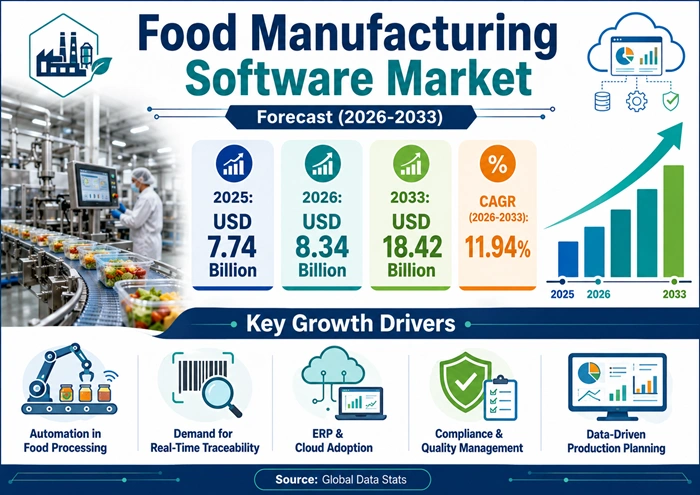
The global food manufacturing software market size is valued at USD 7.74 billion in 2025 and is predicted to increase from USD 8.34 billion in 2026 to approximately USD 18.42 billion by 2033, growing at a CAGR of 11.94% from 2026 to 2033.
Rising demand for operational efficiency and stringent food safety regulations drive unprecedented adoption of digital solutions enabling production optimization, quality assurance, traceability, and compliance management across food processing facilities. Food manufacturing software encompasses enterprise resource planning (ERP), manufacturing execution systems (MES), quality management systems (QMS), and supply chain platforms delivering real-time visibility, automated workflows, and data-driven decision-making supporting manufacturers in meeting complex regulatory requirements while reducing waste and improving profitability.
AI Impact on the Food Manufacturing Software Industry
Artificial Intelligence Revolutionizing Predictive Maintenance and Quality Control Automation
Artificial intelligence is fundamentally transforming the food manufacturing software market by enabling predictive analytics for equipment maintenance, automated quality inspection through computer vision, real-time production optimization, intelligent demand forecasting, and adaptive formulation adjustments that enhance operational efficiency while ensuring consistent product quality and regulatory compliance. Machine learning algorithms analyze sensor data from production lines including temperature fluctuations, pressure variations, equipment vibration patterns, moisture levels, and throughput rates predicting equipment failures 24-72 hours in advance enabling preventive maintenance scheduling, reducing unexpected downtime costing manufacturers USD 50000-200000 per hour, minimizing food waste from production interruptions, and optimizing maintenance resource allocation particularly important for continuous processing operations in dairy, beverage, and bakery facilities where downtime directly impacts product freshness and shelf life. AI-powered computer vision systems inspect products at speeds exceeding 1000 items per minute detecting visual defects, contamination, incorrect packaging, labeling errors, and dimensional inconsistencies with 99.9% accuracy surpassing human inspection capabilities, ensuring brand protection, reducing costly recalls averaging USD 10 million per incident, and maintaining consumer trust.
Natural language processing technologies analyze customer complaints, social media feedback, regulatory updates, quality audit reports, and supplier communications identifying emerging quality issues before they escalate, predicting regulatory compliance challenges, and recommending proactive formulation or process adjustments. The food manufacturing software market benefits from AI-driven demand forecasting analyzing historical sales data, weather patterns, consumer trends, promotional impacts, and economic indicators predicting demand with 15-25% greater accuracy than traditional methods enabling optimized production scheduling, reduced inventory carrying costs, minimized spoilage of perishable ingredients, and improved service levels meeting retailer expectations.
Intelligent recipe optimization uses machine learning to recommend ingredient substitutions based on cost fluctuations, availability constraints, nutritional requirements, and taste preferences while maintaining regulatory compliance and sensory consistency creating dynamic formulation capabilities responding to supply chain disruptions. Robotic process automation integrated with AI handles repetitive data entry tasks including batch record documentation, compliance reporting generation, inventory updates, and quality data logging reducing manual labor by 40-60%, eliminating human errors in critical documentation, and freeing skilled personnel for value-added activities like process improvement and innovation supporting competitive advantage in margin-compressed food manufacturing environment.
Growth Factors
Regulatory Compliance and Supply Chain Traceability Requirements Drive Market Expansion
The food manufacturing software market is experiencing robust growth driven by escalating regulatory compliance complexity across global markets, rising consumer demand for transparency and traceability, increasing food safety incidents necessitating robust tracking systems, labor shortages accelerating automation adoption, and growing pressure to reduce waste and improve sustainability throughout food production operations. Regulatory compliance complexity reaches unprecedented levels with FDA's Food Safety Modernization Act (FSMA) Section 204 requiring enhanced traceability for high-risk foods effective January 2026, European Union's Farm to Fork strategy mandating comprehensive tracking, China's revised Food Safety Law imposing strict documentation requirements, and global private standards like BRC and SQF requiring detailed record-keeping creating imperative for digital solutions replacing manual paper-based systems that cannot meet documentation speed, accuracy, and accessibility requirements of modern audits conducted with 24-48 hours notice expecting immediate data retrieval spanning months or years of production history.
Food safety incidents including listeria outbreaks, salmonella contamination, allergen mislabeling, and foreign material adulteration cost food industry USD 55 billion annually in recalls, legal liabilities, brand damage, and lost sales driving manufacturers to invest in preventive software systems enabling lot tracking, supplier verification, environmental monitoring, and rapid recall execution retrieving specific batches within hours versus days required by manual systems potentially saving companies from bankruptcy-threatening recall expansions. The food manufacturing software market benefits from supply chain transparency demands with 75% of consumers willing to pay premiums for brands providing ingredient sourcing information, retailer requirements for farm-to-fork traceability, and blockchain integration enabling immutable records of ingredient journey from farm through processing to retail creating competitive differentiation and premium positioning particularly important for organic, sustainable, and ethical brands where transparency validates claims.
Labor shortages affecting food manufacturing with 300000 unfilled positions in United States alone and aging workforce losing institutional knowledge accelerate automation adoption with software capturing best practices, standardizing procedures, reducing training time for new employees from weeks to days, and enabling consistent production quality regardless of operator experience particularly critical for smaller manufacturers lacking deep technical benches. Sustainability pressures including corporate commitments to reduce food waste by 50% by 2030, consumer expectations for environmental responsibility, and economic imperatives to maximize ingredient yield drive software adoption enabling real-time monitoring of waste streams, identifying root causes of quality failures, optimizing process parameters to reduce rejects, and providing data supporting continuous improvement initiatives that both satisfy stakeholder expectations and improve profitability.
Market Outlook
Cloud-Based Solutions and Industry 4.0 Integration Define Future Evolution
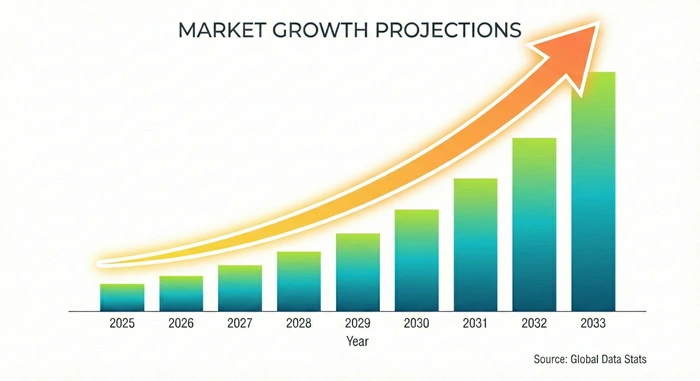
The food manufacturing software market is positioned for sustained expansion through 2033 as manufacturers increasingly adopt cloud-based platforms offering scalability and remote access, integrate IoT sensors and Industry 4.0 technologies enabling smart factories, leverage mobile applications empowering floor workers, embrace subscription-based pricing reducing capital expenditure barriers, and prioritize cybersecurity protecting sensitive formulation data and customer information from growing threat landscape. Cloud-based food manufacturing software migration accelerates with 65% of new deployments utilizing cloud versus on-premises installations offering lower upfront costs through subscription models eliminating USD 100000-500000 capital expenditures, automatic updates ensuring latest features and regulatory compliance without IT intervention, remote access enabling quality managers and plant managers to monitor operations from anywhere particularly valuable for multi-site manufacturers, seamless integration with cloud-based ERP, accounting, and e-commerce platforms, and superior disaster recovery compared to on-premises systems vulnerable to local failures creating compelling value proposition especially for small and medium enterprises lacking dedicated IT resources.
IoT sensor integration transforms traditional manufacturing execution systems into intelligent platforms with wireless sensors monitoring critical control points including refrigeration temperatures, cooking times, pH levels, and line speeds transmitting real-time data enabling immediate corrective actions preventing quality deviations before defects occur, automated alarm notifications replacing manual monitoring, and comprehensive digital records for audit trails eliminating handwritten logs prone to errors and falsification. The food manufacturing software market witnesses mobile application proliferation with tablet and smartphone interfaces enabling floor operators to access work instructions, record quality checks, report equipment issues, and view real-time dashboards without leaving production areas improving response times, enhancing engagement through intuitive modern interfaces familiar from consumer applications, and capturing data at source reducing transcription errors that plague paper-to-system workflows.
Subscription pricing models democratize access to enterprise-grade functionality previously affordable only for large corporations with SMEs representing 70% of food manufacturers now able to access sophisticated quality management, traceability, and production planning tools for USD 200-1000 monthly per user compared to USD 50000-200000 perpetual license costs creating massive market expansion opportunity as thousands of smaller processors digitize operations. Cybersecurity emphasis increases with food manufacturers recognizing value of proprietary recipes, customer data, and operational intelligence implementing software with encryption, role-based access controls, audit trails, and security certifications protecting against industrial espionage, ransomware attacks increasingly targeting food sector, and regulatory requirements for data protection particularly GDPR in Europe and state privacy laws in United States.
Expert Speaks
-
Satya Nadella, Chairman and Chief Executive Officer of Microsoft Corporation, emphasized that cloud-based software platforms enable food manufacturers to achieve operational excellence through data-driven insights, real-time collaboration across global operations, and AI-powered automation optimizing production efficiency, with Microsoft Azure supporting food industry digital transformation through secure scalable infrastructure, advanced analytics capabilities, and industry-specific solutions addressing traceability, quality management, and supply chain visibility requirements.
-
Arvind Krishna, Chairman and Chief Executive Officer of IBM, highlighted that food safety and supply chain transparency represent critical priorities with software solutions leveraging blockchain technology, IoT sensors, and AI analytics enabling end-to-end traceability from farm to fork, supporting regulatory compliance, and building consumer trust, with IBM Food Trust and Watson AI technologies helping manufacturers prevent foodborne illness outbreaks, optimize inventory management, and accelerate recall responses protecting brand reputation.
-
Christian Klein, Chief Executive Officer of SAP SE, stated that integrated ERP and manufacturing software enable food producers to navigate complex supply chains, volatile ingredient costs, and stringent regulations while maintaining profitability and sustainability goals, with SAP industry cloud solutions providing specialized functionality for lot traceability, recipe management, and compliance reporting supporting digital transformation across food manufacturing operations from multinational corporations to mid-sized regional processors.
Key Report Takeaways
-
North America leads the food manufacturing software market with approximately 38% market share in 2025, driven by stringent FDA regulations including FSMA 204 traceability requirements, mature food processing industry with established operations seeking efficiency improvements, strong technology adoption culture, presence of major software vendors, substantial investment in digital transformation, and sophisticated supply chains requiring advanced tracking capabilities.
-
Asia Pacific is growing the fastest with a projected CAGR of 14.50% from 2026 to 2033, fueled by rapid food industry expansion particularly in China and India, rising food safety concerns driving regulatory strengthening, growing middle-class demanding quality assurance, government initiatives promoting smart manufacturing, increasing foreign direct investment from multinational food companies implementing global standards, and expanding export markets requiring international certification compliance.
-
Cloud-based deployment dominates with approximately 58% market share as manufacturers increasingly prefer subscription models over capital-intensive on-premises installations, offering lower upfront costs, automatic updates ensuring regulatory compliance, remote accessibility supporting multi-site operations, superior scalability accommodating business growth, and simplified IT management particularly valuable for SMEs lacking dedicated technology staff.
-
The ERP software segment contributes significantly to overall market revenue with approximately 32% share in 2025, reflecting comprehensive functionality integrating production planning, inventory management, procurement, quality control, financial accounting, and regulatory reporting providing single source of truth eliminating data silos, supporting informed decision-making, and improving operational coordination across departments from procurement through production to distribution.
-
Large enterprises dominate adoption with approximately 62% market share as major food manufacturers invest heavily in comprehensive digital transformation initiatives, complex operations spanning multiple facilities requiring centralized visibility, substantial regulatory compliance burden demanding robust documentation systems, resources to manage sophisticated implementations, and competitive pressures to optimize efficiency supporting sustained investment.
-
The QMS software segment will grow quickly with an estimated CAGR of 13.80% as food safety incidents increase scrutiny, regulatory requirements become more demanding, consumer lawsuits escalate liability exposure, and manufacturers recognize quality management as competitive differentiator enabling premium positioning, reducing waste, and protecting brand reputation worth billions in market valuation particularly important for public companies and private equity-backed food businesses.
Market Scope
| Report Coverage | Details |
|---|---|
| Market Size by 2033 | USD 18.42 Billion |
| Market Size by 2025 | USD 7.74 Billion |
| Market Size by 2026 | USD 8.34 Billion |
| Market Growth Rate from 2026 to 2033 | CAGR of 11.94% |
| Dominating Region | North America |
| Fastest Growing Region | Asia Pacific |
| Base Year | 2025 |
| Forecast Period | 2026 to 2033 |
| Segments Covered | Software Type, Deployment Mode, Enterprise Size, Application, Region |
| Regions Covered | North America, Europe, Asia Pacific, Latin America, Middle East and Africa |
Market Dynamics
Driver Impact Analysis
Stringent Regulatory Compliance and Traceability Mandates Propel Market Growth
The escalating complexity of food safety regulations combined with mandatory traceability requirements represents the most powerful driver propelling the food manufacturing software market toward sustained expansion across all geographic regions and food processing segments. Regulatory compliance evolution reaches critical inflection point with FDA's FSMA Section 204 effective January 2026 requiring enhanced traceability for foods designated as high-risk including cheese, eggs, nut butters, fresh-cut produce, ready-to-eat deli salads, and seafood mandating electronic record-keeping of critical tracking events from receiving through processing to shipping with data retrievable within 24 hours for outbreak investigations, European Union's General Food Law requiring comprehensive traceability with one-step-forward one-step-back documentation, China's revised Food Safety Law imposing criminal penalties for violations, and proliferating private standards from retailers like Walmart and Costco requiring supplier compliance creating imperative for software solutions replacing inadequate spreadsheets and paper records that cannot meet speed, accuracy, and accessibility demands.
Food safety incident frequency and severity drive preventive investments with CDC estimating 48 million foodborne illness cases annually in United States alone costing economy USD 15.6 billion, high-profile outbreaks like 2024 listeria contamination affecting multiple states causing recalls exceeding USD 500 million, class-action lawsuits from contaminated products reaching USD 100 million settlements, and criminal prosecutions of executives for negligence creating existential risk compelling manufacturers to implement software providing environmental monitoring detecting pathogens before contamination occurs, allergen management preventing cross-contact, supplier verification ensuring incoming ingredient safety, and rapid recall capabilities isolating affected lots within hours versus days limiting exposure.
The food manufacturing software market benefits from supply chain complexity with global ingredient sourcing spanning 50-100 suppliers per manufacturer, multi-tier distribution through co-packers, distributors, and retailers, increasing velocity of product movement from factory to consumer in 24-48 hours for fresh products, and transparency expectations from consumers demanding country-of-origin information, organic certification verification, and fair-trade validation creating tracking requirements that only software can manage at scale and speed. Audit pressure intensifies with unannounced inspections from regulatory agencies, third-party certification audits from BRC, SQF, and GFSI requiring detailed documentation available instantly, customer audits from major retailers, and insurance company assessments affecting premium rates demanding robust quality management systems with digital records, statistical process control, corrective action tracking, and supplier qualification documentation easily accessible and demonstrably accurate avoiding audit failures that can suspend operations and terminate customer contracts worth millions in revenue.
| Driver | ≈ % Impact on CAGR Forecast | Geographic Relevance | Impact Timeline |
|---|---|---|---|
| Regulatory Compliance and Traceability Requirements | +4.20% | Global, strongest in North America and Europe | 2026-2033 |
| Food Safety Incidents and Liability Exposure | +3.60% | Developed markets, multinational corporations | 2026-2033 |
| Supply Chain Complexity and Transparency Demands | +2.80% | Global supply chains, consumer-facing brands | 2026-2033 |
| Labor Shortages and Operational Efficiency Pressures | +2.40% | High-wage markets, competitive industries | 2026-2033 |
Restraints Impact Analysis
High Implementation Costs and Integration Complexity Limit Market Penetration
The food manufacturing software market confronts significant barriers related to substantial upfront costs and ongoing subscription fees, complex integration with existing legacy systems, organizational resistance to change, cybersecurity concerns about cloud-based data storage, and inadequate IT infrastructure particularly in emerging markets constraining adoption among price-sensitive small manufacturers and traditional family-owned businesses. Implementation costs represent formidable barrier with comprehensive ERP systems requiring USD 100000-500000 capital investment for software licenses, USD 50000-200000 for consulting and customization services, 6-18 months implementation timelines disrupting operations, ongoing annual maintenance fees of 18-22% of license costs, and cloud subscription models costing USD 50-200 per user monthly accumulating to USD 30000-120000 annually for 50-user deployment creating ROI uncertainty particularly for smaller manufacturers operating on thin margins of 3-8% where software investment equals entire annual profit deterring adoption despite long-term benefits.
Integration complexity challenges manufacturers with legacy systems including older ERP platforms, manual spreadsheets, proprietary databases, and disconnected point solutions requiring expensive middleware, custom programming, or complete system replacements to achieve seamless data flow, technical expertise often unavailable internally necessitating expensive consultants, production downtime during cutover periods risking quality issues and customer delivery failures, and data migration from paper records or obsolete systems requiring months of cleansing and validation creating implementation paralysis particularly for risk-averse food manufacturers where production interruptions directly impact product quality and food safety. The food manufacturing software market suffers from organizational resistance with production managers comfortable with existing procedures viewing software as unnecessary complication, floor workers skeptical of new technologies fearing job displacement or increased monitoring, executives underestimating change management requirements, and lack of digital literacy among workforce particularly older employees near retirement requiring extensive training consuming months of productivity and creating user adoption failures where purchased software remains underutilized delivering fraction of potential value.
Cybersecurity concerns inhibit cloud adoption with manufacturers worried about proprietary recipe protection worth millions in competitive advantage, customer data privacy complying with regulations, ransomware threats increasingly targeting food sector with attacks demanding USD 500000-5000000 payments, and internet connectivity failures in rural manufacturing locations disrupting cloud access creating preference for on-premises installations despite higher costs and maintenance burdens. Infrastructure limitations particularly in emerging markets with unreliable electricity causing frequent outages, poor internet connectivity with insufficient bandwidth for cloud applications, lack of skilled IT personnel for system administration and support, and inadequate computing hardware requiring capital investments in servers, networking equipment, and workstations compound total cost of ownership making software adoption challenging for manufacturers in developing regions despite rapid market growth.
| Restraint | ≈ % Impact on CAGR Forecast | Geographic Relevance | Impact Timeline |
|---|---|---|---|
| High Implementation and Subscription Costs | -2.40% | Small manufacturers, developing markets | 2026-2033 |
| Integration Complexity with Legacy Systems | -2.00% | Established facilities, brownfield operations | 2026-2033 |
| Organizational Resistance and Change Management | -1.60% | Traditional manufacturers, aging workforce | 2026-2033 |
| Cybersecurity and Data Privacy Concerns | -1.40% | Cloud-hesitant enterprises, regulated industries | 2026-2033 |
Opportunities Impact Analysis
IoT Integration and AI-Powered Analytics Create Premium Growth Segments
The integration of Internet of Things sensors with food manufacturing software combined with artificial intelligence-powered analytics presents enormous opportunities for the market by enabling predictive maintenance, real-time quality monitoring, automated decision-making, energy optimization, and premium-priced solutions targeting sophisticated manufacturers seeking competitive advantages through digital transformation. IoT sensor proliferation with costs declining from USD 5-10 per unit to USD 1-3 enabling affordable deployment of hundreds of wireless sensors throughout facilities monitoring critical control points including refrigeration temperatures, humidity levels, cooking times, pH values, water activity, and equipment performance transmitting data to manufacturing software enabling real-time dashboards, automated alerts when parameters deviate from specifications, predictive analytics identifying trends before problems occur, and comprehensive digital records for regulatory compliance creating smart factory capabilities previously affordable only for largest corporations now accessible to mid-sized manufacturers.
Predictive maintenance applications analyzing vibration patterns, temperature anomalies, and performance degradation predict equipment failures 24-72 hours in advance enabling scheduled repairs during planned downtime rather than emergency breakdowns, reducing maintenance costs by 25-40% through optimized parts inventory and labor utilization, extending equipment lifespan by preventing catastrophic failures, and most importantly preventing product contamination from failing equipment creating USD 50 million market opportunity. The food manufacturing software market benefits from energy management integration with software analyzing electricity, gas, water, and compressed air consumption identifying waste and optimization opportunities saving manufacturers 15-25% on utility costs averaging USD 200000-2000000 annually for typical facilities, supporting sustainability reporting required by corporate headquarters and investors, and reducing carbon footprint addressing stakeholder expectations particularly important for public companies and brands targeting environmentally-conscious consumers willing to pay premiums.
Artificial intelligence-powered recipe optimization analyzes thousands of production runs identifying process parameters maximizing yield, quality, and consistency while minimizing waste, recommending ingredient substitutions based on cost fluctuations without compromising quality, and predicting optimal production scheduling considering equipment capabilities, ingredient perishability, and demand forecasts creating intelligent manufacturing systems surpassing human capability. Blockchain integration enabling immutable traceability records creates transparency impossible to achieve with traditional databases, supports premium positioning for organic, sustainable, and ethical brands, facilitates rapid recalls by instantly identifying all affected products and locations, and opens export opportunities requiring third-party verification of production practices commanding premium pricing for manufacturers accessing blockchain-enabled software solutions differentiating from competitors relying on traditional record-keeping.
| Opportunity | ≈ % Impact on CAGR Forecast | Geographic Relevance | Impact Timeline |
|---|---|---|---|
| IoT Integration and Smart Factory Evolution | +3.20% | Technology-forward manufacturers, developed markets | 2027-2033 |
| AI-Powered Predictive Analytics and Optimization | +2.80% | Large enterprises, competitive industries | 2027-2033 |
| Blockchain Traceability and Premium Positioning | +2.40% | Export markets, premium brands, organic sector | 2027-2033 |
| Energy Management and Sustainability Reporting | +2.00% | Corporate-owned facilities, sustainability-focused | 2026-2033 |
Segment Analysis
Cloud-Based Deployment
Dominant Segment Driven by Lower Costs and Remote Accessibility Advantages
The cloud-based deployment segment dominates the food manufacturing software market with approximately 58% share in 2025 and robust CAGR of 13.40% from 2026 to 2033, driven by elimination of substantial upfront capital expenditures replacing USD 100000-500000 on-premises costs with affordable monthly subscriptions starting at USD 50-200 per user, automatic software updates ensuring latest features and regulatory compliance without IT intervention, remote accessibility enabling quality managers and plant managers to monitor multiple facilities from anywhere particularly valuable for multi-site operations, superior disaster recovery and business continuity compared to on-premises systems vulnerable to local failures, and simplified IT management appealing to small and medium manufacturers lacking dedicated technology staff.
Cloud solutions offer compelling total cost of ownership advantages with subscription models converting capital expenses to operating expenses improving cash flow, eliminating server hardware requiring USD 20000-100000 investments plus ongoing maintenance, reducing IT staffing needs saving USD 60000-120000 annually per technical employee, and providing predictable budgeting without surprise infrastructure refresh costs enabling accurate financial planning critical for smaller businesses. Scalability benefits allow manufacturers to start with essential modules and users adding functionality as operations grow without expensive re-implementations, seamlessly accommodate seasonal production fluctuations requiring temporary user additions, and support business expansion through acquisitions integrating new facilities into existing platform rapidly versus months-long on-premises installations.
North America demonstrates particularly strong cloud adoption with approximately 65% deployment share and CAGR exceeding 14.20%, driven by mature technology infrastructure with reliable high-speed internet enabling consistent cloud access, sophisticated IT decision-makers familiar with cloud economics and benefits, regulatory acceptance of cloud computing for food safety data though initially skeptical, competitive pressures forcing rapid digital transformation where cloud enables faster deployment, and vendor concentration with major providers including Microsoft, Oracle, SAP, and specialized food software companies offering robust cloud platforms.
Leading companies serving the food manufacturing software market including Aptean, FoodLogiQ, SafetyChain Software, ComplianceQuest, Infor, DELMIAworks (formerly IQMS), Sage, Wherefour, Vicinity Manufacturing, and SYSPRO compete through cloud-native architectures, mobile applications, industry-specific functionality, compliance expertise, integration capabilities, and customer success programs. The segment continues evolving through hybrid deployments combining cloud flexibility with on-premises control for sensitive data, edge computing processing IoT sensor data locally before cloud transmission reducing latency and bandwidth, private cloud offerings for enterprise customers requiring dedicated infrastructure, and multitenancy optimizations enabling vendors to serve hundreds of customers on shared infrastructure reducing per-customer costs and accelerating innovation velocity benefiting all users supporting sustained rapid growth throughout forecast period with favorable economics, technological advantages, and vendor roadmaps prioritizing cloud development over legacy on-premises platforms gradually becoming maintenance-only offerings.
ERP Software Type
Comprehensive Integration Segment Commanding Premium Positioning and Large Market Share
The ERP software segment represents substantial portion of food manufacturing software market with approximately 32% share and projected CAGR of 11.60% from 2026 to 2033, driven by comprehensive functionality integrating production planning, inventory management, procurement, quality control, financial accounting, sales order management, and regulatory reporting providing single unified platform eliminating data silos, supporting informed decision-making through real-time visibility across operations, and improving coordination between departments from procurement through production to distribution creating operational efficiency. Food-specific ERP systems address unique industry requirements including recipe and formulation management with multi-level bills of materials, lot and batch traceability tracking ingredients from suppliers through finished products, catch weight handling for variable-weight products, shelf-life and expiration date management for perishables, and allergen tracking preventing cross-contamination creating specialized functionality general ERP cannot provide. Integration capabilities enable seamless data flow with manufacturing execution systems on production floor, quality management systems tracking inspections and test results, warehouse management systems optimizing storage and picking, and e-commerce platforms synchronizing inventory and orders eliminating manual re-entry and associated errors improving order accuracy and customer satisfaction.
Europe shows substantial ERP adoption with CAGR of 10.80% driven by stringent regulatory requirements demanding comprehensive documentation, sophisticated food industry with complex operations, strong manufacturing heritage emphasizing process excellence, and preference for established enterprise software vendors including SAP, Oracle, and Microsoft providing localized compliance features. Leading ERP providers serving food manufacturers include SAP with industry-specific S/4HANA functionality, Microsoft Dynamics 365 integrated with Azure cloud services, Oracle NetSuite offering mid-market solutions, Infor CloudSuite Food & Beverage with pre-configured industry processes, Sage X3 Food & Beverage Edition, and specialized providers like Aptean and DELMIAworks focusing exclusively on food manufacturing creating competitive landscape balancing comprehensive functionality from global technology giants against deep industry expertise from specialized vendors. The segment evolves through embedded analytics providing real-time dashboards and predictive insights, AI-powered demand forecasting improving production planning accuracy, mobile applications enabling remote approval workflows and monitoring, and vertical specialization with bakery-specific, beverage-specific, and meat-specific configurations addressing unique operational requirements supporting premium pricing for tailored solutions versus generic ERP requiring extensive customization sustaining healthy margins and customer satisfaction despite market competition.
Regional Insights
North America
Market Leadership Through Regulatory Rigor and Technology Maturity
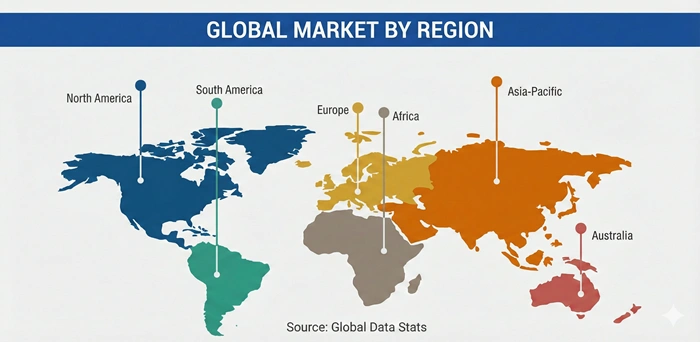
North America maintains its position as the dominant region in the food manufacturing software market, commanding approximately 38% of global market share in 2025 with an estimated value of USD 2.94 billion, projected to reach USD 6.68 billion by 2033 growing at a CAGR of 10.73%. The region's leadership stems from stringent FDA regulations including FSMA Section 204 traceability requirements effective 2026 creating compliance imperative, mature food processing industry with established operations seeking efficiency improvements, strong technology adoption culture embracing digitalization, presence of major software vendors headquartered in United States, substantial investment capacity for digital transformation initiatives, and sophisticated supply chains requiring advanced tracking capabilities. United States dominates regional demand with approximately 86% share driven by approximately 30000 food manufacturing facilities, influential food safety regulations setting global standards, competitive industry dynamics forcing operational excellence, venture capital and private equity ownership of many processors mandating technology investments, and retailer requirements from Walmart, Kroger, and Amazon demanding electronic data interchange and traceability documentation.
Leading companies serving the North American food manufacturing software market include Microsoft, Oracle, SAP, Infor, Aptean, FoodLogiQ, SafetyChain Software, ComplianceQuest, DELMIAworks, Sage, Wherefour, Vicinity Manufacturing, SYSPRO, and numerous specialized providers competing through regulatory expertise understanding FDA, USDA, and state requirements, industry-specific functionality for diverse food sectors from dairy to beverages, implementation services supporting complex deployments, and customer success programs ensuring adoption and ROI. The region benefits from innovation leadership with Silicon Valley and technology hubs driving software advancement, substantial R&D investments developing AI and IoT capabilities, early adoption of emerging technologies like blockchain, strong cybersecurity focus addressing increasing threats, and mature ecosystem of system integrators, consultants, and support providers facilitating implementations. Canada contributes approximately 12% of North American revenue through similar industry structure, bilingual requirements for Quebec market, export-oriented food manufacturers requiring international compliance, and government programs supporting technology adoption. The region witnesses consolidation through acquisitions as private equity firms roll up food software companies, convergence between ERP and specialized solutions, emphasis on user experience addressing adoption challenges, growing SME segment as cloud pricing becomes accessible, and expansion of software-as-a-service models reducing barriers to entry supporting sustained above-average growth throughout forecast period despite market maturity.
Asia Pacific
Fastest Regional Growth Through Industrial Expansion and Regulatory Strengthening
Asia Pacific represents the fastest-growing region in the food manufacturing software market with a projected CAGR of 14.50% from 2026 to 2033, with market value expected to increase from USD 2.40 billion in 2025 to USD 6.45 billion by 2033, capturing rapidly expanding global revenue share. The region's exceptional growth trajectory stems from explosive food industry expansion particularly in China and India with production increasing 8-12% annually, rising food safety concerns following contamination incidents driving regulatory strengthening, growing middle-class populations demanding quality assurance and brand trust, government initiatives promoting Industry 4.0 and smart manufacturing, increasing foreign direct investment from multinational food companies implementing global standards, and expanding export markets requiring international certification compliance particularly to Europe and North America with stringent import requirements. China dominates regional software adoption with approximately 48% share driven by massive food manufacturing sector producing 25% of global processed food output, government Made in China 2025 initiative promoting industrial automation, rising domestic food safety standards following scandals, substantial e-commerce food sales requiring sophisticated inventory management, and domestic software vendors developing localized solutions competing effectively against international providers.
Leading companies serving the Asia Pacific food manufacturing software market include SAP expanding regional presence, Oracle with localized offerings, Microsoft partnering with local system integrators, Infor targeting multinationals, and emerging regional providers like Wonderware India, Fastems China, and Japanese vendors including FUJITSU and NEC offering culturally-adapted solutions, local-language interfaces, and regional compliance features competing through cost advantages and customization flexibility. The region benefits from rapid digitalization with manufacturers leapfrogging legacy systems directly to cloud platforms, government subsidies and tax incentives supporting technology adoption, growing technical talent pool enabling software customization and support, increasing internet connectivity reaching rural manufacturing areas, and rising awareness about operational efficiency benefits as competition intensifies. India shows explosive potential with CAGR exceeding 16.20% driven by growing processed food sector supported by government Make in India initiatives, young population embracing technology, increasing formalization of food industry previously dominated by unorganized sector, rising export ambitions requiring quality certifications, and expanding retail chains demanding supplier compliance though price sensitivity and infrastructure limitations moderate adoption pace. The region witnesses mobile-first approaches with smartphone interfaces enabling floor workers to access systems without desktop computers, integration with popular regional platforms like WeChat and Alipay, emphasis on offline capabilities addressing connectivity challenges, and partnerships between global software vendors and local distributors combining international expertise with regional relationships supporting sustained rapid expansion throughout forecast period.
Top Key Players
-
Aptean (United States)
-
SAP SE (Germany)
-
Oracle Corporation (United States)
-
Microsoft Corporation (United States)
-
Infor (United States)
-
FoodLogiQ (United States)
-
SafetyChain Software (United States)
-
ComplianceQuest (United States)
-
DELMIAworks (United States)
-
Sage Group plc (United Kingdom)
-
SYSPRO (South Africa)
-
Wherefour (United States)
-
Vicinity Manufacturing (United States)
-
Blue Link ERP (Canada)
-
Genius Solutions (United States)
Recent Developments
-
Aptean (2025): Acquired food safety compliance software provider in March 2025 for USD 85 million expanding quality management capabilities, gaining 400+ food manufacturer customers, integrating environmental monitoring and audit management functionality into existing ERP and MES platforms, and strengthening position in regulatory compliance segment growing 15% annually as FSMA Section 204 implementation drives software demand supporting strategic focus on comprehensive food industry solutions.
-
FoodLogiQ (2024): Secured USD 35 million Series C funding in November 2024 from food industry investors including Tyson Ventures accelerating blockchain traceability platform development, expanding integration with major ERP systems, adding AI-powered supply chain risk monitoring, and growing sales team supporting 1500+ brand and supplier network pursuing transparent supply chains and rapid recall capabilities addressing consumer demands and regulatory requirements.
-
SAP (2025): Launched SAP S/4HANA Cloud for Food and Beverage in June 2025 providing industry-specific cloud ERP with embedded lot traceability, recipe management, quality control, and regulatory reporting, targeting mid-market manufacturers seeking enterprise-grade functionality without on-premises complexity, offering subscription pricing starting USD 150 per user monthly, and supporting rapid 3-6 month implementations versus 12-18 months for traditional ERP deployments addressing market demand for faster time-to-value.
-
Microsoft (2024): Formed strategic partnership with food manufacturing software specialist in September 2024 integrating Dynamics 365 ERP with specialized MES functionality, combining Microsoft's enterprise platform with partner's food industry expertise, offering joint solutions to 5000+ food manufacturer prospects, and leveraging Azure IoT for sensor integration supporting smart manufacturing initiatives addressing customer preferences for familiar Microsoft ecosystem versus standalone specialized vendors.
-
Infor (2025): Released AI-powered demand sensing capability in January 2025 for CloudSuite Food & Beverage analyzing point-of-sale data, weather patterns, social media trends, and promotional activities improving forecast accuracy by 20-30% enabling optimized production planning, reduced inventory carrying costs, and minimized waste from obsolete products particularly valuable for perishable food categories, commanding USD 25000-50000 annual premium over standard ERP reflecting advanced analytics value supporting margin expansion strategy.
Market Trends
Mobile Applications and Subscription Pricing Transform Industry Accessibility
The food manufacturing software market is experiencing transformative shifts driven by mobile-first application design, subscription-based pricing democratizing access, industry-specific vertical solutions, cybersecurity emphasis, and sustainability reporting integration responding to stakeholder demands reshaping how manufacturers select, deploy, and benefit from digital platforms. Mobile application proliferation transforms floor-level data capture with tablet and smartphone interfaces enabling production operators to access digital work instructions, record quality checks, report equipment issues, and view real-time performance dashboards without leaving production areas eliminating paper-based systems prone to errors, improving response times from hours to minutes, enhancing employee engagement through modern intuitive interfaces familiar from consumer apps, and capturing data at source reducing transcription mistakes plaguing paper-to-system workflows with mobile adoption exceeding 70% in new deployments.
Subscription-based pricing revolutionizes market dynamics with software-as-a-service models charging USD 50-200 per user monthly replacing perpetual licenses costing USD 1000-5000 per user plus 18-22% annual maintenance democratizing access to enterprise-grade functionality for small and medium manufacturers representing 70% of industry previously priced out of comprehensive solutions, providing predictable operating expenses versus surprise capital investments, including automatic updates ensuring latest features and regulatory compliance, and lowering switching costs encouraging competitive evaluation creating favorable conditions for innovative vendors challenging established players. The food manufacturing software market witnesses vertical specialization with bakery-specific, beverage-specific, meat-specific, and dairy-specific solutions addressing unique operational requirements including allergen management for bakeries, carbonation control for beverages, HACCP for meat processing, and pasteurization tracking for dairy creating differentiated positioning commanding 15-30% premium pricing over generic manufacturing software requiring extensive customization though limiting addressable market necessitating strategic choices between broad horizontal platforms serving multiple industries versus deep vertical expertise serving specific food sectors.
Cybersecurity integration becomes table-stakes functionality with manufacturers demanding encryption protecting proprietary recipes worth millions, role-based access controls preventing unauthorized system access, audit trails documenting all data modifications for compliance, penetration testing validating security posture, and security certifications like SOC 2 and ISO 27001 providing third-party validation particularly important as ransomware attacks increasingly target food sector with attackers recognizing manufacturers' reliance on continuous operations and willingness to pay substantial ransoms avoiding costly downtime. Sustainability reporting capabilities emerge as differentiator with software tracking energy consumption, water usage, waste generation, and carbon emissions supporting corporate sustainability commitments, investor ESG reporting requirements, and customer expectations for environmental responsibility creating competitive advantage for vendors offering integrated sustainability dashboards versus requiring separate systems increasing cost and complexity.
Segments Covered in the Report
By Software Type
-
ERP Software
-
MES Software
-
QMS Software
-
Supply Chain Management Software
-
Inventory Management Software
-
Production Planning Software
-
Regulatory Compliance Software
-
Others
By Deployment Mode
-
Cloud-Based
-
On-Premises
-
Hybrid
By Enterprise Size
-
Small and Medium Enterprises
-
Large Enterprises
By Application
-
Bakery and Confectionery
-
Dairy Products
-
Meat and Poultry
-
Beverages
-
Processed Foods
-
Seafood
-
Others
By Functionality
-
Production Management
-
Quality Management
-
Supply Chain Management
-
Inventory Management
-
Regulatory Compliance
-
Recipe Management
-
Traceability
-
Others
By Region
-
North America
-
United States
-
Canada
-
Mexico
-
-
Europe
-
United Kingdom
-
Germany
-
France
-
Italy
-
Spain
-
Rest of Europe
-
-
Asia Pacific
-
China
-
India
-
Japan
-
Australia
-
South Korea
-
Rest of Asia Pacific
-
-
Latin America
-
Brazil
-
Argentina
-
Rest of Latin America
-
-
Middle East and Africa
-
Saudi Arabia
-
United Arab Emirates
-
South Africa
-
Rest of Middle East and Africa
-
Frequently Asked Questions
Question 1: What is the projected food manufacturing software market size by 2033?
Answer: The food manufacturing software market is projected to reach USD 18.42 billion by 2033, growing from USD 8.34 billion in 2026. This represents robust expansion driven by regulatory compliance requirements including FDA FSMA Section 204, food safety incident prevention, supply chain traceability demands, labor shortages accelerating automation, and cloud-based platform adoption democratizing access to enterprise functionality.
Question 2: Which region dominates the global food manufacturing software market share?
Answer: North America dominates the global food manufacturing software market with approximately 38% market share in 2025, valued at USD 2.94 billion. This leadership position reflects stringent FDA regulations, mature food processing industry, strong technology adoption culture, presence of major software vendors, substantial digital transformation investments, and sophisticated supply chains requiring advanced tracking.
Question 3: What factors are driving the food manufacturing software market growth?
Answer: Key factors driving food manufacturing software market growth include escalating regulatory compliance complexity across global markets, rising food safety incidents necessitating preventive systems, increasing supply chain transparency demands from consumers and retailers, labor shortages accelerating automation adoption, sustainability pressures requiring waste reduction, and IoT integration enabling smart manufacturing. Cloud subscription models also contribute significantly by lowering entry barriers.
Question 4: Which deployment mode segment holds the largest share in the food manufacturing software market?
Answer: The cloud-based deployment segment holds the largest share in the food manufacturing software market with approximately 58% in 2025. This dominance reflects lower upfront costs through subscription pricing, automatic updates ensuring regulatory compliance, remote accessibility supporting multi-site operations, superior disaster recovery, and simplified IT management particularly appealing to SMEs lacking dedicated technology staff.
Question 5: What are the emerging trends in the food manufacturing software market?
Answer: Emerging trends in the food manufacturing software market include mobile-first application design enabling floor-level data capture, subscription-based SaaS pricing democratizing enterprise functionality access, industry-specific vertical solutions addressing unique operational requirements, cybersecurity emphasis protecting proprietary formulations and customer data, sustainability reporting integration tracking environmental metrics, and AI-powered predictive analytics optimizing maintenance and quality. IoT sensor integration and blockchain traceability also gain significant traction enabling smart factories and transparent supply chains.