
Fermented Foods Market Overview
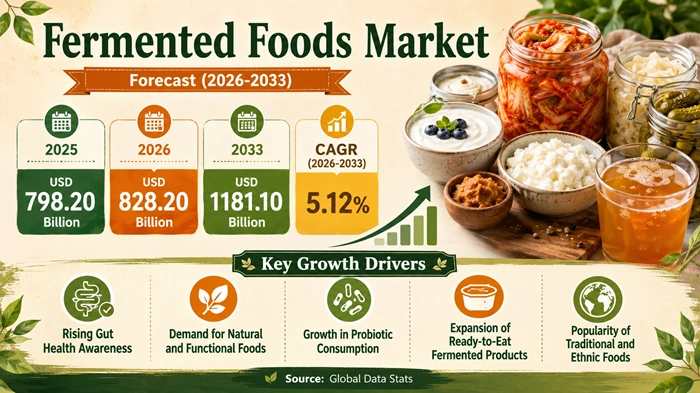
The global fermented foods market size is valued at USD 798.20 billion in 2025 and is predicted to increase from USD 828.20 billion in 2026 to approximately USD 1181.10 billion by 2033, growing at a CAGR of 5.12% from 2026 to 2033.
Rising health consciousness about gut health and probiotic benefits drives unprecedented demand for naturally fermented products delivering beneficial bacteria, enhanced nutritional profiles, and improved digestive wellness. Fermented foods including yogurt, kombucha, kimchi, sauerkraut, and kefir offer traditional preservation methods combined with modern functional food benefits appealing to health-conscious consumers seeking natural immune support and microbiome balance.
AI Impact on the Fermented Foods Industry
Artificial Intelligence Revolutionizing Fermentation Precision and Quality Control
Artificial intelligence is fundamentally transforming the fermented foods market by enabling precision fermentation monitoring, predictive quality assurance, optimal strain selection, automated production control, and personalized product recommendations that enhance consistency while ensuring safety and maximizing probiotic efficacy. Machine learning algorithms analyze fermentation parameters including temperature fluctuations, pH levels, microbial activity, fermentation duration, and environmental conditions predicting optimal harvest timing, detecting contamination risks, and ensuring consistent flavor profiles reducing batch failures from 15% to under 2% while maintaining probiotic strain viability throughout production cycles. AI-powered sensors continuously monitor fermentation vessels tracking real-time microbial growth patterns, metabolite production, gas evolution, and biochemical changes enabling dynamic adjustments to temperature, agitation, and nutrient supplementation optimizing fermentation efficiency and product quality consistency across large-scale industrial operations.
Computer vision systems integrated with packaging lines inspect product appearance, detect color variations indicating fermentation irregularities, verify fill levels, identify packaging defects, and spot foreign material contamination automatically with 99% accuracy ensuring only premium products reach retailers while preventing costly recalls from quality issues. Natural language processing technologies monitor social media conversations, customer reviews, health forums, and nutrition communities identifying consumer discussions about gut health interests, flavor preferences, probiotic benefit awareness, and fermented food experiences informing product development, marketing messages, and formulation adjustments resonating with target demographics. The fermented foods market benefits from AI-driven personalized nutrition platforms analyzing individual microbiome test results, dietary preferences, health conditions, and lifestyle factors recommending customized fermented food selections, optimal serving sizes, and consumption timing maximizing digestive health benefits while building brand loyalty through tailored experiences. Predictive analytics forecast demand patterns across yogurt, kombucha, kimchi, and other fermented categories by analyzing seasonal consumption trends, health movement impacts, dietary trend adoption, and regional preferences enabling manufacturers to optimize production schedules, ingredient sourcing, and distribution strategies avoiding stockouts during wellness season peaks or costly overproduction.
Growth Factors
Gut Health Awareness and Probiotic Research Drive Market Expansion
The fermented foods market is experiencing robust growth driven by escalating gut health awareness about microbiome importance, rising probiotic research validating digestive and immune benefits, increasing demand for natural functional foods, expanding clean-label preferences, and growing interest in traditional fermentation practices. Gut health consciousness reaches mainstream awareness with consumers increasingly recognizing connections between intestinal microbiome balance and overall wellness outcomes including digestive function reducing bloating and irregularity, immune system strength preventing infections, mental health through gut-brain axis affecting mood and cognition, skin health reflecting internal wellness, and metabolic function supporting weight management documented through extensive microbiome research. Probiotic research proliferation provides scientific validation with thousands of clinical studies demonstrating beneficial bacteria strains support digestive health, enhance nutrient absorption, reduce inflammatory responses, support immune regulation, and provide pathogen protection creating evidence-based consumer confidence in fermented foods as functional wellness products beyond traditional nutrition.
Medical recommendations from gastroenterologists, nutritionists, and integrative health practitioners advocating fermented food consumption for microbiome diversity, digestive disorders management including IBS and inflammatory conditions, post-antibiotic recovery restoring beneficial bacteria, and preventive wellness create sustained demand supported by professional endorsement. The fermented foods market benefits from clean-label movements demanding naturally preserved foods without synthetic additives, artificial preservatives, or chemical processing with fermentation providing ancient preservation method delivering safety, extended shelf life, and enhanced nutrition through biological processes appealing to consumers avoiding processed foods and prioritizing ingredient simplicity. Traditional food culture revival creates interest in ancestral fermentation practices including Korean kimchi providing spicy probiotic vegetables, German sauerkraut delivering fermented cabbage, Japanese miso offering umami-rich fermented soybeans, Indian lassi providing spiced yogurt beverages, and Eastern European kefir offering fermented milk creating cultural connections and authentic food experiences. Social media influence from health influencers sharing kombucha brewing tutorials and fermentation recipes, nutritionists explaining probiotic benefits and microbiome science, wellness advocates showcasing fermented food integration in daily diets, and food bloggers featuring fermented ingredients in creative recipes reaches millions of engaged followers normalizing fermented foods as essential component of healthy eating rather than niche ethnic specialty.

Market Outlook
Innovation and Plant-Based Alternatives Define Future Industry Evolution
The fermented foods market is positioned for sustained expansion through 2033 as manufacturers invest heavily in plant-based fermented alternatives, develop functional ingredient enhancements, expand flavor variety appealing to mainstream palates, leverage precision fermentation technologies, and address shelf stability improvements ensuring probiotic viability throughout product lifecycle. Plant-based fermented foods incorporating coconut milk yogurt, almond milk kefir, cashew cheese cultures, fermented oat beverages, and plant-based meat alternatives using fermentation create vegan-friendly probiotic options appealing to rapidly growing plant-based demographics estimated at 25% of consumers reducing animal products while addressing lactose intolerance affecting 65% of global population, dairy allergies, and ethical concerns supporting sustainable nutrition choices. Precision fermentation technologies enable production of specific compounds including dairy proteins without cows, egg proteins from microorganisms, heme for plant-based meat, and specialty ingredients creating innovative fermented products with enhanced nutritional profiles, sustainability benefits, and novel applications.
Functional fermented foods incorporating targeted probiotic strains for specific health outcomes including Lactobacillus rhamnosus for digestive health, Bifidobacterium for immune support, Bacillus coagulans for protein digestion, and Saccharomyces boulardii for antibiotic-associated issues create clinically-backed products targeting specific wellness needs. The fermented foods market witnesses flavor innovation creating approachable varieties including fruit-infused kombuchas, mildly fermented vegetables, sweetened yogurt alternatives, and fusion fermented products combining traditional techniques with modern flavor profiles reducing fermentation taste barriers that historically limited mainstream adoption particularly among children and fermentation-naive consumers. Shelf stability improvements through advanced packaging technologies including modified atmosphere packaging, refrigeration-free probiotic encapsulation, and protective coatings enable fermented product distribution in regions lacking cold chain infrastructure while ensuring probiotic bacteria remain viable through extended storage periods expanding geographic market accessibility. E-commerce expansion transforms distribution with direct-to-consumer fermented food brands offering subscription services delivering fresh kimchi, kombucha, and specialty fermented products regularly, online platforms enabling artisanal producers reaching national audiences, and temperature-controlled shipping ensuring product quality creating convenient access supporting repeat purchasing and category education.
Expert Speaks
-
Dirk Van de Put, Chairman and Chief Executive Officer of Mondelēz International, emphasized that fermented foods represent strategic growth opportunity with consumer demand for gut health and functional nutrition driving innovation in probiotic snacks, fermented ingredients, and wellness-positioned products, with Mondelēz investing in fermentation capabilities, strategic partnerships, and research supporting portfolio expansion into functional food segments addressing evolving wellness priorities.
-
Ramon Laguarta, Chairman and Chief Executive Officer of PepsiCo, highlighted that fermented beverages including kombucha and probiotic drinks demonstrate sustained growth reflecting fundamental consumer shift toward functional beverages supporting digestive health and immunity, with PepsiCo portfolio expansion through innovation, acquisition, and distribution excellence positioning company to capture growing demand for convenient probiotic-rich beverages.
-
Mark Schneider, Chief Executive Officer of Nestlé S.A., stated that fermented dairy products including yogurt and kefir remain cornerstone of healthy nutrition with consumers increasingly seeking probiotic benefits, clean-label formulations, and plant-based alternatives, with Nestlé's continuous innovation in fermentation science, strain research, and product development ensuring category leadership across diverse global markets addressing regional taste preferences and nutritional needs.
Key Report Takeaways
-
Asia Pacific leads the fermented foods market with approximately 49% market share in 2025, driven by deep-rooted fermentation traditions including kimchi, miso, natto, and fermented beverages, large population base exceeding 4.5 billion people, cultural acceptance of fermented flavors, established production infrastructure, and daily consumption patterns integrating fermented foods as dietary staples.
-
North America is growing the fastest with a projected CAGR of 7.40% from 2026 to 2033, fueled by rising gut health awareness, probiotic research education, kombucha popularity explosion, health-conscious millennials, expanding retail distribution including specialty health stores, and growing acceptance of fermented flavors previously considered acquired tastes.
-
Dairy-based fermented products dominate with approximately 56% market share as yogurt, kefir, and fermented milk provide familiar taste profiles, proven probiotic delivery, nutritional density including calcium and protein, established consumption habits particularly for breakfast and snacks, and extensive product variety across flavors and formats.
-
The supermarkets and hypermarkets distribution channel contributes the most to overall market revenue with approximately 54% share in 2025, reflecting extensive refrigerated sections dedicated to fermented products, competitive pricing through volume purchasing, convenient one-stop shopping, and prominent placement driving impulse purchases particularly for yogurt and kombucha.
-
Probiotics ingredient segment dominates with approximately 35% market share as beneficial bacteria strains provide scientifically-validated health benefits, consumer awareness of probiotic terminology, regulatory approval for health claims in many jurisdictions, and clinical research supporting digestive and immune advantages driving consumer purchasing decisions.
-
The online retail segment will grow quickly with an estimated CAGR of 8.90% as e-commerce adoption accelerates, direct-to-consumer fermented food brands proliferate, subscription services gain popularity delivering fresh kimchi and kombucha regularly, specialty artisanal products unavailable locally, and younger demographics embrace convenient home delivery.
Market Scope
| Report Coverage | Details |
|---|---|
| Market Size by 2033 | USD 1181.10 Billion |
| Market Size by 2025 | USD 798.20 Billion |
| Market Size by 2026 | USD 828.20 Billion |
| Market Growth Rate from 2026 to 2033 | CAGR of 5.12% |
| Dominating Region | Asia Pacific |
| Fastest Growing Region | North America |
| Base Year | 2025 |
| Forecast Period | 2026 to 2033 |
| Segments Covered | Product Type, Distribution Channel, Ingredient Type, Region |
| Regions Covered | North America, Europe, Asia Pacific, Latin America, Middle East and Africa |
Market Dynamics
Driver Impact Analysis
Rising Gut Health Awareness and Microbiome Research Propel Market Growth
The escalating global gut health awareness combined with groundbreaking microbiome research represents the most powerful driver propelling the fermented foods market toward sustained expansion across all geographic regions and demographic segments. Gut health consciousness transformation positions digestive wellness as fundamental pillar of overall health with consumers increasingly recognizing connections between intestinal microbiome balance and diverse health outcomes including digestive function supporting regular bowel movements and reducing discomfort, immune system strength with 70% of immune cells residing in gut, mental wellness through gut-brain axis producing neurotransmitters affecting mood, skin health reflecting internal balance, and metabolic function influencing weight management and energy levels documented through extensive clinical research. Microbiome science revelations demonstrate trillions of bacteria inhabiting human intestines influence health far beyond digestion affecting disease risk, medication efficacy, nutritional absorption, and even behavior creating paradigm shift from germ avoidance to beneficial bacteria cultivation through probiotic foods.
Medical community endorsement grows with gastroenterologists recommending fermented foods for IBS management, inflammatory bowel disease symptom reduction, post-antibiotic microbiome restoration, and preventive wellness while nutritionists advocating daily probiotic intake through food sources rather than supplements supporting natural delivery with complementary nutrients and food matrix benefits. The fermented foods market benefits from probiotic research proliferation with thousands of clinical studies validating specific strains provide measurable health benefits including Lactobacillus reducing antibiotic-associated diarrhea, Bifidobacterium supporting immune function, Saccharomyces preventing traveler's diarrhea, and diverse strains reducing inflammation creating evidence-based confidence in fermented foods as functional medicine. Clean-label preferences drive consumers toward naturally fermented foods over synthetic probiotic supplements with fermentation providing ancient preservation method delivering live bacteria in whole food matrix with complementary nutrients, natural flavors, and traditional preparation methods appealing to consumers prioritizing food-based nutrition and avoiding pharmaceutical approaches. Digestive health problems prevalence including IBS affecting 10-15% of populations, acid reflux, bloating, constipation, and food intolerances create enormous affected population seeking dietary solutions with fermented foods offering natural gentle approach compared to medications creating sustained demand from symptomatic individuals experiencing relief.
| Driver | ≈ % Impact on CAGR Forecast | Geographic Relevance | Impact Timeline |
|---|---|---|---|
| Gut Health Awareness and Microbiome Science | +2.00% | Global, strongest in developed markets | 2026-2033 |
| Probiotic Research and Medical Endorsement | +1.80% | Health-conscious demographics, medical communities | 2026-2033 |
| Clean-Label and Natural Food Preferences | +1.40% | Developed markets, educated consumers | 2026-2033 |
| Digestive Health Issues Prevalence | +1.20% | Urban populations, stressed demographics | 2026-2033 |

Restraints Impact Analysis
Taste Barriers and Short Shelf Life Limit Market Penetration
The fermented foods market confronts significant barriers related to acquired taste preferences deterring mainstream consumers, short shelf life requiring cold chain infrastructure, digestive discomfort during adaptation periods, premium pricing compared to conventional foods, and safety concerns about improper fermentation that constrain adoption among taste-sensitive segments and limit geographic expansion. Taste challenges represent critical barrier with fermented foods exhibiting sour tangy flavors from lactic acid production, funky aromatic profiles, carbonation in beverages, strong umami notes, and unfamiliar taste complexity creating initial rejection particularly among children, flavor-conservative adults, and consumers unfamiliar with fermentation traditions preferring mild sweetened products over acidic sour alternatives limiting market penetration beyond health-motivated early adopters.
Shelf life limitations challenge distribution and retail economics with live probiotic fermented foods requiring refrigeration throughout supply chain, exhibiting short viable periods typically 30-60 days, continuing fermentation processes altering flavor profiles, and potential spoilage from temperature abuse creating logistical complexity, inventory management challenges, waste from unsold products, and distribution constraints in regions lacking reliable cold chain infrastructure limiting geographic expansion particularly in developing markets. The fermented foods market suffers from digestive adaptation requirements with consumers new to fermented foods experiencing temporary bloating, gas, or digestive discomfort as microbiome adjusts to increased probiotic intake creating negative first impressions and discontinuation despite transient nature of symptoms as gut bacteria population rebalances requiring consumer education about gradual introduction and temporary adjustment period. Premium pricing challenges accessibility with artisanal fermented products costing 50-150% more than conventional alternatives, specialty kombuchas priced at USD 4-6 per bottle versus USD 1-2 for conventional beverages, and organic fermented vegetables exceeding fresh produce costs creating affordability barriers particularly in price-sensitive markets and economic downturns limiting adoption among middle and lower-income consumers. Safety concerns about home fermentation and improper handling create hesitation with food poisoning risks from contaminated batches, botulism concerns with anaerobic fermentation, alcohol production in uncontrolled fermentation, and mold growth creating fear-based avoidance particularly among pregnant women, immunocompromised individuals, and conservative consumers preferring pasteurized products over live-culture alternatives despite proper commercial production safety records.
| Restraint | ≈ % Impact on CAGR Forecast | Geographic Relevance | Impact Timeline |
|---|---|---|---|
| Acquired Taste and Flavor Barriers | -1.40% | Mainstream consumers, children, Western markets | 2026-2033 |
| Short Shelf Life and Cold Chain Requirements | -1.20% | Developing markets, rural areas, warm climates | 2026-2033 |
| Digestive Adaptation Discomfort | -1.00% | First-time consumers, sensitive individuals | 2026-2033 |
| Premium Pricing Barriers | -0.90% | Price-sensitive segments, economic downturns | 2026-2033 |
Opportunities Impact Analysis
Plant-Based Innovation and Functional Formulations Create Growth Avenues
The development of plant-based fermented alternatives combined with functional ingredient enhancements presents enormous opportunities for the fermented foods market by addressing dietary restrictions, meeting ethical consumption values, creating premium differentiation, and targeting specific health outcomes beyond basic probiotic benefits. Plant-based fermented foods using coconut milk, almond milk, cashew cream, oat base, and soy alternatives create dairy-free probiotic options appealing to rapidly growing vegan population, lactose-intolerant individuals unable to consume traditional yogurt and kefir comprising 65% of global adults, dairy-allergic consumers, and environmentally conscious demographics concerned about animal agriculture impacts creating massive addressable market expansion opportunity beyond traditional dairy-dependent fermented foods.
Precision fermentation technologies enable production of animal-free proteins, specialty enzymes, and functional compounds through microbial fermentation providing sustainable alternatives with identical molecular structure to animal-derived ingredients supporting innovative product development including dairy-identical proteins from yeast, egg whites from bacteria, and collagen from precision fermentation creating next-generation fermented products with enhanced sustainability profiles and novel nutritional benefits. The fermented foods market benefits from functional formulation development incorporating targeted probiotic strains clinically validated for specific health outcomes, prebiotic fibers feeding beneficial bacteria, postbiotics providing metabolic benefits, adaptogenic herbs supporting stress response, and vitamins enhancing nutritional density creating clinically-backed products commanding premium pricing reflecting specialized formulation and targeted wellness applications. Emerging market penetration across Africa, Southeast Asia, and Latin America where fermented food consumption remains lower than developed markets presents massive untapped populations with improving incomes, growing health awareness, expanding organized retail infrastructure enabling refrigerated product distribution, urbanization creating convenience demands, and increasing western dietary influence creating favorable long-term growth conditions. Personalized nutrition through microbiome testing services recommending specific fermented foods based on individual bacterial composition, dietary needs, health goals, and deficiency patterns creates customized probiotic strategies ensuring relevant product selection, optimal consumption patterns, and measurable health improvements building customer loyalty through data-driven personalization supporting premium pricing and recurring purchases.
| Opportunity | ≈ % Impact on CAGR Forecast | Geographic Relevance | Impact Timeline |
|---|---|---|---|
| Plant-Based Fermented Alternatives | +1.90% | Vegan markets, lactose-intolerant populations | 2026-2033 |
| Functional and Targeted Formulations | +1.70% | Health-optimization consumers, clinical applications | 2027-2033 |
| Precision Fermentation Technologies | +1.50% | Innovation-driven markets, sustainability-focused segments | 2028-2033 |
| Emerging Market Expansion | +1.40% | Asia Pacific, Africa, Latin America | 2027-2033 |

Segment Analysis
Dairy-Based Fermented Products
Dominant Segment Driven by Established Consumption and Probiotic Efficacy
The dairy-based fermented products segment dominates the fermented foods market with approximately 56% share in 2025 and steady CAGR of 5.30% from 2026 to 2033, driven by the segment's established consumption patterns spanning generations, familiar taste profiles reducing adoption barriers, proven probiotic delivery through yogurt and kefir, nutritional density providing calcium and protein beyond probiotics, and extensive product variety across flavors and formats. Dairy fermented foods including yogurt providing convenient breakfast and snack options, kefir offering drinkable probiotic beverages, fermented milk delivering traditional beverages, cottage cheese providing protein-rich options, and fermented cream creating culinary ingredients support diverse consumption occasions from morning meals to cooking applications ensuring category relevance across dayparts and usage contexts. Product innovation creates variety spanning Greek yogurt delivering higher protein, Icelandic skyr offering thick texture, Australian-style yogurt providing creaminess, probiotic-enhanced varieties featuring specific beneficial strains, and low-sugar options addressing health concerns maintaining category freshness and consumer interest.
Europe shows particularly strong dairy fermented product consumption with approximately 38% regional market share and CAGR of 4.90%, driven by deep fermentation traditions including French fromage blanc, German quark, Nordic filmjölk and viili, Eastern European kefir culture, and Mediterranean yogurt heritage creating cultural connections and daily consumption habits integrated across meals. Leading companies serving the fermented foods market including Danone, Nestlé, General Mills, Lactalis, Chobani, Yoplait, Müller, Arla Foods, FrieslandCampina, and regional dairy cooperatives compete through continuous innovation in probiotic strains, nutritional fortification, flavor development, texture optimization, and packaging convenience. The segment continues evolving through protein-enriched formulations delivering 15-20 grams per serving, reduced-sugar varieties using natural sweeteners and fruit pieces, organic certified options eliminating synthetic hormones and pesticides, grass-fed dairy positioning providing omega-3 and CLA benefits, and A2 milk fermentation addressing dairy sensitivity while maintaining probiotic benefits. Plant-based dairy alternatives create parallel growth opportunity with coconut yogurt, almond kefir, oat-based fermented products, and cashew cream cheese cultures providing vegan-friendly probiotic options expanding addressable market beyond lactose-tolerant populations while maintaining familiar dairy-style formats and consumption occasions supporting category growth rather than substitution.
Online Retail Distribution Channel
Fastest Growing Segment Capitalizing on Specialty Access and Subscription Models
The online retail distribution channel represents the fastest-growing segment in the fermented foods market with a projected CAGR of 8.90% from 2026 to 2033, driven by e-commerce adoption acceleration particularly among health-conscious millennials and Gen Z, direct-to-consumer fermented food brands proliferation, subscription service convenience delivering fresh products regularly, specialty artisanal products unavailable locally, detailed nutritional information supporting educated purchasing, and temperature-controlled shipping ensuring product quality. Online platforms including Amazon Fresh, specialty health retailers like Thrive Market, brand direct websites, and subscription services like Farmstead and Misfits Market offer unlimited fermented food selection including 50-100 kombucha varieties versus typical supermarket's 5-10 options, artisanal kimchi from small producers, specialty kefir grains for home fermentation, imported fermented products from international sources, and hard-to-find probiotic varieties enabling discovery and category exploration.
North America shows particularly explosive online fermented food sales growth with CAGR exceeding 10.50%, driven by established e-commerce infrastructure, pandemic-accelerated digital grocery adoption normalizing refrigerated food delivery, consumer comfort with specialty food purchasing online, subscription box popularity, and direct-to-consumer brands like Health-Ade, GT's Living Foods, and Wildbrine leveraging digital marketing reaching target audiences efficiently through social media advertising and influencer partnerships. Key players serving the fermented foods market including established brands launching direct channels, specialized fermented food subscription services curating monthly boxes featuring diverse kombucha, kimchi, sauerkraut, and specialty items, and e-commerce platforms expanding refrigerated categories invest heavily in cold chain logistics, digital advertising, customer education content, and optimized packaging ensuring fresh arrival. The segment benefits from subscription models offering automatic monthly deliveries providing discovery experiences introducing consumers to artisanal producers and diverse fermented traditions, ensuring consistent consumption supporting gut health goals, collecting recurring revenue improving business predictability, and gathering valuable consumer data including flavor preferences, purchase frequency, and product ratings informing product development. Educational content integration through online platforms including fermentation tutorials, probiotic benefit explanations, recipe collections featuring fermented ingredients, and microbiome science articles supports consumer knowledge building converting curious browsers into informed purchasers while reducing taste barrier concerns through detailed flavor descriptions and preparation suggestions addressing adoption hesitations.

Regional Insights
Asia Pacific
Market Leadership Through Cultural Heritage and Daily Consumption Patterns
Asia Pacific maintains its position as the dominant region in the fermented foods market, commanding approximately 49% of global market share in 2025 with an estimated value of USD 391.12 billion, projected to reach USD 567.45 billion by 2033 growing at a CAGR of 5.01%. The region's leadership stems from deep-rooted fermentation traditions spanning millennia including Korean kimchi consumed daily with meals, Japanese miso providing umami-rich seasoning, Chinese fermented vegetables and tofu products, Indonesian tempeh offering plant-based protein, Indian yogurt-based lassi and raita, and Southeast Asian fish sauces creating cultural identity and culinary foundations integrating fermented foods as dietary necessities rather than health trends. China, Japan, Korea, and India dominate regional demand with combined approximately 72% Asia Pacific share driven by enormous populations exceeding 3 billion people, established fermentation infrastructure, traditional knowledge passed through generations, daily consumption patterns integrating multiple fermented items per meal, and cultural acceptance of strong fermentation flavors.
Leading companies serving the Asia Pacific fermented foods market include Yakult, CJ CheilJedang, Daesang, Kikkoman, Marukome, Megmilk Snow Brand, Meiji Holdings, Morinaga Milk Industry, Groupe Lactalis Asia, and thousands of regional producers maintaining traditional fermentation methods. The region benefits from street food culture incorporating fermented items, home fermentation practices continuing across households, religious and cultural festivals featuring fermented specialties, and medicinal food traditions attributing healing properties to fermented products. Japan demonstrates sophisticated fermented food consumption with miso soup daily consumption, natto providing probiotic breakfast staple despite challenging flavor and texture, pickled vegetables accompanying meals, and amazake offering sweet fermented rice beverage reflecting deep fermentation integration. South Korea shows extraordinary kimchi consumption averaging 40-60 pounds annually per capita with kimchi refrigerators in most households, government support for kimchi industry including research funding and export promotion, and UNESCO recognition as intangible cultural heritage demonstrating fermentation's cultural significance supporting sustained market strength throughout forecast period.
North America
Fastest Regional Growth Through Health Awareness and Kombucha Explosion
North America represents the fastest-growing region in the fermented foods market with a projected CAGR of 7.40% from 2026 to 2033, with market value expected to increase from USD 146.11 billion in 2025 to USD 242.89 billion by 2033, capturing rapidly expanding global revenue share. The region's exceptional growth trajectory stems from explosive gut health awareness driven by microbiome research publicity, probiotic supplement popularity translating to food preferences, kombucha category explosion from niche health stores to mainstream supermarkets, health-conscious millennial and Gen Z demographics, functional food trends prioritizing wellness benefits, and growing acceptance of fermented flavors previously considered unusual creating favorable conditions for sustained category expansion. United States dominates regional demand with approximately 82% share driven by health and wellness market leadership, extensive retail distribution including Whole Foods and Trader Joe's showcasing fermented products, kombucha brands proliferating with 500+ companies, yogurt category innovation, and immigrant populations maintaining fermentation traditions.
Leading companies serving the North American fermented foods market include Danone North America, General Mills, Chobani, Lifeway Foods, GT's Living Foods, Health-Ade Kombucha, Wildbrine, Farmhouse Culture, Bubbie's, and numerous emerging artisanal producers competing through innovation, education, and distribution expansion. The region witnesses explosive kombucha growth with category expanding from USD 600 million to over USD 2.5 billion in past five years driven by refreshing taste profiles, low sugar varieties, functional ingredient additions including adaptogens and CBD, appealing to soda-replacement seekers, and widespread retail placement including gas stations and convenience stores. Fermented vegetable renaissance occurs with kimchi, sauerkraut, and pickles transitioning from ethnic specialty to mainstream wellness products featured in restaurants, meal kits, and health-focused recipes reflecting flavor adventurousness and probiotic awareness. Canada contributes approximately 14% of North American revenue through similar consumption patterns, particularly strong yogurt and kefir markets, growing kombucha adoption, and multicultural populations maintaining fermentation traditions supporting sustained market growth. The region benefits from extensive health influencer marketing, fermentation workshops teaching home practices, restaurant menu incorporation featuring fermented ingredients, and retail education through in-store demos and product sampling converting curious consumers into regular purchasers supporting sustained adoption beyond early-adopter wellness enthusiasts.
Top Key Players
-
Danone S.A. (France)
-
Nestlé S.A. (Switzerland)
-
General Mills Inc. (United States)
-
The Kraft Heinz Company (United States)
-
PepsiCo Inc. (United States)
-
Yakult Honsha Co. Ltd. (Japan)
-
Chobani LLC (United States)
-
Lifeway Foods Inc. (United States)
-
GT's Living Foods (United States)
-
Health-Ade LLC (United States)
-
CJ CheilJedang Corporation (South Korea)
-
Lactalis Group (France)
-
Arla Foods amba (Denmark)
-
Müller Group (Germany)
-
FrieslandCampina (Netherlands)
Recent Developments
-
Danone (2025): Launched plant-based probiotic yogurt line in March 2025 using precision-fermented dairy proteins and almond base delivering identical taste and nutrition to dairy yogurt while providing vegan-friendly probiotic benefits responding to explosive plant-based demand, strengthening position in alternative dairy category through biotechnology innovation and sustainability leadership.
-
General Mills (2024): Acquired kombucha brand in November 2024 for USD 225 million expanding portfolio into high-growth fermented beverage category, gaining established retail distribution across 15000 stores, accessing younger health-conscious demographics, and complementing yogurt offerings with refreshing probiotic alternative supporting multi-category fermented foods strategy.
-
Chobani (2025): Introduced functional probiotic oat milk in June 2025 featuring clinically-validated strains targeting digestive health, immune support, and mental wellness through gut-brain axis combining trending plant-based format with targeted probiotic benefits, expanding beyond yogurt core into growth beverage category with premium positioning commanding USD 5-6 per bottle.
-
Health-Ade Kombucha (2024): Expanded production capacity in September 2024 investing USD 50 million in new fermentation facility tripling manufacturing capability responding to 40% annual growth, enabling national distribution expansion into 50000 retail locations, and maintaining organic certification and traditional fermentation methods differentiating from synthetic probiotic competitors.
-
Yakult (2025): Launched personalized probiotic recommendation service in January 2025 using microbiome testing analyzing individual bacterial composition, dietary patterns, and health goals recommending optimal Yakult consumption timing and complementary fermented products supporting precision nutrition trend, building customer loyalty through data-driven personalization, and commanding premium pricing for testing services.
Market Trends
Functional Formulations and Flavor Innovation Reshape Product Development
The fermented foods market is experiencing transformative shifts driven by functional ingredient incorporation targeting specific health outcomes, flavor innovation reducing taste barriers, plant-based fermented alternatives, precision fermentation technologies, and sustainability initiatives responding to environmental pressures reshaping production and sourcing practices. Functional formulation development incorporates targeted probiotic strains clinically validated for specific benefits including Lactobacillus rhamnosus GG for diarrhea prevention, Bifidobacterium lactis supporting immune function, Lactobacillus plantarum reducing inflammation, Bacillus coagulans providing protein digestion support, and multi-strain combinations optimizing microbiome diversity creating products positioned as targeted wellness solutions beyond general digestive health. Prebiotic fiber additions including inulin, oligofructose, resistant starch, and chicory root feed beneficial bacteria enhancing probiotic efficacy, postbiotic compounds including short-chain fatty acids provide metabolic benefits without live bacteria requirements, and synbiotic formulations combine prebiotics and probiotics optimizing gut health impacts creating scientifically-advanced products commanding premium positioning.
Flavor innovation reduces acquisition barriers with fruit-infused kombuchas masking fermentation tang through mango, strawberry, and tropical flavors, sweetened yogurt alternatives using natural sweeteners and fruit pieces, mildly fermented vegetables offering gentle introduction compared to intensely sour varieties, and fusion products combining familiar flavors with fermented bases creating approachable alternatives converting taste-hesitant consumers. The fermented foods market witnesses plant-based proliferation with coconut yogurt, almond kefir, oat-based fermented beverages, cashew cheese cultures, and plant-based meat alternatives using fermentation creating vegan-friendly probiotic options addressing lactose intolerance, dairy allergies, ethical concerns, and environmental priorities expanding category addressability beyond dairy-dependent positioning. Precision fermentation enables production of dairy-identical proteins from yeast, egg proteins from bacteria, collagen from microorganisms, and specialty fats providing sustainable alternatives with molecular identity to animal-derived ingredients supporting next-generation products including dairy-free cheese with authentic taste, plant-based meat with heme protein, and beauty supplements with bio-identical collagen. Sustainability practices including regenerative agriculture supporting ingredient sourcing, plastic-free packaging using glass and compostable materials, carbon-neutral fermentation facilities through renewable energy, water conservation in production processes, and food waste reduction through upcycled ingredients address environmental concerns particularly important to younger demographics prioritizing climate action supporting premium positioning differentiation from conventional competitors.
Segments Covered in the Report
By Product Type
-
Dairy Products
-
Yogurt
-
Kefir
-
Cheese
-
Buttermilk
-
Others
-
-
Beverages
-
Kombucha
-
Fermented Tea
-
Kefir Drinks
-
Others
-
-
Vegetables
-
Kimchi
-
Sauerkraut
-
Pickles
-
Others
-
-
Bakery Products
-
Sourdough Bread
-
Fermented Pastries
-
Others
-
-
Others
-
Tempeh
-
Miso
-
Natto
-
Fermented Sauces
-
By Distribution Channel
-
Supermarkets and Hypermarkets
-
Convenience Stores
-
Online Retail
-
Specialty Stores
-
Others
By Ingredient Type
-
Probiotics
-
Yeast
-
Enzymes
-
Bacteria Cultures
-
Others
By Application
-
Food
-
Beverages
-
Dietary Supplements
-
Animal Feed
By Region
-
North America
-
United States
-
Canada
-
Mexico
-
-
Europe
-
Germany
-
United Kingdom
-
France
-
Italy
-
Spain
-
Rest of Europe
-
-
Asia Pacific
-
China
-
Japan
-
South Korea
-
India
-
Australia
-
Rest of Asia Pacific
-
-
Latin America
-
Brazil
-
Argentina
-
Rest of Latin America
-
-
Middle East and Africa
-
Saudi Arabia
-
United Arab Emirates
-
South Africa
-
Rest of Middle East and Africa
-
Frequently Asked Questions
Question 1: What is the projected fermented foods market size by 2033?
Answer: The fermented foods market is projected to reach USD 1181.10 billion by 2033, growing from USD 828.20 billion in 2026. This represents robust expansion driven by rising gut health awareness, probiotic research validation, clean-label preferences, traditional food culture revival, and plant-based fermented alternatives particularly in North America and Europe.
Question 2: Which region dominates the global fermented foods market share?
Answer: Asia Pacific dominates the global fermented foods market with approximately 49% market share in 2025, valued at USD 391.12 billion. This leadership position reflects deep-rooted fermentation traditions spanning millennia, large population exceeding 4.5 billion, daily consumption patterns integrating multiple fermented items, cultural acceptance of fermentation flavors, and established production infrastructure.
Question 3: What factors are driving the fermented foods market growth?
Answer: Key factors driving fermented foods market growth include escalating gut health awareness about microbiome importance, probiotic research validating digestive and immune benefits, clean-label preferences for natural preservation, traditional food culture revival, medical recommendations from gastroenterologists and nutritionists, and social media influence normalizing fermented food consumption. Plant-based alternatives also contribute significantly.
Question 4: Which product type segment holds the largest share in the fermented foods market?
Answer: The dairy-based fermented products segment holds the largest share in the fermented foods market with approximately 56% in 2025. This dominance reflects established consumption patterns spanning generations, familiar taste profiles reducing barriers, proven probiotic delivery through yogurt and kefir, nutritional density providing calcium and protein, and extensive product variety.
Question 5: What are the emerging trends in the fermented foods market?
Answer: Emerging trends in the fermented foods market include functional formulations incorporating targeted probiotic strains for specific health outcomes, flavor innovation reducing taste barriers through fruit infusions and mild fermentation, plant-based alternatives using coconut and oat bases, precision fermentation technologies producing dairy-identical proteins, and sustainability initiatives including plastic-free packaging. Personalized probiotic recommendations based on microbiome testing also gain significant traction.