
Extended Reality Market Overview
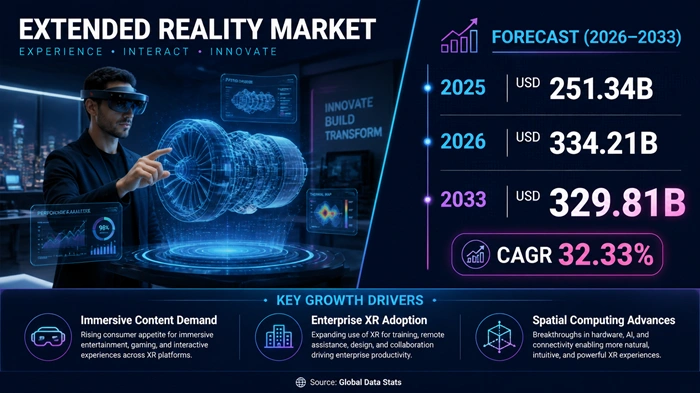
The global extended reality market has emerged as one of the most transformative technological domains redefining how industries and consumers interact with digital content. The global extended reality market size is valued at USD 251.34 billion in 2025 and is predicted to increase from USD 334.21 billion in 2026 to approximately USD 329.81 billion by 2033, growing at a CAGR of 32.33% from 2026 to 2033.
Extended reality encompasses virtual reality, augmented reality, and mixed reality technologies that create immersive digital experiences blending physical and virtual environments. These technologies enable users to interact with three-dimensional digital content in real-time, revolutionizing applications across entertainment, healthcare, education, manufacturing, and retail sectors.
The rapid growth of the extended reality market stems from technological advancements in computing power, graphics processing, sensor technologies, and network connectivity. Industries worldwide are adopting XR solutions to enhance training programs, improve customer engagement, streamline design processes, and create innovative product experiences. The proliferation of affordable devices, improved content availability, and integration with emerging technologies like artificial intelligence and 5G networks are accelerating mainstream adoption. As businesses recognize the competitive advantages offered by immersive technologies, investments in extended reality platforms continue to surge across both consumer and enterprise segments.
AI Impact on the Extended Reality Industry
Transforming Immersive Experiences Through Intelligent Systems and Adaptive Technologies
Artificial intelligence is fundamentally reshaping the extended reality market by enabling smarter, more responsive, and personalized immersive experiences that adapt to individual user behaviors and preferences. AI algorithms power real-time object recognition, environmental mapping, and contextual awareness in XR applications, allowing virtual elements to seamlessly integrate with physical surroundings. Machine learning models analyze user interactions to continuously refine experiences, predict behaviors, and optimize content delivery for maximum engagement. In augmented reality applications, AI enhances visual understanding by identifying objects, surfaces, and spatial relationships, enabling more accurate placement and interaction of virtual elements.
The integration of generative AI with extended reality is creating unprecedented opportunities for dynamic content creation and personalized virtual environments. AI-driven XR systems can generate realistic virtual characters with natural language processing capabilities, simulate complex physical phenomena, and create adaptive training scenarios that respond to learner performance. Computer vision algorithms powered by AI enable gesture recognition, eye tracking, and facial expression analysis, creating more intuitive control mechanisms for XR devices. As AI technologies continue advancing, the extended reality market benefits from improved rendering efficiency, reduced latency, enhanced realism, and more sophisticated interaction models that bridge the gap between physical and digital worlds.
Growth Factors
Rising Enterprise Adoption and Technological Convergence Driving Market Expansion
The extended reality market is experiencing robust growth driven by widespread enterprise adoption across manufacturing, healthcare, education, and defense sectors where immersive technologies deliver measurable productivity gains and cost savings. Organizations are implementing XR solutions for employee training, remote collaboration, product design, equipment maintenance, and customer engagement, recognizing significant returns on investment. The deployment of 5G networks with ultra-low latency enables cloud-based XR applications that eliminate the need for expensive local computing infrastructure, democratizing access to advanced immersive experiences. Integration with Internet of Things devices, edge computing platforms, and artificial intelligence systems creates synergistic ecosystems that amplify the value proposition of extended reality technologies.
Government initiatives supporting digital transformation, smart manufacturing, and innovation in education are channeling substantial funding toward XR infrastructure development and adoption programs. The gaming and entertainment industries continue driving consumer demand for immersive experiences, creating economies of scale that reduce hardware costs and improve accessibility. Advancements in ergonomic design, display technologies, haptic feedback systems, and battery efficiency are addressing previous adoption barriers related to user comfort and device usability. The emergence of metaverse platforms and Web3 technologies is creating new use cases for extended reality, attracting investments from major technology corporations and startups alike.
Market Outlook
Sustained Growth Trajectory Supported by Cross-Industry Digital Transformation Initiatives
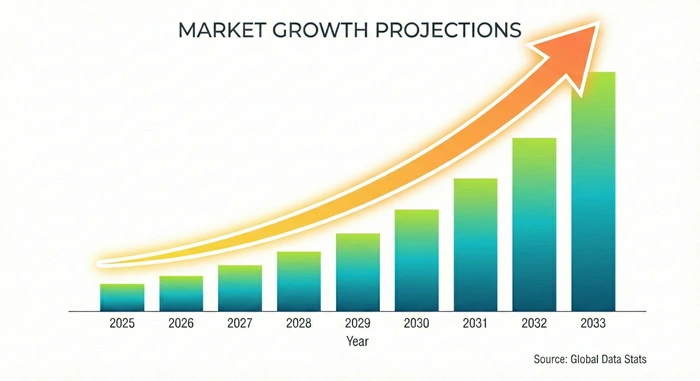
The extended reality market outlook remains exceptionally positive as technological maturation, declining hardware costs, and expanding content ecosystems converge to drive mainstream adoption across consumer and enterprise segments. Industry analysts project sustained double-digit growth rates through 2033 as organizations across sectors recognize XR as a strategic imperative for competitive differentiation and operational excellence. The shift toward hybrid work models and distributed teams is accelerating demand for immersive collaboration platforms that replicate in-person interaction dynamics. Healthcare providers are increasingly deploying XR solutions for surgical planning, medical training, patient therapy, and telemedicine applications, creating substantial market opportunities.
Manufacturing and industrial sectors are leveraging extended reality for design visualization, assembly guidance, quality inspection, and predictive maintenance, improving efficiency and reducing errors. Educational institutions worldwide are adopting immersive learning platforms that enhance student engagement, knowledge retention, and practical skill development across disciplines. Retail brands are implementing AR try-on experiences, virtual showrooms, and interactive product configurators that bridge online and physical shopping experiences. The convergence of XR with blockchain technologies, digital twins, and spatial computing is opening new frontiers in digital commerce, virtual real estate, and social interaction.
Expert Speaks
-
Satya Nadella, CEO of Microsoft Corporation, emphasized that mixed reality and spatial computing represent the next paradigm in human-computer interaction, enabling natural collaboration across physical and digital spaces while transforming how organizations train employees and serve customers.
-
Mark Zuckerberg, CEO of Meta Platforms Inc., stated that extended reality technologies form the foundation for the metaverse vision, creating immersive social experiences that will fundamentally change how people connect, work, and interact in virtual environments.
-
Tim Cook, CEO of Apple Inc., highlighted that augmented reality will become as essential to daily life as smartphones, with spatial computing devices enabling seamless integration of digital information into the physical world for both productivity and entertainment.
Key Report Takeaways
-
North America dominates the extended reality market with a commanding market share of approximately 41.6% in 2025, driven by robust technological infrastructure, significant investments from major corporations, and strong adoption across healthcare, education, and manufacturing sectors.
-
Asia Pacific emerges as the fastest-growing region for XR technologies, propelled by large consumer populations, rapid urbanization, expanding digital infrastructure, and substantial investments in gaming markets and smart manufacturing initiatives across China, Japan, South Korea, and India.
-
Enterprise customers increasingly adopt extended reality solutions for training, remote collaboration, product design, and operational efficiency applications, particularly in manufacturing, healthcare, defense, and energy sectors where immersive technologies deliver quantifiable productivity improvements and cost reductions.
-
Gaming and entertainment applications continue contributing the largest revenue share in the consumer segment, with virtual reality gaming experiences, immersive content platforms, and interactive entertainment driving hardware adoption and ecosystem development.
-
Hardware components dominate the extended reality market accounting for the majority of revenue, with head-mounted displays, tracking systems, input devices, and computing infrastructure representing significant investment areas as device capabilities advance and form factors improve.
-
The augmented reality segment is projected to experience the fastest growth with an estimated CAGR exceeding 35% through 2033, driven by smartphone-based AR applications, industrial use cases, and enterprise adoption for maintenance, training, and customer engagement scenarios.
Market Scope
| Report Coverage | Details |
|---|---|
| Market Size by 2033 | USD 329.81 Billion |
| Market Size by 2025 | USD 251.34 Billion |
| Market Size by 2026 | USD 334.21 Billion |
| Market Growth Rate from 2026 to 2033 | CAGR of 32.33% |
| Dominating Region | North America |
| Fastest Growing Region | Asia Pacific |
| Base Year | 2025 |
| Forecast Period | 2026 to 2033 |
| Segments Covered | Component, Device Type, Technology Type, Application, End-User Industry, Region |
| Regions Covered | North America, Europe, Asia Pacific, Latin America, Middle East & Africa |
Market Dynamics
Drivers Impact Analysis
Technological Advancements and 5G Deployment Accelerating Market Penetration
| Driver | ≈% Impact on CAGR Forecast | Geographic Relevance | Impact Timeline |
|---|---|---|---|
| 5G Network Deployment and Edge Computing | +6-8% | Global, particularly North America and Asia Pacific | 2026-2030 |
| AI Integration and Machine Learning Capabilities | +5-7% | North America, Europe, Asia Pacific | 2026-2033 |
| Enterprise Digital Transformation Initiatives | +7-9% | Global, strongest in North America and Europe | 2026-2033 |
| Declining Hardware Costs and Improved Accessibility | +4-6% | Global, particularly Asia Pacific and Latin America | 2026-2033 |
The extended reality market is experiencing transformative growth driven by the global rollout of 5G networks that provide the ultra-low latency and high bandwidth essential for seamless cloud-based XR experiences. Organizations across industries are recognizing extended reality as a strategic enabler for digital transformation initiatives, investing heavily in immersive technologies to enhance training programs, streamline operations, and create differentiated customer experiences. Artificial intelligence integration is revolutionizing XR applications by enabling real-time environmental understanding, personalized content adaptation, and natural interaction mechanisms that significantly enhance user engagement and experience quality. The convergence of edge computing infrastructure with XR platforms is eliminating previous performance limitations, allowing complex immersive applications to run on lightweight devices without compromising visual fidelity or responsiveness.
Manufacturing and industrial sectors are deploying extended reality solutions at scale for design visualization, assembly guidance, remote expert assistance, and predictive maintenance applications that deliver measurable productivity improvements and cost savings. Healthcare organizations are implementing XR technologies for surgical planning, medical education, patient therapy, and telemedicine services, creating substantial demand in the medical vertical. The proliferation of affordable consumer devices, improved content libraries, and enhanced ergonomic designs are addressing previous adoption barriers and expanding the addressable market across demographic segments. Government funding programs supporting innovation in education technology, smart manufacturing, and defense applications are channeling resources toward XR development and deployment initiatives worldwide.
Restraints Impact Analysis
High Implementation Costs and Technical Challenges Limiting Widespread Adoption
| Restraint | ≈% Impact on CAGR Forecast | Geographic Relevance | Impact Timeline |
|---|---|---|---|
| High Hardware and Software Costs | -4-6% | Developing markets, price-sensitive segments | 2026-2029 |
| Limited Standardization and Interoperability | -3-5% | Global | 2026-2033 |
| User Comfort and Health Concerns | -2-4% | Global, particularly consumer segment | 2026-2030 |
| Data Privacy and Security Issues | -2-3% | Europe, North America | 2026-2033 |
The extended reality market faces significant headwinds from the high costs associated with premium XR hardware including head-mounted displays, tracking systems, and high-performance computing infrastructure required for advanced immersive experiences. Enterprise organizations encounter substantial implementation expenses beyond hardware acquisition, including content development, system integration, employee training, and ongoing maintenance requirements that create barriers for small and medium businesses. Limited standardization across XR platforms and ecosystems creates fragmentation challenges, forcing organizations to develop separate content versions for different devices and restricting seamless user experiences across hardware vendors.
User comfort concerns including motion sickness, eye strain, and physical fatigue during extended XR sessions continue limiting adoption for certain applications and demographic groups. Data privacy and security considerations present obstacles particularly in healthcare, financial services, and enterprise environments where immersive technologies collect sensitive biometric, behavioral, and environmental information requiring robust protection mechanisms. The shortage of skilled developers proficient in XR content creation, 3D modeling, spatial computing, and immersive interaction design constrains the availability of high-quality applications and experiences. Inadequate network infrastructure in developing regions limits access to cloud-based XR services that require high bandwidth and low latency connections for optimal performance.
Opportunities Impact Analysis
Emerging Use Cases and Technological Convergence Creating Growth Avenues
| Opportunity | ≈% Impact on CAGR Forecast | Geographic Relevance | Impact Timeline |
|---|---|---|---|
| Metaverse and Web3 Integration | +5-8% | Global, particularly North America and Asia Pacific | 2027-2033 |
| Healthcare and Medical Training Applications | +4-6% | North America, Europe, Asia Pacific | 2026-2033 |
| Industrial Digital Twin Integration | +3-5% | North America, Europe, Asia Pacific | 2026-2033 |
| Education Technology Transformation | +4-6% | Global | 2026-2033 |
The emergence of metaverse platforms and Web3 technologies is creating unprecedented opportunities for the extended reality market as organizations and consumers explore virtual economies, digital real estate, and immersive social experiences. Healthcare represents one of the most promising growth sectors for XR applications spanning surgical planning, medical education, patient rehabilitation, mental health therapy, and telemedicine services where immersive technologies demonstrate clear clinical benefits. Integration of extended reality with digital twin technologies enables industrial organizations to visualize complex systems, simulate operational scenarios, and optimize manufacturing processes with significant efficiency gains.
Educational institutions worldwide are recognizing XR as a transformative tool for experiential learning, providing students with hands-on practice in safe virtual environments across disciplines from medicine and engineering to arts and sciences. The retail and e-commerce sectors present substantial opportunities for AR try-on experiences, virtual showrooms, product configurators, and immersive brand storytelling that enhance customer engagement and reduce return rates. Aerospace and defense organizations are investing heavily in XR-based training simulators, mission planning tools, and maintenance applications that improve readiness while reducing costs associated with physical equipment and live exercises. The convergence of haptic feedback technologies with XR platforms is enabling tactile interactions that expand use cases in medical training, remote operations, and consumer entertainment.
Segment Analysis
Hardware Component Segment
Dominant Market Position Driven by Device Innovation and Ecosystem Expansion
The hardware component segment maintains a commanding position in the extended reality market, accounting for approximately 58% market share in 2025 with a projected CAGR of 31.8% through 2033. This segment encompasses head-mounted displays, tracking systems, input devices, haptic controllers, computing units, and sensor arrays that form the foundation of immersive experiences. North America leads hardware adoption driven by major technology corporations including Meta Platforms Inc., Microsoft Corporation, Apple Inc., and Google LLC continuously innovating device capabilities with higher resolution displays, wider field of view, improved ergonomics, and extended battery life. Asia Pacific represents the fastest-growing region for XR hardware, propelled by electronics manufacturing hubs in China, Japan, and South Korea where companies like Sony Corporation, Samsung Electronics Co. Ltd., and HTC Corporation are developing competitively priced consumer and enterprise devices.
Head-mounted displays constitute the largest hardware subsegment, with virtual reality headsets, augmented reality glasses, and mixed reality devices addressing different use cases across consumer gaming, enterprise training, and industrial applications. Premium standalone devices featuring integrated computing, inside-out tracking, and hand gesture recognition are gaining market traction as they eliminate the need for external sensors or tethered connections to powerful computers. Smartphone-based XR solutions continue serving as entry points for mass market consumers, particularly in developing regions where affordable cardboard and plastic holders enable basic immersive experiences using existing mobile devices. Haptic feedback systems including gloves, vests, and full-body suits are emerging as critical hardware components for applications requiring tactile sensations in medical training, industrial design, and entertainment scenarios. Technology companies are investing in miniaturization, improved optics, eye-tracking integration, and neural interface research to develop next-generation hardware that addresses current limitations around device weight, thermal management, and field of view restrictions.
Enterprise Application Segment
Rapid Expansion Fueled by Digital Transformation and Productivity Enhancement
The enterprise application segment is experiencing exceptional growth with a projected CAGR of 35.2% from 2026 to 2033, representing one of the most dynamic areas within the extended reality market. Organizations across manufacturing, healthcare, education, retail, aerospace, and defense sectors are deploying XR solutions to address specific business challenges including workforce training, remote collaboration, design visualization, and customer engagement. North America dominates enterprise XR adoption with a market share exceeding 43%, as companies leverage immersive technologies to maintain competitive advantages in innovation-driven industries. Leading enterprise solution providers including Accenture plc, PTC Inc., Unity Technologies Inc., Dassault Systemes SE, and Tata Elxsi Ltd. are developing industry-specific XR platforms tailored to vertical market requirements.
Manufacturing and industrial segments represent the largest enterprise use case, with XR applications supporting design reviews, assembly instructions, quality inspection, maintenance procedures, and remote expert assistance that reduce errors and accelerate production timelines. Healthcare organizations are implementing extended reality for surgical planning using patient-specific anatomical models, medical education through immersive simulation, and patient therapy including exposure treatment for phobias and pain management protocols. Corporate training departments are replacing traditional classroom instruction with immersive scenarios that provide hands-on practice in realistic environments, improving knowledge retention rates and skill development while reducing training costs associated with physical equipment and instructor time. Retail brands are deploying augmented reality applications enabling customers to visualize products in their spaces before purchase, virtual try-on experiences for apparel and cosmetics, and immersive brand storytelling that differentiates their offerings in competitive markets. The architecture, engineering, and construction industries are leveraging XR for design visualization, stakeholder presentations, construction planning, and site inspections that improve collaboration and reduce costly modifications during building phases.
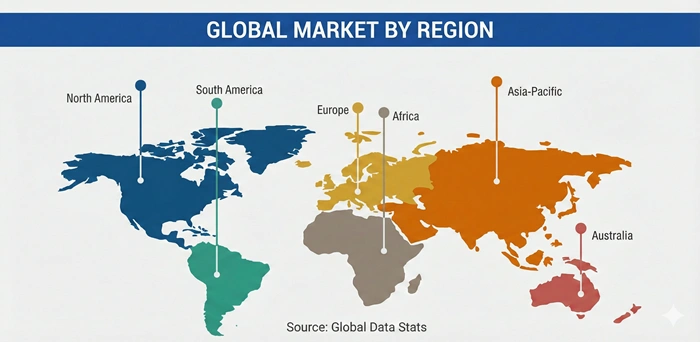
Regional Insights
North America
Market Leadership Driven by Technological Innovation and Enterprise Adoption
North America maintains its position as the dominant region in the extended reality market, commanding approximately 41.6% of global market share in 2025 with a steady CAGR of 31.5% projected through 2033. The region's leadership stems from its robust technological infrastructure, concentration of major technology corporations, substantial research and development investments, and early enterprise adoption across key industries. The United States represents the largest individual market within the region, valued at USD 73.68 billion in 2025, driven by Fortune 500 companies implementing XR solutions for training, product development, and customer engagement initiatives. Major players headquartered in North America including Microsoft Corporation, Meta Platforms Inc., Apple Inc., Google LLC, Qualcomm Incorporated, and NVIDIA Corporation are driving hardware innovation, platform development, and ecosystem expansion.
Healthcare organizations across the region are implementing extended reality for medical education, surgical planning, and patient therapy applications, with academic medical centers leading adoption. Manufacturing enterprises are deploying XR solutions for design visualization, assembly guidance, and maintenance procedures, particularly in automotive, aerospace, and heavy equipment sectors where complex products benefit from immersive technologies. Government agencies and defense contractors are investing heavily in XR-based training simulators, mission planning tools, and battlefield visualization systems that improve readiness while reducing costs. The education sector is embracing immersive learning platforms, with universities and vocational schools implementing XR laboratories for science, engineering, and medical programs. Strong venture capital funding, supportive regulatory environments, and concentration of skilled technology talent continue reinforcing North America's competitive advantages in the extended reality market.
Asia Pacific
Fastest Growth Trajectory Powered by Manufacturing Scale and Consumer Adoption
Asia Pacific emerges as the fastest-growing region for extended reality technologies with a projected CAGR of 36.8% from 2026 to 2033, accounting for approximately 28% of global market share in 2025. The region's exceptional growth stems from large consumer populations, rapid urbanization, expanding middle-class demographics, improving digital infrastructure, and substantial government investments in smart manufacturing and education technology initiatives. China leads regional adoption with massive investments in XR startups, manufacturing capabilities for affordable devices, and integration of immersive technologies in e-commerce, gaming, and industrial applications. Key regional players including Sony Corporation, Samsung Electronics Co. Ltd., HTC Corporation, Seiko Epson Corporation, and Tata Elxsi Ltd. are developing hardware and software solutions targeting both domestic and international markets.
The gaming and entertainment industries serve as primary growth drivers, with China, Japan, and South Korea representing the world's largest gaming markets where consumers demonstrate high willingness to adopt VR gaming systems and immersive content platforms. Manufacturing hubs across the region are implementing XR solutions for quality control, assembly training, and remote expert systems as part of Industry 4.0 transformation initiatives supported by national industrial policies. Education sectors in India, China, and Southeast Asian nations are exploring immersive learning platforms to address teacher shortages and improve educational outcomes in science, technology, engineering, and mathematics disciplines. Retail and e-commerce companies are pioneering augmented reality shopping experiences, virtual try-on applications, and interactive product demonstrations that enhance online shopping conversion rates. Government smart city initiatives and metaverse development projects in countries including China, Singapore, and the United Arab Emirates are creating substantial demand for XR infrastructure and applications.
Top Key Players
-
Apple Inc. (United States)
-
Microsoft Corporation (United States)
-
Meta Platforms Inc. (United States)
-
Google LLC (United States)
-
Samsung Electronics Co. Ltd. (South Korea)
-
Sony Corporation (Japan)
-
Qualcomm Incorporated (United States)
-
NVIDIA Corporation (United States)
-
HTC Corporation (Taiwan)
-
Accenture plc (Ireland)
-
Unity Technologies Inc. (United States)
-
PTC Inc. (United States)
-
Magic Leap Inc. (United States)
-
Varjo Technologies Oy (Finland)
-
Vuzix Corporation (United States)
Recent Developments
-
October 2024: Infinite Reality Inc., a United States-based digital media and extended reality solutions provider, acquired Zappar Ltd., a United Kingdom-based company specializing in XR and AR platforms, for USD 45 million to expand its immersive technology portfolio and strengthen its foothold in immersive commerce and digital media experiences.
-
May 2024: Magic Leap Inc., a United States-based extended reality startup, secured USD 300 million in funding led by Qualcomm Ventures to accelerate the development and commercialization of its spatial computing technology, demonstrating strong investor confidence in the XR market's growth potential.
-
March 2024: Microsoft Corporation and Sony Corporation announced a strategic partnership to collaborate on developing extended reality content for their respective platforms, Microsoft Mixed Reality and PlayStation VR, significantly expanding the XR content library and attracting more users to these ecosystems.
-
January 2025: Apple Inc. intensified its presence in the extended reality market following the continued rollout of Apple Vision Pro, its spatial computing headset featuring advanced mixed reality capabilities, eye tracking, and hand gesture controls aimed at bringing XR technology to mainstream audiences.
-
2024: Meta Platforms Inc. launched the Meta Quest 3, featuring improved mixed reality capabilities, higher resolution displays, and more powerful processing units, reinforcing its position as the market leader in consumer VR headsets while expanding its metaverse platform initiatives.
Market Trends
Convergence of Immersive Technologies With Cloud Computing and Artificial Intelligence
The extended reality market is witnessing significant trends including the shift toward cloud-based XR solutions that leverage edge computing and 5G connectivity to deliver high-quality immersive experiences without requiring expensive local hardware. Organizations are moving from device-centric deployments to platform-based approaches where content and processing occur in the cloud, enabling lightweight headsets and reducing total cost of ownership for enterprise implementations. Integration of generative AI with extended reality platforms is enabling dynamic content creation, personalized experiences that adapt to individual user behaviors, and intelligent virtual assistants that enhance interaction within immersive environments. Haptic feedback technologies are advancing beyond simple vibration motors to sophisticated systems providing realistic tactile sensations, force feedback, and texture simulation that significantly enhance immersion for training, design, and entertainment applications.
The development of lightweight, stylish augmented reality glasses resembling conventional eyewear represents a critical trend as manufacturers address social acceptance barriers that have limited previous AR device adoption. Cross-platform compatibility and open standards initiatives are gaining momentum as industry participants recognize that interoperability will accelerate ecosystem growth and content development. Subscription-based business models are emerging as alternatives to high upfront hardware costs, with companies offering device-as-a-service packages that include hardware, software, content libraries, and support services. Integration of extended reality with digital twin technologies, blockchain platforms, and Internet of Things sensors is creating sophisticated applications for industrial operations, supply chain management, and smart city initiatives. Privacy-preserving technologies including on-device processing, federated learning, and encrypted data transmission are being developed to address security concerns while maintaining the personalization benefits of cloud-connected XR systems.
Segments Covered in the Report
By Component
-
Hardware
-
Head-Mounted Displays
-
Tracking Systems
-
Input Devices
-
Haptic Systems
-
-
Software
-
Development Platforms
-
Content Management
-
Analytics Tools
-
-
Services
-
Integration Services
-
Support and Maintenance
-
Consulting Services
-
By Device Type
-
Head-Mounted Displays (HMDs)
-
Mobile Devices
-
PC/Desktop Systems
-
Projection Systems
By Technology Type
-
Virtual Reality (VR)
-
Augmented Reality (AR)
-
Mixed Reality (MR)
By Application
-
Consumer Applications
-
Gaming
-
Entertainment
-
Social Platforms
-
-
Enterprise Applications
-
Training and Simulation
-
Remote Collaboration
-
Product Design and Visualization
-
Maintenance and Repair
-
By End-User Industry
-
Healthcare
-
Education
-
Retail and E-commerce
-
Industrial and Manufacturing
-
Media and Entertainment
-
Gaming
-
Aerospace and Defense
-
Real Estate and Architecture
-
Automotive
-
Tourism and Hospitality
By Region
-
North America
-
United States
-
Canada
-
Mexico
-
-
Europe
-
United Kingdom
-
Germany
-
France
-
Italy
-
Spain
-
Rest of Europe
-
-
Asia Pacific
-
China
-
Japan
-
India
-
South Korea
-
Australia
-
Southeast Asia
-
Rest of Asia Pacific
-
-
Latin America
-
Brazil
-
Argentina
-
Rest of Latin America
-
-
Middle East and Africa
-
United Arab Emirates
-
Saudi Arabia
-
South Africa
-
Rest of Middle East and Africa
-
Frequently Asked Questions
Question 1: What is the extended reality market size expected to reach by 2033?
Answer: The global extended reality market size is projected to reach USD 329.81 billion by 2033, growing at a CAGR of 32.33% from 2026 to 2033. This growth is driven by increasing adoption across enterprise and consumer segments.
Question 2: Which region dominates the extended reality market currently?
Answer: North America dominates the extended reality market with approximately 41.6% market share in 2025, driven by technological infrastructure and strong enterprise adoption. The region benefits from major technology companies and substantial R&D investments.
Question 3: What are the key applications driving extended reality market growth?
Answer: Key applications driving the extended reality market include gaming and entertainment, enterprise training and collaboration, healthcare simulation and therapy, industrial manufacturing and design, and retail customer engagement experiences. These applications demonstrate measurable productivity and engagement benefits.
Question 4: How is artificial intelligence impacting the extended reality market?
Answer: Artificial intelligence is significantly enhancing the extended reality market by enabling real-time object recognition, personalized content adaptation, natural interaction mechanisms, and adaptive learning systems. AI integration improves user experiences and expands XR application capabilities across industries.
Question 5: What factors are restraining extended reality market growth?
Answer: The extended reality market faces restraints including high hardware and software costs, limited standardization and interoperability, user comfort and health concerns, and data privacy issues. These challenges particularly affect adoption in price-sensitive markets and specific demographic segments.