
Epoxy Resin Market Overview
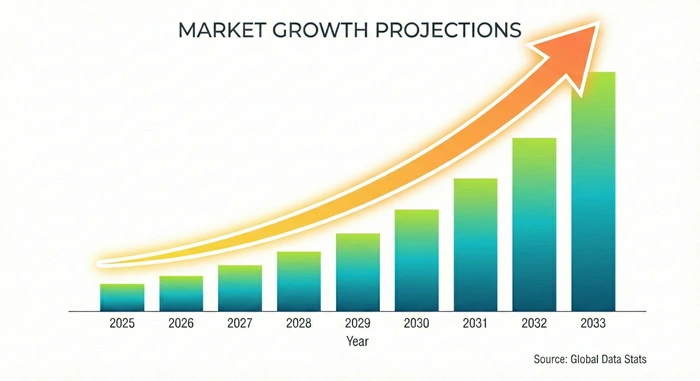
The global epoxy resin market size is valued at USD 12.03 billion in 2025 and is predicted to increase from USD 12.63 billion in 2026 to approximately USD 18.82 billion by 2033, growing at a CAGR of 4.98% from 2026 to 2033.
The industry supplies versatile thermosetting polymers that form highly durable, chemically resistant materials when cured with hardening agents. These specialized resins serve countless applications across coatings, adhesives, composites, and electronics requiring exceptional mechanical strength and bonding properties. Manufacturing facilities worldwide produce millions of tons annually through chemical reactions between epichlorohydrin and various phenolic compounds serving diverse industrial sectors.
The sector plays a crucial role in modern manufacturing infrastructure supporting construction, transportation, energy, and electronics industries. Rising infrastructure investment and growing composite material adoption drive steady demand for high-performance resins. Countries invest substantially in production capacity and formulation innovation to meet increasing requirements while advancing sustainability through bio-based alternatives and reduced environmental impact.

AI Impact on the Epoxy Resin Industry
Optimizing Formulation Development and Production Efficiency Through Advanced Analytics
Artificial intelligence has begun transforming how manufacturers develop customized formulations and optimize production parameters for specific application requirements. Modern AI systems analyze vast datasets from formulation trials, curing studies, and performance testing to identify optimal resin-hardener combinations meeting precise specifications for viscosity, pot life, mechanical properties, and chemical resistance. These technologies help formulation chemists predict how ingredient modifications will affect final product characteristics before conducting expensive laboratory experiments. Machine learning algorithms identify subtle relationships between molecular structure, processing conditions, and performance outcomes that accelerate development cycles for specialty grades serving demanding applications like aerospace composites or electronics encapsulation.
Predictive quality control powered by AI enables manufacturers to maintain consistent product specifications despite variations in raw material quality and environmental conditions affecting polymerization reactions. Sensors throughout production facilities monitor temperature profiles, mixing parameters, and chemical conversion rates feeding real-time data into AI models that automatically adjust process parameters maintaining optimal conditions. This capability reduces batch-to-batch variability, minimizes off-specification production requiring rework or disposal, and improves overall manufacturing efficiency through data-driven optimization. Computer vision systems inspect finished products identifying defects, contamination, or inconsistencies that human inspectors might miss during quality assurance processes.
Growth Factors
Infrastructure Development and Renewable Energy Expansion Driving Robust Demand
The massive global infrastructure modernization programs create fundamental demand for the epoxy resin market as construction projects consume billions of pounds of coatings, adhesives, and flooring systems protecting concrete, steel, and other building materials. Urban development across emerging economies requires durable protective coatings for bridges, tunnels, parking structures, and industrial facilities exposed to harsh environmental conditions including chemical exposure, moisture, and temperature extremes. Modern construction practices increasingly specify high-performance epoxy systems offering superior adhesion, abrasion resistance, and long-term durability compared to traditional coating technologies. This infrastructure focus spans transportation networks, water treatment facilities, power generation plants, and commercial building developments requiring reliable protective systems with minimal maintenance over decades of service life.
Wind energy sector expansion drives substantial composite resin demand as turbine manufacturers require millions of pounds of epoxy systems annually for blade production using vacuum infusion and resin transfer molding processes. Modern wind turbines feature blades exceeding 80 meters in length constructed from glass fiber or carbon fiber reinforced epoxy composites engineered for fatigue resistance under continuous cyclic loading. The renewable energy transition accelerates turbine installations globally as countries pursue carbon reduction targets and energy independence through expanded wind generation capacity. Each multi-megawatt turbine contains several tons of cured epoxy resin in blade structures, nacelle components, and bonding applications requiring specialized formulations balancing mechanical performance, processing characteristics, and cost considerations.
Market Outlook
Regional Manufacturing Shifts and Sustainability Initiatives Reshaping Industry Landscape
Asia Pacific maintains its commanding position as both the dominant production hub and fastest-growing consumption region, driven by massive manufacturing sectors, infrastructure investment, and cost-competitive production facilities. The region benefits from vertically integrated supply chains spanning raw material production, resin manufacturing, and downstream fabrication concentrated in China, India, and Southeast Asia. Production capacity continues expanding throughout the region as global manufacturers establish operations capturing growing local demand while serving export markets through efficient port infrastructure and favorable trade agreements. Regional governments support chemical industry development through industrial park infrastructure, tax incentives, and streamlined regulatory processes attracting substantial foreign direct investment.
Sustainability pressures increasingly influence product development strategies as customers demand bio-based alternatives, reduced VOC emissions, and improved end-of-life recyclability addressing environmental concerns. Manufacturers invest in renewable feedstock sourcing including plant-based epichlorohydrin derived from glycerin rather than petroleum-derived propylene. Water-based and powder epoxy formulations gain market share in coating applications eliminating organic solvents that contribute to air pollution and worker exposure concerns. Chemical recycling technologies emerge enabling recovery and reuse of epoxy composites from wind turbine blades and other end-of-life products historically destined for landfills, supporting circular economy principles gaining importance among environmentally conscious customers and regulatory frameworks.
Expert Speaks
-
Jim Fitterling, Chairman and CEO of Dow – "Epoxy resins remain essential materials enabling lightweighting, durability, and sustainability across transportation and construction applications. Our innovation pipeline focuses on next-generation formulations incorporating renewable content while maintaining performance standards customers depend on for demanding applications requiring long-term reliability."
-
Martin Brudermüller, CEO of BASF – "The transition toward sustainable chemistry creates opportunities for bio-based epoxy systems and circular economy approaches that reduce environmental footprint without compromising technical performance. We're investing substantially in alternative feedstocks and end-of-life solutions addressing customer sustainability commitments."
-
Thierry Vanlancker, CEO of AkzoNobel – "Coating applications continue driving epoxy demand as infrastructure projects and industrial maintenance require durable protective systems. Digital technologies including AI-powered color matching and application optimization are transforming how customers select and apply high-performance coatings."
Key Report Takeaways
-
Asia Pacific dominates the global epoxy resin market with approximately 60% market share, powered by massive manufacturing capacity, growing infrastructure investment, and expanding electronics, automotive, and construction sectors across China, India, and Southeast Asian economies driving both production leadership and consumption growth
-
Asia Pacific also represents the fastest-growing region with projected CAGR exceeding 5.5% through 2033, driven by continued industrialization, urbanization, renewable energy infrastructure development, and substantial foreign investment in manufacturing facilities serving domestic markets and global export opportunities
-
Paints and coatings applications lead end-use categories capturing roughly 42% market share as construction projects, industrial maintenance, and protective coating systems consume billions of pounds annually for corrosion protection, chemical resistance, and aesthetic finishes across infrastructure and manufacturing facilities
-
DGBEA bisphenol A based resins dominate raw material segments accounting for approximately 36% of production volumes due to balanced performance characteristics, cost-effectiveness, and well-established manufacturing processes serving diverse applications from coatings to structural composites
-
Solvent-based technology leads formulation approaches holding about 30% market share thanks to established application methods, excellent surface wetting, and proven performance across industrial coating applications despite environmental pressure driving gradual shift toward water-based and powder alternatives
-
Composites applications show strongest growth potential among end-use segments with highest projected CAGR approaching 5.8% as wind energy expansion, automotive lightweighting, and aerospace manufacturing drive demand for high-performance fiber-reinforced polymer structures
Market Scope
| Report Coverage | Details |
|---|---|
| Market Size by 2033 | USD 18.82 Billion |
| Market Size by 2025 | USD 12.03 Billion |
| Market Size by 2026 | USD 12.63 Billion |
| Market Growth Rate from 2026 to 2033 | CAGR of 4.98% |
| Dominating Region | Asia Pacific |
| Fastest Growing Region | Asia Pacific |
| Base Year | 2025 |
| Forecast Period | 2026 to 2033 |
| Segments Covered | Raw Material, Application, Technology, End-Use Industry, Region |
| Regions Covered | North America, Europe, Asia Pacific, Latin America, Middle East & Africa |
Market Dynamics
Drivers Impact Analysis
Multiple Growth Vectors Supporting Sustained Market Expansion
| Driver | Impact on CAGR Forecast | Geographic Relevance | Impact Timeline |
|---|---|---|---|
| Infrastructure development and construction growth | ≈ 1.5% positive impact | Global, strongest in Asia Pacific and Middle East | Immediate and long-term |
| Wind energy sector expansion driving composite demand | ≈ 1.2% positive impact | Global, particularly Europe, North America, Asia Pacific | Immediate and long-term |
| Electronics industry growth requiring encapsulation materials | ≈ 0.9% positive impact | Global, concentrated in Asia Pacific | Immediate |
| Automotive lightweighting and electric vehicle adoption | ≈ 0.8% positive impact | Global, led by developed markets | Medium to long-term |
Infrastructure investment programs across developing and developed countries create sustained demand for the epoxy resin market as protective coatings, structural adhesives, and flooring systems protect trillions of dollars in construction assets from corrosion, chemical attack, and mechanical wear. Modern infrastructure projects specify high-performance epoxy systems for bridge deck overlays, parking garage waterproofing, chemical processing facilities, and wastewater treatment plants where durability requirements justify premium material costs. Transportation infrastructure including highways, railways, airports, and marine terminals requires specialized epoxy coatings withstanding heavy traffic loads, fuel spills, deicing chemicals, and harsh environmental exposure over multi-decade service lives. These infrastructure applications provide stable long-term demand relatively insulated from economic cycles affecting discretionary spending sectors.
Wind turbine manufacturing drives exponential growth in structural composite applications as global renewable energy capacity additions accelerate dramatically under climate change mitigation policies. Each utility-scale wind turbine requires 8-15 tons of epoxy resin for blade manufacturing using vacuum infusion processes that infiltrate fiber reinforcements with low-viscosity resin systems curing into high-strength composite structures. The offshore wind sector shows particularly robust growth with larger turbines featuring longer blades consuming substantially more resin per unit than smaller onshore installations. Blade manufacturers specify specialized epoxy formulations optimized for fatigue resistance, moisture resistance, and processing characteristics enabling efficient manufacturing of complex aerodynamic shapes incorporating various fiber architectures and core materials.
Restraints Impact Analysis
Challenges Creating Headwinds for Market Growth
| Restraint | Impact on CAGR Forecast | Geographic Relevance | Impact Timeline |
|---|---|---|---|
| Raw material price volatility affecting profitability | ≈ 0.8% negative impact | Global | Immediate |
| Environmental regulations limiting solvent-based formulations | ≈ 0.7% negative impact | Europe, North America | Immediate and long-term |
| Competition from alternative polymer systems | ≈ 0.5% negative impact | Selective applications and regions | Medium to long-term |
| Complex formulation and application requirements | ≈ 0.4% negative impact | Global | Immediate |
Raw material cost fluctuations create significant margin pressure for the epoxy resin market as prices for epichlorohydrin, bisphenol A, and specialty curing agents vary with petroleum feedstock costs, supply-demand balances, and global chemical industry cycles. Epichlorohydrin availability particularly affects market dynamics since this key building block derives from propylene or glycerin with limited producer base creating occasional supply constraints during force majeure events or production disruptions. Manufacturers struggle to pass through sudden cost increases to customers locked into fixed-price supply agreements while absorbing margin compression during inflationary periods affecting profitability. Long-term raw material contracts and vertical integration strategies help larger producers manage cost volatility better than smaller regional manufacturers dependent on spot market purchases.
Environmental regulations mandating reduced VOC emissions and hazardous substance restrictions create reformulation challenges and potential cost increases for established products serving coating and adhesive markets. European REACH regulations, North American EPA rules, and various national standards limit or ban certain aromatic amine hardeners, solvent carriers, and reactive diluents historically used in epoxy formulations. Compliance requires substantial R&D investment developing alternative formulations maintaining performance characteristics while meeting environmental standards. Water-based and powder epoxy systems address emissions concerns but often require modified application equipment, training, and process changes creating adoption barriers for conservative industrial users comfortable with solvent-based technologies proven over decades.
Opportunities Impact Analysis
Emerging Growth Avenues and Market Development Potential
| Opportunity | Impact on CAGR Forecast | Geographic Relevance | Impact Timeline |
|---|---|---|---|
| Bio-based epoxy development from renewable feedstocks | ≈ 1.0% positive impact | Global, led by Europe and North America | Medium to long-term |
| 3D printing and additive manufacturing applications | ≈ 0.7% positive impact | Developed markets initially | Medium to long-term |
| Aerospace composite expansion in commercial aviation | ≈ 0.8% positive impact | Global, centered in North America and Europe | Medium to long-term |
| Emerging market industrialization and infrastructure needs | ≈ 1.3% positive impact | Asia Pacific, Latin America, Africa, Middle East | Immediate and long-term |
Bio-based epoxy resin development creates premium market opportunities as customers increasingly demand sustainable alternatives reducing dependence on petroleum-derived raw materials and lowering carbon footprints. Manufacturers develop resins incorporating renewable content from sources including plant oils, lignin, cardanol, and bio-derived epichlorohydrin maintaining performance characteristics comparable to conventional systems. These bio-based products command premium pricing in environmentally conscious market segments including green building construction, sustainable packaging, and corporate procurement programs with aggressive sustainability targets. Certification schemes verifying renewable content percentages and lifecycle environmental impacts help differentiate products and justify price premiums supporting profitability despite higher raw material costs.
Additive manufacturing and 3D printing applications emerge as high-growth niches for the epoxy resin market as photopolymerizable and thermally curable formulations enable production of complex geometries impossible through conventional manufacturing methods. Industrial 3D printing systems increasingly utilize epoxy-based resins for tooling, fixtures, functional prototypes, and low-volume production parts in aerospace, automotive, and medical device applications. These specialty formulations require precise control over viscosity, cure characteristics, and mechanical properties meeting demanding application requirements. The technology enables distributed manufacturing reducing lead times and inventory costs while allowing design iteration cycles impossible with traditional tooling approaches, driving adoption across industries embracing digital manufacturing transformation.
Segment Analysis
Paints & Coatings Applications
Dominant End-Use Driven by Infrastructure Protection Requirements
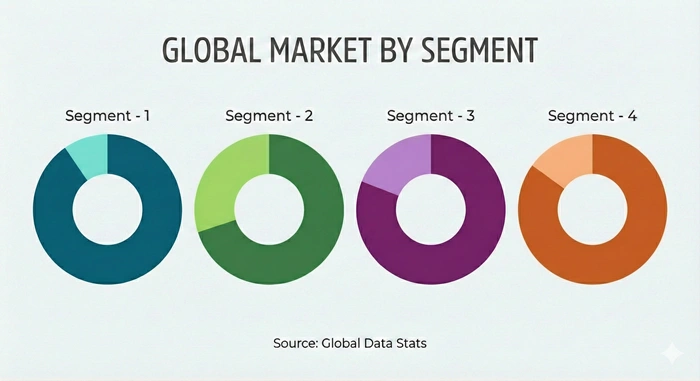
Paints and coatings applications command approximately 42% of the epoxy resin market share in 2025, expanding at 5.1% CAGR through the forecast period. This segment encompasses protective coatings for industrial equipment, infrastructure, marine vessels, and architectural applications requiring exceptional chemical resistance, adhesion, and durability under harsh environmental exposure. Asia Pacific represents the largest and fastest-growing regional market as massive infrastructure construction, industrial facility development, and expanding manufacturing capacity drive coating demand across China, India, and Southeast Asia. Industrial maintenance and marine coating applications particularly favor epoxy systems for steel structure protection against corrosion in chemical processing plants, offshore platforms, ship hulls, and storage tanks where coating failure results in expensive asset damage and operational disruptions.
Major coating resin suppliers including Olin Corporation, Hexion Inc., Huntsman Corporation, and Kukdo Chemical serve global markets through regional production facilities, technical service capabilities, and specialized product lines optimized for specific coating applications. These companies invest heavily in low-VOC and water-based epoxy dispersions addressing environmental regulations while maintaining performance standards customers require for protective coating systems. Two-component epoxy coatings dominate high-performance applications offering superior chemical resistance and mechanical properties compared to single-component alternatives, despite requiring precise mixing and limited pot life creating application complexity. Powder epoxy coatings gain share in appliance, automotive parts, and rebar coating applications eliminating solvents entirely while achieving excellent film properties and transfer efficiency.
Composites Applications
Fastest Growing Segment Driven by Structural Performance Demands
Composites applications capture approximately 25% market share in 2025, demonstrating the strongest growth trajectory at 5.8% CAGR as wind energy, aerospace, automotive, and sporting goods manufacturers increase adoption of fiber-reinforced polymer structures. This segment includes structural composites for wind turbine blades, aircraft components, automotive body panels, pressure vessels, and recreational equipment where high strength-to-weight ratios justify premium material costs. Europe and North America lead technology development and consumption in aerospace and premium automotive applications while Asia Pacific shows fastest growth driven by wind energy expansion and emerging composite manufacturing capabilities. Resin suppliers develop specialized formulations optimized for various manufacturing processes including vacuum infusion, resin transfer molding, prepreg laminates, and filament winding each requiring distinct viscosity profiles, cure characteristics, and processing windows.
Leading composite resin producers including Hexion, Huntsman, Olin, Sicomin, and specialty suppliers serve demanding aerospace, wind energy, and automotive customers through rigorous qualification processes and technical support partnerships. These applications require consistent batch-to-batch properties, extensive material characterization, and long-term performance validation under simulated service conditions. Wind blade manufacturing particularly drives volume growth as utility-scale turbines require tons of resin per blade with offshore installations trending toward even larger sizes maximizing energy capture. The automotive sector increasingly adopts carbon fiber reinforced epoxy composites for structural components and body panels in premium vehicles and electric platforms where mass reduction directly improves performance and driving range justifying higher material costs compared to conventional steel or aluminum construction.
Regional Insights
Asia Pacific
Commanding Market Leadership Through Manufacturing Scale and Infrastructure Investment
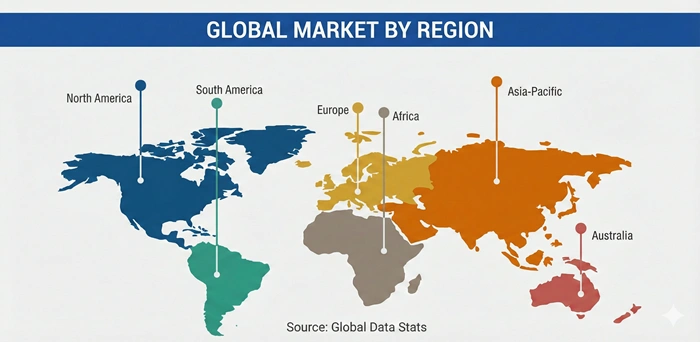
Asia Pacific dominates with approximately 60% of the global epoxy resin market share, valued at over USD 7.2 billion in 2025 and growing at 5.5% CAGR through 2033. The region benefits from vertically integrated supply chains, cost-competitive manufacturing operations, massive infrastructure construction programs, and expanding electronics, automotive, and renewable energy sectors. China alone accounts for nearly half of global epoxy resin production and consumption as the country's manufacturing economy, construction boom, and wind energy expansion create enormous demand across multiple end-use sectors. India and Southeast Asian countries show particularly strong growth rates as infrastructure development accelerates, manufacturing capacity increases, and regional supply chains mature serving domestic markets and export opportunities throughout Asia Pacific and global markets.
Major regional producers including Kukdo Chemical, Nan Ya Plastics, Chang Chun Plastics, and Chinese manufacturers including Bluestar Wuxi Petrochemical dominate through large-scale production facilities achieving economies of scale and vertical integration from raw materials through finished resins. These companies serve domestic markets while also exporting to Europe, North America, and other regions where demand exceeds local production capacity. Regional advantages include lower labor costs, proximity to downstream manufacturing customers, favorable regulatory environments, and government support for chemical industry development through industrial parks and infrastructure investment. The electronics sector concentrated in East Asia drives specialty epoxy demand for semiconductor encapsulation, printed circuit boards, and electronic component manufacturing requiring high-purity resins meeting stringent performance specifications.
North America
Mature Market Emphasizing Technology Leadership and Specialty Applications
North America represents approximately 18% of global market share, growing at 4.6% CAGR as aerospace, wind energy, and infrastructure applications drive demand for high-performance specialty resins. The region emphasizes technology innovation, quality assurance, and premium applications including aerospace composites, electronics encapsulation, and industrial coatings commanding higher prices than commodity coating resins dominating Asian markets. United States leads regional production and consumption through established chemical industry infrastructure, proximity to major end-use markets, and technology leadership in advanced applications. The shale gas revolution providing cost-competitive ethylene feedstock for epichlorohydrin production helps maintain North American manufacturing competitiveness despite higher labor costs compared to Asian producers.
Leading North American operations of global producers including Olin Corporation, Hexion, Huntsman, and Dow Epoxy serve regional markets through domestic manufacturing, technical service capabilities, and specialized product portfolios. The region's competitive advantages lie in innovation, application development expertise, and serving demanding customers requiring consistent quality, technical support, and rapid response to specification changes. Aerospace and wind energy applications concentrated in North America drive premium epoxy demand for structural composites where material qualification processes and long-term performance validation create barriers for new suppliers. Infrastructure investment including bridge rehabilitation, water systems, and renewable energy installations support steady demand for protective coating systems and adhesives.
Top Key Players
-
Olin Corporation (United States)
-
Hexion Inc. (United States)
-
Huntsman Corporation (United States)
-
BASF SE (Germany)
-
Dow Inc. (United States)
-
Kukdo Chemical Co., Ltd. (South Korea)
-
Nan Ya Plastics Corporation (Taiwan)
-
Chang Chun Plastics Co., Ltd. (Taiwan)
-
Aditya Birla Chemicals (India)
-
Bluestar Wuxi Petrochemical Co., Ltd. (China)
-
Sicomin Epoxy Systems (France)
-
Spolchemie (Czech Republic)
-
Cardolite Corporation (United States)
-
DIC Corporation (Japan)
Recent Developments
-
Olin Corporation (2024) – Announced USD 150 million investment expanding epoxy resin production capacity at McIntosh, Alabama facility by 20% targeting growing wind energy composite and coating applications with enhanced product lines offering improved sustainability profiles
-
Hexion Inc. (2025) – Completed development and commercial launch of bio-based epoxy resin line incorporating 50% renewable content from plant-derived materials while maintaining performance characteristics comparable to petroleum-based products for coating applications
-
Huntsman Corporation (2024) – Acquired specialty epoxy technology company strengthening position in aerospace composites and high-performance applications with advanced formulations offering improved processing characteristics and mechanical properties for demanding structural applications
-
BASF (2025) – Opened new epoxy resin research and development center in Shanghai focusing on application development for Asian electronics, automotive, and wind energy customers with localized technical support capabilities and faster innovation cycles
-
Kukdo Chemical (2024) – Invested USD 200 million in new production facility in Southeast Asia increasing capacity for coating resins serving growing infrastructure and industrial maintenance markets throughout Asia Pacific region with improved logistics and customer proximity
Market Trends
Sustainability and Performance Optimization Reshaping Product Development Strategies
The epoxy resin market experiences fundamental shifts toward sustainable formulations as manufacturers invest heavily in bio-based raw materials, reduced VOC emissions, and circular economy approaches addressing environmental concerns. Companies develop resins incorporating renewable content from plant oils, lignin, and bio-derived epichlorohydrin reducing dependence on petroleum feedstocks while maintaining performance characteristics customers require. Water-based and powder epoxy systems gain market share in coating applications eliminating organic solvents that contribute to air pollution and worker exposure issues. Chemical recycling technologies emerge enabling recovery and reprocessing of cured epoxy composites from wind turbine blades and other end-of-life products historically destined for landfills. These sustainability initiatives respond to regulatory pressure, customer demands, and corporate environmental commitments driving industry toward reduced carbon footprint and improved lifecycle environmental performance.
Advanced formulation technologies incorporating nanoparticles, toughening agents, and hybrid organic-inorganic structures enable performance improvements addressing specific application challenges. Manufacturers develop specialized products with enhanced properties including improved toughness, thermal conductivity, flame resistance, or electrical conductivity serving demanding applications in electronics, aerospace, and automotive sectors. Digital technologies including AI-powered formulation optimization, online technical support platforms, and augmented reality application training transform how customers select products and receive technical assistance. Supply chain digitalization improves order processing, inventory management, and quality traceability supporting just-in-time delivery requirements from manufacturing customers minimizing working capital tied up in raw material inventories.
Segments Covered in the Report
By Raw Material
-
DGBEA (Bisphenol A and ECH)
-
DGBEF (Bisphenol F and ECH)
-
Novolac (Formaldehyde and Phenols)
-
Aliphatic (Aliphatic Alcohols)
-
Glycidylamine
-
Others
By Application
-
Paints & Coatings
-
Adhesives & Sealants
-
Composites
-
Electronics Encapsulation
-
Others
By Technology
-
Solvent-Based
-
Water-Based
-
Powder-Based
-
High Solids
By End-Use Industry
-
Construction
-
Automotive
-
Aerospace
-
Wind Energy
-
Electronics
-
Marine
-
Consumer Goods
-
Others
By Region
-
North America
-
Europe
-
Asia Pacific
-
Latin America
-
Middle East & Africa
Frequently Asked Questions
Question 1: What drives growth in the epoxy resin market globally?
Answer: The epoxy resin market experiences robust growth from infrastructure development requiring protective coatings and growing wind energy sector demanding composite materials for turbine blade manufacturing. Electronics industry expansion and automotive lightweighting trends also contribute significantly to sustained market growth across regions.
Question 2: Which region leads the epoxy resin market currently?
Answer: Asia Pacific dominates the epoxy resin market with approximately 60% share backed by massive manufacturing capacity and infrastructure investment programs. The region benefits from cost-competitive production facilities and growing consumption across construction, electronics, and automotive sectors driving both supply and demand leadership.
Question 3: How do sustainability trends impact the epoxy resin market?
Answer: Sustainability initiatives significantly influence the epoxy resin market through development of bio-based formulations and water-based systems reducing environmental impact. Manufacturers invest in renewable feedstocks and chemical recycling technologies addressing customer demands for lower carbon footprint materials while maintaining performance standards.
Question 4: What applications consume the most epoxy resin market production?
Answer: Paints and coatings applications lead the epoxy resin market representing approximately 42% of consumption for infrastructure protection and industrial maintenance. Composites for wind energy and aerospace along with electronics encapsulation follow as major end-use categories consuming substantial volumes globally.
Question 5: Which segment shows fastest growth in the epoxy resin market?
Answer: Composites applications demonstrate the strongest growth trajectory in the epoxy resin market with projected CAGR approaching 5.8% through 2033. Wind turbine blade manufacturing and aerospace structural components drive this segment expansion requiring high-performance fiber-reinforced polymer structures.