
Epilepsy Drug Market Overview
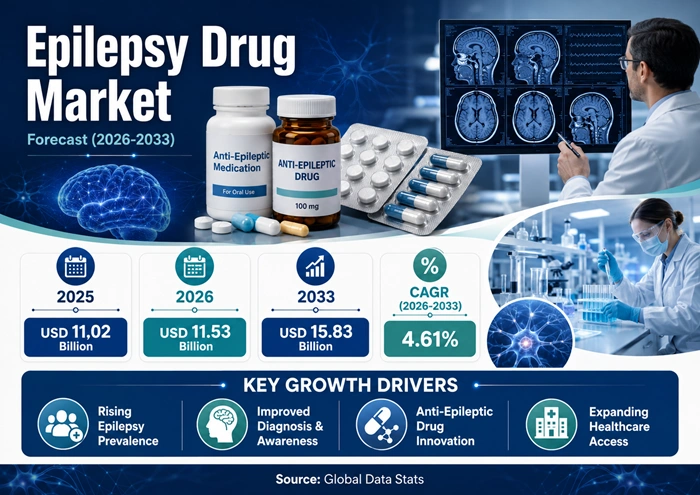
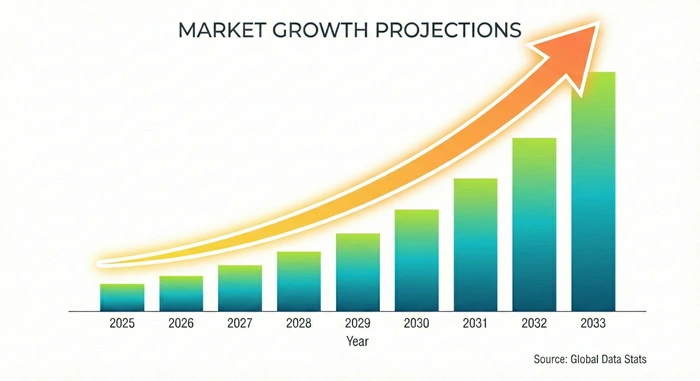
The global epilepsy drug market size is valued at USD 11.02 billion in 2025 and is predicted to increase from USD 11.53 billion in 2026 to approximately USD 15.83 billion by 2033, growing at a CAGR of 4.61% from 2026 to 2033.
This steady growth reflects the rising global prevalence of epilepsy alongside continued pharmaceutical innovation aimed at delivering better seizure control with fewer side effects for patients living with this chronic neurological disorder. As newer generation anti-epileptic drugs gain wider physician acceptance and healthcare systems expand access to neurology care, demand for both branded and generic epilepsy treatments continues expanding across hospital pharmacies, retail pharmacies, and specialty neurology clinics worldwide.
AI Impact on the Epilepsy Drug Industry
Artificial Intelligence Is Enhancing Seizure Prediction Modeling, Accelerating Drug Discovery Pipelines, and Strengthening Patient Adherence Monitoring Across the Epilepsy Drug Landscape — Fundamentally Changing How Neurologists Manage Treatment for Patients With Seizure Disorders
Artificial intelligence has become an increasingly valuable tool for seizure prediction modeling, with machine learning algorithms now capable of analyzing electroencephalogram data and wearable sensor readings to identify patterns that precede seizure onset, giving both patients and physicians earlier warning than traditional monitoring methods ever allowed. This predictive capability matters considerably in an industry where unpredictable seizures significantly affect patient quality of life, and AI-assisted monitoring tools are helping neurologists fine-tune medication dosing based on more precise seizure frequency data. Companies building predictive analytics directly into their patient support programs are increasingly differentiating themselves through measurably improved treatment adjustment accuracy.
Beyond seizure prediction, AI is also accelerating drug discovery pipelines, with computational modeling tools now able to screen thousands of potential anti-epileptic compounds far faster than traditional laboratory methods while flagging promising candidates for further development. This capability has proven valuable for pharmaceutical companies working to identify next-generation treatments capable of controlling drug-resistant seizure types that existing therapies fail to adequately manage. As these AI-driven discovery and monitoring tools continue maturing, they are becoming an increasingly important factor shaping innovation across the broader epilepsy drug market.
Growth Factors
Rising Global Epilepsy Prevalence and Growing Adoption of Third-Generation Anti-Epileptic Drugs Continue Driving Sustained Demand
The most significant growth factor supporting the epilepsy drug market is the steadily rising global prevalence of epilepsy, as improved diagnostic awareness and expanding access to neurology care across both developed and emerging regions bring more patients into treatment who previously went undiagnosed or untreated. With aging populations in many countries also contributing to higher epilepsy incidence rates, this prevalence-driven demand has become an increasingly important growth driver for pharmaceutical companies offering a broad range of anti-epileptic therapies.
A second important growth factor is the growing physician preference for third-generation anti-epileptic drugs, as newer therapies like levetiracetam and lacosamide offer improved seizure control, fewer drug interactions, and better tolerability compared to older first-generation medications. This growing clinical preference, combined with rising awareness campaigns encouraging earlier epilepsy diagnosis and treatment initiation, has broadened the addressable market for epilepsy drug therapies considerably. This combination of rising prevalence and growing preference for newer treatment options continues to strengthen demand across the epilepsy drug market.
Market Outlook
Expanding Drug-Resistant Epilepsy Research and Growing Emerging Market Healthcare Access Point Toward Sustained Growth Through 2033
Looking ahead through the forecast period, the epilepsy drug industry is expected to benefit substantially from continued research investment into treatment-resistant epilepsy, as a meaningful share of patients continue experiencing inadequate seizure control with existing therapies and require novel mechanisms of action to achieve better outcomes. This unmet-need-focused shift is likely to reshape pharmaceutical pipeline priorities considerably as more companies invest in differentiated treatment approaches beyond incremental improvements to existing drug classes.
At the same time, expanding healthcare access and neurology infrastructure across emerging markets is expected to create substantial new demand, as growing government health investment across Asia Pacific and Latin America brings modern epilepsy treatment within reach of patients who previously had limited access to specialist care. Companies that can deliver both proven clinical efficacy and affordable generic alternatives are increasingly well positioned to capture this growth. Providers combining strong research pipelines with broad geographic distribution capability are likely to lead growth within the broader epilepsy drug market through 2033.
Expert Speaks
-
"Our continued investment in next-generation anti-epileptic therapies reflects our commitment to giving patients with treatment-resistant seizures better options for achieving lasting control." — CEO, UCB S.A.
-
"As epilepsy diagnosis rates continue rising globally, our neurology portfolio remains focused on delivering the seizure control and tolerability profile patients need." — CEO, Novartis AG
-
"We remain dedicated to advancing research into drug-resistant epilepsy and expanding access to effective anti-epileptic treatments across underserved patient populations worldwide." — CEO, Pfizer Inc
Key Report Takeaways
-
North America leads the global epilepsy drug market, holding approximately 39% market share in 2025, supported by advanced healthcare infrastructure and strong physician awareness of newer treatment options
-
Asia Pacific is the fastest-growing region, projected to expand at a CAGR near 7.2% through 2033, driven by rising epilepsy diagnosis rates and expanding neurology healthcare access across China and India
-
Adult patients represent the dominant end-user segment, accounting for roughly 62% share, given the higher overall prevalence of epilepsy diagnosis within this age group
-
Third-generation anti-epileptic drugs contribute the most to overall demand, reflecting strong physician preference for their improved safety and efficacy profile
-
Retail pharmacy distribution remains the most widely used channel, valued for its accessibility and convenience for long-term chronic medication management
-
Second-generation anti-epileptic drug segments will grow the fastest among treatment categories, holding close to 24% market share with a CAGR near 7.7% through the forecast period, driven by their improved tolerability compared to first-generation therapies
Market Scope
| Report Coverage | Details |
|---|---|
| Market Size by 2033 | USD 15.83 Billion |
| Market Size by 2025 | USD 11.02 Billion |
| Market Size by 2026 | USD 11.53 Billion |
| Market Growth Rate from 2026 to 2033 | CAGR of 4.61% |
| Dominating Region | North America |
| Fastest Growing Region | Asia Pacific |
| Base Year | 2025 |
| Forecast Period | 2026 to 2033 |
| Segments Covered | Treatment, Distribution Channel, Patient Age Group, Region |
| Regions Covered | North America, Europe, Asia Pacific, Latin America, Middle East & Africa |
Market Dynamics
Drivers Impact Analysis
Rising Global Epilepsy Prevalence and Growing Preference for Third-Generation Therapies Remain the Two Strongest Forces Behind Market Momentum
| Driver | (≈) % Impact on CAGR Forecast | Geographic Relevance | Impact Timeline |
|---|---|---|---|
| Rising global prevalence of epilepsy and improved diagnostic awareness | ~34% | Global | Short to long-term |
| Growing physician preference for third-generation anti-epileptic drugs | ~27% | North America, Europe | Medium-term |
| Expanding neurology healthcare infrastructure in emerging markets | ~25% | Asia Pacific, Latin America | Medium to long-term |
| Rising awareness campaigns encouraging earlier diagnosis and treatment | ~14% | Global | Short to medium-term |
Rising global prevalence of epilepsy continues to serve as the primary engine behind sustained growth in the epilepsy drug market, as improved diagnostic awareness and expanding access to neurology specialists bring more previously undiagnosed patients into active treatment across both developed and emerging regions. This prevalence-driven momentum has translated directly into rising prescription volumes among neurologists and general physicians alike.
Growing physician preference for third-generation anti-epileptic drugs represents the second major driver, as newer therapies deliver improved seizure control with fewer drug interactions compared to older treatment options. This clinical preference shift, combined with expanding neurology healthcare infrastructure across emerging markets, continues reinforcing steady momentum across the broader epilepsy drug market.
Restraints Impact Analysis
Patent Expirations and High Treatment Costs for Newer Therapies Continue to Moderate Broader Expansion
| Restraint | (≈) % Impact on CAGR Forecast | Geographic Relevance | Impact Timeline |
|---|---|---|---|
| Patent expirations exposing branded drugs to generic competition | ~35% | North America, Europe | Short to medium-term |
| High cost of newer branded anti-epileptic therapies limiting broad access | ~28% | Global, particularly emerging markets | Medium-term |
| Side effects and tolerability concerns associated with long-term drug use | ~23% | Global | Medium to long-term |
| Limited neurology specialist availability in rural and underserved regions | ~14% | Asia Pacific, Africa, Latin America | Short to medium-term |
The most persistent restraint facing the epilepsy drug market is patent expiration on several widely prescribed branded medications, which exposes established manufacturers to generic competition that erodes pricing power and revenue even as overall treatment volumes continue growing. This competitive pressure remains particularly pronounced for pharmaceutical companies dependent on a small number of blockbuster branded therapies.
High treatment costs associated with newer branded anti-epileptic drugs represent a second significant restraint, since many patients in lower-income regions struggle to afford advanced therapies despite their improved efficacy and tolerability advantages over older generic alternatives. Combined with limited neurology specialist availability across rural and underserved areas, these restraints continue moderating how quickly broader treatment access expands across the global epilepsy drug market.
Opportunities Impact Analysis
Drug-Resistant Epilepsy Research and Expanding Emerging Market Healthcare Access Represent the Clearest Paths to Growth
| Opportunity | (≈) % Impact on CAGR Forecast | Geographic Relevance | Impact Timeline |
|---|---|---|---|
| Expanding research investment into treatment-resistant epilepsy therapies | ~37% | North America, Europe | Medium to long-term |
| Growing neurology healthcare access investment across emerging markets | ~34% | Asia Pacific, Latin America | Medium-term |
| Rising demand for improved-tolerability second-generation therapies | ~29% | Global | Short to medium-term |
Expanding research investment into treatment-resistant epilepsy represents one of the most substantial opportunities within the epilepsy drug market, as pharmaceutical companies pursuing novel mechanisms of action stand to benefit significantly from addressing the meaningful share of patients who fail to achieve adequate seizure control with existing therapies. This unmet-need-driven differentiation is expected to meaningfully reshape competitive positioning among leading pharmaceutical companies over the coming years.
Growing neurology healthcare access investment across emerging markets presents a second substantial opportunity, as expanding government health spending across Asia Pacific and Latin America brings modern epilepsy treatment within reach of previously underserved patient populations. Rising demand for improved-tolerability second-generation therapies further broadens the opportunity landscape, particularly for companies able to offer both efficacy and affordability. Companies pursuing these parallel opportunities are well positioned to capture meaningful growth within the broader epilepsy drug market through the forecast period.
Segment Analysis
By Treatment: Third-Generation Anti-Epileptic Drugs
Third-Generation Anti-Epileptic Drugs Continue to Anchor the Treatment Landscape, Reflecting Strong Physician Preference for Improved Safety
Third-generation anti-epileptic drugs hold the largest share within the treatment segment of the epilepsy drug market, accounting for approximately 40% of total segment revenue in 2025. This dominance reflects strong physician preference for therapies like levetiracetam and lacosamide, which offer broader-spectrum seizure control, fewer drug interactions, and more convenient once-daily dosing compared to earlier drug generations. In markets like the United States and Germany, neurologists increasingly favor these newer therapies as first-line treatment options for both newly diagnosed patients and those switching from less tolerable older medications. Leading suppliers such as UCB, Pfizer, and Eisai continue to dominate this segment through expanded product portfolios and continuous formulation improvements.
Growth within this segment remains particularly strong in North America, where advanced healthcare infrastructure and strong physician awareness of newer treatment options continue generating sustained demand across thousands of active neurology practices. The region's combination of favorable reimbursement policies and widespread specialist access has helped third-generation anti-epileptic drugs maintain their leading position despite growing generic competition. As global epilepsy diagnosis rates continue rising, third-generation therapies are expected to remain the dominant category within the broader epilepsy drug market throughout the forecast period.
By Treatment: Second-Generation Anti-Epileptic Drugs
Second-Generation Anti-Epileptic Drugs Represent the Fastest-Growing Segment, Reflecting Rising Demand for Improved Tolerability
Second-generation anti-epileptic drugs represent the fastest-growing treatment segment within the epilepsy drug market, holding close to 24% share in 2025 with a projected CAGR near 7.7% through the forecast period as physicians increasingly prescribe these therapies for their enhanced efficacy and safety profile compared to older first-generation medications. Unlike first-generation drugs that often carry more significant side effect burdens and drug interaction risks, second-generation therapies deliver better seizure control while minimizing adverse effects that previously limited patient compliance. This improved tolerability advantage has generated substantial interest among neurologists treating patients who previously discontinued older medications due to side effects.
Growth in this segment remains especially strong in Europe, where a dense concentration of pharmaceutical research organizations and strong regulatory support for newer epilepsy therapies continue driving strong demand for providers capable of delivering these improved treatment options reliably. Companies like Sanofi and GlaxoSmithKline have expanded their second-generation drug portfolios significantly to serve this growing demand, often incorporating extended-release formulations to further improve patient adherence. As demand for better-tolerated treatment options continues rising globally, this segment is expected to remain the fastest-growing category within the broader epilepsy drug market.
Regional Insights
North America
Advanced Healthcare Infrastructure and Strong Physician Awareness Keep North America Firmly in the Lead
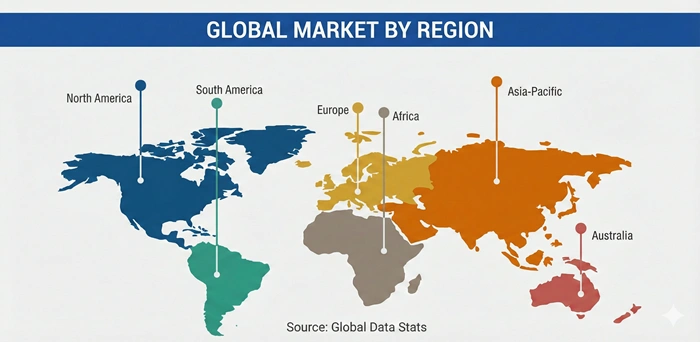
North America commands the leading position in the global epilepsy drug market, holding approximately 39% share in 2025, supported by advanced healthcare infrastructure, strong physician awareness of newer treatment options, and a dense concentration of leading pharmaceutical companies. The United States drives the overwhelming majority of regional demand, backed by favorable reimbursement policies and widespread specialist access that encourage broad adoption of both branded and generic anti-epileptic therapies. Companies with strong regional presence include Pfizer, UCB, and Jazz Pharmaceuticals, each maintaining deep relationships with major neurology practices across the country.
Canada also contributes meaningfully to regional demand, supported by growing epilepsy diagnosis rates and expanding public healthcare coverage for newer anti-epileptic medications. The region's combination of established pharmaceutical infrastructure, deep physician awareness, and continuous drug innovation ensures North America's leadership position within the epilepsy drug market remains firmly intact through the remainder of the forecast period.
Asia Pacific
Rising Epilepsy Diagnosis Rates and Expanding Neurology Healthcare Access Position Asia Pacific as the Fastest-Growing Region
Asia Pacific is projected to register the fastest CAGR within the global epilepsy drug market through 2033, expanding at a rate near 7.2% as rising epilepsy diagnosis rates and expanding neurology healthcare access create substantial new demand across the region. China and India lead much of this regional growth, supported by rapidly growing government healthcare investment and expanding awareness campaigns that bring more previously undiagnosed patients into active treatment across both urban and rural areas. Regional and international pharmaceutical companies alike have expanded their presence to serve this growing demand, often establishing local manufacturing capacity to improve medication affordability and accessibility.
Japan and South Korea contribute further depth to regional growth, both bringing established healthcare infrastructure and growing investment in newer anti-epileptic therapies aimed at improving patient outcomes. Growing government investment in neurology healthcare access across several Asia Pacific markets continues to accelerate epilepsy drug adoption among expanding patient populations alike. This combination of rising diagnosis rates, expanding healthcare access, and growing treatment awareness positions Asia Pacific as the clear growth leader within the broader epilepsy drug market through the forecast period.
Customization Available for This Report
Region-Specific and Country-Specific Versions of This Report Are Available to Deliver a Sharper, More Localized View of Market Dynamics
This report can be tailored on a region-by-region and country-by-country basis, providing localized market sizing, competitive mapping, and treatment adoption trend analysis that a global overview alone cannot fully capture.
Clients seeking a more focused breakdown can request a customized version covering any of the following regions and countries, complete with demand forecasting, competitor landscape review, and adoption trend analysis tied specifically to the epilepsy drug keyword focus:
North America
-
U.S. — Detailed review of treatment adoption and reimbursement policy trends
-
Canada — Coverage of public healthcare coverage and diagnosis rate patterns
-
Mexico — Analysis of emerging healthcare access and treatment investment trends
Europe
-
U.K. — Review of neurology healthcare access and treatment adoption trends
-
Germany — Coverage of pharmaceutical research investment among leading providers
-
France — Insights into anti-epileptic drug adoption and prescribing patterns
-
Italy — Analysis of regional epilepsy treatment investment trends
-
Rest of Europe — Country-level view of emerging demand across Eastern Europe and the Nordics
Asia Pacific
-
China — Coverage of expanding healthcare investment and diagnosis rate growth
-
India — Analysis of growing government healthcare access and treatment demand
-
Japan — Review of established healthcare infrastructure and adoption trends
-
South Korea — Assessment of newer therapy investment and adoption trends
-
Australia — Insights into neurology healthcare access and adoption trends
-
Rest of Asia Pacific — Country-level breakdown covering Thailand, Vietnam, and Indonesia
Latin America
-
Brazil — Coverage of expanding healthcare access and treatment adoption
-
Argentina — Analysis of early-stage neurology healthcare modernization trends
-
Rest of Latin America — Country-level sizing across Colombia, Peru, and Chile
Middle East & Africa
-
UAE — Review of healthcare investment and treatment adoption trends
-
Saudi Arabia — Coverage of expanding healthcare and neurology modernization initiatives
-
Rest of MEA — Country-level view of African epilepsy treatment access expansion
Top Key Players
-
UCB S.A. (Belgium)
-
Sanofi (France)
-
Pfizer Inc (United States)
-
Otsuka America Pharmaceutical Inc (United States)
-
Eisai Co Ltd (Japan)
-
Abbott Laboratories Inc (United States)
-
Novartis AG (Switzerland)
-
GlaxoSmithKline plc (United Kingdom)
-
Sunovion Pharmaceuticals Inc (United States)
-
Jazz Pharmaceuticals plc (Ireland)
-
Neurelis Inc (United States)
-
SK Biopharmaceuticals Co Ltd (South Korea)
Recent Developments
-
In 2025, Neurelis shared study design insights for the Stellina study evaluating VALTOCO diazepam nasal spray for treating seizure clusters in younger epilepsy patients
-
In 2025, UCB advanced its epilepsy drug pipeline with continued clinical development targeting treatment-resistant seizure disorders
-
In 2026, Jazz Pharmaceuticals expanded its neurology portfolio with enhanced formulation improvements aimed at improving patient adherence
-
In 2025, SK Biopharmaceuticals strengthened its anti-epileptic drug distribution network across expanding international markets
-
In 2025, Eisai broadened its epilepsy treatment research initiatives with continued investment in next-generation anti-epileptic compound development
Market Trends
Third-Generation Drug Expansion and Personalized Treatment Approaches Are Reshaping Prescribing Patterns
One of the clearest trends shaping the epilepsy drug market is the continued shift toward third-generation anti-epileptic therapies, as neurologists increasingly favor these newer treatments for their improved tolerability and broader-spectrum seizure control compared to older drug classes. Pharmaceutical companies are investing heavily in expanding these treatment portfolios, recognizing that improved patient compliance has become an increasingly important competitive differentiator as prescribers prioritize long-term treatment adherence.
A second significant trend is the growing move toward personalized epilepsy treatment approaches, as physicians increasingly use genetic and seizure pattern data to select therapies more precisely suited to individual patient needs rather than relying on generalized treatment protocols. This trend toward tailored, data-informed prescribing is particularly meaningful for patients with treatment-resistant epilepsy who have not responded well to standard first-line therapies, continuing to support steady expansion across the broader epilepsy drug market as personalized medicine approaches continue advancing.
Segments Covered in the Report
By Treatment
-
First Generation Anti-Epileptic Drugs
-
Second Generation Anti-Epileptic Drugs
-
Third Generation Anti-Epileptic Drugs
By Distribution Channel
-
Hospital Pharmacies
-
Retail Pharmacies
-
Online Pharmacies
By Patient Age Group
-
Pediatric Patients
-
Adult Patients
By Region
-
North America (U.S., Canada, Mexico)
-
Europe (U.K., Germany, France, Italy, Rest of Europe)
-
Asia Pacific (China, India, Japan, South Korea, Australia, Rest of Asia Pacific)
-
Latin America (Brazil, Argentina, Rest of Latin America)
-
Middle East & Africa (UAE, Saudi Arabia, Rest of MEA)
❝ Built for Every Level — From Startups to Industry Giants ❞
Here Is Exactly How This Report Works for You
-
For tier 1 companies, investors, and established market leaders, this report delivers detailed competitor revenue analysis, treatment pipeline trend mapping, and geopolitical risk context that support confident decisions around portfolio expansion, pricing strategy, and long-term positioning within the epilepsy drug space
-
For tier 2 and tier 3 companies, startups, and mid-sized providers, this report highlights the most commercially promising treatment categories and underserved regional opportunities, giving you a practical framework to compete against larger established players without overextending limited resources
-
For every decision maker across the value chain, this report explains exactly how patent expiration trends, generic competition, and competitor pipeline launches are shaping market direction through 2033, equipping you to plan investment and go-to-market decisions with genuine confidence
Frequently Asked Questions
Question 1: How large is the global epilepsy drug market expected to become by 2033?
Answer: The global epilepsy drug market was valued at USD 11.02 billion in 2025 and is projected to reach USD 15.83 billion by 2033. This growth is driven largely by rising epilepsy prevalence and growing preference for third-generation therapies.
Question 2: What is driving growth in the epilepsy drug market right now?
Answer: Growth in the epilepsy drug market is being driven by rising global epilepsy prevalence alongside growing physician preference for newer, better-tolerated therapies. Expanding neurology healthcare access across emerging markets is further reinforcing this expansion.
Question 3: Which region currently dominates the epilepsy drug market?
Answer: North America currently leads the epilepsy drug market with roughly 39% share, supported by advanced healthcare infrastructure. Asia Pacific is growing the fastest, driven by rising diagnosis rates and expanding healthcare access.
Question 4: Which treatment segment generates the most revenue in the epilepsy drug market?
Answer: Third-generation anti-epileptic drugs generate the largest share of revenue in the epilepsy drug market, reflecting strong physician preference for improved safety profiles. Second-generation drugs remain the fastest-growing treatment segment.
Question 5: Who are the leading companies competing in the epilepsy drug market?
Answer: Leading companies in the epilepsy drug market include UCB, Sanofi, Pfizer, Eisai, and Jazz Pharmaceuticals. These companies compete through continuous innovation in treatment-resistant epilepsy research and improved formulations.