
Enterprise Artificial Intelligence (AI) Market Overview
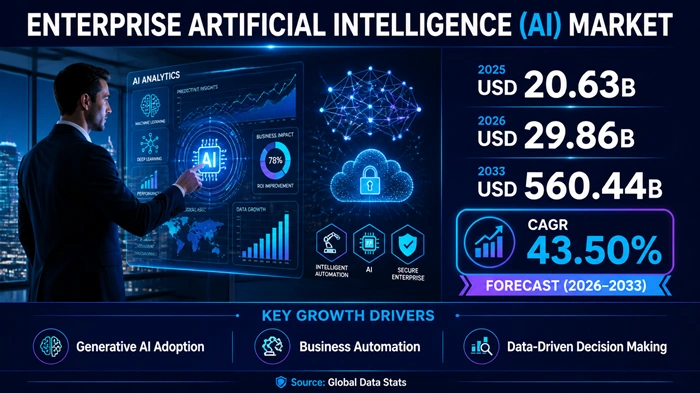
The global enterprise artificial intelligence market size is valued at USD 20.63 billion in 2025 and is predicted to increase from USD 29.86 billion in 2026 to approximately USD 560.44 billion by 2033, growing at a CAGR of 43.50% from 2026 to 2033.
Enterprise artificial intelligence represents the strategic integration of advanced AI technologies including machine learning, natural language processing, computer vision, and decision intelligence into core business operations to automate processes, enhance decision-making, and drive competitive advantages. Organizations across banking, healthcare, manufacturing, retail, and telecommunications are deploying AI-powered solutions to analyze massive datasets, predict business outcomes, optimize workflows, and deliver personalized customer experiences at scale. The technology enables computer systems to perform tasks that traditionally required human intelligence including speech recognition, visual perception, decision-making, and language translation, fundamentally transforming how enterprises operate in the digital economy.
AI Impact on the Enterprise Artificial Intelligence Industry
Reshaping Business Models and Accelerating Digital Transformation Across Global Industries
Artificial intelligence is fundamentally revolutionizing the enterprise artificial intelligence industry by creating a self-reinforcing cycle where AI technologies drive their own advancement and adoption across organizational functions. Modern foundation models and large language models are democratizing access to sophisticated AI capabilities, enabling enterprises to deploy conversational chatbots, intelligent document processing, predictive analytics, and automated decision systems without requiring extensive data science expertise. Organizations are embedding AI across customer service through virtual assistants that processed over 1 billion enterprise interactions in 2024, software engineering through code-generation tools that accelerate development cycles, and strategic planning through predictive models that forecast market trends and operational outcomes. The shift from rule-based automation to learning systems that adapt based on data patterns represents a fundamental transformation in how enterprises approach problem-solving and innovation.
The integration of generative AI into enterprise workflows has introduced unprecedented capabilities for content creation, knowledge synthesis, and decision support that extend beyond traditional automation boundaries. AI systems now handle unstructured data including emails, contracts, audio recordings, and video content, enabling new applications such as automated contract review, clinical documentation, sentiment analysis, and real-time translation across global operations. Leading technology companies report that their AI platforms analyze trillions of customer data points weekly, powering predictive lead scoring, churn prevention, demand sensing across thousands of product SKUs, and anomaly detection from millions of IoT sensor signals. This massive-scale data processing capability, combined with cloud-based AI-as-a-Service platforms that eliminate infrastructure barriers, is accelerating adoption across enterprises of all sizes and democratizing access to advanced AI capabilities that were previously available only to technology giants with substantial resources.
Growth Factors
Operational Efficiency Demands and Data Explosion Driving Unprecedented Adoption
The enterprise artificial intelligence market is experiencing explosive growth driven by the critical need for automation to enhance operational efficiency and reduce labor costs across business functions. Enterprises are redeploying human resources from repetitive tasks toward strategic initiatives by embedding AI into customer support, software development, financial operations, and supply chain management. Organizations implementing AI-powered automation report labor savings that strengthen business cases for GPU infrastructure and inference clusters underpinning large language models, with focus shifting from pure cost reduction to revenue enablement as AI systems transition from recommending actions to executing decisions autonomously. The growing demand for AI-based solutions to improve customer satisfaction, provide better organizational management, and analyze complex datasets is compelling enterprises to invest billions annually in AI technologies that deliver tangible competitive advantages.
The exponential growth of enterprise data represents another fundamental driver, with global data creation tracking toward 175 zettabytes in 2025, compelling organizations to adopt AI systems capable of classifying, extracting insights, and acting on petabyte-scale repositories. Retailers leverage real-time demand sensing across thousands of SKUs, manufacturers detect equipment anomalies from millions of IoT sensor signals, and financial institutions analyze transaction patterns to prevent fraud, all requiring machine learning models that scale horizontally and process high-dimensional inputs beyond classic business intelligence capabilities. Technology platforms report analyzing over 1 trillion customer data points weekly, demonstrating the massive scale at which AI operates across modern enterprises. Cloud-based AI-as-a-Service platforms eliminate capital outlays for on-premises GPU clusters while providing pay-as-you-go access to continually updated foundation models, with major cloud providers reporting 50% year-over-year growth as enterprises embed generative AI into customer-facing workflows.
Market Outlook
Sustained Expansion Across All Sectors as AI Becomes Mission-Critical Infrastructure
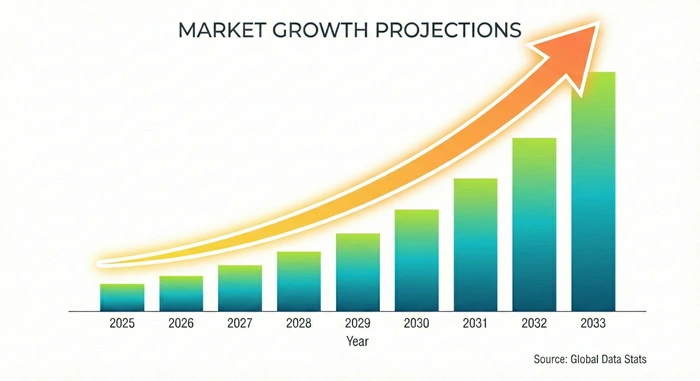
The enterprise artificial intelligence market demonstrates exceptional growth prospects through 2033, with market valuations projected to increase more than 27-fold from current levels as AI transitions from experimental projects to core enterprise infrastructure. North America dominates the global market landscape with the largest regional share of 38.50% in 2024, driven by the concentration of leading AI solution providers including Microsoft, IBM, Amazon, and Google, robust technical infrastructure, substantial venture funding that fuels innovation, and favorable regulatory environments that accelerate time-to-production. The United States leads regional adoption through national AI initiatives that establish development and deployment criteria across industries, while Canada's Vector Institute commercializes academic breakthroughs and Mexico emerges as a nearshore location for AI-enabled business process outsourcing.
Asia Pacific is projected to register the fastest growth rate with a CAGR of 36.60% during the forecast period, propelled by government-backed sovereign AI programs and massive investments in domestic AI development across China, India, Japan, and South Korea. China's USD 50 billion national AI plan finances domestic chip fabrication and foundation model development to reduce reliance on foreign technology, while India's IndiaAI mission allocates USD 1.2 billion to build indigenous infrastructure and train 500,000 AI professionals by 2027. The Asia Pacific Artificial Intelligence Association, founded in 2021 by 663 academics, supports scientists working in AI and related fields through research interactions that advance technology development and application across the region. Europe follows a measured trajectory balancing innovation with governance under the AI Act, with Germany, France, and the United Kingdom investing in public-private research hubs that drive responsible AI development while maintaining competitive positioning.
Expert Speaks
-
Satya Nadella, CEO of Microsoft Corporation: "AI is redefining every software category and every business, including our own. As businesses and countries that adopt AI-powered solutions first will gain a competitive advantage, organizations must focus on building AI capabilities that drive productivity gains, enhance customer experiences, and create new business opportunities across their operations."
-
Arvind Krishna, CEO of IBM Corporation: "We're entering a new era where AI becomes the backbone of enterprise operations. The 68% of CEOs who say AI changes aspects of their business they consider core understand that competitive advantage now depends on who has the most advanced AI capabilities. Success requires not just deploying AI but building trust through governance, explainability, and responsible practices."
-
Andy Jassy, CEO of Amazon Web Services: "The acceleration we're seeing in enterprise AI adoption is unprecedented. Companies recognize that cloud-based AI services provide the scalability and flexibility needed to innovate rapidly without massive upfront investments. Our focus remains on democratizing access to foundation models while giving enterprises the tools to customize AI for their specific needs while retaining intellectual property."
Key Report Takeaways
-
North America leads the enterprise artificial intelligence market with the largest regional share of 38.50% in 2024, driven by the concentration of major AI technology providers including Microsoft, IBM, Amazon, and Google, robust venture funding ecosystems, advanced technical infrastructure, and supportive regulatory frameworks that accelerate innovation and commercial deployment
-
Asia Pacific represents the fastest-growing region for enterprise AI adoption with the highest projected CAGR of 36.60% during the forecast period from 2026 to 2033, experiencing accelerated growth due to government-backed sovereign AI programs, massive public investments in domestic technology development, and rapid digital transformation across manufacturing, financial services, and telecommunications sectors
-
Large enterprises dominate the organization size segment with the largest revenue share of 64% in 2024, as they possess in-house data science talent, ability to amortize AI investments across global operations, complex IT infrastructure that benefits from optimization, and resources to manage sophisticated implementations
-
Cloud deployment captures the dominant position with 62.9% of total revenue in 2024 and projected to grow at the highest CAGR of 36.40%, as enterprises leverage cloud platforms to upgrade systems with AI technologies without capital expenditure, accessing scalability and continuous model updates
-
Natural language processing technology holds the largest share with over 33.40% of revenue in 2024, driven by rising enterprise adoption of virtual support services, conversational AI for customer interactions, and AI-powered document analysis that generates insights from unstructured text
-
IT and telecommunications sector shows exceptional adoption capturing USD 2.98 billion revenue in 2024 and projected to grow at a CAGR of 32.40%, as technology companies increase investments in AI solutions for network optimization, customer experience enhancement, and operational automation while the small and medium enterprises segment is anticipated to experience the fastest CAGR of 38.6% as foundation models embedded in SaaS applications democratize access to enterprise-grade capabilities
Market Scope
| Report Coverage Details | |
|---|---|
| Market Size by 2033 | USD 560.44 Billion |
| Market Size by 2025 | USD 20.63 Billion |
| Market Size by 2026 | USD 29.86 Billion |
| Market Growth Rate from 2026 to 2033 | CAGR of 43.50% |
| Dominating Region | North America |
| Fastest Growing Region | Asia Pacific |
| Base Year | 2025 |
| Forecast Period | 2026 to 2033 |
| Segments Covered | Component, Deployment Type, Technology, Organization Size, End-Use Industry, Functional Area, Region |
| Regions Covered | North America, Europe, Asia Pacific, Latin America, Middle East & Africa |
Market Dynamics
Drivers Impact Analysis
Automation Imperatives and Cloud Infrastructure Advancement Accelerating Market Expansion
| Aspect | Details |
|---|---|
| ≈ % Impact on CAGR Forecast | High Impact (40-45%) |
| Geographic Relevance | Global, with strongest impact in North America, Europe, and Asia Pacific |
| Impact Timeline | Immediate to Long-term (2026-2033) |
The surging demand for automation and AI-based solutions represents the primary driver accelerating enterprise artificial intelligence market growth, as organizations seek to redeploy labor from repetitive tasks toward strategic initiatives that generate competitive advantages. Enterprises are embedding conversational AI into customer support operations, code-generation models into software engineering workflows, and predictive analytics into financial planning processes, achieving productivity gains that fundamentally alter unit economics and enabling business models previously impossible with human-only operations. Organizations implementing AI-powered virtual assistants report processing over 1 billion enterprise customer interactions annually, representing 40% increases from prior years, while foundation models now handle unstructured data including emails, contracts, and audio content that enable new workflows such as automated contract review and clinical documentation.
The proliferation of cloud-based AI-as-a-Service platforms eliminates infrastructure barriers and capital expenditures that previously limited AI adoption to large technology companies with substantial resources. Major cloud providers report 50% year-over-year growth for AI services as enterprises embed generative capabilities into customer-facing workflows, with managed services ensuring version control, security patches, and continuous model retraining without requiring local engineering resources. Cloud deployment provides pay-as-you-go economics that enable small and medium enterprises to access enterprise-grade AI capabilities through pre-trained foundation models embedded in SaaS applications, democratizing technology that was previously exclusive to global conglomerates. The rise of specialized computing hardware including NVIDIA H100 GPUs delivering 30× inference throughput improvements and Google's sixth-generation Trillium TPU achieving 4.7× performance gains enables enterprises to consolidate model-serving infrastructure while reducing cost per operation.
Restraints Impact Analysis
Skills Shortages and Implementation Complexity Creating Adoption Barriers
| Aspect | Details |
|---|---|
| ≈ % Impact on CAGR Forecast | Moderate Impact (15-20%) |
| Geographic Relevance | Global, particularly affecting developing markets and SMEs |
| Impact Timeline | Short to Medium-term (2026-2029) |
A significant restraint limiting enterprise artificial intelligence market growth is the substantial shortage of AI specialists with expertise in deep learning, machine learning, image recognition, and cognitive computing required to implement and manage advanced AI systems. Surveys of enterprise executives reveal that 68% cite talent shortages as the primary barrier to scaling AI initiatives, with demand for data scientists, MLOps engineers, and AI ethicists substantially exceeding supply and inflating salaries while prolonging hiring cycles. Integrating AI technologies with existing enterprise systems requires intensive data processing, comprehensive system knowledge, and specialized skills to faithfully replicate operational workflows, with even minor errors causing system malfunctions that dramatically impact outcomes and business continuity. Only one-third of workers report receiving adequate AI upskilling programs, highlighting misalignment between executive ambitions for AI transformation and workforce readiness to operate intelligent systems effectively.
Cultural resistance and organizational inertia represent additional barriers, as employees remain skeptical of algorithmic recommendations that alter established workflows and create perceived threats to job security. Without comprehensive change-management programs that address workforce concerns, demonstrate value, and provide adequate training, enterprises risk underutilizing expensive AI infrastructure investments and failing to achieve projected returns. The complexity of integrating AI solutions with legacy enterprise systems including ERP, CRM, and proprietary applications creates technical challenges that slow deployment timelines and increase total cost of ownership. Data sovereignty and privacy regulations including Europe's AI Act impose transparency, conformity assessments, and disclosure requirements for high-risk applications, adding compliance overhead that slows deployment while penalties under GDPR can reach 4% of global revenue, elevating regulatory risk particularly for smaller enterprises without dedicated legal and compliance teams.
Opportunities Impact Analysis
Foundation Model Democratization and Industry-Specific Solutions Creating Growth Avenues
| Aspect | Details |
|---|---|
| ≈ % Impact on CAGR Forecast | High Impact (30-35%) |
| Geographic Relevance | Global, with exceptional opportunities in Asia Pacific and Latin America |
| Impact Timeline | Medium to Long-term (2027-2033) |
A major opportunity in the enterprise artificial intelligence market lies in the democratization of AI capabilities through industry-specific foundation models and pre-trained solutions that enable small and medium enterprises to access sophisticated capabilities without building data science teams. Foundation models embedded in SaaS applications eliminate the need for bespoke model development, allowing mid-market firms to match enterprise-grade capabilities through low-code interfaces accessible to non-technical teams, with platforms like Salesforce Einstein and UiPath Automation Cloud illustrating how vendors package AI into user-friendly solutions. This democratization trend narrows technology gaps between global conglomerates and regional competitors, with SMEs leveraging pay-as-you-go inference endpoints to avoid upfront capital expenditure while marketplace-based fine-tuning services enable domain-specific customization.
The surge in AI investment across developing economies including China, India, and Southeast Asian nations creates substantial opportunities as governments promote technology adoption through supportive policies, infrastructure investments, and training initiatives. Increasing investments in AI technologies driven by their capacity to assess data and predict decisions using algorithms assists in improving efficiency across value chains, with numerous startups and established IT firms investing in open-source AI platforms to enhance competitiveness. The expansion of AI into new functional areas including human resources, supply chain optimization, and carbon tracking represents greenfield opportunities, with HR applications projected to experience CAGR of 19.76% as firms automate resume screening, career pathing, and workforce sentiment analysis to reduce time-to-hire and attrition rates. Hybrid and edge deployment models address latency and data residency concerns while maintaining cloud economics, with edge inference growing as autonomous vehicles, industrial robots, and fraud detection systems demand sub-second response times.
Segment Analysis
Cloud Deployment
Scalability and Cost Efficiency Establishing Cloud as Dominant Deployment Model
Cloud deployment captured the dominant position in the enterprise artificial intelligence market by deployment type, accounting for 62.9% of total revenue in 2024 and projected to grow at the highest CAGR of 36.40% throughout the forecast period from 2026 to 2033. The commanding market leadership of cloud-based AI solutions stems from their ability to eliminate capital expenditures for on-premises GPU infrastructure while providing pay-as-you-go access to continually updated foundation models, managed security, and automatic version updates that reduce total cost of ownership. Enterprises leverage cloud platforms to upgrade existing systems with AI-based technologies without investing in infrastructure maintenance, enabling rapid experimentation and deployment across geographically distributed operations. Major cloud providers including Microsoft Azure, Amazon Web Services, and Google Cloud report 50% year-over-year growth for AI services as customers embed generative capabilities into workflows spanning customer service, document processing, and predictive analytics.
Cloud deployment experiences particularly strong adoption across North America and Europe, where robust digital infrastructure, high internet penetration, and mature cloud ecosystems facilitate seamless AI integration. The segment enables organizations to access specialized computing hardware including latest-generation GPUs and TPUs through reservation models that guarantee capacity without physical infrastructure ownership, while hyperscalers handle security patches, compliance certifications, and continuous model retraining on vendor-curated datasets. Leading technology companies including IBM, Microsoft, SAP, and Oracle are expanding cloud-based AI platforms that combine machine learning, natural language processing, and computer vision capabilities into integrated solutions accessible through APIs and low-code interfaces. Small and medium enterprises represent the fastest-growing customer segment for cloud AI, with pre-trained models and SaaS-embedded capabilities enabling mid-market firms to deploy enterprise-grade AI without building data science teams, fundamentally democratizing access to advanced technologies.
Natural Language Processing Technology
Conversational AI and Document Intelligence Driving Technology Leadership
Natural language processing technology dominated the enterprise artificial intelligence market by technology segment, capturing the largest revenue share of over 33.40% in 2024 and anticipated to maintain leadership while growing at a CAGR of 33.40% throughout the projection period. The dominance of NLP technologies reflects their versatility across use cases including virtual assistants, chatbots, sentiment analysis, document processing, contract review, and language translation that directly impact customer experience and operational efficiency. Organizations are increasing investments in NLP solutions driven by capabilities to generate and extract intent from documents in readable, grammatically accurate, and stylistically natural formats while processing unstructured text data that constitutes the majority of enterprise information. Leading AI platforms report processing over 1 billion enterprise customer interactions annually through conversational interfaces, demonstrating the massive scale at which NLP operates across modern businesses.
Natural language processing technology experiences exceptional growth across IT and telecommunications, banking and financial services, and healthcare sectors where document-intensive workflows benefit substantially from AI-powered automation. North America and Europe lead NLP adoption, with enterprises deploying solutions for customer support automation, clinical documentation, legal contract analysis, and regulatory compliance reporting. Companies including Microsoft, IBM, Google, and specialized vendors like OpenAI are advancing large language models that understand context, generate human-quality text, and perform complex reasoning tasks across multiple languages. Computer vision is anticipated to develop at the highest CAGR of more than 36.6% over the forecast period as manufacturing inspection, healthcare diagnostics, autonomous systems, and retail applications expand, while the convergence toward multimodal models that natively handle text, images, and structured data is reducing the need for separate point solutions and streamlining enterprise procurement.
Regional Insights
North America
Technology Leadership and Enterprise Readiness Establishing Regional Dominance
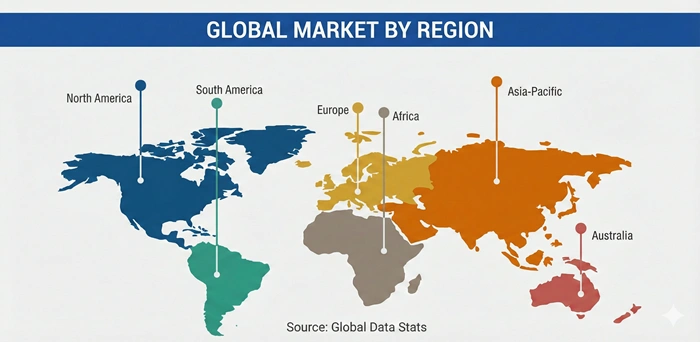
North America holds the dominant position in the enterprise artificial intelligence market with the largest regional share of 38.50% in 2024, valued at approximately USD 7.94 billion in 2025, and projected to maintain leadership throughout the forecast period at a CAGR of 33.0%. The region's commanding market position stems from the concentration of leading AI solution and service providers including Microsoft, IBM, Amazon, Google, and Oracle, combined with advanced technical infrastructure, substantial venture capital funding that accelerates innovation, and regulatory frameworks that support rapid commercialization. The United States leads global enterprise AI adoption through the American AI Initiative launched in 2019, which established federal criteria for AI development and real-world deployment across industries while positioning the nation as the center of AI research and application.
The presence of technology giants investing billions in AI research and development creates a robust ecosystem that drives continuous innovation in foundation models, specialized hardware, and enterprise applications. NVIDIA's data center revenue rose 217% in fiscal 2024 to USD 47.5 billion driven by H100 GPU demand, while Microsoft committed USD 3 billion to expand Azure AI infrastructure across data centers to support growing enterprise workloads. North American enterprises demonstrate high AI readiness, with 72% of respondents identifying the CEO as the primary decision-maker on AI strategy, representing a significant increase from one-third in previous years, while nine out of ten CEOs assert they could speak knowledgeably about how AI impacts their industries. Leading companies across banking, healthcare, manufacturing, and retail sectors are implementing comprehensive AI transformation programs that embed intelligent capabilities across operations, with approximately one-third of CEOs allocating at least 20% of transformation budgets to AI initiatives. Canada contributes through the Vector Institute that commercializes academic breakthroughs, while Mexico emerges as a nearshore location for AI-enabled business process outsourcing that serves North American enterprises.
Asia Pacific
Government-Backed Programs and Digital Transformation Driving Fastest Regional Growth
Asia Pacific is projected to register the fastest growth rate in the enterprise artificial intelligence market with a CAGR of 36.60% during the forecast period from 2026 to 2033, experiencing explosive expansion due to government-backed sovereign AI programs, massive public investments in domestic technology development, and rapid digital transformation across key industries. China leads the region with a USD 50 billion national AI plan that finances domestic semiconductor fabrication, foundation model development, and AI infrastructure to reduce dependence on foreign technology providers while establishing technological sovereignty in critical AI capabilities. The country's aggressive investments enable enterprises to access locally developed AI platforms optimized for Chinese language processing, regulatory compliance, and integration with domestic cloud infrastructure, creating a comprehensive ecosystem supporting rapid adoption.
India represents another high-growth market within Asia Pacific, with the IndiaAI mission allocating USD 1.2 billion to build indigenous AI infrastructure, train 500,000 professionals by 2027, and establish the nation as a global AI leader across software development, business process outsourcing, and technology services. The Asia Pacific Artificial Intelligence Association, founded in 2021 by 663 academics from across the region, supports scientists working in AI and related disciplines through research interactions and knowledge sharing that advances technology development and practical application. Japan subsidizes AI adoption in manufacturing and healthcare sectors to address demographic challenges and maintain industrial competitiveness, while South Korea pursues leadership in AI semiconductors and 5G-enabled applications. Australia leverages AI in mining operations, financial services, and agricultural optimization through advanced digital infrastructure and partnerships with global technology providers. Key companies operating across Asia Pacific including Alibaba, Tencent, Baidu, Wipro, and regional subsidiaries of IBM, Microsoft, and Amazon are forming strategic partnerships to accelerate AI deployment across diverse industry verticals and use cases.
Top Key Players
-
Microsoft Corporation (United States)
-
IBM Corporation (United States)
-
Amazon Web Services Inc. (United States)
-
Google LLC (United States)
-
Oracle Corporation (United States)
-
SAP SE (Germany)
-
C3.ai Inc. (United States)
-
DataRobot Inc. (United States)
-
NVIDIA Corporation (United States)
-
Intel Corporation (United States)
-
Alphabet Inc. (United States)
-
Hewlett Packard Enterprise (United States)
-
Wipro Limited (India)
-
Salesforce Inc. (United States)
-
UiPath Inc. (United States)
Recent Developments
-
Microsoft Corporation (2025): Microsoft announced in December 2025 a USD 3 billion expansion of Azure AI infrastructure across Germany and France to meet European Union data residency requirements, strengthening its position in the European enterprise AI market while addressing regulatory compliance needs and enabling customers to deploy AI solutions that maintain data sovereignty
-
NVIDIA Corporation (2025): NVIDIA introduced the Blackwell GPU architecture in November 2025, claiming 2.5× inference speed improvements over the H100 for large language models, enabling enterprises to consolidate AI infrastructure while reducing operational costs and energy consumption, with major cloud providers and enterprises reserving multi-year capacity commitments
-
Amazon Web Services (2025): AWS unveiled Amazon Bedrock Custom Models in October 2025, allowing enterprises to fine-tune foundation models on proprietary data while retaining model weights and intellectual property, addressing concerns about data privacy and enabling organizations to create domain-specific AI capabilities without sharing sensitive information
-
SAP SE (2025): SAP embedded generative AI capabilities into S/4HANA in September 2025 to automate financial close processes, procurement workflows, and supply-chain planning, demonstrating integration of AI into core enterprise resource planning systems that manage critical business operations across thousands of global enterprises
-
Kyndryl and Google Cloud (2021): Kyndryl announced a strategic partnership with Google Cloud in December 2021 to provide digital transformation services focused on data analytics, machine learning, and AI, with plans to expand managed SAP services, develop data-centric applications, and assist financial clients with accelerating cloud migrations using Google Cloud's AI platform
Market Trends
Agentic AI and Responsible Governance Frameworks Reshaping Enterprise Strategies
The enterprise artificial intelligence market is witnessing transformative trends as agentic AI systems that autonomously execute multi-step workflows gain significant traction across industries. Organizations are moving beyond AI systems that recommend actions toward autonomous agents that make decisions, interact with multiple enterprise systems, and complete complex tasks without human intervention. These intelligent agents integrate deeply with Customer Relationship Management, Enterprise Resource Planning, and proprietary systems to perform end-to-end processes including order fulfillment, customer onboarding, and financial reconciliation. Leading platforms including LangChain, AutoGen, and CrewAI enable businesses to deploy AI agents capable of performing tasks across distributed systems while maintaining security through OAuth 2.1 authentication, role-based access control, and comprehensive audit trails for compliance with SOC2 and GDPR standards.
Responsible AI and governance frameworks are emerging as competitive differentiators as enterprises prioritize ethical deployment, transparency, and regulatory compliance. Vendors compete not only on model accuracy but increasingly on features including bias mitigation, explainability dashboards, carbon efficiency metrics, and safety controls that address algorithmic fairness and environmental sustainability. The European AI Act entered provisional application in 2024, requiring transparency and conformity assessments for high-risk applications including credit scoring and biometric surveillance, elevating compliance as a critical vendor selection criterion. Enterprises are investing in comprehensive cryptographic inventories and Software Bill of Materials that identify all AI implementations across digital estates, enabling risk assessment and prioritized governance strategies. Leadership clarity on AI strategy has reached unprecedented levels, with 72% of executives now identifying the CEO as the primary decision-maker on AI compared to one-third in previous years, reflecting AI's elevation from technical initiative to board-level strategic imperative.
Segments Covered in the Report
By Component
-
Software and Platforms
-
Hardware Accelerators
-
GPUs
-
TPUs
-
NPUs
-
-
Services
-
Professional Services
-
Managed Services
-
By Deployment Type
-
Cloud
-
On-Premises
-
Hybrid and Edge
By Technology
-
Natural Language Processing
-
Machine Learning
-
Computer Vision
-
Speech Recognition
-
Decision Intelligence
-
Others
By Organization Size
-
Large Enterprises
-
Small and Medium Enterprises
By End-Use Industry
-
Banking, Financial Services and Insurance (BFSI)
-
IT and Telecommunications
-
Healthcare and Life Sciences
-
Retail and E-commerce
-
Manufacturing
-
Automotive and Transportation
-
Media and Advertising
-
Energy and Utilities
-
Government
-
Others
By Functional Area
-
Customer-Facing
-
Operations and Supply Chain
-
Finance, Risk and Compliance
-
Human Resources and Talent
-
Marketing and Sales
By Region
-
North America
-
United States
-
Canada
-
Mexico
-
-
Europe
-
United Kingdom
-
Germany
-
France
-
Italy
-
Spain
-
Rest of Europe
-
-
Asia Pacific
-
China
-
India
-
Japan
-
South Korea
-
Australia
-
Southeast Asia
-
Rest of Asia Pacific
-
-
Latin America
-
Brazil
-
Argentina
-
Rest of Latin America
-
-
Middle East & Africa
-
United Arab Emirates
-
Saudi Arabia
-
South Africa
-
Rest of Middle East & Africa
-
Frequently Asked Questions
Question 1: What is the expected enterprise artificial intelligence market size by 2033?
Answer: The global enterprise artificial intelligence market is projected to reach approximately USD 560.44 billion by 2033, growing from USD 29.86 billion in 2026. This exceptional growth is driven by automation demands, cloud AI adoption, and digital transformation initiatives across all industries.
Question 2: Which region dominates the enterprise artificial intelligence market currently?
Answer: North America dominates the enterprise artificial intelligence market with the largest share of 38.50% in 2024, driven by the concentration of major technology providers, robust venture funding, advanced infrastructure, and supportive regulatory frameworks. The United States leads through the American AI Initiative and substantial enterprise investments.
Question 3: What are the primary drivers of enterprise artificial intelligence market growth?
Answer: The primary drivers include surging demand for automation to enhance operational efficiency, exponential growth of enterprise data requiring AI analysis, proliferation of cloud-based AI-as-a-Service platforms, and advances in specialized computing hardware. Organizations report 50% year-over-year growth in cloud AI service adoption.
Question 4: Which technology segment shows the highest adoption in enterprise artificial intelligence market?
Answer: Natural language processing technology captured the largest share with over 33.40% of revenue in 2024, driven by virtual assistants, conversational AI, and document processing applications. Computer vision is projected to grow at the fastest CAGR of more than 36.6% as manufacturing, healthcare, and autonomous system applications expand.
Question 5: What opportunities exist for enterprise artificial intelligence market expansion?
Answer: Major opportunities include democratization through industry-specific foundation models enabling SME adoption, expansion into new functional areas like HR and carbon optimization, hybrid and edge deployments addressing latency concerns, and massive investments in developing economies. Small and medium enterprises segment is anticipated to experience the fastest CAGR of 38.6%.