
Enterprise Application Market Overview
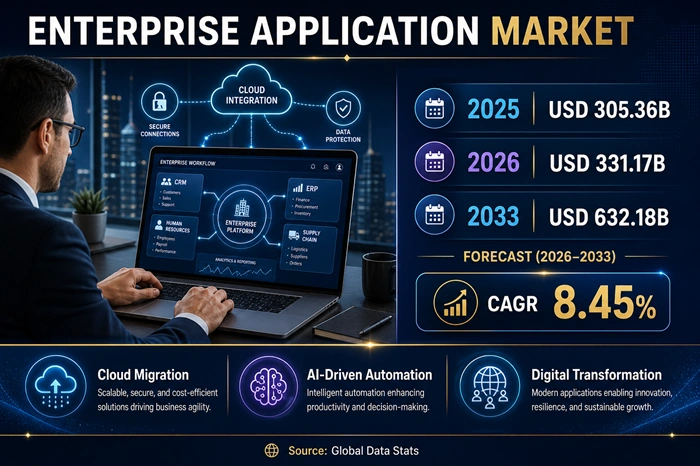
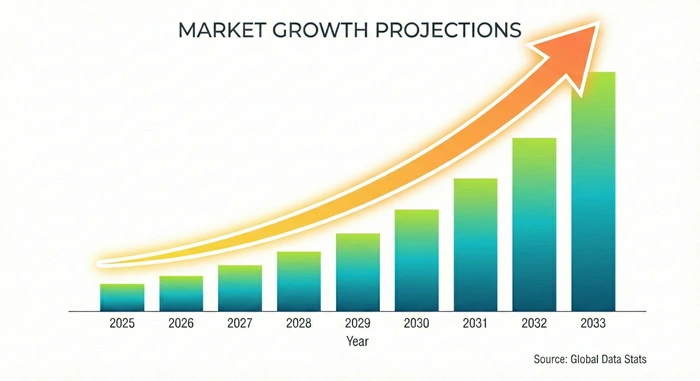
The global enterprise application market size is valued at USD 305.36 billion in 2025 and is predicted to increase from USD 331.17 billion in 2026 to approximately USD 632.18 billion by 2033, growing at a CAGR of 8.45% from 2026 to 2033.
The enterprise application market encompasses comprehensive software solutions designed to support and automate critical business processes including resource planning, customer relationship management, supply chain coordination, human resource administration, and financial operations across organizations of all sizes.
Rising demand for digital transformation initiatives, accelerating adoption of cloud-based deployment models, and growing emphasis on data-driven decision-making drive substantial market expansion worldwide. Organizations increasingly recognize that integrated enterprise applications deliver superior operational efficiency, enhanced collaboration, and competitive advantages compared to fragmented legacy systems operating in silos. The market benefits from technological advancements including artificial intelligence integration, mobile accessibility, real-time analytics, and seamless third-party integrations that expand functional capabilities.
AI Impact on the Enterprise Application Industry
Intelligent Automation and Predictive Insights Transform Business Operations
Artificial intelligence is fundamentally revolutionizing the enterprise application market by introducing intelligent automation, predictive analytics, and cognitive capabilities that significantly enhance decision-making quality while reducing manual intervention requirements. AI algorithms embedded within enterprise resource planning systems automatically optimize inventory levels, predict demand fluctuations, identify procurement anomalies, and recommend cost-saving opportunities that human analysts might overlook. Machine learning models continuously analyze historical transaction patterns, market conditions, and operational metrics to generate accurate forecasts supporting strategic planning, resource allocation, and risk mitigation. Customer relationship management applications leverage AI-powered sentiment analysis, next-best-action recommendations, churn prediction, and personalized engagement strategies that dramatically improve conversion rates and customer lifetime value.
The integration of AI with enterprise applications transforms business process automation through intelligent document processing, robotic process automation, and conversational interfaces that streamline workflows previously requiring extensive human effort. AI-driven chatbots and virtual assistants handle routine inquiries, process standard transactions, and provide instant information access, freeing employees to focus on complex problem-solving and strategic initiatives. Advanced analytics capabilities powered by artificial intelligence enable real-time anomaly detection, fraud identification, compliance monitoring, and operational performance optimization across distributed enterprise operations. Furthermore, AI-enhanced supply chain management applications predict disruptions, optimize logistics routing, automate supplier selection, and enable dynamic pricing strategies responding to market conditions in real-time. Microsoft CEO Satya Nadella emphasizes that organizations are transitioning from AI discovery phases into widespread diffusion periods, distinguishing between spectacle and substance while focusing on shaping real-world impact rather than novelty.
Growth Factors
Digital Transformation Imperative and Cloud Migration Drive Market Expansion
The urgent imperative for digital transformation across industries represents the primary driver propelling enterprise application market growth as organizations modernize legacy infrastructure, eliminate operational silos, and implement integrated systems supporting agile business models. Companies recognize that digital-first strategies prove essential for competitive survival in markets characterized by rapid technological change, evolving customer expectations, and disruptive business models. Executive leadership increasingly prioritizes enterprise application investments that deliver measurable improvements in operational efficiency, customer experience, employee productivity, and financial performance. The COVID-19 pandemic permanently accelerated digital adoption timelines as remote work necessitated cloud-based collaboration tools, mobile application access, and distributed workforce management capabilities that traditional on-premise systems cannot adequately support.
The explosive growth of cloud computing infrastructure and software-as-a-service delivery models creates substantial demand for cloud-based enterprise applications offering subscription pricing, rapid deployment, automatic updates, and scalability advantages compared to capital-intensive on-premise installations. Organizations particularly value cloud applications eliminating upfront hardware investments, reducing IT maintenance burdens, and providing anywhere-anytime access supporting distributed workforces and global operations. The enterprise application market benefits from remote work trends with studies estimating that 22% of the American workforce will work remotely by 2025, creating tremendous demand for mobile-first enterprise solutions supporting productivity outside traditional office environments. Small and medium enterprises demonstrate accelerating adoption as cloud-based subscription models make sophisticated enterprise capabilities previously accessible only to large corporations affordable for businesses with limited IT resources and budgets. Additionally, regulatory compliance requirements across industries including healthcare, financial services, and manufacturing mandate robust enterprise systems capable of audit trails, data governance, and automated reporting supporting regulatory obligations.
Market Outlook
Technology Innovation and Industry-Specific Solutions Sustain Growth Momentum
The enterprise application market outlook remains exceptionally positive as converging trends including artificial intelligence advancement, Internet of Things integration, blockchain adoption, and 5G connectivity expansion create opportunities for next-generation enterprise solutions. Market participants continue investing heavily in research and development to enhance application capabilities through advanced analytics, predictive intelligence, process automation, user experience improvements, and industry-specific functionality addressing vertical market requirements. The shift toward composable enterprise architectures emphasizing modular components, API-first designs, and low-code development platforms enables organizations to rapidly customize and extend enterprise applications without expensive custom coding. Innovation in deployment models including hybrid cloud configurations combining on-premise and cloud systems addresses organizations requiring data sovereignty, regulatory compliance, or integration with legacy infrastructure while capturing cloud benefits.
The proliferation of mobile devices and bring-your-own-device workplace policies drive demand for responsive enterprise applications delivering full functionality across smartphones, tablets, and laptops without compromising user experience. Industry-specific enterprise applications tailored for vertical markets including healthcare, retail, manufacturing, and financial services demonstrate robust growth as specialized solutions address unique regulatory requirements, operational workflows, and industry best practices more effectively than generic horizontal applications. The convergence of enterprise resource planning, customer relationship management, and supply chain management into integrated suites provides comprehensive business visibility, eliminates redundant data entry, and enables end-to-end process optimization. Industry analysts project sustained market expansion throughout the forecast period with particularly strong growth anticipated in Asia Pacific where rapid economic development, digital transformation initiatives, and government technology policies create expanding opportunities.
Expert Speaks
-
Satya Nadella, CEO of Microsoft, emphasized in January 2026 that the technology industry has moved past the initial discovery phase of AI and entered a widespread diffusion period, noting that 2026 will be pivotal for distinguishing between spectacle and substance while focusing on shaping artificial intelligence's real-world impact on business operations rather than pursuing novelty alone.
-
Satya Nadella further asserted during Microsoft's Q4 2025 earnings call that Microsoft maintains clear superiority over hyperscaler competitors including AWS, Google Cloud, and Oracle across critical dimensions including AI product portfolio breadth, technical stack comprehensiveness, infrastructure scale with over 400 datacenters across 70 regions, and capacity deployment adding more than two gigawatts in twelve months.
-
Industry analysts from IDC reported that the top five enterprise application vendors in 2023 were SAP and Salesforce in a statistical tie for first position, followed by Oracle, Microsoft, and Intuit, collectively accounting for 21.2% of worldwide revenues, while also noting that Apps Run The World analysis shows Oracle surpassing SAP as the number one ERP applications provider in 2024 for the first time with annual revenue of USD 8.7 billion versus SAP's USD 8.6 billion driven by fast-growing Oracle Fusion Cloud ERP adoption.
Key Report Takeaways
-
North America leads the global enterprise application market with approximately 41.8% to 42.5% regional share in 2025, driven by high concentration of technology companies, strong digital transformation investments, mature IT infrastructure, and widespread cloud adoption across enterprises.
-
Asia Pacific represents the fastest-growing regional market, expected to register exceptional CAGR of 15.3% from 2025 to 2030, fueled by rapid economic development, government digitalization initiatives, growing small and medium enterprise adoption, and expanding technology infrastructure across emerging markets.
-
Enterprise Resource Planning applications dominate market demand accounting for approximately 30.6% share in 2025, valued for broad utility across industries supporting financial management, procurement, manufacturing, inventory control, and integrated business process management.
-
Customer Relationship Management represents the second-largest segment with approximately 22.3% revenue share in 2024, driven by sales force automation demand, marketing campaign management requirements, and customer service enhancement priorities across industries.
-
Cloud deployment maintains dominant position with the largest revenue share in 2024 and projected fastest growth at 13.90% CAGR through 2034, driven by subscription affordability, rapid deployment timelines, automatic updates, scalability advantages, and remote workforce support capabilities.
-
The retail sector demonstrates fastest end-user growth projected through 2030 as retailers implement integrated systems supporting omnichannel operations, inventory optimization, personalized customer experiences, and e-commerce platform integration.
Market Scope
| Report Coverage Details | |
|---|---|
| Market Size by 2033 | USD 632.18 Billion |
| Market Size by 2025 | USD 305.36 Billion |
| Market Size by 2026 | USD 331.17 Billion |
| Market Growth Rate from 2026 to 2033 | CAGR of 8.45% |
| Dominating Region | North America |
| Fastest Growing Region | Asia Pacific |
| Base Year | 2025 |
| Forecast Period | 2026 to 2033 |
| Segments Covered | Application Type, Deployment Mode, Enterprise Size, End User, Region |
| Regions Covered | North America, Europe, Asia Pacific, Latin America, Middle East & Africa |
Market Dynamics
Drivers Impact Analysis
Cloud Adoption and Process Automation Accelerate Market Penetration
| Factor | (≈) % Impact on CAGR Forecast | Geographic Relevance | Impact Timeline |
|---|---|---|---|
| Digital transformation initiatives | 3.2% | Global, particularly developed markets | Immediate and ongoing |
| Cloud migration trends | 2.8% | Global focus | Immediate to medium-term |
| Remote work enablement | 1.9% | North America, Europe, Asia Pacific | Immediate to medium-term |
| AI and automation integration | 1.7% | Developed markets globally | Medium to long-term |
The worldwide shift toward digital business models and cloud-based infrastructure represents the most significant driver propelling enterprise application market expansion as organizations replace legacy systems with modern integrated platforms supporting agile operations. Businesses recognize that digital transformation delivers competitive advantages through improved operational efficiency, enhanced customer experiences, data-driven decision-making, and innovation capabilities that traditional manual processes cannot match. Executive leadership allocates substantial budgets for enterprise application investments demonstrating measurable returns including reduced operational costs, accelerated time-to-market, improved employee productivity, and enhanced customer satisfaction. The COVID-19 pandemic permanently altered workplace dynamics by demonstrating remote work viability, creating persistent demand for cloud-based enterprise applications accessible from any location supporting distributed workforce collaboration and productivity.
Cloud computing adoption accelerates dramatically as organizations recognize subscription-based software-as-a-service delivery models offer compelling advantages including predictable costs, rapid deployment, automatic updates, elastic scalability, and elimination of capital infrastructure investments. Small and medium enterprises particularly benefit from cloud enterprise applications as subscription pricing makes sophisticated business management capabilities previously affordable only for large corporations accessible to resource-constrained organizations. The enterprise application market experiences substantial growth from automation initiatives as businesses implement intelligent systems reducing manual data entry, automating routine processes, and enabling employees to focus on strategic value-added activities. Remote work trends with approximately 22% of the American workforce projected to work remotely by 2025 create tremendous demand for mobile-optimized enterprise applications delivering full functionality across devices supporting anywhere-anytime productivity. Additionally, data analytics and business intelligence capabilities embedded within modern enterprise applications enable organizations to extract actionable insights from operational data, identify optimization opportunities, predict market trends, and make evidence-based strategic decisions.
Restraints Impact Analysis
Implementation Complexity and Integration Challenges Create Adoption Barriers
| Factor | (≈) % Impact on CAGR Forecast | Geographic Relevance | Impact Timeline |
|---|---|---|---|
| High implementation costs | -1.8% | Price-sensitive emerging markets | Short to medium-term |
| Integration complexity | -1.4% | Organizations with legacy systems | Ongoing |
| Change management resistance | -1.1% | Traditional industries globally | Medium-term |
| Data security concerns | -0.9% | Global, particularly regulated industries | Ongoing |
Substantial costs associated with enterprise application implementation including software licenses, consulting services, data migration, customization, training, and ongoing maintenance create significant barriers to enterprise application market adoption, particularly for small and medium enterprises operating on limited budgets. Large-scale enterprise resource planning deployments frequently require multi-year implementation timelines, extensive process reengineering, and investments often exceeding millions of dollars before delivering business value. Organizations express concerns about return-on-investment timelines, project failure risks, and opportunity costs associated with diverting resources from core business operations to lengthy technology implementations. Total cost of ownership calculations including subscription fees, integration expenses, customization requirements, and internal IT support resources sometimes favor continued use of legacy systems despite recognized limitations.
Technical complexity surrounding enterprise application integration with existing systems, third-party applications, and custom-built solutions creates implementation challenges requiring specialized expertise that many organizations lack internally. The enterprise application market faces adoption obstacles when enterprises attempt integrating modern cloud applications with legacy on-premise systems, requiring middleware platforms, custom APIs, and data transformation logic maintaining real-time synchronization. Organizations with highly customized legacy systems invested over decades face particular difficulties migrating to standardized enterprise applications without losing custom functionality critical to competitive differentiation. Change management challenges represent substantial barriers as enterprise application deployments disrupt established workflows, require employee retraining, and encounter resistance from staff comfortable with familiar legacy systems despite inefficiencies. Additionally, data security and privacy concerns create hesitation around cloud-based enterprise applications as organizations worry about data sovereignty, regulatory compliance, vendor access to sensitive information, and potential breaches exposing confidential business data.
Opportunities Impact Analysis
Industry-Specific Solutions and Emerging Market Expansion Create Growth Prospects
| Factor | (≈) % Impact on CAGR Forecast | Geographic Relevance | Impact Timeline |
|---|---|---|---|
| Vertical market specialization | 2.3% | Global, particularly healthcare and retail | Medium-term |
| Emerging market adoption | 2.1% | Asia Pacific, Latin America, Middle East | Medium to long-term |
| SME cloud migration | 1.8% | Global focus | Medium-term |
| Composable architecture adoption | 1.5% | Developed markets | Medium to long-term |
The development of industry-specific enterprise applications tailored for vertical markets including healthcare, retail, manufacturing, financial services, and government creates substantial opportunities within the enterprise application market as specialized solutions address unique regulatory requirements, operational workflows, and industry best practices more effectively than generic horizontal platforms. Healthcare organizations demonstrate growing demand for enterprise applications supporting electronic health records, patient engagement, regulatory compliance, revenue cycle management, and population health initiatives addressing sector-specific challenges. Retail enterprises require integrated systems managing omnichannel operations, inventory optimization, point-of-sale integration, customer loyalty programs, and e-commerce platforms supporting seamless shopping experiences. Manufacturing vertical applications address production planning, quality management, asset maintenance, and supply chain coordination specific to industrial operations.
Emerging markets across Asia Pacific, Latin America, Middle East, and Africa present exceptional growth opportunities as economic development, infrastructure investments, government digitalization initiatives, and growing entrepreneurship create expanding customer bases for enterprise applications. Small and medium enterprise cloud migration represents a particularly dynamic opportunity as subscription-based software-as-a-service models eliminate traditional capital barriers enabling resource-constrained organizations to access sophisticated enterprise capabilities. The enterprise application market benefits from composable enterprise architecture trends emphasizing modular components, API-first designs, microservices architectures, and low-code development platforms that enable rapid customization, faster innovation cycles, and reduced total cost of ownership. Strategic partnerships between enterprise application vendors and industry consultants, system integrators, and technology partners accelerate market penetration through combined solution offerings, implementation expertise, and local market knowledge. Additionally, mergers and acquisitions activity including recent deals such as IBM's USD 6.4 billion HashiCorp acquisition and numerous enterprise software company consolidations create opportunities for portfolio expansion, technology integration, and market share gains.
Segment Analysis
Enterprise Resource Planning Dominance
Comprehensive Business Integration and Operational Efficiency Maintain Market Leadership
Enterprise Resource Planning applications command the dominant position within the enterprise application market, accounting for approximately 30.6% of total market share in 2025, as these comprehensive platforms integrate financial management, procurement, manufacturing, inventory control, human resources, and supply chain operations into unified systems providing real-time business visibility. ERP systems deliver substantial value by eliminating data silos, reducing redundant data entry, standardizing business processes, and enabling cross-functional coordination that improves operational efficiency and decision-making quality. Core ERP modules including financial accounting, order management, procurement, manufacturing execution, and business intelligence provide end-to-end process automation from customer inquiry through order fulfillment and financial settlement. Modern ERP platforms increasingly incorporate advanced capabilities including artificial intelligence, machine learning, predictive analytics, and mobile access that enhance traditional transactional functionality.
North America demonstrates particularly strong ERP adoption with large enterprises and government agencies implementing cloud-based ERP systems from Oracle, SAP, and Microsoft, while industry analysis shows Oracle surpassing SAP in 2024 as the number one ERP provider with USD 8.7 billion annual revenue driven by rapid Oracle Fusion Cloud ERP growth among major customers including AT&T, Bank of America, FedEx, Kroger, Lowe's, Meta, and UPS. Europe shows robust ERP demand with manufacturing organizations, particularly in Germany, implementing SAP S/4HANA supporting Industry 4.0 initiatives, smart factory operations, and supply chain digitalization. The enterprise application market ERP segment benefits from migration waves as organizations replace aging legacy systems approaching end-of-life, transitioning from on-premise installations to cloud-based platforms offering reduced total cost of ownership, automatic updates, and enhanced functionality. Small and medium enterprises demonstrate accelerating ERP adoption as cloud-based subscription models make enterprise-grade business management capabilities affordable for growing companies previously relying on spreadsheets and disconnected point solutions. Manufacturing industries particularly value ERP systems supporting production planning, materials requirements planning, quality management, and asset maintenance critical to operational excellence.
Cloud Deployment Rapid Growth
Subscription Economics and Remote Access Drive Accelerated Segment Expansion
Cloud deployment represents the fastest-growing segment within the enterprise application market, expected to expand at remarkable CAGR of 13.90% through 2034, as organizations embrace software-as-a-service delivery models offering subscription pricing, rapid deployment, automatic updates, elastic scalability, and remote workforce support. Cloud-based enterprise applications eliminate substantial upfront capital investments in servers, storage, networking equipment, and data center infrastructure required for traditional on-premise installations, converting fixed capital expenses into predictable operational subscriptions. Deployment timelines shrink dramatically as cloud applications become operational within days or weeks compared to multi-month on-premise implementations requiring hardware procurement, software installation, network configuration, and testing before production use. Organizations particularly value automatic software updates delivering new features, security patches, and regulatory compliance enhancements without requiring internal IT teams to plan, test, and execute upgrade projects.
North America leads cloud deployment adoption with technology-forward enterprises, software companies, and digital-native businesses implementing pure cloud strategies avoiding on-premise infrastructure investments, while major cloud enterprise application providers including Salesforce, Oracle, SAP, Microsoft, and Workday headquarter operations in the United States serving global customers. Asia Pacific demonstrates exceptional cloud deployment growth momentum as governments promote digital transformation, telecommunications infrastructure improves supporting reliable internet connectivity, and cost-conscious organizations embrace subscription models avoiding capital expenditures. The enterprise application market cloud segment particularly benefits from small and medium enterprise adoption as subscription pricing makes sophisticated business management capabilities accessible to resource-constrained organizations previously unable to afford enterprise-grade solutions. Remote work trends create additional cloud demand as distributed workforces require anywhere-anytime application access from home offices, customer sites, and mobile locations that on-premise systems behind corporate firewalls cannot adequately support. Industry analysts project that by 2025 more than 80% of businesses will adopt cloud-first strategies emphasizing software-as-a-service applications over traditional on-premise installations, recognizing cloud advantages including resilience, scalability, innovation velocity, and total cost of ownership benefits.
Regional Insights
North America Market Leadership
Technology Innovation and Digital Maturity Drive Regional Dominance
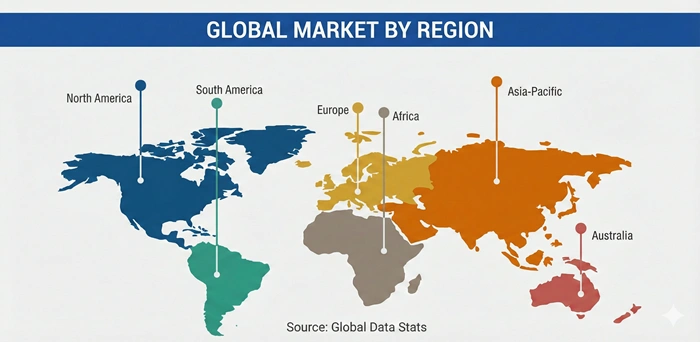
North America commands substantial leadership within the enterprise application market, maintaining approximately 41.8% to 42.5% regional share in 2025, driven by high concentration of technology companies, strong corporate digital transformation investments, mature IT infrastructure, and widespread cloud adoption across enterprises. The United States represents the primary growth engine valued at USD 72.40 billion in 2025 projected to reach USD 138.28 billion by 2034, reflecting robust enterprise demand across industries including financial services, healthcare, retail, manufacturing, and government. Corporate headquarters for leading enterprise application vendors including Oracle, Microsoft, Salesforce, Workday, and ServiceNow concentrate in North America, creating regional advantages through local presence, customer proximity, and partnership ecosystems.
Major corporations including Bank of America, AT&T, FedEx, Kroger, Lowe's, Meta, and United Parcel Service implement large-scale cloud ERP deployments from Oracle and SAP supporting global operations with thousands of users and complex business requirements. The enterprise application market in North America particularly benefits from innovation leadership as vendors introduce cutting-edge capabilities including artificial intelligence, machine learning, advanced analytics, and mobile-first user experiences that establish competitive standards adopted globally. Strong venture capital funding, technology talent pools, and entrepreneurial ecosystems support continuous innovation in enterprise software through startups introducing disruptive business models, specialized vertical solutions, and next-generation technologies. Canada demonstrates growing enterprise application adoption across industries with government agencies, telecommunications providers, financial institutions, and resource companies implementing integrated business management systems. The region shows particularly strong customer relationship management adoption with the United States hosting 1535 CRM system providers in 2025, reflecting market maturity and innovation leadership in customer engagement technologies.
Asia Pacific Fastest Growth
Economic Development and Digital Transformation Drive Exceptional Regional Expansion
Asia Pacific emerges as the fastest-growing regional enterprise application market, expected to register exceptional CAGR of 15.3% from 2025 to 2030, propelled by rapid economic development, government digitalization initiatives, expanding middle class populations, and substantial technology infrastructure investments across emerging economies. The region encompasses the world's largest populations with growing small and medium enterprise sectors demonstrating accelerating enterprise application adoption as cloud-based subscription models make sophisticated business management capabilities affordable for resource-constrained organizations. China represents a major market with government policies promoting digital economy development, industrial automation, and technology self-sufficiency driving domestic enterprise software demand across manufacturing, retail, logistics, and financial services sectors. India demonstrates exceptional growth potential with expanding IT services industry, growing startup ecosystem, government digital transformation programs, and improving telecommunications infrastructure supporting cloud application adoption.
Japan shows mature enterprise application adoption with large corporations including Toyota Motor implementing SAP S/4HANA supporting complex global manufacturing operations, while South Korea demonstrates strong deployment across electronics, automotive, and retail industries. The enterprise application market in Asia Pacific particularly benefits from manufacturing sector digitalization as Industry 4.0 initiatives, smart factory deployments, and supply chain optimization programs drive demand for integrated ERP, manufacturing execution systems, and supply chain management applications. Southeast Asian nations including Indonesia, Thailand, Vietnam, and Philippines demonstrate accelerating adoption as economic development improves, digital payment systems proliferate, and e-commerce growth creates demand for retail-focused enterprise applications. Regional enterprise application providers including Tata Consultancy Services from India alongside multinational vendors establish local presence serving domestic markets through culturally adapted solutions, local language support, and competitive pricing. Government initiatives promoting smart city development, digital government services, and technology-enabled public services generate substantial demand for enterprise applications supporting citizen services, administration automation, and data-driven governance.
Top Key Players
-
SAP SE (Germany)
-
Oracle Corporation (United States)
-
Microsoft Corporation (United States)
-
Salesforce Inc. (United States)
-
Workday Inc. (United States)
-
Infor Inc. (United States)
-
Adobe Inc. (United States)
-
ServiceNow Inc. (United States)
-
Intuit Inc. (United States)
-
Sage Group plc (United Kingdom)
-
IFS AB (Sweden)
-
Epicor Software Corporation (United States)
-
Unit4 N.V. (Netherlands)
-
Acumatica Inc. (United States)
-
Plex Systems Inc. (United States)
Recent Developments
-
Oracle Corporation (2024-2025): Oracle surpassed longtime frontrunner SAP in 2024 to become the number one ERP applications provider for the first time with annual revenue of USD 8.7 billion compared to SAP's USD 8.6 billion, driven by fast-growing Oracle Fusion Cloud ERP adoption among major enterprise customers including AT&T, Bank of America, FedEx, Kroger, Lowe's, Meta, NHS, Tesco, and UPS implementing cloud-based business management platforms.
-
IBM (2025): In February 2025, IBM completed its USD 6.4 billion acquisition of HashiCorp, a San Francisco-based provider of cloud infrastructure management software and tools, leveraging HashiCorp's Terraform and Vault products to expand IBM's offerings in cloud infrastructure automation, multi-cloud management, security life-cycle management, and artificial intelligence capabilities supporting enterprise digital transformation.
-
Microsoft Corporation (2024-2025): Microsoft demonstrated exceptional cloud and AI growth in fiscal Q4 2025 with Azure accelerating growth, remaining payment obligations reaching USD 368 billion up 37%, and CEO Satya Nadella asserting Microsoft's superiority over hyperscaler competitors including AWS, Google Cloud, and Oracle across AI product portfolio, technical stack, infrastructure with over 400 datacenters across 70 regions, and capacity deployment exceeding two gigawatts in twelve months.
-
Federal Bank India (2025): In January 2025, Federal Bank launched FedOne, a new transaction banking platform developed through 10-month collaboration with Nucleus Software, completing digital transformation implementation aimed at modernizing corporate banking services, enhancing customer experience, and improving operational efficiency through integrated enterprise application capabilities.
-
Aptean (2024): Aptean, a provider of niche enterprise applications for vertical markets, expanded its transportation management portfolio through acquisition of UK-based 3T Logistics & Technology Group, demonstrating continued industry consolidation as specialized software vendors pursue strategic acquisitions expanding product offerings, customer bases, and geographic reach.
Market Trends
Composable Architecture and Industry-Specific Solutions Transform Development Approaches
The rapid adoption of composable enterprise architecture emphasizing modular components, API-first designs, microservices principles, and low-code development platforms represents a transformative trend within the enterprise application market, enabling organizations to rapidly assemble and customize business capabilities without extensive custom coding. Composable approaches allow enterprises to select best-of-breed components from multiple vendors, integrate them through standardized APIs, and create tailored solutions addressing unique business requirements while maintaining flexibility to swap components as needs evolve. Platform vendors increasingly expose comprehensive API libraries enabling third-party developers, system integrators, and internal IT teams to extend core functionality, build custom applications, and integrate external data sources supporting organization-specific workflows. Low-code and no-code development tools democratize application development by enabling business analysts and power users to create functional applications through visual interfaces without traditional programming expertise, accelerating innovation and reducing IT backlog.
Industry-specific enterprise application development addressing vertical market requirements represents another significant trend as vendors recognize that specialized solutions serving healthcare, retail, manufacturing, financial services, and government sectors deliver superior value compared to generic horizontal platforms requiring extensive customization. Vertical applications incorporate industry-specific workflows, regulatory compliance requirements, specialized terminology, and best practices developed through deep domain expertise that generic enterprise resource planning systems cannot adequately address. The enterprise application market demonstrates growing emphasis on user experience design as vendors invest in intuitive interfaces, mobile-first approaches, personalized dashboards, and consumer-grade experiences that improve employee adoption, reduce training requirements, and enhance productivity. Integration marketplaces and pre-built connectors proliferate as vendors establish partnership ecosystems enabling seamless data exchange with complementary applications including e-commerce platforms, payment processors, shipping carriers, marketing automation tools, and industry-specific solutions. Additionally, hybrid deployment models combining on-premise and cloud components address organizations requiring data sovereignty, regulatory compliance, or legacy system integration while capturing cloud benefits including scalability, automatic updates, and reduced maintenance burden.
Segments Covered in the Report
By Application Type:
-
Enterprise Resource Planning (ERP)
-
Financial Management
-
Supply Chain Management
-
Manufacturing
-
Project Management
-
-
Customer Relationship Management (CRM)
-
Sales Force Automation
-
Marketing Automation
-
Customer Service
-
-
Supply Chain Management (SCM)
-
Procurement
-
Logistics
-
Inventory Management
-
-
Human Resource Management (HRM)
-
Payroll
-
Talent Management
-
Workforce Management
-
-
Business Intelligence (BI)
-
Analytics
-
Reporting
-
Data Visualization
-
By Deployment Mode:
-
Cloud
-
Public Cloud
-
Private Cloud
-
-
On-Premise
-
Hybrid
By Enterprise Size:
-
Large Enterprises
-
Small And Medium Enterprises (SMEs)
By End User:
-
BFSI (Banking, Financial Services, Insurance)
-
Retail
-
Manufacturing
-
Healthcare
-
IT And Telecom
-
Government
-
Education
-
Transportation & Logistics
-
Energy & Utilities
By Region:
-
North America
-
United States
-
Canada
-
Mexico
-
-
Europe
-
Germany
-
United Kingdom
-
France
-
Italy
-
Spain
-
Rest of Europe
-
-
Asia Pacific
-
China
-
India
-
Japan
-
South Korea
-
Southeast Asia
-
Rest of Asia Pacific
-
-
Latin America
-
Brazil
-
Argentina
-
Rest of Latin America
-
-
Middle East & Africa
-
United Arab Emirates
-
Saudi Arabia
-
South Africa
-
Rest of Middle East & Africa
-
Frequently Asked Questions
Question 1: What is the projected enterprise application market size by 2033?
Answer: The global enterprise application market is projected to reach USD 632.18 billion by 2033, growing from USD 331.17 billion in 2026 at a CAGR of 8.45%.
Question 2: Which region dominates the enterprise application market currently?
Answer: North America dominates the enterprise application market with approximately 41.8% to 42.5% share in 2025, driven by technology innovation and strong digital transformation investments.
Question 3: What are the key drivers of enterprise application market growth?
Answer: Key drivers include digital transformation initiatives, cloud migration trends, remote work enablement, AI and automation integration, and small and medium enterprise cloud adoption.
Question 4: Which application type leads the enterprise application market?
Answer: Enterprise Resource Planning leads with approximately 30.6% market share in 2025, followed by Customer Relationship Management with 22.3% share in 2024.
Question 5: How does cloud deployment compare to on-premise in the enterprise application market?
Answer: Cloud deployment maintains the largest revenue share and demonstrates fastest growth at 13.90% CAGR through 2034, driven by subscription affordability and remote work support.