
EMC Filtration Market Overview
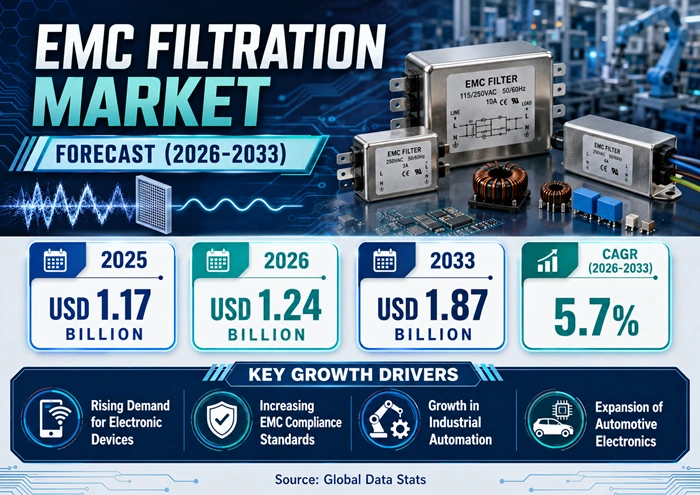
The global EMC filtration market size is valued at USD 1.17 billion in 2025 and is predicted to increase from USD 1.24 billion in 2026 to approximately USD 1.87 billion by 2033, growing at a CAGR of 5.7% from 2026 to 2033.
Electromagnetic compatibility (EMC) filtration refers to the use of specialized filters and suppression components designed to prevent electromagnetic interference (EMI) from disrupting the performance of electronic systems. The market is gaining consistent momentum, driven by the growing complexity of electronic systems across industries including automotive, industrial automation, telecommunications, consumer electronics, and medical devices. As global regulatory requirements for EMC compliance tighten and electronic device density increases, the demand for effective EMC filtration solutions continues to grow.
AI Impact on the EMC Filtration Industry
Artificial Intelligence Is Accelerating EMC Filter Design, Predictive Testing, and System-Level Interference Management — Opening New Frontiers for Efficiency and Product Performance
Artificial intelligence is beginning to reshape the way EMC filtration products are designed and validated. AI-driven simulation and modeling tools can now predict electromagnetic interference patterns in complex circuit environments with significantly greater speed and accuracy than traditional design-and-test cycles. This capability allows engineers to identify and resolve EMC compliance issues earlier in the product development cycle, reducing costly redesigns and accelerating time to market for manufacturers of electronics across automotive, industrial, and telecommunications sectors.
Beyond design, AI is also being applied to adaptive EMC filtering systems that can adjust their suppression characteristics in real time based on changing operating conditions. In high-frequency and broadband applications — such as electric vehicle power electronics and industrial motor drives — static filter designs may not provide optimal performance across all operating conditions. AI-enabled adaptive filters that dynamically adjust their frequency response represent a meaningful step forward in performance, and early commercial implementations are beginning to appear in the most demanding EMC filtration applications.
Growth Factors
The Rapid Adoption of Electric Vehicles, Expanding Industrial Automation, and Tightening Global EMC Regulations Are the Primary Forces Propelling the EMC Filtration Market
The single most powerful growth driver for the EMC filtration market is the rapid global adoption of electric vehicles. EVs are electronics-intensive systems — they incorporate battery management systems, power inverters, on-board chargers, motor controllers, and increasingly sophisticated driver assistance and infotainment electronics, all of which generate significant electromagnetic interference. Each of these subsystems requires carefully designed EMC filters to suppress noise, protect sensitive electronics, and meet stringent automotive EMC standards. As EV production scales globally, the demand for automotive-grade EMC filtration components is growing at a particularly strong rate.
Expanding industrial automation is another consistent demand driver. As factories worldwide adopt more advanced robotics, variable-speed motor drives, servo systems, and power electronics, the complexity of their electromagnetic environments increases dramatically. Each new piece of industrial equipment is both a potential source of and a potential victim of EMI, creating a strong and recurring need for EMC filtration across industrial electrical panels, automation cabinets, and power conversion systems. Simultaneously, tightening EMC regulatory frameworks in North America, Europe, and Asia Pacific are compelling electronics manufacturers across all sectors to invest more systematically in EMC compliance, including filter integration.
Market Outlook
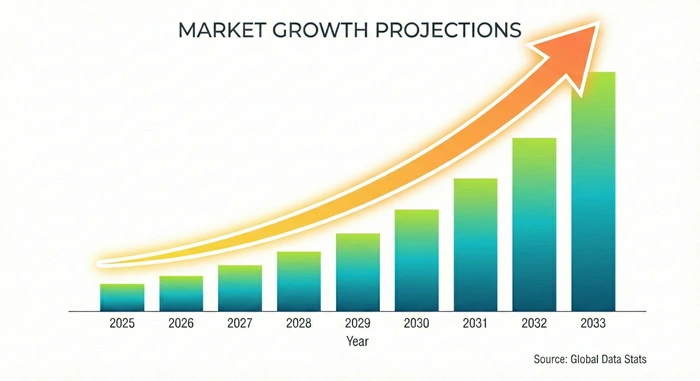
The EMC Filtration Market Is on a Steady Long-Term Growth Path, Reinforced by Smart Manufacturing, 5G Infrastructure Rollout, and the Proliferation of IoT-Connected Devices
The medium-to-long-term outlook for the EMC filtration market is shaped by several converging technology trends that are all highly supportive of continued market expansion. The rollout of 5G telecommunications infrastructure is creating new and complex EMC challenges, as high-frequency signals propagate across densely installed base station equipment that must coexist with a wide range of other electronic systems. Each 5G infrastructure installation generates demand for specialized high-frequency EMC filters capable of suppressing interference across a broad frequency spectrum.
The rapid proliferation of IoT-connected devices is another powerful long-term growth catalyst. By 2030, the number of IoT-connected endpoints globally is expected to exceed 30 billion, and each of these devices must comply with regional EMC standards to be legally sold and operated. The sheer volume of new device certifications required will translate into sustained and growing demand for EMC filtration components across consumer, industrial, medical, and infrastructure IoT applications. Miniaturization trends and integrated EMC module development will shape product innovation priorities across the forecast period, ensuring that the EMC filtration market remains technically dynamic and commercially active through 2033.
Expert Speaks
-
"As power electronics density in electric vehicles and renewable energy systems continues to increase, the demands placed on EMC filtering components have never been more exacting. We are investing heavily in next-generation filter materials and integration architectures that can meet the performance requirements of these challenging applications." — CEO, TE Connectivity Ltd.
-
"The intersection of digitalization, electrification, and automation in industrial settings is creating a genuinely complex electromagnetic environment that our customers must navigate carefully. Our focus is on delivering EMC solutions that are both technically superior and easy to integrate into demanding industrial system designs." — CEO, Schaffner Holding AG
-
"5G infrastructure deployment and the explosion of connected devices are creating EMC challenges at a scale and frequency range that the industry has not encountered before. Our engineering teams are developing broadband EMC filtration products specifically designed to address this new environment and keep pace with the rapid innovation cycle of the telecommunications sector." — CEO, TDK Corporation
Key Report Takeaways
-
North America leads the EMC filtration market with approximately 34% of global market share in 2025, underpinned by a highly advanced electronics manufacturing base, strong automotive and aerospace sectors, and rigorous EMC regulatory requirements enforced by the FCC and military standards bodies
-
Asia Pacific is the fastest-growing region, projected to expand at a CAGR of approximately 7.1% from 2026 to 2033, powered by large-scale electronics manufacturing in China, South Korea, Japan, and Taiwan, combined with a rapidly growing automotive electronics sector and expanding government enforcement of EMC compliance standards
-
The automotive end-use segment is the dominant application category, accounting for approximately 32% of total EMC filtration market revenue in 2025, driven by the increasing electronics content per vehicle and the accelerating transition to electric and hybrid powertrains that generate complex EMI environments
-
Power line EMC filters represent the most widely used product type, holding approximately 40% of total product share in 2025, owing to their broad applicability across industrial power supplies, motor drives, and power conversion systems in nearly every electronics-intensive industry
-
Industrial automation is the most consistent demand-generating sector for electromagnetic compatibility filtration products due to the high density of variable-frequency drives, servo systems, and power electronics deployed in modern factory environments
-
Medical-grade EMC filtration is the fastest-growing future segment within the EMC filtration market, projected to expand at a CAGR of approximately 7.8% from 2026 to 2033 and capture close to 16% market share by 2033, driven by the increasing complexity and electronics density of connected medical devices and the strict EMC standards required for patient safety certification
Market Scope
| Report Coverage | Details |
|---|---|
| Market Size by 2033 | USD 1.87 Billion |
| Market Size by 2025 | USD 1.17 Billion |
| Market Size by 2026 | USD 1.24 Billion |
| Market Growth Rate (2026–2033) | CAGR of 5.7% |
| Dominating Region | North America |
| Fastest Growing Region | Asia Pacific |
| Base Year | 2025 |
| Forecast Period | 2026 – 2033 |
| Segments Covered | Product Type, Current Rating, End-Use Industry, Sales Channel |
| Regions Covered | North America, Europe, Asia Pacific, Latin America, Middle East & Africa |
Market Dynamics
Drivers Impact Analysis
EV Adoption, Industrial Automation Expansion, and Mandatory EMC Compliance Regulations Are the Three Strongest Structural Growth Drivers Shaping the EMC Filtration Market Through 2033
| Driver | ≈ % Impact on CAGR Forecast | Geographic Relevance | Impact Timeline |
|---|---|---|---|
| Rapid global adoption of electric vehicles and EV charging infrastructure | ~34% | North America, Europe, Asia Pacific | Short to Medium Term |
| Expanding industrial automation and variable-frequency drive deployment | ~28% | Asia Pacific, Europe, North America | Short to Medium Term |
| Tightening global EMC regulatory standards (FCC, CE, CISPR) | ~24% | North America, Europe, Asia Pacific | Medium to Long Term |
| Growth of 5G infrastructure and IoT device proliferation | ~14% | Global | Long Term |
The EMC filtration market is experiencing one of its most powerful growth phases driven by the electrification of transportation. In 2023 alone, global EV sales exceeded 14 million units, representing over 35% year-on-year growth. Every EV contains dozens of electronic modules that both generate and are sensitive to electromagnetic interference — from the high-voltage inverter and battery management system to the advanced driver assistance computers and infotainment unit. EMC filters are required at virtually every electronic interface within these vehicles, creating a recurring and growing demand that scales directly with EV production volumes.
Industrial automation is amplifying this demand in a parallel but equally significant way. Every variable-frequency drive (VFD), servo amplifier, and switching power supply deployed in a modern automated facility generates conducted and radiated EMI that can disrupt other equipment and trigger control system faults. Factory automation investments are growing at a strong pace globally, particularly in China, Germany, and the United States, where manufacturers are deploying robotics and smart manufacturing technologies at scale. Each new automation installation creates a need for EMC filtration at the power input stage of every new piece of equipment, ensuring consistent and growing demand across this sector.
Restraints Impact Analysis
High Integration Complexity, Cost Sensitivity in Consumer Electronics, and Technical Challenges at High Frequencies Create Meaningful Barriers to Growth in the EMC Filtration Market
| Restraint | ≈ % Impact on CAGR Forecast | Geographic Relevance | Impact Timeline |
|---|---|---|---|
| Price sensitivity limiting adoption of premium EMC solutions in consumer segments | ~36% | Asia Pacific, Latin America | Short Term |
| Technical challenges in designing effective filters for very high frequency applications | ~28% | Global | Medium to Long Term |
| Miniaturization demands conflicting with filter performance requirements | ~22% | Global | Medium Term |
| Supply chain constraints for specialized magnetic core materials | ~14% | North America, Europe | Short to Medium Term |
One of the more persistent commercial challenges in the EMC filtration market is the price sensitivity that characterizes the consumer electronics and low-cost industrial equipment segments. EMC compliance is a regulatory requirement, but manufacturers in cost-competitive markets frequently seek the lowest-cost filter solution that will pass certification testing, rather than investing in premium components that offer superior long-term performance. This dynamic suppresses average selling prices and limits revenue growth in high-volume segments even as unit demand continues to rise.
Technical performance challenges also create real friction in certain high-growth applications. At the very high frequencies associated with wide-bandgap semiconductor power converters — such as those using silicon carbide (SiC) and gallium nitride (GaN) devices — conventional LC filter topologies can exhibit resonance and parasitic effects that limit their attenuation performance. Designing effective EMC filters for these next-generation power electronic architectures requires significant engineering expertise and often proprietary materials and topologies. Companies that have not invested in the necessary R&D capabilities will struggle to serve the highest-growth segments of the EV and renewable energy markets effectively.
Opportunities Impact Analysis
Wide-Bandgap Semiconductor Applications, Renewable Energy Infrastructure, and Medical Electronics Represent the Three Highest-Value Growth Opportunities for EMC Filtration Market Participants
| Opportunity | ≈ % Impact on CAGR Forecast | Geographic Relevance | Impact Timeline |
|---|---|---|---|
| Growing use of SiC and GaN power devices requiring advanced EMC filtration | ~36% | North America, Europe, Asia Pacific | Medium to Long Term |
| Rapid expansion of solar, wind, and energy storage power conversion systems | ~28% | Asia Pacific, Europe, North America | Short to Medium Term |
| Rising demand for medical-grade EMC filtration in connected medical devices | ~22% | North America, Europe | Long Term |
| Expanding defense and aerospace electronics with stringent EMC requirements | ~14% | North America, Europe | Long Term |
The transition to wide-bandgap semiconductor devices — particularly SiC and GaN power transistors — in EV power electronics, solar inverters, and industrial motor drives is creating a transformative opportunity for the EMC filtration market. These devices switch at frequencies significantly higher than conventional silicon devices, which dramatically increases the conducted and radiated EMI they generate. This requires entirely new categories of EMC filter designs optimized for high-frequency attenuation — a technical challenge that favors innovative, R&D-intensive filter manufacturers capable of delivering certified solutions for this demanding application space.
Renewable energy infrastructure is a closely related and equally compelling growth opportunity. Solar inverters, wind turbine power converters, and battery energy storage systems all use high-power switching electronics that generate significant EMI, and all require robust EMC filtration to comply with grid-connection standards and protect surrounding electrical infrastructure. As the global installed base of renewable energy systems continues to expand rapidly under energy transition mandates, the demand for EMC filtration components in this sector will grow at an above-average rate, making it one of the most strategically important growth vectors for EMC filtration manufacturers through 2033.
Segment Analysis
By Product Type
Power Line EMC Filters Anchor the Market With the Largest Share While Signal Line Filters Emerge as the Fastest-Growing Product Category Driven by IoT and 5G Infrastructure Demand
Power line EMC filters hold the largest product type share in the EMC filtration market at approximately 40% in 2025, a position reflecting their fundamental role in suppressing conducted interference at the power input stage of virtually every piece of industrial, commercial, and consumer electronics equipment. These filters — available as single-phase and three-phase configurations spanning a wide range of current and voltage ratings — are required in motor drives, power supplies, charging systems, and automation controllers across every electronics-intensive industry. North America and Europe account for the largest revenue shares within the power line filter segment, driven by high industrial automation density and stringent EMC compliance requirements. Key players including Schaffner Holding AG (Switzerland), TE Connectivity Ltd. (Switzerland/USA), and TDK Corporation (Japan) lead this segment through broad product portfolios, technical support capabilities, and strong relationships with industrial OEM customers. The power line filter segment is expected to grow at a CAGR of approximately 5.3% from 2026 to 2033.
Signal line EMC filters represent the fastest-growing product type within the EMC filtration market, projected to expand at a CAGR of approximately 7.4% from 2026 to 2033. The growth of this segment is directly tied to the massive expansion of data communications, 5G base station installations, IoT sensor networks, and high-speed digital interface applications — all of which require effective signal line filtering to maintain data integrity while meeting radiated emissions limits. Asia Pacific is the highest-growth geography for signal line filters, driven by its dominant role in electronics manufacturing and the rapid deployment of 5G infrastructure across China, South Korea, and Japan. Murata Manufacturing Co., Ltd. (Japan), TDK Corporation (Japan), and Würth Elektronik Group (Germany) are among the most prominent suppliers in this segment, offering compact, high-performance solutions tailored for the small form factors demanded by IoT and 5G infrastructure designs.
By End-Use Industry
Automotive Is the Dominant End-Use Segment While Renewable Energy and Energy Storage Emerge as the Highest-Growth Application Area Within the EMC Filtration Ecosystem
The automotive end-use segment is the largest and most commercially significant application category within the EMC filtration market, accounting for approximately 32% of total market revenue in 2025. The increasing electronics content per vehicle — which now routinely exceeds 100 electronic control units in a modern passenger car — combined with the specific EMC challenges introduced by EV and hybrid powertrains, makes automotive one of the most technically demanding and commercially important segments for EMC filter manufacturers. Standards such as CISPR 25, ISO 11452, and automotive-specific OEM requirements create a rigorous compliance environment that demands high-quality, certified filter components. The segment is growing at a CAGR of approximately 6.5% from 2026 to 2033. Europe leads in automotive EMC filtration demand, home to major OEMs and Tier 1 suppliers including Schaffner Holding AG (Switzerland), Vacuumschmelze GmbH & Co. KG (Germany), and Bourns, Inc. (USA) that supply EMC solutions into the premium European automotive supply chain.
Renewable energy and energy storage represent the fastest-growing end-use application in the EMC filtration market, with projected segment CAGR of approximately 8.1% from 2026 to 2033. Solar inverters, wind turbine converters, and battery energy storage systems all generate substantial conducted EMI through their high-power switching operations, and grid-connection standards in Europe and North America impose strict limits on harmonic and radio frequency interference that require purpose-designed EMC filtration. As global renewable energy capacity additions accelerate year after year under national energy transition commitments, the aggregate demand for EMC filtration in this sector is growing in direct proportion. Asia Pacific — particularly China — represents the single largest geography for renewable energy EMC filtration, given China's dominance in both solar and wind power equipment manufacturing. TDK Corporation (Japan), Epcos AG (Germany, TDK subsidiary), and Vishay Intertechnology, Inc. (USA) are key suppliers in this rapidly growing application segment.
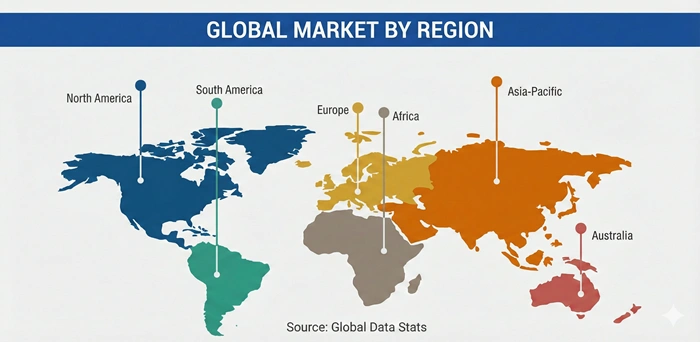
Regional Insights
North America's Established Regulatory Framework and Asia Pacific's Manufacturing Scale Are the Two Most Defining Geographic Forces Shaping the Global EMC Filtration Market Through 2033
North America
North America Leads the EMC Filtration Market Through Its Mature Regulatory Enforcement, Dense Industrial Automation Base, and Rapidly Growing Electric Vehicle Production Ecosystem
North America holds approximately 34% of global EMC filtration market share in 2025, growing at a regional CAGR of approximately 5.2% from 2026 to 2033. The United States is the dominant country market, supported by stringent FCC electromagnetic emissions regulations, a dense industrial manufacturing base, and rapidly expanding EV production capacity from companies including Tesla, General Motors, and Ford. Military and aerospace electronics represent another commercially significant demand source in North America, as defense system electronics must comply with particularly demanding MIL-STD-461 electromagnetic compatibility standards that require robust and certified filtering solutions. Key players including TE Connectivity Ltd. (USA), Bourns, Inc. (USA), Vishay Intertechnology, Inc. (USA), and ETS-Lindgren (USA) maintain strong North American market positions through direct customer relationships and localized technical support.
Canada contributes to the North American EMC filtration market through its growing clean energy sector and expanding domestic electronics manufacturing. Mexico is an increasingly important production hub for automotive electronics and industrial equipment, where demand for EMC filtration components is growing in step with manufacturing capacity additions from major international automotive OEMs. The combination of FCC regulatory compliance requirements, expanding EV infrastructure, and growing data center construction is expected to keep North America's EMC filtration demand on a steady and consistent growth trajectory through 2033.
Asia Pacific
Asia Pacific Is the Fastest-Growing Region in the EMC Filtration Market, Anchored by World-Leading Electronics Manufacturing Scale and Rapidly Accelerating EV and Renewable Energy Sectors
Asia Pacific is the fastest-growing regional market in the EMC filtration segment, expanding at a CAGR of approximately 7.1% from 2026 to 2033 and holding approximately 31% of global market share in 2025. China is the single most important country within the region, serving simultaneously as the world's largest electronics manufacturer, the largest EV producer, and the largest installer of solar and wind energy — all of which are high-density applications for EMC filtration products. China's national EMC standards body (CNCA) is also progressively aligning domestic standards with international CISPR requirements, which is driving increased investment in EMC compliance across the Chinese electronics manufacturing ecosystem. Leading suppliers active in the Asian Pacific region include TDK Corporation (Japan), Murata Manufacturing Co., Ltd. (Japan), Panasonic Corporation (Japan), and Schaffner Holding AG (Switzerland), all of which have significant manufacturing or sales presence in the region.
South Korea, Japan, and Taiwan collectively contribute substantial demand through their world-class semiconductor, display, consumer electronics, and telecommunications equipment manufacturing industries. Japan in particular has a well-developed culture of EMC engineering excellence and hosts several of the world's most technically advanced EMC filter manufacturers. India is an emerging growth market within Asia Pacific, as the country's rapidly expanding electronics manufacturing sector — supported by government production-linked incentive programs — is generating new and growing demand for EMC filtration components across consumer electronics, industrial equipment, and EV charger manufacturing.
Customization Available by Region and Country
This EMC Filtration Market Report Is Fully Customizable to Deliver Targeted Region-Specific and Country-Level Intelligence Aligned With Your Strategic Business Objectives and Commercial Priorities
Our EMC filtration market report is available with complete region-wise and country-wise customization, enabling clients to obtain in-depth analysis, localized market sizing, regulatory environment assessments, end-use industry demand mapping, competitive landscape analysis, and growth opportunity identification specific to any geography of interest.
-
Customized EMC filtration market reports are available for all the following regions and countries:
North America
-
United States, Canada, Mexico — country-level EMC filtration market sizing, automotive and industrial demand analysis, FCC regulatory environment, key OEM and distributor relationships, and competitive landscape for each North American market
Europe
-
United Kingdom, Germany, France, Italy, Rest of Europe — region-specific analysis covering EU EMC Directive compliance requirements, automotive Tier 1 supply chain dynamics, renewable energy sector demand, and country-level competitive positioning for leading European EMC filter suppliers
Asia Pacific
-
China, India, Japan, South Korea, Australia, Rest of Asia Pacific — detailed country-level breakdowns covering electronics manufacturing output, EV sector EMC demand, local regulatory frameworks, key distributor networks, and sub-regional growth forecast drivers
Latin America
-
Brazil, Argentina, Rest of Latin America — market sizing, industrial automation activity, regulatory landscape, and electronics manufacturing investment trends tailored to the key Latin American EMC filtration markets
Middle East & Africa
-
UAE, Saudi Arabia, Rest of MEA — analysis of infrastructure electronics demand, government smart city and digital economy investments, renewable energy sector growth, and market opportunity assessment for EMC filtration products across the MEA region
Top Key Players
-
Schaffner Holding AG (Switzerland)
-
TE Connectivity Ltd. (Switzerland/United States)
-
TDK Corporation (Japan)
-
Murata Manufacturing Co., Ltd. (Japan)
-
Bourns, Inc. (United States)
-
Vishay Intertechnology, Inc. (United States)
-
Würth Elektronik Group (Germany)
-
ETS-Lindgren (United States)
-
Panasonic Corporation (Japan)
-
Vacuumschmelze GmbH & Co. KG (Germany)
-
Schurter Holding AG (Switzerland)
-
Epcos AG (TDK Group) (Germany)
Recent Developments
-
In 2025, Schaffner Holding AG launched a new series of three-phase EMC filters specifically engineered for SiC-based motor drives and EV charging infrastructure, addressing the growing need for high-frequency attenuation performance in wide-bandgap semiconductor power systems.
-
In 2025, TDK Corporation expanded its EMC filtration product portfolio for industrial automation applications with a new range of compact, high-current single-phase filters optimized for use in robot controllers and servo amplifier systems within high-density factory automation cabinets.
-
In 2024, TE Connectivity Ltd. strengthened its EMC product line for automotive applications through the integration of advanced filter materials into its next-generation automotive EMC connector and module platform, targeting the growing demand from EV powertrain and charging system OEM customers.
-
In 2025, Murata Manufacturing Co., Ltd. announced a strategic capacity expansion at its EMC component manufacturing facility in Japan to address growing order volumes driven by 5G base station and IoT device demand, with production scheduled to come fully online in 2026.
-
In 2024–2025, Würth Elektronik Group launched a dedicated application engineering initiative specifically focused on EMC filtration for renewable energy power conversion systems, offering design support and pre-certified filter modules for solar inverter and battery storage manufacturers in Europe and Asia Pacific.
Market Trends
The Miniaturization of EMC Filters and the Development of Application-Specific Solutions for EVs and Renewable Energy Systems Are the Two Most Defining Innovation Trends Reshaping the EMC Filtration Market
The most technically significant trend in the EMC filtration market is the relentless push toward component miniaturization combined with improving performance. Modern electronics systems — from compact IoT sensors to densely integrated automotive ECUs — impose strict space constraints on all passive components, including EMC filters. Filter manufacturers are responding by developing multilayer ceramic, thin-film, and nanocrystalline core technologies that deliver equivalent or superior attenuation in dramatically smaller physical packages. This miniaturization trend is enabling EMC filter integration in form factors and applications that were previously impractical, broadening the addressable market significantly.
A parallel and equally important trend is the growing emphasis on application-specific EMC filter development. Rather than general-purpose solutions, market leaders are increasingly developing filter platforms purpose-engineered for specific high-growth applications — including EV on-board chargers, solar microinverters, 5G radio units, and medical imaging equipment — where generic filter designs may not meet the combination of electrical performance, physical size, environmental robustness, and regulatory certification requirements. This specialization trend is rewarding companies with deep application engineering capabilities and is becoming a primary basis of competitive differentiation within the EMC filtration market.
Segments Covered in the Report
-
By Product Type
-
Power Line EMC Filters
-
Signal Line EMC Filters
-
Data Line EMC Filters
-
Other Product Types
-
-
By Current Rating
-
Up to 10A
-
10A to 100A
-
Above 100A
-
-
By End-Use Industry
-
Automotive
-
Industrial Automation
-
Consumer Electronics
-
Telecommunications and IT Infrastructure
-
Medical Devices
-
Aerospace and Defense
-
Renewable Energy
-
Other End-Use Industries
-
-
By Sales Channel
-
Direct Sales (OEM)
-
Distributor Sales
-
Online Sales
-
-
By Region
-
North America (U.S., Canada, Mexico)
-
Europe (U.K., Germany, France, Italy, Rest of Europe)
-
Asia Pacific (China, India, Japan, South Korea, Australia, Rest of Asia Pacific)
-
Latin America (Brazil, Argentina, Rest of Latin America)
-
Middle East & Africa (UAE, Saudi Arabia, Rest of MEA)
-
❝ Built for Every Level — From Startups to Industry Giants ❞
Here Is Exactly How This Report Works for You
-
Whether you are a Tier 1 global electronics component manufacturer benchmarking your EMC filtration portfolio, a Tier 2 regional supplier assessing geographic expansion opportunities, or a startup developing next-generation filter solutions for EV or renewable energy applications — this report delivers comprehensive competitor revenue analysis, revenue source breakdowns, supply-demand dynamics, and geopolitical risk mapping that empowers every stakeholder across the EMC filtration value chain to make high-confidence strategic decisions.
-
For investors and mid-level companies evaluating capital allocation, product line expansion, or market entry, the report provides rigorous analysis of how EV adoption rates, industrial automation investment, 5G rollout timelines, and renewable energy installation targets across key geographies translate into specific and quantifiable EMC filtration revenue opportunities — including how raw material availability and supply chain concentration risks are affecting near-term market dynamics.
-
For senior executives and strategic planners at EMC filter manufacturers, electronics OEMs, and distributors, this report maps how evolving regulatory frameworks, trade policy changes, and technology transitions to wide-bandgap semiconductor architectures are reshaping procurement requirements and supply chain strategies globally — providing the intelligence your organization needs to position itself competitively through 2033 and capture the highest-growth segments ahead of the competition.
Frequently Asked Questions
Question 1: What is the current size and growth forecast of the EMC filtration market?
Answer: The EMC filtration market is valued at USD 1.17 billion in 2025 and is projected to reach USD 1.87 billion by 2033. It is expected to grow at a CAGR of 5.7% from 2026 to 2033.
Question 2: What factors are driving growth in the EMC filtration market?
Answer: The key drivers of the EMC filtration market include the rapid global adoption of electric vehicles, expanding industrial automation, and tightening EMC regulatory requirements across major markets. The proliferation of IoT devices and 5G infrastructure is also generating strong and growing demand for signal line and broadband filtering solutions.
Question 3: Which region leads the EMC filtration market and which is growing fastest?
Answer: North America leads the EMC filtration market with approximately 34% global share in 2025. Asia Pacific is the fastest-growing region, expanding at a CAGR of approximately 7.1% from 2026 to 2033 due to its dominant electronics manufacturing base and rapidly growing EV and renewable energy sectors.
Question 4: What are the main product types in the EMC filtration market?
Answer: The primary product types in the EMC filtration market include power line EMC filters, signal line EMC filters, and data line EMC filters. Power line filters currently hold the largest share at approximately 40%, while signal line filters are growing fastest due to expanding 5G and IoT applications.
Question 5: Who are the leading companies in the EMC filtration market?
Answer: The leading companies in the EMC filtration market include Schaffner Holding AG, TE Connectivity Ltd., TDK Corporation, Murata Manufacturing Co. Ltd., Würth Elektronik Group, and Vishay Intertechnology. These companies maintain competitive positions through broad product portfolios, deep application engineering expertise, and strong global distribution networks.