
Elemental Boron Market Overview
Specialized Metalloid Applications Drive Advanced Manufacturing, Aerospace Defense, and Semiconductor Technologies
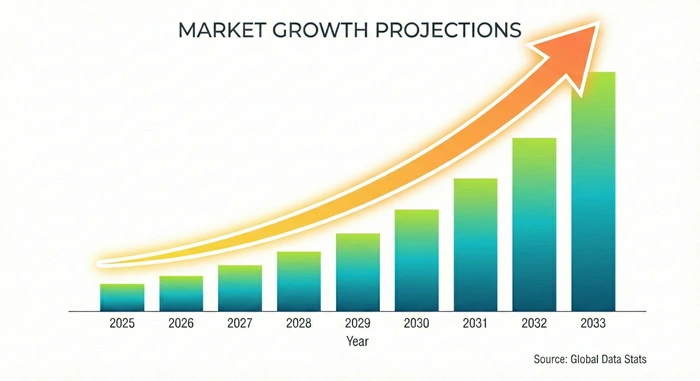
The global elemental boron market size is valued at USD 1.69 billion in 2025 and is predicted to increase from USD 1.74 billion in 2026 to approximately USD 2.26 billion by 2033, growing at a CAGR of 3.85% from 2026 to 2033. This specialized materials industry encompasses production, processing, distribution, and application of boron in its pure elemental form demonstrating exceptional hardness, high melting point, and unique electronic properties. Elemental boron serves critical functions across semiconductors, nuclear reactors, aerospace alloys, defense armor, permanent magnets, and high-energy applications requiring materials with extraordinary thermal stability and low density characteristics.
The elemental boron market addresses escalating demand for advanced manufacturing materials where conventional elements cannot achieve comparable performance in extreme conditions. This metalloid element demonstrates remarkable properties including hardness second only to diamond, resistance to oxidation at elevated temperatures, and neutron absorption capabilities essential for nuclear applications. Major industrial sectors including electronics manufacturing, aerospace engineering, metallurgical processing, pharmaceutical synthesis, and energy generation consume substantial elemental boron volumes as manufacturers pursue product innovation through specialized materials enabling breakthrough performance across demanding operational environments requiring exceptional durability and stability.

AI Impact on the Elemental Boron Industry
Machine Learning and Process Automation Revolutionize Production Efficiency and Quality Control Standards
Artificial intelligence transforms the elemental boron market through computational materials science predicting optimal extraction methods, purification processes, and crystalline structure formation based on thermodynamic modeling and molecular dynamics simulations. Machine learning algorithms analyze thousands of processing parameters including temperature profiles, reduction agent concentrations, vacuum conditions, and cooling rates identifying optimal combinations achieving target purity levels exceeding 99.9% while minimizing production costs. These AI-powered systems enable virtual process optimization eliminating expensive pilot-scale experiments before full production implementation. Deep learning models trained on spectroscopic data perform automated quality verification analyzing X-ray diffraction patterns, infrared spectroscopy results, and electron microscopy images detecting impurities and structural defects at parts-per-million concentrations impossible through manual analytical methods.
Advanced AI applications extend beyond production optimization to revolutionize supply chain management and demand forecasting within the elemental boron market landscape. Neural networks analyze global semiconductor production data, aerospace manufacturing schedules, defense procurement patterns, and nuclear energy expansion plans predicting regional demand fluctuations enabling optimized inventory positioning reducing stockouts during peak usage periods. Predictive maintenance algorithms monitor critical production equipment including reduction furnaces, purification systems, and crystallization chambers forecasting component failures enabling scheduled maintenance preventing costly production disruptions. Automated logistics systems optimize distribution routes, customs documentation, and hazardous materials handling compliance reducing transportation costs while ensuring regulatory adherence across jurisdictions with varying chemical transportation requirements. These AI-driven capabilities position manufacturers to achieve superior operational efficiency while reducing production costs by 20-30% and improving delivery reliability throughout forecast period.
Growth Factors
Semiconductor Industry Expansion and Defense Applications Drive Unprecedented Elemental Boron Demand
The elemental boron market experiences robust growth propelled by semiconductor industry evolution where advanced chip manufacturing requires ultra-high purity boron as dopant material enabling precise electrical conductivity control in silicon wafers. Technology node progression toward 3-nanometer processes and beyond demands boron sources with purity levels exceeding 99.999% containing minimal metallic contamination interfering with transistor performance. Major semiconductor manufacturers including TSMC, Samsung Foundry, and Intel consume substantial elemental boron volumes supporting global chip production exceeding 1 trillion units annually. Ion implantation processes utilizing boron ions create p-type semiconductor regions essential for CMOS transistor fabrication representing fundamental building blocks of modern electronics. Emerging wide-bandgap semiconductors including boron-doped diamond and boron nitride-based devices demonstrate superior performance in high-power and high-frequency applications driving specialized elemental boron demand throughout forecast period.
Defense and aerospace sectors drive elemental boron market expansion through specialized applications including boron carbide armor, neutron shielding, and high-energy propellants requiring elemental boron feedstock. Military vehicle armor incorporating boron carbide ceramic plates demonstrates exceptional hardness-to-weight ratios protecting personnel and equipment from ballistic threats while minimizing vehicle weight constraints. Nuclear submarine construction and advanced reactor designs utilize boron-enriched materials for neutron absorption controlling fission reactions and preventing radiation exposure. Aerospace applications including rocket propellants, ramjet fuels, and hypersonic vehicle materials leverage boron's exceptional energy density and high-temperature stability. Government defense spending growth particularly among United States, China, and European nations creates sustained procurement demand for specialized boron-based materials. Space exploration initiatives including lunar base construction and Mars missions require radiation shielding incorporating boron compounds creating emerging application opportunities supporting market growth throughout forecast period.
Market Outlook
Purification Technology Advancement and Application Diversification Position Industry for Sustained Long-Term Expansion
The elemental boron market outlook remains exceptionally positive as manufacturers invest substantially in advanced purification technologies addressing quality requirements and cost constraints restricting broader commercialization. Next-generation reduction processes utilizing magnesiothermic reduction, metallothermic reduction, and plasma-based methods achieve higher yields with reduced energy consumption compared to traditional techniques. Ultra-high purity production methods incorporating zone refining, sublimation purification, and chemical vapor deposition enable purity levels exceeding 99.999% meeting stringent semiconductor and nuclear applications specifications. Crystalline boron production technologies including floating zone methods and flux growth techniques create large single crystals enabling advanced research and specialty applications. Amorphous boron powder manufacturing through chemical reduction and spray pyrolysis produces fine particles with controlled size distributions serving composite materials, pyrotechnic formulations, and catalytic applications throughout diverse industrial sectors.
Investment trends within the elemental boron market reflect growing confidence in long-term demand fundamentals as chemical companies, specialty materials producers, and mining corporations expand production capacity targeting electronics, aerospace, and energy applications. Leading producers including SB Boron, Pavezyum Kimya, Höganäs, and Noah Technologies maintain robust capital expenditure programs commissioning purification facilities, quality control laboratories, and distribution infrastructure. Acquisition activity intensifies as multinational corporations pursue market entry through strategic acquisitions of boron mining operations, processing technology providers, and specialty materials distributors accessing established supply chains and customer relationships. Vertical integration strategies connecting boron mining with elemental production and end-product manufacturing create streamlined value chains reducing costs and ensuring supply reliability. Research collaborations between materials producers, university laboratories, and government research institutes advance application development particularly in energy storage, quantum computing, and advanced manufacturing supporting sustained market expansion through 2033.
Expert Speaks
-
Simon Trott, Chief Executive of Rio Tinto, emphasized strategic focus: "A simplified business structure, grounded in our fundamental commitment to safety and with sharper focus on the most compelling opportunities we have, will enable us to deliver new standards of operational excellence and value creation. We have delivered resilient results this year and remain on track to deliver strong mid-term production growth including our borates business supporting critical materials supply chains".
-
Kallum Titmarsh, CEO of 5E Advanced Materials, articulated strategic vision: "Critical mineral boron represents the best supporting actor of US magnet supply chain. We are in talks with Los Alamos National Laboratory to secure about $20 million in federal support for our Fort Cady boron project, demonstrating government recognition of boron's strategic importance in advanced manufacturing and national security applications requiring domestic production capabilities".
-
Industry Leadership, highlighted market drivers: "By 2030, the global demand will grow by at least 20% and amount to more than 6 million tons per year of boric acid. At the same time, 70% of boron applications will be driven by lithium-ion battery manufacturing, permanent magnet production, and advanced semiconductor fabrication requiring ultra-high purity elemental boron feedstock supporting technology sector expansion".
Key Report Takeaways
-
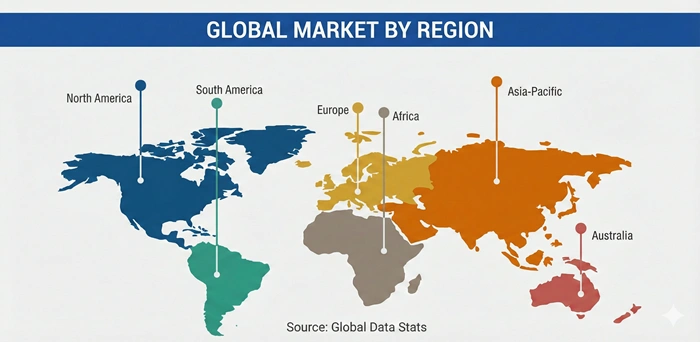
Asia Pacific dominates the elemental boron market with commanding share exceeding 39%, driven by concentrated electronics manufacturing, semiconductor production, and metallurgical processing across China, Japan, and South Korea where domestic consumption, industrial applications, and export manufacturing consume substantial high-purity boron volumes supported by established supply chains and processing infrastructure.
-
Middle East & Africa emerges as the fastest-growing regional market with projected CAGR approaching 4.5% through 2033, propelled by expanding industrial base, defense sector investments, and nuclear energy development where Turkey's dominant boron reserves through Eti Maden operations and emerging African manufacturing create growth opportunities across diverse applications.
-
Amorphous boron represents the dominant form segment accounting for approximately 58% market share due to versatile applications, established production methods, and cost-effectiveness where powder formulations serve metallurgical additives, composite reinforcements, and pyrotechnic compositions requiring controlled particle size distributions.
-
Metallurgy applications constitute the largest end-use segment capturing substantial market share driven by steel alloy additives, non-ferrous metal processing, and specialty alloy formulations where boron additions improve hardenability, grain refinement, and mechanical properties across automotive, construction, and industrial equipment manufacturing sectors.
-
Electronics and semiconductors maintain high-growth application segment demonstrating exceptional growth potential with anticipated CAGR exceeding 5.2% through 2033, attributed to expanding chip production, advanced node adoption, and wide-bandgap semiconductor development requiring ultra-high purity boron dopants supporting global electronics manufacturing expansion.
-
High purity grades above 99% dominate market specifications representing substantial segment share driven by semiconductor fabrication, nuclear applications, and advanced materials requiring minimal impurity content where rigorous quality standards justify premium pricing and specialized production techniques throughout forecast period.
Market Scope
| Report Coverage Details | |
|---|---|
| Market Size by 2033 | USD 2.26 Billion |
| Market Size by 2025 | USD 1.69 Billion |
| Market Size by 2026 | USD 1.74 Billion |
| Market Growth Rate from 2026 to 2033 | CAGR of 3.85% |
| Dominating Region | Asia Pacific |
| Fastest Growing Region | Middle East & Africa |
| Base Year | 2025 |
| Forecast Period | 2026 to 2033 |
| Segments Covered | Form, Purity Level, Application, Distribution Channel, Region |
| Regions Covered | North America, Europe, Asia Pacific, Latin America, Middle East & Africa |
Market Dynamics
Drivers Impact Analysis
Semiconductor Manufacturing Growth and Defense Modernization Accelerate Elemental Boron Adoption
| Impact Factor | (≈) % Impact on CAGR Forecast | Geographic Relevance | Impact Timeline |
|---|---|---|---|
| Semiconductor Industry Expansion | +1.6% | Asia Pacific, North America | 2026-2033 |
| Defense and Aerospace Demand | +1.3% | Global Markets | 2026-2033 |
| Nuclear Energy Development | +0.9% | Asia, Middle East | 2027-2033 |
| Advanced Materials Innovation | +0.7% | Developed Markets | 2026-2033 |
The elemental boron market benefits substantially from semiconductor industry expansion where global chip production projected to exceed 1.2 trillion units annually by 2030 requires boron dopants for p-type semiconductor fabrication. TSMC, Samsung Foundry, and Intel invest billions in advanced fabrication facilities producing chips at 3-nanometer technology nodes and beyond demanding ultra-high purity boron sources with metallic impurities below 1 part per billion. Ion implantation equipment manufacturers including Applied Materials and Axcelis Technologies specify elemental boron feedstock meeting stringent purity standards ensuring consistent transistor performance across wafer production volumes exceeding 30 million units monthly. Memory chip production including DRAM and NAND flash devices incorporates boron-doped regions controlling charge storage and retrieval mechanisms. Emerging wide-bandgap semiconductors utilizing boron-doped diamond and cubic boron nitride substrates demonstrate superior performance in high-power and high-frequency applications supporting electric vehicle power electronics and 5G telecommunications infrastructure throughout forecast period.
Defense modernization programs drive elemental boron market growth through procurement initiatives requiring advanced armor systems, neutron shielding materials, and high-energy propellants incorporating boron compounds. United States Department of Defense budget allocations exceeding 800 billion dollars annually support military vehicle upgrades, aircraft modernization, and naval vessel construction incorporating boron carbide armor plates manufactured from elemental boron feedstock. Next-generation tank armor, helicopter crew protection, and personnel body armor specifications require boron carbide ceramics achieving hardness values exceeding 3000 Vickers while maintaining 30-40% weight reductions compared to steel armor equivalents. Nuclear submarine fleet expansion across China, India, and European nations requires boron-enriched control rods and shielding materials absorbing neutron radiation preventing uncontrolled fission reactions. Hypersonic weapon development programs pursue boron-based high-energy fuels delivering thrust-to-weight ratios exceeding conventional propellants enabling sustained hypersonic flight velocities. These defense applications demonstrate sustained government procurement creating baseline demand independent of commercial market fluctuations supporting market stability throughout forecast period.
Restraints Impact Analysis
Production Costs and Supply Concentration Challenge Market Penetration Across Price-Sensitive Applications
| Restraint Factor | (≈) % Impact on CAGR Forecast | Geographic Relevance | Impact Timeline |
|---|---|---|---|
| High Production Costs | -1.2% | Global Markets | 2026-2033 |
| Supply Chain Concentration | -0.9% | Import-Dependent Regions | 2026-2031 |
| Purification Complexity | -0.7% | High-Purity Applications | 2026-2033 |
| Limited Ore Reserves | -0.6% | Non-Producing Regions | 2026-2030 |
The elemental boron market faces growth constraints from substantial production costs where multi-stage purification processes, specialized equipment requirements, and energy-intensive reduction reactions create cost structures significantly exceeding commodity chemical prices. Magnesiothermic reduction processes converting boron oxide to elemental boron require high-purity magnesium metal, controlled atmosphere furnaces, and post-reaction purification adding 40-60% to production costs compared to simpler boron compound manufacturing. Ultra-high purity grades demanded by semiconductor applications require additional zone refining, sublimation purification, or chemical vapor deposition steps achieving five-nines purity (99.999%) commanding prices 10-20 times higher than industrial-grade materials. Energy consumption for reduction reactions, vacuum processing, and purification operations represents 25-35% of total production costs creating vulnerability to electricity price fluctuations particularly in regions without preferential industrial power rates. These economic constraints limit addressable markets to high-value applications where unique properties justify premium pricing restricting commodity-scale adoption throughout forecast period.
Supply chain concentration challenges constrain elemental boron market development where Turkey controls approximately 70% of global boron reserves through state-owned Eti Maden operations creating geopolitical dependencies for importing nations. Political instability, export restrictions, or strategic resource management policies could disrupt global supply chains affecting electronics manufacturing, defense procurement, and industrial consumption patterns. Limited domestic production capabilities across major consuming regions including United States, Europe, and Asian nations beyond China require import dependencies vulnerable to trade disputes, transportation disruptions, and currency fluctuations. Lack of diversified supply sources creates strategic vulnerabilities particularly for defense and aerospace applications requiring assured materials access during international tensions or conflict scenarios. Long lead times for new mine development, processing facility construction, and quality certification ranging 5-10 years prevent rapid supply response to demand surges. These supply concentration risks motivate government initiatives including United States critical minerals programs, European Union strategic autonomy policies, and Chinese domestic production incentives supporting supply chain diversification throughout forecast period.
Opportunities Impact Analysis
Energy Storage and Quantum Computing Create Substantial Growth Avenues Beyond Traditional Applications
| Opportunity Factor | (≈) % Impact on CAGR Forecast | Geographic Relevance | Impact Timeline |
|---|---|---|---|
| Energy Storage Innovation | +1.1% | Global Markets | 2027-2033 |
| Quantum Computing Materials | +0.8% | North America, Europe | 2028-2033 |
| Medical Isotope Production | +0.6% | Healthcare Markets | 2027-2033 |
| Advanced Ceramics Growth | +0.5% | Industrial Applications | 2026-2033 |
The elemental boron market stands to capture substantial value from energy storage innovation where next-generation battery chemistries including boron-based solid electrolytes and boron-doped electrode materials demonstrate superior performance characteristics. Solid-state battery development incorporating boron compounds as electrolyte components achieves higher ionic conductivity, improved safety characteristics, and extended temperature operating ranges compared to conventional liquid electrolytes. Lithium-ion battery electrode materials utilizing boron-doped graphite anodes demonstrate 15-25% capacity improvements and enhanced cycle life supporting electric vehicle range extension and grid storage applications. Magnesium-ion and aluminum-ion battery research explores boron-based cathode materials enabling multi-electron charge transfer reactions achieving theoretical energy densities exceeding lithium-ion technologies. Supercapacitor electrodes incorporating boron-doped carbon materials demonstrate exceptional power density and rapid charge-discharge capabilities. These emerging energy storage applications create substantial growth opportunities as global battery production projected to exceed 5 terawatt-hours annually by 2030 supporting electric mobility, renewable energy integration, and portable electronics throughout forecast period.
Quantum computing development presents exceptional growth opportunities for the elemental boron market as researchers explore boron-based qubit implementations, quantum interconnects, and cryogenic electronics operating at millikelvin temperatures. Boron-doped diamond demonstrates exceptional properties for quantum sensing applications detecting magnetic fields, electric fields, and temperature variations at nanoscale resolution enabling breakthrough measurement capabilities. Boron vacancy centers in diamond lattices create optically addressable spin qubits maintaining quantum coherence at room temperature potentially revolutionizing quantum information processing. Ultra-pure boron materials enable neutron detection applications supporting homeland security, nuclear safeguards, and medical imaging where helium-3 detector shortages create market opportunities for boron-10 enriched alternatives. Medical isotope production utilizing boron-10 targets in nuclear reactors generates fluorine-18 for PET scanning and other diagnostic radiopharmaceuticals serving growing healthcare imaging markets. These diverse advanced applications expand addressable markets beyond traditional metallurgical and semiconductor sectors creating sustained growth opportunities throughout forecast period.
Segment Analysis
By Form: Amorphous Boron
Versatile Applications and Established Production Infrastructure Sustain Amorphous Segment Market Leadership
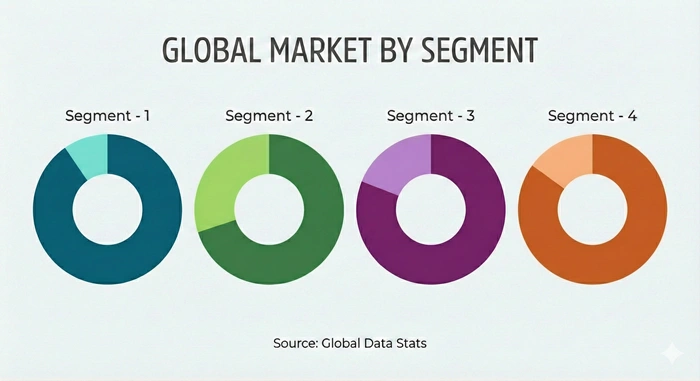
Amorphous boron commands the largest share within the elemental boron market, accounting for approximately 58% of global revenue with continued expansion projected at steady CAGR of 3.6% through 2033. This material category encompasses non-crystalline elemental boron produced through chemical reduction methods, magnesiothermic reduction, and thermal decomposition processes demonstrating brown-to-black powder appearance with particle sizes ranging from nanometers to micrometers. The elemental boron market benefits from amorphous forms' versatile applications spanning metallurgical additives, composite reinforcements, pyrotechnic compositions, and catalytic materials where crystalline structure not required for functional performance. Production cost advantages compared to crystalline grades enable broader market penetration across price-sensitive applications. Manufacturing flexibility allows customized particle size distributions, surface treatments, and purity levels addressing diverse customer specifications across industrial sectors.
Asia Pacific leads amorphous boron consumption within the market, driven by concentrated metallurgical processing, composite manufacturing, and specialty chemical production. Chinese steel industry consumes substantial amorphous boron volumes as alloying additive improving hardenability, grain refinement, and mechanical properties across automotive, construction, and machinery applications. Japanese and South Korean electronics manufacturers utilize amorphous boron in specialized applications including electromagnetic interference shielding, thermal interface materials, and conductive polymer composites. Nano-scale amorphous boron powders demonstrate exceptional reactivity enabling applications in solid rocket propellants, pyrotechnic ignition systems, and energetic materials where high surface area-to-volume ratios enhance combustion characteristics. Leading regional producers including YingKou Liaobin Fine Chemicals, Baoding Pengda New Material Technology, and Dandong Chemical Engineering Institute operate production facilities serving domestic markets and export opportunities. North American and European consumption emphasizes specialty applications including catalytic materials, pharmaceutical synthesis, and advanced ceramics where performance requirements justify premium pricing. Composite materials applications particularly aerospace structures and sporting goods incorporate amorphous boron fibers achieving exceptional stiffness-to-weight ratios enabling lightweight high-strength components throughout forecast period.
By Application: Metallurgy
Steel Production and Specialty Alloys Position Metallurgy as Dominant Application Category
Metallurgy applications represent the largest segment within the elemental boron market, capturing substantial market share driven by steel alloying, non-ferrous metal processing, and specialty alloy formulations. This sector encompasses diverse metalworking processes including carbon steel hardenability improvement, stainless steel grain refinement, nickel alloy strengthening, and titanium alloy processing where trace boron additions deliver disproportionate property improvements. The elemental boron market benefits from metallurgy segment's volume opportunities where global steel production exceeding 1.9 billion metric tons annually creates substantial addressable market despite low addition rates typically ranging 0.001-0.003% by weight. Automotive steel applications particularly advanced high-strength steels for vehicle body structures, chassis components, and safety systems require boron additions achieving required mechanical properties while maintaining weldability and formability.
Asia Pacific leads metallurgical applications within the market, driven by concentrated steel production, automotive manufacturing, and construction activity. Chinese steel industry alone producing over 1 billion metric tons annually represents dominant consumption market for boron metallurgical additives. Japanese specialty steel producers including Nippon Steel, JFE Steel, and Kobe Steel utilize boron additions in premium automotive grades, tool steels, and bearing materials. South Korean automotive suppliers serving Hyundai, Kia, and domestic component manufacturers specify boron-treated steels achieving required crash performance and weight reduction targets. Indian steel industry growth supporting infrastructure development, automotive production, and manufacturing expansion creates emerging consumption opportunities. Leading metallurgical boron suppliers including SB Boron, Pavezyum Kimya, and regional distributors maintain technical service capabilities supporting steel mill customers optimizing addition practices and quality control procedures. North American and European metallurgical consumption emphasizes specialty applications including aerospace titanium alloys, nickel-based superalloys, and tool steels where controlled boron additions improve high-temperature strength, creep resistance, and grain boundary characteristics. Powder metallurgy applications incorporating boron additions achieve enhanced sintering characteristics and mechanical properties supporting automotive transmission components, industrial machinery parts, and cutting tool production throughout forecast period.
Regional Insights
Asia Pacific
Manufacturing Dominance and Electronics Production Establish Regional Leadership in Elemental Boron Consumption
Asia Pacific commands the elemental boron market with dominant share exceeding 39%, driven by concentrated electronics manufacturing, semiconductor production, and metallurgical processing across China, Japan, and South Korea where domestic consumption, industrial applications, and export manufacturing consume substantial high-purity boron volumes. China alone accounts for approximately 55% of Asia Pacific market share with integrated production spanning boron mining through elemental processing and downstream applications. Semiconductor foundries including SMIC, Hua Hong Semiconductor, and domestic chip manufacturers consume substantial ultra-high purity boron supporting domestic production capacity exceeding 300 billion chips annually. Japanese electronics companies including Sony, Panasonic, and Renesas maintain specialized boron consumption for advanced semiconductor devices, power electronics, and sensor applications. South Korean semiconductor giants Samsung Electronics and SK Hynix represent major consumers of electronics-grade elemental boron supporting memory chip production and foundry operations.
Regional manufacturing concentration strengthens Asia Pacific's market position through vertically integrated supply chains connecting boron production with end-use applications. Chinese boron producers including YingKou Liaobin, Baoding Pengda, and Dandong Chemical Engineering Institute operate integrated facilities serving domestic steel industry, electronics manufacturers, and specialty chemical sectors. Japanese specialty materials companies including Höganäs affiliate operations and domestic producers maintain high-purity production capabilities serving semiconductor and advanced materials applications demanding five-nines purity specifications. Steel industry consumption particularly automotive grades and construction materials creates baseline demand as regional production supporting global manufacturing supply chains. Aerospace applications including Chinese commercial aircraft development, defense programs, and space exploration initiatives require specialized boron materials for composite structures and propulsion systems. The region's market dominance continues through 2033 as electronics manufacturing expansion, industrial development, and technology advancement create sustained consumption growth supporting continued leadership position throughout forecast period.
Middle East & Africa
Resource Availability and Industrial Development Position Region as Fastest-Growing Geographic Market
Middle East & Africa emerges as the fastest-growing regional elemental boron market with projected CAGR of 4.5% through 2033, propelled by Turkey's dominant boron reserves, expanding industrial base, and defense sector investments. Turkey controls approximately 70% of global boron reserves concentrated in Eskişehir and Kırka deposits operated by state-owned Eti Maden producing over 2 million metric tons of boron minerals annually. Domestic processing facilities convert boron minerals into elemental boron, boron carbide, and specialty compounds serving export markets and emerging domestic applications. Strategic positioning as global boron supplier creates opportunities for value-added processing including high-purity elemental production targeting semiconductor, aerospace, and defense applications. Government initiatives supporting domestic manufacturing, technology development, and export diversification create favorable conditions for market expansion.
Regional market growth reflects diverse development drivers including industrial expansion, energy sector investments, and defense modernization programs. Middle East nuclear energy development particularly United Arab Emirates Barakah Nuclear Power Plant and Saudi Arabian nuclear program plans require boron-based control materials and neutron shielding supporting regional consumption growth. African manufacturing development particularly South Africa, Egypt, and Morocco creates emerging demand for metallurgical additives, specialty chemicals, and advanced materials. Defense spending growth across Gulf Cooperation Council nations supporting military modernization and aerospace development requires specialty boron materials for armor systems and advanced propulsion applications. Leading regional suppliers including Pavezyum Kimya (Turkey), Eti Maden subsidiaries, and emerging processors develop production capabilities serving regional markets and export opportunities. Infrastructure development including steel production facilities, petrochemical complexes, and manufacturing zones creates consumption opportunities for boron metallurgical additives and specialty materials. The region's market growth continues accelerating through 2033 as resource advantages, industrial development, and strategic positioning create favorable dynamics supporting sustained market expansion throughout forecast period.
Top Key Players
-
SB Boron (Turkey)
-
Eti Maden (Turkey)
-
Pavezyum Kimya (Turkey)
-
Höganäs AB (Sweden)
-
Noah Technologies Corporation (United States)
-
Borman/Tronox (United States)
-
New Metals and Chemicals Ltd. (India)
-
YingKou Liaobin Fine Chemicals (China)
-
Baoding Pengda New Material Technology (China)
-
Dandong Chemical Engineering Institute (China)
-
SkySpring Nanomaterials Inc. (United States)
-
5E Advanced Materials Inc. (United States)
-
American Borate Company (United States)
-
Rio Tinto (United Kingdom/Australia)
-
Gujarat Boron Derivatives Pvt. Ltd. (India)
Recent Developments
-
Rio Tinto (2025): Announced comprehensive operating model restructuring simplifying product group structure focusing on core businesses while placing Borates operations under Chief Commercial Officer portfolio for strategic review, demonstrating continued commitment to safe profitable operations meeting customer commitments while evaluating optimal strategic positioning for specialty materials business supporting long-term value creation.
-
5E Advanced Materials (2025): Secured negotiations with Los Alamos National Laboratory pursuing approximately $20 million in federal government support for Fort Cady boron project in California, demonstrating U.S. government recognition of boron's strategic importance for domestic supply chain security supporting permanent magnet production, advanced manufacturing, and national defense applications requiring assured domestic materials access.
-
US Borax/Rio Tinto (2024): Expanded distribution network establishing partnerships with regional suppliers across Midwest and other strategic markets improving product accessibility for industrial customers, agricultural users, and specialty applications while maintaining quality standards and technical support capabilities supporting customer success and market share growth across diverse end-use sectors.
-
Eti Maden (2024): Increased export volumes of refined boron products to United States and global markets enhancing supply security and competitive pricing for commercial customers, positioning Turkey's state-owned producer as reliable global supplier supporting electronics manufacturing, metallurgical processing, and specialty chemical applications across diverse geographic markets.
-
Mosaic Company (2024): Invested $2 million in research programs focused on boron-enriched sustainable fertilizer formulations addressing nutrient management, environmental stewardship, and regulatory compliance requirements, demonstrating continued innovation in agricultural applications supporting global food security and sustainable farming practices requiring advanced micronutrient solutions.
Market Trends
Sustainable Production and Advanced Applications Reshape Industry Competitive Dynamics
The elemental boron market experiences transformative trends centered on sustainable production methods as environmental regulations, carbon footprint reduction initiatives, and circular economy principles drive process innovation. Manufacturers develop low-carbon reduction processes utilizing renewable electricity for electrothermal processing, hydrogen reduction reactions, and plasma-based synthesis methods reducing greenhouse gas emissions by 40-60% compared to conventional carbon-based reduction techniques. Waste heat recovery systems capture thermal energy from high-temperature reduction furnaces utilizing recovered heat for facility heating, electricity generation, or process preheating improving overall energy efficiency by 20-30%. Water recycling and closed-loop cooling systems minimize freshwater consumption addressing water scarcity concerns particularly in arid regions hosting boron mining and processing operations. Renewable energy integration particularly solar and wind power supporting processing operations reduces fossil fuel dependency aligning with corporate sustainability commitments and customer supply chain requirements. These sustainability initiatives create competitive advantages as electronics manufacturers, aerospace companies, and government procurement agencies increasingly prioritize suppliers demonstrating environmental stewardship throughout forecast period.
Advanced application development trends reshape the elemental boron market as research institutions, national laboratories, and corporate R&D teams explore novel uses beyond traditional applications. Quantum materials research investigating boron-doped diamond, hexagonal boron nitride, and boron-carbon compounds demonstrates exceptional properties for quantum sensing, quantum computing, and quantum communications enabling breakthrough measurement capabilities and information processing architectures. Biomedical applications including boron neutron capture therapy for cancer treatment, boron-based diagnostic agents, and antimicrobial materials create emerging healthcare opportunities. Advanced ceramics incorporating boron carbide, boron nitride, and boride compounds demonstrate exceptional hardness, thermal conductivity, and chemical resistance serving cutting tools, wear-resistant components, and high-temperature applications. Additive manufacturing applications utilizing boron-containing feedstocks enable complex geometries, graded compositions, and customized properties impossible through conventional manufacturing. These innovation trends expand addressable markets while creating premium pricing opportunities for specialized high-purity materials supporting continued industry evolution throughout forecast period.
Segments Covered in the Report
By Form
-
Amorphous Boron (Powder, Nano Powder)
-
Crystalline Boron (Alpha-Rhombohedral, Beta-Rhombohedral, Beta-Tetragonal)
By Purity Level
-
High Purity (>99%)
-
Standard Purity (95-99%)
-
Technical Grade (<95%)
By Application
-
Metallurgy (Steel Alloying, Non-Ferrous Metals, Specialty Alloys)
-
Electronics & Semiconductors (Dopants, Substrates, Devices)
-
Aerospace & Defense (Armor Materials, Propellants, Composites)
-
Nuclear Applications (Neutron Absorbers, Control Materials, Shielding)
-
Ceramics & Abrasives (Boron Carbide, Boron Nitride, Composites)
-
Pharmaceuticals & Healthcare (Synthesis Reagents, Medical Isotopes)
-
Others
By Distribution Channel
-
Direct Sales (OEMs, Tier 1 Suppliers)
-
Distributors & Wholesalers
-
E-commerce & Online Portals
-
Specialty Chemical Suppliers
By Region
-
North America (United States, Canada, Mexico)
-
Europe (Germany, United Kingdom, France, Turkey, Rest of Europe)
-
Asia Pacific (China, Japan, South Korea, India, Rest of Asia Pacific)
-
Latin America (Brazil, Argentina, Rest of Latin America)
-
Middle East & Africa (Turkey, UAE, Saudi Arabia, South Africa, Rest of MEA)
Frequently Asked Questions
Question 1: What is the projected size of the elemental boron market by 2033?
Answer: The global elemental boron market is expected to reach approximately USD 2.26 billion by 2033, growing from USD 1.74 billion in 2026. This substantial expansion reflects semiconductor industry growth, defense modernization programs, nuclear energy development, and advanced materials innovation requiring specialized boron products across diverse applications.
Question 2: Which region dominates the elemental boron market currently?
Answer: Asia Pacific leads the elemental boron market with over 39% share, driven by concentrated electronics manufacturing, semiconductor production, and metallurgical processing across China, Japan, and South Korea. Leading producers including YingKou Liaobin, Baoding Pengda, and regional operations maintain dominant production and consumption positions serving domestic and export markets.
Question 3: What are the primary drivers of elemental boron market growth?
Answer: Key growth drivers include semiconductor industry expansion requiring ultra-high purity dopants, defense and aerospace applications demanding specialized armor and propulsion materials, nuclear energy development utilizing neutron absorption properties, and advanced materials innovation exploring quantum computing and energy storage applications. These factors create sustained demand across technology-intensive sectors throughout forecast period.
Question 4: Which application holds the largest elemental boron market share?
Answer: Metallurgy dominates the elemental boron market with substantial share driven by steel alloying, non-ferrous metal processing, and specialty alloy formulations. Global steel production exceeding 1.9 billion metric tons annually creates substantial addressable market despite low boron addition rates, with automotive advanced high-strength steels representing particularly significant consumption segment.
Question 5: How do purity levels impact the elemental boron market?
Answer: High purity grades above 99% command premium pricing and represent fastest-growing segment driven by semiconductor fabrication, nuclear applications, and advanced materials requiring minimal impurity content. Ultra-high purity specifications exceeding 99.999% for semiconductor dopants justify specialized production techniques and rigorous quality control procedures supporting premium market positioning throughout forecast period.