
Edge Artificial Intelligence Chips Market Overview
The global edge artificial intelligence chips market size is valued at USD 8.00 billion in 2025 and is predicted to increase from USD 9.64 billion in 2026 to approximately USD 35.82 billion by 2033, growing at a CAGR of 20.60% from 2026 to 2033. Edge artificial intelligence chips represent specialized semiconductor processors designed to execute AI algorithms and machine learning workloads directly on edge devices located physically close to data sources, rather than relying on distant cloud servers or centralized data centers. These advanced chips enable real-time data processing, reduce latency to milliseconds, minimize bandwidth consumption, enhance privacy by keeping sensitive information local, and improve energy efficiency across applications including autonomous vehicles, smart cameras, industrial robots, wearable devices, and IoT sensors.
The edge artificial intelligence chips market continues transforming how organizations deploy AI capabilities across distributed networks through decentralized computing architectures that process information at the network edge where data originates. This technological shift addresses fundamental limitations of cloud-based AI processing including connectivity dependencies, latency constraints, bandwidth costs, privacy concerns, and reliability requirements for mission-critical applications demanding instantaneous responses. Edge AI chips integrate neural processing units, graphics processors, application-specific integrated circuits, and field-programmable gate arrays optimized for running inference workloads, enabling devices from smartphones to industrial equipment to make intelligent decisions autonomously without constant internet connectivity or cloud access.
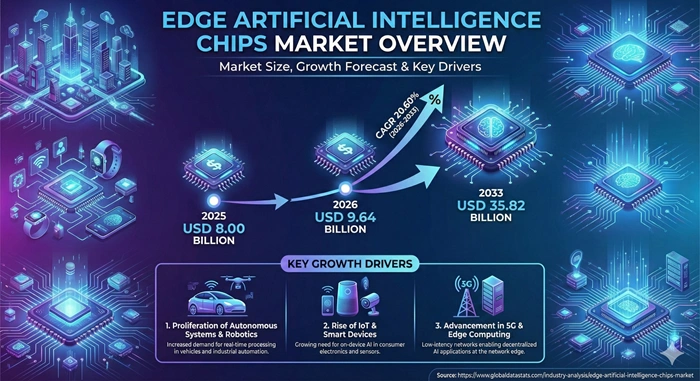
AI Impact on the Edge Artificial Intelligence Chips Industry
Enabling Autonomous Intelligence and Real-Time Decision-Making at Device Level
Artificial intelligence fundamentally transforms the edge artificial intelligence chips market by creating unprecedented demand for specialized processors capable of executing sophisticated neural networks, deep learning models, and computer vision algorithms directly on resource-constrained devices. Traditional computing architectures struggled to handle the massive parallel processing requirements of modern AI workloads, leading semiconductor companies to develop purpose-built chips incorporating tensor cores, neural engines, and AI accelerators optimized specifically for machine learning inference operations. These specialized processors deliver 10-100 times better performance per watt compared to general-purpose CPUs when running AI algorithms, making practical applications previously impossible on battery-powered edge devices including facial recognition on smartphones, obstacle detection in drones, anomaly detection in industrial sensors, and voice processing in smart speakers.
Furthermore, AI integration drives edge artificial intelligence chips evolution toward more sophisticated capabilities including on-device training where models continuously learn and adapt based on local data without uploading information to cloud servers. Federated learning architectures leverage edge AI chips to train models collaboratively across thousands of devices while preserving privacy, with only model updates rather than raw data transmitted between devices and central servers. Generative AI brings new requirements as large language models and diffusion models demand massive computational resources, spurring development of next-generation edge chips capable of running trimmed versions of these models for applications like real-time translation, content creation, and conversational interfaces. The convergence of AI advancement and edge computing creates virtuous cycles where more powerful chips enable new applications, while expanding use cases justify investments in even more capable semiconductor technologies.
Growth Factors
IoT Device Proliferation and Real-Time Processing Requirements Drive Market Expansion
The edge artificial intelligence chips market experiences robust growth driven by explosive proliferation of IoT devices worldwide, with projections indicating over 75 billion connected devices by 2025 generating unprecedented data volumes requiring local processing capabilities. Smart homes deploy dozens of connected devices including security cameras, thermostats, appliances, and entertainment systems that benefit from edge AI enabling voice control, behavior prediction, anomaly detection, and automated responses without constant cloud connectivity. Industrial IoT applications span predictive maintenance sensors monitoring equipment vibration and temperature patterns, vision systems inspecting product quality, autonomous mobile robots navigating warehouse floors, and environmental sensors tracking conditions across manufacturing facilities. Each application generates continuous data streams that prove impractical or impossible to transmit entirely to cloud servers, creating demand for edge AI chips processing information locally and transmitting only actionable insights.
Real-time processing requirements across safety-critical applications accelerate edge artificial intelligence chips adoption as millisecond-level latency proves essential for autonomous vehicles detecting obstacles, medical devices monitoring patient conditions, industrial robots avoiding collisions, and security systems identifying threats. Autonomous driving systems must process data from multiple cameras, lidar sensors, and radar units making split-second decisions about steering, braking, and acceleration based on road conditions, nearby vehicles, pedestrians, and traffic signals. Cloud processing introduces unacceptable latency ranging from 50-100 milliseconds even with optimal network conditions, while edge AI chips enable processing in under 10 milliseconds allowing vehicles to react as quickly as human drivers. Healthcare applications including remote patient monitoring, surgical robots, and diagnostic equipment similarly require instantaneous processing without tolerance for network delays or connectivity interruptions that could compromise patient safety.
Market Outlook
Strong Growth Trajectory Supported by 5G Deployment and Automotive Transformation
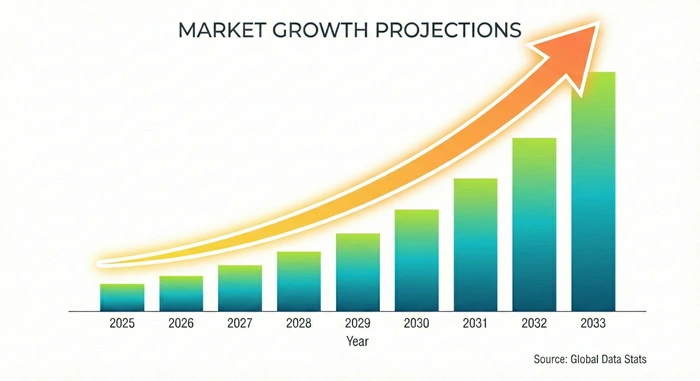
The edge artificial intelligence chips market demonstrates exceptional growth prospects through the forecast period, supported by global 5G network deployment enabling ultra-low latency connectivity, massive device density, and edge computing infrastructure supporting distributed AI workloads. The convergence of 5G with edge AI creates powerful synergies as high-bandwidth low-latency networks enable new applications including augmented reality experiences, remote surgery, autonomous vehicle coordination, and smart city systems while edge processing reduces bandwidth demands and enables functionality during network disruptions. Telecommunications providers invest billions building edge data centers located closer to users enabling hybrid architectures where simple AI tasks execute on device chips, complex processing occurs at network edge servers, and only periodic training updates utilize centralized cloud resources.
Investment in the edge artificial intelligence chips market spans semiconductor manufacturer R&D developing advanced process nodes below 5nm enabling billions of transistors on tiny chips, venture capital funding for specialized AI chip startups creating novel architectures, strategic acquisitions by established players expanding capabilities, and massive corporate spending by automakers, consumer electronics manufacturers, and industrial companies integrating edge AI into products. The automotive industry transformation toward electric and autonomous vehicles creates particularly strong demand as modern vehicles incorporate dozens of AI chips processing sensor data, managing battery systems, optimizing energy consumption, and providing advanced driver assistance features. Government initiatives including smart city programs, defense modernization, healthcare digitization, and manufacturing competitiveness drive additional demand while regulations around data privacy, algorithmic accountability, and cybersecurity influence chip design priorities emphasizing security features, explainability capabilities, and privacy-preserving processing.
Expert Speaks
-
Jensen Huang, Founder and CEO of NVIDIA Corporation, stated that "generative AI is reshaping industries and opening new opportunities for innovation and growth. Today, we're at the cusp of a major shift in computing. The intersection of AI and accelerated computing is set to redefine the future".
-
Cristiano Amon, CEO of Qualcomm Technologies Inc., emphasized that "AI is the new UI. The user interface has now become human-centric. It adapts to you and understands your context – where you are, what you are doing. The interesting thing is the edge. It's no longer just important to run certain things on your phone or PC — it's now a requirement".
-
Michelle Johnston Holthaus, Intel CEO, highlighted that edge AI represents "one of Intel's most important priorities and most exciting areas of opportunity, not only in traditional general-purpose computing but also in the emerging realms of inference workloads driven by agentic AI and physical AI".
Key Report Takeaways
-
Asia Pacific leads the edge artificial intelligence chips market with the largest regional share of 35% in 2024, driven by robust semiconductor manufacturing ecosystem, rapid consumer electronics adoption, massive IoT deployments, and government-backed AI initiatives across China, Japan, South Korea, and India
-
North America emerges as the fastest-growing region during the forecast period, fueled by substantial investments in edge computing infrastructure, expanding autonomous vehicle development, strong focus on digital transformation across sectors, and presence of leading technology innovators
-
ASICs segment dominates the chip type category with 35% market share in 2024, offering high performance, low latency, and optimized power efficiency tailored for specific AI tasks, with widespread deployment in smartphones, smart cameras, and IoT devices
-
NPUs/AI Accelerators demonstrate the fastest growth rate during the forecast period with projected CAGR exceeding 22%, driven by increasing need for deep learning capabilities, real-time inference requirements, and explosive growth in AI-powered edge devices
-
Consumer electronics holds the largest application segment share at 40% in 2024, leveraging edge AI chips for smartphones, wearables, smart home devices, voice assistants, image enhancement, and predictive analytics applications
-
Automotive segment exhibits the fastest application growth during the forecast period, driven by autonomous vehicle development, advanced driver assistance systems deployment, connected vehicle features, and real-time sensor data processing requirements
Market Scope
| Report Coverage | Details |
|---|---|
| Market Size by 2033 | USD 35.82 Billion |
| Market Size by 2025 | USD 8.00 Billion |
| Market Size by 2026 | USD 9.64 Billion |
| Market Growth Rate from 2026 to 2033 | CAGR of 20.60% |
| Dominating Region | Asia Pacific |
| Fastest Growing Region | North America |
| Base Year | 2025 |
| Forecast Period | 2026 to 2033 |
| Segments Covered | Chip Type, Component Type, Technology Node, Application, End-Use Industry, Form Factor, Region |
| Regions Covered | North America, Europe, Asia Pacific, Latin America, Middle East & Africa |
Market Dynamics
Drivers Impact Analysis
Privacy Concerns and Bandwidth Optimization Requirements Accelerate Adoption
Privacy and security concerns significantly drive edge artificial intelligence chips market growth as organizations and consumers increasingly prefer processing sensitive data locally on devices rather than transmitting information to cloud servers vulnerable to interception, breaches, and unauthorized access. Healthcare applications handling patient medical records, diagnostic images, and physiological monitoring data face strict regulatory requirements under HIPAA and GDPR mandating data protection measures that edge processing inherently provides by keeping information within device boundaries. Financial services deploying biometric authentication, fraud detection, and transaction monitoring systems similarly benefit from edge AI chips enabling analysis without exposing account details, payment credentials, or personal identification to external networks. Consumer privacy awareness drives demand for edge processing in smartphones, home security cameras, and smart speakers as users express concerns about companies collecting voice recordings, facial images, and behavioral data transmitted to cloud servers.
Bandwidth optimization requirements propel edge artificial intelligence chips adoption as transmitting massive data volumes from billions of IoT devices to centralized cloud servers proves economically and technically impractical. Security cameras generating continuous 4K video streams produce over 100GB daily per device, making cloud transmission prohibitively expensive and bandwidth-intensive for deployments spanning hundreds or thousands of cameras. Edge AI chips enable local video analysis detecting only relevant events like unauthorized entries or suspicious behaviors, transmitting brief clips rather than complete feeds reducing bandwidth consumption by 95% or more. Industrial facilities deploying thousands of sensors monitoring temperature, vibration, pressure, and other parameters similarly benefit from edge processing filtering noise, detecting anomalies, and reporting only significant deviations rather than streaming raw data continuously. The combination of privacy protection and bandwidth efficiency creates compelling economic and technical justifications for edge AI deployment across diverse applications.
| Driver | ≈ Impact on CAGR Forecast | Geographic Relevance | Impact Timeline |
|---|---|---|---|
| Privacy Concerns and On-Device Processing Demand | High (+4-5%) | Global, particularly Europe and North America | Immediate to Long-term (2026-2033) |
| Bandwidth Optimization and Network Cost Reduction | High (+3-4%) | Global, particularly emerging markets | Immediate to Long-term (2026-2033) |

Restraints Impact Analysis
High Development Costs and Power Consumption Challenges Limit Growth
High development costs represent significant restraints affecting edge artificial intelligence chips market growth as designing and manufacturing advanced AI processors require massive investments in research, specialized engineering talent, expensive design tools, and cutting-edge semiconductor fabrication facilities. Developing chips using advanced process nodes below 7nm costs tens of millions of dollars for tape-out cycles alone, with total development expenses including architecture design, verification, testing, and qualification often exceeding USD 100-300 million for complex AI processors. These financial barriers create substantial advantages for established semiconductor giants possessing necessary capital, expertise, and fabrication partnerships while limiting market entry opportunities for startups and smaller companies lacking resources. The high upfront investment extends development timelines requiring 2-3 years from initial design to production chips, creating risks that market requirements or competitive landscape shifts before products reach customers.
Power consumption and thermal management constraints challenge edge artificial intelligence chips deployment particularly in battery-operated devices where energy efficiency directly impacts user experience through battery life and device longevity. High-performance AI workloads demand substantial computational resources generating heat that compact mobile devices struggle to dissipate, leading to thermal throttling reducing performance during sustained operations. Smartphones, wearables, drones, and other portable applications face strict power budgets measured in watts requiring careful optimization balancing AI capabilities against battery drain. Edge devices deployed in remote locations powered by solar panels or small batteries prove even more constrained, limiting viable AI complexity. Designing chips achieving required performance within tight power envelopes demands sophisticated architectural innovations including dynamic voltage and frequency scaling, specialized low-power modes, efficient memory hierarchies, and advanced manufacturing processes enabling better performance per watt, all adding development complexity and costs.
| Restraint | ≈ Impact on CAGR Forecast | Geographic Relevance | Impact Timeline |
|---|---|---|---|
| High Development Costs and R&D Investment Requirements | Medium (-2-3%) | Global, particularly impacting startups and SMEs | Immediate to Long-term (2026-2033) |
| Power Consumption and Thermal Management Constraints | Medium (-2-3%) | Global, particularly mobile and remote applications | Immediate to Medium-term (2026-2030) |
Opportunities Impact Analysis
5G Integration and Automotive Industry Transformation Create Growth Avenues
The integration of 5G networks with edge AI infrastructure creates transformative opportunities for the edge artificial intelligence chips market by enabling ultra-low latency communication, massive device connectivity, and distributed computing architectures combining on-device processing with network edge servers. 5G networks provide latency under 10 milliseconds compared to 50-100 milliseconds for 4G, enabling applications requiring near-instantaneous responses including augmented reality overlays, multiplayer gaming, remote equipment operation, and collaborative robotics. The combination of edge AI chips processing data locally with 5G enabling rapid coordination between devices creates powerful capabilities impossible with either technology independently. Telecommunications providers building 5G infrastructure invest heavily in edge computing facilities located at network edges enabling hybrid processing where lightweight tasks execute on device chips while complex analysis occurs at nearby edge servers accessed through high-speed 5G connections.
The automotive industry transformation toward autonomous, electric, and connected vehicles creates substantial opportunities as edge artificial intelligence chips become essential components enabling safety-critical features, energy optimization, and advanced user experiences. Modern vehicles incorporate 10-20 AI chips processing data from dozens of cameras, radar, lidar, and ultrasonic sensors enabling features including adaptive cruise control, lane keeping assistance, automatic emergency braking, parking assistance, and driver monitoring. Fully autonomous vehicles under development require even more sophisticated edge AI processing analyzing sensor data continuously making thousands of decisions per second about navigation, obstacle avoidance, traffic rule compliance, and passenger safety. The global automotive AI chip market projected to reach USD 15 billion by 2030 creates focused growth opportunities for semiconductor companies developing specialized processors meeting automotive reliability, temperature tolerance, and safety certification requirements. Electric vehicle adoption adds demand for AI chips optimizing battery management, predicting range, and controlling power distribution while connected vehicle features including over-the-air updates, predictive maintenance, and infotainment systems require additional processing capabilities.
| Opportunity | ≈ Impact on CAGR Forecast | Geographic Relevance | Impact Timeline |
|---|---|---|---|
| 5G Integration and Ultra-Low Latency Applications | High (+4-5%) | Global, particularly developed markets with 5G deployment | Medium to Long-term (2027-2033) |
| Automotive Industry Transformation and Autonomous Vehicles | High (+4-5%) | Global, particularly North America, Europe, and China | Immediate to Long-term (2026-2033) |
Segment Analysis
Chip Type Analysis
ASICs Dominate Market While NPUs/AI Accelerators Demonstrate Rapid Growth
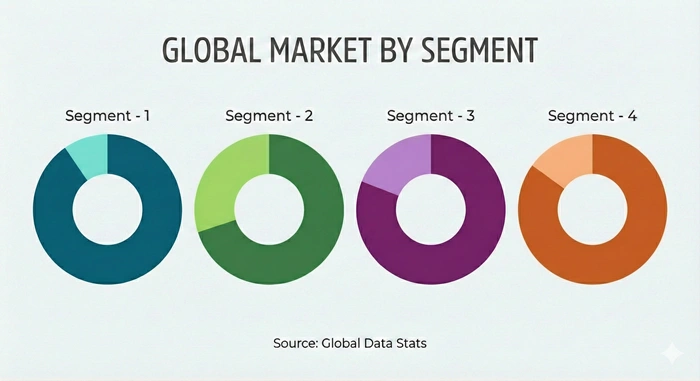
The application-specific integrated circuits segment accounts for 35% of the edge artificial intelligence chips market share in 2024, driven by ability to offer high performance, low latency, and optimized power efficiency specifically tailored for particular AI tasks including image recognition, voice processing, and sensor data analysis. ASICs achieve superior efficiency compared to general-purpose processors by eliminating unnecessary functionality, optimizing circuits exclusively for target workloads, and leveraging custom memory architectures minimizing data movement overhead. Major technology companies including Apple, Google, and Huawei deploy proprietary ASICs in smartphones and consumer devices achieving 2-5 times better performance per watt compared to programmable alternatives for specific applications like neural network inference. The segment benefits from economies of scale as consumer electronics manufacturers produce hundreds of millions of devices annually justifying expensive ASIC development costs amortized across massive production volumes, while customization enables competitive differentiation through unique capabilities unavailable from commodity processors.
The neural processing units and AI accelerators segment demonstrates the fastest projected growth rate exceeding CAGR of 22% during the forecast period as organizations require specialized chips optimized for deep learning workloads, real-time inference operations, and emerging generative AI applications. Edge artificial intelligence chips incorporating dedicated NPUs deliver 10-50 times faster neural network processing compared to CPUs by implementing hardware optimized for matrix multiplications, convolutions, and other operations fundamental to machine learning algorithms. The explosive growth of AI-powered applications across smartphones, autonomous vehicles, industrial robots, and security systems drives demand for NPU capabilities as software increasingly relies on sophisticated neural networks requiring specialized hardware acceleration. Asia Pacific leads NPU adoption driven by consumer electronics manufacturing concentrated in China, Japan, South Korea, and Taiwan where companies including MediaTek, Samsung, and Huawei integrate AI accelerators into processors powering billions of mobile devices, while North America exhibits rapid growth as automotive companies and technology giants develop custom NPUs for autonomous vehicles, data centers, and edge computing platforms.
Application Analysis
Consumer Electronics Leads While Automotive Exhibits Fastest Growth
The consumer electronics segment holds the largest share at 40% in the 2024 edge artificial intelligence chips market, driven by massive integration of AI-powered chips in smartphones, wearables, smart TVs, gaming devices, and home automation systems serving billions of users globally. Smartphones represent the single largest application incorporating multiple AI chips enabling camera enhancements like portrait mode and night photography, voice assistants processing natural language queries, facial recognition for security, predictive text entry, battery optimization, and app recommendations. Wearable devices including smartwatches and fitness trackers leverage edge AI for health monitoring analyzing heart rate patterns, detecting falls, tracking sleep quality, and providing personalized coaching without constant smartphone connectivity. Smart home devices spanning security cameras, doorbell monitors, thermostats, and appliances deploy edge AI enabling voice control, behavior learning, anomaly detection, and automated responses creating convenient, personalized experiences driving consumer adoption.
The automotive segment exhibits the fastest projected CAGR during the forecast period as vehicle electrification, autonomous driving development, and connected features transform automobiles into sophisticated mobile computing platforms requiring extensive edge artificial intelligence chips processing capabilities. Advanced driver assistance systems deployed in mainstream vehicles rely on edge AI analyzing camera and radar data enabling features including adaptive cruise control maintaining safe following distances, lane departure warnings preventing unintended drifts, automatic emergency braking detecting collision risks, and blind spot monitoring alerting drivers to nearby vehicles. The progression toward fully autonomous driving requires exponentially more edge AI processing power as vehicles must continuously analyze data from 10-20 sensors including cameras providing 360-degree visibility, lidar creating detailed 3D environment maps, radar detecting object distances and velocities, and GPS providing location information. North America leads automotive edge AI adoption through aggressive autonomous vehicle development by companies including Tesla, Waymo, Cruise, and traditional automakers, while Europe demonstrates strong growth driven by stringent safety regulations mandating advanced driver assistance features and major automotive manufacturers including Mercedes, BMW, and Volkswagen investing billions in autonomous technology, and Asia Pacific exhibits rapid expansion as Chinese electric vehicle makers including BYD, NIO, and XPeng integrate sophisticated AI capabilities competing with established global brands.
Regional Insights
Asia Pacific
Manufacturing Ecosystem Strength and Government Initiatives Drive Regional Leadership
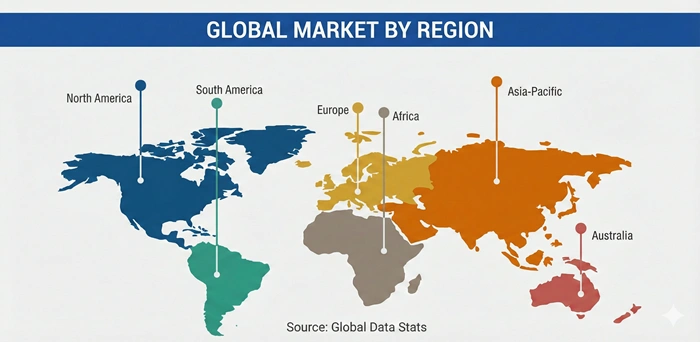
Asia Pacific dominates the global edge artificial intelligence chips market with 35% market share in 2024, supported by robust semiconductor manufacturing ecosystem concentrated in Taiwan, South Korea, China, and Japan, rapid consumer electronics adoption across massive populations exceeding 4 billion people, extensive IoT device deployments, and aggressive government initiatives promoting AI development as national strategic priorities. The region benefits from presence of leading semiconductor foundries including TSMC and Samsung producing majority of world's advanced chips using cutting-edge process nodes, enabling local fabless chip designers to access latest manufacturing technologies. China pursues AI leadership through government programs including Made in China 2025 and New Generation AI Development Plan providing billions in funding, tax incentives, and preferential policies supporting domestic chip development while companies including Huawei, Baidu, and Alibaba invest heavily in custom edge AI processors for smartphones, cloud services, and autonomous vehicles.
The Asia Pacific edge artificial intelligence chips market demonstrates particular strength across consumer electronics, smartphones, and IoT applications where regional manufacturers including Samsung, Xiaomi, OPPO, Vivo, and Realme produce over 60% of global smartphone shipments integrating sophisticated edge AI capabilities. Japan maintains leadership in automotive electronics and industrial automation deploying edge AI across robotics, manufacturing equipment, and vehicle systems, while South Korea leverages electronics industry strength incorporating AI chips across consumer devices, displays, and appliances. India exhibits explosive growth driven by expanding smartphone penetration, government Digital India initiative, growing startup ecosystem developing innovative applications, and increasing manufacturing capacity as global companies establish production facilities. Southeast Asian nations including Vietnam, Thailand, Indonesia, and Malaysia demonstrate rapid adoption as manufacturing relocates from China, smart city initiatives deploy IoT infrastructure, and growing middle classes drive consumer electronics demand. The region faces challenges including varying regulatory frameworks across countries, intellectual property protection concerns, and talent competition, but sustained government support, manufacturing advantages, and massive domestic markets position Asia Pacific for continued edge AI chips market leadership.
North America
Technology Innovation and Autonomous Vehicle Development Fuel Regional Growth
North America emerges as the fastest-growing region for the edge artificial intelligence chips market during the forecast period, driven by substantial investments in edge computing infrastructure, aggressive autonomous vehicle development by automotive and technology companies, strong corporate focus on digital transformation across industries, and presence of leading semiconductor innovators including NVIDIA, Intel, Qualcomm, AMD, and specialized startups. The United States leads regional activity with market reaching USD 2.88 billion in 2025, fueled by technology giants including Apple, Google, Microsoft, and Amazon developing custom AI chips for smartphones, cloud services, smart home devices, and autonomous systems while automotive companies including Tesla, GM, and Ford invest billions integrating edge AI across vehicle platforms. The region benefits from sophisticated venture capital ecosystem funding dozens of specialized edge AI chip startups developing novel architectures for specific applications, robust university research programs advancing semiconductor technologies, and strong collaboration between industry, academia, and government laboratories.
The North American edge artificial intelligence chips market thrives through automotive industry transformation as the region serves as primary development hub for autonomous driving technologies with companies including Waymo, Cruise, Aurora, and Zoox testing self-driving systems requiring massive edge AI processing capabilities. Major automotive suppliers including Aptiv, Bosch, and Continental develop advanced edge AI solutions for driver assistance and autonomous features supplied to manufacturers globally. Healthcare represents another strong growth area as hospitals, medical device manufacturers, and telehealth providers deploy edge AI enabling diagnostic imaging analysis, patient monitoring, surgical assistance, and predictive health analytics while complying with strict HIPAA privacy regulations favoring local processing. Industrial applications span manufacturing automation, predictive maintenance, quality inspection, and supply chain optimization as companies pursue Industry 4.0 transformation. Canada contributes to regional growth through advanced AI research institutions, government programs supporting technology development, and aerospace, telecommunications, and natural resources industries adopting edge AI capabilities. The region faces intensifying competition from Asia Pacific manufacturing advantages and Europe's regulatory frameworks, but technology innovation leadership, strong intellectual property protection, and substantial domestic markets across automotive, healthcare, and enterprise sectors position North America for sustained edge artificial intelligence chips market expansion.
Top Key Players
-
NVIDIA Corporation (United States)
-
Intel Corporation (United States)
-
Qualcomm Technologies Inc. (United States)
-
Advanced Micro Devices Inc. (United States)
-
Apple Inc. (United States)
-
Samsung Electronics Co. Ltd. (South Korea)
-
Huawei Technologies Co. Ltd. (China)
-
MediaTek Inc. (Taiwan)
-
Broadcom Inc. (United States)
-
Google LLC (United States)
-
Xilinx Inc. (United States)
-
Texas Instruments Incorporated (United States)
-
NXP Semiconductors (Netherlands)
-
Arm Holdings (United Kingdom)
-
Ambarella Inc. (United States)
Recent Developments
-
July 2025: Hailo launched the Hailo 10H edge AI accelerator as the first discrete chip optimized for generative AI workloads at the edge, delivering 40 TOPS INT4 and 20 TOPS INT8 performance at just 2.5W power consumption, with HP adopting it for AI Accelerator M.2 Card enabling on-device large language model processing
-
May 2025: Samsung Electronics released the Galaxy S25 series smartphones integrating advanced edge AI capabilities through Galaxy AI, enabling on-device processing for personalized, context-aware experiences including AI agents operating across multiple apps, real-time photo and audio editing, and privacy-focused data handling powered by Snapdragon 8 Elite Mobile Platform
-
April 2025: Intel Corporation announced strategic pivot toward homegrown AI chip development for edge and robotics use cases, moving away from acquisitions toward evolving in-house platforms focusing on agentic AI and physical AI applications requiring specialized edge processing capabilities
-
February 2025: Apple Inc. collaborated with educational institutions including UCLA's Center for Education of Microchip Designers to bolster AI and silicon engineering talent development, supporting future edge AI initiatives and ensuring pipeline of skilled professionals advancing chip design capabilities
-
November 2023: MediaTek introduced the Dimensity 9300 flagship mobile chip featuring unique all-big core design combining extreme performance with industry-leading power efficiency, delivering enhanced user experiences in gaming, video capture, and on-device generative AI processing for smartphones
Market Trends
Generative AI Integration and Specialized Vertical Solutions Transform Chip Development
The edge artificial intelligence chips market demonstrates clear trends toward generative AI integration as semiconductor companies develop processors capable of running large language models, diffusion models, and multimodal AI applications directly on edge devices without cloud connectivity. Traditional edge AI chips focused primarily on inference tasks running pre-trained models for image classification, object detection, and voice recognition, while generative AI demands substantially more computational resources generating novel content including text, images, code, and audio. Next-generation edge processors incorporate capabilities supporting transformer architectures, attention mechanisms, and large parameter models through innovations including mixed-precision computing, sparse neural network acceleration, and efficient memory architectures enabling billion-parameter models running on smartphone-class devices. The integration of generative AI at the edge enables applications including real-time language translation, conversational assistants, content creation tools, and personalized recommendations executing locally protecting privacy while delivering instantaneous responses impossible with cloud-dependent alternatives.
Specialized vertical solutions represent another significant trend as edge artificial intelligence chips evolve from general-purpose AI accelerators toward industry-specific processors optimized for particular application requirements, regulatory constraints, and performance characteristics. Automotive chips incorporate functional safety features meeting ISO 26262 certification requirements, operate across extended temperature ranges from -40°C to 125°C, and provide redundancy enabling fail-operational behavior critical for autonomous driving safety. Healthcare chips integrate encryption hardware, secure boot mechanisms, and isolated processing environments supporting HIPAA compliance while optimizing for medical imaging analysis, diagnostic algorithms, and patient monitoring workloads. Industrial chips emphasize reliability, longevity, and harsh environment tolerance enabling deployment in factories, oil fields, and outdoor installations while supporting predictive maintenance, quality inspection, and process optimization applications. The vertical specialization enables chip companies to command premium pricing by delivering immediate value through pre-optimized capabilities, industry certifications, and specialized features reducing time-to-market and development costs for customers compared to adapting general-purpose processors to specific industry requirements.
Segments Covered in the Report
By Chip Type
-
Application-Specific Integrated Circuits (ASICs)
-
Field Programmable Gate Arrays (FPGAs)
-
Graphics Processing Units (GPUs)
-
Central Processing Units (CPUs)
-
Neural Processing Units (NPUs) / AI Accelerators
-
Digital Signal Processors (DSPs)
-
Vision Processing Units (VPUs)
By Component Type
-
Hardware (Processor Units, Memory Units, Sensors)
-
Software (AI Frameworks & SDKs, Middleware & APIs)
By Technology Node
-
7nm and Below
-
8nm to 14nm
-
15nm to 28nm
-
Above 28nm
By Application
-
Consumer Electronics (Smartphones, Wearables, Smart Home Devices)
-
Automotive (Autonomous Vehicles, ADAS)
-
Healthcare (Portable Medical Devices, Diagnostic Equipment)
-
Industrial Automation (Robotics, Predictive Maintenance)
-
Surveillance & Security (Smart Cameras, Drones)
-
Retail (Smart Vending Machines, Customer Analytics)
-
Smart Agriculture
-
Smart Cities
By End-Use Industry
-
Automotive
-
Healthcare
-
Consumer Electronics
-
Manufacturing & Industrial
-
Telecommunications
-
Retail & E-Commerce
-
Government & Defense
-
Energy & Utilities
By Form Factor
-
Embedded Edge AI Chips
-
Standalone Edge AI Chips
By Region
-
North America (United States, Canada, Mexico)
-
Europe (United Kingdom, Germany, France, Italy, Spain)
-
Asia Pacific (China, Japan, India, South Korea, Taiwan, Southeast Asia)
-
Latin America (Brazil, Argentina, Chile)
-
Middle East & Africa (UAE, Saudi Arabia, South Africa)
Frequently Asked Questions
Question 1: What is the edge artificial intelligence chips market size and projected growth?
Answer: The global edge artificial intelligence chips market is valued at USD 8.00 billion in 2025 and is predicted to reach USD 35.82 billion by 2033, growing at a CAGR of 20.60% from 2026 to 2033. This growth reflects increasing IoT device adoption, autonomous vehicle development, privacy concerns driving on-device processing, and 5G network deployment enabling edge computing infrastructure.
Question 2: Which region dominates the edge artificial intelligence chips market currently?
Answer: Asia Pacific leads the edge artificial intelligence chips market with 35% market share in 2024, supported by robust semiconductor manufacturing ecosystem and massive consumer electronics production. North America demonstrates the fastest growth rate driven by autonomous vehicle development, substantial edge computing investments, and strong technology innovation across automotive, healthcare, and industrial sectors.
Question 3: What chip types drive the edge artificial intelligence chips market expansion?
Answer: ASICs hold the largest share at 35% in 2024 through high performance and power efficiency for specific AI tasks deployed in smartphones and IoT devices. NPUs/AI Accelerators demonstrate the fastest growth exceeding 22% CAGR driven by increasing deep learning requirements, real-time inference demands, and explosive growth in AI-powered edge applications across industries.
Question 4: How does the edge artificial intelligence chips market benefit from automotive applications?
Answer: The edge artificial intelligence chips market leverages automotive transformation through autonomous vehicle development requiring massive sensor data processing, ADAS deployment enabling safety features, and connected vehicle capabilities demanding local intelligence. Modern vehicles incorporate 10-20 AI chips processing camera, radar, and lidar data enabling real-time decision-making critical for navigation, obstacle avoidance, and passenger safety.
Question 5: What challenges affect edge artificial intelligence chips market adoption?
Answer: The edge artificial intelligence chips market faces challenges including high development costs exceeding USD 100-300 million for advanced AI processors limiting startup participation, and power consumption constraints affecting battery-operated devices requiring careful optimization. Thermal management issues, limited on-device training capabilities, skills shortages, and balancing performance with energy efficiency also constrain adoption particularly in resource-constrained applications.