
Disposable Trocars Market Overview
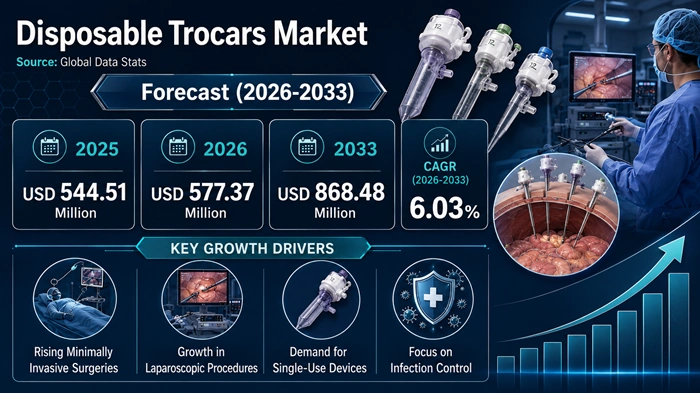
The global disposable trocars market size is valued at USD 544.51 million in 2025 and is predicted to increase from USD 577.37 million in 2026 to approximately USD 868.48 million by 2033, growing at a CAGR of 6.03% from 2026 to 2033.
Disposable trocars are single-use surgical access devices used in minimally invasive procedures — consisting of a hollow cannula and an obturator — that create a portal through the abdominal wall for the introduction of laparoscopic instruments. Rising global adoption of minimally invasive surgery, growing preference for single-use devices that eliminate cross-contamination risk, expanding surgical procedure volumes worldwide, and continuous product innovations in tip design and integration with robotic surgery platforms are collectively driving consistent growth in the single-use trocar segment throughout the forecast period.
AI Impact on the Disposable Trocars Industry
Robotic Surgery Integration, AI-Powered Surgical Navigation, and Smart Sensor-Embedded Access Devices Are Reshaping the Disposable Trocars Market from a Commodity Instrument into an Intelligent Surgical Access System
Artificial intelligence is transforming the disposable trocars market by progressively embedding these instruments within broader digital surgery ecosystems where real-time data capture, robotic guidance, and AI-assisted decision support elevate their clinical utility beyond simple tissue access. AI-powered surgical planning platforms now use preoperative imaging data to model the optimal trocar placement configuration for a specific patient's anatomy and the target procedure — reducing placement errors that can cause vascular injury, bowel perforation, or inadequate instrument triangulation within the operative field. Leading robotic surgery system manufacturers including Intuitive Surgical and Medtronic are designing proprietary single-use trocar systems that integrate directly with their robotic platforms, enabling intelligent instrument tracking, seal integrity monitoring, and automatic insufflation pressure adjustment in response to real-time readings from pressure sensors embedded in the trocar cannula. These capabilities are fundamentally changing the commercial value proposition of disposable trocars — transforming them from low-cost consumable access devices into premium intelligent surgical infrastructure that commands higher unit pricing and generates data that feeds back into continuous surgical outcome improvement programs.
The manufacturing and quality assurance dimensions of the disposable trocars market are also being transformed by AI-powered production technologies. Computer vision systems integrated into gummy extrusion and assembly lines inspect dimensional tolerances, tip geometry precision, and seal integrity on every unit produced — catching manufacturing deviations that would be impossible to detect through statistical sampling approaches at the production speeds required for high-volume single-use device manufacturing. AI-driven demand forecasting is helping medical device distributors and hospital supply chain teams optimize disposable trocar inventory levels, reducing the waste and stockout risk that have historically characterized single-use surgical device procurement. As hospitals increasingly transition to data-driven surgical supply chain management platforms, manufacturers that can provide real-time product availability, procedure-linked consumption analytics, and predictive replenishment capabilities will build competitive advantages that extend beyond product quality into integrated supply chain partnership relationships with major health system customers.
Growth Factors
The Global Transition to Minimally Invasive Surgery and the Healthcare Industry's Decisive Shift from Reusable to Single-Use Sterile Instruments Are the Two Most Powerful Structural Growth Drivers in the Disposable Trocars Market
The global acceleration of minimally invasive surgery (MIS) adoption is the most commercially significant and durable growth driver in the disposable trocars market. Laparoscopic and robotic-assisted surgical procedures — which require trocar-based abdominal access to introduce cameras, energy devices, and tissue manipulation instruments — have grown from niche surgical techniques to the standard of care across general surgery, gynecology, urology, colorectal surgery, and bariatric surgery over the past two decades. Globally, more than 10 million laparoscopic procedures are performed annually, and this volume is growing as MIS techniques are adopted by surgeons in emerging markets who are gaining training access through simulation platforms, surgical education programs, and demonstration facilities established by device manufacturers seeking to develop demand in high-growth geographies. Each laparoscopic procedure requiring multiple trocar ports — typically between three and five — creates direct, procedure-linked demand for disposable trocar units, making overall MIS volume growth the most reliable commercial predictor of disposable trocar market expansion.
The healthcare industry's decisive shift from reusable surgical instruments to single-use sterile devices is the second structural driver transforming the commercial opportunity for disposable trocars. Healthcare-associated infection prevention has become a top institutional priority for hospitals worldwide — particularly in the context of evolving regulatory standards for sterile processing, incidents of infection linked to inadequately reprocessed surgical instruments, and the practical challenges of ensuring complete reprocessing compliance across high-volume, multi-room surgical suites. Single-use disposable trocars eliminate all reprocessing-related contamination risk by definition — delivering guaranteed sterility at the point of use without dependence on cleaning, disinfection, and sterilization processes that are complex, labor-intensive, and subject to human error. Hospital infection control committees, surgical safety programs, and healthcare procurement teams are increasingly specifying disposable trocars as the institutional standard precisely because they simplify infection risk management, reduce liability exposure from reprocessing failures, and align with accreditation body expectations for surgical instrument sterility assurance.

Market Outlook
The Disposable Trocars Market Outlook Through 2033 Is Defined by Robotic Surgery Platform Expansion, Emerging Market Procedure Volume Growth, and Sustainability-Driven Eco-Friendly Device Innovation
The long-term commercial outlook for the disposable trocars market through 2033 is shaped by three converging trends that will simultaneously expand market volume and diversify its revenue architecture. The expansion of robotic surgery platforms beyond the traditional tier-1 academic medical center into community hospitals, ambulatory surgery centers, and healthcare facilities in emerging markets represents the most commercially transformative near-term development. As the installed base of robotic surgery systems expands — driven by the competitive entry of platforms from Medtronic (Hugo RAS System), Johnson & Johnson (Ottava), and CMR Surgical (Versius) alongside Intuitive Surgical's Da Vinci — the associated demand for robot-compatible single-use trocars, cannulae, and access systems will grow proportionally, creating a highly captive recurring revenue stream for the manufacturers whose products are certified for use with each platform. This platform-linked demand model is particularly favorable for leading companies whose proprietary disposable trocar designs are validated as part of specific robotic surgery ecosystem hardware configurations.
Environmental sustainability has emerged as an increasingly prominent commercial consideration in the disposable trocars market, as hospitals and health systems facing sustainability commitments and medical waste reduction targets scrutinize the environmental impact of their single-use device consumption. Medical device manufacturers are responding by developing partial reusability designs — where the reusable outer cannula is combined with a disposable inner obturator and sealing valve — that capture the sterility and convenience advantages of single-use components while reducing overall plastic waste per procedure. Bio-based polymer materials and recyclable packaging initiatives are being explored by leading manufacturers including B. Braun and Applied Medical to reduce the environmental footprint of their single-use trocar lines. These sustainability innovations are expected to command premium pricing in the European and North American hospital markets where sustainability credentials are increasingly weighted in group purchasing organization contract evaluations — creating a new product quality differentiation dimension that operates alongside clinical performance in procurement decisions throughout the forecast period.
Expert Speaks
-
"The expansion of minimally invasive and robotic-assisted surgery is one of the most significant structural trends in global healthcare, and the demand for high-quality, reliable single-use surgical access devices is growing in direct proportion to procedure volume. Our investments in innovative trocar design, robotic system compatibility, and sustainable manufacturing reflect our commitment to meeting the evolving needs of surgeons and health systems worldwide as MIS becomes the standard of care across an expanding range of surgical specialties and geographies." — CEO, Medtronic plc
-
"Single-use surgical instruments have moved from a preference to a standard in many health systems, driven by infection prevention imperatives, regulatory requirements, and the recognition that guaranteed sterility at the point of use is simply the safer and more operationally reliable approach for high-risk surgical instrument categories. The disposable trocars segment is benefiting from this broader institutional transition to single-use sterile devices, and we expect this to be a durable and expanding commercial opportunity through the decade." — CEO, Johnson & Johnson MedTech
-
"Emerging markets represent one of the most exciting growth frontiers for minimally invasive surgery instruments. As healthcare infrastructure investments in China, India, Brazil, and Southeast Asia expand surgical capacity and laparoscopic training programs bring MIS techniques to a new generation of surgeons, the demand for high-quality, affordable disposable surgical access devices is growing at rates that significantly exceed mature market dynamics. Companies that can deliver globally validated quality at emerging market price points will capture disproportionate share of this growth opportunity." — CEO, B. Braun Melsungen AG
Key Report Takeaways
-
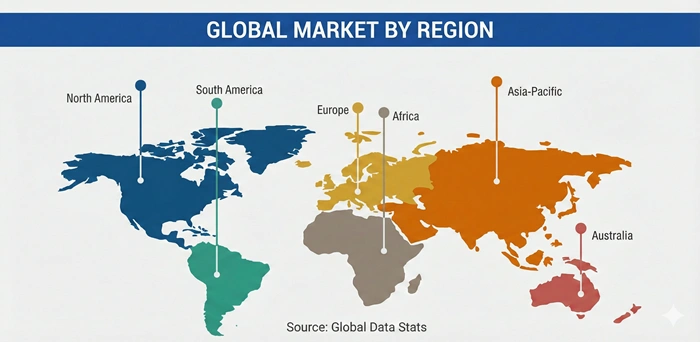
North America leads the global disposable trocars market with approximately 39–40% revenue share in 2025, supported by the world's highest per-capita laparoscopic procedure rates, a well-developed preference for single-use sterile instruments across hospital and ambulatory surgery center environments, strong robotic surgery platform adoption driving proprietary disposable trocar demand, and the concentrated commercial presence of major players including Medtronic, Ethicon (Johnson & Johnson), and Applied Medical in the U.S. market
-
Asia Pacific is the fastest-growing regional market, projected to expand at approximately 7.43% CAGR through 2033, powered by rapidly expanding laparoscopic surgical training infrastructure in China and India, growing medical tourism supporting advanced surgical procedure demand, government healthcare investment programs building hospital surgical capacity, and the expanding commercial presence of both international and domestic medical device companies serving the regional market
-
Bladeless trocars dominate the tip type segment with approximately 44–45% of total tip type revenue in 2025, favored for their demonstrated ability to reduce tissue trauma, lower insertion force requirements, and improve patient recovery outcomes in laparoscopic and robotic procedures — while optical trocars are the fastest-growing tip type at approximately 6.85% CAGR, driven by expanding adoption in robotic surgery platforms and safety-focused surgical protocols requiring direct visual confirmation of safe abdominal wall entry
-
General surgery is the dominant application segment with approximately 46–47% of total application revenue in 2025, reflecting the breadth and volume of laparoscopic general surgical procedures including cholecystectomy, appendectomy, hernia repair, and colectomy — while gynecological surgery is the fastest-growing application at approximately 6.93% CAGR, driven by rapidly growing adoption of laparoscopic and robotic procedures for conditions including fibroids, endometriosis, ovarian cysts, and hysterectomy
-
Hospitals lead the end-user segment with approximately 61–62% of total end-user revenue in 2025 through their role as the primary site for complex multi-port laparoscopic and robotic procedures — while ambulatory surgical centers are the fastest-growing end-user category at approximately 7.13% CAGR, driven by the healthcare system-wide shift toward outpatient surgical delivery that combines cost efficiency, patient convenience, and the clinical feasibility of performing a growing range of laparoscopic procedures on a same-day basis
-
The 10–12mm port size segment holds the largest revenue share at approximately 49–50% in 2025, reflecting its dominance in standard laparoscopic instrumentation protocols across general and gynecological surgery applications — while the 5mm segment is growing fastest at approximately 6.69% CAGR as surgeons adopt reduced-port and single-incision laparoscopic surgery techniques that favor smaller diameter access devices for improved cosmesis and faster patient recovery
Market Scope
| Report Coverage | Details |
|---|---|
| Market Size by 2033 | USD 868.48 Million |
| Market Size by 2025 | USD 544.51 Million |
| Market Size by 2026 | USD 577.37 Million |
| Market Growth Rate from 2026 to 2033 | CAGR of 6.03% |
| Dominating Region | North America |
| Fastest Growing Region | Asia Pacific |
| Base Year | 2025 |
| Forecast Period | 2026 to 2033 |
| Segments Covered | Tip Type, Application, End User, Port Size, Region |
| Regions Covered | North America, Europe, Asia Pacific, Latin America, Middle East & Africa |
Market Dynamics
Drivers Impact Analysis
Rising Global Laparoscopic Procedure Volumes and the Healthcare-Wide Infection Prevention Mandate Driving Single-Use Instrument Adoption Are the Two Strongest Commercial Growth Catalysts in the Disposable Trocars Market
| Driver | ≈ % Impact on CAGR Forecast | Geographic Relevance | Impact Timeline |
|---|---|---|---|
| Rising global minimally invasive surgery procedure volumes | ~34% | Global, led by North America, Asia Pacific | Long-term |
| Healthcare-associated infection prevention mandates | ~26% | North America, Europe, Asia Pacific | Medium to long-term |
| Robotic surgery platform expansion and proprietary trocar adoption | ~22% | North America, Europe, Japan | Medium to long-term |
| Ambulatory surgery center growth and outpatient procedure migration | ~12% | North America, Europe | Short to medium-term |
| Emerging market healthcare infrastructure development | ~6% | Asia Pacific, Latin America, MEA | Medium to long-term |
The relationship between MIS procedure volume growth and disposable trocar demand is among the most direct and reliable commercial demand drivers in the medical device industry. Each laparoscopic procedure consumes between three and five disposable trocar units depending on the procedure type and surgeon preference — creating a highly predictable, procedure-linked consumption pattern that grows in direct proportion to MIS volume expansion. As laparoscopic surgery becomes the dominant modality across an expanding range of elective and emergency surgical indications — with robotic-assisted MIS extending the technically feasible procedure range to more complex and previously open-surgery-only operations — the volume of trocar units consumed per year grows correspondingly. Healthcare systems in developed markets are actively encouraging outpatient laparoscopic procedures through reimbursement policies that reward shorter hospital stays and same-day discharge — accelerating the shift of surgical volume from inpatient operating rooms to ambulatory surgery centers that prefer single-use instruments for their streamlined sterile processing workflows.
The infection prevention mandate driving institutional preference for disposable surgical instruments operates as a regulatory, quality standards, and liability risk management imperative simultaneously — making it a more durable commercial driver than simple cost-benefit comparisons between single-use and reusable trocars would suggest. Joint Commission accreditation requirements, AORN (Association of periOperative Registered Nurses) best practice guidelines, and EU MDR sterile reprocessing regulations all create institutional frameworks that make reusable surgical instrument programs increasingly complex and liability-laden to operate. Hospital risk management teams evaluating reprocessing failures that have led to outbreak investigations and significant legal liability exposure in multiple healthcare systems are recommending transition to single-use sterile devices for instrument categories where the infection transmission risk is clinically significant. For disposable trocars — which enter the peritoneal cavity and create pathways between the external environment and sterile surgical fields — the infection prevention case for single-use over reusable designs is particularly compelling and is driving policy decisions in health systems across North America and Europe that have adopted blanket single-use policies for all penetrating laparoscopic access devices.

Restraints Impact Analysis
High Per-Unit Cost Relative to Reusables and Growing Medical Waste Concerns Are the Two Primary Commercial Barriers Limiting Disposable Trocars Market Penetration in Cost-Sensitive Healthcare Environments
| Restraint | ≈ % Impact on CAGR Forecast | Geographic Relevance | Impact Timeline |
|---|---|---|---|
| Higher per-procedure cost vs. reusable trocar alternatives | ~40% | Asia Pacific, Latin America, MEA, Price-sensitive EU | Medium to long-term |
| Medical waste volume and environmental sustainability concerns | ~32% | Europe, North America | Medium to long-term |
| Limited healthcare infrastructure in low-resource settings | ~20% | Sub-Saharan Africa, Rural Asia Pacific, Latin America | Long-term |
| Regulatory approval timelines for innovative designs | ~8% | Global | Short to medium-term |
The cost differential between disposable and reusable trocars represents the most commercially significant restraint on the disposable trocars market in price-sensitive healthcare environments — particularly in emerging markets and rural healthcare settings in developing nations where per-procedure device budgets are tightly constrained by insurance reimbursement frameworks or public health system procurement budgets. A complete set of three to five reusable trocars for a standard laparoscopic procedure may cost USD 1,500–3,000 for the initial capital purchase but theoretically amortizes this cost across hundreds of reprocessing cycles — while an equivalent disposable trocar set for a single procedure may cost USD 100–300. In hospital systems where reprocessing infrastructure is in place and quality-controlled, this cost comparison can favor reusable products from a pure unit economics perspective — limiting disposable adoption among procurement officers focused on cost per procedure rather than total infection risk cost. Medical device companies are addressing this barrier through advanced manufacturing efficiencies, volume-based pricing agreements with group purchasing organizations, and health economic analyses demonstrating that the true cost of reusable trocars — when reprocessing labor, sterile processing infrastructure, quality assurance programs, and infection-related liability are fully costed — is not as favorable as simple capital cost amortization calculations suggest.
Environmental sustainability concerns represent a growing institutional restraint in European and North American markets, where hospital sustainability programs and regulatory environmental frameworks are scrutinizing the plastic waste generation associated with large-scale single-use device consumption. A typical high-volume laparoscopic surgery center performing 3,000 procedures annually may discard 9,000–15,000 disposable trocar units, generating significant volumes of mixed plastic and metal waste that are difficult to separate for recycling due to their multi-material construction. The European Green Deal and healthcare sector decarbonization commitments are prompting procurement teams in European health systems to evaluate the environmental credentials of single-use device suppliers alongside clinical and cost criteria — creating a regulatory tailwind for manufacturers developing eco-designed disposable trocars using recycled plastics, mono-material construction, or take-back recycling programs, while creating headwinds for companies that cannot demonstrate meaningful sustainability improvements in their product lines.
Opportunities Impact Analysis
Robot-Compatible Proprietary Single-Use Trocar Systems and Emerging Market MIS Procedure Volume Expansion Are the Two Highest-Value Growth Opportunities in the Disposable Trocars Market
| Opportunity | ≈ % Impact on CAGR Forecast | Geographic Relevance | Impact Timeline |
|---|---|---|---|
| Robot-compatible proprietary single-use trocar systems | ~46% | North America, Europe, Japan, Advanced Asia Pacific | Medium to long-term |
| Emerging market MIS procedure volume expansion | ~36% | Asia Pacific, Latin America, MEA | Medium to long-term |
| Eco-designed and partially reusable hybrid trocar innovation | ~18% | Europe, North America | Medium to long-term |
The commercial opportunity represented by robot-compatible proprietary disposable trocar systems is the most strategically valuable in the disposable trocars market because it converts a historically price-competitive commodity instrument into a captive, platform-linked recurring revenue stream that commands premium pricing and benefits from robotic system installed base expansion. Intuitive Surgical's Da Vinci system uses proprietary single-use trocars and cannulae that must be purchased through the Intuitive supply channel — generating substantial recurring revenue that grows automatically as the Da Vinci installed base expands globally and procedure volumes on each system increase. Competing robotic surgery platform developers including Medtronic, Johnson & Johnson, and CMR Surgical are building similar proprietary accessory supply models into their commercial strategies — creating multiple parallel captive trocar demand streams tied to different robotic platform ecosystems. Medical device companies that secure design certification and supply agreements with multiple robotic platform developers will capture the most commercially valuable and defensible positions within the disposable trocars market through the forecast period.
Emerging market expansion represents the parallel geographic growth opportunity that will significantly diversify the revenue geography of the disposable trocars market through 2033. India's expanding healthcare infrastructure — including the construction of 150,000 health and wellness centers under the Ayushman Bharat program and rapid growth in private hospital chain surgical capacity — is creating new installed laparoscopic surgical capacity that requires ongoing disposable instrument supply. China's expanding tier-2 and tier-3 city hospital networks are adopting laparoscopic surgery at accelerating rates, creating demand for affordable, quality-certified disposable trocars that domestic manufacturers including Zhejiang Geyi Medical Instrument and Hangzhou Kangji Medical Instrument are well-positioned to supply alongside international brands. Brazil, Mexico, and Saudi Arabia are undergoing parallel healthcare infrastructure expansions that are creating new high-growth regional markets for minimally invasive surgery instruments — with medical device manufacturers targeting these markets through local distribution partnerships, regulatory approval investments, and localized pricing programs designed to compete effectively with both international and domestic device suppliers.

Segment Analysis
By Tip Type
Bladeless Trocars Lead the Tip Segment with Over 44% Revenue Share While Optical Trocars Are the Fastest-Growing Design as Robotic and Safety-Protocol Surgery Adoption Expands in the Disposable Trocars Market
Bladeless trocars hold the dominant position in the disposable trocars market by tip type, accounting for approximately 44–45% of total tip type revenue in 2025. Their clinical advantage lies in the tissue separation mechanism that dilates rather than cuts through the abdominal wall — reducing the risk of vessel injury, minimizing post-insertion bleeding, and enabling safer placement in patients with adhesion histories or anatomically challenging abdominal walls. Surgeons performing high-volume laparoscopic procedures report lower insertion force requirements and improved patient outcomes with bladeless designs, particularly in bariatric and gynecological applications where patient anatomy and tissue density vary significantly. North America leads bladeless trocar revenue globally, with companies including Applied Medical (Kii Bladeless Trocar), Medtronic, and Ethicon (Johnson & Johnson) dominating the segment through established surgeon preference relationships built over decades of clinical use in U.S. and Canadian hospital systems.
Optical trocars are growing at the fastest CAGR of approximately 6.85% within the tip type segment through 2033, driven by expanding adoption in robotic surgery protocols and safety-focused laparoscopic surgical training programs that require direct visual confirmation of safe abdominal entry. Optical trocars incorporate a clear plastic obturator tip that allows the surgeon to visualize tissue layers on the laparoscope monitor as the trocar is advanced through the abdominal wall — providing real-time visual feedback that eliminates the "blind" insertion step that carries the highest injury risk in conventional bladeless and bladed trocar placement. Asia Pacific is the fastest-growing geography for optical trocar adoption, where surgical quality improvement programs in Chinese and Indian teaching hospitals are implementing visual-entry protocols as a standard training requirement — with companies including CONMED Corporation, B. Braun, and Teleflex expanding their optical trocar product ranges and local distribution commitments in this high-growth regional market.
By Application
General Surgery Leads with Over 46% Application Revenue While Gynecological Surgery Is Growing at the Fastest CAGR Driven by Laparoscopic and Robotic Female Pelvic Surgery Adoption in the Disposable Trocars Market
General surgery holds the commanding application revenue position in the disposable trocars market at approximately 46–47% of total application revenue in 2025, reflecting the breadth and high annual procedure volume of laparoscopic general surgical operations globally. Cholecystectomy alone — the removal of the gallbladder, which is among the most commonly performed laparoscopic procedures worldwide — accounts for more than 1 million procedures annually in the United States and generates consistent, high-volume disposable trocar consumption across standard three-port and four-port surgical configurations. Appendectomy, inguinal hernia repair, colorectal resection, and bariatric procedures including sleeve gastrectomy and gastric bypass collectively add tens of millions of trocar unit consumption occasions annually across global hospital systems. Medtronic, Ethicon (Johnson & Johnson), Applied Medical, and CONMED Corporation are among the leading suppliers maintaining strong general surgery application market positions through surgeon relationship programs, bundled supply agreements with hospital group purchasing organizations, and continuous product innovation targeting the specific port size and tip design preferences of high-volume general surgery procedures.
The gynecological surgery application segment is growing at the fastest CAGR of approximately 6.93% within the disposable trocars market through 2033, powered by the rapid and broad adoption of laparoscopic and robotic-assisted procedures for female pelvic conditions that were historically treated through open surgical approaches. Laparoscopic hysterectomy — now the preferred surgical approach for uterine fibroids and early endometrial cancer at leading gynecological surgery centers — requires three to five trocar insertions per procedure and is growing at 8–10% annually in both developed and emerging markets. Robotic-assisted gynecological surgery using the Da Vinci platform is further expanding the clinical feasibility and adoption rate of minimally invasive approaches for complex pelvic operations, creating strong demand for proprietary Intuitive Surgical trocar systems within this application segment. Europe demonstrates particularly strong gynecological application growth, where NICE guidelines in the U.K. and clinical guidelines in Germany and France explicitly favor minimally invasive hysterectomy approaches — with companies including Richard Wolf, Karl Storz, and B. Braun well-represented in European gynecological surgery instrument supply channels.
Regional Insights
North America
North America Commands Approximately 39–40% of Global Disposable Trocars Market Revenue, Anchored by the World's Highest MIS Procedure Volumes and Institutional Commitment to Single-Use Sterile Instruments
North America holds approximately 39–40% of global disposable trocars market revenue in 2025, expanding at a regional CAGR of approximately 5.84% through the forecast period. The United States is the dominant revenue contributor, driven by the world's highest absolute volumes of laparoscopic and robotic-assisted surgical procedures performed annually, comprehensive insurance reimbursement frameworks that cover minimally invasive surgical approaches across all major payer categories, and a long-established institutional preference for single-use sterile instruments across major health system surgical programs. Leading companies including Medtronic, Ethicon (Johnson & Johnson), Applied Medical, CONMED Corporation, and Teleflex maintain the largest North American market shares through established group purchasing organization contracts, dedicated surgical sales force coverage, and continuing medical education programs that build surgeon preference relationships early in clinical career formation.
The robotic surgery market — dominated by Intuitive Surgical's Da Vinci platform with over 8,000 systems installed globally and concentrated most densely in U.S. academic and community hospitals — creates a uniquely valuable captive demand stream for proprietary single-use trocar systems within the North American disposable trocars market. Canadian market demand mirrors U.S. trends on a proportionally smaller scale, with provincial health systems' coverage of laparoscopic procedures and strong surgical training programs at Canadian academic medical centers sustaining consistent disposable trocar consumption. The ambulatory surgery center channel — representing a rapidly growing share of U.S. laparoscopic procedure volume — is a particularly dynamic commercial opportunity where integrated supply programs and efficient single-use instrument logistics create competitive advantages for manufacturers with strong distribution partnerships in the outpatient surgical facility segment.
Asia Pacific
Asia Pacific Is the Fastest-Growing Region in the Disposable Trocars Market at 7.43% CAGR, Driven by Expanding Laparoscopic Training Programs, Healthcare Infrastructure Investment, and Rising Surgical Procedure Volumes
Asia Pacific is projected to expand at the highest regional CAGR of approximately 7.43% through 2033, establishing it as the most commercially dynamic growth region in the disposable trocars market over the forecast period. China is the largest and fastest-growing individual country market within the region, where government-funded hospital construction programs, expansion of the national health insurance system's laparoscopic procedure coverage, and rapidly growing medical tourism for advanced minimally invasive procedures are collectively driving double-digit annual growth in laparoscopic procedure volumes. Domestic manufacturers including Zhejiang Geyi Medical Instrument Co., Ltd., Hangzhou Kangji Medical Instrument Co., Ltd., and Ningbo Yaoming Medical Technology are successfully competing with international brands in China's price-sensitive hospital procurement environment by offering NMPA-approved products at competitive price points — while international companies including Medtronic, B. Braun, and Ethicon maintain premium segment positions at leading tertiary hospitals.
India represents one of the region's highest-velocity growth opportunities, where rapidly expanding private hospital laparoscopic surgery capacity, growing adoption of laparoscopic training programs through the Association of Minimal Access Surgeons of India, and rising middle-class demand for minimally invasive surgical approaches are driving strong disposable trocar demand growth. Japan and South Korea are mature, quality-focused markets where premium-specification optical and bladeless trocars from international manufacturers command strong positions in advanced robotic and laparoscopic surgery programs. Australia's well-developed hospital system and high per-capita laparoscopic procedure rates support steady regional market contribution, with Medtronic, B. Braun, and Applied Medical among the leading suppliers in the Australian disposable instrument market. Southeast Asian markets including Thailand, Indonesia, Vietnam, and Malaysia are at earlier stages of MIS adoption but are demonstrating accelerating growth rates as hospital investment programs expand laparoscopic surgical capacity in their major urban healthcare centers.
Customization Available for This Report
This report offers comprehensive region-wise and country-wise customization, providing tailored market intelligence on disposable trocars market demand dynamics, regulatory frameworks, surgical procedure volume trends, competitive pricing analysis, and key company strategies specifically aligned to your selected geography and market focus.
Customized versions of this report are available for each region and country listed below, delivering actionable geography-specific intelligence for medical device manufacturers, hospital supply chain teams, surgical instrument distributors, and healthcare investors:
North America
-
U.S. — FDA 510(k) regulatory framework, hospital GPO contract analysis, ambulatory surgery center channel growth, robotic surgery trocar demand, and competitive brand landscape
-
Canada — Health Canada regulatory standards, provincial surgical procedure coverage analysis, hospital procurement dynamics, and competitive market landscape
-
Mexico — COFEPRIS regulatory requirements, IMSS and ISSSTE hospital procurement analysis, MIS adoption trends, and market entry opportunity assessment
Europe
-
U.K. — MHRA regulatory standards, NHS single-use device policy evolution, NICE guidelines impact on laparoscopic procedure volumes, and competitive commercial landscape
-
Germany — BfArM regulatory framework, hospital laparoscopic procedure volume analysis, single-use vs. reusable policy dynamics, and key competitive market analysis
-
France — ANSM regulatory requirements, HAS clinical guidelines, laparoscopic procedure growth trends, and competitive supplier landscape
-
Italy — Ministero della Salute regulatory standards, laparoscopic adoption trends, hospital procurement dynamics, and competitive market analysis
-
Rest of Europe — Eastern European hospital investment programs, EU MDR reprocessing regulatory impact, and emerging disposable trocars market opportunity analysis
Asia Pacific
-
China — NMPA regulatory framework, domestic vs. international brand competitive dynamics, hospital procurement channels, and surgical procedure volume growth analysis
-
India — CDSCO regulatory standards, private hospital expansion impact, laparoscopic training program growth, and competitive market analysis
-
Japan — PMDA regulatory standards, robotic surgery adoption, premium device market dynamics, and competitive landscape for disposable surgical instruments
-
South Korea — MFDS regulatory environment, advanced laparoscopic program analysis, competitive market dynamics, and growth opportunity assessment
-
Australia — TGA regulatory framework, hospital channel analysis, robotic surgery adoption, and competitive supplier landscape
-
Rest of Asia Pacific — Country-level disposable trocars market analysis for Thailand, Indonesia, Vietnam, Malaysia, and Singapore
Latin America
-
Brazil — ANVISA regulatory framework, SUS hospital procurement programs, private hospital laparoscopic growth, and competitive market landscape
-
Argentina — ANMAT regulatory standards, healthcare system structure impact, MIS adoption trends, and market opportunity analysis
-
Rest of Latin America — Colombia, Chile, Peru hospital investment programs, laparoscopic adoption growth, and competitive market analysis
Middle East & Africa
-
UAE — MOH regulatory standards, premium hospital sector analysis, medical tourism surgical demand, and competitive market landscape
-
Saudi Arabia — SFDA regulatory requirements, Vision 2030 healthcare investment programs, hospital expansion impact, and competitive supplier analysis
-
Rest of MEA — Sub-Saharan Africa healthcare investment, MIS training program development, and emerging disposable trocars market opportunity analysis
Top Key Players
-
Medtronic plc (Ireland / United States)
-
Ethicon Inc. — Johnson & Johnson MedTech (United States)
-
Applied Medical Resources Corporation (United States)
-
CONMED Corporation (United States)
-
B. Braun Melsungen AG (Germany)
-
Teleflex Incorporated (United States)
-
CooperSurgical Inc. (United States)
-
Karl Storz GmbH & Co. KG (Germany)
-
Richard Wolf GmbH (Germany)
-
Zhejiang Geyi Medical Instrument Co. Ltd. (China)
-
Hangzhou Kangji Medical Instrument Co. Ltd. (China)
-
Stryker Corporation (United States)
-
LaproSurge Ltd. (United Kingdom)
-
Purple Surgical International Ltd. (United Kingdom)
-
Genicon Inc. (United States)
Recent Developments
-
In March 2025, Nexus CMF unveiled the 1.9mm Disposable Trocar featuring a sharper and more precise needle-point tip edge — a new product designed to improve placement accuracy and reduce tissue trauma in minimally invasive cranial and facial procedures, representing an expansion of the disposable trocar concept into specialized surgical access applications beyond standard laparoscopic use
-
In January 2025, Medtronic plc announced expanded commercial availability of its Hugo RAS robotic surgery platform in additional European and Asia Pacific markets, including integration validation for its proprietary disposable trocar and cannula system — a development expected to materially accelerate proprietary single-use access device consumption as the Hugo installed base grows across international markets beyond its initial commercial launch geographies
-
In October 2024, Applied Medical Resources Corporation received FDA 510(k) clearance for an updated version of its Kii Balloon Trocar System for extraperitoneal laparoscopic hernia repair, incorporating a redesigned blunt-tip obturator and improved balloon dissection mechanism — enhancing the product's safety and ease-of-use profile for the high-volume inguinal hernia repair procedure where Applied Medical has historically maintained a strong market position
-
In September 2024, Johnson & Johnson MedTech expanded its Ottava robotic surgery platform clinical evaluation program to additional U.S. health system partners, with the program including validation of Ethicon's proprietary single-use trocar designs for Ottava system compatibility — a critical step in building the captive disposable access device supply relationship that is central to the commercial model for J&J's robotic surgery platform strategy
-
In July 2024, B. Braun Melsungen AG announced the launch of its redesigned Aesculap Ternamian EndoTIP trocar series featuring enhanced ergonomic grip design and improved sheath seal performance, targeting the European laparoscopic general surgery market with a focus on ambulatory surgery center applications where ease of use, consistent sealing performance, and compatibility with standard insufflation equipment are primary purchasing criteria
Market Trends
Two Transformative Trends Are Reshaping the Disposable Trocars Market: The Accelerating Integration of Robotics and Digital Surgery Ecosystems Creating Platform-Linked Proprietary Demand and the Growing Adoption of Reduced-Port Surgical Techniques Driving 5mm Trocar Segment Growth
The integration of disposable trocars within proprietary robotic surgery ecosystems is the single most commercially transformative trend in the disposable trocars market, converting what was historically a highly commoditized instrument category into a high-margin, platform-linked captive revenue stream. As robotic surgery system manufacturers design proprietary single-use trocar and cannula systems validated exclusively for their platforms — as Intuitive Surgical has done with Da Vinci, and as Medtronic, Johnson & Johnson, and CMR Surgical are replicating with their respective platforms — they create recurring device revenue streams that grow automatically with robotic procedure volumes without competitive pricing pressure from generic instrument manufacturers. This platform captivity model is progressively expanding the total commercial value of the disposable trocar market by establishing price floors and volume predictability that commodity laparoscopic trocar markets historically could not support. Hospitals and surgery centers adopting robotic platforms commit implicitly to multi-year proprietary trocar supply relationships that insulate robotic surgery device manufacturers from the margin compression that affects the broader disposable trocars market through generic competition and group purchasing organization price negotiations.
The growing adoption of reduced-port and single-incision laparoscopic surgery techniques is the second major trend reshaping segment dynamics within the disposable trocars market through the forecast period. Surgeons seeking to minimize the cosmetic and healing impact of laparoscopic procedures are adopting approaches that consolidate instrument access through fewer and smaller port incisions — driving demand for 5mm and ultra-low-profile trocar designs that enable multi-instrument single-incision access without compromising surgical visualization or instrument maneuverability. Bariatric, colorectal, and gynecological surgery programs at academic centers in the U.S., South Korea, and Germany are leading the adoption of reduced-port techniques, with their clinical outcomes data progressively building the evidence base that drives broader surgical community adoption. The commercial opportunity this trend creates for manufacturers with validated 5mm and reduced-profile trocar product lines is substantial — and the companies that establish early clinical champion relationships at the surgical centers pioneering these techniques will build sustainable competitive positioning as the techniques achieve wider adoption through the forecast period.
Segments Covered in the Report
By Tip Type
-
Bladeless Trocars
-
Dilating Tip Bladeless Trocar Designs
-
Balloon-Tipped Extraperitoneal Access Trocars
-
-
Optical Trocars
-
Visual Entry Trocar Designs with Transparent Obturators
-
-
Blunt Trocars
-
Radially Expanding Access Trocars
-
-
Bladed Trocars
-
Pyramidal and Conical Tip Bladed Designs
-
By Application
-
General Surgery
-
Cholecystectomy, Hernia Repair, Appendectomy, Colorectal, and Bariatric Procedures
-
-
Gynecological Surgery
-
Laparoscopic Hysterectomy, Myomectomy, Ovarian Cystectomy, and Endometriosis Procedures
-
-
Urological Surgery
-
Laparoscopic Nephrectomy, Prostatectomy, and Pyeloplasty Procedures
-
-
Pediatric Surgery
-
Neonatal and Pediatric Laparoscopic Procedures
-
-
Others
-
Thoracoscopic and Specialty Minimally Invasive Surgical Applications
-
By End User
-
Hospitals and Clinics
-
Academic Medical Centers and Community Hospital Surgical Suites
-
-
Ambulatory Surgical Centers
-
Outpatient and Same-Day Surgical Facilities
-
-
Specialty Surgical Centers
-
Robotic Surgery Centers and Specialty Gynecology/Urology Facilities
-
By Port Size
-
5mm Trocars
-
10–12mm Trocars
-
15mm and Above Trocars
By Region
-
North America (U.S., Canada, Mexico)
-
Europe (U.K., Germany, France, Italy, Rest of Europe)
-
Asia Pacific (China, India, Japan, South Korea, Australia, Rest of Asia Pacific)
-
Latin America (Brazil, Argentina, Rest of Latin America)
-
Middle East and Africa (UAE, Saudi Arabia, Rest of MEA)
❝ Built for Every Level — From Startups to Industry Giants ❞
Here Is Exactly How This Report Works for You
-
For tier 1 global medical device corporations, major robotic surgery platform manufacturers, and institutional healthcare investors, this report provides granular competitor revenue analysis across product lines and geographies for Medtronic, Ethicon (Johnson & Johnson), Applied Medical, CONMED Corporation, and B. Braun — alongside a comprehensive geopolitical and regulatory intelligence layer covering how FDA 510(k) clearance timelines, EU MDR single-use device provisions, emerging market regulatory approval requirements, and robotic platform proprietary supply ecosystem developments are reshaping competitive positioning, pricing power, and market share distribution within the disposable trocars market through 2033
-
For tier 2 and tier 3 medical device manufacturers, specialty surgical instrument distributors, hospital group purchasing organization buyers, and ambulatory surgery center operators, this report maps the highest-growth product segments including optical trocars, 5mm reduced-port designs, and robot-compatible systems, the most commercially attractive emerging market expansion geographies, and the competitive dynamics between global multinational device companies and cost-competitive Asian domestic manufacturers — providing the strategic intelligence needed to identify white-space market opportunities and competitive positioning strategies for the forecast period
-
For all decision-makers across the disposable trocars value chain — from R&D directors and product managers to supply chain executives and market access leaders — this report translates complex signals including robotic surgery installed base expansion trajectories, ambulatory surgery center growth rates, infection prevention regulatory developments, and sustainability-driven procurement trends into actionable strategic intelligence that supports superior product development investment, partnership, distribution strategy, and geographic expansion decisions through 2033
Frequently Asked Questions
Question 1: What is the current size of the global disposable trocars market and what is the projected value by 2033?
Answer: The global disposable trocars market was valued at USD 544.51 million in 2025 and is projected to reach approximately USD 868.48 million by 2033, growing at a CAGR of 6.03% from 2026 to 2033. This growth is driven by rising global minimally invasive surgery procedure volumes, growing institutional preference for single-use sterile instruments, expanding robotic surgery adoption, and accelerating healthcare infrastructure development in emerging markets.
Question 2: What are disposable trocars and why are they preferred over reusable alternatives?
Answer: Disposable trocars are single-use surgical access devices used in laparoscopic and robotic procedures to create ports through the abdominal wall for the introduction of cameras and instruments — and they are preferred over reusable alternatives primarily because they guarantee sterility at the point of use, eliminating all cross-contamination and healthcare-associated infection risks associated with reprocessing. Single-use designs also deliver consistent performance in every procedure without the mechanical degradation, tip wear, or valve seal deterioration that accumulates in reusable trocars over successive reprocessing cycles.
Question 3: Which region is the fastest growing in the disposable trocars market?
Answer: Asia Pacific is the fastest-growing regional market in the disposable trocars market at approximately 7.43% CAGR through 2033, driven by rapidly expanding laparoscopic surgical training infrastructure, growing government and private hospital investment programs building new MIS surgical capacity, rising medical tourism volumes for advanced minimally invasive procedures, and the strong domestic medical device manufacturing industry serving the region's price-sensitive hospital procurement environment. China and India individually represent the two largest growth opportunities within the region, with both countries experiencing double-digit annual growth in laparoscopic procedure volumes.
Question 4: What tip types are available in the disposable trocars market and which is most widely used?
Answer: The disposable trocars market offers bladeless, optical, blunt, and bladed tip designs, with bladeless trocars holding the dominant market share of approximately 44–45% in 2025 due to their tissue-dilating mechanism that reduces vessel injury risk and insertion force requirements in standard laparoscopic procedures. Optical trocars are the fastest-growing design type, gaining adoption in safety-focused surgical protocols and robotic surgery platforms where direct visual confirmation of safe abdominal entry through the transparent obturator tip is a clinical requirement.
Question 5: Who are the leading companies in the disposable trocars market?
Answer: The leading companies in the disposable trocars market include Medtronic plc, Ethicon (Johnson & Johnson MedTech), Applied Medical Resources Corporation, CONMED Corporation, B. Braun Melsungen AG, and Teleflex Incorporated — which collectively hold the largest global market shares through established surgeon relationships, group purchasing organization contracts, and proprietary robot-compatible trocar designs. Asian manufacturers including Zhejiang Geyi Medical Instrument Co. and Hangzhou Kangji Medical Instrument are rapidly growing their market positions through competitive pricing, NMPA and international regulatory certifications, and strong distribution networks serving the expanding Asia Pacific healthcare market.