
Direct Selling Market Overview
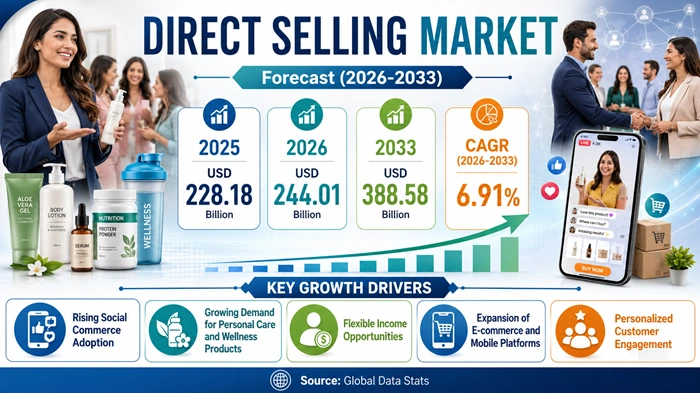
The global direct selling market size is valued at USD 228.18 billion in 2025 and is predicted to increase from USD 244.01 billion in 2026 to approximately USD 388.58 billion by 2033, growing at a CAGR of 6.91% from 2026 to 2033. This consistent expansion reflects the growing global appetite for flexible, personalized retail models, fueled by digital tools, entrepreneurial participation, and consumer trust in product-driven selling methods.
The direct selling industry is evolving at an impressive pace, powered by rising smartphone penetration, the expansion of social commerce, and a generation of independent business owners seeking flexible income opportunities. As traditional retail continues to face disruption, the direct selling model has demonstrated remarkable resilience and adaptability across both developed and developing markets worldwide.
AI Impact on the Direct Selling Industry
How Artificial Intelligence Is Quietly Reshaping the Way Products Are Sold, Distributed, and Personalized Across Global Direct Sales Networks
Artificial intelligence is transforming the direct selling landscape in ways that were hard to imagine even five years ago. AI-powered tools are now helping independent sellers build personalized product recommendations for customers, optimize outreach messaging, and predict demand patterns more accurately. Platforms embedded with AI chatbots allow sellers to respond to queries in real time, reducing response gaps and improving the overall buyer experience. Companies that have adopted AI-enabled CRM systems are witnessing measurable improvements in customer retention and repeat order rates.
Beyond customer interaction, AI is making a deep impact on how direct selling companies train and onboard their seller networks. Virtual training modules driven by machine learning are replacing traditional in-person onboarding, making it easier for new participants to learn product knowledge and selling techniques at their own pace. Predictive analytics tools now help sellers identify high-potential leads within their social networks, giving them a sharper edge in building pipelines. As AI continues to mature, its integration with direct sales platforms will likely define the next phase of industry competitiveness.
Growth Factors
The Demand for Flexible Business Models, Digital Commerce Tools, and Wellness Products Is Creating a Multi-Dimensional Growth Story for the Global Direct Sales Sector
The primary force behind the direct selling market's sustained growth is the dramatic shift in how consumers prefer to shop and how workers prefer to earn. More individuals globally are gravitating toward entrepreneurial income opportunities that offer flexibility, low startup costs, and community-based selling structures. The health and wellness product category, which is among the most popular in direct selling, has seen exponential demand growth as consumers place increasing priority on personal health management. This behavioral shift continues to be a significant tailwind for the market.
Digital tools have further lowered barriers to entry. Social media platforms, messaging apps, and e-commerce integrations have given independent sellers access to audiences that were once only reachable by large brands. The ability to conduct business via mobile devices has accelerated participation in developing regions such as Southeast Asia, Latin America, and parts of Africa, where formal retail infrastructure remains underdeveloped. The growing acceptance of the direct-to-consumer (D2C) model by mainstream retailers also validates the effectiveness of the direct selling approach.
Market Outlook
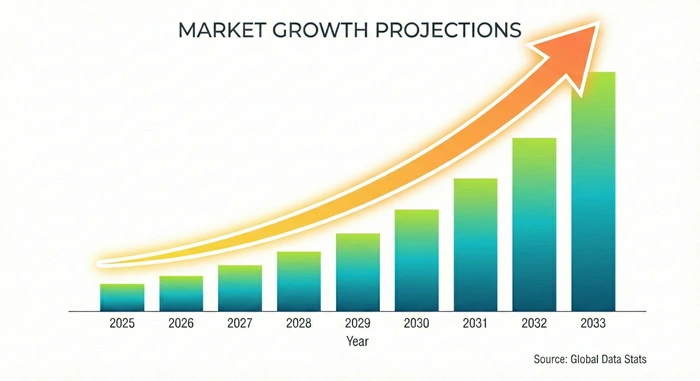
With Expanding Digital Ecosystems, Evolving Consumer Preferences, and Rising Participation in Emerging Economies, the Direct Selling Market Is Positioned for Steady Long-Term Growth Through 2033
Looking ahead, the direct selling market is poised to benefit from an expanding middle class in Asia Pacific, Africa, and Latin America. Rising disposable incomes in these regions are driving consumer spending on health, personal care, and lifestyle products — all of which are core categories in direct selling. As network connectivity improves across these markets, more individuals are discovering direct selling as a viable income channel, adding new participant cohorts that deepen market reach.
From a strategic standpoint, leading companies are investing in technology platforms that offer sellers real-time inventory data, automated reorder capabilities, and digital storefronts. These investments are designed to improve seller productivity and customer satisfaction simultaneously. Regulatory frameworks in key markets are also becoming clearer, which is reducing compliance uncertainty for businesses. With these converging forces, the market trajectory through 2033 looks promising, supported by both structural and cyclical growth drivers.
Expert Speaks
-
"The direct selling model remains one of the most powerful channels for building brand loyalty, and the integration of digital tools is only amplifying its reach. We are seeing remarkable resilience in this sector even as broader retail dynamics shift." — CEO, Amway
-
"Health and wellness demand is at an all-time high, and direct selling gives us the ability to personalize that conversation with consumers in a way that mass retail simply cannot replicate. Our investment in digital platforms reflects this conviction." — CEO, Herbalife Nutrition
-
"The rise of social commerce and mobile-first seller networks is creating a new paradigm in direct sales. Our strategy is to empower our independent business owners with AI-driven insights so they can grow faster and serve customers better." — CEO, Nu Skin Enterprises
Key Report Takeaways
-
North America dominates the direct selling market, holding the largest regional share at approximately 35% in 2025, driven by a mature seller base, strong regulatory frameworks, and high household spending on health, wellness, and personal care products
-
Asia Pacific is the fastest-growing region, projected to grow at a CAGR of over 8.5% from 2026 to 2033, driven by rising internet penetration, youthful demographics, and rapidly expanding middle-class populations in China, India, and Southeast Asia
-
Individual consumers represent the dominant end-user category, accounting for the majority of purchases, particularly in health, wellness, and cosmetics segments where personalized recommendations strongly influence buying decisions
-
Health & Wellness is the leading product segment, contributing the highest market share at approximately 36% in 2025, reflecting global consumer priorities around preventive healthcare and functional nutrition
-
Multi-Level Marketing (MLM) is the most widely used business model in the direct selling industry, enabling companies to scale their distribution networks rapidly through tiered compensation structures and community-driven selling
-
The cosmetics and personal care segment is expected to grow quickly, projected to capture nearly 28% market share by 2033, growing at a CAGR of approximately 7.5%, particularly in Asia Pacific where beauty and skincare demand is surging among younger consumers
Market Scope
| Report Coverage | Details |
|---|---|
| Market Size by 2033 | USD 388.58 Billion |
| Market Size by 2025 | USD 228.18 Billion |
| Market Size by 2026 | USD 244.01 Billion |
| Market Growth Rate from 2026 to 2033 | CAGR of 6.91% |
| Dominating Region | North America |
| Fastest Growing Region | Asia Pacific |
| Base Year | 2025 |
| Forecast Period | 2026 – 2033 |
| Segments Covered | Type, Product, End-User, Region |
| Regions Covered | North America, Europe, Asia Pacific, Latin America, Middle East & Africa |
Market Dynamics
Drivers Impact Analysis
Rising Consumer Preference for Personalized Retail Experiences and the Proliferation of Digital Selling Tools Are the Core Engines Accelerating Growth in the Direct Selling Market
| Driver | ≈ % Impact on CAGR Forecast | Geographic Relevance | Impact Timeline |
|---|---|---|---|
| Growing demand for health & wellness products | ~28% | Global, strongest in North America & Asia Pacific | Short to Long Term |
| Digital platform & social commerce adoption | ~24% | Asia Pacific, North America | Short to Medium Term |
| Rising entrepreneurial participation | ~20% | Latin America, Southeast Asia, MEA | Medium to Long Term |
| Expansion of D2C distribution channels | ~16% | North America, Europe | Medium Term |
| Improving regulatory clarity in emerging markets | ~12% | Asia Pacific, Latin America | Long Term |
The direct selling market is experiencing robust momentum primarily because consumers are demanding more meaningful, personalized interactions with the brands they support. Unlike traditional retail, the direct selling model places a human intermediary at the heart of each transaction — a dynamic that builds trust and loyalty more effectively than most digital advertising formats can achieve. The growing health and wellness sector has proven to be particularly fertile ground for direct sellers, as consumers value the guidance and education that sellers provide when choosing supplements, functional foods, or personal care products. This human-centered approach to commerce is increasingly recognized as a genuine competitive advantage.
The widespread adoption of digital tools among sellers is amplifying the volume and velocity of transactions. Social media platforms — particularly in markets like India, Brazil, Indonesia, and Mexico — have become the primary venues through which independent sellers build relationships, share product demonstrations, and close sales. This digital shift has democratized access to the direct selling income opportunity, making it accessible to individuals regardless of their geographic location or formal business experience. As mobile internet continues to penetrate rural and semi-urban markets, the pool of active sellers and buyers in the direct selling ecosystem is expanding consistently.
Restraints Impact Analysis
Regulatory Complexity, Reputation Challenges, and Seller Retention Issues Continue to Create Friction That Moderates the Pace of Growth in Global Direct Sales Networks
| Restraint | ≈ % Impact on CAGR Forecast | Geographic Relevance | Impact Timeline |
|---|---|---|---|
| Negative perception and MLM-related scrutiny | ~-22% | Global, especially North America & Europe | Short to Medium Term |
| High seller attrition and dropout rates | ~-20% | Global | Ongoing |
| Regulatory restrictions on MLM compensation structures | ~-18% | China, India, Europe | Medium to Long Term |
| Market saturation in mature economies | ~-15% | North America, Western Europe | Medium Term |
| Product quality inconsistencies by independent sellers | ~-10% | Developing markets | Short to Medium Term |
One of the persistent challenges facing the direct selling market is the reputational overhang associated with multi-level marketing structures. Public scrutiny and regulatory investigations in several major markets — including the United States, India, and parts of Europe — have periodically raised questions about the fairness and sustainability of certain compensation models. Although most established companies operate within compliant frameworks, the broader industry often faces a trust deficit that makes consumer and seller recruitment more difficult. Companies have responded by increasing transparency in income disclosures and simplifying compensation plan structures.
Seller retention is another significant constraint that directly impacts long-term market growth. Industry data consistently shows that a large proportion of direct sellers exit within their first year, driven by unmet income expectations, lack of mentoring, or difficulty building a customer base. High attrition creates ongoing recruitment costs for companies and limits the ability to scale networks organically. Companies that invest in structured training, digital tools for seller support, and community-building programs tend to achieve higher retention rates, but the challenge remains industry-wide.
Opportunities Impact Analysis
Rapid Digitalization in Emerging Markets, Expansion of E-Commerce Integration, and Rising Demand for Wellness Products Present Significant Untapped Opportunities for Direct Selling Companies
| Opportunity | ≈ % Impact on CAGR Forecast | Geographic Relevance | Impact Timeline |
|---|---|---|---|
| Social commerce and live-selling platforms | ~+25% | Asia Pacific, Latin America | Short to Medium Term |
| Expansion into underserved rural markets | ~+22% | India, Southeast Asia, Africa | Medium to Long Term |
| AI-powered personalization for sellers | ~+20% | Global | Medium Term |
| Green and sustainable product line expansion | ~+18% | Europe, North America | Medium to Long Term |
| Strategic partnerships with e-commerce platforms | ~+15% | Global | Short to Medium Term |
The fastest-growing opportunity for the direct selling market lies in the convergence of social media and e-commerce — a phenomenon broadly referred to as social commerce. Platforms in Asia Pacific, particularly in China and Southeast Asia, have pioneered live-streaming commerce formats where sellers present products in real time to large audiences, taking orders instantly within the platform. This model blends the authenticity of personal selling with the scale of digital broadcasting, creating a powerful new channel that established direct selling companies are now beginning to replicate in their own ecosystems.
Sustainability represents another compelling opportunity. Consumers — particularly younger demographics — are placing growing importance on environmentally responsible products and ethical business practices. Direct selling companies that expand their portfolio of organic, cruelty-free, or sustainably packaged products are likely to attract a new wave of both buyers and sellers who align with these values. Several leading companies have already committed to sustainability roadmaps, positioning themselves favorably in the eyes of an increasingly environmentally conscious consumer base. These strategic moves are expected to contribute meaningfully to market expansion over the forecast period.
Segment Analysis
By Type
Multi-Level Marketing Remains the Backbone of the Global Direct Sales Industry, While Single-Level Models Gain Ground in Digital-First, Product-Centric Sales Environments
Multi-Level Marketing (MLM) commands the dominant share in the direct selling market, accounting for approximately 65% of total market revenue in 2025 and expected to maintain this leadership through 2033, growing at a CAGR of around 7.0%. The MLM model's strength lies in its ability to create self-sustaining networks of independent sellers who are motivated not only by product sales commissions but also by the opportunity to earn override commissions from their recruited downlines. This layered incentive structure has proven highly effective at scaling distribution networks rapidly, particularly in regions like Asia Pacific, Latin America, and parts of Africa where traditional employment alternatives are limited. Companies such as Amway (USA), Herbalife Nutrition (USA), and Infinitus (China) are among the dominant players in this segment, leveraging deep cultural acceptance and decades of brand trust to sustain large seller ecosystems.
Single-Level Marketing (SLM), on the other hand, is growing steadily as a clean, straightforward alternative that avoids the complexity and reputational risks associated with MLM structures. This segment holds approximately 35% market share in 2025 and is projected to grow at a CAGR of 6.7%, driven by a rise in direct-to-consumer brands that prefer selling through individual brand advocates rather than layered networks. The SLM model is gaining particular traction in Europe and North America, where consumers and regulators tend to favor simpler, more transparent income models. Companies offering cosmetics, wellness devices, and nutritional products via SLM structures are finding receptive markets among professional sellers who prioritize product quality and straightforward earning potential over recruitment-based income.
By Product
Health and Wellness Products Lead Global Direct Sales Revenue, While Cosmetics and Personal Care Emerges as the Fastest-Growing Product Category in Key High-Potential Regions
The Health & Wellness segment holds the leading position in the direct selling market, commanding approximately 36% of global market revenue in 2025 and expected to grow at a CAGR of 7.2% through 2033. This dominance is underpinned by a fundamental and accelerating consumer shift toward preventive healthcare, functional nutrition, and physical vitality. Products in this category — including dietary supplements, protein formulas, vitamins, and immunity boosters — are particularly well-suited to the direct selling model because they benefit from personalized guidance and usage education, which sellers are ideally positioned to provide. Asia Pacific is the standout growth region for health and wellness direct sales, with China and India contributing the largest volumes; companies such as Infinitus (China), Amway (USA), and Natural Health Trends (USA) have built dominant positions in this geography through localized product formulations and large seller networks.
The Cosmetics & Personal Care segment is emerging as the most dynamic growth category in the broader direct sales landscape, holding approximately 27% market share in 2025 and forecast to reach nearly 28% by 2033, growing at a CAGR of approximately 7.5%. This segment benefits from high repeat purchase rates, strong brand loyalty, and the deeply personal nature of beauty and skincare purchasing, where recommendations from trusted individuals carry significant weight. Latin America — particularly Brazil — has established itself as a powerhouse market for cosmetics direct selling, supported by a culturally embedded appreciation for beauty and personal grooming. Companies including Natura & Co (Brazil), Avon Products (USA), and Mary Kay (USA) have long dominated this geography, continuously introducing new product lines that cater to diverse skin tones and preferences, reinforcing the category's growth potential.
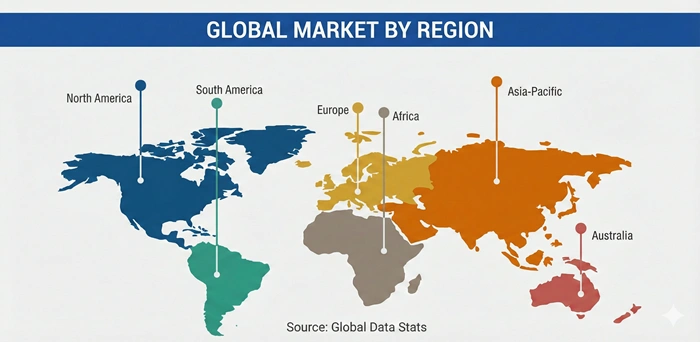
Regional Insights
North America's Structural Advantages and Asia Pacific's Explosive Growth Momentum Define the Two Most Strategically Critical Geographies in the Global Direct Selling Market
North America
North America's Deep-Rooted Direct Sales Culture, Mature Regulatory Framework, and Concentration of Global Headquarters Make It the Undisputed Leader in the Direct Selling Market
North America holds the dominant position in the direct selling market, accounting for approximately 35% of global market share in 2025, with the United States contributing the lion's share of this revenue. The region's market is supported by an estimated 7 million+ active direct sellers, a high household income base, and deep consumer familiarity with brands such as Amway, Herbalife, Avon, and Nu Skin. The U.S. market alone is projected to grow at a CAGR of approximately 6.4% from 2026 to 2033, underpinned by sustained demand for health supplements, personal care products, and household essentials. Regulatory stability provided by the Federal Trade Commission (FTC) and the Direct Selling Association (DSA) creates a predictable operating environment that large-scale players can leverage effectively.
Canada and Mexico are contributing to the region's steady expansion, with both markets showing growing interest in wellness products and flexible income opportunities. Mexican consumer participation in direct selling is particularly notable, given the country's relatively young population and strong community-based selling culture. Key players with significant North American operations include Amway (USA), Herbalife Nutrition (USA), Nu Skin Enterprises (USA), Mary Kay (USA), and eXp Realty (USA). These companies consistently invest in seller training, digital tools, and product innovation to maintain their competitive advantages in a market that, while mature, continues to deliver reliable revenue growth.
Asia Pacific
Asia Pacific Is the Fastest-Growing Region in the Direct Selling Market, Propelled by a Young Population, Rising Digital Connectivity, and Surging Demand for Health and Beauty Products
Asia Pacific is projected to be the fastest-growing region in the direct selling market, expanding at a CAGR of over 8.5% from 2026 to 2033 and expected to account for more than 38% of global market share by the end of the forecast period. China remains the single largest country market in this region, driven by a massive consumer base, government-regulated but deeply established direct selling sector, and high demand for health and nutritional products. India is rapidly emerging as a secondary growth engine, supported by over a billion mobile users, increasing internet access in tier-2 and tier-3 cities, and a large working-age population seeking supplemental income through selling activities. Southeast Asian countries — including Indonesia, Vietnam, and the Philippines — are experiencing double-digit growth in direct selling participation driven by social commerce adoption.
Key companies operating in Asia Pacific include Infinitus (China), JAFRA Cosmetics (USA, with strong Asia footprint), PT HWI (Indonesia), Amway (with strong China and India operations), and Natural Health Trends (USA, focused on the Asia Pacific region). These players have tailored their product portfolios and compensation plans to align with local consumer preferences and cultural selling norms, enabling faster penetration in these high-potential markets. Japan and South Korea, while more mature, continue to contribute stable revenue through premium wellness and personal care product lines. The region's digital infrastructure investments are creating a fertile foundation for the next phase of direct selling growth.
Report Customization Available by Region and Country
This report can be fully customized to deliver targeted insights for specific regions and countries, providing granular market analysis, local trends, competitive landscapes, and growth opportunities tailored to your geography of interest.
The report is available with customized coverage across all major global regions and individual countries. Whether you are evaluating a single country market or a multi-region strategy, customized versions can be developed to include demand trends, regulatory environment analysis, key player mapping, and forecast data specific to each geography. This level of customization ensures that your strategic decisions are grounded in localized, high-quality intelligence rather than broad averages.
North America
-
United States — Largest direct selling market with a mature seller base, strong regulatory clarity, and high consumer spending on wellness and personal care
-
Canada — Growing health-focused direct selling sector with rising participation from digital-native entrepreneurs
-
Mexico — High-potential emerging market supported by youthful demographics and community selling culture
Europe
-
United Kingdom — Established direct selling industry with strong cosmetics and wellness categories
-
Germany — Precision-focused market with high demand for premium health and household products
-
France — Growing appetite for beauty and personal care direct selling fueled by lifestyle-driven consumer behavior
-
Italy — Culturally receptive market for cosmetics and home goods direct sales
-
Rest of Europe — Includes emerging markets in Eastern Europe with rising direct seller participation rates
Asia Pacific
-
China — The region's largest and most regulated direct selling market with dominant health product demand
-
India — Fastest-growing country market, driven by mobile commerce and rising aspirational middle class
-
Japan — Premium market with high penetration of health and beauty products via direct sales
-
South Korea — Beauty-focused direct selling ecosystem with global brand exports
-
Australia — Mature, compliance-driven market with strong wellness product demand
-
Rest of Asia Pacific — Includes high-growth markets such as Indonesia, Vietnam, and the Philippines
Latin America
-
Brazil — Global leader in cosmetics direct selling, home to Natura & Co and a large seller base
-
Argentina — Rising direct selling participation amid growing demand for personal and wellness products
-
Rest of Latin America — Includes Colombia, Chile, and Peru as emerging direct selling destinations
Middle East & Africa
-
UAE — Premium consumer market with expanding direct selling networks in health and beauty
-
Saudi Arabia — Growing young population with increasing interest in wellness and personal care products
-
Rest of MEA — Includes South Africa, Nigeria, and Kenya as emerging high-potential direct selling markets
Top Key Players
-
Amway (United States)
-
Herbalife Nutrition Ltd. (United States)
-
Avon Products Inc. (United States)
-
Nu Skin Enterprises (United States)
-
Mary Kay Inc. (United States)
-
Natura & Co (Brazil)
-
Infinitus (China) Co. Ltd. (China)
-
eXp Realty International Corp. (United States)
-
Vorwerk & Co. KG (Germany)
-
Oriflame Cosmetics S.A. (Sweden)
-
Belcorp Corporate Services S.A.C. (Peru)
-
JAFRA Cosmetics International (United States)
-
Tupperware Brands Corporation (United States)
-
4Life Research LLC (United States)
-
Natural Health Trends Corp. (United States)
Recent Developments
-
In 2025, Amway announced a strategic investment in AI-powered seller coaching tools, deploying personalized performance dashboards across its global distributor network to improve seller productivity and retention rates
-
In 2024, Natura & Co completed the sale of Aesop to L'Oréal for approximately USD 2.5 billion, allowing the company to refocus its direct selling strategy on its core Natura and Avon brands in Latin America and global markets
-
In 2025, Herbalife Nutrition undertook a significant rebranding initiative, simplifying its product portfolio and relaunching its seller training platform with integrated mobile-first digital tools to attract younger independent business owners
-
In 2024, Nu Skin Enterprises announced a partnership with a leading AI technology provider to integrate advanced skin analysis tools into its product recommendation engine, enhancing seller-to-customer personalization capabilities
-
In 2025, eXp Realty continued its geographic expansion, entering new Asia Pacific markets and surpassing 90,000 active agents globally, reinforcing its position as the largest virtual direct selling real estate brokerage in the world
Market Trends
Convergence of Social Commerce, AI-Powered Personalization, and Wellness Megatrends Is Defining the Next Chapter of Innovation and Competition in the Global Direct Sales Industry
The most transformative trend reshaping the direct selling market is the fusion of social media engagement and commerce — popularly termed social commerce. Sellers are no longer limited to hosting home parties or making cold calls; they are building sizeable digital audiences through short-form video content, live-streaming product demonstrations, and interactive community groups on platforms like Instagram, TikTok, WhatsApp, and WeChat. This shift is dramatically expanding the potential customer reach of individual sellers, enabling even new participants to achieve meaningful sales volumes early in their journey. Companies that provide sellers with branded digital content, shareable product links, and in-platform purchase tools are gaining a competitive advantage in attracting and retaining top performers in their networks.
A second major trend is the increasing role of sustainability and transparency in shaping purchase decisions. Consumers across North America, Europe, and progressively in Asia Pacific are demanding to know the origin, formulation, and environmental impact of the products they buy. Direct selling companies that have pivoted toward organic ingredients, eco-friendly packaging, cruelty-free testing, and ethical sourcing are seeing demonstrably higher engagement from younger buyer and seller segments. Alongside this, income transparency — the practice of clearly disclosing average seller earnings at different levels of the compensation structure — is gaining regulatory momentum globally, pushing companies to reform disclosure standards and redesign compensation plans for clarity and fairness.
Segments Covered in the Report
-
By Type
-
Single-Level Marketing
-
Multi-Level Marketing (MLM)
-
-
By Product
-
Health & Wellness
-
Cosmetics & Personal Care
-
Household Goods & Durables
-
Others
-
-
By End-User
-
Individual Consumers
-
Business Customers
-
-
By Region
-
North America
-
U.S.
-
Canada
-
Mexico
-
-
Europe
-
U.K.
-
Germany
-
France
-
Italy
-
Rest of Europe
-
-
Asia Pacific
-
China
-
India
-
Japan
-
South Korea
-
Australia
-
Rest of Asia Pacific
-
-
Latin America
-
Brazil
-
Argentina
-
Rest of Latin America
-
-
Middle East & Africa
-
UAE
-
Saudi Arabia
-
Rest of MEA
-
-
❝ Built for Every Level — From Startups to Industry Giants ❞
Here Is Exactly How This Report Works for You
-
This report equips investors, mid-market companies, and enterprise decision-makers with precise market sizing, CAGR projections, and regional growth data — giving you the intelligence needed to allocate capital confidently, identify white-space opportunities, and benchmark competitor positioning before entering or expanding in any market
-
For tier-1 corporations and strategic planners, the report delivers deep competitor revenue analysis, revenue source mapping, and geopolitical risk assessment — helping leadership teams understand how tariffs, regulatory shifts, and cross-border supply chain dynamics are affecting direct selling operations and how to build resilience into go-to-market strategies
-
Startups and emerging-scale businesses will find the segment-level demand forecasts, buyer behavior analysis, and regional customization data particularly actionable — offering a clear map of where demand is accelerating, which product categories are underserved, and how global giants are positioning themselves so you can differentiate, disrupt, and grow faster
Frequently Asked Questions
Question 1: What is the current size and growth forecast of the direct selling market?
Answer: The direct selling market was valued at USD 228.18 billion in 2025 and is projected to reach USD 388.58 billion by 2033. It is expected to grow at a CAGR of 6.91% from 2026 to 2033.
Question 2: Which product segment holds the largest share in the direct selling market?
Answer: The Health & Wellness segment leads the direct selling market with approximately 36% of global revenue in 2025. This dominance is driven by rising consumer interest in preventive healthcare and functional nutrition products.
Question 3: Which region dominates the direct selling market, and which is growing fastest?
Answer: North America currently dominates the direct selling market with approximately 35% market share in 2025. Asia Pacific is the fastest-growing region, projected to expand at a CAGR of over 8.5% through 2033.
Question 4: What are the key business models used in the direct selling market?
Answer: The two primary models in the direct selling market are Multi-Level Marketing (MLM) and Single-Level Marketing (SLM). MLM accounts for the majority share at approximately 65%, driven by its network-building and tiered commission structures.
Question 5: What factors are restraining growth in the direct selling market?
Answer: The direct selling market faces challenges including negative perceptions around MLM structures, regulatory scrutiny in key economies, and high seller attrition rates. Market saturation in mature regions like North America and Western Europe also moderates the overall growth pace.